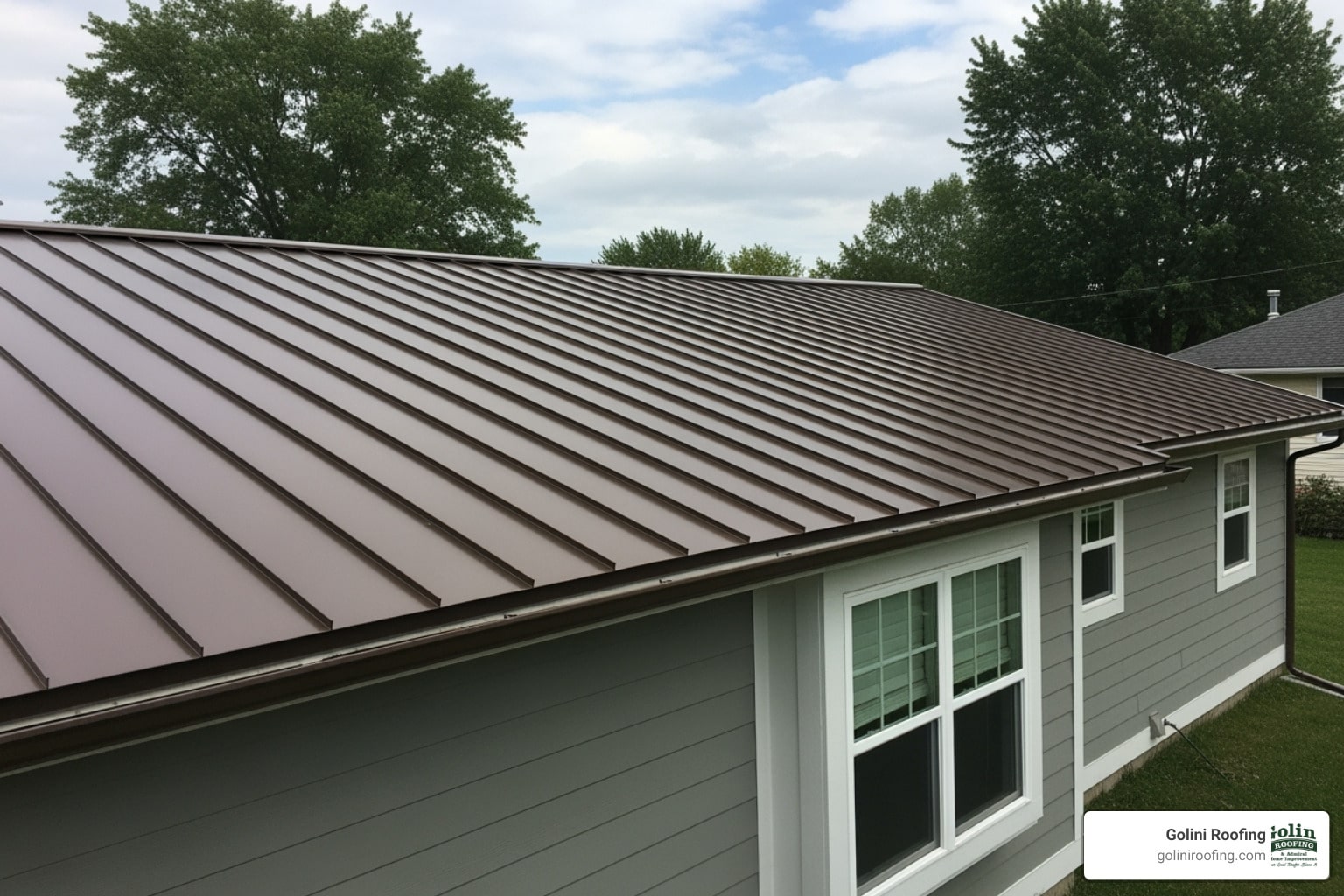
Low Slope Residential Roofing: Expert Secure 2025
Understanding Low Slope Residential Roofing
Low slope residential roofing is a specialized category requiring different materials and installation techniques than traditional steep-slope roofs. Understanding these systems is crucial for homeowners with flat or gently sloped sections on their homes, such as porches, garages, or modern home additions.
Key characteristics include:
- Roof Pitch: A slope of less than 4:12 (it rises less than 4 inches for every 12 horizontal inches).
- Water Management: Relies on a continuous waterproof membrane rather than shedding water like steep roofs.
- Material Restrictions: Standard asphalt shingles cannot be used on very low slopes (under 2:12) due to water ponding risks.
Because these roofs don’t have enough pitch for water to drain quickly, they must be designed as completely waterproof systems. Building codes and manufacturer instructions prohibit using standard shingles on slopes below 2:12, as it can lead to water damage and voided warranties.
I’m Jack Golini, owner of Golini Roofing. With over 35 years of experience with low slope residential roofing systems in the local area, I know that proper material selection and expert installation are critical for these applications.
What is a Low Slope Roof and Why Does it Matter?
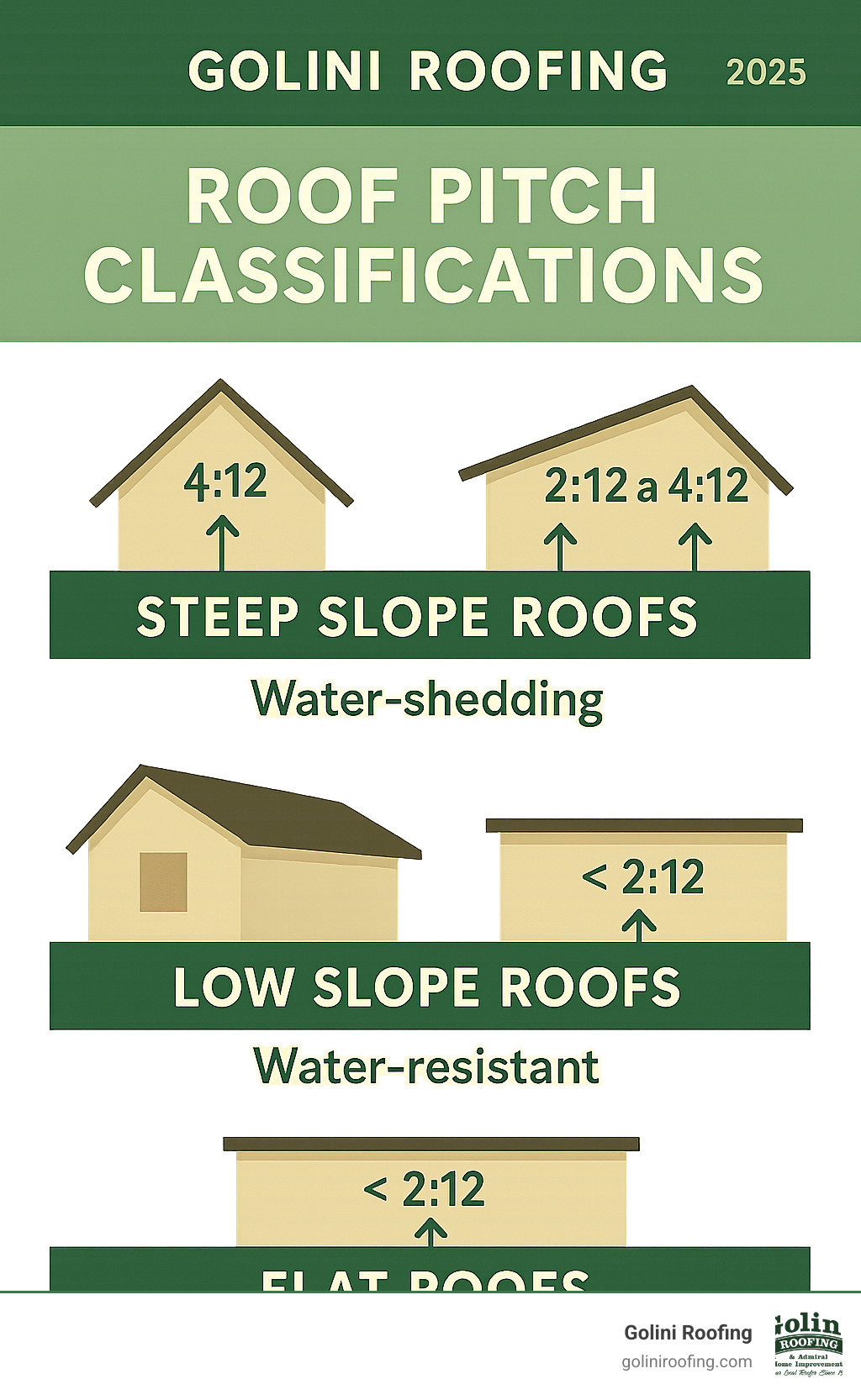
A roof’s pitch or slope is measured with a “rise over run” ratio. For example, a 4:12 pitch means the roof climbs 4 inches for every 12 inches it runs horizontally.
For low slope residential roofing, any pitch below 4:12 falls into this category. A critical distinction exists at a 2:12 pitch. Roofs between 2:12 and 4:12 can sometimes use asphalt shingles, but only with special installation and extra underlayment. Anything below a 2:12 pitch is a hard no for standard shingles, a rule supported by the 2018 International Residential Code.
This matters because of how water behaves. Steep roofs use gravity to shed water quickly. Low slope residential roofing systems can’t rely on gravity alone, as slow-moving water can lead to ponding. When water sits on a roof, it will find any crack or imperfect seal. This is why water-resistance is more important than water-shedding for these applications.
Standard asphalt shingles are designed to shed water, not sit in it. Installing them on a roof that’s too flat will void your warranty and lead to expensive damage. At Golini Roofing, we strictly follow manufacturer guidelines and always recommend proper low slope residential roofing materials. You can learn more about our general approach on our roofing services page.
Common Applications in Homes
Low slope roofing is common in many Massachusetts homes. We often install these systems on:
- Porches and garages, which frequently have a gentler pitch than the main house.
- Dormers and home additions, where a low slope is needed to maximize interior headroom or blend with existing architecture.
- Townhouses and modern architectural designs, where architects use them to create clean, minimalist lines.
Key Benefits of a Low Slope Design
Despite the technical challenges, low slope residential roofing offers compelling advantages:
- Architectural Flexibility: These roofs provide incredible design freedom for clean, modern lines or complex roof structures.
- Usable Space Potential: A low-slope roof can be transformed into a functional area, such as a rooftop deck, a green roof garden, or a platform for solar panels or HVAC equipment.
- Easier Maintenance Access: The flatter surface makes it safer for professionals to perform inspections and repairs.
- Improved Energy Efficiency: Low-slope roofs often mean less attic space, which can improve temperature control. Using reflective materials like white TPO or PVC can create “cool roofs” that meet Energy Star requirements and reduce heat absorption, lowering cooling costs in the summer.
Choosing the Right Materials for Low Slope Residential Roofing
For low slope residential roofing, selecting the right material is about long-term protection. Key factors include durability against Massachusetts’ freeze-thaw cycles, water resistance, aesthetics, and cost.
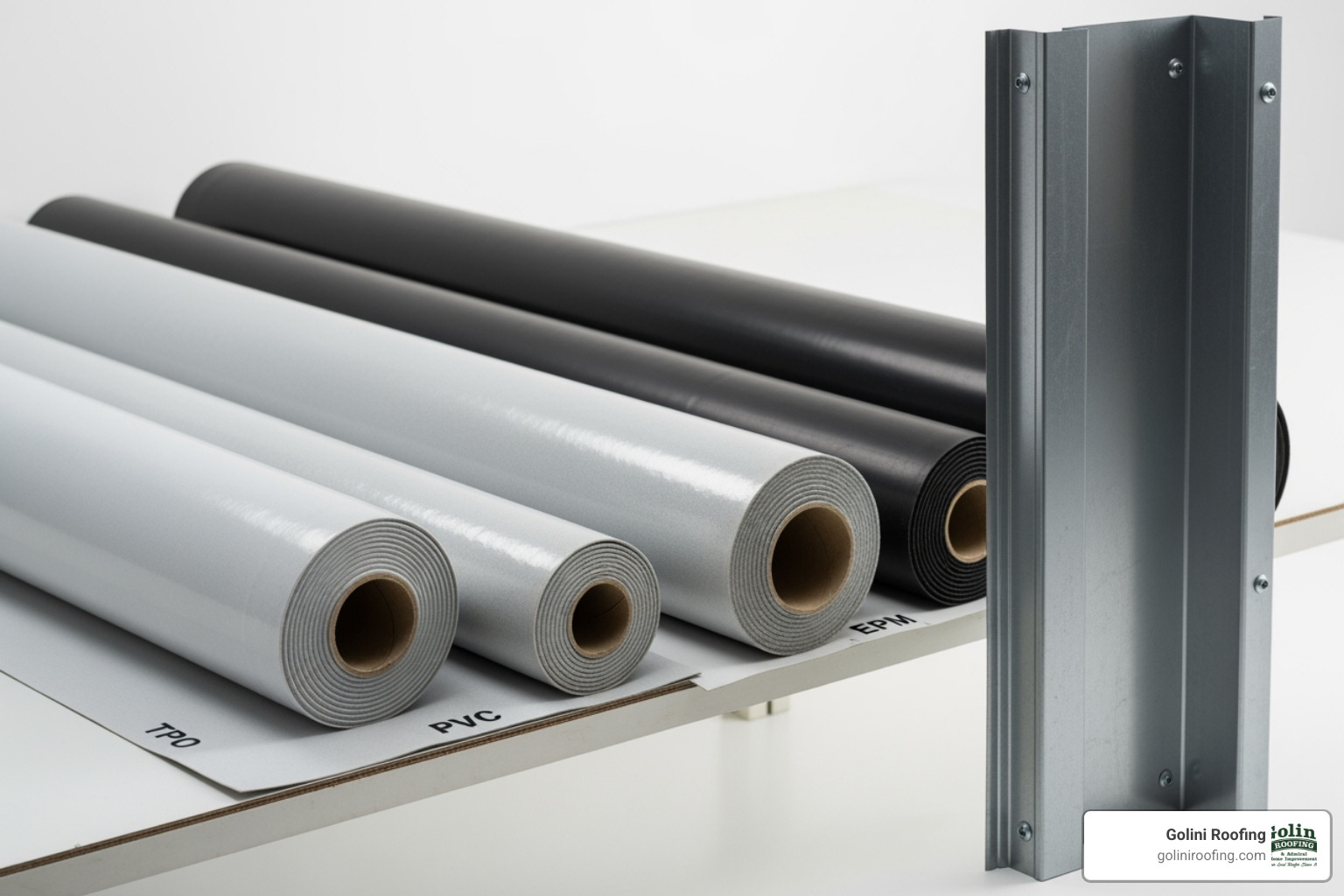
Single-Ply Membrane Roofing (TPO, PVC, EPDM)
These systems are popular for low slope residential roofing because they offer superior waterproofing with fewer seams. Fewer seams mean fewer potential leak points.
- Thermoplastic Olefin (TPO): Often called the “energy saver,” its white surface reflects heat, reducing cooling costs. Seams are heat-welded to create a seamless waterproof barrier. It lasts around 25 years.
- Polyvinyl Chloride (PVC): Similar to TPO with its white surface and heat-welded seams, PVC is more puncture-resistant and handles chemical exposure better, making it ideal for high-traffic areas.
- Ethylene Propylene Diene Monomer (EPDM): Known as “rubber roofing,” this black material is incredibly flexible in freezing temperatures and has outstanding UV resistance. It can last 25 to 30 years.
Modified Bitumen & Built-Up Roofing (BUR)
These asphalt-based systems are tough and reliable.
- Modified Bitumen: This is essentially asphalt roofing improved with polymers (SBS or APP) for greater flexibility and durability. It’s tough enough for foot traffic and comes in granule surfaces to match existing shingles. Application can be self-adhering (peel-and-stick) or torch-down, which requires professional expertise.
- Built-Up Roofing (BUR): The traditional “tar and gravel” roof, BUR consists of multiple layers of bitumen and reinforcing fabrics. It creates a robust, heavy, and fire-resistant barrier that can last 15 to 30+ years.
Standing Seam Metal Roofing
For a sleek, modern look and exceptional performance, consider standing seam metal for your low slope residential roofing project.
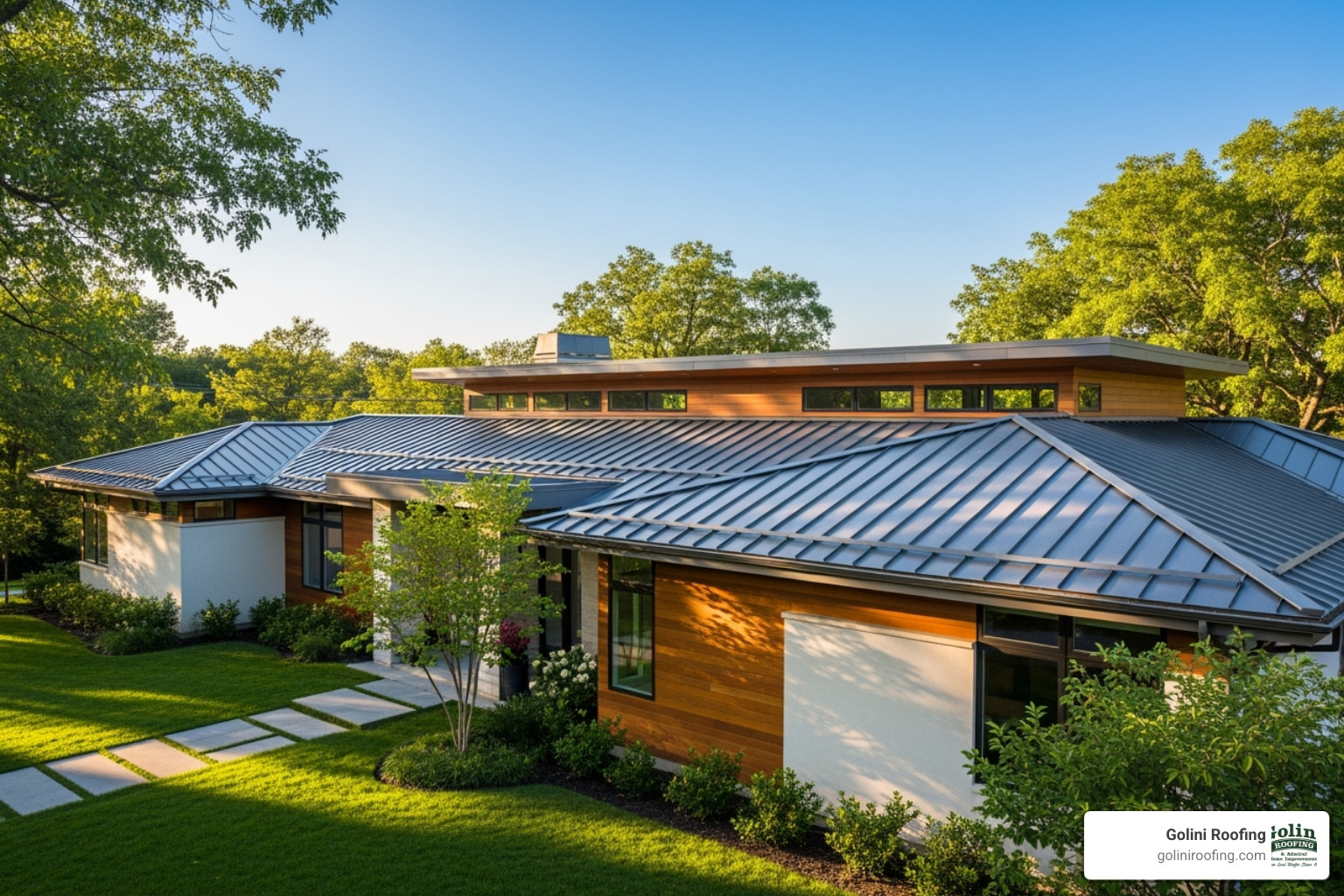
Its key feature is a concealed fastener system, where panels are joined by raised, mechanically crimped seams. This hides the screws, eliminating a common source of leaks. The system allows for thermal expansion and contraction, crucial for Massachusetts’ temperature swings. Standing seam metal roofs can last 30 to 50+ years with minimal maintenance. While the upfront cost is higher, their longevity and recyclability make them an excellent long-term investment.
Comparing Low Slope Roofing Materials
| Material Type | Lifespan | Pros | Cons | Best For |
|---|---|---|---|---|
| TPO | ~25 years | Energy-efficient white surface, durable, lightweight, heat-welded seams | Shows dirt easily, less flexible in extreme cold | Energy-conscious homeowners, hot climates |
| PVC | ~25 years | Extremely puncture-resistant, chemical resistant, energy-efficient | Higher cost than TPO, shows dirt | High-traffic areas, long-term performance |
| EPDM | 25-30 years | Highly flexible, excellent UV resistance, no glare, proven durability | Black surface absorbs heat, limited colors | Long-term durability, areas where glare is a concern |
| Modified Bitumen | 10-20+ years | Walkable, multiple colors available, self-sealing, familiar material | Torch application requires expertise, heavier weight | Residential applications, matching existing shingles |
| Built-Up Roofing | 15-30+ years | Extremely robust, multi-layer protection, fire resistant | Heavy, messy installation, limited aesthetics | Large residential projects, maximum durability |
| Standing Seam Metal | 30-50+ years | Exceptional longevity, concealed fasteners, low maintenance, recyclable | Higher upfront cost, requires proper drainage design | Premium applications, long-term investment |
Installation and Design: The Keys to a Long-Lasting Roof
For low slope residential roofing, the quality of the installation and design is just as important as the material choice. These systems are unforgiving; they rely on a perfect waterproof barrier because water doesn’t drain quickly. Every seam, flashing detail, and penetration must be flawless.
The golden rule is to always give water a path to drain. Even a “flat” roof needs a slight slope (at least 1/4 inch per foot) to prevent water from ponding, which is the primary cause of failure.
Proper underlayment is also critical. For low slope shingle applications (2:12 to 4:12 pitch), we install a full ice and water protector as a secondary waterproof barrier. The most vulnerable spots are seams and flashing around chimneys, skylights, and vents, which require expert attention to prevent leaks.
Key Considerations for Residential Low Slope Roofing Installation
A successful low slope residential roofing project depends on meticulous preparation and execution.
- Deck Preparation: The roof deck must be clean, dry, smooth, and structurally sound. Imperfections can create weak spots in the membrane.
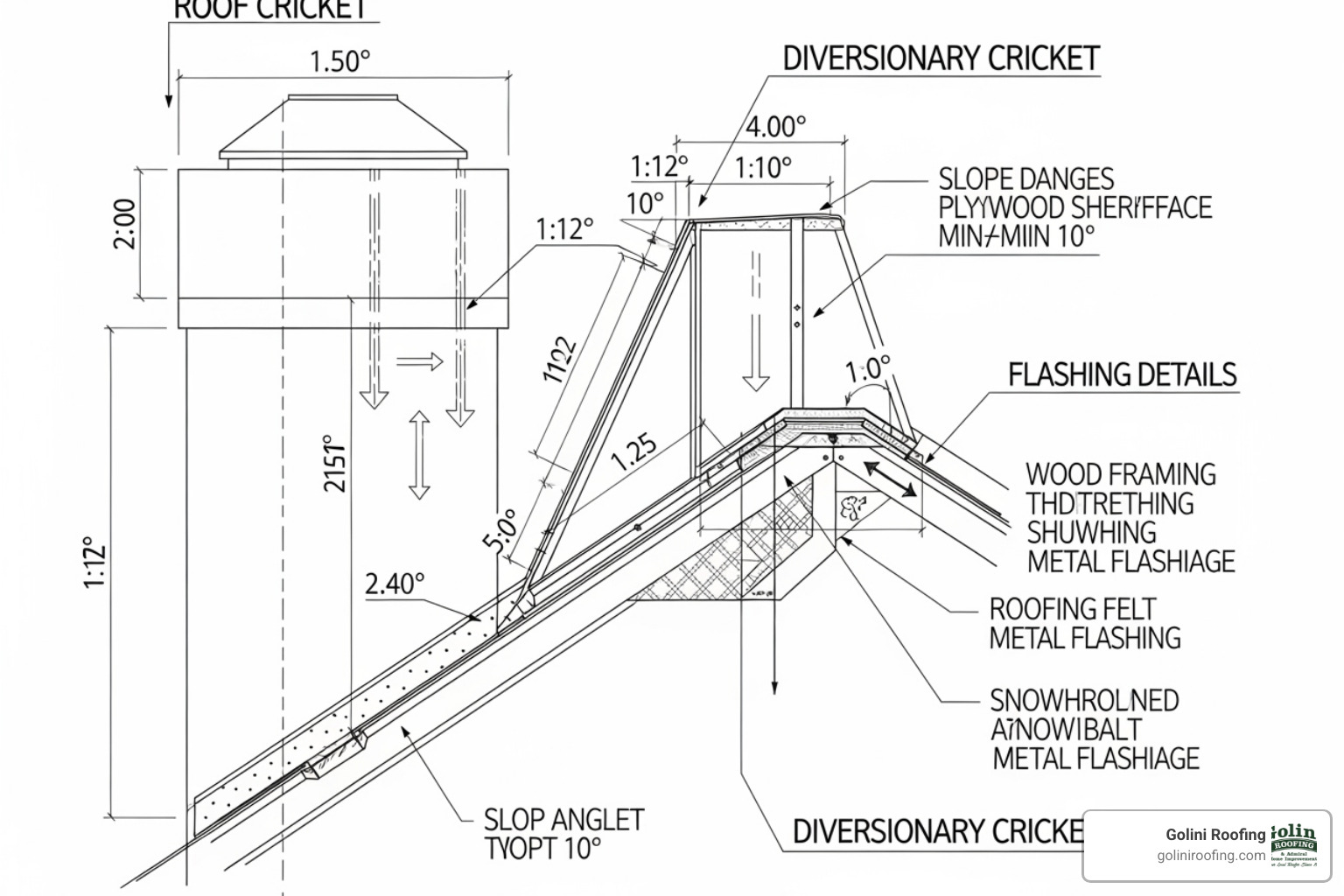
- Insulation and Slope: We often use tapered insulation or build small sloped structures called “crickets” to create positive drainage.
- Vapor Barriers: When using ice and water protectors, proper ventilation is essential to prevent moisture buildup and condensation within the roof assembly.
- Proper Flashing: Every penetration, wall, and edge must be detailed with specialized flashing techniques integrated seamlessly with the roof membrane.
- Drainage Systems: Crickets divert water around obstructions, while scuppers are openings that let water flow off the roof into gutters. A complete water management system is crucial, which includes effective gutters. You can learn more about our gutter services to ensure your system works together.
How Climate and Design Influence Your Choice
New England’s climate presents serious challenges for low slope residential roofing, including heavy snow, ice dams, freeze-thaw cycles, and intense UV exposure.
- Snow Load: The roofing material must handle the weight of heavy, wet snow and ice.
- Ice Dams: When snow melts and refreezes at the roof’s edge, it can force water under roofing materials. Proper ice and water shield application is our first line of defense.
- Freeze-Thaw Cycles: Constant expansion and contraction of freezing water puts stress on materials. We choose products with excellent flexibility to resist cracking.
- UV Exposure: Low slope roofs get direct sun, which can degrade materials over time. UV-resistant membranes and coatings are vital.
Your building design also influences material choice. A modern home may suit a white TPO membrane, while a traditional home might look better with a granule-surface modified bitumen that matches existing shingles.
Common Problems, Maintenance, and Longevity
No roof is maintenance-free, and low slope residential roofing systems have unique vulnerabilities. Fortunately, most problems are preventable with proper care.
The most common issues we see are:
- Ponding Water: Water that sits for more than 48 hours after a storm accelerates material breakdown and can lead to leaks.
- Leaks at Seams and Flashing: These are the most vulnerable points on a low slope roof. Poor installation or age can cause seams to separate or flashing to fail.
- Membrane Punctures: Falling branches, foot traffic, or dropped tools can create holes that allow water intrusion.
- UV Degradation: Constant sun exposure can make roofing materials brittle and prone to cracking over time.
- Debris Accumulation: Piles of leaves and dirt trap moisture and can clog drainage systems, leading to ponding water.
If you’re facing any of these issues, don’t wait. Our team specializes in roof repairs and can restore your roof’s integrity.
Preventing Common Issues with Proactive Maintenance
A little proactive maintenance for your low slope residential roofing can save you a lot of money and stress. We recommend the following:
- Regular Inspections: Check your roof twice a year (spring and fall) and after major storms. Look for standing water, debris, cracks, or blisters.
- Keep Drainage Clear: Ensure drains, scuppers, and gutters are free of leaves and debris so water can flow off the roof quickly.
- Check Sealant: Inspect the sealant around pipes, vents, and skylights. It can dry out and crack over time, especially in New England’s climate.
- Fix Small Problems Immediately: A tiny puncture or a lifted seam can quickly become a major leak if left unaddressed.
Lifespan and Warranties for Residential Low Slope Roofing
The longevity of your low slope residential roofing depends on the material, installation quality, and maintenance.
- Material Lifespans: Modified bitumen typically lasts 15-20 years, while single-ply membranes like TPO and EPDM can last 25-30 years. Standing seam metal is the longest-lasting option, often exceeding 30-50 years.
- Warranties: It’s important to understand the two types of warranties. Manufacturer warranties cover material defects but can be voided by improper installation. Our workmanship warranty covers the installation itself. At Golini Roofing, we stand behind our work because we know that precision is what makes a low slope system last, especially given the challenges of Massachusetts weather like snow loads and freeze-thaw cycles.
Frequently Asked Questions about Low Slope Roofs
With over 35 years of experience, I’ve answered many questions about low slope residential roofing. Here are some of the most common ones.
Can I install solar panels on my low-slope roof?
Yes, low slope residential roofing is an excellent platform for solar panels. The relatively flat surface provides an ideal angle for capturing sunlight. However, there are critical considerations:
- Structural Capacity: We must first verify that your roof can handle the combined weight of the panels, mounting system, and potential snow loads.
- Mounting Systems: We often use ballasted (weighted) systems or non-penetrating clamps to avoid making holes in your roof membrane.
- Waterproofing: If penetrations are necessary for wiring or mounts, they must be perfectly waterproofed to prevent leaks and protect your warranty.
We recommend that a qualified roofer and a solar installer work together to ensure the installation is both effective and safe for your roof.
Are low-slope roofs more expensive than traditional shingle roofs?
Upfront, low slope residential roofing typically costs more than a standard asphalt shingle roof. The higher cost is due to a few factors:
- Material Costs: Specialized membranes, metal, or modified bitumen are more expensive than standard shingles.
- Labor Intensity: Installation requires specialized skills and meticulous attention to detail, especially around seams and flashing.
- System Complexity: These are often multi-layer systems that may require tapered insulation or crickets to ensure proper drainage.
However, many low slope materials last significantly longer than asphalt shingles (25-50+ years vs. 15-25 years). When you consider the lifecycle cost, a quality low slope roof often provides better long-term value.
Note: Average costs based on internet data range from $8-25+ per square foot for materials and installation, but these are not actual Golini Roofing costs and will vary widely based on your specific project.
How often should I have my low-slope roof inspected?
Regular inspections are key to maximizing the lifespan of your low slope residential roofing. We recommend a professional inspection twice a year: once in the spring and once in the fall. A post-storm check after severe weather is also a good idea.
While a homeowner can spot obvious issues like debris from the ground, a professional should get on the roof to perform a thorough check. We examine seams for separation, inspect flashing around all penetrations, look for punctures or blisters in the membrane, and ensure drainage systems are clear. Think of it as preventive medicine for your roof—a small investment that can prevent major, costly problems down the road.
Your Trusted Partner for Low Slope Roofing in Massachusetts
Choosing the right low slope residential roofing system comes down to three key elements: proper material selection, expert installation, and consistent maintenance. Unlike steep roofs, low slope systems must be perfectly waterproof, requiring precise drainage design and flawless execution. This is where experience truly matters.
At Golini Roofing, we have been mastering our craft for over 35 years. Our meticulous approach, including our signature hand-nailing craftsmanship where applicable, is applied to every low slope installation. We understand the demands of the Massachusetts climate, from heavy snow loads and ice dams to brutal freeze-thaw cycles.
Whether you have a porch roof in Burlington, are planning a modern addition in Stoneham, or need a durable solution for a townhouse in Lynnfield, we bring decades of New England climate expertise to your project. We will help you choose the low slope residential roofing solution that fits your home, budget, and your long-term goals.
We proudly serve homeowners throughout Burlington, Lynnfield, North Reading, Reading, Stoneham, Wakefield, Wilmington, Winchester, and Woburn.
Contact us for a free estimate on your roofing project and find why so many homeowners trust Golini Roofing to protect their most important investment.