
Understanding What You’ll Pay for a New Shingle Roof

The average cost to replace a roof with shingles typically ranges from $5,700 to $32,000 for most homes, with the national average around $10,000 to $20,000. Here’s what homeowners can expect:
- 3-Tab Asphalt Shingles: $3.50–$5.00 per square foot ($7,000–$10,000 for a 2,000 sq ft roof)
- Architectural Shingles: $4.00–$8.50 per square foot ($8,000–$17,000 for a 2,000 sq ft roof)
- Luxury Shingles: $7.00–$16.00 per square foot ($14,000–$32,000 for a 2,000 sq ft roof)
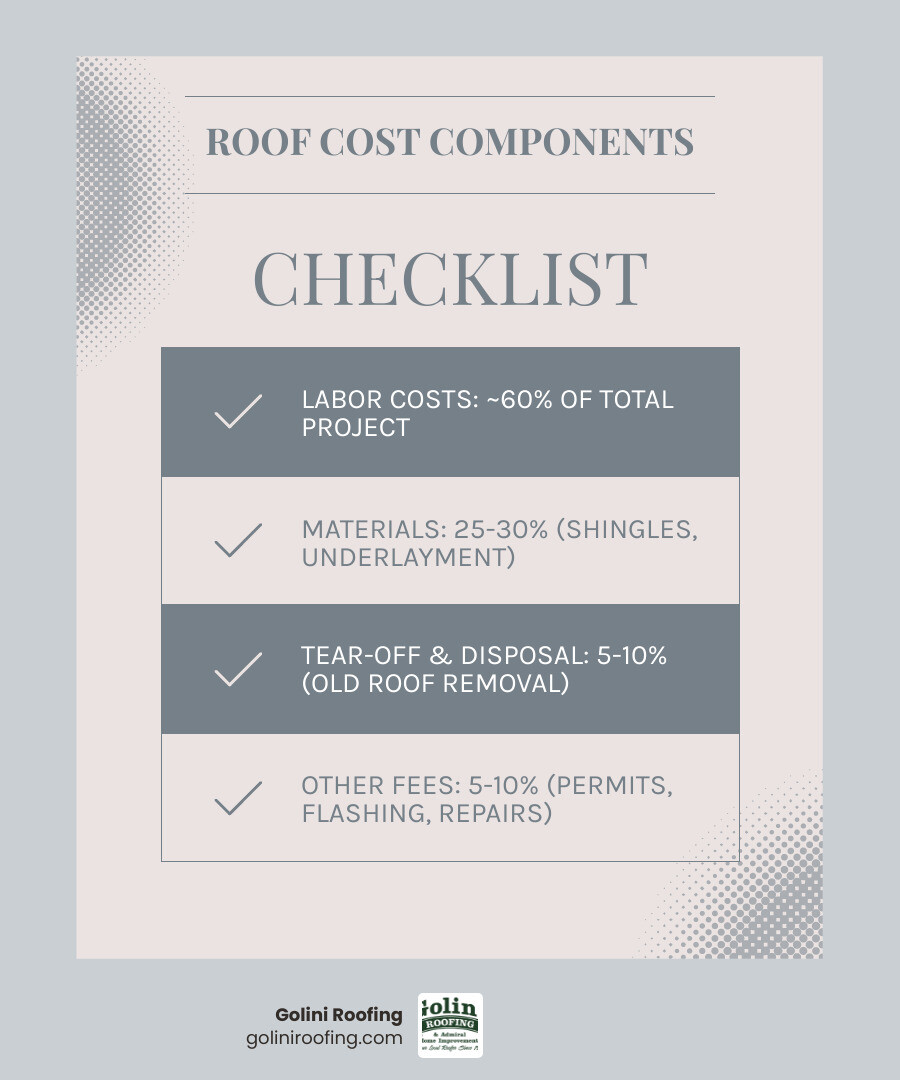
- Labor costs: Approximately 60% of total project cost
- Additional expenses: Tear-off ($1–$5/sq ft), underlayment, flashing, permits ($150–$500)
Note: These are average costs based on internet data and not specific to Golini Roofing. Actual costs vary by roof size, pitch, complexity, and location.
Replacing your roof is one of the biggest investments you’ll make in your home. It protects everything inside—your family, your belongings, and the structure itself. But understanding what drives the cost can feel overwhelming when you’re trying to budget for this major project.
This guide breaks down every cost factor so you know exactly what to expect. We’ll walk you through material options, labor expenses, hidden costs, and smart ways to manage your budget without sacrificing quality.
I’m Jack Golini, and I’ve been installing roofs in the North Shore area since 1982. Over 35+ years, I’ve helped thousands of homeowners steer the average cost to replace a roof with shingles, ensuring they get exceptional value and craftsmanship that lasts. At Golini Roofing, we believe in transparent pricing and quality work that stands the test of time.
Handy average cost to replace a roof with shingles terms:
Shingle Types and Their Material Costs
When considering a roof replacement, one of the first and most impactful decisions you’ll make is choosing your shingle material. This choice significantly influences the overall average cost to replace a roof with shingles, affecting everything from durability and lifespan to curb appeal and, of course, your budget. We’re here to help you understand the options.
3-Tab Asphalt Shingles
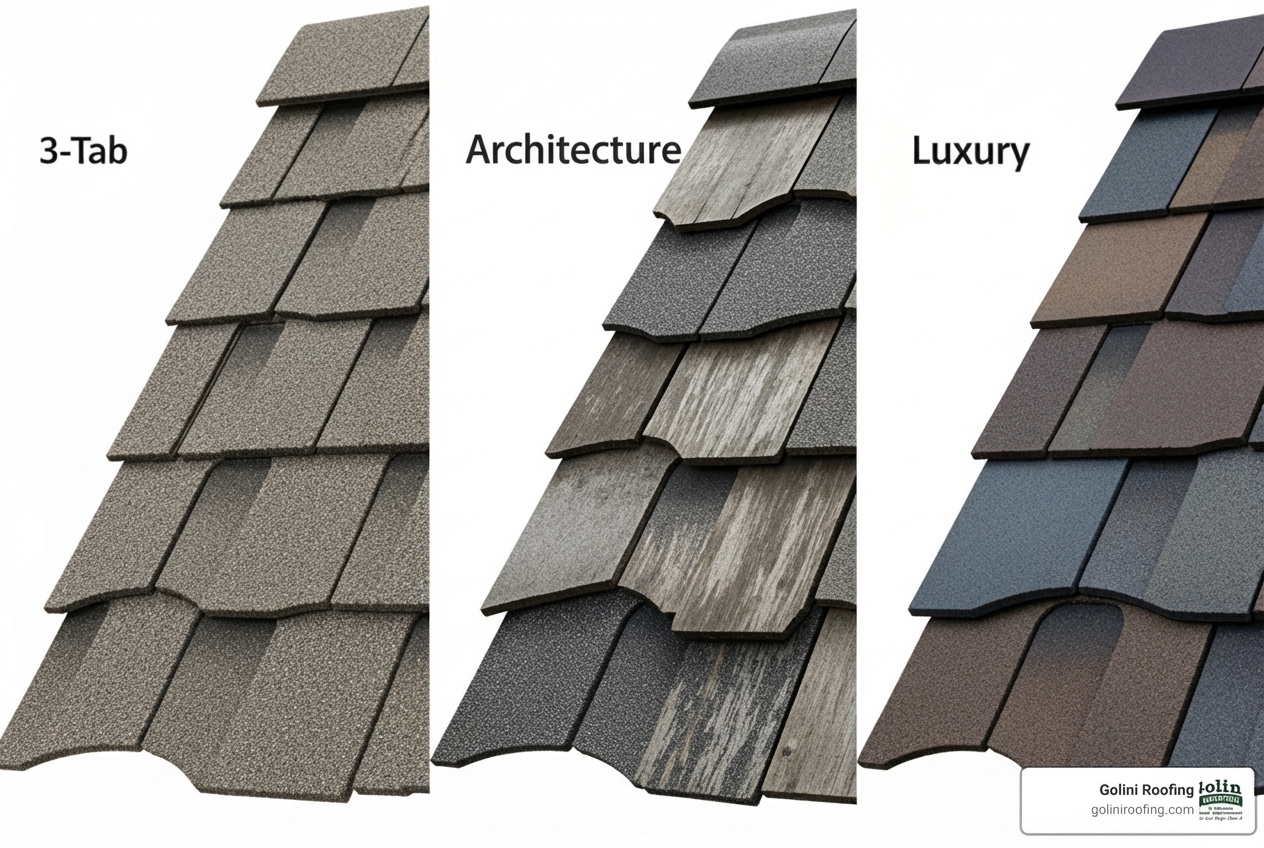
These are the most traditional and budget-friendly asphalt shingle option. They get their name from the three tabs cut along their lower edge, giving them a flat, uniform appearance. While they offer basic protection for your home, their thinner construction means a shorter lifespan compared to other shingle types.
- Cost per sq. ft.: Typically ranges from $3.50 to $5.00 per square foot installed.
- Lifespan: You can expect 3-tab shingles to last around 15 to 20 years. They’re a solid choice if you’re looking for a cost-effective solution with basic protection.
Architectural (Dimensional) Shingles
Architectural shingles, also known as dimensional or laminate shingles, are by far the most popular choice for homeowners today. They’re thicker and more robust than 3-tab shingles, featuring multiple layers of asphalt and granules fused together. This gives them a textured, dimensional look that mimics natural wood shakes or slate, adding significant curb appeal to your home.
- Cost per sq. ft.: Generally falls between $4.00 and $8.50 per square foot installed.
- Lifespan: With their improved durability, architectural shingles typically last 25 to 30 years, offering a great balance of aesthetics, performance, and value.
- More info about our roofing services.
Luxury (Premium) Shingles
For homeowners seeking the ultimate in durability and high-end aesthetics, luxury shingles are the way to go. These are the thickest and heaviest asphalt shingles available, often designed to replicate the sophisticated look of natural slate or cedar wood shakes. They provide maximum protection against the elements and are a fantastic option for boosting your home’s value and curb appeal.
- Cost per sq. ft.: Expect to pay between $7.00 and $16.00 per square foot installed for these premium options.
- Lifespan: Luxury shingles boast an impressive lifespan of 30 to 50 years, making them a long-term investment in your home’s beauty and protection.
Understanding the Average Cost to Replace a Roof with Shingles
Calculating the total project price for a roof replacement involves more than just the cost of shingles. It’s a blend of key variables that come together to form your final estimate. Our goal is to help you understand these factors so you can get an accurate picture of what to expect.
How Roof Size and Complexity Drive the Price
It probably comes as no surprise that the larger your roof, the more it will cost to replace. More roof square footage means more materials and more labor time. Roofing professionals often measure roofs in “squares,” where one roofing “square” equals 100 square feet of roof surface. So, a 2,000 square foot roof is 20 squares.
But it’s not just about size! The complexity of your roof also plays a huge role.
- Roof Pitch (Steepness): The steeper your roof’s pitch, the more challenging and time-consuming the work becomes. Our crews need to take extra safety precautions, use specialized equipment, and move more slowly. This translates to higher labor costs.
- Complexity: A simple, straightforward roof (like a basic gable) will be less expensive than a complex one with multiple hips, valleys, dormers, skylights, or chimneys. Each of these features requires careful cutting, flashing, and sealing, adding to both material waste and labor hours.
How Labor Impacts the average cost to replace a roof with shingles
Labor is often the largest component of your roof replacement bill, typically accounting for about 60% of the total cost. This isn’t just about the time spent installing shingles; it encompasses the skill, experience, and efficiency that professional roofers bring to the job.
At Golini Roofing, we pride ourselves on our meticulous hand-nailing technique for every shingle. While some other roofing companies might use nail guns for speed, hand-nailing ensures each shingle is perfectly aligned and securely fastened, providing superior wind resistance and longevity. This attention to detail is a hallmark of our craftsmanship and contributes to a roof that truly stands the test of time.
Hiring a professional team like ours provides immense benefits:
- Expertise and Efficiency: Our experienced crews work safely and efficiently, completing most projects in just 1 to 3 days, minimizing disruption to your home.
- Safety Protocols: Roofing is dangerous work. Professionals have the training, equipment, and insurance to perform the job safely, protecting both our team and your property.
- Workmanship Warranty: A reputable contractor stands behind their work. We offer a comprehensive workmanship warranty, giving you peace of mind that your investment is protected against installation errors.
Additional Costs Beyond the Shingles
While shingles are the star of the show, a complete roof replacement involves several other essential components and services that add to the overall average cost to replace a roof with shingles. Ignoring these can lead to future problems and unexpected expenses down the line.
Here’s a breakdown of potential additional costs:
- Tear-off and Disposal: Before new shingles go on, the old roof needs to come off. This involves labor for removal and fees for disposing of the old materials. This can range from $1 to $5 per square foot, with total removal and disposal costs typically between $665 and $3,343 on average.
- Underlayment: This protective layer is installed directly onto your roof deck before the shingles. It provides an extra barrier against moisture and helps protect your home. New underlayment typically costs between $1.50 and $2.10 per square foot.
- Ice & Water Shield: Crucial in colder climates like ours in Massachusetts, this self-adhering membrane prevents ice dams from backing up under your shingles and causing leaks. Replacing ice and water barriers can cost between $1.87 and $2.53 per square foot for materials alone.
- Flashing: Thin metal sheets (often galvanized steel) used around chimneys, skylights, vents, and valleys to prevent water penetration. Flashing typically costs between $9.00 and $11.00 per foot to install.
- Drip Edge: Installed along the eaves and rakes of your roof, drip edge directs water away from your fascia and prevents water damage.
- Decking Replacement: Sometimes, when the old roof is removed, we find damaged or rotting roof decking underneath. Replacing or repairing roof decking can add between $2.20 and $3.00 per square foot. This is an important structural repair that cannot be overlooked.
- Building Permits: Most municipalities in Massachusetts require a permit for a full roof replacement. The cost of these permits can vary widely, from $150 to $500, depending on your specific city or town. Our team can help steer the permitting process for your project.
Regional Price Variations in Massachusetts
Just like the price of a lobster roll changes from Boston to the Cape, the average cost to replace a roof with shingles varies across different regions, even within Massachusetts. While national averages provide a general idea, local factors significantly influence the final price.
In the Northeast, and particularly in our service areas like Burlington, Lynnfield, North Reading, Reading, Stoneham, Wakefield, Wilmington, Winchester, and Woburn, we often see slightly different pricing compared to other parts of the country. This can be due to:
- Local Labor Rates: The cost of living and demand for skilled tradespeople directly impacts labor costs.
- Material Availability and Transportation: Proximity to suppliers and transportation costs for materials can affect prices.
- Building Codes: Specific local building codes and requirements (e.g., for ice and water shield in snow-prone areas) can influence material choices and installation methods, affecting cost. For instance, areas like Beverly, MA and Ipswich, MA may have particular regulations that impact project scope and cost.
We always recommend getting a detailed, localized estimate to understand the specific costs for your home.
Is It Time for a Replacement? Key Signs and Lifespan
Knowing when to replace your roof is crucial. Proactive replacement can save you from costly emergency repairs and extensive interior damage. No one wants to deal with a leaking ceiling during a Nor’easter!
Telltale Signs Your Shingle Roof Needs Replacing
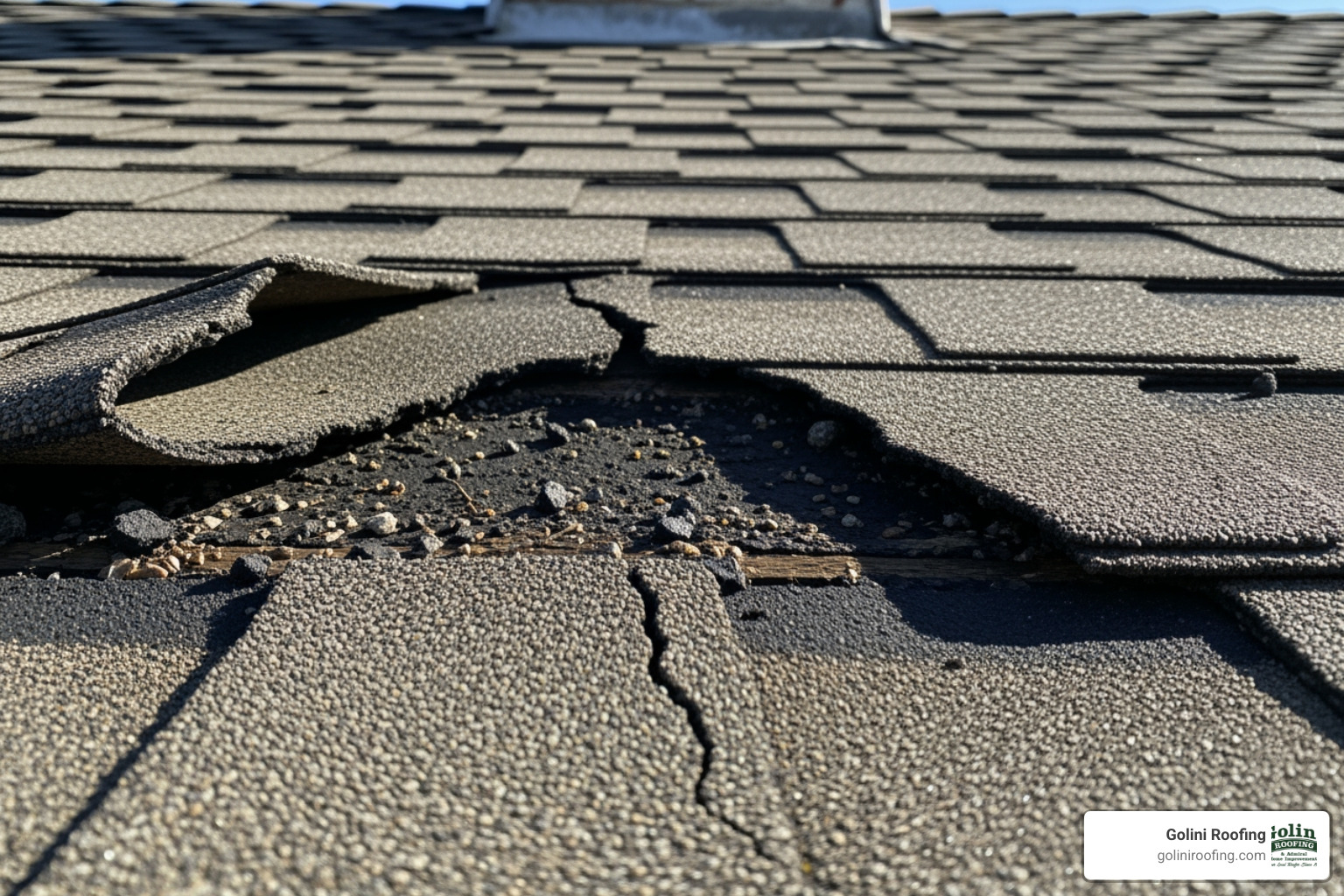
Your roof often gives subtle (and not-so-subtle) hints that it’s nearing the end of its life. Keep an eye out for these common indicators:
- Curling or Cracked Shingles: Shingles that are curling at the edges or cupping in the middle, or those with visible cracks, are losing their effectiveness and are prone to wind damage and water penetration.
- Bald Spots and Granule Loss: Asphalt shingles have granules that protect them from the sun’s UV rays. If you notice dark “bald” spots where granules are missing, or a significant amount of granules in your gutters, your shingles are deteriorating.
- Active Leaks in the Attic: This is perhaps the most obvious sign. If you see water stains on your ceiling or drips in your attic, your roof’s protective barrier has been compromised.
- Roof Age (Over 20 Years): Even if your roof looks okay, its age is a major factor. If your 3-tab asphalt shingle roof is 20 years old, it’s probably time to get your roof replaced. Most roofing materials have a finite lifespan, and once they reach it, they become less effective.
- When to consider roof repairs.
Breaking Down the average cost to replace a roof with shingles by Lifespan
The type of shingle you choose has a direct impact on how long your roof will protect your home, and thus, how often you’ll need to consider the average cost to replace a roof with shingles.
- 3-tab shingle lifespan: Typically 15 to 20 years. These are a good short-term, budget-friendly option.
- Architectural shingle lifespan: Generally 25 to 30 years. Their improved construction provides a longer service life and better protection.
- Luxury shingle lifespan: Can last 30 to 50 years. These premium shingles offer maximum durability and longevity, making them a wise long-term investment.
Industry resources provide standard estimated life expectancies for various home components. Understanding these lifespans helps you plan for future maintenance and replacement needs.
Smart Ways to Manage Your Roof Replacement Budget
A new roof is a significant investment, but it’s one that pays off in home protection, energy efficiency, and property value. We believe in empowering homeowners to make informed decisions that align with their budget without compromising on quality or long-term savings.
DIY vs. Professional Installation
You might be tempted to tackle a roof replacement yourself to save on labor costs. While DIY can reduce expenses by $1,000 to $5,000 for labor, we strongly advise against it for most homeowners. The risks often far outweigh the potential savings:
-
Significant Risks of DIY:
- Safety: Roofing is dangerous. Falls from roofs are common and can result in serious injury or worse.
- Voided Warranties: Improper installation by an unlicensed individual can void manufacturer warranties on your shingles.
- Improper Installation: Without expert knowledge, you could make costly mistakes that lead to leaks, premature roof failure, and even structural damage. This can require expensive repairs down the road, often costing $150 to nearly $1,000 to fix underlying issues.
- Insurance Complications: Your homeowner’s insurance might not cover damages resulting from DIY installation.
- Time and Effort: A professional crew can complete a roof replacement in days, while a DIY project can drag on for weeks, exposing your home to the elements.
-
Benefits of Hiring a Pro:
- Experience and Efficiency: Professionals have the tools and training to do the job right, quickly and efficiently.
- Insurance and Licensing: Reputable contractors are licensed and insured, protecting you from liability if an accident occurs on your property.
- Quality Workmanship: We ensure every shingle is carefully installed, like our hand-nailing technique, which guarantees a durable, long-lasting roof.
- Warranties: You benefit from both manufacturer warranties (on materials) and a workmanship warranty (on the installation itself), giving you peace of mind.
How to Save Money Without Sacrificing Quality
While cutting corners is never a good idea, there are smart ways to manage your budget for the average cost to replace a roof with shingles:
- Get Multiple Quotes: Don’t settle for the first estimate. We encourage you to get detailed quotes from at least three reputable roofing companies. This helps you compare pricing, services, and professionalism.
- Schedule During Off-Season: Contractors can be busier during peak seasons (spring and summer). Scheduling your roof replacement during late fall or winter, when demand is lower, might lead to more competitive pricing or better scheduling flexibility.
- Choose Cost-Effective Materials: As discussed, 3-tab or architectural asphalt shingles offer excellent protection at a more accessible price point than luxury options.
- Avoid Suspiciously Low Bids: If an estimate seems too good to be true, it probably is. Unusually low prices can indicate subpar materials, cutting corners on installation, or a lack of proper insurance, all of which lead to costly problems later. The cost of a new roof should not be the deciding factor when picking a roofing contractor.
- Explore our past projects.
Return on Investment (ROI) for a New Shingle Roof
Replacing your roof isn’t just an expense; it’s a smart investment in your home. A new roof significantly boosts your home’s value, improves curb appeal, and provides peace of mind for potential buyers.
According to the 2024 Cost vs. Value Report, a new asphalt shingle roof can provide a return on investment (ROI) of approximately 60% when selling a home. This means that for every dollar you invest, you can expect to recoup about 60 cents in increased home value. While it might not be the highest ROI compared to some interior renovations, a sound, attractive roof is fundamental to a home’s structural integrity and marketability.
A fresh, durable roof signals to buyers that the home has been well-maintained and won’t require immediate major repairs, making your property more attractive and often leading to a quicker sale at a better price.
Frequently Asked Questions about Shingle Roof Costs
We understand that you likely have many questions about such a significant home improvement project. Here are some of the most common ones we hear regarding the average cost to replace a roof with shingles.
How long does a shingle roof replacement take?
For most residential homes, a shingle roof replacement typically takes between 1 to 3 days. However, several factors can influence this timeline:
- Roof Size and Complexity: Larger roofs or those with multiple facets, valleys, dormers, or skylights will naturally take longer.
- Weather Conditions: Rain, high winds, or extreme temperatures can cause delays. We always prioritize safety and quality, even if it means pausing work.
- Number of Layers to Remove: If there are multiple layers of old shingles to tear off, this adds time to the preparation phase.
- Unforeseen Repairs: Finding damaged roof decking or other structural issues during tear-off can extend the project duration as these must be addressed before new shingles are installed.
Can I install new shingles over the old ones?
This is often referred to as a “roof-over” or “re-roofing,” and while it can save money by avoiding tear-off and disposal costs, it’s not always the best or even a permissible option.
- Cost Savings: Yes, it’s cheaper initially because you save on labor and dumpster rental.
- Hidden Damage Risks: Installing new shingles over old ones means you can’t inspect the underlying roof deck for rot, mold, or structural damage. Any existing issues will be covered up and potentially worsen.
- Building Code Limitations: Most building codes limit roofs to two layers of shingles. If you already have two layers, a tear-off is mandatory.
- Shorter Lifespan: The added weight can stress the roof structure, and the uneven surface of old shingles can cause the new ones to buckle or fail prematurely, potentially shortening the new roof’s lifespan and even voiding manufacturer warranties.
We generally recommend a full tear-off to ensure the integrity of your roof system and allow for a thorough inspection of the decking.
Does homeowners insurance cover a roof replacement?
Homeowners insurance typically covers roof replacement if the damage is due to a sudden, unexpected event, such as:
- Storm Damage: This includes damage from hail, high winds, or falling trees.
- Fire: Damage caused by a fire.
However, policies generally do not cover roof replacement for:
- Age and Normal Wear and Tear: As roofs naturally age and deteriorate, this is considered routine maintenance and not covered.
- Lack of Maintenance: Damage resulting from neglecting proper roof care.
- Specific Exclusions: Some policies may exclude damage from earthquakes, mold, pests, or improper installation.
We recommend contacting your insurance provider to understand your specific coverage and discuss any potential claims.
Conclusion: Partnering with an Expert for Your New Roof
Navigating the average cost to replace a roof with shingles can seem daunting, but by understanding the various factors—from shingle types and roof complexity to labor and additional expenses—you’re better equipped to make informed decisions. A new roof is a crucial investment in your home’s safety, efficiency, and long-term value.
At Golini Roofing, we bring over 35 years of experience to every project. Our commitment to quality craftsmanship, including our meticulous hand-nailing technique, ensures that your new shingle roof is not only beautiful but also durable and long-lasting. We serve homeowners across Massachusetts, including Burlington, Lynnfield, North Reading, Reading, Stoneham, Wakefield, Wilmington, Winchester, and Woburn, providing transparent estimates and exceptional service.
We’re here to help you protect your home with a roof that stands the test of time.
Get a detailed estimate for your roof replacement cost today, and let us show you the Golini Roofing difference.