
Why Finding the Right Attic Insulation Installer Matters
If you’re searching for an attic insulation installer near me, it’s crucial to find a qualified professional. Before hiring, verify their licensing and insurance, check for certifications, get multiple quotes, ask about air sealing, confirm the recommended R-value (R49-R60 for New England), and review past work.
The stakes are high. Nine out of 10 homes in the US are underinsulated, leading to heating and cooling bills that are 15-50% higher than necessary. Poor insulation also strains your HVAC system, creates uncomfortable temperature swings, and allows ice dams to form, which can damage your roof. Beyond the financial impact, this loss of conditioned air affects your daily comfort and your home’s overall health.
The national average cost to insulate an attic ranges from $1,200 to $3,250, but can exceed $7,500 for complex jobs. These are average costs based on internet data—your actual price will depend on attic size, insulation type, and the need for old material removal.
I’m Jack Golini, and since 1982, I’ve helped North Shore homeowners understand the link between quality roofing and proper attic insulation. When looking for an attic insulation installer near me, I advise homeowners to look for a professional who understands the complete system—from air sealing to choosing the right materials for our climate.
Why Your Attic Needs Proper Insulation
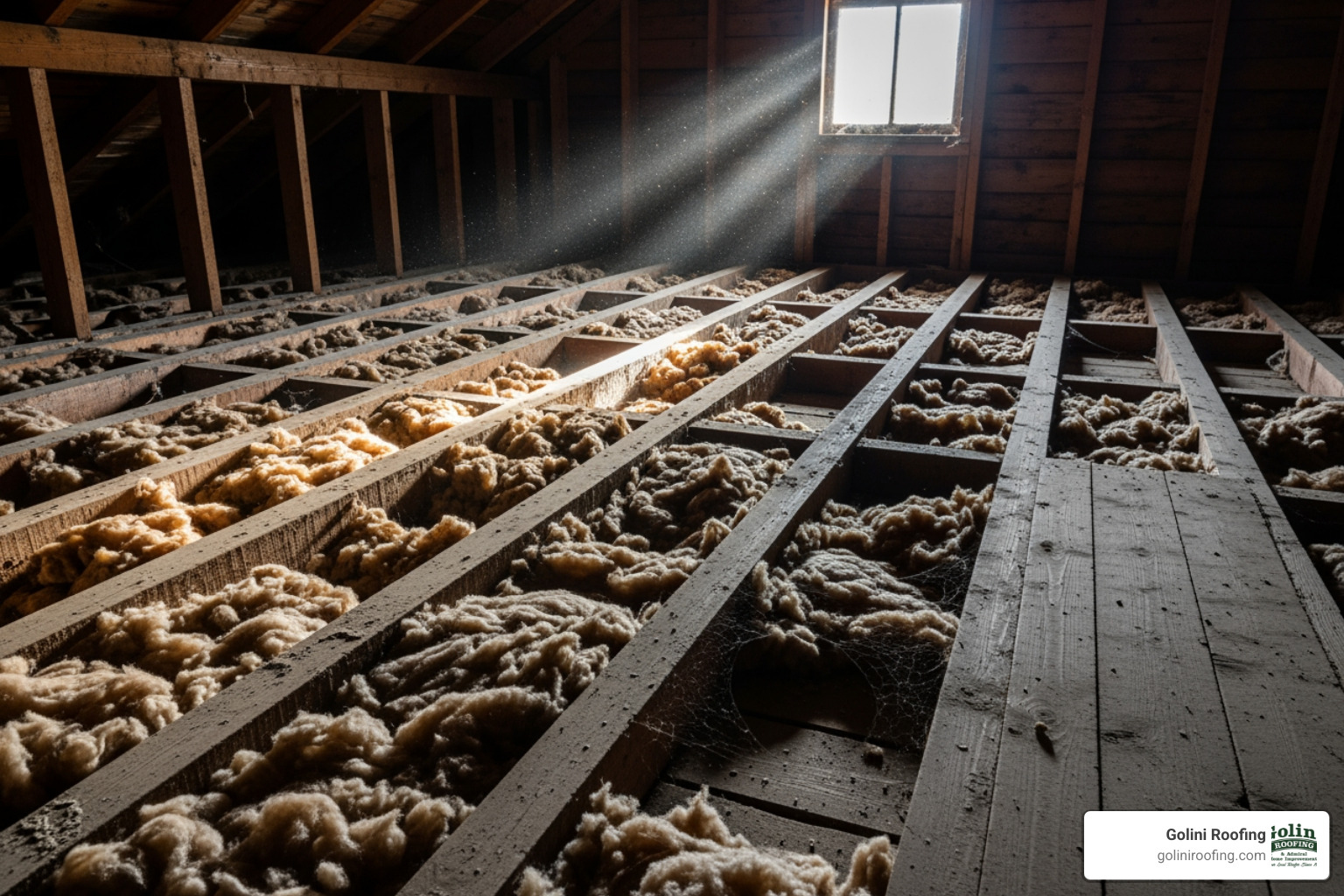
Your attic is a critical barrier between your living space and the outside elements. When it’s underinsulated, your home is vulnerable to a host of problems. In Massachusetts, this means the warm air you pay for in winter escapes, while summer heat radiates down, forcing your HVAC system to work overtime. This energy loss doesn’t just drain your wallet; it creates uncomfortable temperature fluctuations throughout your home.
Beyond cost and comfort, poor insulation leads to serious issues. Escaping heat melts snow on your roof, which refreezes at the eaves to form destructive ice dams. These can cause thousands in water damage to your roof, walls, and ceilings. Gaps in the insulation also create entry points for pests and allow moisture to accumulate, leading to mold, rot, and compromised structural integrity.
Key Benefits of Upgrading Your Attic Insulation
Investing in proper attic insulation for your home in Burlington, Lynnfield, or the surrounding towns delivers immediate and long-term benefits:
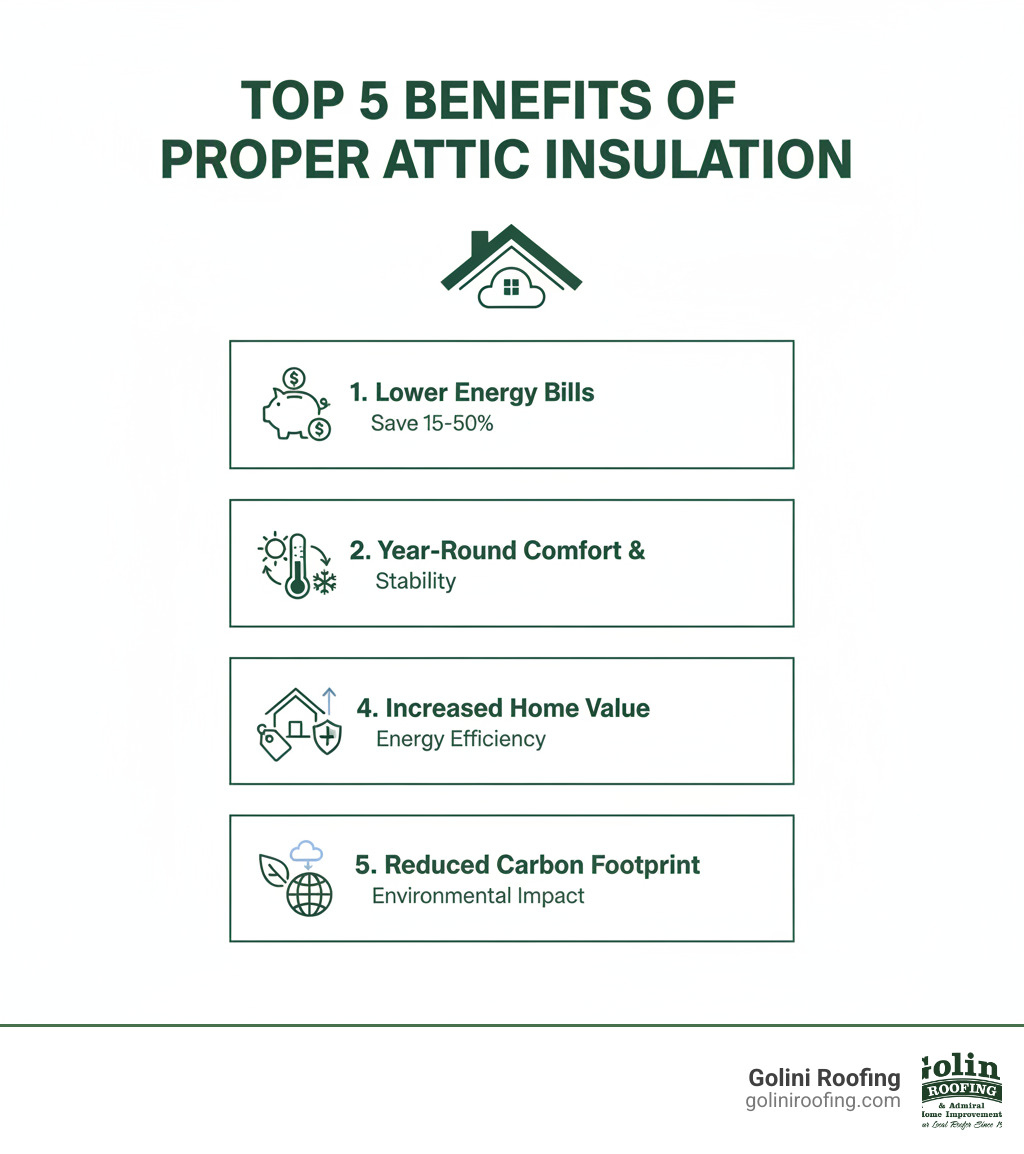
- Lower Energy Bills: Reduce heating and cooling costs by 15-50% and extend the life of your HVAC system.
- Stable Year-Round Comfort: Eliminate hot and cold spots for a consistent temperature throughout your home.
- Ice Dam Damage Prevention: Keep heat inside your living space to prevent the melt-and-refreeze cycle that damages roofs.
- Increased Home Value: Energy efficiency is a major selling point for potential buyers.
- Improved Air Quality & Noise Reduction: A well-sealed attic reduces the entry of dust and allergens and dampens outside noise.
- Smaller Carbon Footprint: Using less energy is good for your wallet and the environment.
5 Signs Your Attic is Underinsulated
If you notice any of these common warning signs, it’s time to call an attic insulation installer near me for an inspection:
- High Heating and Cooling Costs: Your energy bills are consistently higher than your neighbors’ with similar homes.
- Inconsistent Temperatures: Some rooms are always too hot or too cold, regardless of the thermostat setting.
- Ice Dams in Winter: Thick ridges of ice form along your roof’s eaves, signaling that heat is escaping from your attic.
- Drafty Rooms: You feel cold air near ceilings or exterior walls, indicating air leaks.
- Visible Floor Joists: If you can see the wooden joists in your attic floor, you don’t have enough insulation.
Understanding Insulation: Types, Costs, and R-Value
When you’re ready to upgrade your attic insulation, you’ll find there’s more to it than just picking a material. Different insulation types, varying costs, and “R-value” all come into play. Understanding these basics will help you make the right choice for your North Shore home.
Common Types of Attic Insulation
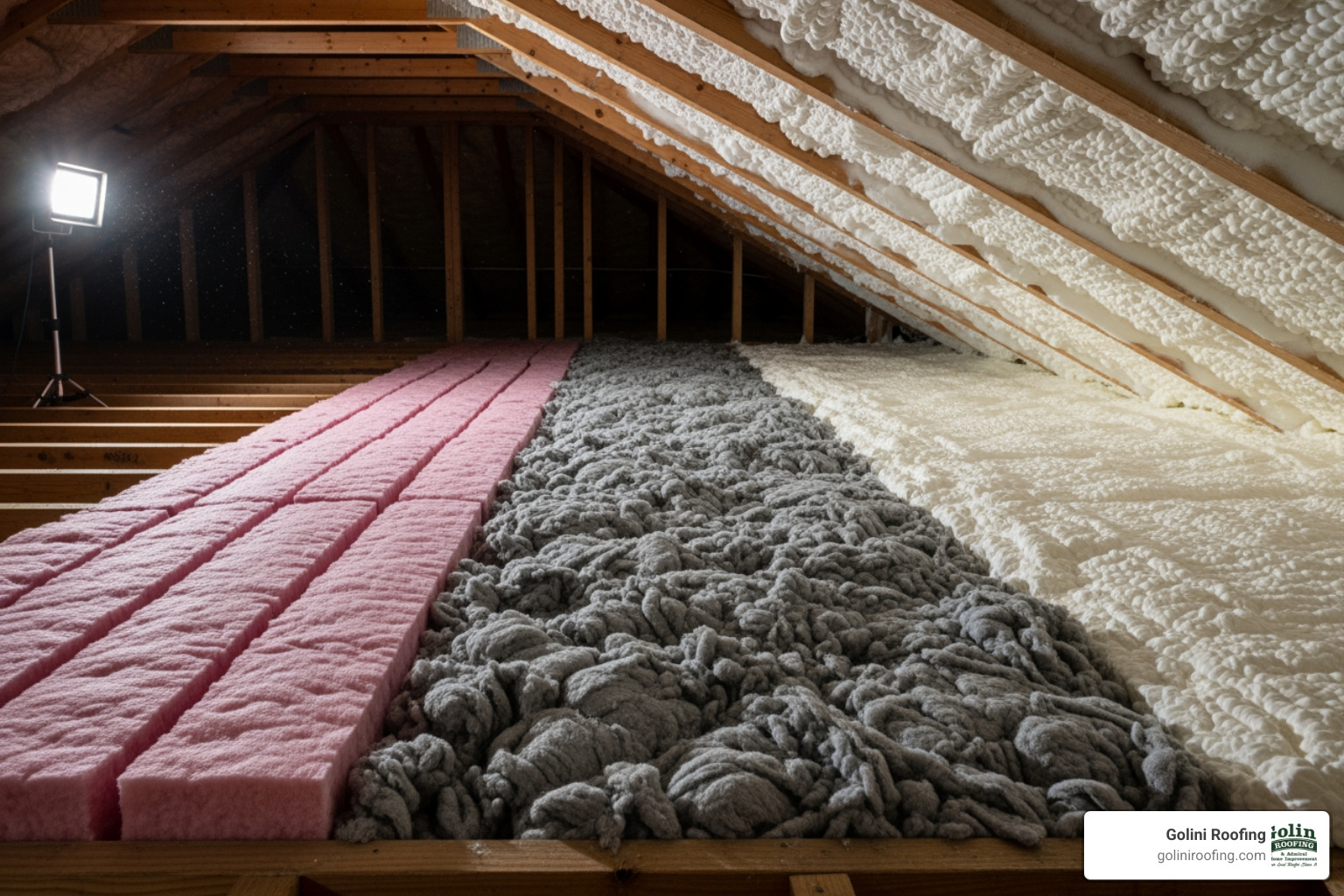
Think of insulation materials as tools for a job—the best one depends on your attic’s layout, budget, and efficiency goals. Here are the most common options an attic insulation installer near me might recommend:
- Blown-in (Cellulose/Fiberglass): These loose-fill materials are excellent for filling irregular spaces. Cellulose is made from recycled paper and is a great sound barrier. Fiberglass is made from spun glass and is naturally moisture-resistant. Both are cost-effective but can settle over time. R-value: 2.2-3.8 per inch. Avg. Cost: $1-$4 per sq. ft.
- Spray Foam (Open/Closed-Cell): This premium option creates a superior air seal. Open-cell foam is pliable and expands to fill every crack, but is not waterproof. Closed-cell foam is rigid, waterproof, and offers the highest R-value, even adding structural strength. Spray foam is the most expensive option and requires professional installation. R-value: 3.5-7.0 per inch. Avg. Cost: $2-$5 per sq. ft.
- Batt Fiberglass: These are the familiar pre-cut rolls of insulation. Batts are inexpensive but must be installed perfectly without gaps or compression to be effective, making them tricky for attics with irregular spacing. R-value: 2.9-3.8 per inch. Avg. Cost: $2-$4 per sq. ft.
How Much Does Attic Insulation Cost?
Nationally, an attic insulation project costs around $2,500, with most homeowners spending between $1,200 and $3,250. Complex jobs can reach $7,500 or more. These are average costs based on internet data; your price depends on attic size, insulation type, labor rates, and whether old insulation must be removed or air sealing is needed. Because every home is unique, the best approach is to get a personalized estimate.
What is R-Value and Why Does it Matter?
R-value measures insulation’s resistance to heat flow. A higher R-value means better performance. In our New England climate, a high R-value keeps heat inside during winter and outside during summer, leading to stable temperatures and lower energy bills.
For Massachusetts, experts recommend an attic R-value between R49 and R60. If you can see your attic floor joists, your R-value is too low. A professional can measure your current insulation and determine how much is needed to reach the target, ensuring your home is properly protected.
The Professional Installation Process
Professional attic insulation is more than just adding material; it’s a systematic process that requires expertise, safety precautions, and specialized equipment. A pro installer understands how to create a complete system that works with your home’s structure and ventilation.
From Inspection to Installation: What to Expect
A professional project follows a clear sequence to ensure quality results. The entire process typically takes from five hours to two days.
- Initial Inspection: The process begins with a thorough assessment of your attic’s existing insulation, ventilation, and any signs of moisture, mold, or pests.
- Old Insulation Removal (If Needed): If the existing material is wet, moldy, pest-infested, or contains asbestos-containing vermiculite, it must be safely removed first.
- Air Sealing: This is a critical step. The installer seals gaps around pipes, wires, and light fixtures in the attic floor to prevent conditioned air from escaping your living space.
- Ventilation Prep: To ensure proper airflow and prevent moisture buildup, baffles are installed to keep soffit vents clear of insulation.
- New Insulation Application: Using protective gear, the crew installs your chosen material—blown-in, spray foam, or batts—to the correct depth to achieve the target R-value.
- Final Cleanup: A professional team will leave your home and property as clean as they found it, removing all debris.
Lifespan and Replacement
High-quality insulation is a long-term investment. Fiberglass and spray foam can last 80 years or more, while cellulose typically lasts 20 to 30 years before it may need to be topped off. However, this lifespan can be cut short by several factors:
- Water Damage: A roof leak or condensation can mat insulation, destroying its R-value and creating a breeding ground for mold.
- Mold Growth: Any insulation with visible mold or a musty smell must be replaced, and the moisture source fixed.
- Pest Infestation: Rodents and insects can nest in insulation, contaminating it and reducing its effectiveness.
- Compaction: Over time, loose-fill insulation can settle and lose its air-trapping loft, reducing its performance. If it looks flat or you can see your joists, it may be time for a refresh.
How to Hire the Best Attic Insulation Installer Near Me
Finding the right attic insulation installer near me is the most important step in the process. The quality of the installation directly impacts your energy savings and home comfort for years to come. You need a team that understands our Massachusetts climate and delivers work they stand behind.
Finding and Vetting a Potential Attic Insulation Installer Near Me
Start your search by looking for local contractors with a strong presence in towns like Wakefield, Reading, and Lynnfield. Ask neighbors and friends for recommendations. Once you have a shortlist, follow these steps:
- Get at least three detailed quotes to compare pricing and scope of work.
- Read online reviews on popular review sites to look for patterns in customer feedback.
- Verify their Massachusetts license and liability insurance. This is non-negotiable and protects you from liability.
- Look for certifications from organizations like the Building Performance Institute (BPI) or the Home Performance with ENERGY STAR program, which show a commitment to best practices.

Key Questions to Ask Your Attic Insulation Installer Near Me
When you speak with potential contractors, their answers to these questions will reveal their expertise and professionalism. A good installer will welcome your questions.
- Are you licensed and insured in Massachusetts?
- What R-value do you recommend for my attic and why? (The answer should be R49-R60 for our climate.)
- Do you perform air sealing before insulating? (The answer must be yes.)
- What type of insulation do you suggest for my attic, and what are its pros and cons?
- Can you provide a detailed, written estimate breaking down all costs?
- How will you protect my home and property during the installation?
- Do you offer a warranty on workmanship and materials?
- Can you provide references from recent clients in my area?
- How long will the project take, from start to finish?
- How do you handle ventilation, wiring, and other potential obstacles in the attic?
At Golini Roofing, we’ve been serving the North Shore since 1982 and believe in transparency. We encourage homeowners to do their homework. If you’re ready to explore your options, schedule your free, no-obligation inspection and let’s discuss what’s best for your home.
Frequently Asked Questions About Attic Insulation
Over our years serving homeowners in Wakefield, Reading, and the North Shore, we’ve answered countless questions about attic insulation. Here are the most common ones.
Can I add new insulation on top of old insulation?
Yes, in many cases, you can add new insulation over existing material to boost your R-value without the cost of removal. However, this is only safe and effective if the old insulation is completely dry, clean, and free of pests.
Removal is not optional if your existing insulation is:
- Wet or water-damaged: Wet insulation loses its R-value and can lead to mold.
- Showing signs of mold: Moldy insulation is a health hazard and must be removed.
- Infested with pests: Droppings and nests contaminate the material.
- Asbestos-containing vermiculite: If your home was built before 1990 and has pebble-like insulation, it must be tested. If it contains asbestos, it requires professional abatement. See the EPA’s guidance on asbestos-containing vermiculite.
How long does attic insulation installation take?
Most professional attic insulation projects are completed within five hours to two days. The exact timeline depends on the attic’s size and accessibility, the type of insulation being installed (spray foam takes longer), and whether old insulation needs to be removed first. A thorough air sealing job will also add a few hours but is essential for performance.
Are there rebates or tax credits for attic insulation?
Yes! These incentives can significantly reduce the cost of your project. Homeowners may be eligible for:
- Federal Tax Credits: These can reduce your tax bill for qualifying energy-efficient home improvements. Check the IRS website for current details.
- State and Local Utility Rebates: Many Massachusetts utility companies offer cash rebates for insulation upgrades to reduce energy demand. These programs can put hundreds of dollars back in your pocket.
A qualified attic insulation installer near me should be familiar with local programs and can help you identify incentives you may be eligible for. Don’t leave this money on the table.
Conclusion: A Smart Investment for Your Home
Upgrading your attic insulation is one of the smartest investments for your home, delivering lower energy bills, stable year-round comfort, protection against ice dams, and increased home value. With nine out of ten U.S. homes being underinsulated, there’s a good chance you’re paying too much for heating and cooling.
However, the benefits of new insulation depend entirely on the quality of the installation. Proper air sealing and ventilation are critical, which is why choosing the right attic insulation installer near me is essential.
At Golini Roofing, we’ve served the North Shore since 1982. We understand how a properly insulated attic and a quality roof work together to protect your home from New England weather. We bring the same meticulous craftsmanship to insulation that we bring to our hand-nailed roofing.
For homeowners in Burlington, Lynnfield, Reading, and our other service areas, we are ready to help you create a more comfortable and efficient home. We’ll ensure the job is done right the first time.
Ready to make a smart investment in your home? Schedule your free, no-obligation inspection today and find how proper insulation can improve your home’s comfort and efficiency.