

Why an Attic Mold Inspection Could Be Your Home’s Most Important Health Check
Attic mold inspection is a professional service that identifies mold growth, moisture problems, and ventilation issues in your attic before they cause serious damage to your home or health. Here’s what you need to know:
What to Expect from a Professional Attic Mold Inspection:
- Visual examination of your attic’s roof sheathing, rafters, insulation, and ventilation system
- Moisture detection using specialized meters to find hidden water sources
- Thermal imaging to identify temperature differences that indicate poor insulation or leaks
- Air and surface sampling (when necessary) to confirm mold types and spore levels
- Detailed report with findings, photos, and remediation recommendations
Average Cost Range: Based on internet data, professional mold inspections typically range from free to $600, with more comprehensive inspections using infrared technology costing up to $1,800. These are industry averages and not specific to Golini Roofing’s pricing.
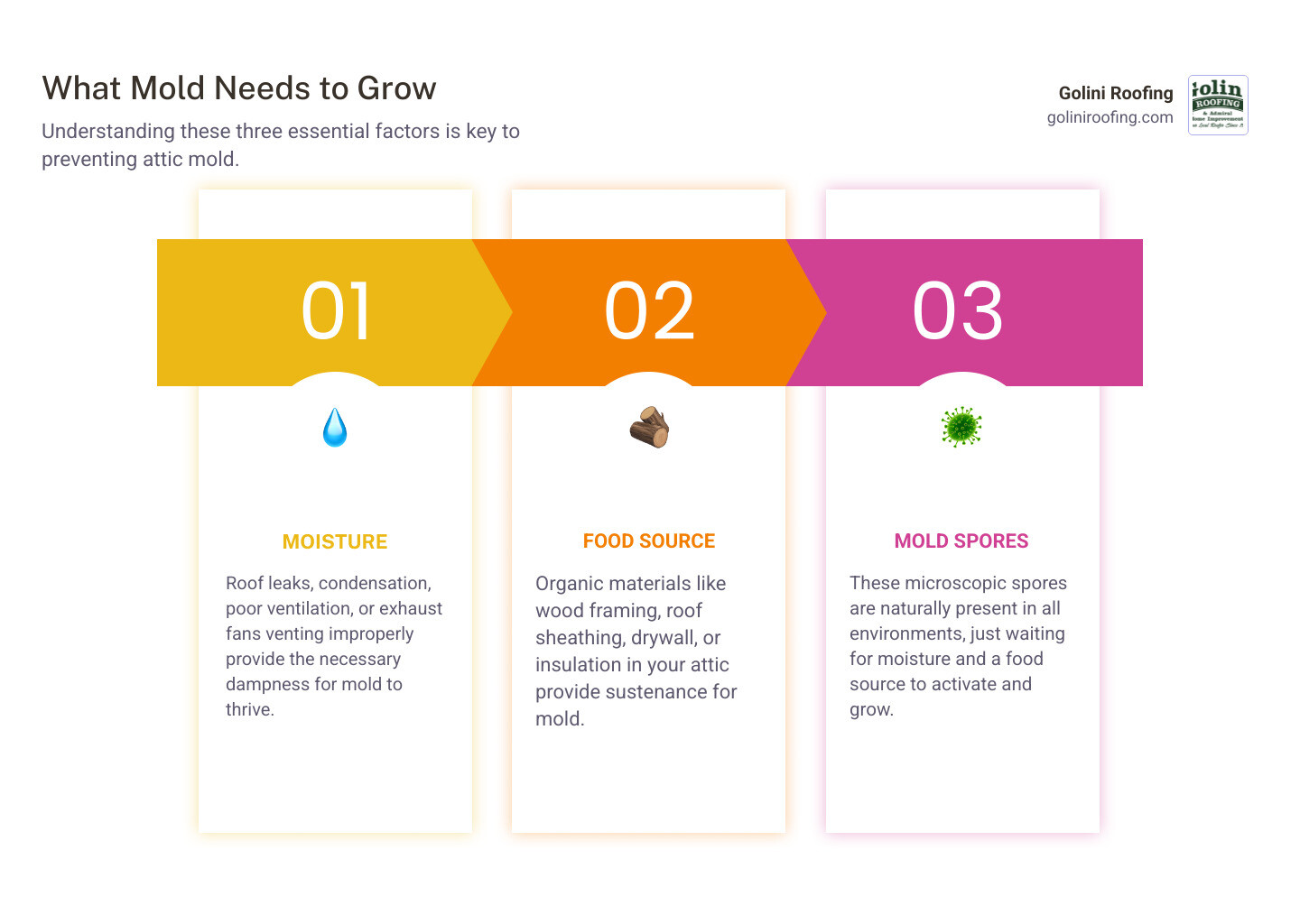
Attics are one of the most common areas for mold growth in homes. The equation is simple but dangerous: moisture plus building materials plus mold spores equals an infestation that can begin in just 12 to 48 hours. What makes attic mold particularly troubling is that it often goes unnoticed for months or even years. You’re not up there checking regularly, and by the time you spot ceiling stains or smell that telltale musty odor, the problem has usually spread significantly.
The most common culprit behind attic mold is blocked or insufficient ventilation. When warm, humid air from your living spaces rises into the attic and can’t escape properly, it condenses on cold surfaces like roof sheathing. Add in roof leaks, bathroom fans venting directly into the attic, or ice dams from winter weather, and you’ve created a perfect breeding ground.
The health risks are real. Mold exposure can irritate your eyes, skin, and lungs. For vulnerable individuals—children, elderly family members, or anyone with compromised immune systems—the effects can be much more severe, including worsening asthma symptoms and chronic respiratory issues. Beyond health concerns, mold quietly damages your home’s structure, weakening roof decking and rafters while destroying insulation’s effectiveness.
I’m Jack Golini, owner of Golini Roofing, and in my 35+ years serving homeowners throughout the North Shore area, I’ve seen how attic mold inspection can prevent thousands of dollars in repairs and protect families from serious health hazards. Our team approaches every attic mold inspection with the same meticulous care we bring to all our roofing work—because your home’s health starts from the top down.
Why Attic Mold is a Silent Threat to Your Home and Health
Attic mold isn’t just an unsightly nuisance; it’s a silent threat that can compromise the structural integrity of your home and pose significant health risks to its occupants. Because attics are often out of sight and out of mind, mold can grow unchecked, slowly but surely causing damage. We’ve seen it happen countless times in homes across Burlington, Lynnfield, North Reading, Reading, Stoneham, Wakefield, Wilmington, Winchester, and Woburn.
The conditions in an attic are often ideal for mold to thrive. High humidity, poor airflow, and the abundance of organic materials like wood, drywall, and insulation create a perfect storm. Once mold spores find moisture and a food source, they can multiply rapidly, often within 12 to 48 hours.
Common Causes of Attic Mold Growth
Understanding the root causes of attic mold is the first step toward prevention. Here are the most common culprits we encounter:
- Blocked Soffits and Insufficient Ventilation: This is hands-down the most common cause of attic mold. Proper attic ventilation relies on a continuous flow of air from soffit vents (low on the roof) to ridge vents (at the peak). When soffit vents are blocked by insulation or debris, or if there aren’t enough roof vents, warm, moist air gets trapped. This leads to condensation on the cold underside of the roof sheathing, providing the moisture mold needs.
- Bathroom Fans Venting into the Attic: A surprisingly frequent issue, exhaust fans from bathrooms, kitchens, or laundry rooms that terminate directly into the attic—rather than outside the home—dump warm, humid air right into the attic space. This directly contributes to moisture buildup and subsequent mold growth.
- High Humidity and Temperature Differences: When there’s a significant temperature difference between your living space and your attic, especially in colder months, warm, moist air from your home can seep into the attic. As this air hits colder surfaces, it condenses, creating an ideal environment for mold. This “stack effect” can draw humid air upwards.
- Water Intrusion and Roof Leaks: Even small, intermittent roof leaks can introduce enough moisture to foster mold. Leaks can occur due to damaged shingles, compromised flashing around chimneys or vents, or even ice dams that force water under roofing materials. For more information on preventing and repairing roof leaks, visit our page on More info about roof repairs.
- Ice Dams: During winter, if warm air escapes from your home into the attic, it can melt snow on your roof. This water then refreezes at the colder eaves, forming ice dams. These dams prevent melting snow from draining off the roof, causing water to back up under shingles and into the attic, leading to significant moisture problems and mold.
The Impact on Your Home’s Structure and Air Quality
The consequences of ignoring attic mold extend far beyond its visual presence:
- Weakened Roof Sheathing and Rotted Rafters: Mold literally eats away at organic materials. Over time, it can weaken the wooden components of your roof structure, including the sheathing (the wood panels under your shingles) and rafters, potentially leading to costly structural repairs or even roof collapse.
- Compromised Insulation R-value: When insulation becomes damp or moldy, its effectiveness dramatically decreases. Mold can break down the insulation material, reducing its R-value (its ability to resist heat flow). This means your home becomes less energy-efficient, leading to higher heating and cooling bills. The “Mold on Attic Insulation” source indicates that while mold doesn’t typically grow on fiberglass itself, it often grows on dust settled on it or on the sheathing above it, affecting its performance.
- Spore Circulation and HVAC Contamination: Mold spores are airborne. They can easily travel from the attic into your living spaces through gaps around light fixtures, ceiling penetrations, or even through your HVAC system if the ductwork runs through the attic and has leaks. This can lead to a pervasive mold problem throughout your home.
- Long-Term Consequences and Health Risks: Beyond property damage, the long-term consequences of ignoring attic mold can include chronic health issues for occupants. Mold naturally releases bacteria and mold spores into the air stream, compromising indoor air quality. Exposure to these can lead to persistent respiratory issues, allergies, headaches, fatigue, and skin irritation. For sensitive individuals, this can manifest as worsening asthma symptoms and other serious health problems. You can learn more about how mold exposure can lead to respiratory issues.
Telltale Signs: When to Schedule an Attic Mold Inspection
Because mold often hides in the dimly lit corners of your attic, it’s crucial to know the signs that indicate a problem. Being proactive can save you significant headaches and expenses down the line. We recommend annual attic inspections as a preventative measure, but certain clues should prompt an immediate call to the pros.
Visual and Olfactory Clues You Shouldn’t Ignore
Your senses are your first line of defense against hidden mold. Here’s what to look for and sniff out:
- Musty or Earthy Smells: This is often the earliest and most reliable indicator of mold, even if you can’t see it. A persistent, damp, or decaying odor coming from your attic or even drifting into your living spaces strongly suggests mold growth.
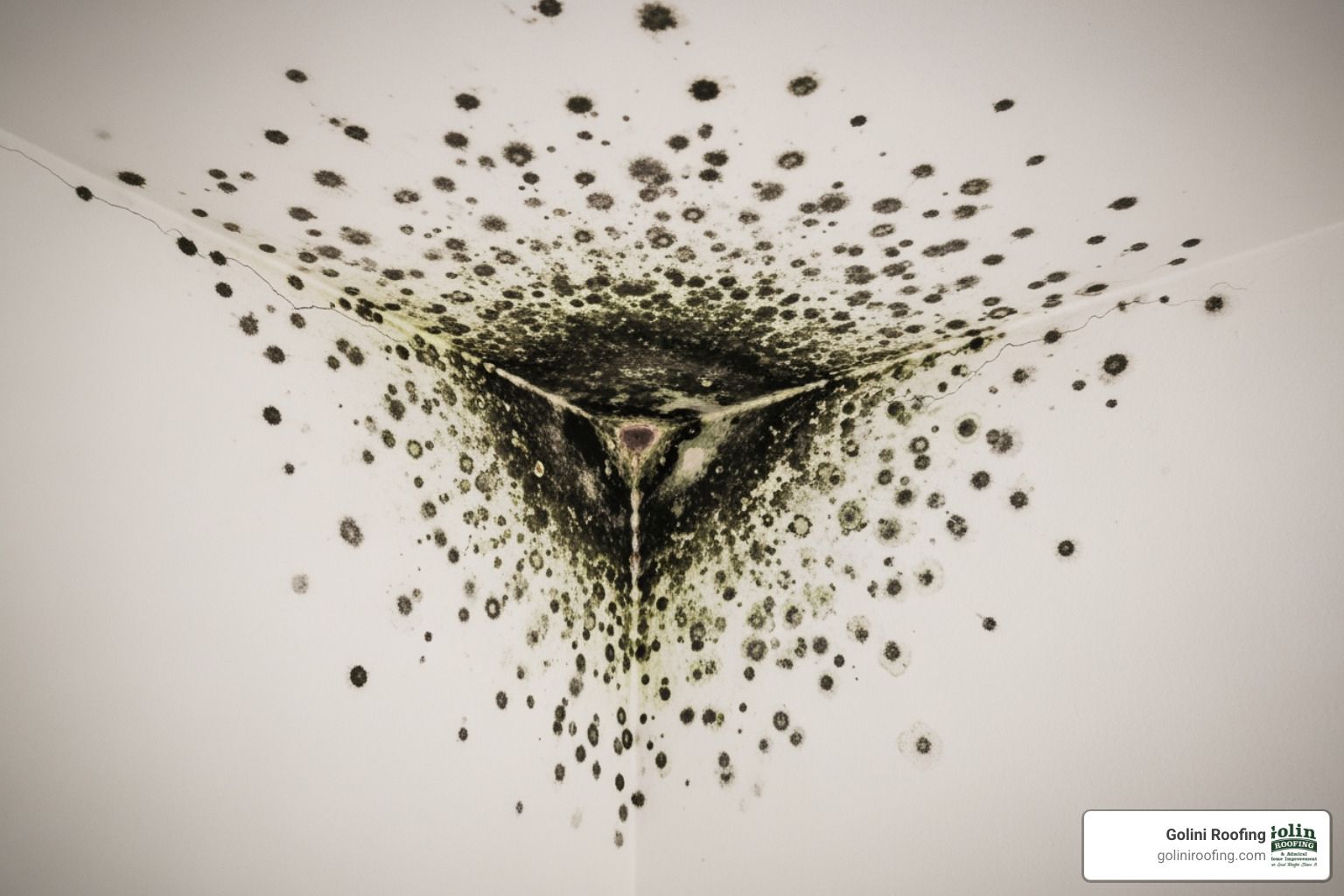
- Black, Green, or White Staining on Wood Surfaces: Visually inspect your attic’s wooden components—rafters, trusses, and the underside of the roof sheathing. Mold can appear as fuzzy, slimy, or powdery patches in various colors, most commonly black, green, or white.
- Damp or Wet Insulation: If your insulation feels damp to the touch, or if you see water stains on it, moisture is present. This is a prime breeding ground for mold and also indicates your insulation is no longer performing effectively.
- Warped Roof Decking: Moisture causes wood to swell and warp. If the roof sheathing (the wooden panels under your shingles) appears warped or discolored, it’s a strong sign of water intrusion and potential mold.
- Peeling Paint on Ceilings: Peeling, bubbling, or discolored paint on the ceilings of your upper floors can indicate a roof leak that has allowed water to seep down, creating moisture problems and mold growth in the attic above.
- Frost on the Underside of the Roof in Winter: During colder months, if you venture into your attic and see frost on the underside of the roof sheathing, it’s a clear sign of excessive moisture and poor ventilation. This frost will melt and condense, leading to mold.
Health Symptoms That May Point to a Mold Problem
Mold exposure can manifest as a variety of health complaints, often mimicking common allergies or colds. If you or your family members experience any of these symptoms without a clear cause, especially when at home, attic mold could be the culprit:
- Unexplained Allergies: Persistent sneezing, runny nose, itchy eyes, or skin rashes that don’t respond to typical allergy treatments.
- Persistent Cough or Wheezing: Mold spores can irritate the respiratory system, leading to chronic coughing, shortness of breath, or wheezing.
- Headaches and Fatigue: Many individuals report unexplained headaches, dizziness, and chronic fatigue when exposed to mold.
- Skin Irritation: Rashes, itching, or other skin irritations can be a reaction to mold exposure.
- Worsening Asthma Symptoms: For those with asthma, mold can act as a trigger, leading to more frequent or severe attacks.
The Professional Attic Mold Inspection Process: A Step-by-Step Guide
When you suspect mold in your attic, a professional attic mold inspection is crucial. Unlike a quick DIY glance, our comprehensive process digs deep to uncover the extent of the problem, identify its source, and provide you with actionable solutions. We believe in being thorough because, as we always say, the devil is in the details, especially when it comes to mold.
Step 1: Comprehensive Visual Examination
Our inspection begins with a meticulous visual assessment of your entire attic space. This isn’t just a casual look; it’s a systematic search for any and all indicators of moisture and mold.
- Checking for Moisture Sources: We carefully trace potential water entry points, looking for signs of active leaks or past water intrusion from the roof, flashing, or plumbing vents.
- Identifying Water Stains: Even if the area is dry now, old water stains on wood, insulation, or ceiling materials tell a story of past moisture issues that could have led to mold.
- Assessing Ventilation Systems (Soffits, Ridge Vents): We’ll check if your soffit vents are clear and unobstructed, and if your ridge vents are installed correctly and functioning efficiently. Blocked or inadequate ventilation is a primary contributor to attic mold.
- Examining Insulation Condition: We inspect the insulation for dampness, compression, discoloration, or visible mold growth. Compromised insulation not only harbors mold but also loses its thermal efficiency.
- Looking for Signs of Pests: While not directly mold, pests can bring in moisture, block vents, or damage materials, creating conditions conducive to mold growth. Their presence can also indicate entry points for water.
Step 2: Using Advanced Tools for an Accurate Attic Mold Inspection
A visual inspection is just the beginning. To truly understand the scope of the problem, we deploy a suite of specialized tools:
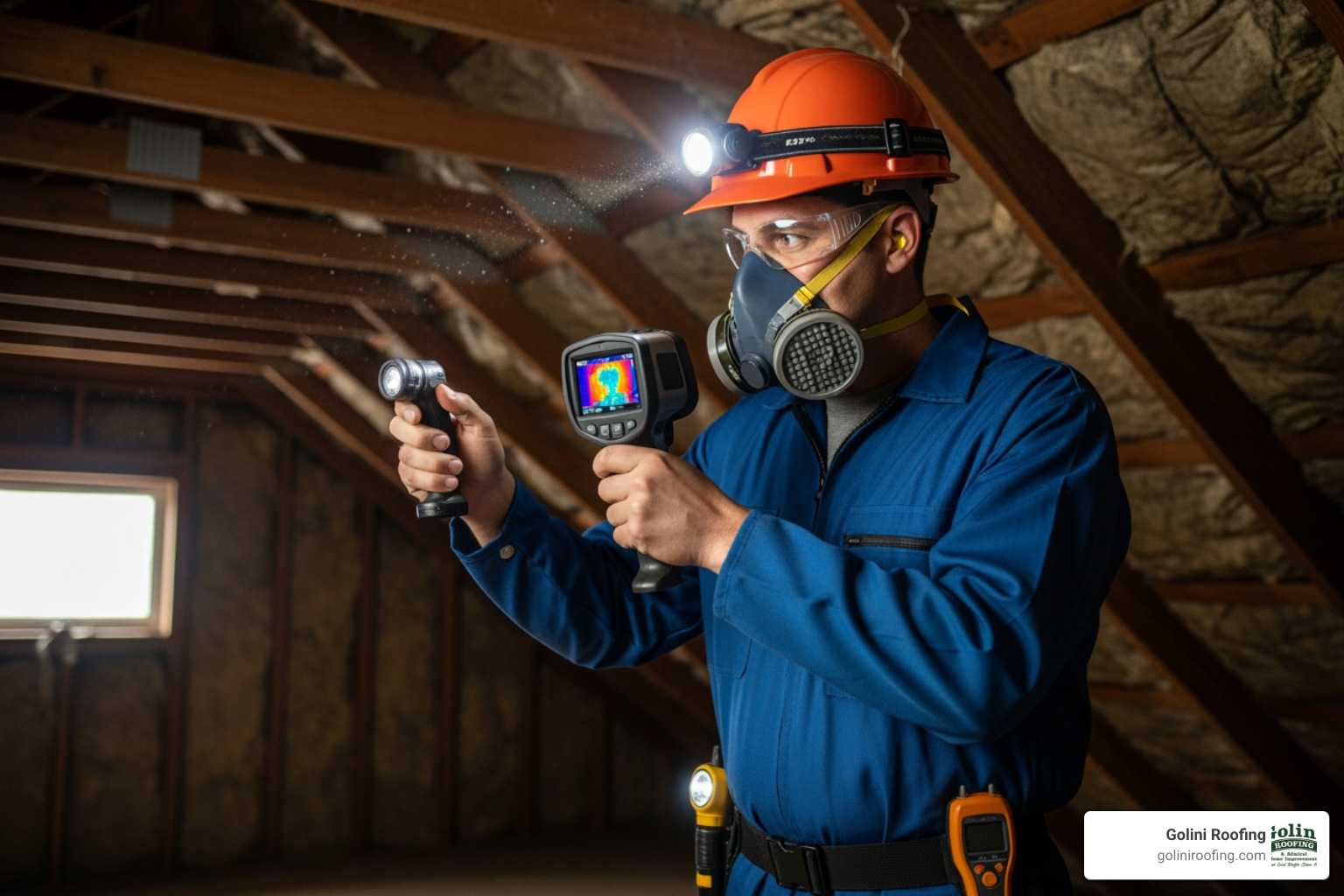
- Moisture Meters: These invaluable devices allow us to detect liftd moisture levels in wood, drywall, and other building materials that may not be visibly wet. This helps us pinpoint hidden leaks or areas of condensation.
- Thermal Imaging Cameras: By detecting temperature differences, thermal cameras can reveal hidden moisture pockets, areas of missing or compressed insulation, and air leaks where warm, humid air is entering the attic. These “cold spots” are often where condensation occurs.
- Borescopes for Hard-to-Reach Areas: For those tricky spots behind walls or in tight cavities, borescopes allow us to peer into inaccessible areas without causing damage, ensuring no mold goes undetected.
- Humidity Readers (Hygrometers): These tools measure the relative humidity within the attic, helping us assess the overall moisture environment and identify if it’s conducive to mold growth.
Step 3: When Is an Attic Mold Inspection with Sampling Necessary?
While visual and instrumental inspections are often sufficient, there are specific situations where we recommend taking air or surface samples for laboratory analysis:
- Confirming Mold Type: Different types of mold can have varying health impacts. Sampling helps identify the specific species present.
- Determining Spore Concentration: If mold is suspected but not visible, or if there’s a strong musty odor, air sampling can determine if liftd levels of airborne mold spores are present.
- Post-Remediation Verification: After mold removal, sampling can verify that the remediation efforts were successful and that mold spore levels have returned to normal, healthy levels.
- When Mold Isn’t Visible but Suspected: If occupants are experiencing mold-related health symptoms but no visible mold is found, sampling can help confirm the presence of hidden mold.
After the Inspection: Remediation and Prevention Strategies
Once our attic mold inspection is complete and we’ve identified the presence and source of mold, the next critical steps are remediation and implementing long-term prevention strategies. We’ll provide you with a clear plan, custom to your home’s specific needs.
Professional Remediation vs. DIY: A Cost and Safety Comparison
When it comes to attic mold, we strongly advise against DIY removal. While a small patch of mold in a bathroom might be manageable for a homeowner, attic mold presents unique challenges and risks.
| Factor | DIY Mold Remediation (Attic) | Professional Mold Remediation |
|---|---|---|
| Cost | Initial material cost might be lower, but often leads to repeat attempts or missed sources, increasing long-term costs. | Higher upfront cost (average remediation ranges from $500 to $4,000, with many attic jobs around $2,000). |
| Safety | High risk of falls, exposure to mold spores, electrical hazards, confined space issues. Inadequate PPE. | Strict safety protocols, specialized PPE, proper containment to prevent cross-contamination. |
| Effectiveness | Often superficial, fails to address root cause, high chance of recurrence. Difficult to reach all affected areas. | Thorough removal, addresses underlying moisture issues, uses specialized equipment (e.g., dry ice blasting, chemical washing). |
| Equipment | Limited to household tools, basic respirators, and cleaning agents. | Industrial-grade HEPA vacuums, air scrubbers, dehumidifiers, specialized cleaning agents, thermal cameras, moisture meters. |
| Expertise | Lack of training in mold biology, containment, and safe disposal. | Certified technicians with IICRC training, experience in mold identification and removal. |
| Long-term | High risk of mold returning, potential for structural damage to worsen, ongoing health risks. | Effective, long-lasting solutions, often with warranties against re-growth. |
Attics are one of the most dangerous areas of your home to attempt mold remediation due to fall risks, protruding nails, extreme temperatures, and confined spaces. Without proper training and equipment, you risk spreading spores to other areas of your home, exacerbating the problem, and exposing yourself to serious health hazards. Professional mold removal ensures the job is done safely, effectively, and permanently.
Key Measures for Preventing Future Attic Mold
An attic mold inspection isn’t just about finding mold; it’s about identifying the conditions that allowed it to grow so we can prevent its return. Here’s how we help you implement preventative measures:
- Ensuring Proper Attic Ventilation: This is paramount. We’ll ensure your attic has a balanced ventilation system, with adequate soffit vents for air intake and ridge or other exhaust vents for air outflow. This continuous airflow carries away moisture and heat, keeping your attic dry. You can find a comprehensive guide to ensuring a durable attic here: A Guide to Durable Attics.
- Sealing Air Leaks from Living Spaces: Warm, moist air from your home can easily rise into the attic through small gaps around light fixtures, plumbing pipes, electrical wiring, and attic access points. We identify and seal these air leaks to prevent moisture infiltration.
- Venting All Exhaust Fans Outdoors: All bathroom, kitchen, and dryer exhaust fans must terminate outside the home, not into the attic. This is a common source of moisture that can be easily corrected.
- Maintaining a Sound Roof and Gutters: A healthy roof is your first line of defense against attic moisture. Regular roof inspections and timely repairs of damaged shingles, flashing, or leaks are crucial. Similarly, clear and functional gutters prevent water from backing up and seeping into your attic. For expert gutter services, please visit our page: More info about gutter services. We’ll ensure your roof is in top shape to protect your attic.
- Proper Insulation: While mold doesn’t typically grow on fiberglass insulation itself, it can grow on dust settled on it or on the sheathing if the insulation isn’t installed correctly. We ensure insulation is properly installed, doesn’t block vents, and maintains its R-value to prevent condensation.
Frequently Asked Questions about Attic Mold
How long does attic mold removal typically take?
The timeline for attic mold removal can vary significantly based on several factors, including the size of the infested area, the severity of the mold growth, the type of materials affected, and the chosen remediation method. Mild cases of mold infestation, perhaps affecting a small, easily accessible area, might be resolved in as little as one to two days. This typically involves cleaning, drying, and addressing the moisture source.
However, moderate or extreme infestations, especially those that have spread across large sections of the attic or have caused significant damage to structural components like roof sheathing or insulation, can take a week or longer to remediate. This longer timeline accounts for thorough containment, removal of contaminated materials (like insulation or damaged wood), detailed cleaning, application of antimicrobial treatments, and often, structural repairs or insulation replacement. Factors like difficult-to-reach areas or the need for specialized equipment (e.g., dry ice blasting) can also extend the duration of the project.
How does attic mold affect my home’s indoor air quality?
Attic mold can have a substantial negative impact on your home’s indoor air quality. Mold spores are microscopic and easily become airborne. While your attic might seem sealed off, small gaps and pathways exist between the attic and your living spaces. These can include unsealed ceiling penetrations for light fixtures, plumbing, or electrical wiring, as well as leaky HVAC ductwork that runs through the attic.
Through a phenomenon known as the “stack effect,” warmer air from your living spaces naturally rises and can draw mold spores from the attic downwards into your home. Once these spores enter your breathable air, they can trigger a range of health issues, from mild allergic reactions (sneezing, coughing, itchy eyes, skin rashes) to more severe respiratory problems, especially for individuals with asthma, allergies, or compromised immune systems. The presence of mold in the attic means its spores are constantly being released, contributing to a persistent degradation of your indoor air quality and potentially affecting the health and comfort of everyone in the household.
What are the long-term consequences of ignoring attic mold?
Ignoring attic mold is akin to ignoring a slow-moving but relentless wrecking ball aimed at your home and your family’s well-being. The long-term consequences can be severe and costly:
- Severe Structural Damage: Mold feeds on organic materials like wood. Over time, it will gradually decompose roof sheathing, rafters, and other wooden structural components, leading to wood rot. This weakening can compromise the structural integrity of your roof, potentially leading to sagging, leaks, or even a catastrophic roof collapse. The longer it’s ignored, the more extensive and expensive the necessary repairs will become.
- Compromised Insulation and Energy Inefficiency: Mold can destroy attic insulation, reducing its R-value and making it ineffective. This means your home will struggle to maintain comfortable indoor temperatures, leading to significantly higher heating and cooling bills year-round.
- Persistent Health Problems: Continuous exposure to airborne mold spores can lead to chronic health issues for occupants. These can include ongoing allergies, respiratory infections, exacerbated asthma, fatigue, headaches, and other systemic health problems that may require long-term medical attention.
- Decreased Property Value: A home with an untreated mold problem in the attic will be significantly devalued. Mold is a major red flag for potential buyers and can complicate or even halt a real estate transaction. Remediation costs, even if covered by the seller, are often higher than the original asking price would have been without the mold.
- Spread to Other Areas: If left unchecked, attic mold can eventually spread to other areas of your home, affecting drywall, carpets, furniture, and personal belongings, turning a contained problem into a pervasive and much more expensive whole-house remediation.
Secure Your Home with a Professional Inspection
We hope this guide has shed some light on the often-hidden world of attic mold. As we’ve discussed, attic mold is a serious issue that can impact both your home’s structural integrity and your family’s health. The importance of early detection cannot be overstated. What starts as a small patch of mold can quickly escalate into a widespread problem, leading to extensive damage and costly repairs.
This is why professional expertise is so crucial. At Golini Roofing, we bring over 35 years of experience to every job, whether it’s a full roof replacement or a detailed attic mold inspection. We understand the intricate relationship between your roof, your attic’s ventilation, and the overall health of your home. Our commitment to quality, from the meticulous hand-nailing of every shingle to our thorough inspection processes, means you can trust us to protect your investment.
Don’t let attic mold become a silent destroyer in your home. Take the proactive step to ensure a healthy, safe, and energy-efficient living environment for your family. Secure your peace of mind by scheduling a professional inspection today.