
Average cost to replace 2000 sq ft roof: 2024 Shocking Facts
Understanding the Real Investment in Your Home’s Protection
The average cost to replace 2000 sq ft roof ranges from $9,500 to $20,000 nationally, with most homeowners paying around $14,000 for architectural shingles on a standard cross gable roof. However, your actual costs can vary significantly based on material choice, roof complexity, and regional labor rates.
Quick Cost Overview for 2000 Sq Ft Roof:
– Low-end (3-tab asphalt): $6,000 – $11,000
– Mid-range (architectural shingles): $9,500 – $16,000
– High-end (metal/tile/slate): $18,000 – $60,000+
– Labor typically accounts for: 60% of total cost
– Project timeline: 1-3 days for asphalt, 3-7 days for premium materials
Note: These are average costs based on internet data and not actual costs for Golini Roofing.
When you’re facing a roof replacement, understanding these costs upfront helps you budget properly and avoid surprises. The wide price range reflects how factors like roof pitch, material quality, removal complexity, and your location can dramatically impact the final bill.
I’m Jack Golini, and I’ve been helping North Shore homeowners steer roof replacement decisions since 1982, consistently seeing how the average cost to replace 2000 sq ft roof varies based on each home’s unique needs. My 35+ years of experience has taught me that while cost is important, the quality of installation and materials ultimately determines your roof’s long-term value and performance.
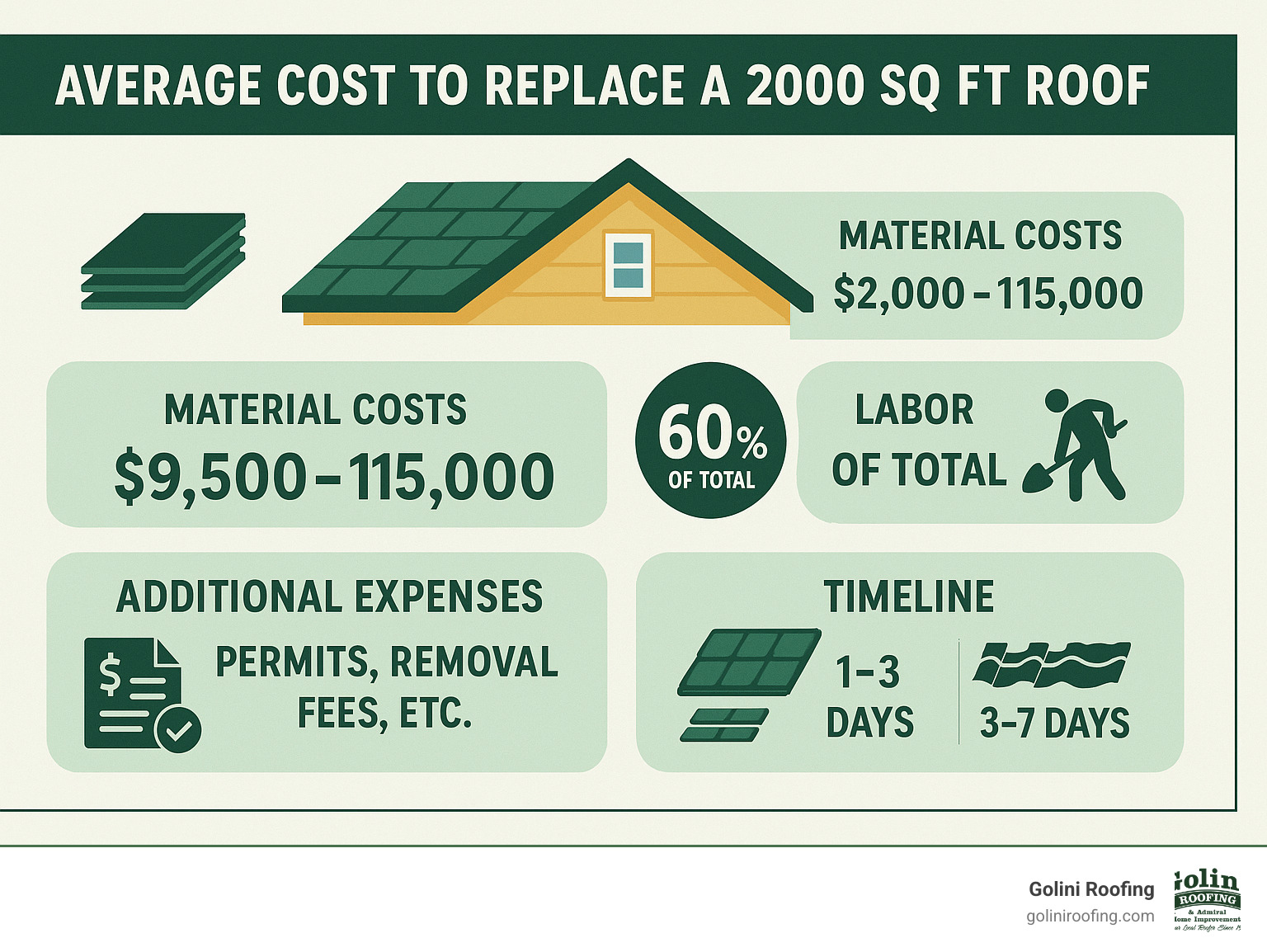
Common average cost to replace 2000 sq ft roof vocab:
– Roof tear off cost
– cost of new roof per sq ft
Average Cost to Replace a 2000 Sq Ft Roof in 2024
Let’s be honest – roofing costs have gone through the roof (pun intended) since 2020. Material prices jumped 20-30% due to supply chain hiccups and labor shortages, making it more important than ever to understand what you’re really looking at for your roof replacement project.
The good news? Once you know what drives these costs, you can budget smartly and avoid those heart-stopping moments when quotes start rolling in.
Average cost to replace 2000 sq ft roof: National snapshot
Across the country, the average cost to replace 2000 sq ft roof typically runs between $9,500 and $20,000, with most homeowners landing around $14,000 for quality architectural shingles on a standard cross-gable roof. That breaks down to roughly $4.75 to $10 per square foot installed.
Note: These are average costs based on internet data and not actual costs for Golini Roofing.
Here’s the reality of what makes up that price tag: materials can range from $2,000 for basic 3-tab shingles up to $15,000 for premium options, while labor typically eats up 60% of your total bill – usually $6,000 to $12,000. Don’t forget about tear-off and disposal costs ($2,000 to $5,000) and those often-overlooked permits and inspections ($100 to $1,000).
Your 2,000 square foot home actually needs about 20 “squares” of roofing material. One square covers 100 square feet, but here’s the catch – your actual roof area is usually 10-25% larger than your home’s footprint once you factor in pitch and overhangs.
The cost-per-square method is how most contractors price jobs, and understanding roof squares helps you compare quotes apples-to-apples. Labor share dominates most estimates, while tear-off fees, permit costs, and disposal add those extra line items that can surprise first-time roof buyers.
| Price Range | Material Type | Total Cost | Cost Per Sq Ft |
|---|---|---|---|
| Low | 3-tab asphalt | $6,000 – $11,000 | $3.00 – $5.50 |
| Mid | Architectural shingles | $9,500 – $16,000 | $4.75 – $8.00 |
| High | Metal/tile/slate | $18,000 – $60,000+ | $9.00 – $30.00+ |
Average cost to replace 2000 sq ft roof: New England vs Sunbelt
Where you live makes a huge difference in what you’ll pay. The average cost to replace 2000 sq ft roof here in New England runs 15-30% higher than national averages, and honestly, there are good reasons for that premium.
Climate premiums are real – our roofs need to handle serious snow loads, ice dams, and those brutal freeze-thaw cycles that would make a Florida roof weep. Labor rates in Massachusetts reflect our higher cost of living, with skilled roofers earning wages that match the expertise needed for our challenging conditions.
In New England, you’re looking at $8,000 to $15,000 for basic asphalt shingles, $12,000 to $22,000 for architectural shingles, and $20,000 to $50,000+ for premium materials. Meanwhile, Sunbelt states typically see $6,000 to $12,000, $9,000 to $18,000, and $15,000 to $40,000+ respectively.
Material shipping costs also bump up our prices – getting quality roofing materials to Massachusetts job sites costs more than delivering to distribution centers in Texas or Georgia. But here’s the silver lining: New England roofs often last longer thanks to less brutal UV exposure and fewer extreme heat cycles that can age materials faster in southern climates.
The bottom line? Yes, we pay more upfront, but we’re also investing in roofs built to handle whatever Mother Nature throws at us.
Price Factors That Can Raise or Lower Your Quote
The average cost to replace 2000 sq ft roof can swing dramatically based on your home’s specific characteristics. I’ve seen quotes vary by $15,000 or more on similar-sized homes simply because of these key factors.
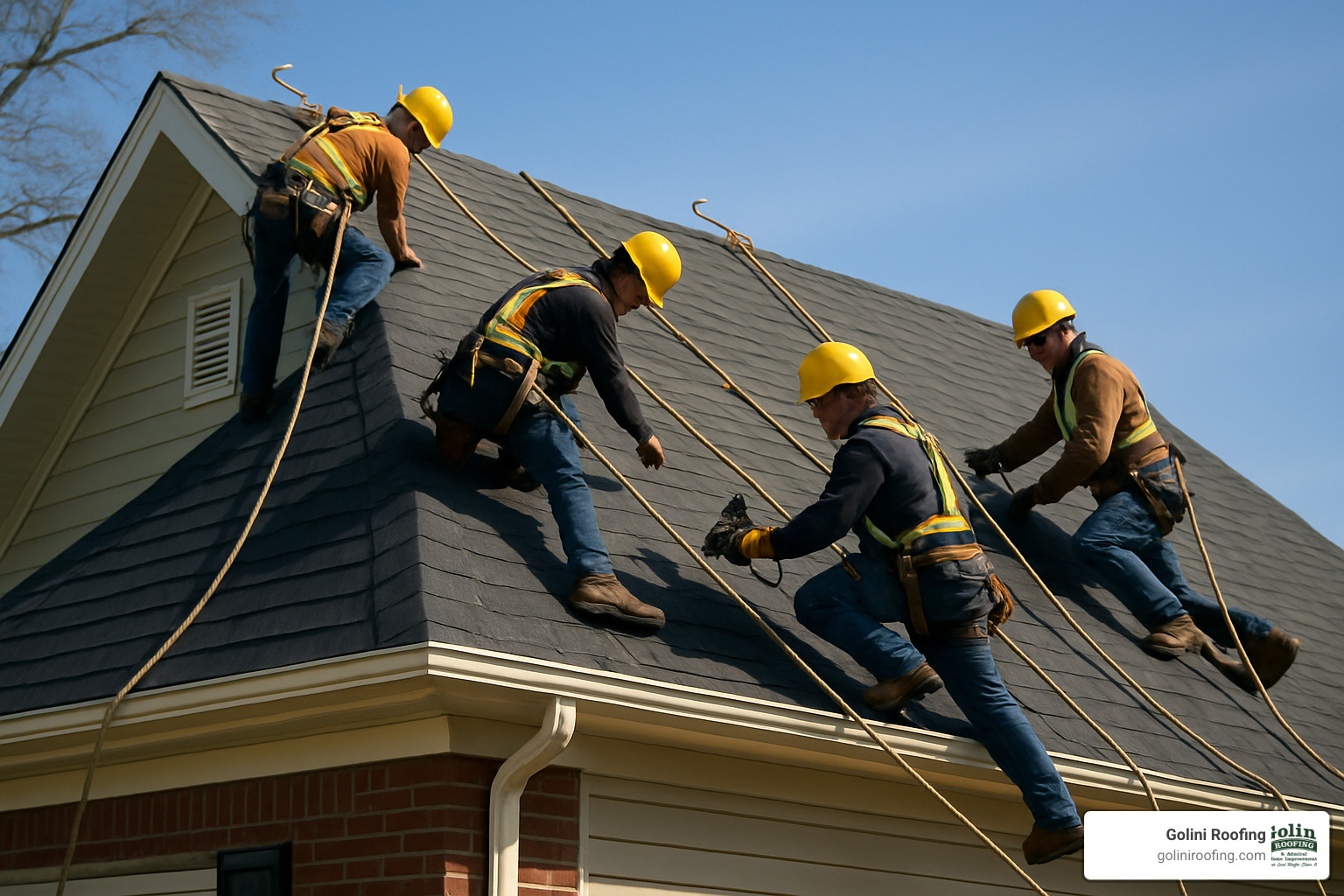
Your roof’s pitch, shape, and height create the biggest cost variations. Then there’s the tear-off complexity, timing of your project, and local building requirements. Understanding these factors helps you budget realistically and avoid the shock of unexpectedly high quotes.
Roof pitch, shape & height
A steep roof isn’t just harder to walk on—it’s significantly more expensive to replace. Your roof’s pitch directly impacts how much safety equipment we need, how slowly we can work, and how much staging time is required.
A standard 6/12 pitch (rising 6 inches for every 12 inches horizontally) represents our baseline pricing. But if your roof is steeper than 8/12, expect to pay 15% to 40% more than the typical average cost to replace 2000 sq ft roof. Low-pitched roofs under 4/12 can actually save you 10% to 20% since they’re safer and faster to work on.
Roof shape complexity matters just as much as pitch. A simple gable roof installs smoothly, but add multiple dormers, valleys, and intersections, and your labor costs climb quickly. Hip roofs typically add 10% to 15% to your bill, while multiple dormers can increase costs by 20% to 35%.
Two-story homes require additional staging and safety setup, usually adding 10% to 20% to labor costs compared to ranch homes. The extra time needed to safely move materials up and down makes a noticeable difference in your final quote.
Tear-off, removal & deck repairs
Most roof replacements require complete removal of your old shingles, and this tear-off process significantly impacts your total investment. Building codes typically limit homes to two layers of roofing, so if you’re already at that limit, tear-off becomes mandatory rather than optional.
Tear-off costs generally run $1.50 to $3.00 per square foot, plus dumpster rental fees of $400 to $800 and disposal costs. For a 2,000 square foot roof, you’re looking at $3,000 to $6,000 just for removal before any new materials go on.
The real budget surprise often comes from deck repairs. When we remove old shingles, we sometimes find rotted or damaged plywood sheathing underneath. About 10% to 15% of roofs need some deck repair, ranging from a few hundred dollars for minor fixes to $8,000 or more if extensive rot has developed.
Minor repairs affecting just a few sheets of plywood typically cost $200 to $800. Moderate damage covering about 25% of your roof deck runs $1,000 to $3,000. But extensive rot affecting half or more of your deck can add $3,000 to $8,000+ to your project.
Location & timing
When you schedule your roof replacement can save or cost you thousands. Peak roofing season from May through September sees full pricing due to high demand. Shoulder seasons in April and October might offer 5% to 10% savings, while off-season work from November through March could potentially save 10% to 20%.
However, winter roofing comes with trade-offs. Weather delays can extend your project timeline significantly, and working conditions are more challenging. Storm-damaged areas see temporary price surges as contractors become overwhelmed with insurance claims work.
Your specific location within Massachusetts also affects pricing. Urban areas typically cost 10% to 15% more than rural locations due to higher labor rates, parking challenges, and complicated material deliveries. Accessibility issues—like narrow driveways or homes surrounded by landscaping—can add time and complexity to any project.
Local building codes vary by municipality, with some requiring upgraded ventilation systems, ice and water barriers, or specific underlayment materials that weren’t needed when your original roof was installed. These code updates can add $500 to $2,000 to your project but provide important protection improvements.
More info about Calculating Roof Replacement Cost
Material & Labor Cost Breakdown for a 2,000 Sq Ft Roof
Breaking down the average cost to replace 2000 sq ft roof into materials and labor helps you understand where your investment goes and why quality matters so much in both categories.
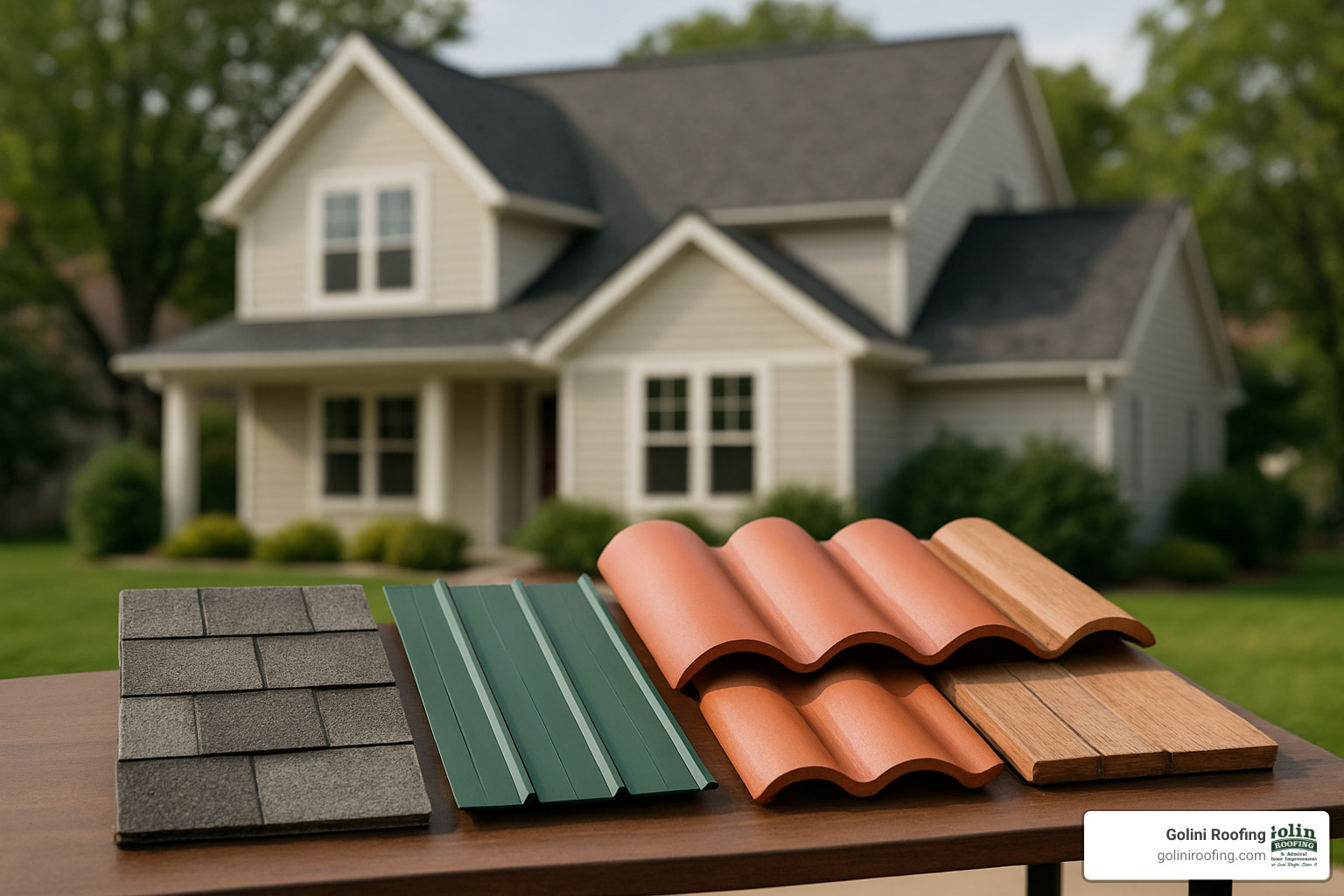
Material pricing per square for a 2000 sq ft roof
Your 2,000 square foot roof will need approximately 60 bundles of shingles or 20 squares of material (remember, one square covers 100 square feet). But materials go far beyond just the shingles you see on top.
Asphalt shingle pricing varies dramatically by quality tier. Basic 3-tab shingles run $80 to $150 per square, while architectural shingles cost $120 to $250 per square. Premium luxury shingles can reach $200 to $400 per square, offering improved durability and curb appeal.
If you’re considering alternatives to asphalt, metal roofing ranges from $300 to $800 per square, clay or concrete tile costs $400 to $1,200 per square, and natural slate commands $800 to $2,000+ per square. Synthetic materials like composite slate or shake fall between $250 to $600 per square.
The materials you don’t see matter just as much. Quality underlayment costs $75 to $400 per square depending on type, while ice and water barrier adds $100 to $200 for typical applications. Flashing around chimneys, vents, and valleys runs $200 to $800 depending on roof complexity.
Ridge vents for proper attic ventilation cost $3 to $8 per linear foot, and drip edge protection runs $2 to $5 per linear foot. These seemingly small components play huge roles in your roof’s long-term performance.
Upgrades like algae-resistant shingles add 5-15% to material costs but prove worthwhile in humid climates. Class 4 impact-resistant shingles cost 10-20% more upfront but may qualify for insurance discounts that pay for themselves over time.
Note: These are average costs based on internet data and not actual costs for Golini Roofing.
More info about Average Cost of New Roof
Labor: 60% of total bill
Here’s something that surprises many homeowners: labor typically accounts for 60% of your total roof replacement cost. That makes it the single largest expense, and frankly, the most important investment in your roof’s future performance.
Base installation labor runs $2.50 to $5.00 per square foot, but several factors can increase these rates significantly. Steep pitch roofs add $0.50 to $2.00 per square foot due to safety requirements and slower installation. Complex roof shapes with multiple angles and intersections can add $1.00 to $3.00 per square foot.
Our hand-nailing approach at Golini Roofing adds $0.25 to $0.75 per square foot compared to pneumatic installation, but there’s good reason for this premium. Hand-nailing ensures each shingle receives proper penetration and holding power, especially critical for New England’s challenging weather conditions.
Crew experience dramatically affects both speed and quality. An experienced crew works faster but commands higher hourly rates – yet they often complete jobs more efficiently than cheaper alternatives. Weather delays can extend timelines and increase costs, while safety setup time becomes more significant on steep or complex roofs.
A typical 2,000 square foot roof requires 2-4 skilled installers working 1-3 days for asphalt shingles. Metal and tile installations require specialized skills and take considerably longer, often 3-7 days for the same square footage.
Material staging affects daily productivity too. Getting materials safely onto the roof and positioned for efficient installation takes time, especially on multi-story homes or roofs with limited access.
The labor investment pays dividends through proper installation techniques, attention to detail, and warranty compliance. Cutting corners on labor often leads to premature failures that cost far more than the initial savings.
More info about Roofing Estimate
Additional Expenses, Timelines & Money-Saving Tips
Beyond the basic average cost to replace 2000 sq ft roof, several additional expenses and timing considerations can significantly impact your total investment. Smart planning and understanding these factors can help you avoid surprises and potentially save thousands.
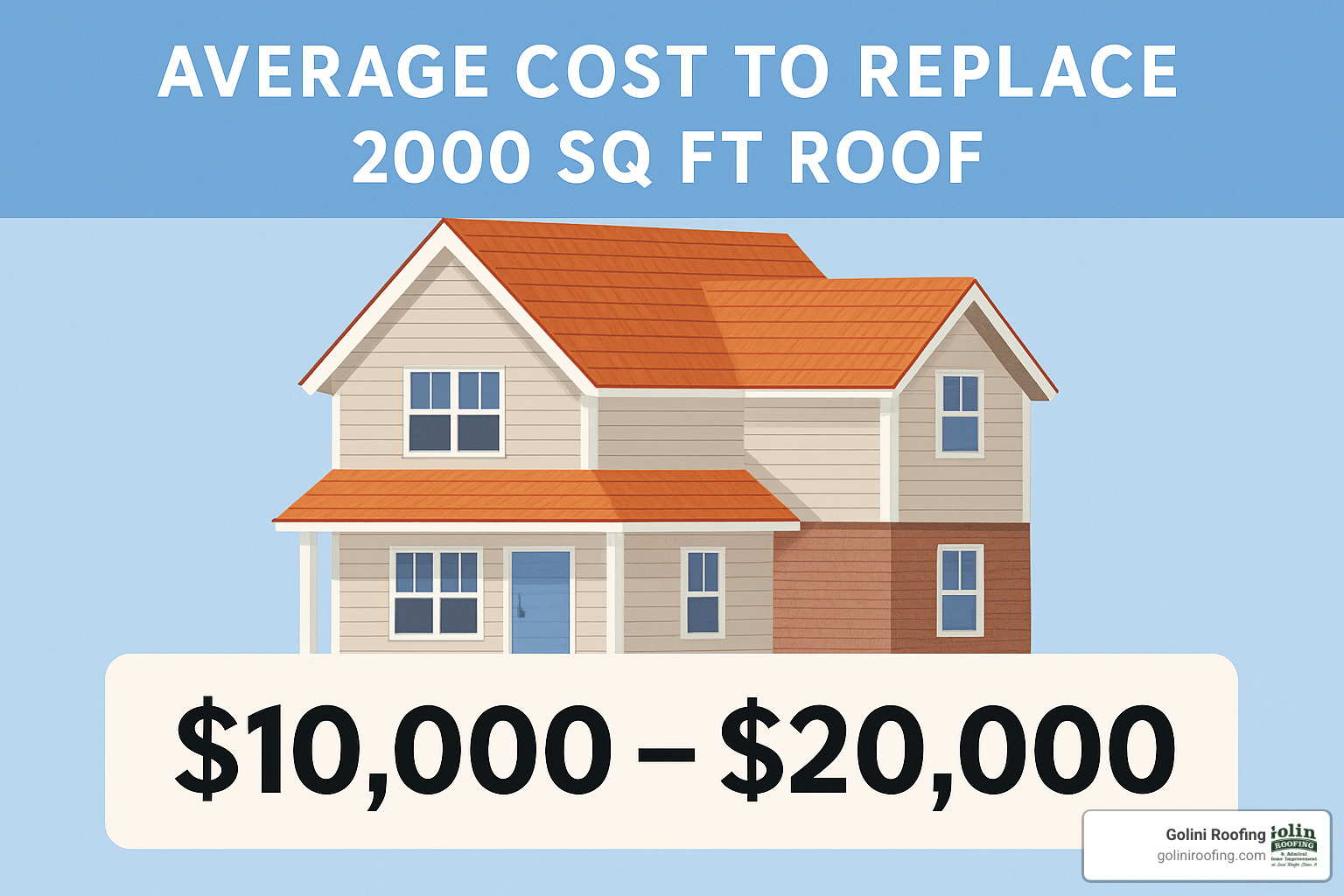
Additional costs often overlooked include:
Building permits typically cost $100 to $1,000 depending on your local municipality, with most Massachusetts towns requiring permits for full roof replacements. Inspection fees add another $100 to $300 to your project cost.
Upgraded flashing around chimneys, skylights, and valleys can add $500 to $2,000 to your project, but it’s essential for preventing leaks. Ice and water barrier installation, crucial in New England, costs an additional $200 to $600 but protects against ice dam damage.
Improved ventilation systems add $300 to $1,500 but significantly improve your roof’s performance and longevity. If you’re replacing gutters simultaneously, budget another $800 to $3,000 for a complete perimeter system.
Solar readiness preparation is becoming increasingly popular, and replacing a roof is a great time to add solar. This planning adds minimal cost upfront but can save thousands later if you decide to install solar panels.
Project timeline for a 2000 sq ft replacement
Understanding realistic timelines helps you plan around the disruption and potential weather delays that could affect costs. Asphalt shingle installations typically take 1-3 days, while metal roofing requires 3-5 days due to the precision required for proper installation.
The pre-installation phase often takes longer than homeowners expect. Permit approval requires 1-3 weeks in most Massachusetts towns, and material ordering can take another 1-2 weeks, especially for specialty products or during peak season.
Weather delays are particularly common here in New England, where sudden storms can halt work for safety reasons. I’ve seen projects delayed for weeks during particularly wet springs or when early winter weather arrives unexpectedly.
Complex roofs with multiple dormers or steep pitches add 1-2 days to any timeline, while tile or slate installations can take 5-7 days due to the specialized installation techniques required.
How to trim costs without cutting quality
Smart homeowners can reduce the average cost to replace 2000 sq ft roof without compromising on quality or longevity. The key is knowing where to save and where to invest.
Timing your project strategically offers the biggest potential savings. Scheduling during off-season months (November through March) can save 10-20% on labor costs, though you’ll need to be flexible with weather delays. Booking early in the season, before peak demand drives prices up, also helps control costs.
Material choices significantly impact your budget. Architectural shingles offer excellent value compared to premium designer options, while still providing superior performance to basic 3-tab shingles. Impact-resistant shingles cost 10-20% more upfront but may qualify for insurance discounts that offset the additional expense over time.
Financing options can make larger projects more manageable. Government-backed programs may offer low-interest loans for qualifying homeowners. Some manufacturers provide financing programs, and energy-efficient materials may qualify for tax credits.
Bundling services like combining roof replacement with gutter work can sometimes yield package savings, though it’s important to ensure your contractor excels at both services rather than just offering convenience.
Getting multiple detailed quotes ensures competitive pricing, but the lowest bid isn’t always the best value. Look for contractors who provide comprehensive estimates breaking down materials, labor, and additional costs clearly.
What you shouldn’t compromise on includes proper underlayment and ice barriers (essential in New England), quality flashing around penetrations, adequate ventilation systems, and experienced, licensed contractors. DIY installation might seem tempting for savings, but roofing is dangerous work requiring specialized skills. Poor installation can void warranties and cost far more through premature failure.
Note: These are average costs based on internet data and not actual costs for Golini Roofing.
More info about Estimate the Cost of a New Roof
Frequently Asked Questions about the Average Cost to Replace 2000 Sq Ft Roof
How many bundles or squares of shingles are needed?
When planning your roof replacement, you’ll need approximately 60 bundles of shingles for a 2,000 square foot home, which translates to 20 squares of roofing material. However, here’s where it gets interesting – your actual roof area is almost always larger than your home’s footprint.
The roof pitch multiplier typically adds 15-25% to your material needs. A moderate slope requires about 1.15 to 1.25 times your home’s square footage in roofing materials. So that 2,000 square foot ranch might actually need materials for 2,300 square feet of roof surface.
Don’t forget the waste allowance – you’ll want an extra 10-15% for cuts, mistakes, and future repairs. Simple gable roofs usually need 20-22 squares total, while hip roofs require 22-24 squares. If your home has complex shapes with dormers, plan for 24-26 squares.
I always recommend ordering that extra material. You’ll thank yourself later when you need a few replacement shingles and they match perfectly, rather than dealing with slight color variations from different production runs.
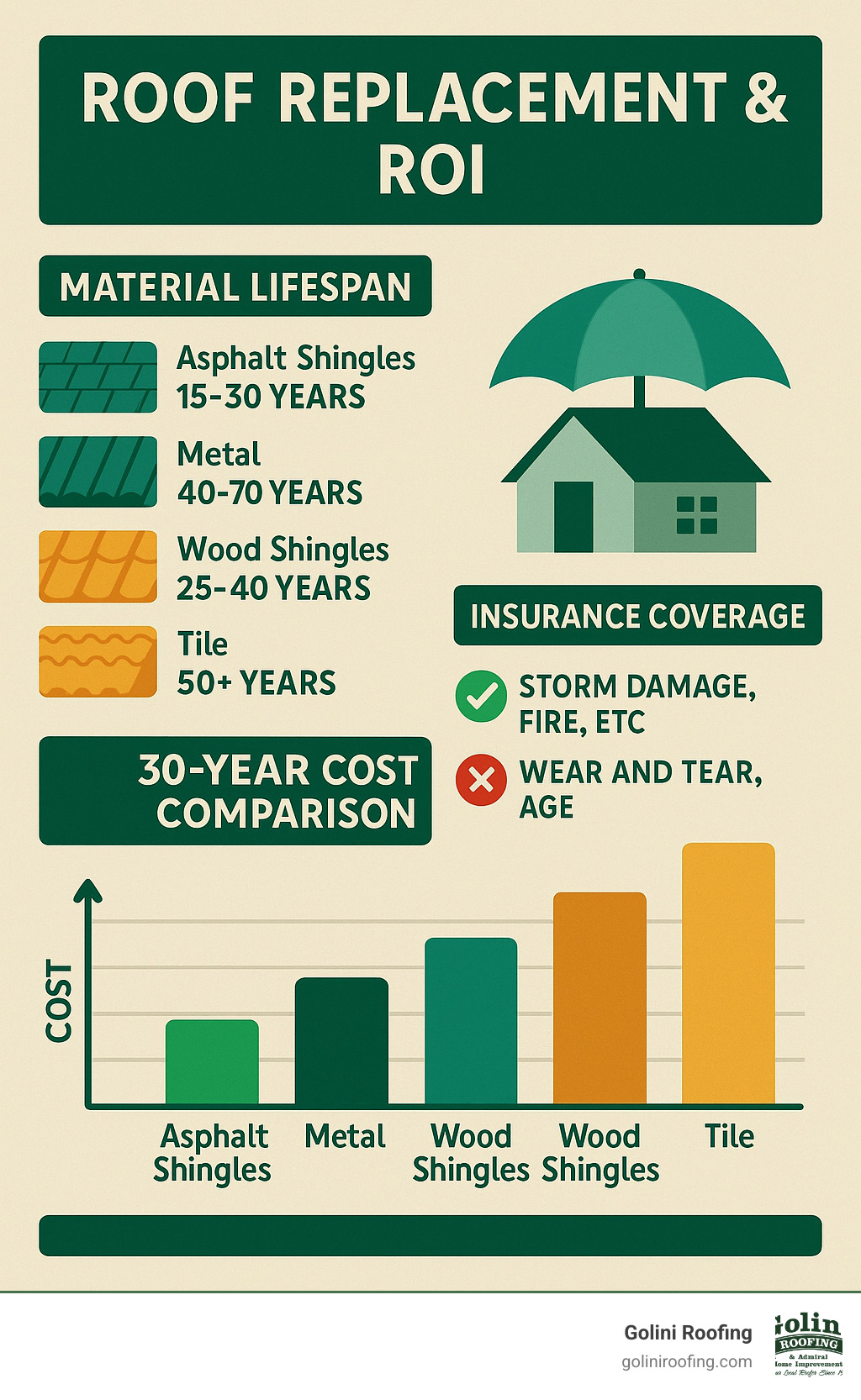
How long will a new roof last by material?
The lifespan of your new roof dramatically affects the true value of your investment in the average cost to replace 2000 sq ft roof. Think of it as cost-per-year rather than just upfront expense.
Asphalt shingles remain the most popular choice, with 3-tab versions lasting 15-20 years and architectural shingles extending to 20-30 years. Here in Massachusetts, we actually see these on the longer end of their range because we don’t get the intense UV exposure that southern climates experience.
Metal roofing is where longevity gets impressive – 50 to 100+ years of protection. Clay and concrete tiles offer similar lifespans at 50-100+ years, while natural slate can literally outlast your great-grandchildren at 100+ years. Synthetic materials split the difference at 30-50 years.
Several factors affect these lifespans beyond the material itself. Installation quality makes a huge difference – our hand-nailing approach, for instance, provides superior holding power compared to pneumatic installation. Adequate ventilation, regular maintenance, and storm exposure all play roles in how long your roof actually lasts.
New England’s freeze-thaw cycles can be tough on roofing materials, but they’re generally easier on roofs than the constant heat and UV bombardment in desert climates. It’s one of the few advantages of our challenging weather!
Does homeowners insurance ever pay for a full replacement?
This is probably the question I get asked most often, and the answer is: sometimes, but it depends on several important factors.
Insurance typically covers roof replacement when damage results from storm damage like wind or hail, fire, falling trees, or sudden accidental damage. The key word here is “sudden” – insurance companies draw a clear line between unexpected damage and normal wear and tear.
What they usually won’t cover includes normal aging, poor maintenance, gradual deterioration, or cosmetic issues. If your 25-year-old roof is just tired and worn out, that’s considered a homeowner responsibility.
Age matters significantly in insurance claims. Roofs over 20 years old often receive depreciated value coverage rather than full replacement cost. Some insurers even require roof replacement if your roof exceeds 15-20 years, regardless of condition.
Here’s a pro tip: Class 4 impact-resistant shingles can earn you 5-15% insurance discounts in many areas. While they cost more upfront, these savings can offset the premium over time while providing better protection.
Documentation is crucial for successful claims. Take photos immediately after storms, contact your insurance company within one year of damage, and get professional inspections to identify all damage – sometimes there’s more than meets the eye. Keep every receipt and piece of documentation related to your roof’s maintenance and any damage.
The claims process works best when you’re proactive about maintenance and can demonstrate you’ve taken good care of your roof throughout its lifespan.
Conclusion
When all is said and done, the average cost to replace 2000 sq ft roof typically ranges from $9,500 to $20,000 nationally, though your actual investment could vary significantly based on your home’s unique characteristics and your material preferences. Think of this wide range as a starting point rather than a final answer—your roof’s complexity, your local labor market, and the quality level you choose will ultimately determine where you land within this spectrum.
The math breaks down in predictable ways once you understand the components. Material costs can swing from $2,000 for basic shingles to $15,000 or more for premium options, while labor consistently represents about 60% of your total investment regardless of material choice. If you’re in New England like our North Shore customers, expect to pay 15-30% above national averages due to higher labor rates and stricter building codes—but also expect your roof to last longer thanks to our less intense UV exposure.
Timing your project strategically can save you substantial money without sacrificing quality. Off-season installations often come with 10-20% savings, and getting multiple detailed quotes ensures you’re paying fair market rates. However, the cheapest bid isn’t always the best value—poor installation can turn a $12,000 roof into a $20,000 problem when you factor in repairs and premature replacement.
Here’s what I’ve learned after 35+ years in the roofing business: quality installation matters more than the price difference between contractors. Our meticulous hand-nailing approach takes more time than pneumatic installation, but it’s this attention to detail that helps our customers get the full lifespan from their investment. Whether you choose architectural shingles or premium metal, proper installation techniques and quality materials ensure your roof protects your family for decades to come.
Your roof replacement represents one of the largest home improvement investments you’ll make, but when you spread that cost over 20 to 50+ years depending on materials, it becomes a reasonable price for the protection, comfort, and peace of mind a quality roof provides. The average cost to replace 2000 sq ft roof might seem daunting upfront, but it’s truly an investment in your home’s future and your family’s safety.
More info about New Roof Estimate Calculator
