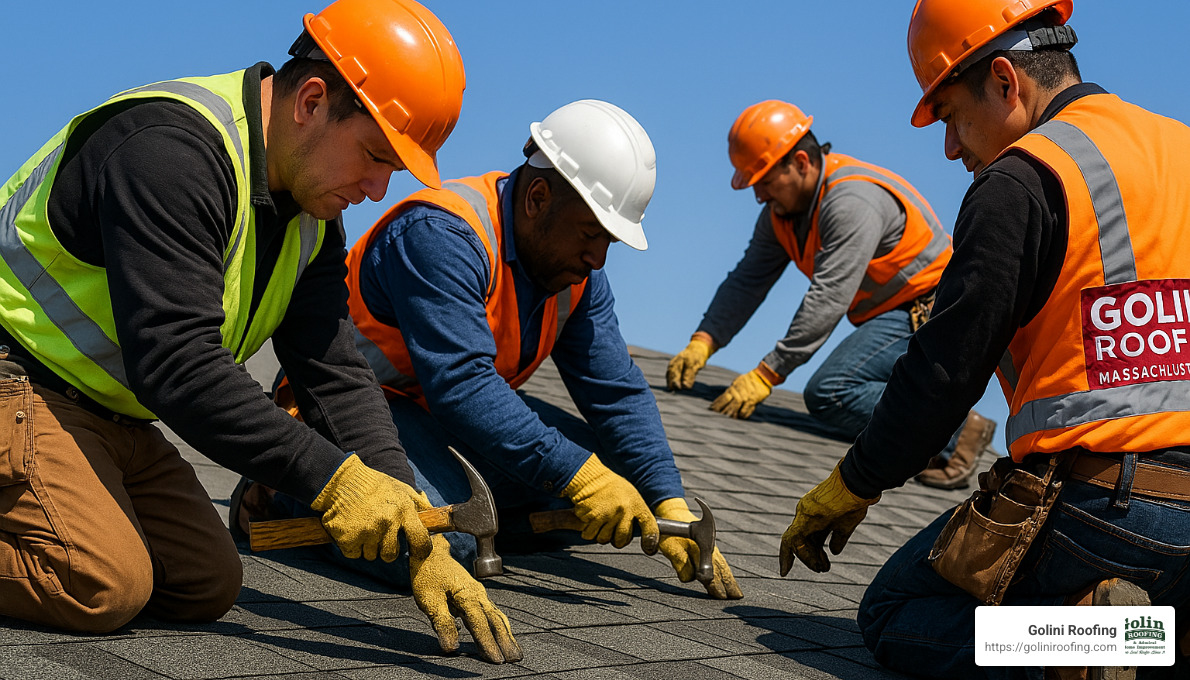
Average Cost to Reroof a House: 5 Essential Pricing Secrets Revealed
Why the Average Cost to Reroof a House Matters for Homeowners
The average cost to reroof a house is around $9,419, but prices typically range widely between $5,855 and $27,100 depending on your roof size, materials, and other key factors. Here’s a quick look at average costs based on size and material:
- Cost per square foot: $4.35–$11
- Typical average: $5,855–$13,113
- High-end cost (slate, premium materials): up to $30,000+
Knowing the numbers is just the first step. As a homeowner, understanding what influences these costs helps you budget wisely, avoid surprises, and get the best possible roof for your investment.
I’m Jack Golini, and I’ve spent over 35 years as a roofing professional. I’ve helped countless homeowners steer the average cost to reroof a house by providing clear pricing guidance and quality craftsmanship every step of the way.
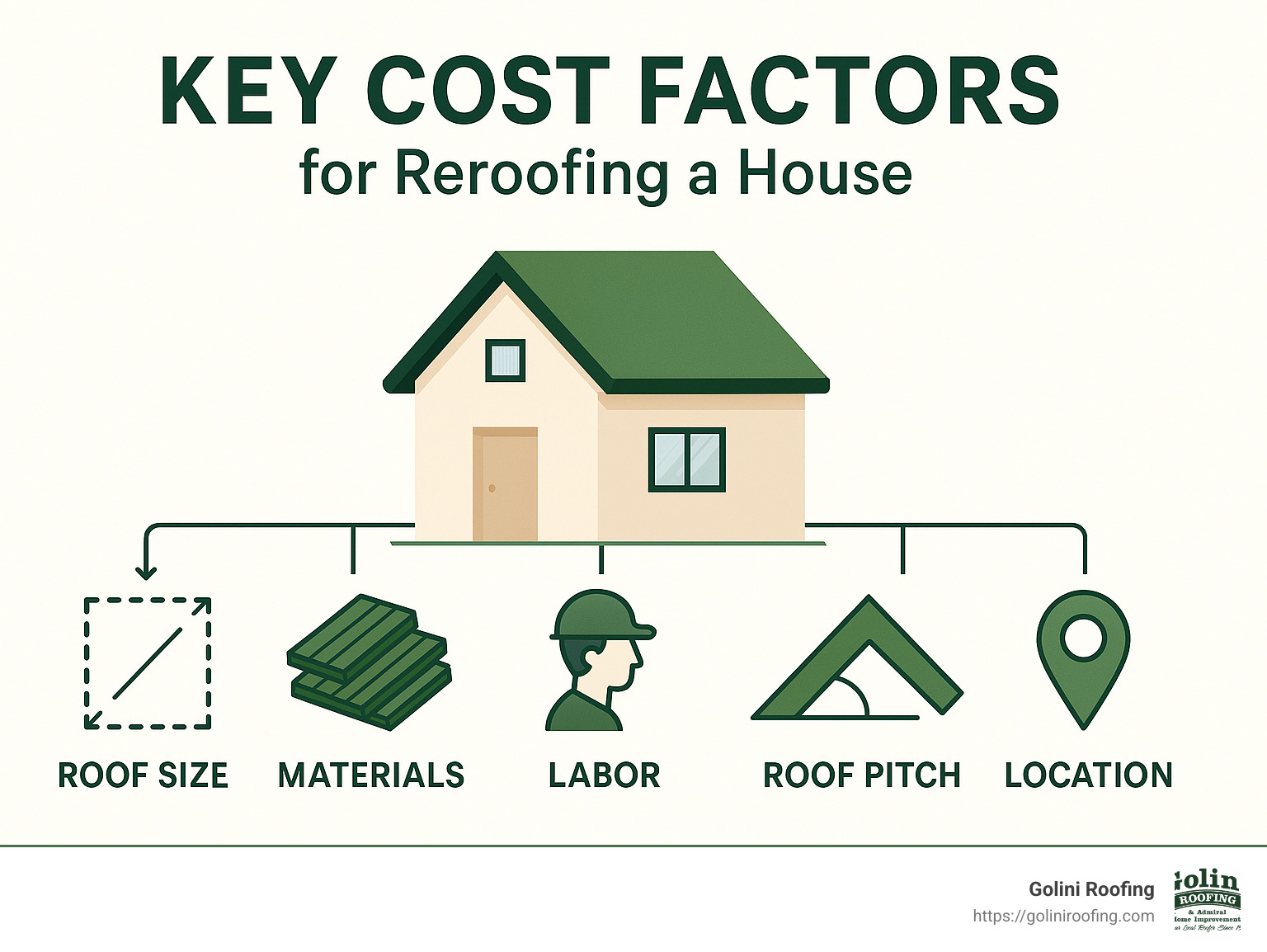
Check out the infographic below to quickly understand what affects reroofing costs:
Average cost to reroof a house terms to know:
– flat roof cost
– flat roof repair cost
– how much does a roof cost to replace
What Is the Average Cost to Reroof a House?
When homeowners here in Massachusetts ask us, “What’s the average cost to reroof a house?” our first response is usually, “Well, it depends!” And that’s not a cop-out—we promise! Many factors influence exactly how much you’ll spend on a new roof, from size and materials to labor and location.
Across the country, homeowners typically pay between $5,855 and $13,113, with the national average hitting around $9,419. Of course, your own project may land at the lower or higher end depending on your home’s specific needs.
To give you a clearer picture, here’s how roof size and choice of material can impact your costs. These are average costs based on national internet data—not exact prices from Golini Roofing:
| Roof Size (sq ft) | Asphalt Shingles | Metal Roofing | Tile Roofing | Slate Roofing |
|---|---|---|---|---|
| 1,000 | $4,350–$11,000 | $5,700–$16,000 | $8,500–$21,000 | $17,000–$30,000 |
| 1,500 | $6,525–$16,500 | $8,550–$24,000 | $12,750–$31,500 | $25,500–$45,000 |
| 2,000 | $8,700–$22,000 | $11,400–$32,000 | $17,000–$42,000 | $34,000–$60,000 |
| 2,500 | $10,875–$27,500 | $14,250–$40,000 | $21,250–$52,500 | $42,500–$75,000 |
| 3,000 | $13,050–$33,000 | $17,100–$48,000 | $25,500–$63,000 | $51,000–$90,000 |
As you can see, your choice of roofing material makes a big difference. Traditional asphalt shingles are the most affordable option. Moving up to metal roofing, you’ll pay a bit more, but the trade-off is greater durability and lifespan. Tile and slate roofing are premium choices that offer a beautiful aesthetic and impressive longevity—but be prepared for higher upfront costs.
Roofing professionals measure roofs in “squares,” where one square equals 100 square feet. While your home may be about 2,000 square feet inside, the actual roof area is typically larger—usually around 2,200 to 2,400 square feet due to pitch and overhangs. At an average cost of $4.35 to $11 per square foot for asphalt shingles, a 2,200-square-foot roof might cost anywhere from about $9,570 to $24,200 for the entire project.
Most professional reroofing quotes include materials, labor, removing old shingles (typically up to two layers), disposing of old roofing materials, and basic warranties. That more complex projects—such as steep roofs, extensive repairs, or premium materials—can push your costs to the upper end of those ranges or even beyond.
At Golini Roofing, we take pride in offering personalized pricing custom to your home’s unique requirements. With over 35 years serving homeowners throughout Massachusetts, we understand that reroofing is a significant investment. That’s why we always provide clear, transparent estimates and guidance so you can make informed decisions.
Ready to explore what might influence your reroofing costs even further? Let’s explore the factors that affect the average cost to reroof a house next.
Factors That Influence the Cost of Reroofing
Understanding the details behind the average cost to reroof a house can save you money and help you avoid unexpected surprises. Several key factors influence roofing costs, and knowing them upfront makes budgeting easier and less stressful. Let’s look at each of these factors in simple, clear terms so you can plan confidently.
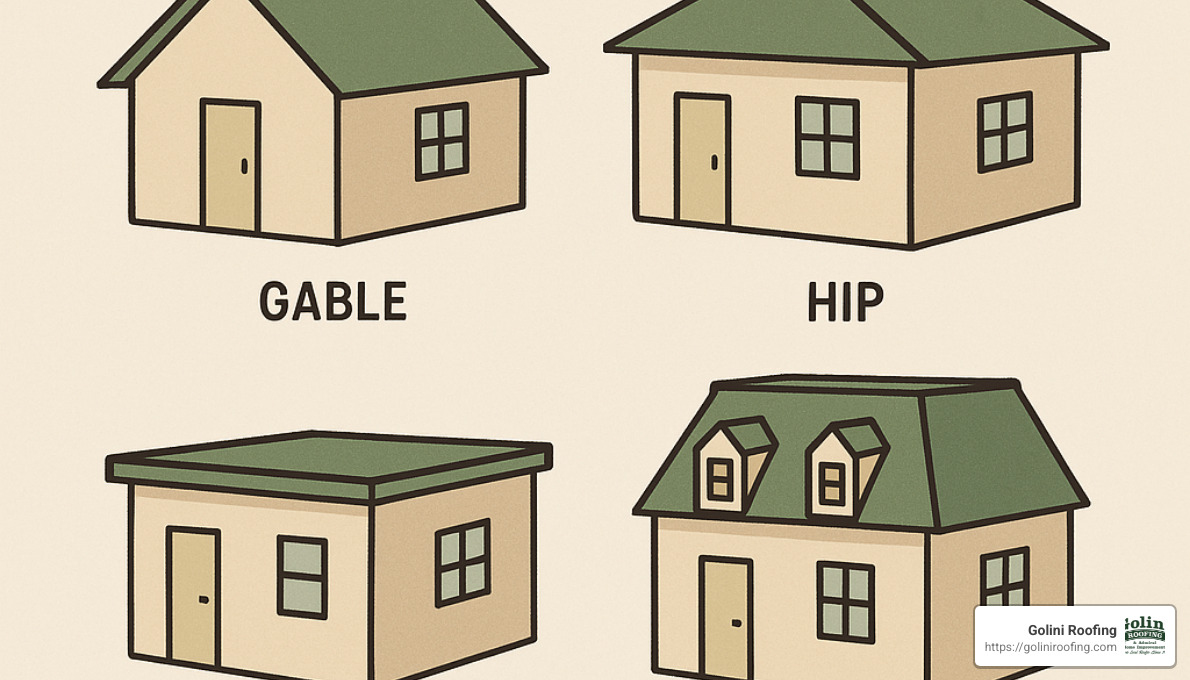
The Impact of Roof Size on the Average Cost to Reroof a House
The size of your roof plays a big role in determining the average cost to reroof a house. Simply put, a larger roof will cost more overall because it requires more materials and labor. But here’s an interesting twist: with larger roofs, the cost per square foot often goes down.
Why is that? It’s because certain fixed expenses—such as transporting materials, setting up equipment, and managing paperwork—stay roughly the same, whether you have a small or large roof. When those fixed costs spread across a bigger roof, you get a lower cost per square foot.
For example, a smaller roof (around 1,000 square feet) typically costs between $5.50 and $11 per square foot to reroof. But a larger roof (around 3,000 square feet) could cost just $4.35 to $9 per square foot.
Knowing the exact size of your roof is crucial for getting a precise estimate. At Golini Roofing, we carefully measure every roof we work on to give you accurate, customized pricing without surprises.
How Roof Pitch Affects the Average Reroofing Cost
Another factor that affects the average cost to reroof a house is roof pitch. Pitch simply means how steep your roof is. Roofers measure pitch as a ratio—for example, a 4:12 pitch means your roof rises 4 inches every 12 inches horizontally.
Steeper roofs (usually 6:12 pitch or higher) are more expensive to reroof. Why? Because working on steep roofs is trickier, slower, and more dangerous. Roofers need special safety gear, and the job takes longer. Plus, steeper roofs actually have more surface area to cover compared to flatter roofs with the same home footprint.
Let’s look at typical costs based on pitch:
- Low-slope roofs (2:12–4:12 pitch): Often the simplest to reroof, costing roughly $4.50–$7 per square foot.
- Medium-pitch roofs (4:12–6:12 pitch): Common in Massachusetts neighborhoods, these roofs typically cost around $5–$9 per square foot.
- Steep-slope roofs (6:12–12:12 pitch): Steeper roofs get pricier, ranging from about $7–$12 per square foot.
- Very steep roofs (12:12 pitch and higher): At $9–$15+ per square foot, these roofs can significantly increase your overall price.
Here in Wakefield and nearby towns, many homes have medium or steep pitches—something to keep in mind when budgeting for your reroofing project.
Roofing Material Choices and Their Cost Differences
Your choice of roofing material significantly impacts the average cost to reroof a house. Each different material gives your home a unique look, lifespan, and price.
The most popular and budget-friendly choice is asphalt shingles, typically costing between $4.35 and $11 per square foot installed. They’re affordable, available in various styles, and last around 15–30 years. Within this range, you’ll find basic 3-tab shingles at the lower end ($4.35–$7 per sq. ft.) and higher-end architectural shingles around $5–$9 per square foot. Premium designer shingles are pricier at $7–$11 per square foot—but offer added curb appeal and durability.
If you’re looking for longevity and durability, metal roofing is a great option, with average costs of $5.70 to $16 per square foot installed. Metal roofs last 40–70 years, far outliving asphalt shingles. Steel panels fall at the lower end ($5.70–$12), while aluminum ($7–$14) and premium metals like copper or zinc ($15–$30) are at the higher end.
Want something unique? Consider tile roofing—stylish but pricier at $8.50–$26 per square foot installed. Concrete tiles are the most common and affordable, while clay tiles represent the premium end. Tile roofs often last over 50 years.
At the top end, slate roofing is the most expensive option ($17–$30+ per square foot installed) but also the longest-lasting—easily outliving more than a century. Synthetic slate is slightly more affordable at $12–$20 per square foot, with natural slate at the highest price point.
At Golini Roofing, with over 35 years of experience installing all these materials, we’ll gladly guide you through the pros and cons of each option to find the best choice for your home and budget.
Labor Costs and Regional Price Variations
Labor costs make up roughly 60% of the average cost to reroof a house. Materials usually account for the remaining 40%. However, these percentages vary based on your roof’s complexity and material choice.
It’s important to note that labor costs vary greatly depending on your location. Roofing prices in Massachusetts tend to be higher than the national average due to our higher living costs, stricter building codes, and climate considerations. For example, the average reroofing cost in California might hover around $11,200, compared to around $6,450 in Missouri. Here in Massachusetts, we typically fall somewhere above the national range.
Several regional factors bump up costs in our area. Local labor rates are higher, and Massachusetts has very specific building requirements—especially since roofs must withstand snow, ice, and changing temperatures. Urban areas or places with difficult access (like downtown Boston) might cost more due to logistical challenges like parking, material delivery, and waste disposal.
Also, don’t forget permitting fees—necessary for most roofing jobs. Permits in Massachusetts typically cost between $100 and $1,000 depending on your town and the project’s complexity. And if your reroofing includes energy efficiency upgrades, you may need to consider regulations like Title 24 Energy Standards.
At Golini Roofing, we clearly outline all labor, material, and permit costs upfront. Transparency matters to us—we want you to feel confident about every step of your reroofing project.
Additional Costs to Consider When Reroofing
Beyond the basic average cost to reroof a house, several additional expenses can impact your total project cost. Being aware of these potential extras helps you budget more accurately and avoid surprises.
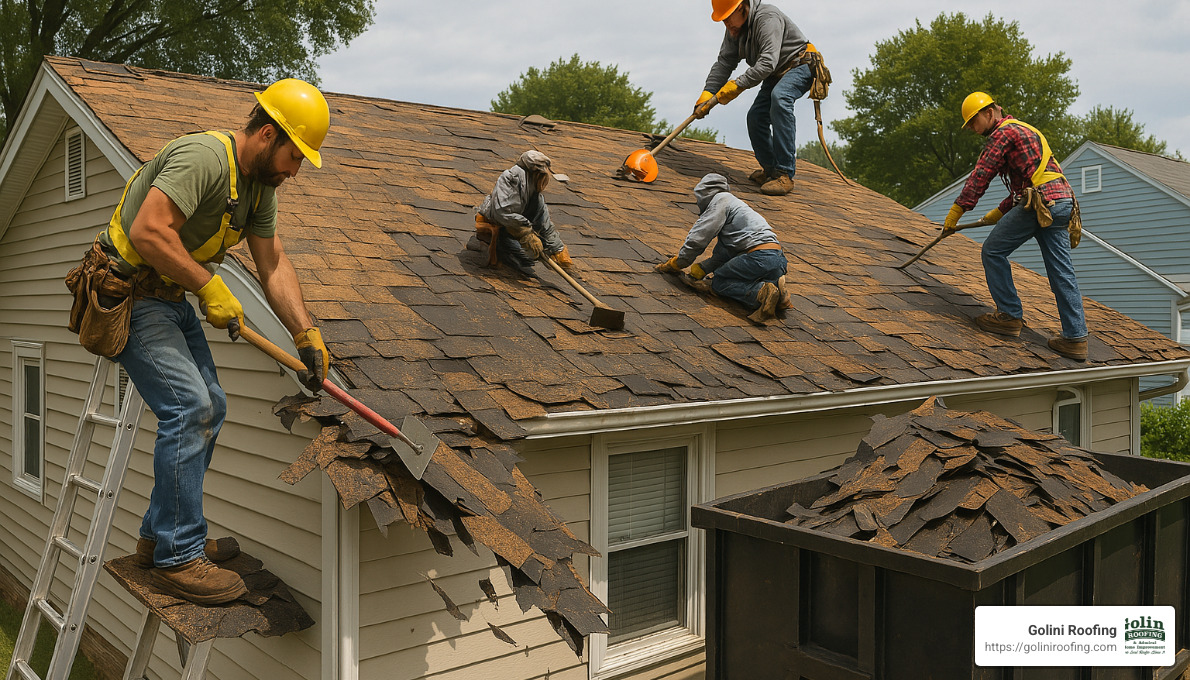
Removal of Old Roofing Materials
That layer of old shingles has to go somewhere, and removing it isn’t free. While some homeowners might hear about “roofing over” (installing new shingles on top of old ones), a complete tear-off is usually the smarter choice for the long-term health of your roof.
Removal costs typically range from $1 to $5 per square foot, depending on how many layers need to come off and what materials you’re dealing with. Those heavy slate tiles? They’ll cost more to remove than basic asphalt shingles.
For perspective, on an average 2,000 square foot roof, removal alone might add $2,000 to $10,000 to your project. Yes, that’s a chunk of change, but proper removal ensures we can spot and fix any hidden problems lurking beneath those old shingles. It’s like going to the dentist – a little pain now prevents bigger problems later!
Structural Repairs and Deck Replacement
Once we peel back those old shingles, we sometimes find surprises – and not the fun birthday kind. Water damage, rot, or structural issues often hide beneath failing roofs.
Replacing damaged roof decking (the plywood sheets that form your roof’s foundation) typically costs $70 to $100 per sheet. If we find more serious issues like compromised rafters or trusses, repairs can add thousands to your project. At Golini Roofing, we’ve seen everything from minor spot repairs to major structural work needed once the old roof comes off.
These costs aren’t usually included in the initial average cost to reroof a house estimate because we can’t see through your existing roof (though sometimes we wish we could!). That’s why we always perform a thorough inspection after tear-off and discuss any necessary repairs before proceeding. No homeowner likes surprises when it comes to their budget.
Permits, Inspections, and Disposal Fees
The paperwork part of roofing isn’t glamorous, but it’s essential. Most towns in Massachusetts require permits for reroofing projects, typically costing between $100 and $1,000 depending on your location and project scope. These permits often require inspections during and after the project to ensure everything meets code.
Then there’s the question of what to do with all that old roofing material. Disposal fees can add $500 to $1,500 to your project, depending on local landfill rates, the amount and type of material, and how far we need to haul it. In some Massachusetts communities, these fees are higher than the national average due to limited disposal options.
At Golini Roofing, we handle all the permitting, inspection scheduling, and proper disposal as part of our service. After 35 years in the business, we’ve built relationships with local building departments that help streamline this process for our customers.
Gutter Replacement and Additional Features
While you’re investing in a new roof, it might make sense to address other related components. Many of our customers choose to replace their gutters at the same time as their roof – and for good reason. Those weathered gutters might not only clash with your beautiful new roof but could also be nearing the end of their useful life.
Gutter replacement typically costs around $7 to $25 per linear foot, or approximately $1,200 for an average home. This cost varies based on the material you choose (aluminum, copper, etc.) and the gutter style.
Other features that might affect the average cost to reroof a house include:
Skylights often need new flashing or complete replacement during a reroof, adding $1,000-$3,000 per skylight. Chimneys require special attention with new flashing and sealing, costing $300-$1,000. Ventilation improvements like ridge vents or soffit vents might add $300-$1,000 but dramatically improve your roof’s performance and longevity. And in our snowy Massachusetts climate, adding ice and water shield protection (an additional $1-$1.50 per square foot in vulnerable areas) can prevent costly ice dam damage.
These additional features aren’t just upgrades – they’re investments in your roof’s performance and longevity. They might increase your upfront cost, but they can save you thousands in potential damage down the road. Just like buying quality snow tires for a New England winter, sometimes spending a bit more upfront makes all the difference when the weather turns.
All these prices represent average costs based on internet data and not actual costs for Golini Roofing. Our pricing is always customized to each project’s specific requirements after a thorough on-site assessment.
Repair vs. Replacement: Which Is More Cost-Effective?
When your roof starts showing signs of trouble, you’re probably wondering: “Should I repair or replace my roof?” It’s a common question, and, as you might expect, the answer can vary. While the average cost to reroof a house is certainly higher than making repairs, sometimes it’s actually the smarter—and more economical—long-term investment.
Let’s explore this decision together and help you figure out what’s best for your home, your budget, and your peace of mind.
Signs Your Roof Needs Attention
The first step is to know when your roof is calling out for help. Here are a few clear signs to look out for:
If your roof has reached a certain age, replacement often becomes the wiser choice. Asphalt shingles typically last around 15–20 years; after that, continual repairs will add up fast and become less effective.
Spotting a few missing or damaged shingles after a storm isn’t uncommon, and that’s usually an easy fix. However, if large sections or multiple areas are showing serious damage, this likely signals deeper issues. At that point, a full reroof might be necessary.
Leaks or water stains inside your home are clear indicators your roof needs attention. Small leaks can sometimes be repaired, but if water damage is widespread or recurring, it probably means your roof is past its prime.
Have you noticed sagging areas on your roof? That’s a red flag indicating structural problems. This isn’t something to take lightly, as it often requires comprehensive repairs or even full replacement.
Finally, if you regularly find lots of granules in your gutters (those tiny bits of material from your shingles), your roof is losing its protective coating. Granule loss means your shingles are reaching the end of their lifespan, signaling it’s likely time for a replacement.
If any of these signs sound familiar, it’s worth taking a closer look and possibly calling in a roofing professional to assess the situation.
Comparing Costs: Repair vs. Replacement
When considering whether to repair or replace your roof, it’s important to weigh the costs carefully. Roof repairs can range widely—from minor fixes around $150 to significant structural repairs costing up to $7,000. Most homeowners typically see repair costs between $400 to $1,500.
Minor repairs, such as replacing a few shingles or fixing small leaks, tend to be on the lower end ($150–$400). Moderate repairs, like partial reroofing or flashing adjustments, will move into a higher range ($400–$1,500). Major repairs involving structural issues, larger leaks, or significant damage will push the figure toward $1,500–$7,000, sometimes even more.
Here’s a handy rule: When repair costs start approaching 30% or more of the average cost to reroof a house, it’s usually smarter to consider replacement instead. And if your roof is older, investing in a full reroof will save you money in the long run.
But cost isn’t the only factor in your decision. A full roof replacement offers other important benefits that repairs alone can’t match.
Why Replacement Might Be More Cost-Effective in the Long Run
Upgrading to a completely new roof can be an appealing option even if the initial investment is higher. Why? Because a new roof can actually save you money—and hassle—in the long run.
For starters, today’s roofing materials often boost your home’s energy efficiency, reducing your monthly energy bills. Modern shingles and roofing systems are simply better at reflecting the sun’s heat and insulating your home.
A new roof can also significantly boost your home’s value, often returning 60–85% of the cost when you sell. Buyers love knowing they won’t need to worry about roof problems anytime soon, and a well-kept roof makes your home much more appealing.
There’s also the peace of mind factor. Unlike repairs—which might have you wondering when the next leak or issue will pop up—a new roof typically comes with solid warranties and gives you confidence that your home is well-protected.
Finally, replacing your roof now can help you avoid expensive future costs. Waiting too long and relying on constant repairs can lead to sudden emergencies, costly interior water damage, and structural deterioration. By investing in replacement sooner, you save yourself the headache (and potential wallet-ache) later.
At Golini Roofing, we know this isn’t always an easy decision. That’s why—with over 35 years of roofing experience in Wakefield, Reading, and surrounding Massachusetts communities—we offer honest, clear assessments of your roof’s condition. We’ll walk you through the options, clearly discussing what’s best for your home and budget.
If you’re still unsure whether to repair or replace your roof, we’re here to help you figure it out. Give us a call or visit our roof replacement cost page for more information.
DIY Reroofing vs. Hiring a Professional
When you’re staring at that average cost to reroof a house estimate, I completely understand the temptation to grab a ladder and tackle the project yourself. After all, with labor making up about 60% of your total bill, the potential savings can look mighty attractive to any budget-conscious homeowner.
But before you head to the home improvement store, let’s have an honest conversation about what DIY reroofing really entails—and whether those savings are worth it in the long run.
The DIY Approach: Potential Savings and Challenges
Let’s talk numbers first. For a DIY project, you’ll still need to purchase all the materials:
For a typical 2,000 square foot roof (20 squares in roofing terms), your material costs would likely run between $2,600 and $4,400. Compare that to the professional installation total of $8,700-$22,000, and you’re looking at potential savings of $6,100-$17,600. That’s certainly nothing to sneeze at!
But here’s where things get complicated. Those savings come with some serious trade-offs:
Safety comes first—or rather, it should. Roofing consistently ranks among the most dangerous construction jobs, with falls accounting for a significant number of serious injuries each year. I’ve seen even experienced pros have close calls on steep roofs.
Equipment isn’t cheap or simple. Beyond basic ladders, you’ll need safety harnesses, tear-off shovels, nail guns, compressors, and more. Renting helps, but proper safety equipment isn’t where you want to cut corners.
Roofing is a skill that professionals spend years perfecting. What looks simple—nailing down shingles—actually involves precise techniques to ensure water doesn’t find its way into your home during the next downpour.
Time is money too. What our experienced Golini Roofing crews can accomplish in 2-5 days might take a DIYer 2-3 full weeks. That’s a lot of vacation time (and sore muscles).
Warranty considerations are often overlooked. Most manufacturers will void material warranties if their products aren’t installed by qualified professionals. That 30-year shingle warranty? It might be worthless if you install them yourself.
Pros and Cons of DIY vs. Professional Reroofing
When I talk with homeowners considering the DIY route, I always encourage them to weigh both sides carefully:
The DIY path offers significant cost savings, the personal satisfaction of completing a major home project, control over your timeline, and new skills. There’s definitely something rewarding about looking up at your house and thinking, “I did that.”
But the challenges are substantial: serious safety risks, no workmanship warranty, potential for costly mistakes that could lead to leaks, physical demands that shouldn’t be underestimated, and the specialized knowledge needed to handle unexpected issues (like finding rotted decking once you tear off the old shingles).
Professional installation brings expert workmanship backed by warranties, proper techniques refined over thousands of projects, quick completion (your home isn’t exposed to the elements for weeks), insurance coverage, valid material warranties, and the peace of mind that comes with knowing experienced roofers can handle whatever surprises your old roof might be hiding.
The main drawbacks are primarily the higher upfront cost and the need to research contractors carefully to find one you trust.
After 35+ years of climbing ladders and fixing roofs throughout Massachusetts, I’ve seen the aftermath of many DIY roofing attempts. While some homeowners successfully complete their projects, many others end up calling us to fix issues—often at a higher cost than the original professional installation would have been.
At Golini Roofing, we believe the safety, quality, and warranty protection of professional installation typically outweigh the potential savings of DIY for most homeowners. Our decades of experience mean we’ve seen (and solved) virtually every roofing challenge that can arise during a project.
That said, we respect a homeowner’s decision either way—and we’re always happy to provide advice if you’re determined to tackle your roof yourself. Just promise me you’ll invest in proper safety equipment first!
Tips to Save on Reroofing Costs
Reroofing your home is one of those big investments that makes your wallet wince a little. But thankfully, you don’t have to overspend to get a quality roof. Here are some friendly tips to manage your roofing budget wisely and keep that average cost to reroof a house as reasonable as possible—without cutting corners on quality.
Strategic Timing Can Lower Costs
Believe it or not, when you schedule your roof replacement can make a real difference in your total costs. Like most industries, roofing has its peak and off-peak seasons, especially here in Massachusetts.
Late fall through winter often sees prices drop around 5–15% because contractors aren’t as busy (and let’s face it, most homeowners don’t think about roofing when there’s snow on the ground). Early spring can also offer some pre-season deals before business ramps up. However, be cautious—summer through early fall tends to be the busiest period, driving prices up significantly.
If you can handle the chill and plan your project ahead of time, scheduling during off-peak seasons could knock $500–$2,000 off your roofing bill. Just remember, asphalt shingles prefer milder weather, ideally between 40°F and 85°F, so you don’t want to push your luck too far into those freezing New England winters!
Get Multiple Detailed Quotes
One of the best—and easiest—things you can do is ask for multiple quotes. Aim for 3–5 detailed estimates from reputable roofing contractors. When comparing your quotes, look beyond just the bottom-line price.
Make sure each quote clearly breaks down labor, materials, removal, disposal fees, and permits. Verify that you’re looking at equivalent products and installation methods—because a suspiciously low price might mean shortcuts in quality or unexpected extra charges later on.
And—this is important—always check what warranties come included. A slightly higher upfront cost could mean better warranty coverage and fewer headaches down the road.
Choose Cost-Effective Materials
Quality materials don’t always have to break the bank. Choosing the right balance between quality and affordability can significantly reduce your reroofing bill without sacrificing peace of mind.
For example, opting for architectural shingles instead of the premium designer types can save you about $2–$4 per square foot. Likewise, selecting standard metal panels instead of the fancy standing-seam variety can leave an extra $3–$7 per square foot in your pocket. And if you love the look of slate but not its steep price, synthetic slate roofing can offer a similar appearance for $5–$10 less per square foot.
At Golini Roofing, we love helping homeowners find that “sweet spot” between cost and quality. We’ve done it countless times over our 35+ years in business and are always happy to walk you through your options.
Maintain Your Roof to Extend Its Lifespan
Here’s the thing—one of the best ways to save money on roofing is to take good care of the one you’ve got. Regular maintenance can add years to your roof’s life, delaying the need for costly replacement.
Schedule annual inspections to catch small issues before they grow into big problems. Keep your gutters clear to prevent water backups and ice dams (trust us, your roof will thank you). Trim any overhanging branches regularly, so storms don’t drop unwanted debris or limbs onto your shingles. And if you spot leaks or damage, don’t wait—fixing them promptly can save hundreds or even thousands in potential repairs.
Investing in regular maintenance can easily add an extra 5–10 years to your roof’s lifespan, ultimately lowering the overall annual cost of ownership significantly.
Consider Financing Options
Sometimes your best strategy isn’t just about cutting costs upfront, but rather making that investment more manageable over time. Financing your reroofing project can let you choose higher-quality materials and professional installation without feeling overwhelmed financially.
Options like home equity loans or lines of credit often have lower interest rates and flexible terms. Manufacturer-backed financing deals might even offer promotional rates or discounts. FHA Title I loans are government-backed home improvement loans designed to help homeowners cover essential projects like roofing. And don’t forget to check if your roofing materials qualify for energy-efficient tax credits—that’s like money back directly into your pocket!
By spreading out your reroofing costs, you gain the freedom to prioritize quality and longevity over short-term savings. After all, a well-installed, durable roof is worth every penny of investment.
Taking care of your roofing project can feel intimidating at first—it’s a major expense. But by planning strategically, carefully comparing quotes, choosing smart materials, maintaining your roof, and exploring financing options, you can confidently manage the average cost to reroof a house. At Golini Roofing, we’re always here to help you steer your roofing project—no stress, no surprises, just good old-fashioned quality and honest advice.
Frequently Asked Questions About Reroofing Costs
How Often Should I Reroof My House?
The timing for reroofing your home depends largely on the roofing material you choose and the local weather conditions. Here in Massachusetts, we experience everything from winter snowstorms to scorching summer heat, which can shorten the typical lifespan of your roof.
On average, asphalt shingles last about 15–30 years. If you opt for standard 3-tab shingles, you’ll get around 15–20 years of use, while architectural shingles can last closer to 20–30 years. Premium designer shingles often push past 25 or even 30 years, especially with good maintenance.
If durability is a priority, metal roofing can be a great investment. Metal roofs typically last between 40 and 70 years. Steel panels will provide around 40–60 years of service, aluminum roofs often exceed 50 years, and premium metals like copper or zinc can last more than 70 years.
For something truly long-lasting, consider tile roofing or slate roofing. Concrete tiles can give you 50 or more years of reliable protection, while clay tiles have been known to last between 50 and 100 years. Natural slate is even more resilient, lasting from 75 years all the way up to 200 years or more. There’s even synthetic slate available, providing a similar look at a more budget-friendly price, typically lasting 40–50 years.
When evaluating the average cost to reroof a house, always factor in how long the materials will last. While premium materials may cost more upfront, the extended lifespan often makes them a smarter long-term investment for homeowners here in Massachusetts.
Will Homeowners Insurance Cover My Reroofing Costs?
Whether or not your homeowners insurance covers roof replacement usually depends on why the damage occurred. Insurance typically covers roof repairs or replacements caused by sudden, unexpected events—things like storm damage from wind or hail, trees or branches falling onto your roof, fires, or even vandalism.
However, insurance usually doesn’t cover roof replacement costs if your roof has simply reached the end of its natural lifespan or is suffering from normal wear and tear. Gradual deterioration due to age, poor maintenance, or cosmetic issues are usually excluded.
If you think your roof damage falls under your insurance coverage, take plenty of clear photos right away and reach out to your insurance provider as soon as possible. It’s also smart to have an experienced roofing contractor like Golini Roofing inspect your roof and provide a detailed report and estimate. With over 35 years of experience serving homeowners in Wakefield, Reading, and other Massachusetts communities, we’ve seen it all and can help guide you through the claims process smoothly and stress-free.
How Can I Extend the Lifespan of My New Roof?
You’ve invested in a beautiful new roof—now how do you get the most life out of it? To avoid facing the average cost to reroof a house again sooner than necessary, it’s important to take care of your roof with routine maintenance.
One of the simplest yet most important things you can do is have your roof professionally inspected every year or two. Regular inspections let you catch small issues before they turn into big (and expensive) headaches.
Don’t underestimate the importance of clean gutters either. Gutters clogged with leaves and debris can cause water backup, leading to leaks and roof damage. Make sure your gutters get cleaned at least twice a year—especially in fall, when leaves are falling, and in spring, after winter storms.
Another critical factor is proper attic ventilation. Good ventilation keeps moisture and heat from building up and damaging your roof shingles from the inside out. If you notice moss or algae building up on your shingles, clean them off promptly with gentle methods or have a professional handle it. Left untreated, these organisms trap moisture and cause shingles to deteriorate prematurely.
It’s also smart to trim any overhanging branches away from your roof. This prevents both physical damage from falling limbs and the buildup of leaves and other debris. Ensure the metal flashing around chimneys, vents, and skylights is inspected regularly, as these are common trouble spots for leaks.
In wintertime, heavy snow buildup can strain your roof. Using a roof rake (carefully!) can help remove excess snow and reduce the risk of ice dams, protecting your roof from costly winter damage.
By following these simple maintenance practices, you can easily add 5–10 years to your roof’s life, maximizing the value of your investment.
Conclusion
Understanding the average cost to reroof a house is key to making smart decisions when it’s time to invest in your home’s future. As we’ve covered in detail, reroofing costs typically range from about $5,855 to $13,113 for standard materials. Of course, premium options like slate or tile can push your total well beyond $30,000 in some cases.
Throughout this guide, you’ve learned that many factors shape the final price tag of your reroofing project. Roof size, pitch, choice of materials, local labor rates, and your geographic location all have a significant impact. While asphalt shingles may offer the most wallet-friendly upfront cost, premium materials like metal, tile, or slate can provide a much longer lifespan, potentially making them more cost-effective in the long run.
One key takeaway we’ve emphasized is the importance of professional installation. Quality workmanship makes a huge difference in how long your roof lasts and how well it performs. Here at Golini Roofing, we’ve spent more than 35 years hand-nailing each shingle to ensure outstanding results. (And, yes, our team does have incredibly strong hands by now!)
Regular roof maintenance is another essential component of keeping reroofing costs under control. Simple things like keeping your gutters clear, scheduling annual inspections, and trimming those pesky branches can extend your roof’s lifespan significantly. Longer roof life means fewer replacements—something your wallet will definitely appreciate.
We’ve also shared some practical tips to help you manage your reroofing costs. Scheduling your project during the off-season can shave hundreds or even thousands off your total. Getting multiple quotes makes sure you’re paying a fair price, and choosing materials wisely can give you quality without breaking the bank. Don’t forget about financing options, either—spreading out the investment can make higher-quality roofing much more manageable.
At Golini Roofing, we understand that reroofing your home is a big decision—and a major investment. That’s why we’re committed to transparent pricing and honest advice. Our goal is to help you find the ideal balance between cost, quality, and performance, so you feel confident in your roofing project.
For over 35 years, we’ve proudly served homeowners throughout Wakefield, Burlington, Reading, and Greater Massachusetts. If you’d like personalized guidance, a free inspection, or an estimate custom to your home’s unique needs, we’re just a phone call or click away.
To learn more about roof replacement costs or to get in touch, check out our easy-to-follow guide to roof replacement cost. We’re here to help you protect your home—and your budget—every step of the way!