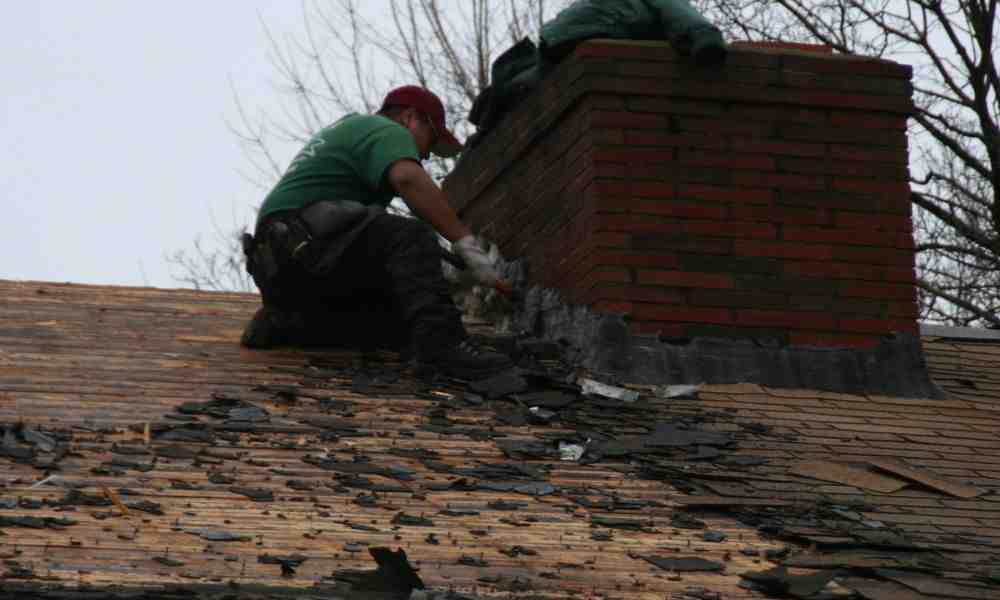
Broken Roof Shingles: Stop 1 Costly Disaster
Why Broken Roof Shingles Demand Your Immediate Attention
Broken roof shingles might seem like a minor cosmetic issue, but they’re actually your home’s first red flag that trouble is brewing. Here’s what you need to know right now:
Quick Action Guide for Broken Roof Shingles:
- Immediate Risk: Water can seep beneath damaged shingles within hours of the first rain
- Minor Repairs: Fixing a few broken shingles costs $100–$1,500 on average (internet-based estimates)
- Major Replacement: Ignoring damage can lead to a full roof replacement costing $8,000–$20,000 or more
- Timeline: Inspect your roof twice yearly and immediately after any storm
- Call a Pro When: You see multiple damaged areas, sagging, or interior water stains
Your roof’s shingles are more than just decoration—they’re a protective shield working 24/7 against rain, wind, hail, and sun. When even one shingle cracks, curls, or goes missing, it starts a dangerous domino effect. Water finds its way beneath the surface. Your roof deck begins to rot. Mold grows in your attic. What starts as a $200 repair can quickly escalate into thousands of dollars in structural damage.
The good news? You don’t need to be a roofing expert to catch problems early. This guide will show you exactly what broken roof shingles look like, when you can tackle a simple DIY fix, and when it’s time to call in the professionals.
I’m Jack Golini, and I’ve been repairing broken roof shingles and protecting homes throughout the North Shore since 1982. Over 35+ years, I’ve seen how a single overlooked shingle can turn into a homeowner’s nightmare—and how quick action can save thousands.
What Do Broken Roof Shingles Look Like? A Visual ID Guide
Learning to spot the warning signs of broken roof shingles early can save you thousands. While a professional inspection is always best, you can often identify issues from the safety of your yard.
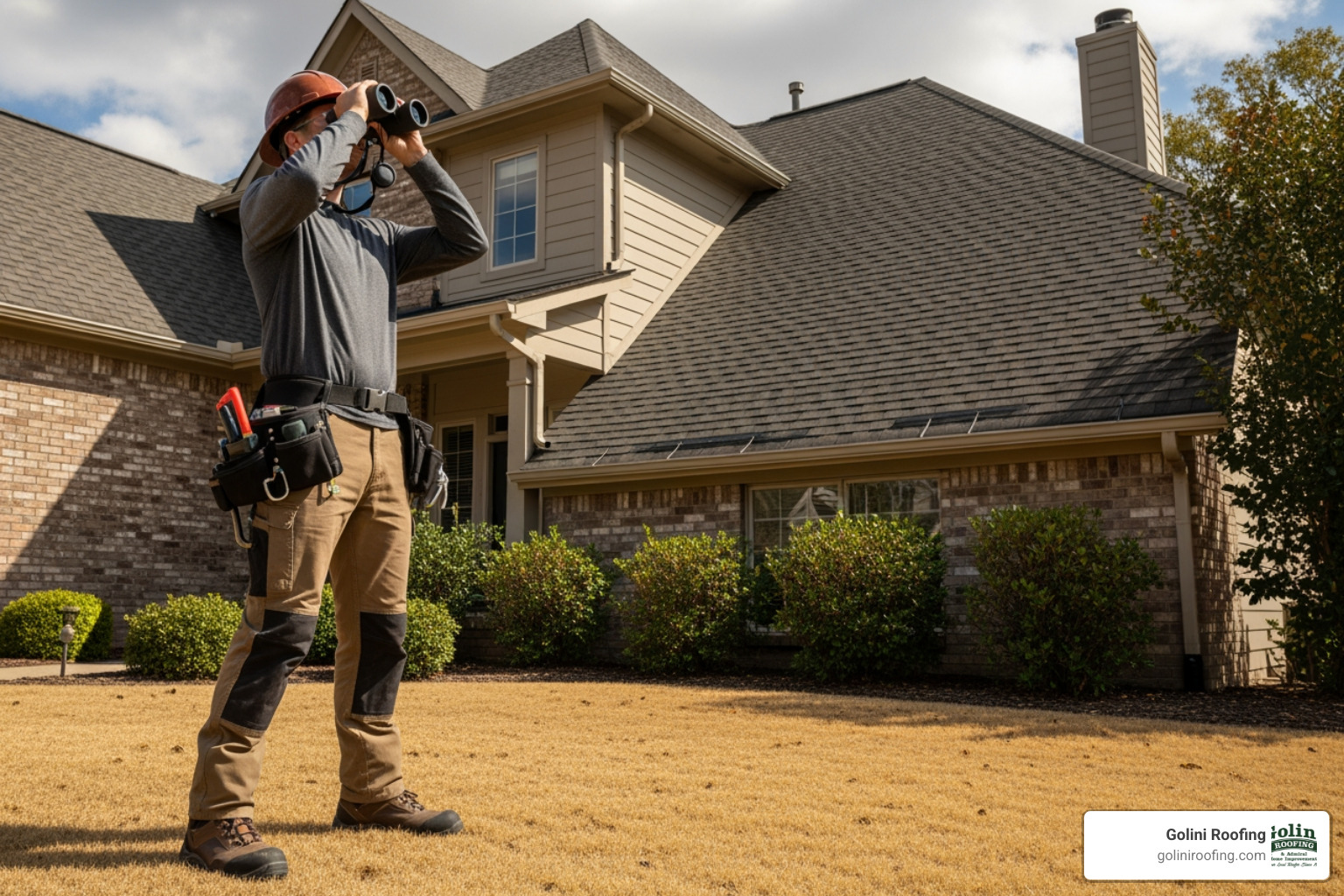
Safety first. Never climb onto your roof without proper safety equipment and experience. Instead, use binoculars to scan for damage from the ground. The goal is to spot problems early, not to risk injury.
Common Types of Shingle Damage to Spot
Here’s what broken roof shingles actually look like up close.
Cracking and splitting are fractures caused by temperature fluctuations. These cracks create direct pathways for water to get under your shingles.
Curling or cupped edges occur as shingles age or overheat. The lifted edges create pockets where water can pool and seep through to the roof deck.
Blistering appears as raised bumps on the shingle’s surface. These are caused by trapped moisture or heat and lead to rapid granule loss, creating a weak spot.
Missing shingle tabs are obvious gaps where shingles have been torn off by high winds, exposing the underlayment. This damage requires immediate attention.
Bald spots from granule loss look like dark patches where the protective granules have worn away. Check your gutters for an accumulation of these granules, which resemble coarse black sand. For more details, see What Do Damaged Shingles Look Like?.
Hail or impact bruises appear as dark spots, dents, or areas of missing granules. After a hailstorm, check metal gutters and flashing for dents, which confirm your shingles were also impacted.
The Main Culprits: What Causes Shingle Damage?
Understanding the cause helps you know what to look for.
Severe weather is the primary enemy. In Massachusetts, high winds, heavy rain, snow, and ice dams put constant stress on your shingles.
High winds can rip off shingles, bend tabs, or create creases. Quality shingles are rated for wind resistance (ASTM D3161 and D7158).
Hail impact can be subtle. Even small hailstones can bruise shingles. Dented gutters are a sure sign your shingles were also damaged.
Intense sun and UV degradation slowly dry out the asphalt in shingles, making them brittle and causing granules to loosen.
Old age is inevitable. Most asphalt shingle roofs last 15-30 years. As they age, they become brittle, curl, and crack. If your roof is over 20 years old and showing these signs, consider a replacement.
Poor installation from mistakes like exposed nails or improper flashing can cause premature failure. This is why we hand-nail every shingle at Golini Roofing—it ensures your roof lasts its full lifespan.
Falling tree limbs cause impact damage, but even small branches scraping in the wind can wear away granules. Keep trees trimmed at least six feet from your roof.
Foot traffic can dislodge granules and crack brittle shingles, especially on a hot day. It’s best to stay off your roof and leave inspections to professionals.
The Domino Effect: Why You Can’t Ignore Damaged Shingles
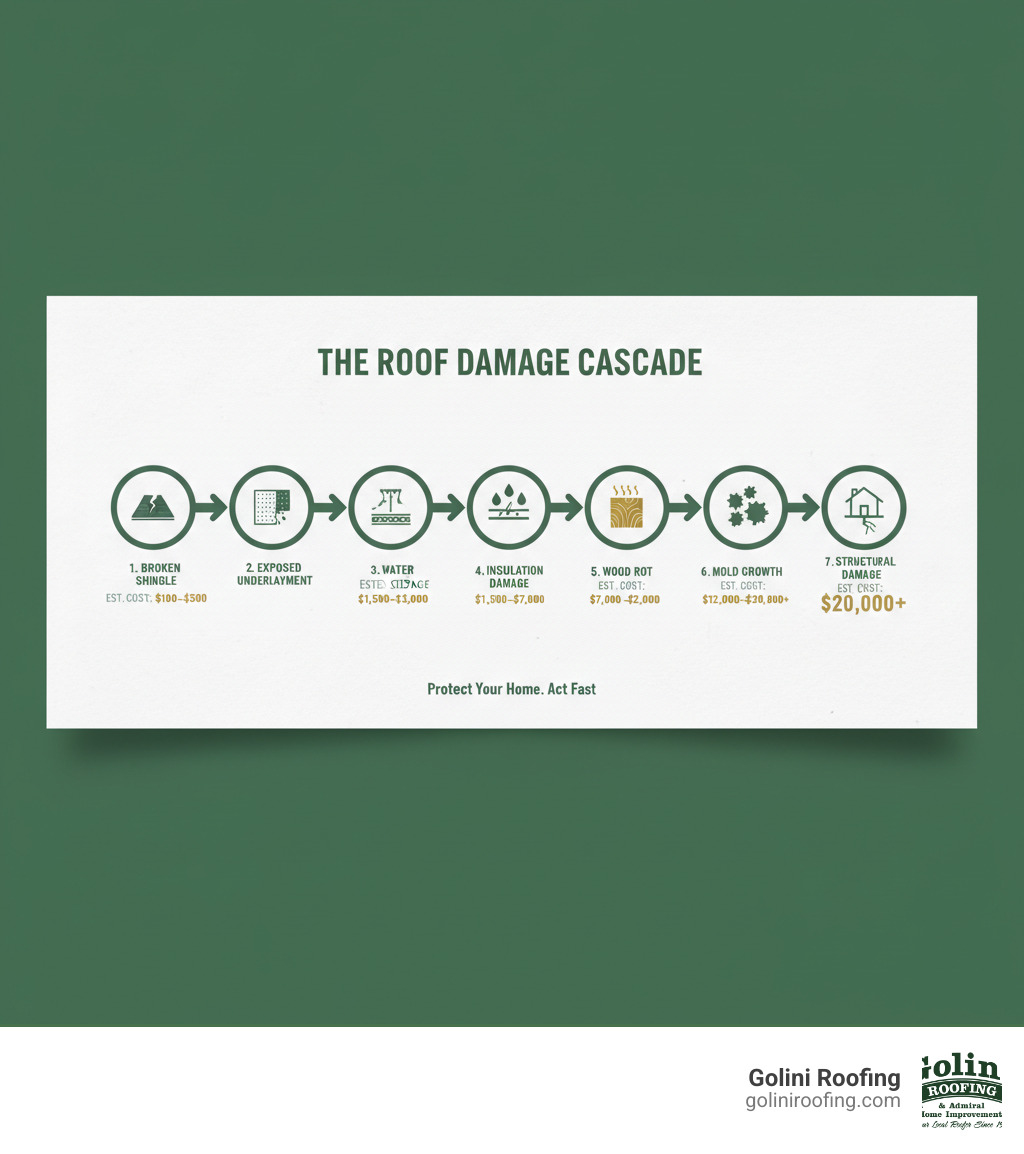
Ignoring a few broken roof shingles is like ignoring a small crack in a dam. Water is relentless, and what starts as a minor fix can quickly become a catastrophic repair. A homeowner might delay a small repair, only to call us in a panic later when water is dripping through their ceiling. By then, the damage has already spread far beyond the original shingles.
From a Small Drip to Major Structural Rot
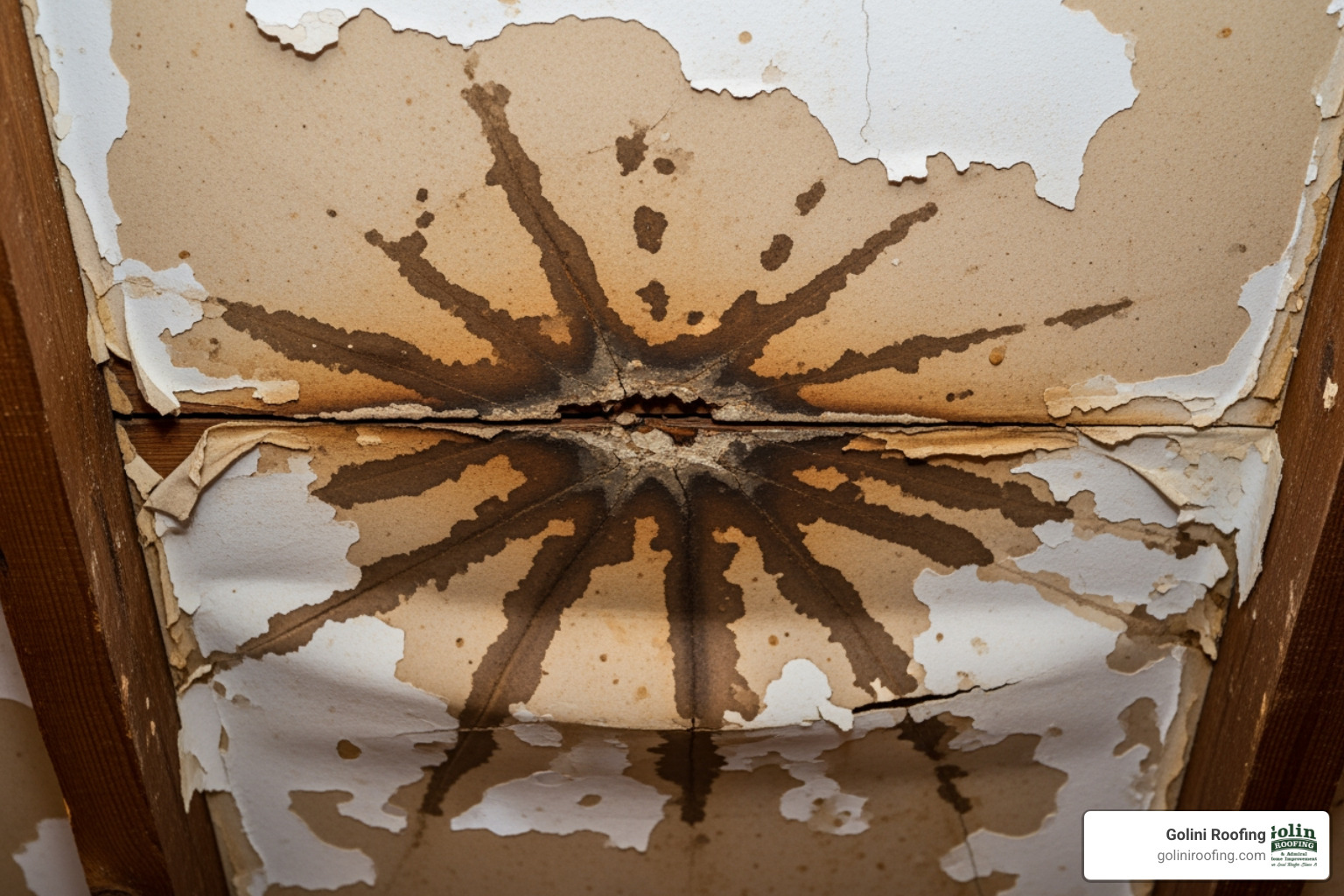
A damaged shingle allows water to seep in, first saturating the underlayment. From there, it soaks attic insulation, rendering it useless and raising your energy bills. The moisture then reaches the wooden decking, rafters, and support beams, causing them to rot and weaken your roof’s structure. A warped or sagging roof deck is a clear sign of long-term water damage. Eventually, you’ll see the evidence inside: water stains on ceilings, peeling paint, and even potential electrical hazards. What began as a few broken roof shingles has now invaded your living space.
The Hidden Dangers of Mold and Mildew
Where there’s moisture, mold follows, often within 24 to 48 hours. Your dark, damp attic is a perfect breeding ground. Mold spreads aggressively, ruining drywall, insulation, and personal belongings, leading to costly remediation. More importantly, mold poses serious health risks. According to the CDC, exposure can cause allergic reactions, respiratory issues, and other health problems, especially for those with asthma or compromised immune systems. The CDC provides detailed information about the negative health effects of mold exposure.
Those broken roof shingles aren’t just a cosmetic issue; they’re a threat to your home and your family’s health. Catching damage early—before water gets in—can save you thousands of dollars and protect your family.
Your Action Plan: DIY Shingle Repair vs. Calling a Professional
Spotting broken roof shingles might tempt you to try a DIY fix. For a single damaged shingle, this can be a manageable project. However, knowing when to call a professional is key to avoiding costly mistakes or injury.
Safety is paramount. If you’re uncomfortable with heights, lack proper safety gear, or your roof is steep, call a professional. There’s no shame in leaving the work to trained and equipped experts. If you proceed with a DIY repair, work on a warm, dry day when shingles are flexible, and always wear non-slip shoes, gloves, and safety glasses.
How to Fix Minor Broken Roof Shingles Yourself
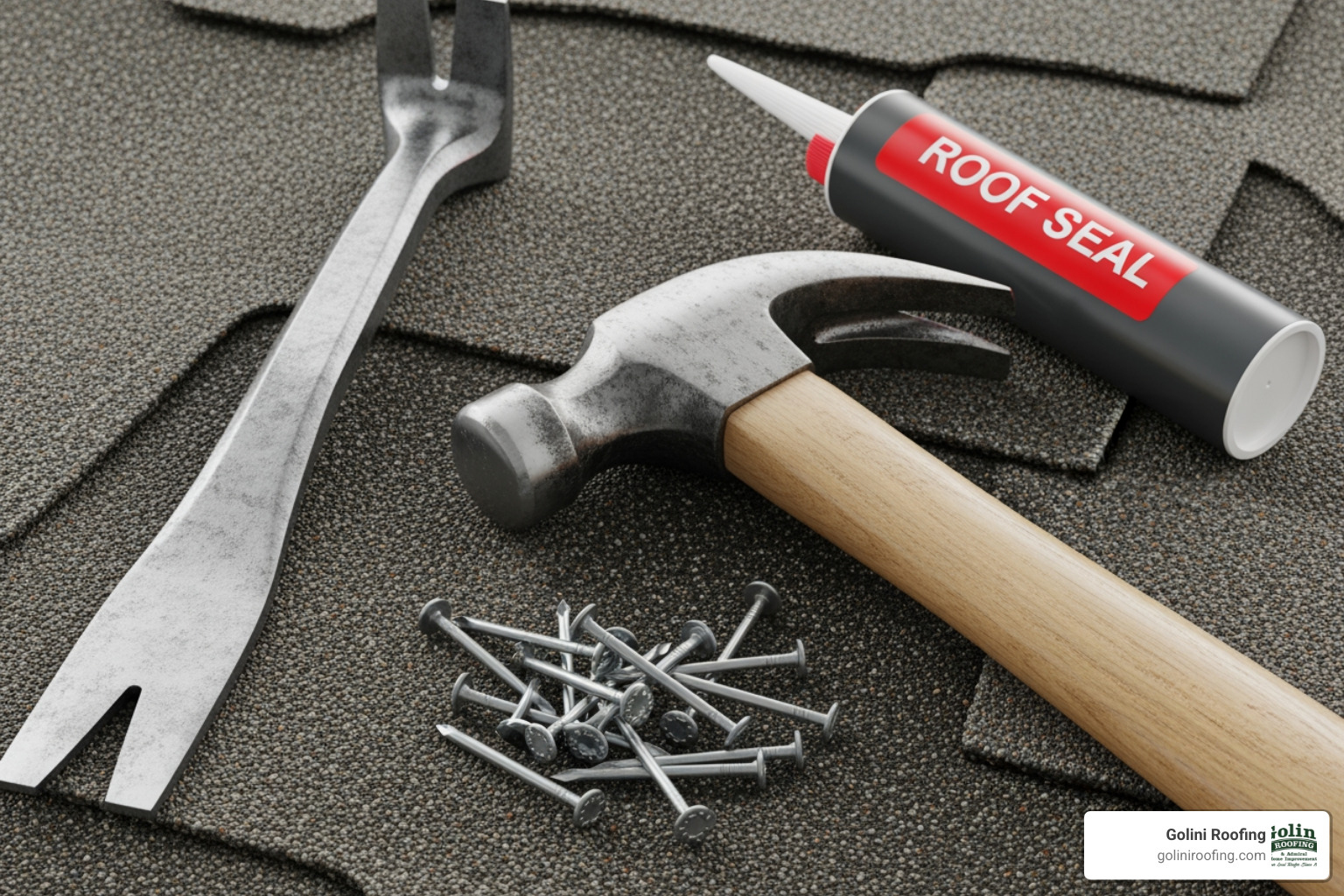
For minor repairs, you’ll need a pry bar, hammer, utility knife, roofing sealant, and matching replacement shingles with 1-and-1/4-inch roofing nails.
- Replacing a Single Shingle: Gently break the seal of the shingles above the damaged one. Use a pry bar to remove the nails holding the damaged shingle, then slide it out. Slide the new shingle into place, secure it with four roofing nails under the overlapping shingle, and reseal the tabs of the surrounding shingles with roofing cement. For detailed steps, consult online guides on how to repair and replace roof shingles.
- Sealing a Cracked Shingle: Clean the area, apply roofing sealant under the crack, press it down, and then apply another bead of sealant over the top, smoothing it with a putty knife.
- Fixing a Curled Shingle: Clean under the curl, apply a generous amount of sealant, and weigh the shingle down with a brick for at least 24 hours to allow it to cure.
Red Flags: When to Call a Professional Roofer Immediately
Some situations require immediate professional help. Call a roofer if you see:
- Widespread Damage: Multiple broken roof shingles across different areas often indicate a larger, systemic problem.
- A Sagging Roof Deck: This is a structural emergency caused by significant water damage. Do not wait to call a professional.
- Active Leaks: Water stains on ceilings or damp insulation mean water has already breached your roof’s defenses and needs to be addressed quickly.
- An Aging Roof (15-20+ years): Patching old, brittle shingles is often a temporary fix. A professional can assess if a repair is sufficient or if a replacement is the smarter investment.
- An Unknown Leak Source: Water can travel before it becomes visible. Professionals have the experience to trace leaks to their hidden source, like faulty flashing.
- Safety Concerns: If your roof is steep or you lack the proper safety equipment, leave the work to us.
At Golini Roofing, we’ve been protecting homes throughout the North Shore for over 35 years. Our hand-nailing technique ensures a durable, long-lasting roof. Whether it’s a repair or replacement, we’re here to help.
The Cost of Waiting: Repairing Shingles vs. Replacing the Whole Roof
It’s tempting to delay fixing broken roof shingles, but procrastination is one of the costliest mistakes a homeowner can make. Every day you wait allows more damage to occur. Making a timely decision between repair and replacement is essential to protect your home’s value and your peace of mind.
The Price of a Patch: Understanding Minor Repair Costs
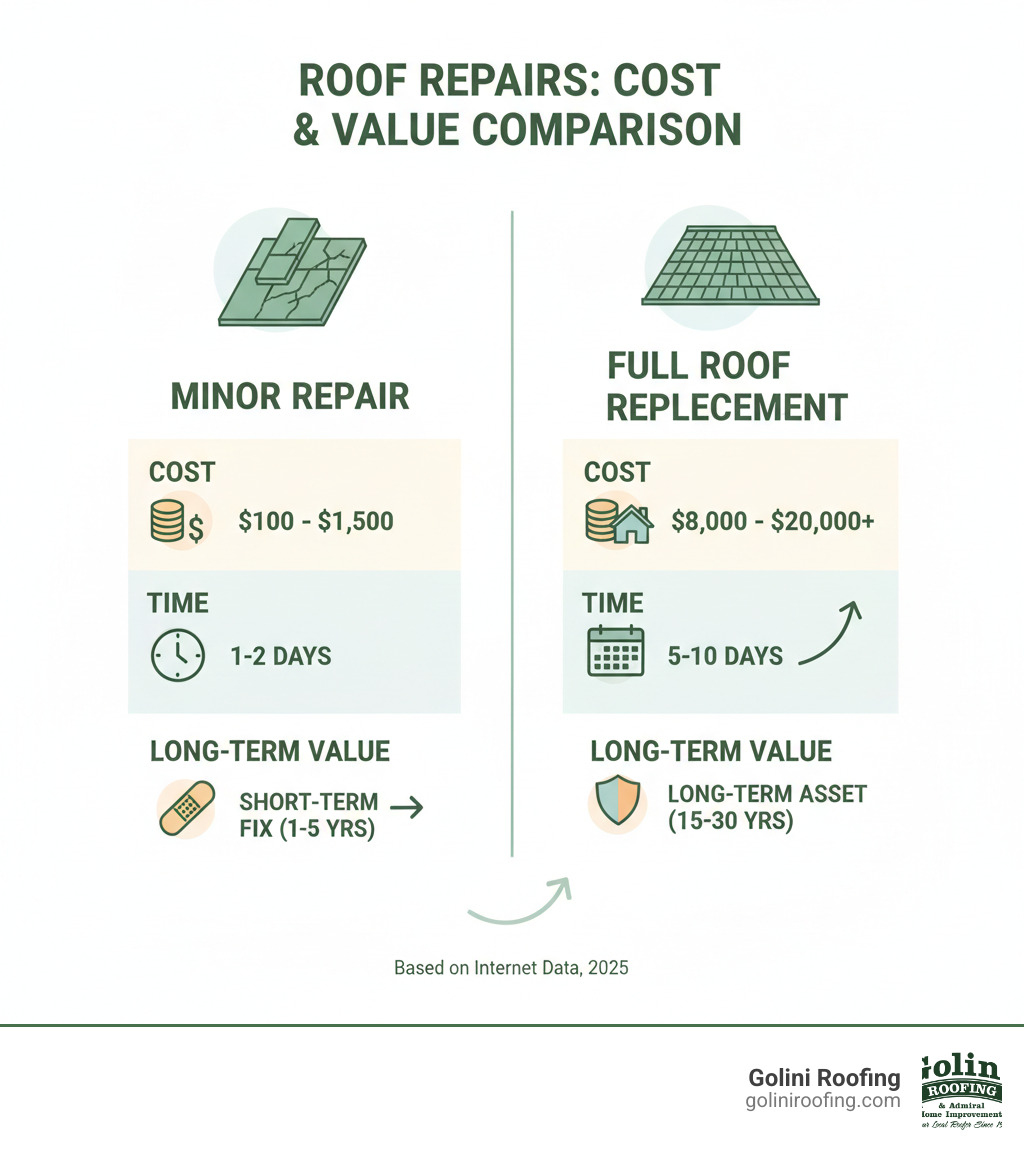
The good news is that fixing minor shingle damage early is affordable. Based on internet data, small repairs typically range from $100–$1,500. (Note: These are online averages, not a quote from Golini Roofing. Contact us for a free estimate.)
Costs vary based on:
- The extent of damage
- The type of shingle
- Roof accessibility
A minor repair now is far cheaper than dealing with water-damaged decking, mold remediation, and ruined ceilings later.
The Investment in a New Roof: Replacement Costs & Benefits
Sometimes, a full replacement is the wiser investment for your home’s future. Based on internet data, a new roof can cost $8,000–$20,000 or more. (Again, these are online averages, not a quote from Golini Roofing.)
Replacement is the smarter choice when you have:
- Extensive Damage: If broken roof shingles are widespread or the underlying decking is rotten, patching is no longer effective.
- Old Age: If your roof is near or past its 15-30 year lifespan, it’s time to replace it. Old shingles are brittle and fail to protect your home.
- Structural Issues: A sagging roof indicates a problem that requires a full tear-off and replacement of damaged decking.
A new roof is a significant investment, but it provides decades of protection, improved energy efficiency, and peace of mind. At Golini Roofing, our meticulous hand-nailing technique ensures maximum durability. When you’re ready, explore our comprehensive roofing services.
Proactive Protection: How to Extend the Life of Your Roof
The best way to prevent costly repairs for broken roof shingles is proactive maintenance. A little preventive care can give you decades of reliable protection. We recommend inspecting your roof twice a year (spring and fall) and after any major storm. You can do a visual check safely from the ground with binoculars.

Your Essential Roof Maintenance Checklist
- Inspect Twice Yearly: In spring and fall, look for cracks, curls, or missing shingles. Pay close attention to flashing around chimneys, vents, and skylights.
- Keep Gutters Clear: Clogged gutters cause water to back up under shingles, leading to rot and leaks. Clean them twice a year to ensure proper drainage. We can help with our gutter services.
- Trim Overhanging Branches: Overhanging branches scrape away protective granules and can fall during storms. Keep them trimmed at least six feet from your roof.
- Ensure Proper Attic Ventilation: A well-ventilated attic regulates temperature and moisture, preventing shingles from baking in the summer and stopping rot and mold in the winter. It’s also your best defense against ice dams. Learn more about how to prevent ice dams in winter.
- Choose Quality Materials: When replacing your roof, choose high-quality, impact-resistant shingles. They cost more upfront but offer better long-term protection against harsh New England weather.
A little attention now prevents a lot of headaches later. If you spot anything concerning during your inspections, give us a call. We’re always happy to provide honest advice.
Don’t Let a Small Problem Turn into a Disaster
You now know how a single broken roof shingle can trigger a domino effect of water intrusion, rot, and mold, leading to thousands in repairs. The key is to act fast. You’re equipped to spot the warning signs and know the difference between a simple DIY patch and a job for a professional.
Don’t wait for a small problem to become a disaster. That water stain or handful of shingles in your yard won’t fix itself. For widespread damage, an aging roof, or any repair you’re not comfortable tackling, trust the experts.
At Golini Roofing, we’ve protected homes in Wakefield, Burlington, Lynnfield, North Reading, Reading, Stoneham, Wilmington, Winchester, and Woburn for over 35 years. Our signature hand-nailing technique ensures every shingle is secured for maximum durability against harsh New England weather. It’s a level of care that gives you lasting peace of mind.
Your home is your biggest investment. Don’t let broken roof shingles compromise its value or your family’s safety. Let us help you protect it.
Ready to get started? Contact us today for a free, no-obligation estimate on your roof. Let’s keep that small problem from turning into a catastrophe.