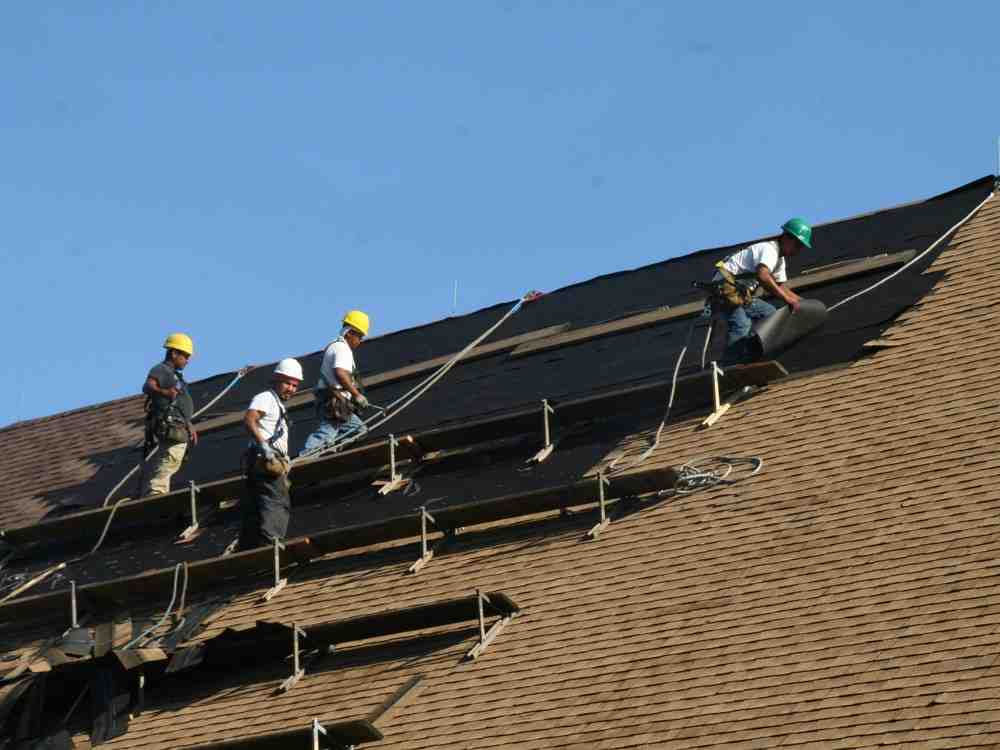
Calculating Roof Replacement Cost: Top Tips for 2024
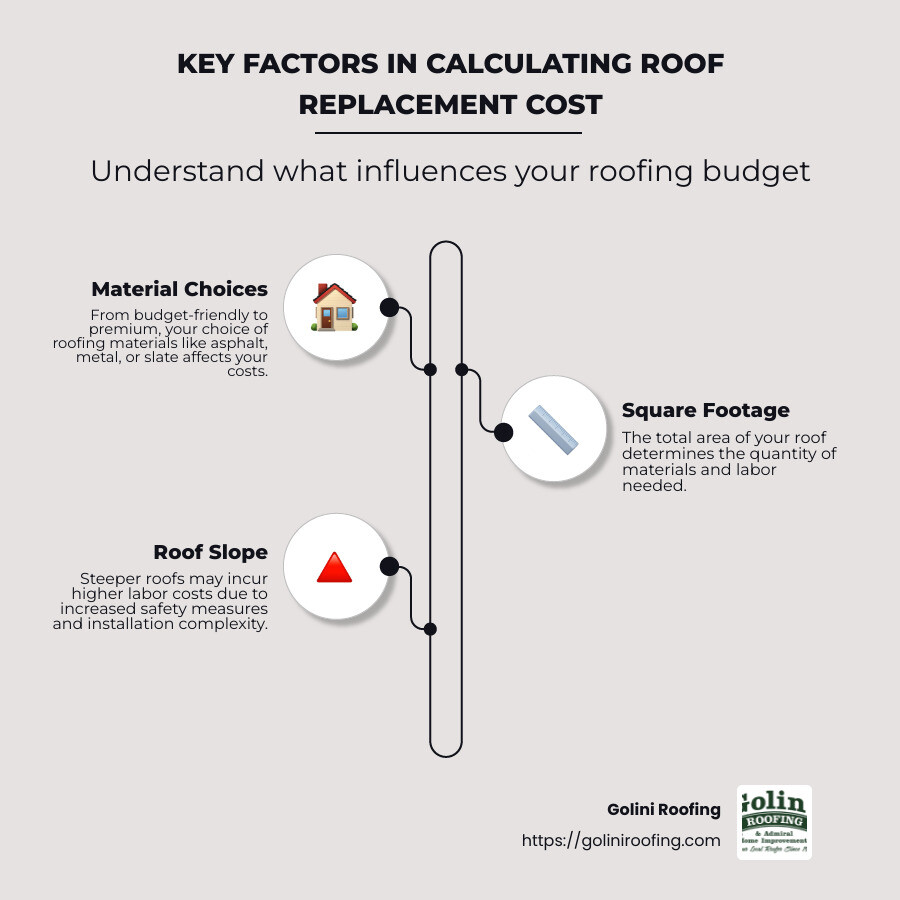
When it comes to calculating roof replacement cost, three main factors can affect your budget: materials, square footage, and roof slope. Understanding these elements will help you estimate expenses and plan accordingly:
- Materials: From affordable 3-tab shingles to premium designer shingles, material choices can significantly influence your costs.
- Square Footage: The size of your roof directly impacts the quantity of materials and labor required.
- Roof Slope: Steeper roofs may increase labor costs due to additional safety measures and complexity.
Now, let’s dig deeper into how these elements play a role in crafting your roofing budget.
My name is Jack Golini, and with over 35 years of experience in the roofing industry, calculating roof replacement cost is second nature. My goal is to ensure homeowners from Burlington to Woburn make informed decisions about their roofing needs.
Handy calculating roof replacement cost terms:
– house roofing cost estimator
– metal roofs cost
– new shingles cost
Factors Influencing Roof Replacement Cost
When you’re planning a roof replacement, several factors will shape your final budget. Understanding these will help you make informed decisions and avoid surprises. Here’s what you need to know:
Roof Size
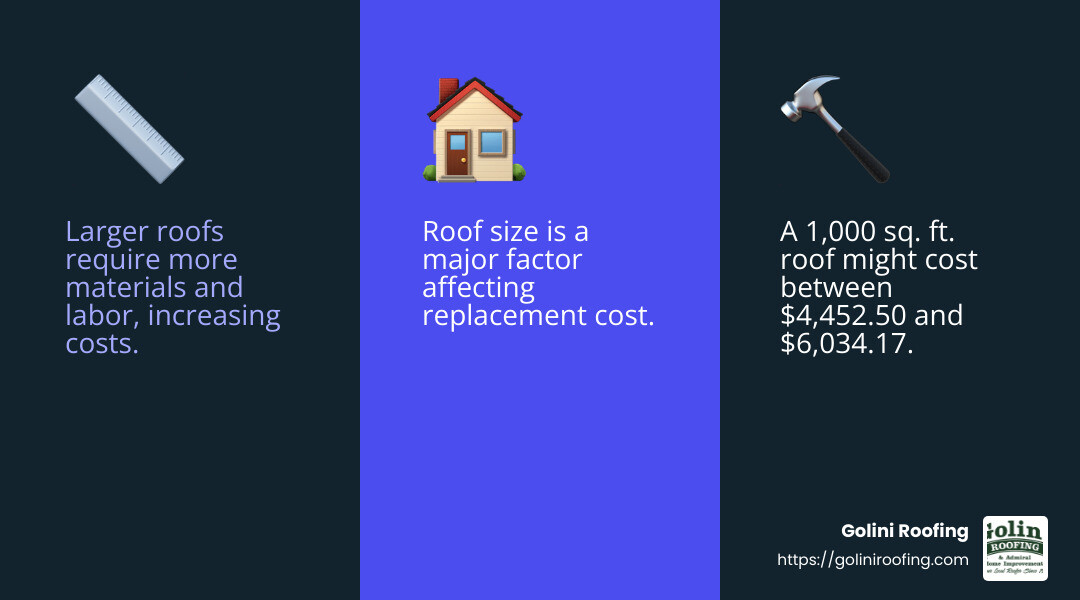
The size of your roof is a major factor in determining cost. Larger roofs require more materials and labor, which means higher expenses. For example, a 1,000 sq. ft. roof might cost between $4,452.50 and $6,034.17, while a 2,000 sq. ft. roof can range from $8,905.00 to $12,068.33.
Roofing Materials
Your choice of materials can significantly affect your budget. Here’s a quick breakdown:
- 3-Tab Shingles: Affordable and easy to install but have a shorter lifespan.
- Architectural Shingles: More durable and visually appealing but pricier.
- Metal Roofing: Highly durable but can be expensive, especially standing seam options.
Each material comes with pros and cons, so consider both your budget and your climate when choosing.
Labor Costs
Labor can account for up to 60% of your total cost. Rates vary by region. In high-cost areas, like California, labor might range from $40 to $60 per hour. In more affordable areas, like Texas, it could be less.
Roof Complexity
The complexity of your roof design also impacts costs. Steeper roofs or those with multiple angles and features require more time and expertise, increasing labor costs.
Location
Your location plays a role too. For instance, regions with heavy snowfall might need additional underlayment or ice barriers. Local regulations and permits can also add to the cost.
Roof Removal
Don’t forget about the cost of removing old roofing materials. This can range from $0.40 to $2.00 per square foot. On average, expect to pay between $665 and $3,343 for removal and disposal.
Additional Features
Finally, consider any extra features, like skylights or chimneys, which can complicate the installation and increase costs.
Understanding these factors will help you create a realistic budget for your roof replacement project. Next, we’ll explore how to calculate these costs in more detail.
Calculating Roof Replacement Cost
When calculating roof replacement cost, it’s crucial to understand the various elements that contribute to the total expense. Let’s break it down to make it simple.
Average Cost
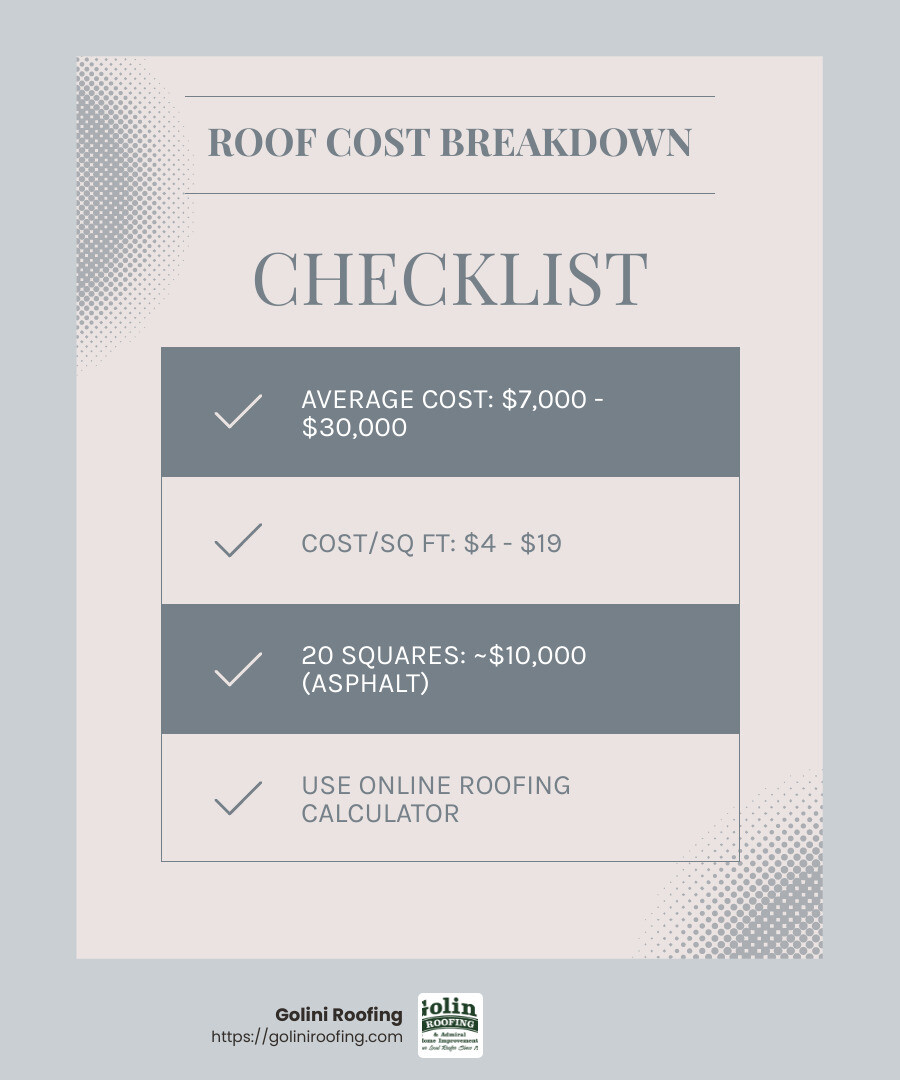
The average cost of a roof replacement can vary widely based on several factors, such as materials and labor. For instance, a standard asphalt shingle roof might cost between $7,000 and $10,000, while a metal roof could range from $15,000 to $30,000. Keep these numbers in mind as a baseline when planning your budget.
Cost Per Square Foot
Costs are often calculated per square foot. Asphalt shingles typically range from $4 to $6 per square foot, while metal roofs can cost between $12 and $19 per square foot. Knowing the cost per square foot helps you estimate the total cost based on your roof’s size.
Cost Per Square
In roofing terms, a “square” is a 10×10 foot area, or 100 square feet. This is a common unit of measurement in the industry. For example, if your roof is 20 squares, and you’re using asphalt shingles at $5 per square foot, the material cost alone would be around $10,000.
Roofing Calculator
To simplify the process, consider using a roofing calculator. Many companies, like Golini Roofing, offer online tools that can help you estimate costs quickly. These calculators typically require inputs such as roof dimensions, material choice, and slope to provide a rough estimate. They are a great way to get an initial idea of potential costs, though a professional inspection is always recommended for accuracy.
By breaking down costs into these components, you can better understand where your money goes and plan your budget accordingly. Next, we’ll dig into how different roofing materials impact your overall replacement costs.
Roof Replacement Cost by Material
When planning a roof replacement, understanding how different materials affect costs can help you make informed decisions. Here’s a simple breakdown of common roofing materials and their impact on your budget.
Asphalt Shingles
Asphalt shingles are the most popular choice for homeowners due to their affordability and ease of installation. They typically cost between $4 and $6 per square foot. While they are budget-friendly, they have a shorter lifespan of about 20 to 30 years. They are ideal for those looking to balance cost and durability.
Metal Roofing
Metal roofs are known for their durability and long lifespan, often lasting 40 to 70 years. They are more expensive, ranging from $12 to $19 per square foot. Metal roofs are energy-efficient and can withstand harsh weather conditions, making them a good investment in the long run. However, the initial cost is higher compared to asphalt shingles.
Tile Roofing
Tile roofing offers a classic look and long-lasting performance. Clay and concrete tiles are common options, with costs ranging from $6.27 to $12.29 per square foot. Tile roofs can last 50 years or more, but they require a strong structural support due to their weight. If aesthetics and longevity are priorities, tile roofing is worth considering.
Wooden Shakes
Wooden shakes and shingles provide a natural and rustic appearance. They are slightly more expensive, costing between $6.02 and $9.12 per square foot. While they look great, they require regular maintenance to prevent issues like rot and algae growth. With proper care, they can last around 30 years, making them a charming option for those who love a traditional look.
Slate Roofing
Slate roofs are the premium choice, known for their elegance and longevity. They can last up to 150 years, but they come with a hefty price tag. Re-roofing with slate tiles can cost between $39,925 and $54,020. Slate is extremely durable and requires minimal maintenance, making it a long-term investment for those who can afford the upfront cost.
By understanding the cost implications of each material, you can choose the one that best fits your budget and needs. Next, we’ll explore how location affects roof replacement costs.
Roof Replacement Cost by Location
When calculating roof replacement cost, where you live plays a big role. Let’s explore how regional differences, climate impact, and local regulations can affect your roofing budget.
Regional Differences
Roof replacement costs can vary a lot depending on your location. For instance, in California, the cost might range from $8,000 to $25,000 due to higher living expenses. Meanwhile, Texas offers a more budget-friendly range of $6,700 to $20,000. In Massachusetts, expect prices between $7,000 and $22,000.
Why the difference? It’s mostly due to labor rates, material availability, and the local cost of living. So, where you live can make a big difference in your roofing costs.
Climate Impact
The climate in your area also affects the cost. In regions with harsh weather, like heavy snow or strong winds, you might need more durable materials. For example, metal roofing is popular in areas with extreme weather due to its durability. However, it comes at a higher price, ranging from $12 to $19 per square foot.
On the other hand, in milder climates, you might opt for asphalt shingles, which are more affordable at $4 to $6 per square foot. But remember, they have a shorter lifespan.
Local Regulations
Local building codes and regulations can also influence your costs. Some areas have strict codes that require specific materials or installation methods. For instance, in regions prone to hurricanes, you might need to use materials that can withstand high winds, which could increase your expenses.
Additionally, permits and inspections may add to your overall cost. It’s crucial to check with your local authorities or a trusted roofing contractor to understand the requirements in your area.
Understanding these factors can help you plan better for your roof replacement project. Next, we’ll look into additional costs you might encounter during the process.
Additional Costs in Roof Replacement
When planning for a roof replacement, it’s important to consider more than just the main materials like shingles or tiles. There are several additional components that can impact your budget. Let’s break them down:
Roof Decking
Roof decking is the base layer that supports your roofing materials. It’s usually made of plywood or oriented strand board (OSB). If your roof has leaks or damage, the decking might need replacing. This can cost between $2.20 and $3.00 per square foot.
However, keep in mind that your contractor won’t know the condition of the decking until the old roof is removed. So, this cost might be added after you’ve received an initial quote.
Underlayment
The underlayment is a protective layer between your decking and shingles. It helps prevent water damage. Most modern underlayments are made from synthetic felt covered in asphalt. It’s often required by building codes and costs between $1.50 and $2.10 per square foot.
Ice and Water Barrier
An ice and water barrier provides extra protection in vulnerable areas like edges, ridges, and valleys. It’s especially useful in regions with heavy snow or rain. Replacing this barrier can range from $1.87 to $2.53 per square foot, not including installation.
Fascia and Soffit
Fascia boards support your gutters and are located at the roof’s edge. Soffits cover the underside of the overhang. Both are prone to water damage and might need replacement during a roof project. Installing new fascia costs between $4.25 and $8.62 per linear foot, while soffits range from $2.80 to $5.28 per linear foot. The good news? These can be DIY projects to save money.
Roof Flashing
Roof flashing is essential for waterproofing around chimneys, skylights, and other roof penetrations. Made of galvanized steel, flashing costs between $9.00 and $11.00 per foot. It’s not always necessary to replace flashing unless it’s damaged.
Pipe Boots
Pipe boots are rubber fittings that seal around pipes to prevent leaks. Each boot costs $63.00 to $85.00. Like flashing, they don’t always need replacing unless they’re worn out.
Understanding these additional costs helps you create a more accurate budget for your roof replacement. Next, we’ll answer common questions about calculating roof replacement costs.
Frequently Asked Questions about Calculating Roof Replacement Cost
How do I calculate the cost of a new roof?
Calculating the cost of a new roof involves a few key steps. First, determine the size of your roof. This is usually measured in square feet. You’ll need to measure each section of your roof and add them together.
Next, consider the cost per square foot of your chosen roofing material. For example, asphalt shingles might cost between $4 and $6 per square foot, while metal roofing can range from $12 to $19 per square foot. Multiply the total square footage of your roof by the cost per square foot of the material you choose.
Don’t forget to account for the complexity of your roof. If your roof has a steep slope or many angles, it may require more labor and materials, increasing the overall cost.
What factors affect roof replacement cost?
Several factors can influence the cost of replacing a roof.
- Roof Complexity: Roofs with steep pitches or complex designs can be more expensive to replace due to the additional labor and safety measures required.
- Material Choice: The type of roofing material you choose plays a significant role in cost. Asphalt shingles are typically more affordable, while metal or slate roofing can be more costly but offer longer lifespans.
- Average Cost and Cost Range: It’s important to understand the average cost and potential cost range for your specific project. For example, a simple roof with asphalt shingles might cost between $6,000 and $9,000, while a more complex metal roof could range from $30,000 to $47,500.
How much does it cost to replace 1000 sq ft of roof?
Replacing a 1,000 sq ft roof can vary greatly depending on the material and complexity. On average, you might expect to pay around $7,000 for a basic asphalt shingle roof. However, if you opt for a more durable material like metal, the cost could increase significantly, potentially reaching up to $40,000 per square foot.
Understanding these costs can help you budget effectively for your roof replacement project. In the next section, we’ll explore the importance of choosing the right roofing contractor to ensure quality and value for your investment.
Conclusion
Choosing the right roofing contractor is crucial for ensuring a high-quality roof replacement. At Golini Roofing, we pride ourselves on our expert craftsmanship and commitment to customer satisfaction. With over 35 years of experience in the roofing industry, we have honed our skills to provide top-notch services that meet the unique needs of each client.
Our meticulous hand-nailing technique ensures that each shingle is securely placed, enhancing the durability and longevity of your roof. This attention to detail sets us apart from others and highlights our dedication to delivering roofs that stand the test of time.
We understand that a roof replacement is a significant investment, and we aim to make the process as smooth and transparent as possible. Our team works closely with you to ensure that all your questions are answered, and your concerns are addressed. By providing clear communication and reliable service, we ensure that you are informed and confident throughout the project.
If you’re considering a roof replacement, we invite you to explore our new roof estimate services and experience the Golini Roofing difference. Our expert team is ready to assist you with a free consultation and estimate, helping you make informed decisions about your roofing needs.
In choosing Golini Roofing, you are choosing a partner dedicated to quality, reliability, and exceptional service. Let us help you protect your home with a roof that will last for years to come. Contact us today to get started on your roofing project.