
Complete Roof Replacement: Top Guide for 2025 Success
Complete roof replacement is a major home improvement project that involves removing existing roof materials down to the deck and installing brand-new materials. It ensures your home is protected and remains energy-efficient. Here’s a quick rundown of what to expect:
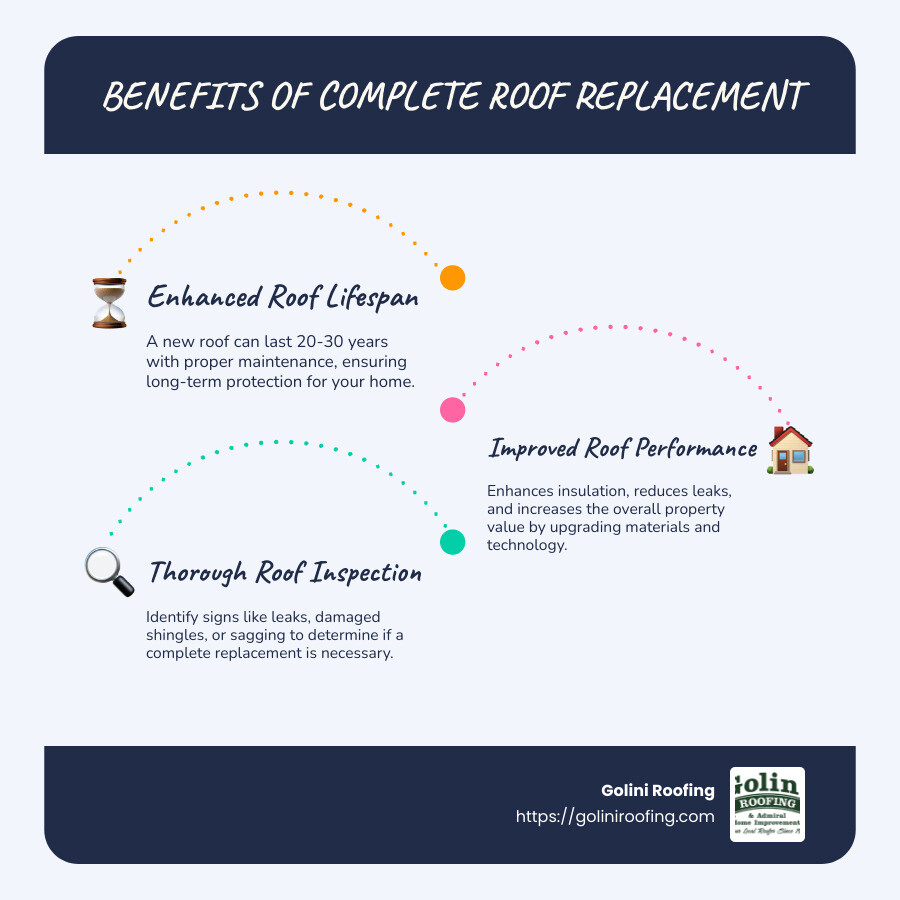
- Roof Lifespan: Most roofs last 20-30 years. Regular maintenance can prolong this.
- Roof Performance: A new roof improves insulation, reduces leaks, and increases property value.
- Roof Inspection: It’s the first step in determining if a complete replacement is necessary. Look for signs like leaks, damaged shingles, or sagging.
I’m Jack Golini, owner of Golini Roofing with over 35 years of experience in the field. I’ve been ensuring top-notch craftsmanship in complete roof replacement to protect your home and investment.
Complete roof replacement word roundup:
– how much does roof replacement cost
– how often should a roof be replaced
– replacing roof shingles
What is a Complete Roof Replacement?
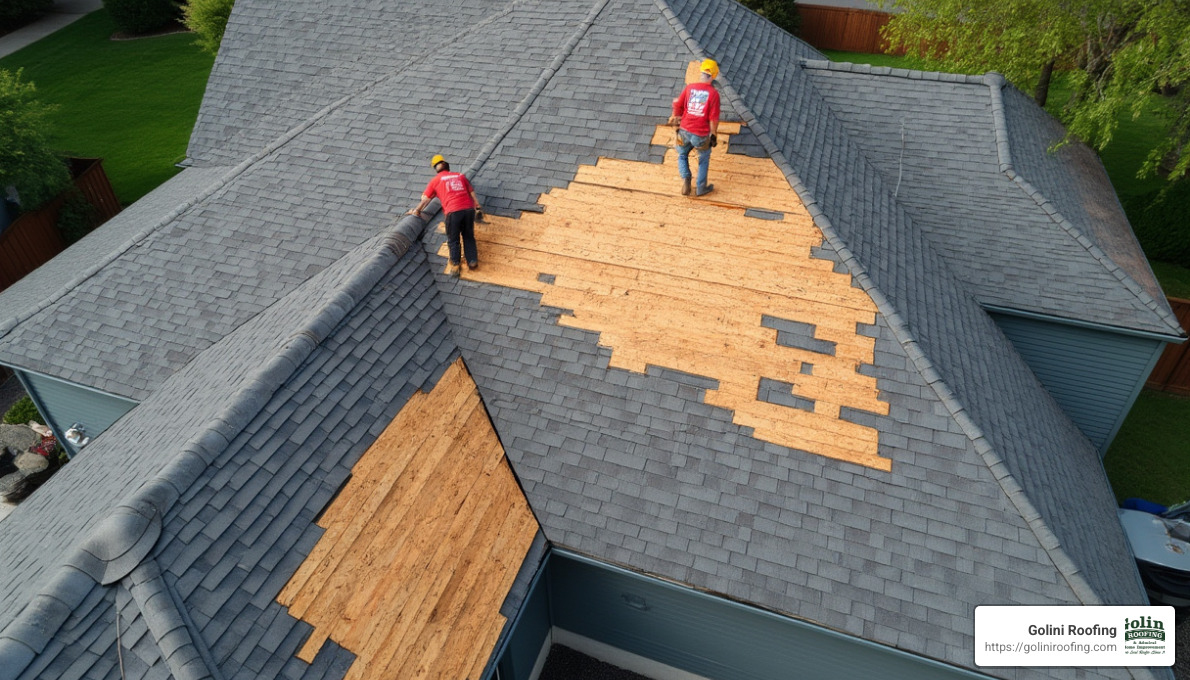
A complete roof replacement is a thorough overhaul of your roof, ensuring every part is brand new and fully functional. Unlike re-roofing, which simply adds a layer of shingles over the existing roof, a complete replacement involves removing all the old materials down to the roof deck. This process is often referred to as a “tear-off” roof.
The Layers of a Roof
Understanding the different layers involved in a roof can help you appreciate the complexity of a complete roof replacement.
- Shingles: The outermost layer that protects your home from the elements. Asphalt shingles are the most common choice, offering a balance of cost and durability.
- Underlayment: This is the waterproof or water-resistant layer beneath the shingles. It acts as an extra barrier against moisture. Think of it as your roof’s raincoat.
- Roof Decking: Also known as sheathing, the decking is made of wooden boards attached to the roof’s trusses. It’s the foundation to which all other layers are attached. If the decking is damaged, it must be replaced to ensure the stability of your new roof.
- Flashing: Thin metal pieces installed to prevent water from seeping into joints and valleys. It’s crucial for areas around chimneys, skylights, and vents.
- Drip Edge: A metal strip that ensures water flows into the gutters and not behind them. It’s a small but vital component in preventing water damage.
Tear-Off Process
The tear-off process is labor-intensive but necessary for a long-lasting roof. It involves stripping away all the old shingles and underlayment to inspect the roof decking. This step is crucial because it allows roofers to repair any damage to the decking before installing new materials.
Why Opt for Complete Replacement?
A complete roof replacement offers several benefits:
- Longevity: By addressing all layers, you ensure the roof lasts longer and performs better.
- Energy Efficiency: New materials can improve insulation, reducing heating and cooling costs.
- Peace of Mind: A fully replaced roof minimizes the risk of leaks and other issues down the road.
If your roof is showing signs of significant wear or damage, a complete roof replacement is often the best solution. It’s an investment in your home’s future, ensuring safety and comfort for years to come.
The Complete Roof Replacement Process
Replacing a roof is a big project, but understanding the steps can make it less daunting. Here’s what you can expect from start to finish during a complete roof replacement.
1. Roof Inspection
Before any work begins, a thorough roof inspection is crucial. This step helps identify any existing damage and assesses the overall condition of your roof. Experts use tools like thermal scanners to find hidden issues, such as moisture buildup, that aren’t visible to the naked eye. This ensures that no problems are overlooked.
2. Project Estimate
After the inspection, you’ll receive a detailed project estimate. This document outlines the costs involved, from materials to labor. Be sure to ask questions and request clarifications if needed. A clear understanding of the estimate prevents surprises later on.
3. Contract Signing
Once you agree to the estimate, it’s time to sign a contract. This contract should include all project details, including timelines, costs, and warranties. Make sure everything is in writing to protect both you and the contractor.
4. Material Ordering
With the contract signed, the next step is ordering materials. The materials must be delivered before work can begin. The roofing company will coordinate the delivery to ensure everything arrives on time.
5. Installation
On the scheduled start date, the roofing crew will arrive to begin the installation. The first task is tearing off the old roof, which includes removing all shingles, underlayment, and any damaged decking. This step is essential for a fresh start.
Once the old materials are removed, the new layers—decking, underlayment, shingles, flashing, and drip edge—are installed. Depending on the size and complexity of your roof, this process can often be completed in a single day, though it might take longer for larger roofs or if weather conditions are unfavorable.
6. Cleanup
After installation, a comprehensive cleanup ensures your property is left in pristine condition. The crew will dispose of all debris from the old roof and perform a final inspection to make sure everything is perfect. Make sure cleanup is included in your contract to avoid any unexpected costs.
A complete roof replacement is a significant investment, but it ensures your home is protected and efficient for years to come. With the right contractor, the process can be smooth and stress-free.
Cost of Complete Roof Replacement
Understanding the cost of a complete roof replacement is crucial for homeowners planning this significant investment. Let’s break it down into simple terms.
Average Cost
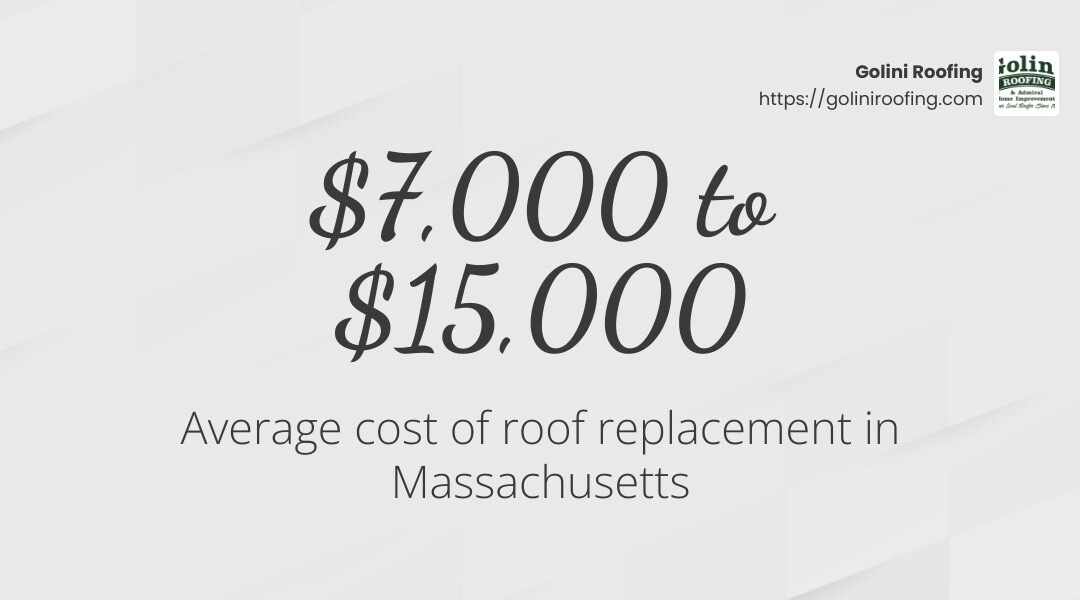
The cost of replacing an entire roof can vary widely based on several factors. Generally, you can expect to pay between $7,000 and $15,000 for a typical home in Massachusetts. This range includes everything from removing the old roof to installing the new one.
Cost by Location
Location plays a big role in determining the cost of a roof replacement. In regions with higher living expenses, like Massachusetts, labor costs can be significantly higher. For example, labor rates in Massachusetts can be driven up by local building codes and the need for specialized services, like snow removal and ice shield installation, due to harsh winters.
Cost by Square Footage
The size of your roof is another major factor. Larger roofs require more materials and labor, which increases the total cost. For instance, a 1,000 sq. ft. roof might cost around $7,000, while a 3,000 sq. ft. roof could go up to $21,000.
Budget Considerations
When planning for a complete roof replacement, consider all potential costs, not just the obvious ones. In addition to materials and labor, you may incur additional expenses for:
- Permit Fees: Required by local authorities for construction work.
- Roof Inspections: To ensure quality and compliance with standards.
- Emergency Services: Premium charges for expedited services if your roof is severely damaged.
To avoid unexpected expenses, ask for a detailed estimate that breaks down each cost component. This transparency helps you understand where your money is going and allows you to plan your budget effectively.
Understanding these cost factors will help you make informed decisions and ensure your roofing investment is well-planned and executed. Up next, we’ll explore the differences between partial and full roof replacements to help you decide which option best suits your needs.
Partial vs. Full Roof Replacement
Choosing between a partial roof replacement and a complete roof replacement can be challenging. Let’s explore the key considerations to help you decide which option is best for your home.
Localized Damage
When damage is confined to a specific area, a partial replacement might be the way to go. For example, if a storm only affects one section of your roof, you can replace just that part. This is often more cost-effective and quicker than replacing the entire roof.
However, be cautious. If the underlying damage is more widespread than it appears, a partial fix might only be a temporary solution. It’s essential to have a professional inspection to assess the full extent of the damage.
Budget Constraints
Budget is a significant factor in deciding between partial and full replacement. A partial replacement is generally more affordable, as it involves less labor and fewer materials. This option can be a lifesaver if your budget is tight or if your insurance only covers part of the roof.
But remember, while a partial replacement can save money upfront, it may not be the most cost-effective solution long-term if the rest of the roof is nearing the end of its lifespan.
Structural Issues
If your roof has structural problems, a complete roof replacement is often necessary. Structural issues, like a weakened frame or damaged decking, require a thorough approach. Ignoring these problems can lead to more severe damage and costly repairs later on.
A full replacement addresses these issues comprehensively, ensuring your home’s safety and structural integrity.
Energy Efficiency
Energy efficiency is another consideration. A full roof replacement allows you to upgrade to more energy-efficient materials, which can reduce heating and cooling costs. Newer materials often offer better insulation and reflectivity, leading to long-term savings on energy bills.
A partial replacement may not provide the same energy efficiency benefits, especially if the older sections of the roof remain.
The choice between partial and full roof replacement depends on several factors, including the extent of the damage, your budget, and your long-term goals. Consulting with a trusted roofing contractor can help you make the best decision for your home.
Next, we’ll tackle some frequently asked questions about complete roof replacement to address common concerns homeowners have.
Frequently Asked Questions about Complete Roof Replacement
How much does it cost to replace an entire roof?
The cost of a complete roof replacement can vary widely. On average, it ranges from $5,848 to $12,879. However, several factors can influence this cost:
- Roof Size: Larger roofs require more materials and labor, increasing the overall cost. For instance, a 1,000 sq. ft. roof might cost around $7,000, while a 3,000 sq. ft. roof could go up to $21,000.
- Material Choice: The type of roofing material you choose plays a significant role in cost. Asphalt shingles are generally more affordable, costing around $3 to $6 per square foot. In contrast, metal roofs are more durable but can cost up to $40 per square foot.
- Location: Prices can vary based on where you live. Regions with higher living costs, like California, may have higher labor charges compared to places like Texas.
- Additional Repairs: Sometimes, roof replacement requires extra repairs, such as fixing the underlayment or replacing damaged decking, which can add to the overall cost.
Understanding these factors can help you budget effectively for your roof replacement project.
What is included in a complete roof replacement?
When you opt for a complete roof replacement, several key components of your roof are replaced to ensure a sturdy and durable result:
- Roof Decking: This is the base layer that supports all other materials. It provides a solid surface for the underlayment and shingles.
- Underlayment: A crucial waterproof layer that sits between the decking and shingles. It offers additional protection from severe weather.
- Drip Edge: A thin metal strip installed around the roof’s edges to direct water away, preventing it from seeping under the roof layers.
- Shingles: The outermost layer, acting as a shield against water and debris. Asphalt shingles are the most common choice for residential roofs.
Together, these components ensure your roof is well-protected and long-lasting.
Should I stay home during roof replacement?
Deciding whether to stay home during a roof replacement involves considering several factors:
- Safety Considerations: Roof replacements can be hazardous. It’s advisable to stay clear of the work area to avoid any accidents.
- Noise Levels: The process can be noisy, with hammering and tearing off old materials. If you’re sensitive to noise or work from home, you might want to consider spending the day elsewhere.
- Project Duration: A typical roof replacement can take a few days, depending on the roof size and weather conditions. Plan accordingly to minimize disruptions to your daily routine.
Staying informed and preparing ahead can make the roof replacement process smoother and less stressful.
In the next section, we’ll conclude with insights into how Golini Roofing ensures top-notch craftsmanship and customer satisfaction in every project.
Conclusion
At Golini Roofing, we take pride in delivering exceptional craftsmanship and ensuring our customers’ satisfaction with every complete roof replacement. With over 35 years of experience, we have honed our skills to provide roofing solutions that stand the test of time.
Our unique approach involves meticulous hand-nailing of each shingle, which guarantees a high-quality, durable roof. This attention to detail sets us apart in the roofing industry and ensures that your roof not only looks great but also performs exceptionally well.
Customer satisfaction is at the heart of what we do. We understand that a roof replacement is a significant investment, and we are committed to making the process as smooth and stress-free as possible. From the initial consultation to the final cleanup, we ensure clear communication and transparency, so you know exactly what to expect at each stage.
Our roofing expertise extends beyond just installing a roof. We offer comprehensive services, including roof inspections, project estimates, and guidance on material choices, to help you make informed decisions about your roofing needs. Whether you’re dealing with storm damage or planning for a roof upgrade, our team is here to support you every step of the way.
Choosing Golini Roofing means choosing a partner dedicated to excellence. We invite you to experience the Golini Roofing difference and ensure your roof is in the best possible hands. For more information on our services and how we can help with your roofing needs, visit our roof replacement services page.
Thank you for considering Golini Roofing for your next roofing project. We look forward to working with you and ensuring your home is protected for years to come.
