
Why Understanding Shingle Bundle Coverage Matters for Your Roofing Project
If you’re planning a roofing project, knowing the coverage of a bundle of shingles is essential for accurate material estimation and budget planning. Here’s what you need to know:
Quick Answer:
- One bundle typically covers 33.3 square feet of roof area.
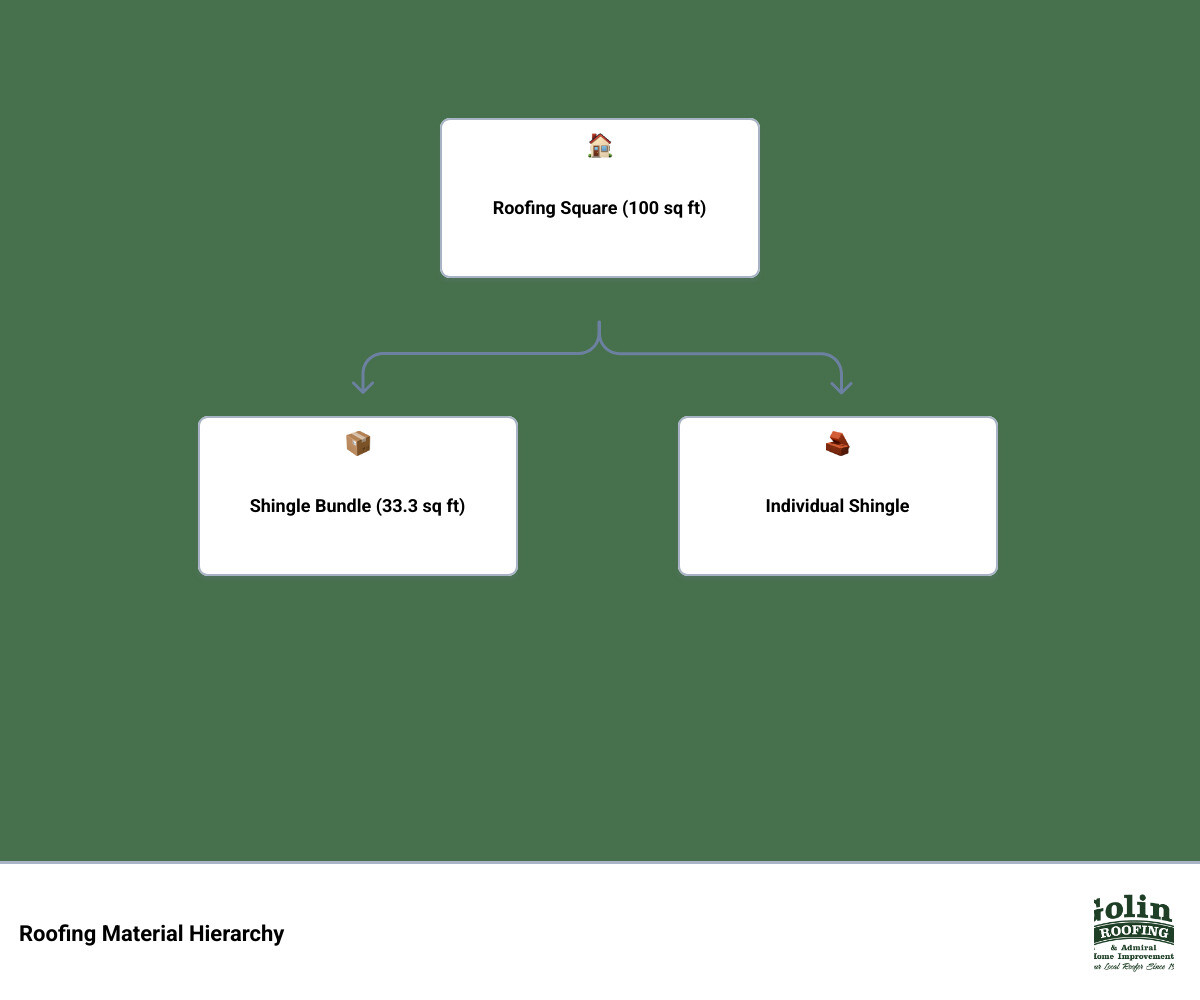
- Three bundles equal one “roofing square” (100 square feet).
- Coverage varies by shingle type: 3-tab shingles usually contain 26-29 shingles per bundle, while architectural shingles contain 20-22.
- Always add 10-15% extra to account for waste, cuts, and errors.
Understanding these basics helps you estimate how many bundles you’ll need, avoid costly shortages, and plan your budget more accurately. While the math isn’t complicated, factors like roof pitch, complexity, and specialized shingles for hips and ridges all affect your final material count. Getting it wrong means either running out of materials mid-project or overspending.
I’m Jack Golini. With over 35 years in the roofing industry, I’ve helped countless Massachusetts homeowners understand the coverage of a bundle of shingles and calculate their exact material needs. This guide will walk you through everything you need to know to estimate your roofing materials with confidence.
Decoding the Basics: Shingle Bundles and Roofing Squares
Before we calculate anything, let’s define the two fundamental units in roofing. Once you understand them, everything else clicks into place.
What’s Inside a Shingle Bundle?
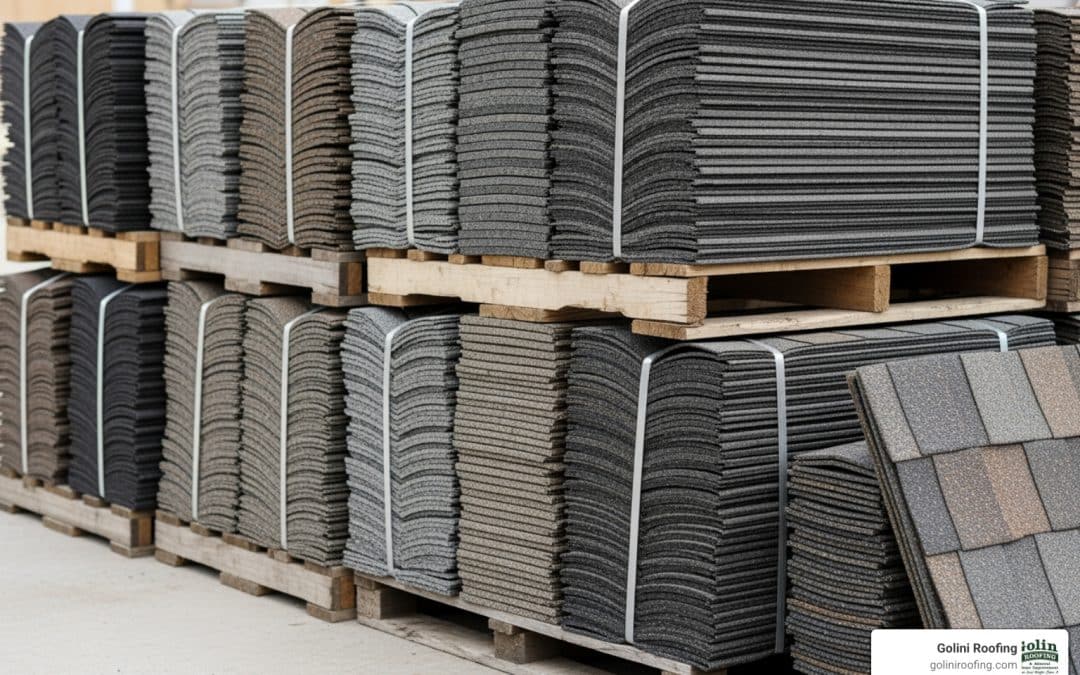
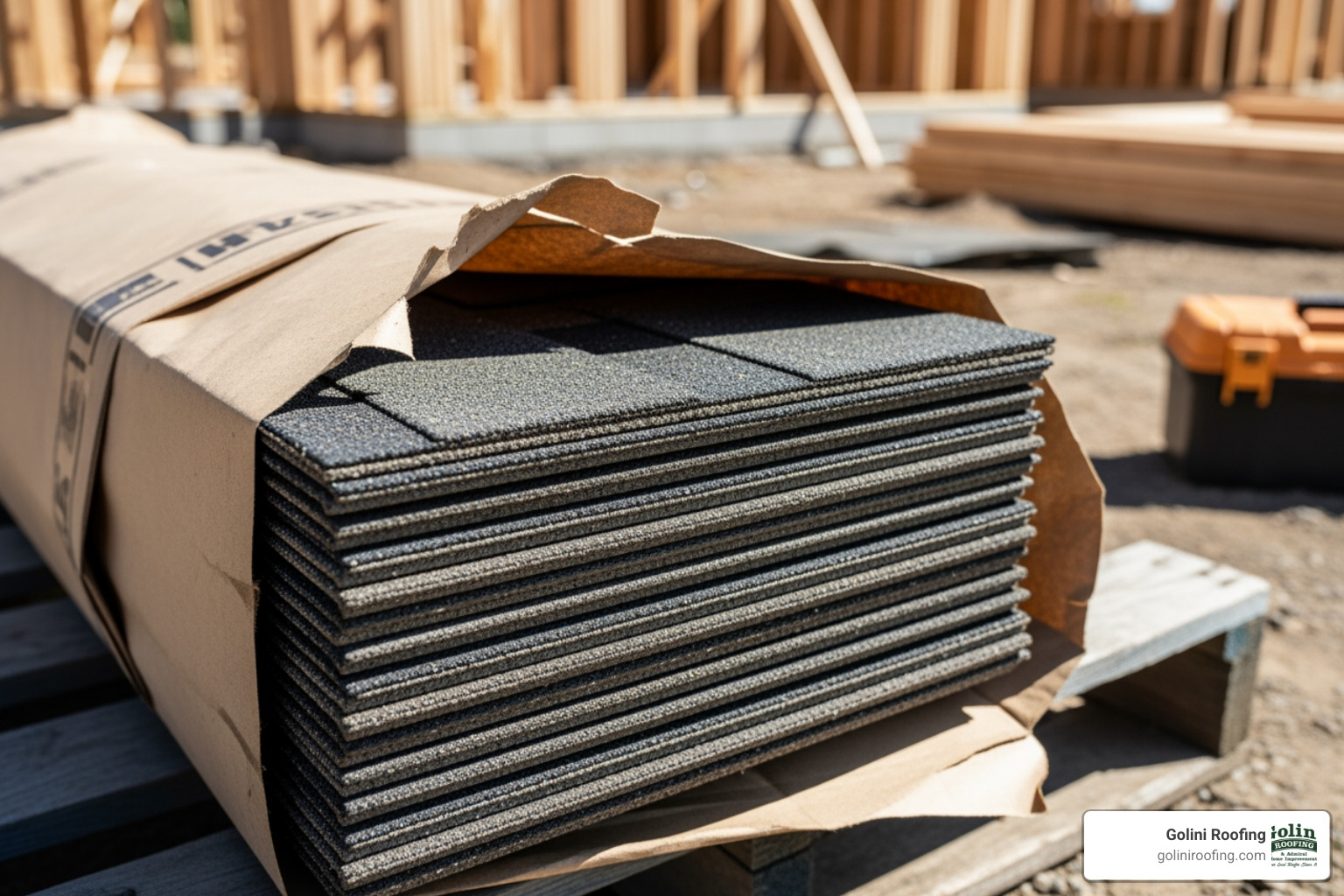
Shingles are sold in packages called “bundles,” which are sized to be carried and handled by one person. The number of shingles inside each bundle varies depending on the type you’re buying.
- 3-tab shingles, the traditional flat style, typically contain 26 to 29 individual shingles per bundle.
- Architectural shingles are thicker and create visual depth. Because they’re bulkier, a bundle contains 20 to 22 shingles.
- Luxury shingles, the premium option, are even thicker and may contain only 10 to 16 shingles per bundle.
Most bundles of architectural shingles weigh between 60 and 80 pounds, while 3-tab bundles are lighter at 45 to 60 pounds. This weight is by design, making the bundles manageable for workers to handle safely on the roof. Understanding bundle weight is important for logistics and labor planning.
What is a Roofing Square?
While shingles come in bundles, the roofing industry uses a standard unit for measuring and estimating: the “roofing square.”
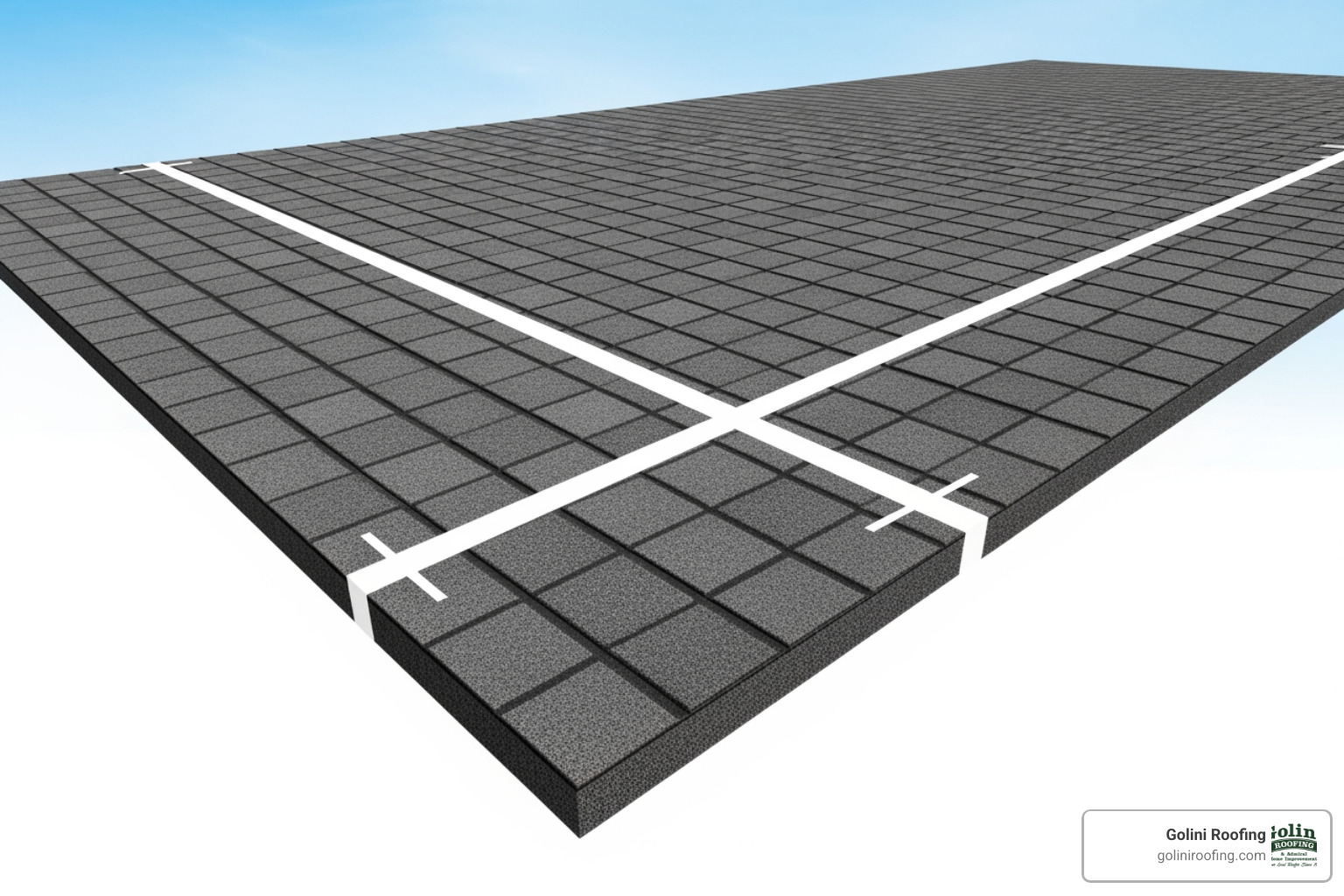
A roofing square equals exactly 100 square feet of roof area. This standardization simplifies everything. Instead of saying “your roof is 2,347 square feet,” a roofer will say “you have a 23.5 square roof.” It’s a universal term understood by everyone from suppliers to installers.
The roofing square is the foundation for calculating materials and providing quotes. This standard unit is why the coverage of a bundle of shingles is expressed in relation to a roofing square. Manufacturers design their bundles so that three bundles equal one square, covering those 100 square feet. It’s a system refined over decades to make roofing projects more predictable. If you’re curious about the comprehensive services we provide to Massachusetts homeowners, you can find more info about our roofing services.
Understanding the Coverage of a Bundle of Shingles
Now that we know what a bundle and a square are, let’s get to the core question: how much area does one bundle actually cover?
The General Rule: Average Square Footage per Bundle
Here’s the straightforward answer: one bundle of standard asphalt shingles typically covers approximately 33.3 square feet of roof area. This means you’ll need three bundles to cover one roofing square (100 square feet).
While 33.3 sq. ft. is the industry standard, always check the manufacturer’s specifications on the packaging, as coverage can vary slightly. When we’re working on a home in Woburn or Stoneham, we always verify the exact coverage to prevent costly mistakes.
The number of shingles in a bundle doesn’t directly determine its coverage; the total installed surface area does. This is why a bundle of architectural shingles has fewer, but larger, shingles than a 3-tab bundle, yet both typically deliver the same 33.3 square feet of coverage of a bundle of shingles.
How Shingle Type Impacts the Coverage of a Bundle of Shingles
The type of shingle you choose affects how many individual pieces are in a bundle due to differences in design, dimensions, and thickness.
| Shingle Type | Shingle Count per Bundle | Average Weight per Bundle | Coverage per Bundle (Approx.) |
|---|---|---|---|
| 3-Tab Shingles | 26-29 shingles | 45-60 lbs | 33.3 sq ft |
| Architectural Shingles | 20-22 shingles | 60-80 lbs | 33.3 sq ft |
| Luxury Shingles | 10-16 shingles | 70-100+ lbs | 20-25 sq ft (often less) |
- 3-tab shingles are thinner and flatter, so more pieces (26-29) are needed to achieve the standard 33.3 sq. ft. coverage.
- Architectural shingles are thicker and multi-layered. Fewer, larger pieces (20-22) are needed to cover the same area. Their thickness also provides better durability, which is important for Massachusetts weather.
- Luxury shingles are premium, heavy shingles designed to mimic slate or wood. A bundle might contain only 10-16 shingles and often covers less area (sometimes only 20-25 sq. ft.), meaning you may need four or five bundles per square.
Why Does Coverage Vary Between Manufacturers?
Even within the same shingle type, you may notice slight differences in coverage between manufacturers. This is due to a few factors:
- Proprietary Designs: Each manufacturer has its own manufacturing process that results in minor differences in shingle size and shape.
- Warranty Requirements: Manufacturers specify exact installation guidelines, including exposure area and nailing patterns, to ensure their warranty is valid. These requirements can affect the final coverage of a bundle of shingles.
- Exposure Area: The portion of the shingle that remains visible after installation can vary slightly between products, which directly impacts how many shingles are needed to cover an area.
At Golini Roofing, we’ve worked with every major shingle manufacturer over our 35 years. We know the specifications and follow them carefully, hand-nailing each shingle on homes in Burlington, Reading, and beyond to ensure you get the full coverage and durability you paid for.
How to Calculate the Shingle Bundles Needed for Your Roof
Estimating the right amount of shingles is more straightforward than you might think. Getting it right avoids the frustration of material shortages or the waste of over-buying. Here’s how we do it at Golini Roofing.
Step 1: Accurately Measure Your Roof’s Area
First, you need your roof’s total square footage. Your roof’s surface area is not the same as your home’s square footage due to the slope. A roof’s area can be 50-60% larger than the house’s footprint.
For a simple rectangular roof, the formula is Length x Width = Square Footage. For more complex roofs, common on older homes in Reading or Winchester, break the roof down into simple shapes like rectangles and triangles. Calculate the area of each section (Length x Width for rectangles; 0.5 x Base x Height for triangles) and add them all together for your total.
If you prefer not to get on the roof yourself, modern services use satellite imagery for accurate measurements. You can also Use our roof square footage calculator to get a solid estimate from the ground.
Step 2: Convert Square Footage to Bundles
Once you have your total roof square footage, converting it to bundles is simple. This is where understanding the coverage of a bundle of shingles pays off.
First, divide your total square footage by 100 to get the number of “roofing squares.” For a 2,500 sq. ft. roof, that’s 25 squares. Since the general rule is three bundles per square, you’ll need a baseline of 75 bundles (25 x 3). However, this isn’t your final number.
Step 3: Factor in Waste and Complexity
This step is crucial for a smooth project. Roofing generates waste from cuts needed for valleys, hips, and dormers. We recommend adding 10-15% extra to your bundle count to account for this. This “waste factor” covers material for cuts, starter courses, and potential errors.
A simple roof on a ranch-style home in Woburn might only need a 10% waste factor, while a complex Victorian roof in Stoneham could require 15% or even 20%.
Let’s finish our example: for a 2,500 sq. ft. roof (75 bundles), a 15% waste factor adds about 12 bundles (75 x 0.15 = 11.25). Your final order should be 87 bundles.
It’s always better to have a few bundles left over than to run short. Running out causes delays and risks color mismatches from different manufacturing lots. Plus, leftover bundles are perfect for future roof repairs, ensuring a perfect color match years down the road.
Beyond the Basics: Other Factors Influencing Your Shingle Order
While our three-step calculation provides a solid estimate, a few other factors can impact your final shingle order and project cost.
How Roof Pitch Affects the Coverage of a Bundle of Shingles
The pitch (steepness) of your roof plays a major role. A steeper roof has more surface area than a flatter roof on the same size house, meaning it requires more shingles. Pitch is expressed as a ratio, like 6/12 (6 inches of vertical rise for every 12 inches of horizontal run).
Roofing professionals use pitch multiplier factors to calculate the true surface area. For example, a common 6/12 pitch has a multiplier of 1.118 (meaning it has 11.8% more surface area than the flat footprint), while a steep 12/12 pitch has a multiplier of 1.414 (41.4% more area). Factoring in pitch is critical for an accurate estimate, ensuring your calculation for the coverage of a bundle of shingles is correct.
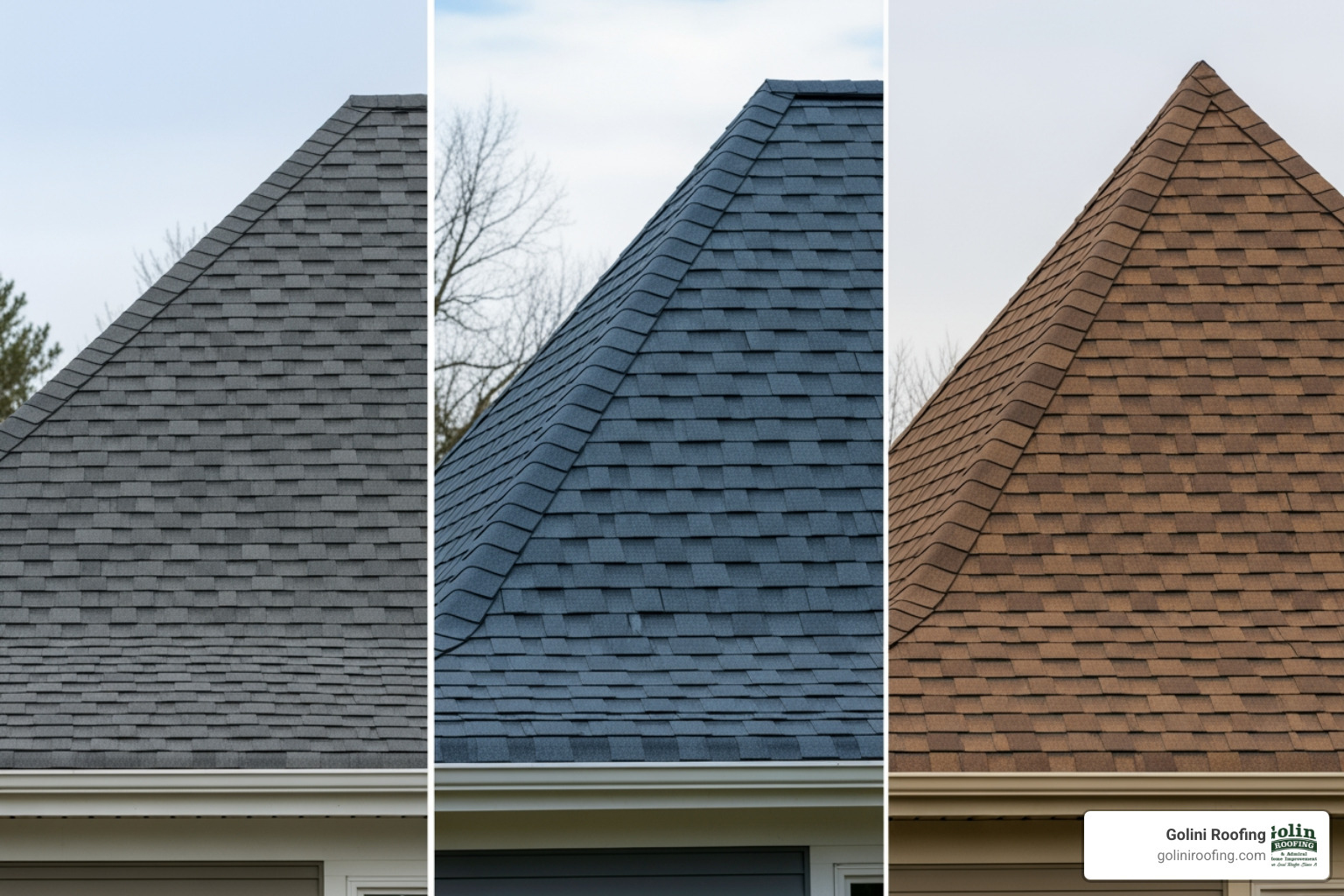
Specialized Shingles: Hips, Ridges, and Starters
A complete roofing system requires more than just the main field shingles. You’ll also need specialized shingles that are packaged and sold differently.
- Hip and ridge cap shingles are designed for the peaks (ridges) and angled intersections (hips) of your roof, providing a finished look and a critical water seal. They are sold by the linear foot, with a bundle typically covering 20-36 linear feet.
- Starter strip shingles are used for the first course at the roof’s edges to ensure proper water shedding. They are also sold by the linear foot.
You must measure the linear feet of all hips, ridges, and edges to buy the correct amount of these specialized shingles. Forgetting them can lead to leaks.
Relating Bundle Cost to Overall Project Cost
Understanding the coverage of a bundle of shingles helps with material quantity, but cost is another factor. Based on average internet data (not Golini Roofing’s pricing), bundle costs can range from $27-$90 for 3-tab, $33-$150 for architectural, and $100-$300 for luxury shingles. We provide transparent, custom quotes for your project.
Higher-quality shingles cost more but offer longer warranties and better durability, saving you money in the long run. However, materials are only part of the budget. Labor costs are typically the largest portion of a roofing project, and quality installation is key to a roof’s lifespan. Your budget must also include other essential materials like underlayment, flashing, and nails, as well as debris removal.
Frequently Asked Questions about Shingle Coverage
Over my 35 years in roofing, I’ve heard just about every question from homeowners across Massachusetts. Here are the most common ones.
How many bundles of shingles does a typical 1,500 sq. ft. roof need?
A 1,500 sq. ft. roof is 15 roofing squares (1,500 / 100). At 3 bundles per square, you need a baseline of 45 bundles. However, you must add a waste factor. For a straightforward roof, a 10% waste factor (about 5 bundles) is common. This brings your total to approximately 50 bundles. This cushion prevents mid-project shortages and provides spares for future repairs.
Can I mix shingle bundles from different brands?
My honest advice is: don’t do it. Even if colors look similar, shingles from different brands have slight variations in size, thickness, and color that become obvious on the roof. They also have different nailing patterns and overlap requirements, which complicates installation. Most importantly, mixing brands will almost certainly void your warranty. For the best results, use a single brand and try to get all bundles from the same manufacturing lot for color consistency.
What should I do with leftover shingles?
Definitely keep them. I recommend saving at least one full, unopened bundle. These are invaluable for future repairs, as finding an exact color match years later is nearly impossible due to discontinued colors and batch variations. Store the extra bundles flat in a cool, dry place like a garage or basement, away from sunlight and extreme temperatures. Having matching shingles on hand makes future roof repairs easier, cheaper, and ensures a seamless look.
Conclusion: Ensuring a Perfect Roof with Professional Precision
Understanding the coverage of a bundle of shingles is key to smart roofing decisions. As we’ve covered, a typical bundle covers about 33.3 square feet, meaning three bundles make one roofing square. Factoring in shingle type, roof pitch, and waste helps you accurately calculate your material needs. This knowledge directly impacts your budget and project timeline, putting you in control of your investment.
However, having the right number of bundles is only half the battle; proper installation is the other half. At Golini Roofing, our 35+ years of experience have taught us that precision matters. We’ve built our reputation on meticulous hand-nailing of each shingle. This method ensures superior durability, creating a roof that withstands New England’s harsh weather.
We have proudly served homeowners across Massachusetts—from Burlington to Woburn and Lynnfield to Winchester—for over 35 years. Our commitment to quality craftsmanship ensures your new roof is not only beautiful but provides reliable, long-lasting protection.
Whether you’re ready to move forward with your roofing project or still have questions about material estimates, we’re here to help. For a flawless finish and the peace of mind that comes with expert installation, contact us today for a professional consultation. Let’s make sure your roof is done right the first time.