

Why Damaged Roof Shingles Demand Your Attention
Damaged roof shingles are more than an eyesore—they’re a warning sign that your home’s first line of defense is compromised. If you’re noticing issues with your roof, here’s what you need to know:
Quick Identification Guide:
- Missing or loose shingles – Gaps in your roof’s protective layer
- Curling or cupping – Edges lifting up or centers caving in
- Cracks and splits – Visible breaks in the shingle surface
- Granule loss – Dark spots where protective coating is gone
- Blistering – Raised bubbles on the shingle surface
- Dents or bruises – Impact marks from hail or debris
Your roof shingles protect your home from rain, wind, and sun. When they’re damaged, water can seep through to the underlayment and into your home, leading to stained ceilings, mold, rotted wood, and structural problems. The longer you wait, the more expensive the fix becomes.
The good news is that many shingle problems can be spotted and repaired early. Some fixes are simple enough for a capable homeowner, while others require professional expertise. This guide walks you through identifying damage, understanding causes, and learning which repairs you can handle versus when to call the experts.
I’m Jack Golini, and I’ve been protecting homes in the North Shore area since 1982. Over 35 years in roofing has taught me that catching damaged roof shingles early can save homeowners thousands. Whether you’re dealing with a few cracked shingles or widespread storm damage, understanding your options is the first step to protecting your investment.
First, Spot the Problem: How to Identify Damaged Roof Shingles
The sooner you catch damaged roof shingles, the less you’ll pay in repairs. We tell homeowners throughout the North Shore to inspect their roofs twice a year (spring and fall) and after any major storm.
Before you get on a ladder, safety is paramount. Much of the damage can be spotted from the ground with binoculars. If you must use a ladder, ensure you’re comfortable with heights and the weather is clear. If your roof is steep or you feel uncertain, call a professional. Also, check your attic and ceilings for water stains or peeling paint—these are clear signs of a roof leak.
Visual Signs from the Ground
From the safety of your lawn, you can identify several warning signs:
- Missing shingles: High winds can rip shingles off, leaving the underlayment exposed. These gaps are an emergency.
- Misaligned or crooked shingles: Shingles that are out of position can’t do their job, allowing water to find gaps.
- Dark patches or streaks: This often means algae or moss, which holds moisture and breaks down shingles over time.
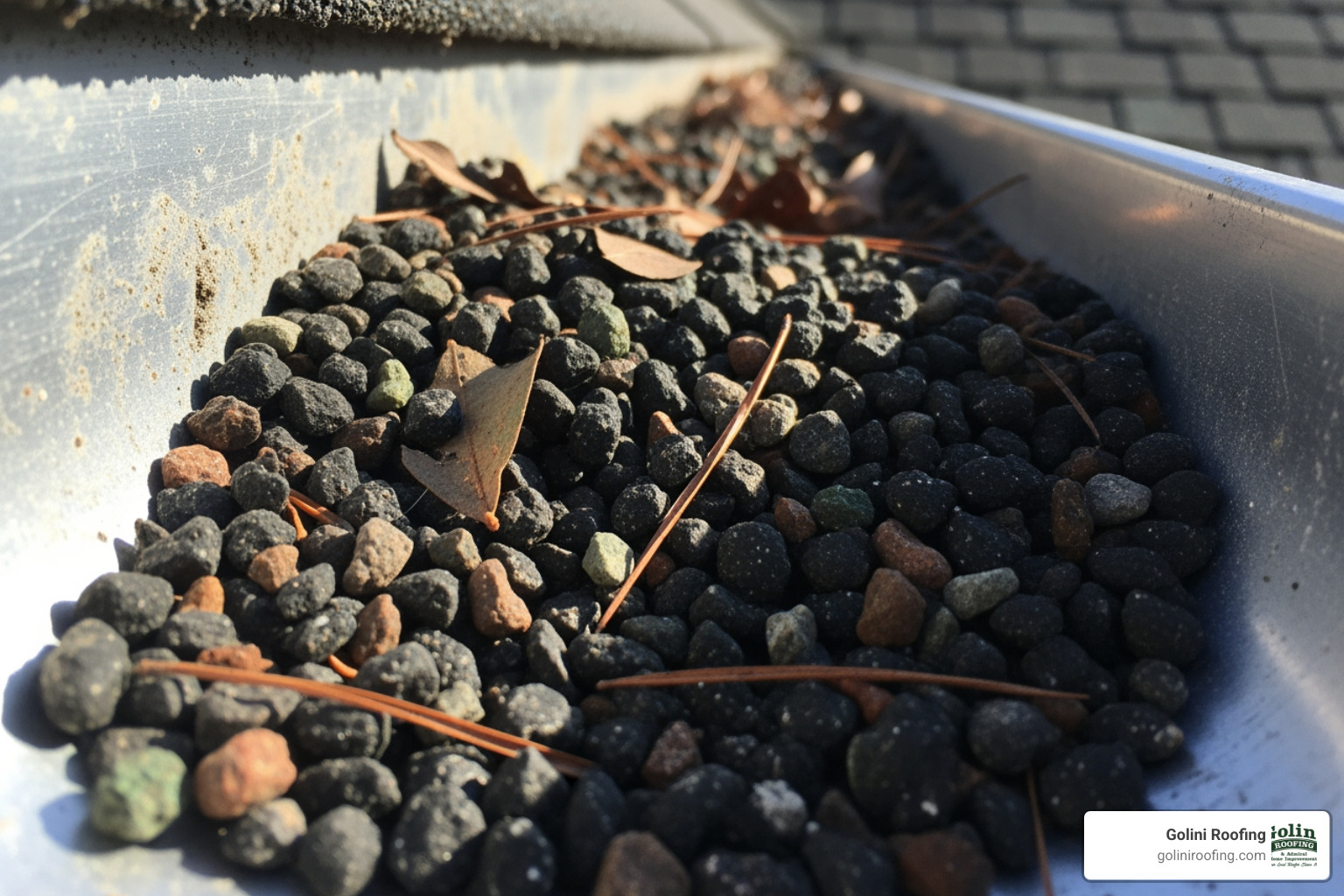
- Granules in your downspouts: These ceramic granules protect shingles from UV rays. Finding them in your gutters means your shingles are losing their protective layer, a common sign of aging or storm damage.
- Debris on the roof: Leaves and branches trap moisture and can hide or cause damage.
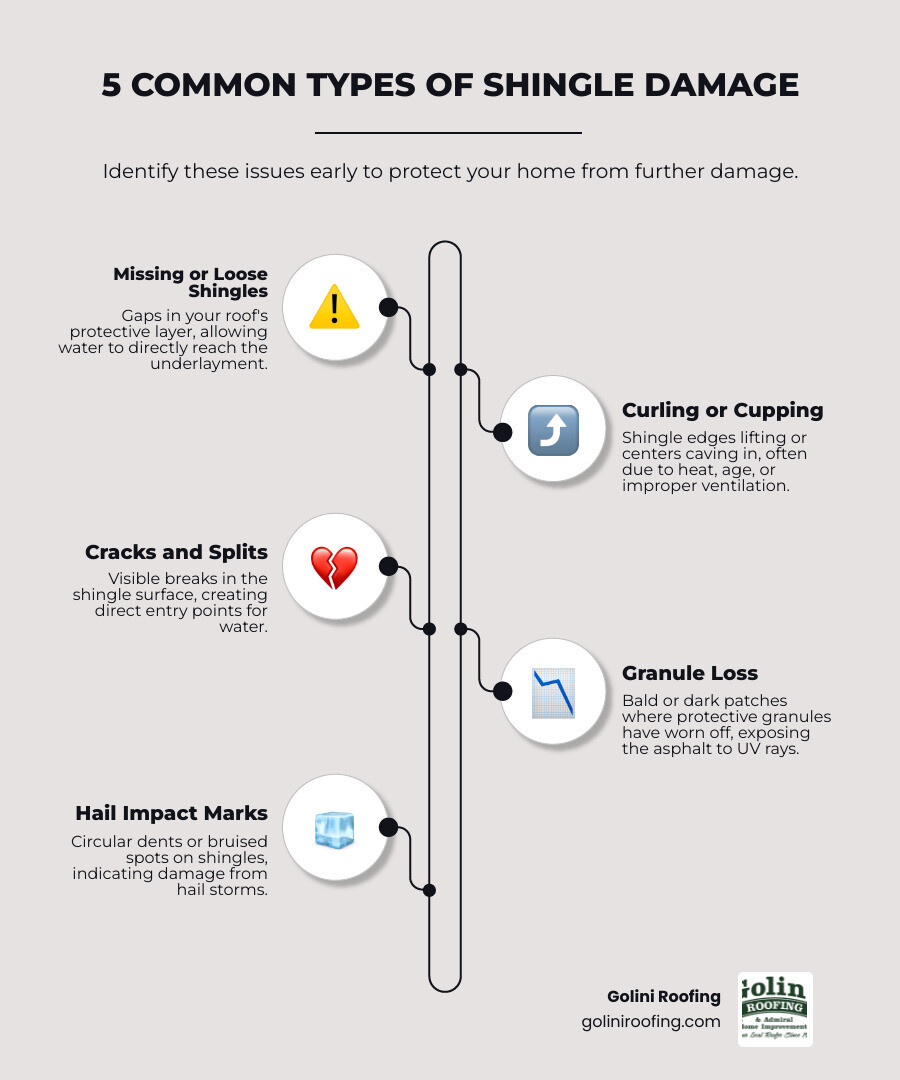
Common Types of Damaged Roof Shingles (Up Close)
A closer inspection reveals specific types of damage:
- Curling or cupped shingles: When shingles lose flexibility, their edges can turn upward (cupping) or the middle can rise (clawing). This makes them vulnerable to wind and water. It’s usually caused by age, heat, or moisture.
- Cracking and splitting: Temperature fluctuations can make shingles brittle, causing cracks that create a direct path for water to your roof deck.
- Blistering: Small bubbles on the shingle surface can form from trapped moisture or excessive attic heat. When they pop, the shingle’s inner layers are exposed, and deterioration accelerates.
- Bruised or dented shingles from hail: Hail damage often appears as dark spots or bruises where granules have been knocked away. Even small hail can cause damage, especially on an older roof.
- Flaking and granule loss: All shingles lose granules over time, but storms and UV exposure speed up the process, creating “bald spots” vulnerable to sun and water.
For more comprehensive information about the various issues that can affect your roof beyond just shingle damage, check out our guide on identifying roof problems.
Understanding the Culprits: What Causes Shingle Damage?
Understanding why your shingles are damaged is as important as identifying the damage. In Massachusetts, our roofs constantly battle challenges that contribute to shingle deterioration.
The Impact of Weather and Environment
Our New England climate is tough on roofs. The constant barrage of sun, wind, rain, and snow is the primary reason we see damaged roof shingles.
- How to identify wind damage on roof shingles: Strong winds can do more than just remove shingles. Look for misaligned or crooked shingles, curling corners, or a crease where a shingle has been bent backward. Choosing roofing products with high wind resistance ratings (like ASTM D3161 and ASTM D7158) offers better protection.
- Hail Impact: Hailstorms cause damage that appears as bruises or dark spots where protective granules have been knocked away. The damage depends on hail size and the age of your shingles. Prompt action after a hailstorm is key to preventing bigger issues.
- Extreme Heat and Sun Exposure (UV Degradation): The sun’s intense UV rays break down the asphalt in shingles, making them brittle and reducing their waterproofing. This also causes “thermal shock”—repeated expansion and contraction that strains roof components.
- Ice Dams: A classic Massachusetts winter problem. Ice dams form when melting snow refreezes at the eaves, causing water to back up under your shingles. This can lead to leaks in your attic and walls. Preventing ice dams is crucial.
- Heavy Rain and Snow: Prolonged heavy rain can exploit existing weaknesses, while heavy snow loads put significant stress on your roof structure.
Age and General Wear & Tear
Even without storms, time takes its toll.
- Typical Asphalt Shingle Lifespan: Most asphalt shingles last 15 to 30 years. This varies based on shingle quality, installation, climate, and maintenance. As shingles age, they become more susceptible to damage.
- Shingles Becoming Brittle: With age, the asphalt dries out, causing shingles to lose flexibility and become prone to cracking.
- Gradual Granule Loss: Over the years, shingles naturally shed their protective granules. When they’re gone, the asphalt underneath is exposed to UV rays, accelerating its breakdown.
- Sealant Failure Over Time: The sealant that bonds shingle layers degrades over time. This allows shingles to loosen, making them vulnerable to wind and water.
Your DIY Guide to Basic Shingle Repair
For a few damaged roof shingles, a DIY repair can save money and prevent bigger issues. However, your safety comes first. DIY repair is only for isolated damage on a low-slope roof. If your roof is steep, the damage is widespread, or you’re not confident, call a professional. It’s not worth the risk.
Always work on warm, dry days (50-85°F). Shingles are more pliable when warm, making them easier to work with and less likely to crack. Sealants also cure properly in these conditions.
Tools and Materials You’ll Need
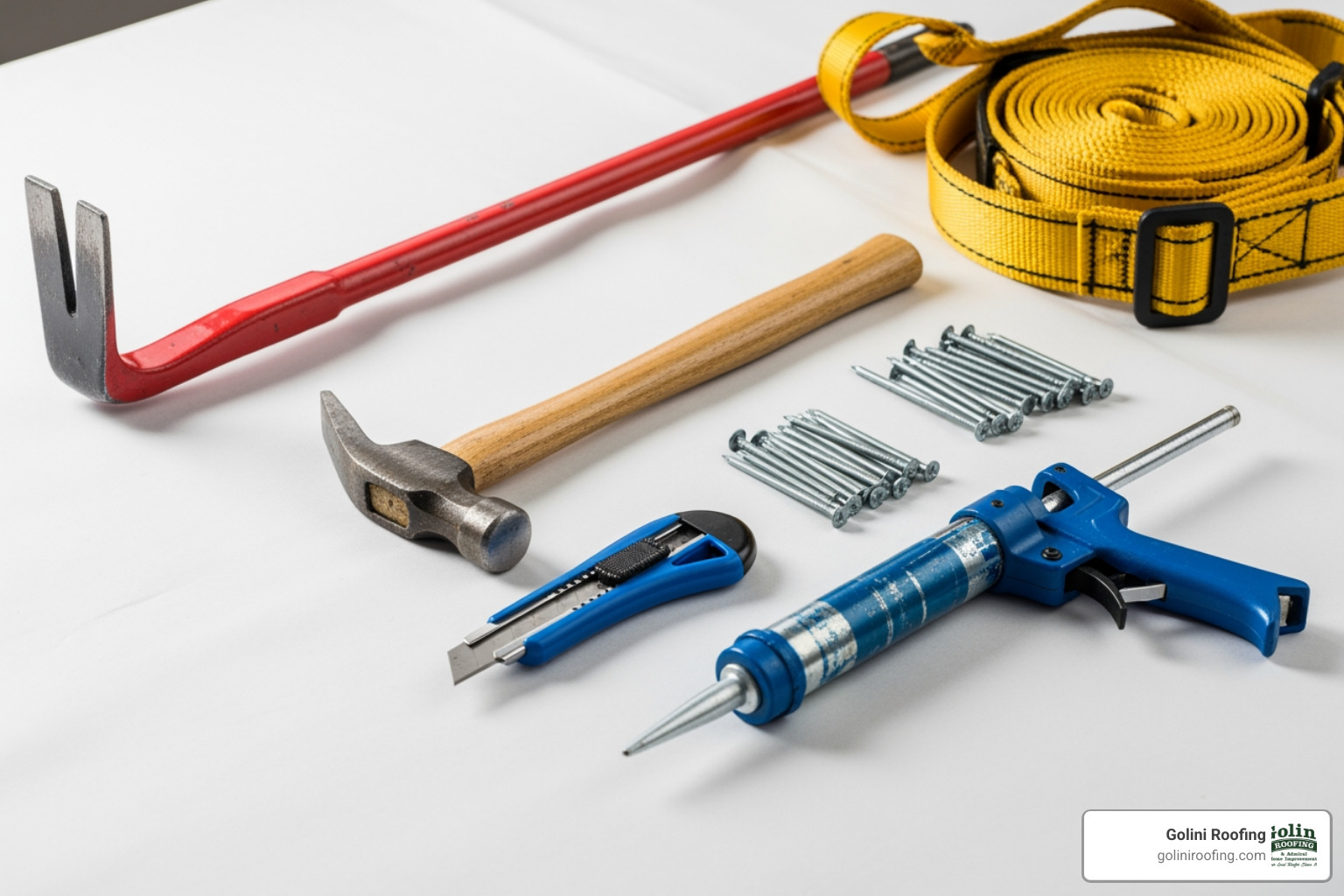
Gather your gear before you start.
- Safety Gear: Gloves, safety glasses, non-slip shoes, and a climbing harness with a rope.
- Tools: Ladder, flat pry bar, hammer, utility knife, and a caulking gun.
- Materials: Matching replacement shingles, roofing cement/sealant, and 1¼-inch galvanized roofing nails.
Step-by-Step: Fixing Curled or Cracked Shingles
For shingles that are just curled or have a small crack, you can often repair them without a full replacement.
- Clean the area: Use a stiff brush to remove dirt and debris from under the damaged shingle.
- Apply sealant: For a curled shingle, lift the edge and apply a bead of roofing sealant underneath. For a cracked shingle, work sealant into and under the crack.
- Press and weigh down: Press the shingle firmly into the sealant. Place a heavy object (like a cloth-wrapped brick) on the repair for at least 24 hours.
- Seal the top (for cracks): Apply a thin bead of sealant over the crack and spread it with a putty knife. Sprinkle loose granules over the wet sealant to help it blend in.
Step-by-Step: How to Replace Missing or Damaged Roof Shingles
When a shingle is too damaged to repair, replacement is necessary.
- Free the damaged shingle: Gently lift the edges of the shingles directly above the damaged one with a flat pry bar.
- Remove the nails: Slide the pry bar under the damaged shingle to find and extract the nails holding it in place.
- Slide the old shingle out: The shingle should now slide out. Use a utility knife to cut any old sealant if it’s stuck.
- Slide the new shingle in: Position the new shingle, ensuring it’s aligned with the surrounding shingles.
- Nail the new shingle: Use 1¼-inch roofing nails in the same spots as the old ones. Position the nails so the shingle above will cover their heads.
- Seal everything up: Lower the overlapping shingles. Apply a dab of roofing sealant under their tabs to secure them against wind. For extra protection, run a thin bead of sealant along the new shingle’s edges.
DIY Repair vs. Calling a Professional: When to Make the Call
There’s satisfaction in a DIY fix, and for minor issues with damaged roof shingles, it’s often possible. However, knowing when to call a professional is about protecting your home and keeping yourself safe.

When a DIY Fix is Appropriate
A DIY repair is suitable for isolated damage—one or two shingles with minor cracks or curls on a low-slope roof. If you have the right safety gear and are comfortable with heights, a simple repair is within reach.
Red Flags: Signs You Need an Expert for Damaged Roof Shingles
Some situations require professional expertise. Trying to DIY these can lead to bigger problems or injury.
- Widespread damage: If you see damage in multiple areas, it signals a larger issue.
- Roof age: If your roof is over 15-20 years old, what looks like minor damage could be a symptom of systemic failure. Patching may not be enough.
- Interior water damage: Water stains on ceilings or a musty smell in the attic mean water is already getting in. Finding the source of a leak requires experience.
- Soft or spongy spots: If the roof feels soft underfoot, the underlying deck is likely rotting. This is structural damage that needs immediate professional attention.
- Steep roofs: Working on a steep pitch is dangerous without professional training and equipment. Please don’t risk it.
- After major storms: A professional inspection is wise after hailstorms or high winds. Hail damage can be subtle but cause future problems. A proper assessment is also crucial for insurance claims.
If you see these signs, we can help. We’ve protected homes across the North Shore since 1982, hand-nailing every shingle for lasting quality. Learn more at our professional roof repair services page.
Proactive Protection: Preventing Future Shingle Damage
Here at Golini Roofing, we believe a little prevention goes a long way. A proactive approach to roof care is the best way to extend your roof’s life, avoid costly repairs, and gain peace of mind.
The Importance of Regular Roof Inspections
Think of inspections as your roof’s annual check-up. They are your first defense against damaged roof shingles becoming major problems. Catching issues early saves money and headaches.
We recommend homeowners inspect their roofs twice a year, in the spring and fall, and after any major storm. Use binoculars to look for missing, curled, or cracked shingles, and check your gutters for granule buildup. These are all clues that your roof needs attention.
Essential Maintenance Tips
A few simple habits can significantly stretch the life of your asphalt shingles.
- Keeping Gutters Clean and Clear: Clogged gutters cause water to back up, potentially seeping under shingles or damaging fascia boards. Regular cleaning is a simple, effective way to prevent water damage. For more information, visit: More info about our gutter services
- Trimming Overhanging Tree Branches: Branches can scrape against shingles, rubbing off protective granules. A falling branch can cause serious physical damage. They also give critters like squirrels and raccoons easy access to your roof.
- Ensuring Proper Attic Ventilation: Good attic ventilation prevents heat buildup in the summer, which can bake shingles from underneath. In winter, it prevents moisture buildup that leads to mold, rot, and shingle blisters.
- How to Prevent Ice Dams in Winter: Here in Massachusetts, ice dams are a common foe. They form when heat from your home melts snow, which then refreezes at the colder roof edges. This barrier forces water under your shingles. To prevent them, ensure your attic is well-insulated and ventilated to keep the roof surface evenly cold.
Frequently Asked Questions about Damaged Shingles
We hear many questions from homeowners about their roofs, especially when they notice damaged roof shingles. It’s natural to wonder about lifespan, repair methods, and costs. Let’s tackle some common inquiries.
How long do asphalt shingles typically last?
Generally, asphalt shingles last 15 to 30 years. This range depends on the shingle quality, the expertise of the installation, the local climate, and how well the roof is maintained. Regular inspections and timely repairs help shingles reach the upper end of their expected lifespan.
Can I put new shingles over old ones?
This is often called a “re-cover” or “layover.” While sometimes possible, we generally don’t recommend it. Layering new shingles can hide underlying problems with your roof deck, like rot or damage. It also adds excessive weight to your roof structure and can prevent the new shingles from sealing properly, shortening their life. A full tear-off of the old roof is always the best practice for longevity and performance.
How much does it cost to repair a few damaged shingles?
The cost varies. A minor DIY repair might only cost $100-$200 for materials. For a professional repair, the cost will include labor and expertise. For more significant issues, like widespread storm damage, costs can be substantial. According to internet data, the average cost to repair storm damage is around $12,300, but this is just a general figure. The best way to get an accurate estimate for your situation is to contact a professional roofing contractor for an on-site inspection.
Conclusion: Protect Your Investment with a Healthy Roof
We’ve covered a lot about damaged roof shingles. Remember this: early detection and timely action are your best friends in keeping your roof in top shape. A small issue today—a curled shingle or a few missing granules—can quickly become a costly problem like water damage if left unaddressed.
Think of your roof as your home’s primary defense. Simple, focused repairs can prevent minor blemishes from becoming major crises. It’s also important to know your limits. While some small fixes are great DIY projects, it’s crucial to recognize when a job is too big, complex, or risky. That’s when calling an expert makes all the difference.
Here at Golini Roofing, we understand the challenges our Massachusetts roofs face. With over 35 years of experience, we’re not just fixing roofs; we’re protecting homes. Our commitment to hand-nailing every shingle is a promise of craftsmanship and durable results built to withstand New England’s weather.
Don’t let damaged roof shingles compromise your home’s safety or value. If you’re concerned about your roof’s condition, contact us today for a professional assessment.
Get a professional estimate for your shingle replacement needs