
Why Downspout Drainage Issues Can Destroy Your Home’s Foundation
Downspout drainage issues are among the most overlooked problems that can cause thousands of dollars in foundation damage. When your gutters and downspouts fail to move water away from your home properly, that water has to go somewhere – and it usually ends up right where you don’t want it.
Common downspout drainage problems include:
- Clogged downspouts – Leaves, debris, and shingle gravel block water flow
- Poor installation – Lack of proper slope or inadequate discharge points
- Overflowing gutters – Water cascades over sides instead of flowing through downspouts
- Too close to foundation – Water pools against basement walls
- Frozen pipes – Ice blocks prevent winter drainage
- Root intrusion – Tree roots crack and clog buried drain lines
The research shows that hundreds of gallons of runoff can come off your roof during heavy rain. Without proper drainage, this water saturates the soil around your foundation, leading to basement leaks, foundation cracks, and expensive structural repairs.
Most homeowners don’t realize their downspouts have problems until they see water stains on their basement walls or notice their foundation settling. By then, the damage is already done.
I’m Jack Golini, and I’ve been helping homeowners in the Wakefield, MA area solve downspout drainage issues for over 35 years through Golini Roofing. In my experience, most drainage problems can be prevented with proper installation and regular maintenance – which is exactly what this guide will teach you.
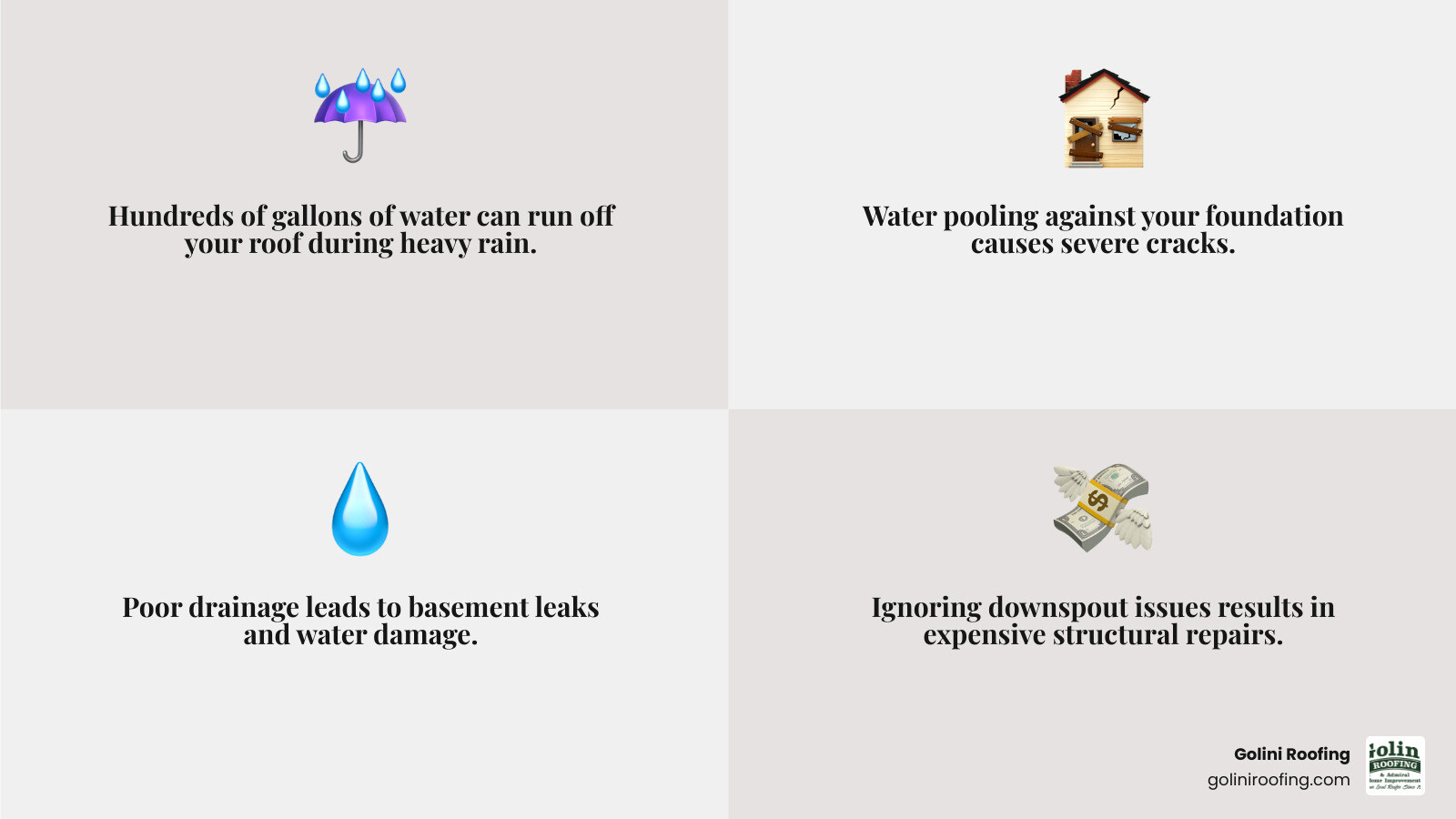
Downspout drainage issues terms explained:
Spotting the Red Flags: Signs of Gutter and Downspout Problems
Before we dive into how to fix things, let’s chat about how to tell if you even have downspout drainage issues. Many signs are right there for you to see, while others are a bit sneakier. Catching these problems early can save you a whole lot of stress and money down the road.
One of the easiest signs to spot is pooling water around your home’s foundation after it rains. If water isn’t moving away properly, it just sits there. This pooling water can lead to bigger headaches, like foundation cracks. Think about it: water constantly soaking the soil around your house can make it expand and shrink. This puts a lot of pressure on your foundation, eventually causing cracks. We’ve even seen this kind of water damage crack the brickwork on really old homes!
Beyond the foundation, peek inside your home. Do you notice any basement leaks? Or maybe some yucky mold or mildew growing in your basement or crawl space? These are clear signs that water is finding its way through your foundation walls.
Now, head back outside. Is the soil around your house, especially near the downspouts, looking a little washed away? That’s eroded soil, and it means water is hitting the ground too hard and moving dirt away. You might also spot peeling paint on your home’s exterior walls or ugly water stains on siding. These are big clues that water is overflowing or splashing from your gutters and downspouts.
And don’t forget to look up! If your gutters are sagging, it’s a sure sign they’re either packed full of gunk or weren’t put up correctly. When they sag, water can’t flow properly and just spills over the sides instead of heading into the downspouts.
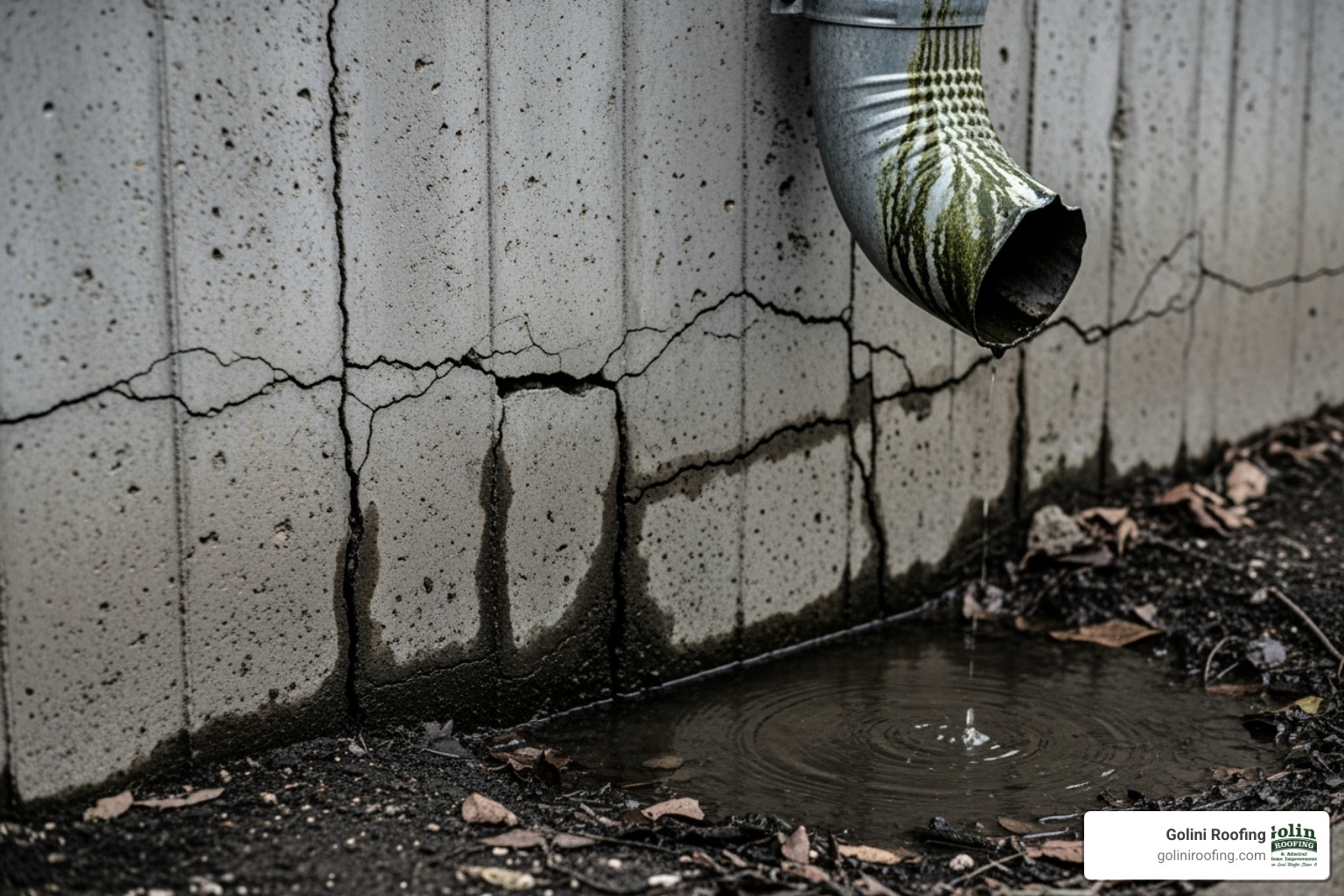
Diagnosing Common Downspout Drainage Issues
Once you’ve noticed some of these red flags, it’s time to figure out exactly what’s causing your downspout drainage issues. The most common reason, by far, is clogged gutters. Leaves, twigs, shingle grit, and even sneaky animal nests can build up, stopping water from getting into the downspout. When that happens, water has nowhere to go but right over the top, leading to overflowing downspouts.
Sometimes, the downspout itself is clear, but the problem lies with disconnected extensions or pipes. If a downspout extension has come loose or is broken, water will simply dump out right next to your foundation. We often see problems with improper slope in underground downspout pipes too. If the pipe isn’t angled down enough (even a tiny 1% slope is usually plenty for water to move), water can just sit there, letting debris settle and cause clogs.
And for us folks in colder spots like Wakefield, MA, ice dams in winter can be a real headache. Water sitting in gutters or downspouts can freeze solid. This creates blockages that keep melting snow from draining. When that happens, water can actually get pushed back up under your roof shingles, leading to leaks and damage inside your home.
For more detailed information on fixing these issues, you can explore our resources on Gutter Repair Services Near Me.
DIY Fixes for Common Downspout Drainage Problems
It’s empowering to know that many downspout drainage issues don’t always require a professional right away. With a little bit of effort and the right tools, you can tackle many common problems yourself. Think of it as proactive home maintenance – your foundation will thank you!
Before you start, gather your supplies. Here’s a quick list of what you’ll need for DIY gutter maintenance:
- A sturdy ladder: Safety first! Make sure it’s stable and on level ground.
- Good work gloves: These will protect your hands from sharp debris and grime.
- A gutter scoop or small trowel: This makes clearing out gunk much easier.
- A garden hose with a strong nozzle: Perfect for flushing out debris and testing how well water flows.
- A bucket or tarp: Use this to collect all the leaves and gunk you pull out, making cleanup a breeze.
Your main goal should be regular cleaning. We suggest giving your gutters and downspouts a good clear-out at least twice a year. The best times are usually in the late spring, after all the tree buds have opened, and again in the late fall, once most of the leaves have dropped. If your home is surrounded by lots of trees, you might find yourself needing to clean them more often.
Start by manually removing any large debris like leaves, twigs, or shingle grit from your gutters. Use your scoop or trowel to get into those tight spots. Once the gutters look pretty clear, grab your garden hose. Send water through the downspouts. If the water backs up or drains slowly, you’ve found a clog! For minor clogs, the hose pressure might be enough to push the debris through. If it’s more stubborn, a plumber’s snake can often break up those tougher blockages.
Once your gutters and downspouts are sparkling clean and flowing freely, it’s time to think about where that water actually goes. This is where downspout extensions and splash blocks become your best friends.
Installing Downspout Extensions and Splash Blocks
Even a perfectly clean gutter system isn’t doing its job if it’s dumping water right next to your home’s foundation. This is exactly why downspout extensions and splash blocks are so important. Their job is simple: to guide that rainwater away from your house. This prevents water from pooling up and seeping into your basement. They also do wonders for preventing soil erosion right where the water hits the ground.
For the best protection, your downspouts should direct water at least 6 feet away from your foundation. Some experts even recommend aiming for 6 to 10 feet, depending on your specific soil and how your yard slopes. If you have underground pipes, they should ideally extend even further, perhaps 10 to 20 feet from your home, leading to a safe spot for the water to discharge.
Installing a flexible plastic extension is usually a simple DIY task. You just attach it to the end of your existing downspout. At the very end of that extension, place a splash block. This is a simple, angled piece of plastic or concrete that helps spread the water out over a wider area. This stops the water from concentrating in one spot, which further prevents erosion and keeps your landscaping looking neat.
For even more detailed guidance on fixing and installing extensions, be sure to check out our page dedicated to More info about Downspout Extension Repair.
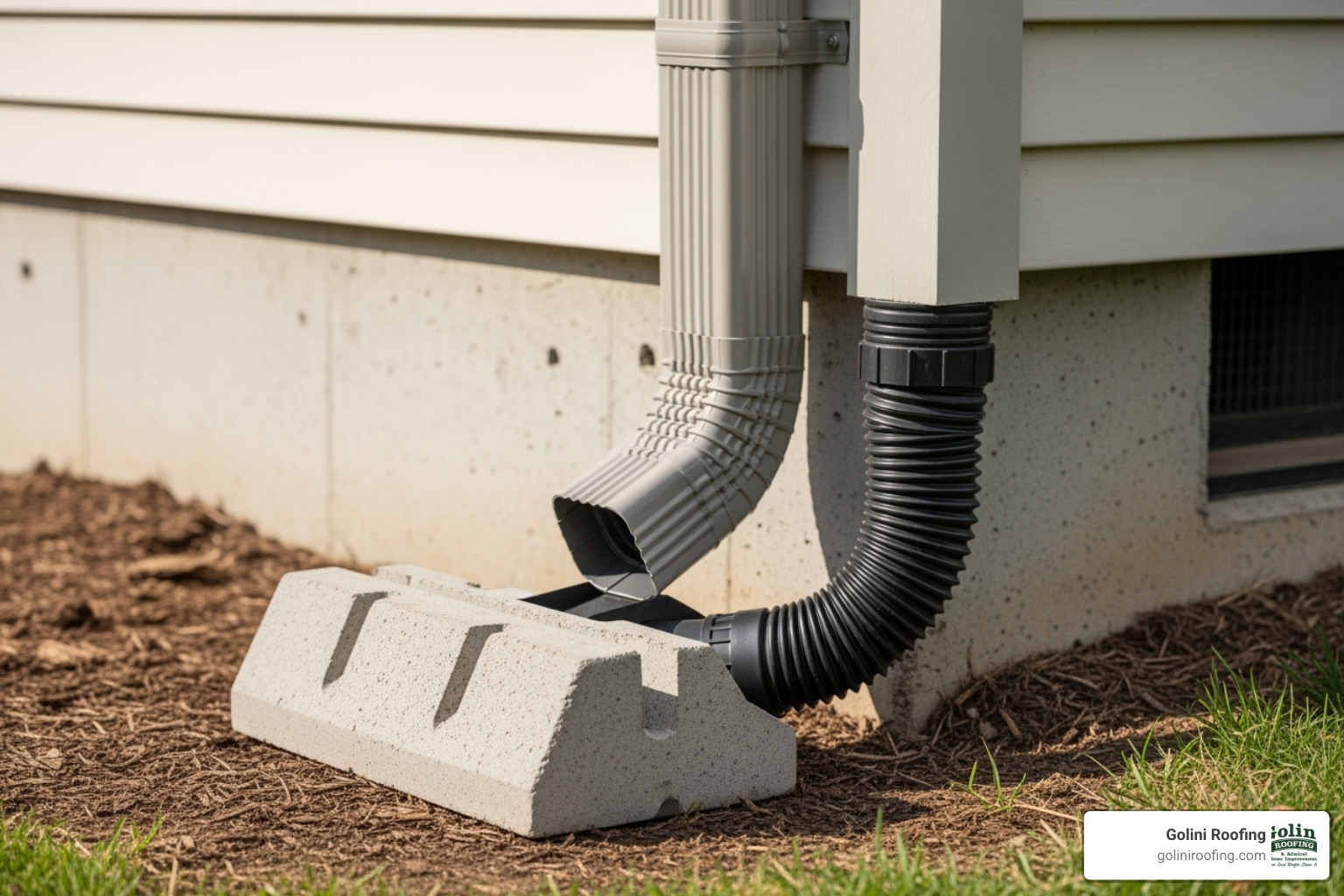
Tackling Buried Downspout Drainage Issues
While convenient for aesthetics, buried downspouts can introduce a unique set of downspout drainage issues that are harder to diagnose and fix. The most common issues homeowners face with buried downspouts include clogging, improper installation, lack of slope, shingle gravel buildup, root intrusion, and freezing risks.
Clogging is the most frequent problem. Out of sight, out of mind, right? Unfortunately, debris like leaves, dirt, and especially shingle gravel (which sheds from older roofs) can accumulate inside the pipes. Without proper components, this buildup can create a ‘sink trap’ effect, leading to complete blockages. We’ve seen pipes completely filled with solid shingle gravel!
Improper installation often exacerbates these problems. A lack of slope is a primary culprit. If the buried pipe doesn’t have a consistent downward slope, water won’t drain completely, allowing debris to settle and create clogs. This can also lead to standing water, which is a major concern for freezing risks in colder climates. When water freezes in the pipes, it expands, potentially cracking or bursting the lines.
Finally, root intrusion is a silent but destructive threat. Tree roots are attracted to the moisture and nutrients inside drainage pipes and can easily find their way into small cracks or loose connections. Once inside, they grow, blocking water flow and eventually shattering the pipes, leading to costly excavation and repairs.
The Right Way to Install and Fix Buried Downspouts
Solving buried downspout drainage issues often comes down to proper installation. If you’re installing a new system or fixing an old one, here’s what we recommend:
First, ensure a minimum 1% slope (about 1 inch of fall for every 10 feet of pipe) for your buried pipes. This ensures gravity does its job and water flows efficiently, carrying small debris along with it. A common recommendation is even more, around 1/8th inch per foot, to ensure optimal drainage.
Second, choose the right pipe material. While flexible corrugated pipe is often used due to its lower cost and ease of installation, it gets a bad rap for a reason. Its ridges can trap debris, and it’s more prone to collapsing or cracking. We strongly recommend using smooth-walled PVC or HDPE piping (High-Density Polyethylene). These materials are much more durable, resistant to root intrusion, and their smooth interior allows water and debris to flow freely. For example, SDR-35 is a stiff plastic pipe rated for sewer lines, offering superior durability and root resistance.
Third, incorporate essential components:
- Inline catch basins: These are crucial for managing shingle gravel and other sediment. Installed upstream of the buried pipe, they collect debris, making it easy to clean out periodically (we recommend using a shop vacuum).
- Pop-up emitters: These are installed at the discharge end of the buried pipe. They allow water to exit when the pipe is full but remain closed otherwise, preventing debris and small animals from entering. They also provide an accessible point for cleaning and inspection.
For troubleshooting and repair of existing buried systems, our More info about Clogged Downspout Repair page offers valuable insights.
To prevent freezing in colder climates, proper slope is key to ensure all water drains out of the pipe. If water can’t drain, it’s trapped and will freeze. Burying pipes below the frost line (where possible) is ideal, but proper slope and ensuring discharge points remain unobstructed (e.g., clear of snow or ice) are often more practical solutions. For sump pump lines, an air gap relief system can prevent pump failure if the discharge line freezes.
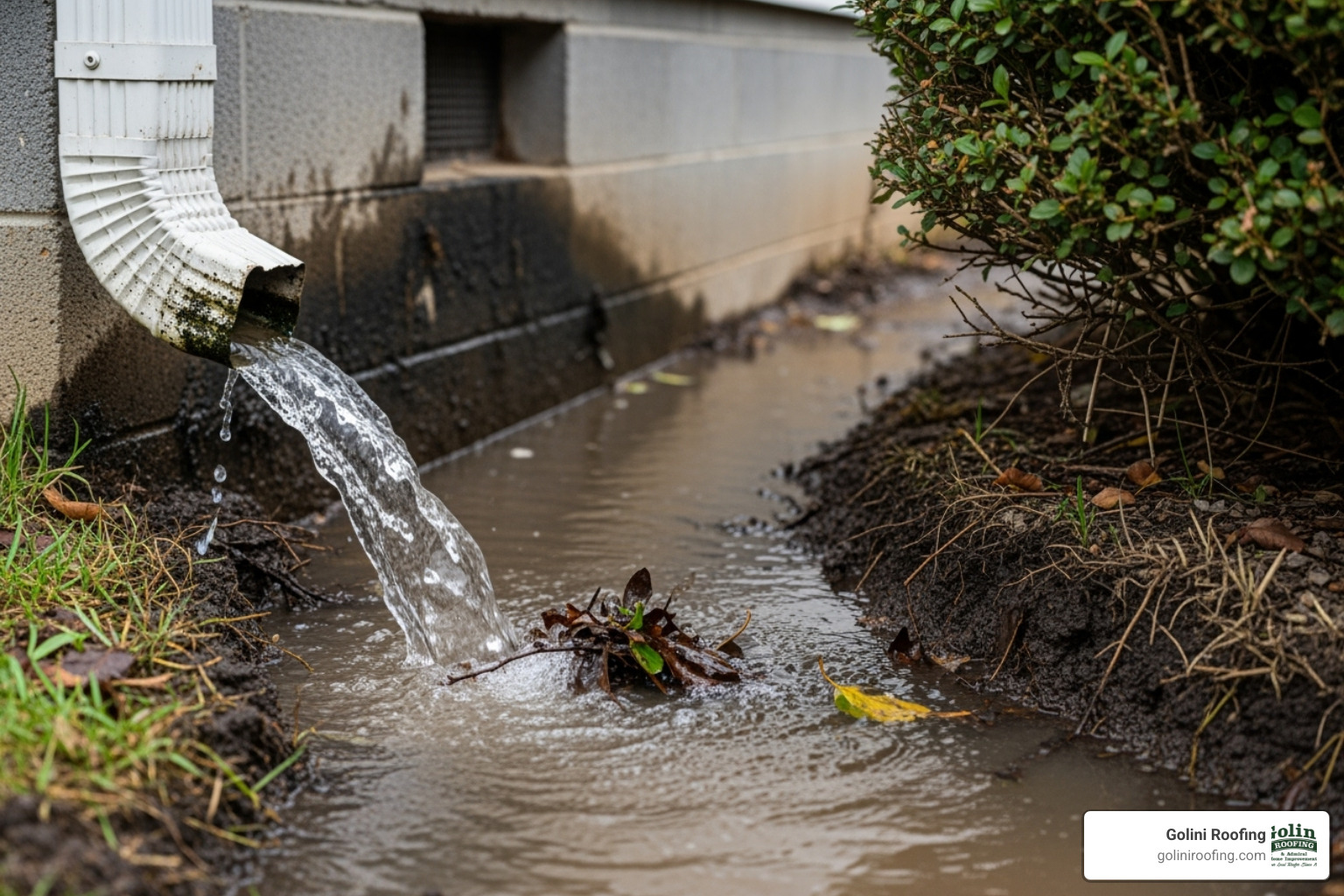
Advanced Solutions for Persistent Drainage Problems
Sometimes, those simple, everyday fixes just aren’t enough, and you might find yourself facing downspout drainage issues that are more stubborn than a Massachusetts winter. This is especially true if you’re dealing with poor overall yard drainage or significant water runoff problems that go beyond what a quick clean-out can solve. But don’t worry, there are still plenty of advanced solutions to bring peace back to your property!
One highly effective solution is professional yard grading. Think of it as giving your yard a gentle, purposeful slope away from your home. This involves reshaping the land so that water naturally flows away from your foundation, rather than pooling near it. We typically recommend a minimum slope of 6 inches over 10 feet. It’s amazing how often poor grading is the silent culprit behind a soggy yard and persistent water problems, essentially directing rain right towards your house instead of safely away.
Beyond grading, smart landscaping strategies can also become powerful allies in your fight against drainage woes. Have you ever heard of a rain garden? These are specially designed, shallow depressions planted with native vegetation that act like natural sponges, helping to absorb and filter stormwater runoff. They’re not just pretty; they prevent water from overwhelming your existing drainage system or creating unwelcome puddles in your yard. Strategic plant placement is key too – for example, planting trees and shrubs a good distance from your gutters can significantly reduce the amount of debris that ends up clogging them. And don’t forget ground cover plants; they’re excellent at preventing soil erosion, especially on slopes where water might otherwise wash away precious topsoil.
Finally, incorporating hardscaping features can be a game-changer. Imagine permeable patios, charming gravel paths, or even a decorative dry creek bed. These elements aren’t just for curb appeal; they’re designed to help manage water flow. For instance, if you have a spot where runoff water is constantly causing trouble for your landscaping, adding more hardscaping features in those problem areas can provide an neat and effective solution. Simple gravel beds placed directly under downspouts can also absorb runoff and prevent erosion, keeping your foundation dry and your yard intact.
If you’re considering a full overhaul or simply looking to upgrade your entire gutter system to prevent future issues, our team at Golini Roofing can certainly help. You can explore our comprehensive Gutter Installation services for solutions custom-custom to your home.
Handling Runoff and Neighbor Downspout Drainage Issues
Sometimes, downspout drainage issues can become a bit of a neighborhood puzzle, especially when water crosses property lines. It’s helpful to understand the difference between surface water and collected surface water when you’re discussing these matters.
Surface water is what we call water that flows naturally across the ground without any specific channel, like a wide sheet of rain after a storm. Generally, if you’re the lower property owner, you have the right to protect your property from this natural flow, even if it means blocking it. However, this can sometimes lead to water pooling on the higher property, so it’s always best to approach these situations with caution and open communication.
Collected surface water, on the other hand, is a different beast. This is water whose flow has been concentrated or directed by someone’s actions – think ditches, pipes, eavestroughs, or yes, those very same downspouts. If your neighbor has directed their downspouts in a way that sends water directly onto your property, that falls under collected surface water. In most cases, the person who collects and directs this water has a responsibility to discharge it in a way that doesn’t cause problems for their neighbors.
If you find yourself dealing with a neighbor’s downspouts draining onto your property, we always recommend starting with a friendly chat. Often, people simply aren’t aware that their drainage is causing an issue for you. Explain the problem calmly and suggest potential solutions. If a friendly conversation doesn’t quite resolve things, you might want to check your local municipal bylaws.
Many towns and cities have specific property standards bylaws regarding lot grading and drainage that can offer guidance. In some situations, a mutual agreement drain can even be formalized. While property owners certainly have legal rights regarding surface water runoff, legal action should always be considered a very last resort. For more detailed guidance on wetness or erosion problems, you can often find comprehensive guides from local soil and water conservation districts.
Frequently Asked Questions about Downspout Drainage
It’s natural to have questions about your home’s drainage, especially when you’re trying to protect your biggest investment! At Golini Roofing, we often get asked similar things by homeowners trying to tackle their downspout drainage issues. So, we’ve gathered some of the most common questions right here to help you out.
How far away from my house should my downspouts drain?
This is a fantastic question, and it’s absolutely crucial for protecting your foundation! When your downspouts empty too close to your home, all that water just soaks into the soil right next to your foundation. Over time, this can lead to serious problems like cracking, settling, and those dreaded basement leaks.
For water that flows above ground, we generally recommend a minimum distance of 6 to 10 feet away from your foundation. Think of it as creating a safe zone where water can disperse naturally without causing harm. The exact ideal distance can sometimes depend on things like how well your soil drains or the slope of your yard. The main goal is always to ensure water doesn’t pool anywhere near your house.
If you have underground drainage pipes, you’ll want them to extend even further. We typically suggest 10 to 20 feet from your home. These pipes should lead to a safe discharge point, like a dry well, a gentle slope that directs water away, or even a street drain if allowed in your area. The further the water is directed away, the better protected your foundation will be from those persistent downspout drainage issues.
What should I do if my neighbor’s downspout drains onto my property?
Ah, the classic neighborly drainage dilemma! This situation falls under what we call “collected surface water.” It means your neighbor has intentionally gathered water from their roof (through their gutters and downspouts) and is directing it onto your land. Generally speaking, they are responsible for making sure this doesn’t cause problems for your property.
Our first piece of advice is always to start with a friendly conversation. Often, your neighbor might not even realize their drainage is causing an issue for you. Explain calmly what’s happening and how it’s affecting your property. You could suggest simple solutions, like them adding an extension to their downspout or redirecting it to a different part of their own yard. Open communication often solves these issues quickly and keeps neighborly relations positive.
If a friendly chat doesn’t quite resolve things, your next step should be to check your local municipal bylaws regarding property drainage. Many towns and cities have specific rules about how close downspouts can discharge to property lines or if they can create a hazard for adjacent properties. This can give you a better understanding of your rights and options. While legal action is always a last resort, understanding local regulations can empower your conversations and guide further steps if needed. For more guidance on specific issues, your local county or municipal government may offer helpful resources that apply to similar situations.
How often should I clean my gutters and downspouts?
Think of gutter and downspout cleaning as essential preventative medicine for your home! To keep those pesky downspout drainage issues at bay, we recommend a minimum of twice a year for cleaning.
The best times for this are typically:
- Late spring: After all the trees have fully leafed out and shed their “spring debris” like seeds, blossoms, and small twigs.
- Late fall: Once most of the leaves have fallen from the trees. This clears out all that autumn foliage before winter sets in.
However, if your home is surrounded by lots of trees – especially those that drop a lot of needles, seeds, or tiny leaves – you might find yourself needing to clean them more frequently. Some homes, depending on their environment, could benefit from three or even four cleanings a year. It’s also a smart idea to inspect your gutters and downspouts regularly, especially after heavy storms. Catching a potential blockage early can save you a lot of hassle and prevent minor problems from turning into major downspout drainage issues.
Conclusion: Protect Your Foundation with Proper Drainage
Well, we’ve covered a lot, haven’t we? From spotting the subtle signs to tackling those tricky buried pipes, it’s clear that downspout drainage issues are a common challenge for homeowners. But here’s the good news: they’re also largely preventable! Taking the time to understand these problems and address them head-on can save you a world of headaches and expense down the road.
Think of it this way: your home’s foundation is its backbone. When rainwater isn’t properly directed away, that water can seep into the soil, leading to all sorts of trouble like foundation cracks, basement leaks, and even mold growth. Nobody wants that! By being proactive with your home maintenance, you’re not just preventing costly repairs; you’re investing in the long-term health and stability of your biggest asset.
At Golini Roofing, we believe in protecting homes from the ground up, starting with your roof and its drainage system. For over 35 years, we’ve been helping folks in the Wakefield, MA area keep their homes safe and dry. We take pride in our work, carefully hand-nailing each shingle and ensuring every job is done with exceptional craftsmanship.
If you’ve got nagging downspout drainage issues, or you simply want a professional assessment of your roofing and gutter system, we’re here to help. Explore our comprehensive Gutter Services to see how we can keep your downspouts flowing freely and your home protected from the elements. Let’s make sure your home stays dry, safe, and sound for years to come!
Like us on Facebook!
