
Drain pipes and guttering: Ultimate Guide 2025
The Unsung Hero of Your Home
Drain pipes and guttering are your home’s first line of defense against water damage. This system collects rainwater from your roof and channels it safely away from your foundation.
Key Components of a Complete Drainage System:
- Gutters – Collect rainwater along the roofline
- Downspouts (Drain Pipes) – Channel water vertically from gutters to ground level
- Splash Blocks – Direct water away from the foundation
- Elbows & Connectors – Guide water flow around obstacles
- Hangers & Straps – Secure the system to your home
Ignoring your drainage system until it fails can lead to devastating results. Foundation damage can cost $2,000 to $15,000 to repair, and basement flooding averages $3,000 to $30,000, based on internet data (not actual costs for Golini Roofing services).
A properly designed system of drain pipes and guttering prevents these costly problems. The key is ensuring every component works together to manage water flow from the roof to the ground.
I’m Jack Golini, and since 1982, I’ve seen how proper drain pipes and guttering save North Shore homeowners thousands in foundation and structural repairs.
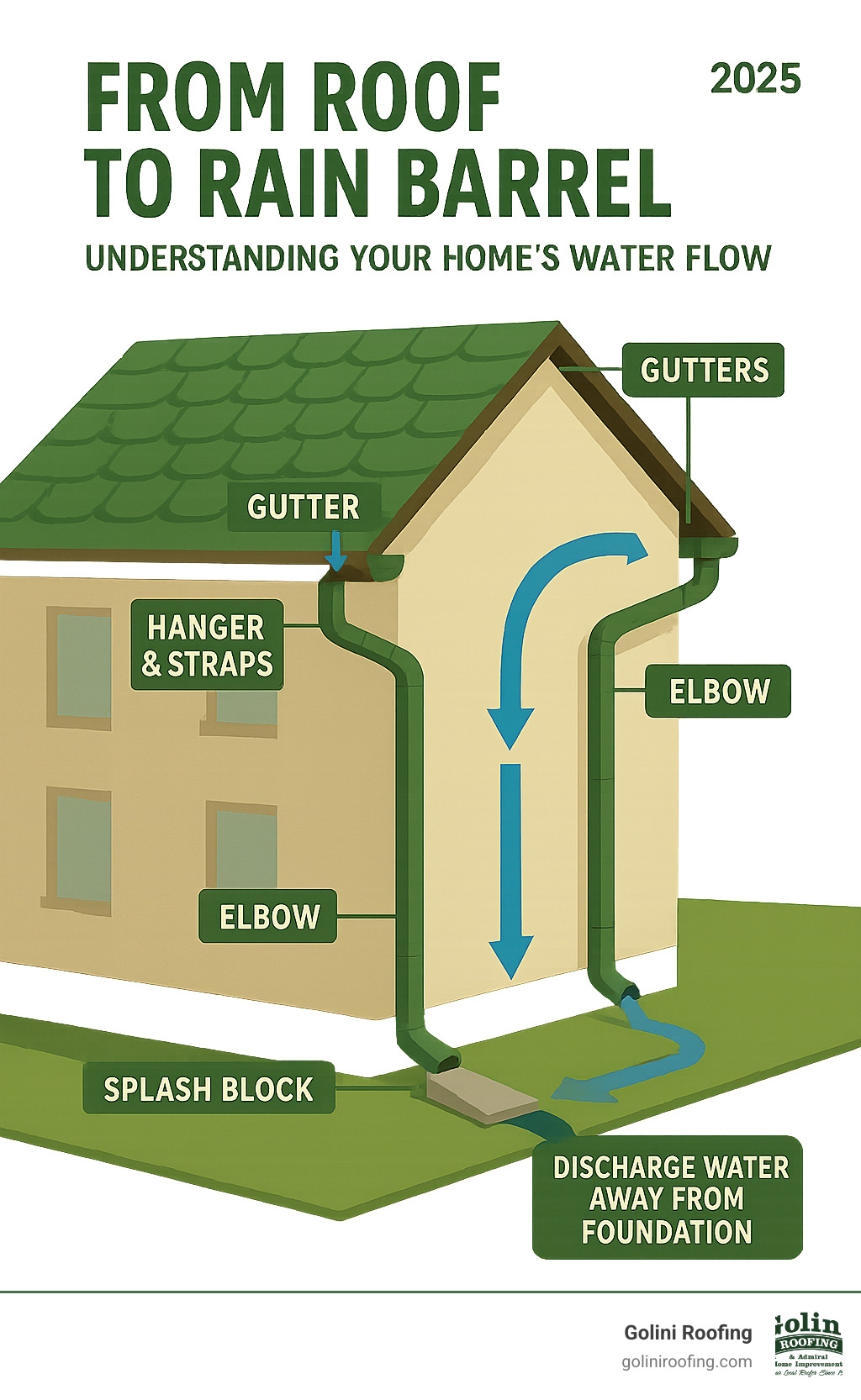
Key drain pipes and guttering vocabulary:
The Anatomy of a Complete Guttering System
Your roof collects a surprising amount of water, and your drain pipes and guttering system works 24/7 to protect your home. The gutters collect rainwater, and the downspouts (drain pipes) deliver it safely to the ground. When this system works, you won’t give it a second thought. When it fails, you’ll quickly see how much water your roof handles.
For homeowners dealing with water management challenges, you can find more info about our gutter services to see how we can help protect your investment.
Essential Components of Drain Pipes and Guttering
A complete drain pipes and guttering system has several key parts working together to protect your home.
- Gutters: These horizontal channels run along your roofline. Most homes use K-style gutters for a modern look, while older homes may have classic half-round gutters.
- Downspouts (Drain Pipes): These vertical pipes efficiently carry rainwater from the gutters to the ground.
- End caps: They seal gutter ends to direct water toward downspouts.
- Gutter hangers: These secure gutters to the fascia and maintain the proper slope for drainage.
- Elbows: These allow downspouts to bend around obstacles and direct water away from the foundation.
- Downspout straps: These secure downspouts to the house, preventing movement during storms.
- Splash blocks: Placed at the base of downspouts, they disperse water and prevent erosion near your foundation.
Downspouts: Form and Function
A single downspout can handle hundreds of gallons of water per minute in a heavy storm, channeling it safely away from your foundation.
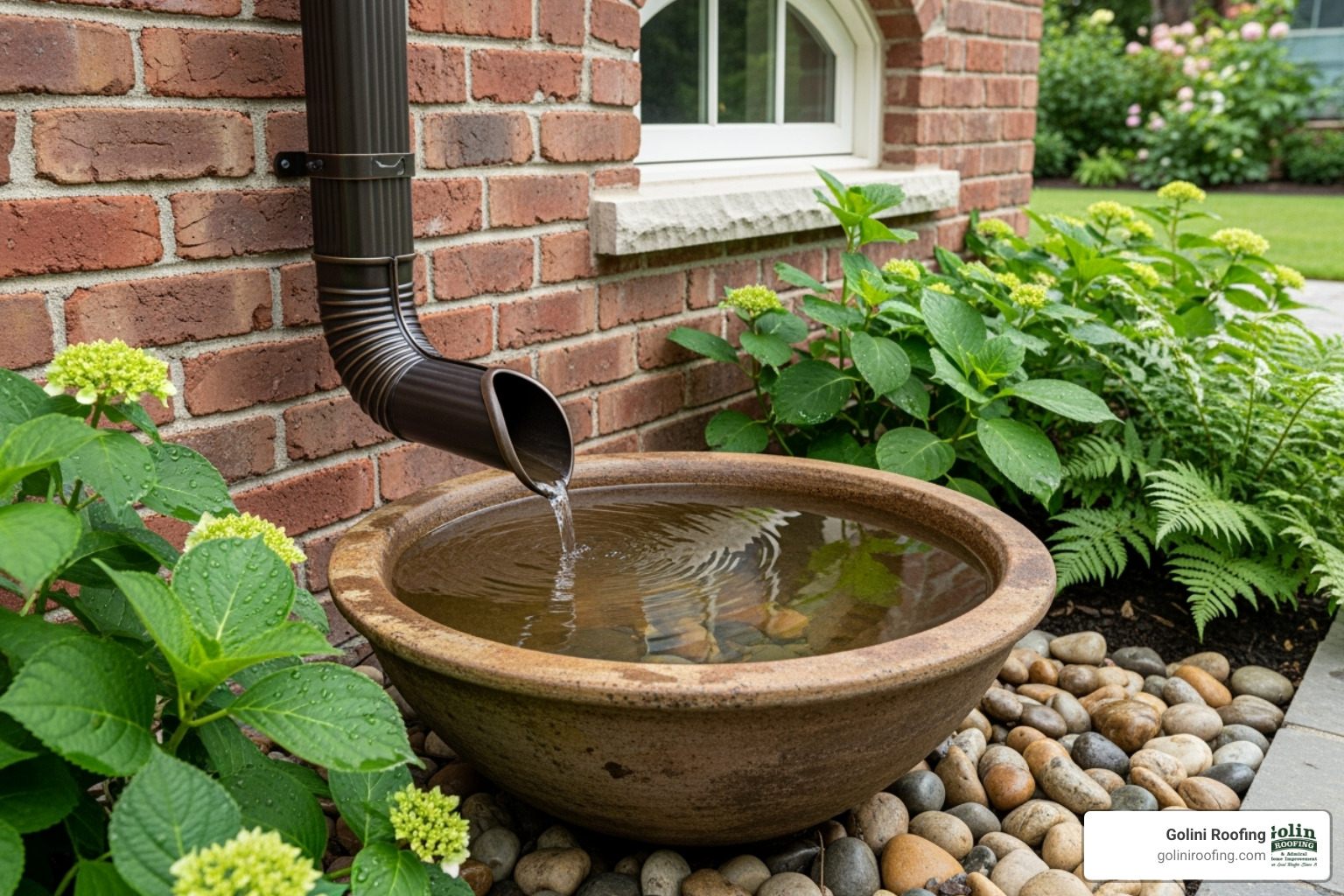
Modern downspouts also improve your home’s aesthetic appeal. Available in various materials and colors, they can complement your home’s style. Round downspouts pair well with half-round gutters, while rectangular ones match K-style gutters.
Water flow capacity is critical during heavy rainfall. A standard 2×3 inch downspout handles about 186 gallons per minute, while a larger 3×4 inch downspout manages 464 gallons per minute. Downspout efficiency depends on proper sizing and placement to match your roof area and local rainfall. Too few or too small will cause overflow.
During downspout installation, positioning is key. The downspout must connect securely to the gutter outlet and be fastened properly with straps to withstand years of weather.
Choosing the Right Drain Pipes and Guttering for Your Home
Selecting the right drain pipes and guttering involves balancing protection, performance, and budget. The right system pays for itself by protecting your foundation and home value. If you’re considering a complete exterior upgrade, our roofing services can help create a unified approach.
Material selection is your first big decision. Climate considerations are also key; our Northeast weather demands a durable system. Proper sizing calculations are crucial to prevent your system from being overwhelmed, and budgeting means finding the balance between initial cost and long-term durability.
A Comparison of Downspout Materials
Each downspout material offers a different blend of durability, maintenance, and cost.
| Material | Pros | Cons | Durability | Cost (Avg. per linear foot) | Lifespan (Years) |
|---|---|---|---|---|---|
| Aluminum | Lightweight, durable, inexpensive, non-corrosive, available in many colors, easy to install. | Susceptible to dents, can fade over time. | Good | $6 – $12 | 25-30+ |
| Vinyl (PVC) | Inexpensive, easy to install (DIY-friendly), does not rust, lightweight. | Prone to UV damage (can become brittle), colors can fade, susceptible to ladder damage, less durable in extreme temps. | Fair | $3 – $6 | 10-20 |
| Steel | Strong, durable, resistant to thermal expansion, good for heavy snow/ice. | May rust over time (galvanized needs maintenance), heavier, can be more expensive than vinyl/aluminum. | Very Good | $8 – $20 | 20-30+ |
| Copper | Most durable, exceptionally long lifespan, low maintenance, develops unique patina, adds aesthetic value. | Most expensive, doesn’t retain shine, requires specialized installation. | Excellent | $25 – $40+ | 50-100+ |
Note: The prices listed are average costs based on internet data and not actual costs for Golini Roofing services. Actual costs can vary widely depending on location, complexity, and specific product choices.
- Aluminum is the most common choice, balancing affordability and performance. It won’t rust and comes in many colors, though it can dent.
- Vinyl is a budget-friendly DIY option, but New England winters can make it brittle and prone to cracking.
- Steel is a tough option ideal for areas with heavy snow and ice, but galvanized steel requires maintenance to prevent rust.
- Copper is a premium, long-lasting choice that develops a beautiful green patina over time.
Sizing Your System: How Big is Big Enough?
Proper sizing is critical to handle water volume during storms. The calculation starts with your roof square footage and considers local rainfall intensity.
Here’s a general guide for sizing calculation:
- A 3-inch downspout handles runoff from about 600 square feet of roof.
- A 4-inch downspout manages 1,200 square feet and is suitable for most homes.
- A 5-inch downspout handles 2,000 square feet and is used for larger homes or areas with intense rain.
Placement is also important. I recommend one downspout for every 25 to 35 feet of guttering. Finally, a proper gutter slope (a quarter-inch drop every ten feet) is essential to ensure water flows toward the downspouts and doesn’t pool in the gutters.
Installation and Maintenance Best Practices
Proper installation of your drain pipes and guttering system is critical for long-term success. While DIY is possible for some, professional installation ensures correct sizing, secure fastening, and proper slope for optimal water flow. This attention to detail, similar to our approach with roof repairs, protects your home’s foundation.
Regular maintenance is just as crucial. Staying on top of a few simple tasks will keep your system performing at its peak and prevent expensive problems.
A Step-by-Step Guide to Downspout Installation
Installing a downspout correctly ensures water flows where it should.
- Prepare the Gutter Connection: Cut a hole for the outlet in the gutter, ensuring it’s at least four inches from the end, and smooth the edges.
- Secure the Outlet Tube: Insert the outlet tube from inside the gutter, secure it with screws, and apply high-quality sealant for a watertight seal.
- Position with Elbows: Use elbows to create an offset, bringing the downspout flush against the house wall.
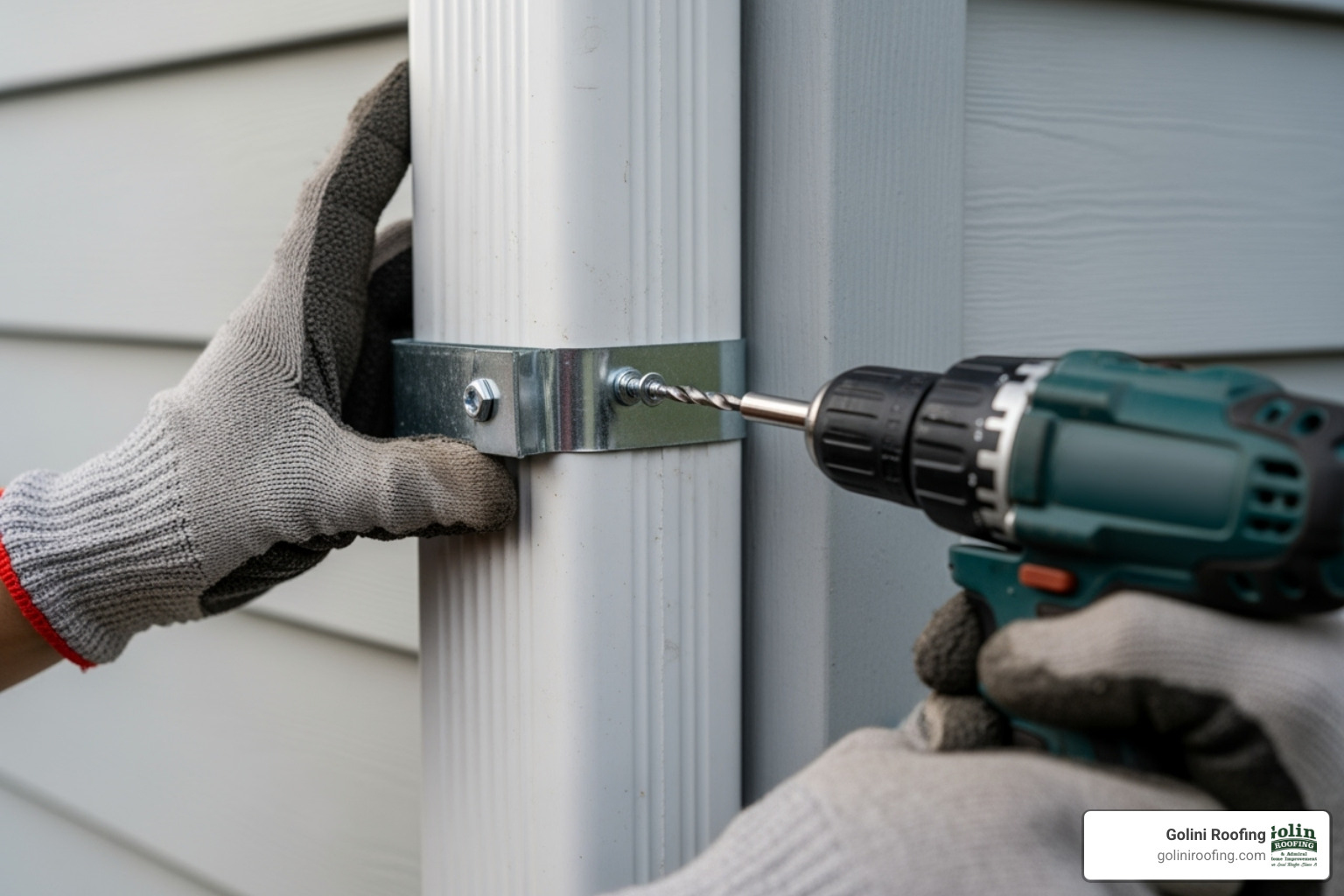
- Connect Downspout Sections: Fit the upper section inside the lower one to prevent leaks, ensuring careful alignment.
- Secure to the Wall: Anchor the downspout with straps spaced about every three feet, using fasteners appropriate for your siding.
- Manage Water Discharge: Use a final elbow or shoe to direct water at least 4 to 6 feet from the foundation. Splash blocks, extensions, or underground pipes can help achieve this.
Maintenance for Your Drain Pipes and Guttering
Regular care keeps your drain pipes and guttering in top shape.
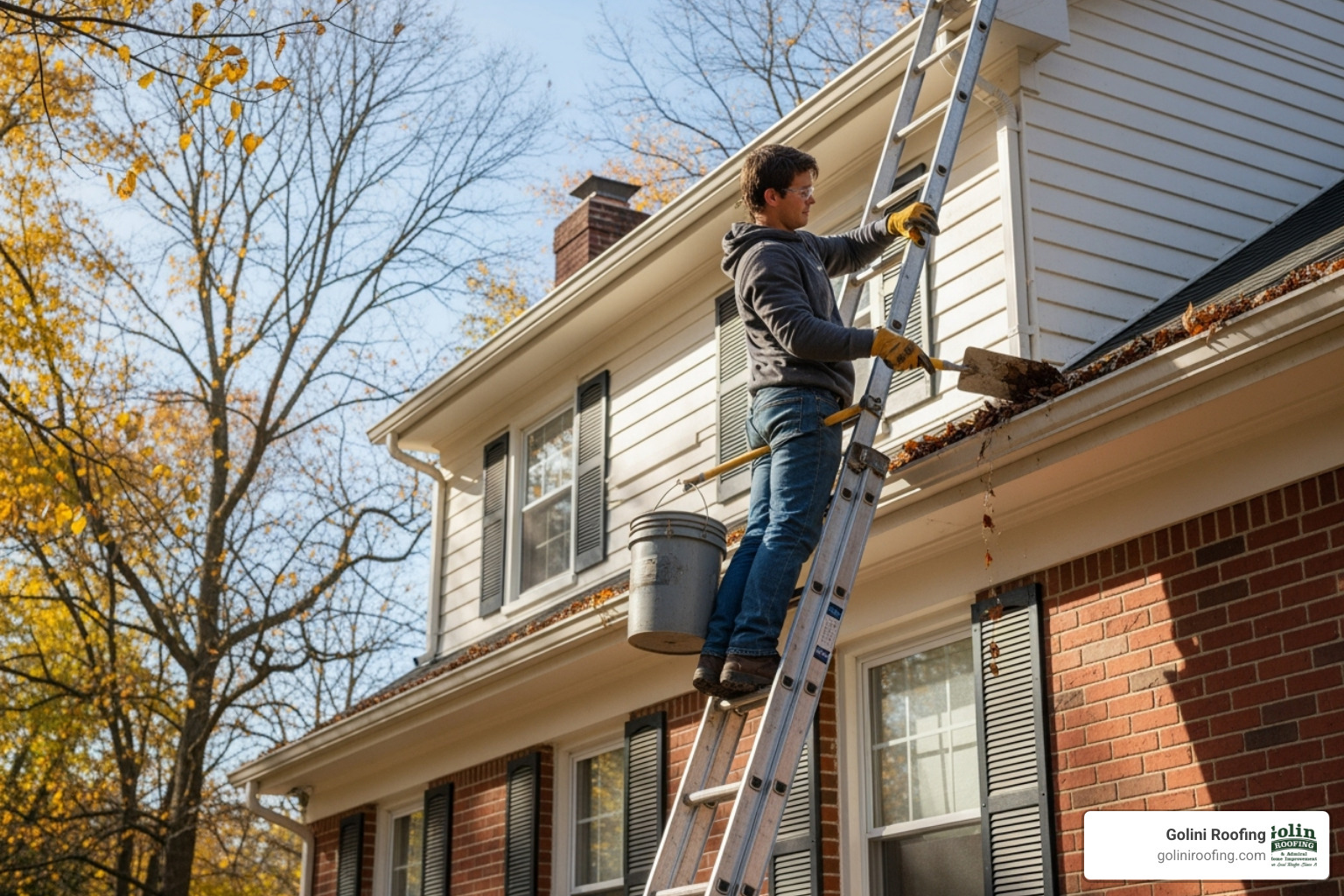
- Debris Removal: Clean gutters at least twice a year (late spring and late fall) to remove leaves, twigs, and other blockages.
- Clog Prevention: Gutter guards are excellent for keeping large debris out and reducing cleaning frequency.
- Leak Inspection: After cleaning or heavy rain, check for drips at seams and joints or any signs of rust.
- Seasonal Checks: Visually inspect your system after severe weather for loose hangers or damage from snow and ice.
- Downspout Accessories: Use splash blocks or extensions to direct water away from the foundation. Diverters can channel water into rain barrels, and wire strainers at downspout openings prevent clogs in the pipes.
Troubleshooting Common Issues and When to Call a Pro
Your drain pipes and guttering system works hard, but problems can arise. Catching issues early is key to preventing minor problems from turning into expensive headaches. Don’t wait until you see water damage to act.
The Dangers of Improper Drainage
When your drain pipes and guttering system fails, the consequences can be severe and costly.
- Foundation Damage: Pooling water saturates soil, causing it to expand and contract, which puts immense pressure on foundation walls. Repairs can cost $2,000 to $15,000, based on internet data (not actual costs for Golini Roofing services).
- Landscape Erosion: Uncontrolled runoff washes away topsoil and can carve channels in your yard, often directing more water toward your foundation.
- Basement Flooding: Water seeping into basements can lead to repairs ranging from $3,000 to $30,000, according to internet data, not to mention the loss of personal property.
- Pest Infestation: Standing water attracts mosquitoes, while damp wood and soil draw termites and rodents.
- Mold and Mildew Growth: Excess moisture can cause mold on exterior walls and inside your home, creating health risks.
- Ice Dams in Winter: In Massachusetts, improper drainage can cause water to freeze at the roof’s edge, forcing water under shingles and into your home.
Red Flags: Knowing When to Seek Professional Help
Some gutter problems are subtle. Watch for these warning signs:
- Persistent Clogs: If you’re constantly clearing the same spot, it may indicate an improper slope or the need for more downspouts.
- Damaged or Rusted Metal: Corrosion spreads quickly and can turn a small rust spot into a major leak.
- Water Overflowing: During rain, overflowing water means your system is clogged or undersized, and that water is damaging your foundation.
- Loose Gutters or Downspouts: Loose components are a safety hazard and can lead to property damage if they fall.
- Visible Cracks or Holes: Any crack or hole is a leak that directs water where it shouldn’t go.
- Water Pooling Near Your Foundation: This is a clear sign your system has failed to do its most important job.
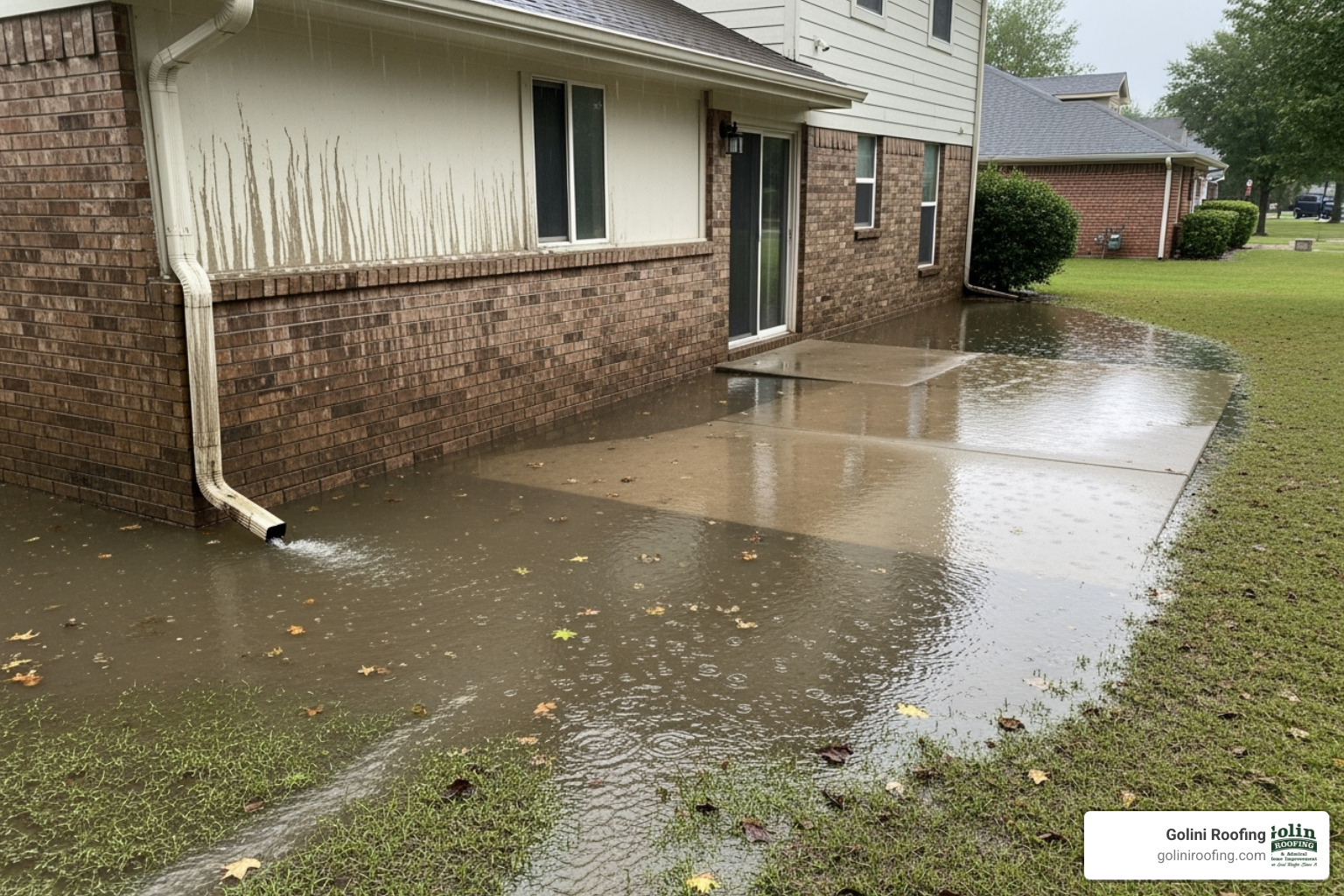
If you see these signs, don’t wait. We serve homeowners throughout Wakefield, Burlington, Lynnfield, North Reading, Reading, Stoneham, Wilmington, Winchester, and Woburn, and can diagnose and fix problems correctly the first time.
Frequently Asked Questions about Guttering and Drainage
After 35+ years in the business, I’ve heard just about every question homeowners have about their drain pipes and guttering. Here are answers to some of the most common ones.
What is the primary function of a downspout?
A downspout’s main job is to carry the rainwater collected by your gutters down from the roof and direct it safely away from your home’s foundation. This prevents costly water damage, soil erosion, and basement flooding.
What is the most common downspout size for a residential home?
For most homes in Massachusetts, a 4-inch diameter downspout (or a rectangular 3×4 inch) is standard. This size is typically sufficient for an average residential roof, handling runoff from about 1,200 square feet of roof area. Smaller homes might use 3-inch downspouts, while larger or more complex roofs may require 5-inch downspouts.
How far away from the house should a downspout discharge water?
This is critical: water should be discharged at least 4 to 6 feet away from your foundation. Discharging water too close saturates the soil, which can lead to foundation cracks and basement leaks. You can achieve this distance using simple accessories like splash blocks or downspout extensions.
Protect Your Foundation with a Professional Gutter System
Your home is a significant investment that deserves the best protection. A professional drain pipes and guttering system isn’t just an expense; it’s an investment in water management that safeguards your home’s structural integrity and value.
An effective drainage system prevents costly problems like foundation cracks, basement flooding, and landscape erosion. Based on internet data, these issues can cost anywhere from $2,000 to over $30,000 to repair (these are not actual costs for Golini Roofing services).
At Golini Roofing, we’ve protected North Shore homes for over 35 years. Our meticulous approach extends from hand-nailing shingles to installing every component of your water management system. We understand the challenges of Massachusetts weather and design systems that last.
We serve communities including Wakefield, Lynnfield, North Reading, Reading, Stoneham, Wilmington, Winchester, and Woburn, tailoring our approach to your property’s specific needs.
Don’t wait for water damage to occur. A properly installed system of drain pipes and guttering is a proactive measure that protects your entire home.
Ready to give your home the protection it deserves? Contact us for a free estimate and let’s talk about keeping your home safe and dry for decades to come.
Like us on Facebook!
