
Drain Spout Repair: Quick 3-Step Guide
Your Home’s First Line of Defense Against Water Damage
Drain spout repair is a crucial maintenance task for protecting your home from costly water damage. Here’s what you need to know:
Common Drain Spout Problems:
- Loose downspouts – Pull away from walls due to broken straps or screws
- Leaking joints – Water drips from connections between sections
- Clogs – Debris blocks water flow causing overflow
- Holes and cracks – Corrosion or impact damage creates openings
- Sagging gutters – Improper slope prevents proper drainage
Quick DIY Solutions:
- Reattach loose downspouts with new straps and screws
- Seal small leaks with gutter sealant or patch material
- Clear clogs by flushing with a garden hose
- Replace damaged sections using slip joints or couplings
Your gutters and downspouts channel thousands of gallons of water away from your home annually. A failing system can lead to severe consequences, including foundation damage, basement flooding, and structural rot. For a deeper dive into how gutters work, check out this helpful rain gutter overview.
The good news is that most downspout issues are surprisingly DIY-friendly. With basic tools, you can handle common repairs that might otherwise cost $75–$500 when hiring professionals (average costs based on internet data, not actual Golini Roofing prices).
But here’s what many homeowners don’t realize: proper maintenance and timely repairs can extend your gutter system’s life by decades. A small leak today can become a major replacement tomorrow if ignored.
I’m Jack Golini, and with over 35 years of experience helping homeowners in the Wakefield, MA area with their roofing and drain spout repair needs, I’ve learned that most gutter problems start small and are preventable with the right approach.
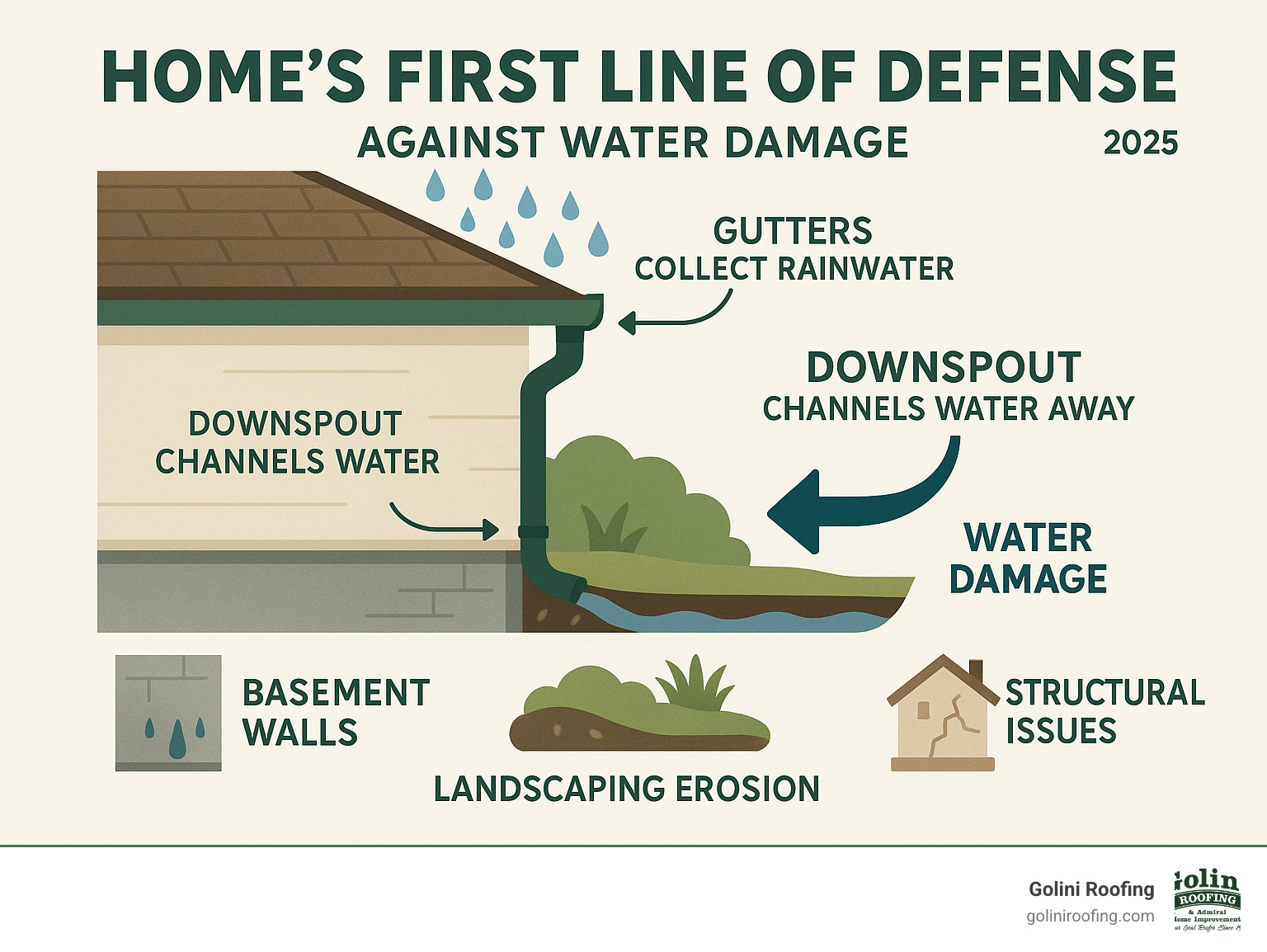
Find more about drain spout repair:
Identifying Common Gutter and Downspout Problems
Before you can fix a problem, you need to spot it. Catching these early warning signs can save you significant headaches and expense:
- Water stains on siding: This often indicates water is overflowing or leaking from the gutters, running down your house.
- Peeling paint or rotting wood: Especially near the fascia board or trim, this is a clear sign that water is repeatedly saturating these areas.
- Eroded landscaping or trenches: If you see channels forming in the soil around your foundation, it means water is not being properly diverted away.
- Water pooling near the foundation: This is a major red flag. Excess water near your foundation risks thousands of dollars in foundation repairs, creating hydrostatic pressure that can lead to cracks.
- Mildew on the foundation or in the basement: Persistent dampness from overflowing gutters can lead to mold and mildew growth.
- Gutters pulling away from the house: This can be due to loose hangers, rotted fascia, or heavy clogs.
Knowing when to repair versus replace is key. If you’re dealing with widespread damage, extensive rust, or multiple leaks across many sections, it’s often more cost-effective in the long run to consider a full replacement. However, for isolated issues, a targeted drain spout repair is usually sufficient. Learn more about when to repair vs. replace your gutters with our more info about gutter repair services.
Clogs and Overflow
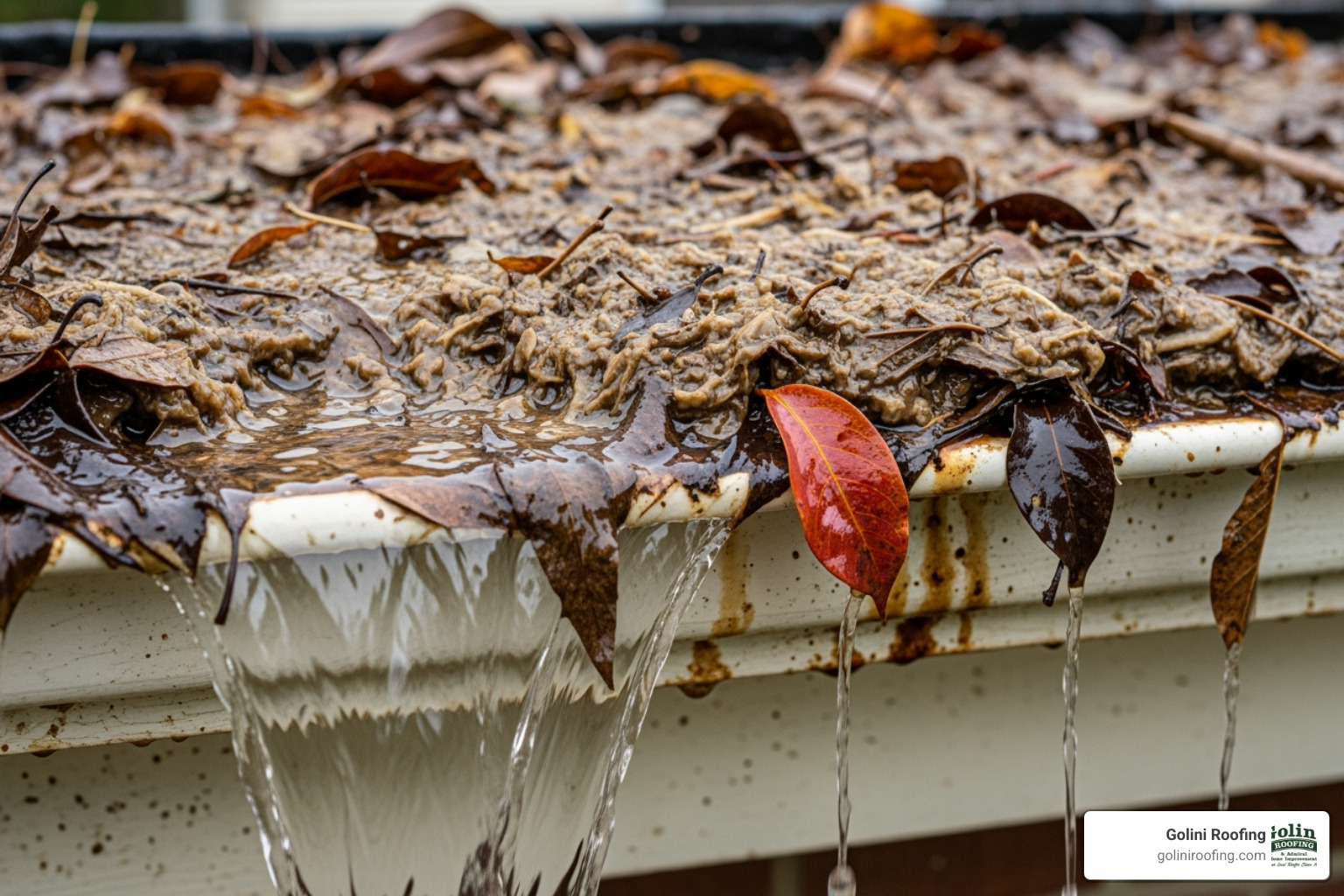
When leaves, twigs, and shingle gravel build up, they create a dam. Water then overflows, causing gutters to sag and pour directly onto your foundation, siding, or landscaping, defeating their purpose.
Leaks and Holes
Leaks can undermine your gutters even if they’re clear. Common leak points include:
- Dripping joints: Where two sections of gutter or downspout meet, the sealant can degrade over time.
- Corroded spots: Metal gutters, especially older ones, can rust through, creating small holes.
- Cracked sections: Vinyl gutters can become brittle and crack due to temperature fluctuations or impact.
- Punctures from damage: A stray branch or a ladder mishap can create a hole.
- Loose end caps: The caps at the end of gutter runs can come loose, allowing water to escape.
- Failed sealant: Any area that has been sealed previously may eventually need re-sealing.
Detached or Loose Components
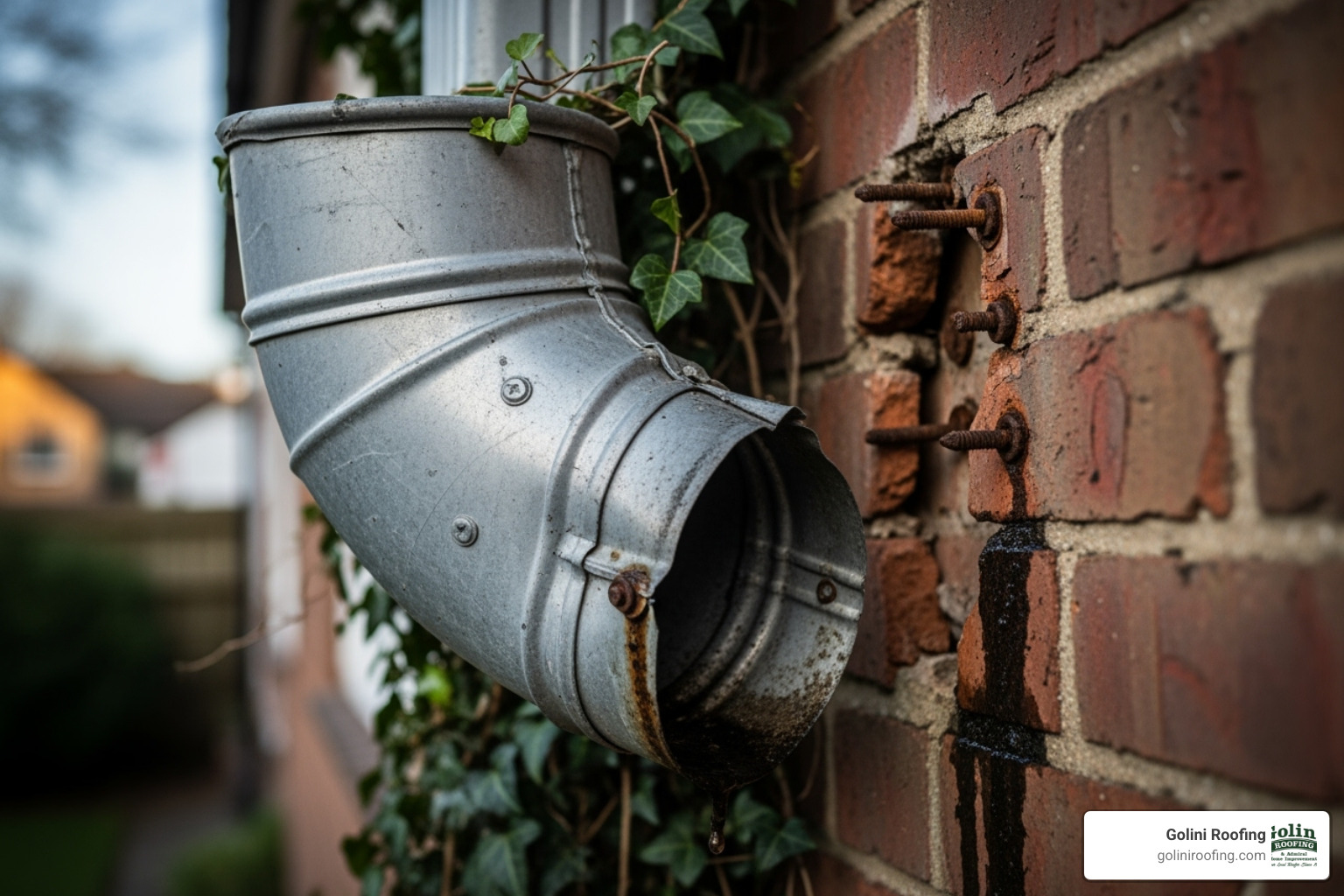
This is often caused by:
- Loose downspout straps: The straps that secure the downspout to the wall can become brittle, break, or their fasteners can pull out.
- Missing screws: Screws holding downspout sections together or connecting them to the gutter can vibrate loose or corrode.
- Ice damage: In colder climates like ours in Massachusetts, ice buildup inside downspouts can exert immense pressure, causing them to pull away from the house or detach from the gutter.
- Wind damage: Strong winds can pry loose sections or straps, especially if they weren’t securely fastened to begin with.
Gutter and Downspout Materials and Costs
| Material | Approx. Cost per Foot | Pros | Cons |
|---|---|---|---|
| Vinyl | $3 – $5 | Lightweight, inexpensive, rust-proof | Can become brittle in cold weather; limited color longevity |
| Aluminum | $4 – $9 | Lightweight, rust-proof, many color options | Dents more easily than steel |
| Galvanized Steel | $8 – $12 | Strong, durable, paintable | Heavier; can rust if the coating is scratched |
| Copper | $25 – $40+ | Extremely long-lasting, beautiful natural patina | Highest material cost; usually requires professional installation |
Curious what it might cost to swap out an entire system? See our breakdown of the Average Cost to Replace Gutters.
Proactive Maintenance to Extend Gutter Life
Proactive maintenance is key to avoiding expensive drain spout repair bills. While gutters are low-maintenance, neglecting them can lead to costly problems. It’s like changing your car’s oil; skipping it leads to bigger issues.
Regular cleaning is your best friend. We recommend a semi-annual schedule—once in late spring after pollen and tree debris have settled, and again in late fall after the leaves have fallen. If you have trees directly over your roof, you might need to clean more often. It’s worth the extra effort.
After scooping out debris, flush the gutters with a hose. This clears smaller particles and lets you check for proper water flow. Watch to see if water moves smoothly to the downspout or if it pools, which indicates a clog. If water isn’t flowing properly, don’t ignore it. For detailed help with stubborn blockages, check out our guide on Clogged Downspout Repair.
Mother Nature can be rough on gutters. After any significant storm—whether it’s high winds, heavy rain, or an ice storm—take a walk around your house. Look for loose sections, new stains on your siding, or downspouts that have pulled away from the house. Catching storm damage early can save you from bigger headaches later.
A maintenance tip many homeowners overlook is keeping tree branches trimmed back from your roofline. I can’t tell you how many drain spout repair calls we get that could have been prevented by simple tree maintenance. Overhanging branches drop leaves, twigs, and sometimes larger limbs that can damage your entire gutter system.
Should You Install Gutter Guards?
Gutter guards can seem like a “set it and forget it” solution, but it’s important to understand their pros and cons.
The biggest benefit is obvious: less cleaning. Good gutter guards can dramatically reduce how often you need to haul out that ladder. They act like a filter, keeping the big troublemakers (leaves, twigs, etc.) out of your gutters while still letting water through.
They also prevent major clogs and keep pests from nesting in your gutters.
But here’s where it gets interesting. There are several types of gutter guards out there, and they’re not all created equal. You’ve got mesh screens, reverse curve systems, and fine micro-mesh filters. Some excel at handling big leaves, while others are better at filtering out shingle grit and smaller debris.
While some gutter guards are DIY-friendly, professional installation often makes the difference between a system that works and one that causes new problems. I’ve seen improperly installed guards cause water to overshoot the gutter or create spots where debris builds up on top of the guards.
If you’re considering gutter guards for your home, we offer Gutter Cover Installation Service and can help you choose the right type for your specific situation. The best gutter guard is one that’s properly matched to your home’s unique needs.
When to Call a Professional for Drain Spout Repair
While we encourage homeowners to tackle many drain spout repair tasks themselves, there are times when calling a professional is the smartest, safest, and most cost-effective choice.
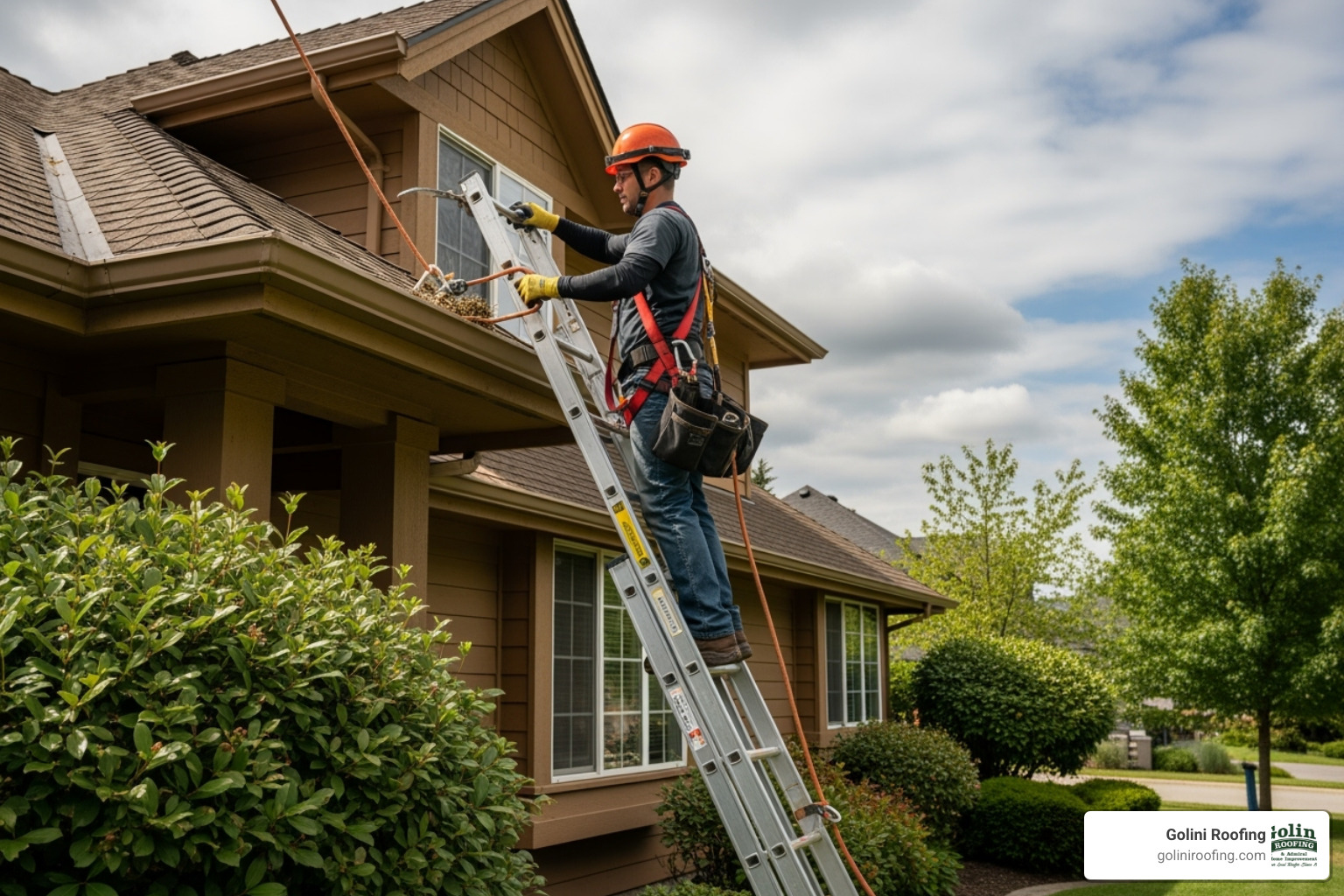
Sometimes the best DIY decision is knowing when not to DIY.
Home height is probably the biggest factor. If your gutters are on a second story or higher, working on ladders becomes extremely dangerous. The risk of falls far outweighs any cost savings from doing it yourself. I’ve seen too many homeowners get hurt trying to save a few dollars on what should have been a professional job.
Extensive damage or rot is another clear sign to call in the pros. When you find significant sections of rotted fascia board, widespread rust, or damage that extends beyond a simple patch job, the repair becomes much more complex. These situations often require specialized tools and expertise to ensure a lasting fix.
Your comfort level with heights and proper tools is key. If you lack a stable ladder, specialized equipment, or are uncomfortable with heights, it’s safer to hire a professional. Your safety is paramount.
Underground drainage issues present another scenario where professional help is usually necessary. If your downspouts connect to an underground drainage system and you suspect clogs or damage in those buried pipes, this typically goes beyond typical DIY capabilities.
For complex jobs, especially on multi-story homes in the Wakefield, MA area, trust a professional like Golini Roofing. With over 35 years of experience, we handle everything from simple reattachments to complete system overhauls, ensuring the job is done safely and correctly.
The peace of mind that comes with professional installation often pays for itself in the long run. Find out more about local gutter services at Gutter Companies Near Me.
Frequently Asked Questions about Downspout Repair
Here are answers to some of the most common questions we get about drain spout repair.
How much does professional downspout repair cost?
The national average cost for professional downspout repair ranges from $75 to $180, but the final price depends on several factors. Minor repairs like reattaching a loose downspout or sealing a small leak might be on the lower end, with some contractors often charging $40-80 per hour plus materials.
However, if you need section replacement, you’re looking at $4-22 per linear foot for labor and materials. Copper downspouts can cost up to $40 per linear foot to replace. The height of your home also plays a big role, as second-story work costs more due to extra safety requirements. A simple strap replacement might be under $100, but extensive work could reach $500 or more. These are average costs based on internet data, not actual Golini Roofing prices.
Can I use glue or caulk to fix any downspout leak?
While gutter sealant is perfect for patching small holes and sealing seams, it’s not a magic fix for every leak. Leaks at connection points are often due to improper pitch or alignment, not just a missing seal. For example, water can back up if a downspout extension is pitched toward the elbow instead of away from it. Sealant won’t fix this.
The real fix is to adjust the physical components to create proper drainage flow. Use sealant for cracks and loose joints, but if a leak persists, investigate the system’s alignment.
How often should I clean my gutters?
I always tell homeowners to clean their gutters twice a year minimum: once in late spring after all the pollen and early debris has settled, and again in late fall once the leaves have finished dropping.
However, if you have many overhanging trees (especially oak or pine), you might need to clean them three or four times a year. Regular cleaning prevents major clogs that lead to overflows, ice dams, and expensive drain spout repair work. It’s also a great opportunity to spot small problems before they become big headaches.
If you’re dealing with persistent clogs, check out our guide on Clogged Downspout Repair for some professional techniques that can help.
Protect Your Investment with Proper Gutter Care
Your gutters and downspouts are unsung heroes, protecting your biggest investment. With the knowledge from this guide, you’re now equipped to keep this crucial system running smoothly.
Most common gutter issues are DIY-friendly. Reattaching a loose downspout, sealing a minor leak, or clearing a clog are manageable tasks for most homeowners with basic tools and a focus on safety.
Preventative maintenance is your secret weapon. Regular cleaning and inspections catch small problems before they become expensive headaches. A loose strap is a quick fix, but if ignored, it can lead to a detached downspout and water damage.
Knowing your limits is also key. For complex or unsafe jobs, like those on high roofs or involving extensive rot, calling a professional is the smartest choice. A seasoned contractor has the experience, equipment, and insurance to do the job safely.
Think of your gutter system as a long-term investment in your home’s health. A well-maintained system protects your foundation, prevents basement flooding, preserves your siding, and keeps your landscaping intact. The small investment in maintenance can prevent thousands in water damage repairs.
Water doesn’t forgive neglect. But with a combination of smart DIY maintenance and professional help when needed, your gutters can protect your home for decades to come.
For a comprehensive evaluation or professional help with your Gutter Services, contact our team today. We’re here to help homeowners in Wakefield, MA, and surrounding areas like Burlington, Lynnfield, North Reading, Reading, Stoneham, Wilmington, Winchester, and Woburn, ensure their homes stay protected through every season.
