
Gutter Installation: 7 Key Tips for Stress-Free Setup
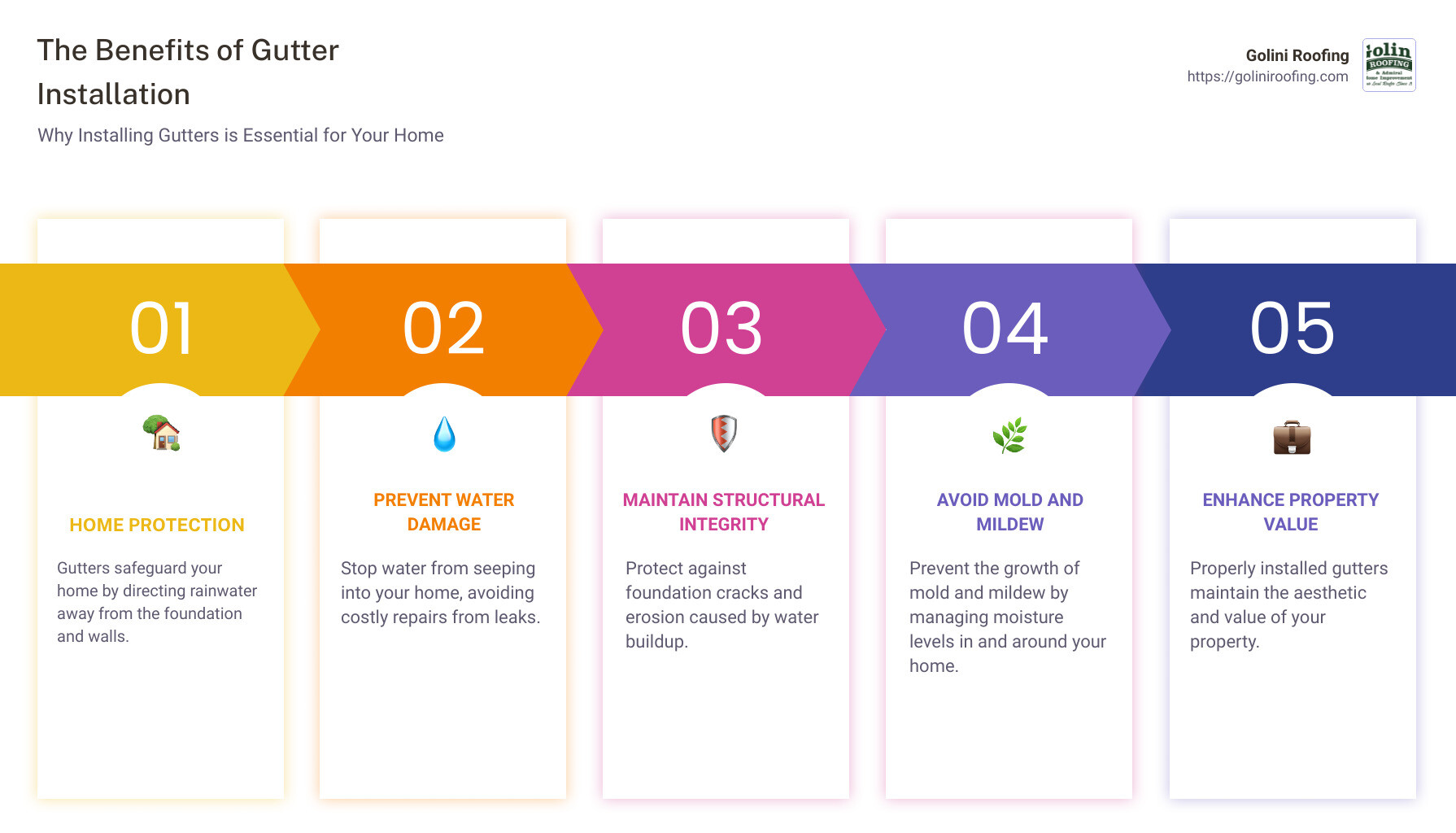
Gutter installation is crucial for maintaining your home’s durability and protecting it from potential water damage. Without properly installed gutters, rainwater can collect around your home’s foundation and walls, leading to problems like mold, mildew, and even structural issues. This vital installation helps direct water away from your house, preserving both the beauty and safety of your property.
Here’s a quick rundown of why gutters matter:
- Home Protection: Gutters protect your home by channeling water away from the foundation, walls, and landscaping.
- Prevent Water Damage: Properly installed gutters prevent water from leaking into your home, avoiding costly repairs.
- Maintain Structural Integrity: Shield your home from foundation cracks and erosion.
At Golini Roofing, we pride ourselves on delivering seamless gutter installation experiences. Jack Golini, with over 35 years in the industry, ensures your gutters are expertly installed to protect your most valuable investment — your home. Experience professional care and precision with each project, minimizing hassles and maximizing results.
Transition to next section: Understanding the various types of gutters is essential to choose the right one for your home.
Simple gutter installation word guide:
– gutter installation cost
– gutter repair near me
– rain gutter repair
Types of Gutters
Choosing the right type of gutter for your home can make all the difference in how well your gutter system performs. Here’s a breakdown of the most common types:
K-Style Gutters
K-style gutters are the most popular choice for many homeowners. They have a flat back and a decorative front that resembles crown molding, making them both functional and aesthetically pleasing. These gutters are highly effective at handling large amounts of water, which is why they’re commonly used in areas with heavy rainfall.
Box-Style Gutters
Box-style gutters are larger and often used in commercial or industrial buildings. They can handle massive water flow due to their size, making them ideal for large roofs. However, they require professional installation due to their complexity.
Half-Round Gutters
Half-round gutters have a simple, curved shape. They are often found on older, historic homes. While they don’t handle as much water as K-style gutters, their smooth surface allows water to flow more freely, reducing clogs.
Vinyl Gutters
Vinyl gutters are lightweight and easy to install, making them a favorite for DIY projects. They are also cost-effective and resistant to rust and corrosion. However, they may not last as long as other materials and can become brittle in extreme temperatures.
Aluminum Gutters
Aluminum gutters are a popular choice due to their durability and resistance to rust. They are lightweight, making them easy to install. Aluminum gutters can also be painted to match your home’s exterior. However, they can be prone to bending or denting if not handled carefully.
Steel Gutters
Steel gutters are known for their strength and durability. They can withstand heavy loads and impacts, making them ideal for areas with harsh weather conditions. However, they are heavier and more challenging to install. They also require regular maintenance to prevent rust.
Copper Gutters
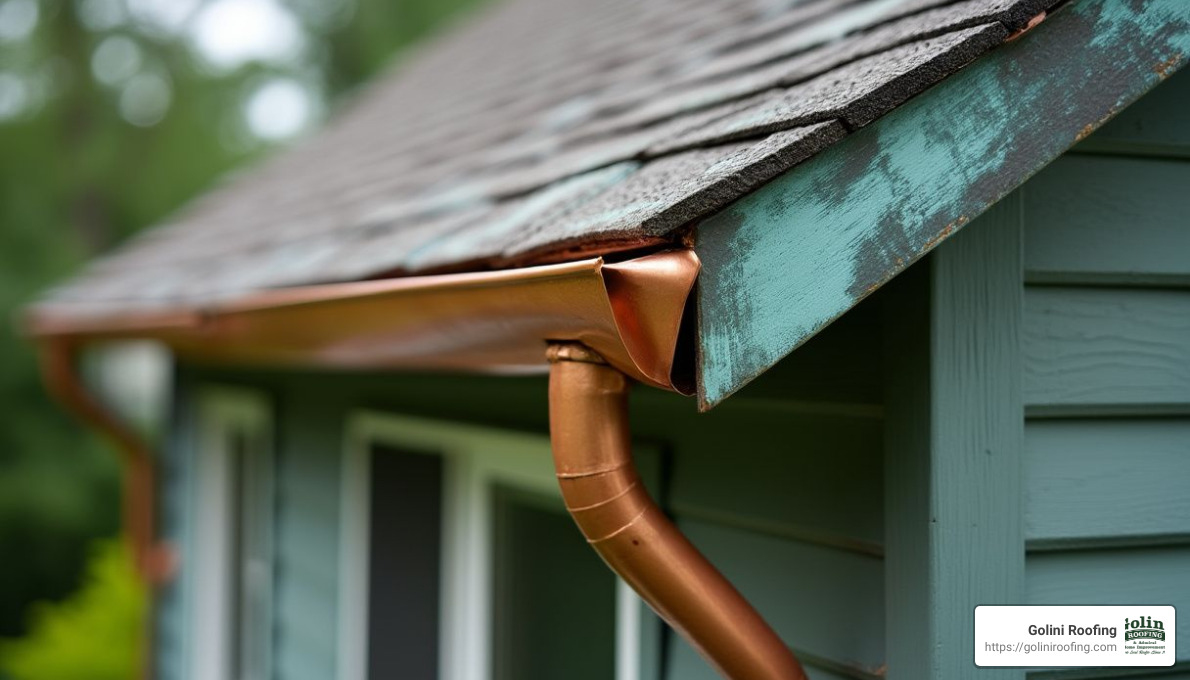
Copper gutters offer a unique, neat look and develop a beautiful green-silver patina over time. They are highly durable and can last up to 50 years. However, they are one of the most expensive options and require regular maintenance to maintain their appearance.
Zinc Gutters
Zinc gutters are long-lasting and develop a protective patina that helps prevent corrosion. They are durable and have a distinctive appearance that can improve your home’s curb appeal. However, they are also more expensive and may react with other metals if not installed properly.
Choosing the right gutter type involves considering your home’s needs, the local climate, and your budget. Each material offers unique benefits and challenges, so weigh these factors carefully.
Transition to next section: Once you’ve selected the perfect gutter type, understanding the costs associated with installation is the next step in ensuring your home is well protected.
Gutter Installation Costs
When it comes to gutter installation, understanding the costs involved is crucial. Let’s break down the average costs, how they vary by material, house size, and per linear foot.
Average Costs
The cost to install new gutters ranges from $600 to $4,100. Most homeowners find themselves spending around $2,300. This price includes both budget-friendly options like vinyl and high-end materials like copper.
Cost by Material
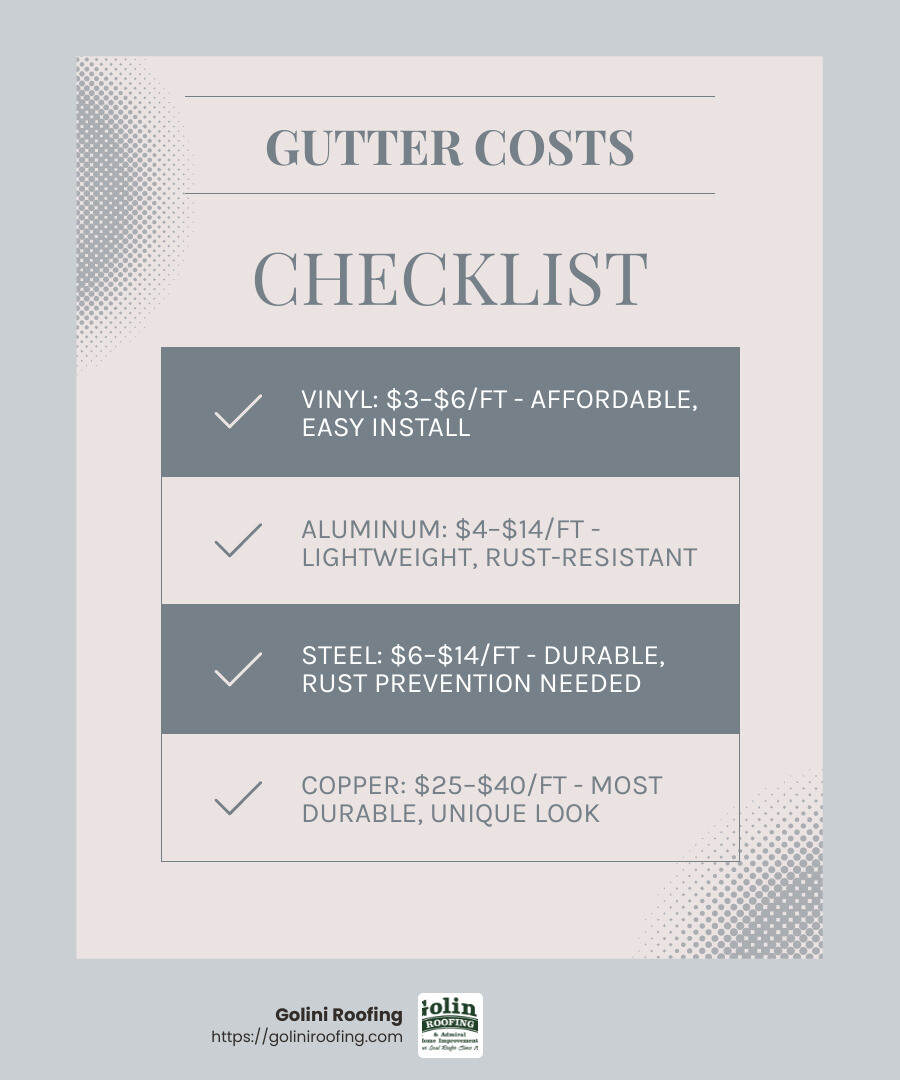
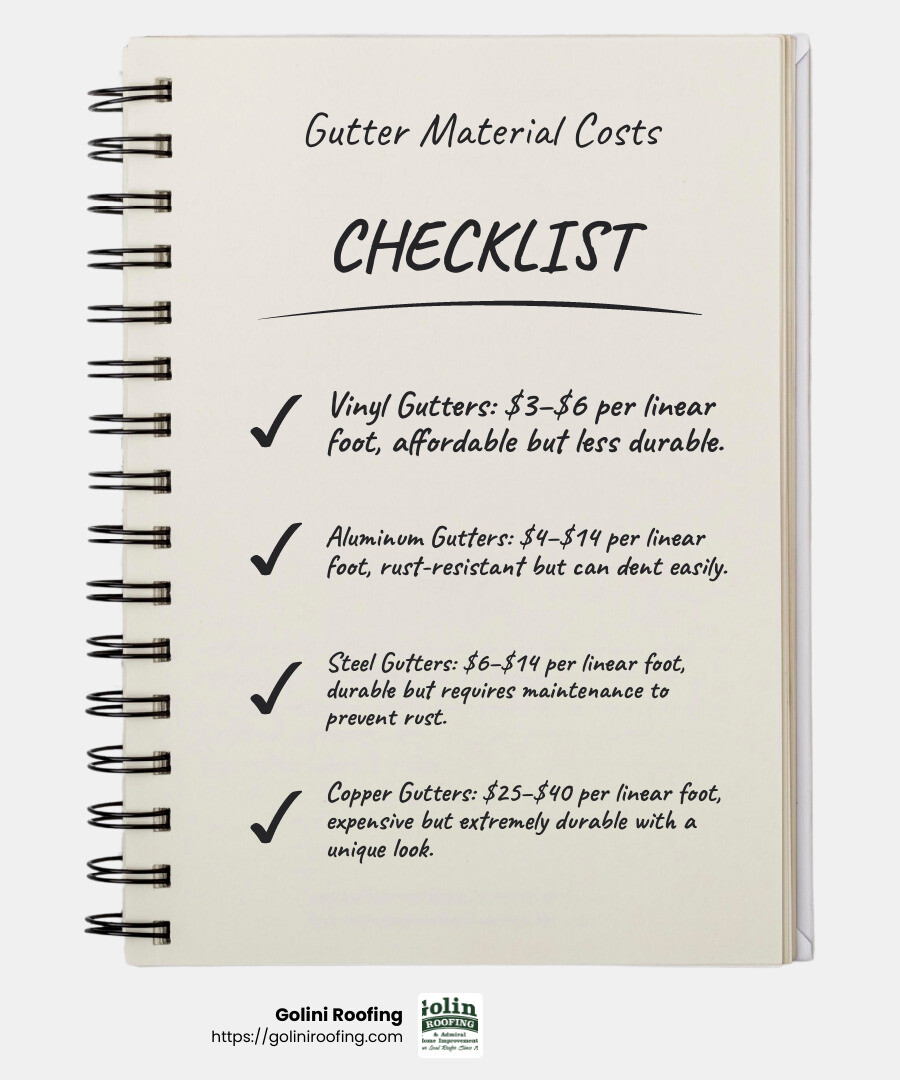
Different materials come with varying price tags. Here’s a quick look at what you might expect to pay per linear foot:
- Vinyl Gutters: $3–$6. They’re affordable and easy to install but may need replacement sooner, especially in harsh weather conditions.
- Aluminum Gutters: $4–$14. These are lightweight and rust-resistant but can dent easily.
- Steel Gutters: $6–$14. Known for their durability, but they require professional installation and regular maintenance to prevent rust.
- Copper Gutters: $25–$40. Extremely durable with a unique look, but they are the most expensive option.
- Zinc Gutters: $15–$40. Long-lasting with a protective patina, but they come with a higher price tag.
- Wood Gutters: $21–$32. They add character to historic homes but need significant maintenance.
Cost by House Size
The size of your home significantly impacts the total cost. Larger homes require more materials and labor. Here’s a general idea of the cost range based on house size:
- 1,000 sq ft: $600 – $1,500
- 1,500 sq ft: $900 – $2,000
- 2,000 sq ft: $1,200 – $2,500
- 2,500 sq ft: $1,500 – $3,200
- 3,000 sq ft: $1,800 – $4,100
Cost Per Linear Foot
The cost per linear foot can range from $4 to $40, depending on the material. Vinyl sits at the lower end, while copper and wood are at the higher end. This variability allows you to choose a material that fits your budget while meeting your home’s needs.
Understanding these costs will help you make an informed decision about your gutter installation. Next, we’ll dive into the installation process itself, detailing what steps are involved and how to ensure a successful project.
How to Install Gutters
Installing gutters may seem daunting, but breaking it down into steps makes it manageable. Here’s a simple guide to help you understand the process.
Snap Layout Lines
First, mark where the gutters will hang. Use a chalk snap line to draw a straight line along the fascia. This line ensures your gutters slope correctly for water to flow toward the downspouts. A good rule of thumb is a slope of 1/2 inch for every 10 feet of gutter.
Attach Fascia Brackets
Next, attach the fascia brackets along the chalk line. These brackets support the gutters and keep them in place. Space them about 32 inches apart for stability. Use a drill to secure them tightly to the fascia board.
Saw Gutter to Length
Measure the length of your roof edge and cut the gutter sections to fit. Use a hacksaw or tin snips for precise cutting. Always wear safety glasses and leather gloves to protect yourself from sharp edges.
Attach End Caps
Once cut, seal the ends of the gutter sections with end caps. These prevent water from spilling out the ends. Apply a bead of gutter sealant to the end caps and press them onto the gutter ends.
Cut Downspout Holes
Mark where the downspouts will connect to the gutter. Use a marker to outline the hole, then cut it out using a multi-tool or chisel. The hole should be centered over the downspout location.
Install Gutter
With help from a friend, lift the gutter sections into place and secure them to the fascia brackets. Make sure they align with the layout line and slope correctly. Use hex head gutter screws to fasten them securely.
Form Strip-Miter Joint
If your gutters need to turn a corner, you’ll create a strip-miter joint. This joint connects two gutter sections at an angle. Cut the ends of the sections at a 45-degree angle, then connect them with a gutter slip joint connector.
Connect Downspout
Attach the downspout to the hole you cut earlier. Use U-brackets to secure the downspout to the house. Ensure it directs water away from the foundation to prevent damage. Consider adding a flexible downspout extension for better water diversion.
With these steps, your gutters should be securely installed and ready to handle rainwater efficiently. Next, we’ll explore how to choose the right gutter installer for your project.
Choosing a Gutter Installer
Selecting the right gutter installer is crucial to ensure a smooth installation and long-lasting performance. Here’s what you should consider:
Experience
Experience matters. A seasoned installer knows the ins and outs of the process and can handle unexpected issues efficiently. Look for companies with several years in the business. They are more likely to have encountered and solved a variety of gutter installation challenges.
Licensing and Insurance
Check for licenses and insurance. Most states require gutter installers to have a contractor license or specific trade certification. Proper insurance, including general liability and workers’ compensation, is essential. This protects you from any liabilities if an accident occurs during the project.
Reviews and Referrals
Word of mouth is powerful. Ask friends, family, and neighbors about their experiences with local gutter installers. Online reviews are also valuable. Look for consistent positive feedback on quality and service. A company with glowing reviews is more likely to meet your expectations.
Reputable Brands
Choose installers who work with reputable brands. Quality materials lead to better performance and durability. Ask your installer about the brands they use and why they prefer them. This can give you insight into their commitment to quality.
Warranties
Warranties provide peace of mind. Check the details of the warranties offered by the installer. A strong warranty reflects confidence in their work and materials. Look for at least a 5-10 year warranty on materials and a 1-3 year warranty on labor.
Materials
Material choice affects durability and cost. Different materials like aluminum, steel, and copper have their pros and cons. Aluminum is lightweight and rust-resistant, while copper is durable but more expensive. Discuss the best options for your home and climate with your installer.
By focusing on these factors, you can find a reliable gutter installer who will ensure your gutters are installed correctly and efficiently. Next, we’ll dig into gutter maintenance and repair to keep your system in top shape.
Gutter Maintenance and Repair
Keeping your gutters in top shape is essential for protecting your home. Here’s what you need to know about gutter maintenance and repair:
Cleaning Frequency
Regular cleaning is crucial. Most homeowners should clean their gutters two to six times per year. This prevents clogs and ensures water flows smoothly, protecting your home from leaks and water damage.
Common Issues
Gutters can face several problems:
- Clogs: Leaves and debris can block water flow.
- Leaks: Holes or cracks can cause water to escape.
- Sagging: Loose fasteners might make gutters hang improperly.
- Mold and Mildew: Stagnant water can lead to growth.
Addressing these issues promptly can save you from costly repairs later.
Repair Services
Professional repair services can tackle these problems quickly. They can:
- Patch leaks and holes.
- Tighten loose fasteners.
- Re-align sagging sections.
- Remove clogs and debris.
Hiring a professional ensures the job is done safely and effectively.
Gutter Guards
Gutter guards reduce maintenance needs. These covers keep leaves and debris out while allowing water to flow through. While they don’t eliminate the need for cleaning, they significantly decrease the frequency.
Maintenance Plans
Some companies offer maintenance plans. These plans include regular inspections, cleaning, and minor repairs. They can be billed monthly or annually, providing peace of mind and extending the life of your gutters.
By staying on top of maintenance and addressing repairs promptly, you can keep your gutters functioning well and protect your home from potential water damage. Next, let’s explore some frequently asked questions about gutter installation.
Frequently Asked Questions about Gutter Installation
How much does it cost to install gutters per SF?
The cost to install gutters can vary widely. On average, gutter installation ranges from $5 to $33 per linear foot. This translates to about $0.50 to $3.30 per square foot of your home. The actual price depends on the material you choose. For example, aluminum gutters might cost around $7 to $33 per linear foot, while vinyl options are cheaper at $2 to $6 per linear foot.
How much does it cost to install gutters around a house?
The total cost to install gutters depends on the size of your house and the material selected. Here’s a quick look at average costs based on house size:
- 1,000 sq ft house: $500–$3,300, with an average cost of $1,900
- 1,500 sq ft house: $750–$5,000, with an average cost of $2,875
- 2,000 sq ft house: $1,000–$6,600, with an average cost of $3,800
Factors that affect these costs include the number of stories in your home, roof complexity, and any additional services like fascia repair or gutter guard installation. Expect higher costs for taller homes due to the need for extra safety equipment and labor.
Can I install gutters myself?
Yes, you can install gutters yourself, but it’s not always recommended. DIY installation can save money upfront, but there are pros and cons to consider:
Pros:
- Cost Savings: You avoid labor costs, which can be significant.
- Flexibility: You can work on your schedule.
Cons:
- Safety Risks: Working on ladders can be dangerous, especially for multi-story homes.
- Skill Level: Proper installation requires precision to ensure correct slope and drainage.
- Time-Consuming: It can take much longer than hiring a professional.
If you choose to DIY, make sure you understand the safety considerations and are confident in your ability to complete the job correctly. Otherwise, hiring a professional can ensure a safe and efficient installation.
Next, let’s dig into the importance of choosing the right gutter installer.
Conclusion
Choosing the right gutter installation service can make all the difference in protecting your home from water damage. At Golini Roofing, we understand the value of professional installation and the long-term benefits it brings.
Why Professional Installation Matters
Professional installation ensures that your gutters are correctly aligned and securely attached. This prevents leaks and overflow, which can cause serious damage to your home’s foundation, siding, and landscaping. Our team at Golini Roofing has over 35 years of experience, and we pride ourselves on meticulous hand-nailing techniques that ensure durability and reliability.
The Long-Term Benefits
Investing in professional gutter installation offers numerous long-term advantages:
- Durability: Professionally installed gutters last longer, reducing the need for frequent repairs or replacements. This saves you money over time.
- Efficiency: Properly installed gutters improve water flow, protecting your home from potential water damage.
- Peace of Mind: Knowing your gutters are installed correctly gives you confidence during heavy rainfalls and storms.
Why Choose Golini Roofing?
Golini Roofing stands out with our commitment to exceptional craftsmanship and customer satisfaction. Our team is fully licensed and insured, ensuring a safe and efficient process. We also offer warranties on our materials and workmanship, providing an added layer of protection for your investment.
In conclusion, while DIY gutter installation might seem tempting, the risks and potential costs of mistakes often outweigh the initial savings. Choosing a professional service like Golini Roofing ensures your gutters are installed to the highest standards, offering you long-lasting protection and peace of mind.
