
Gutter Supplies: 5 Smart Choices for 2025
Why Proper Gutter Supplies Are Critical for Home Protection
Your home’s gutter system is its first line of defense against water damage. More than just a channel for rain, it’s a crucial network designed to protect your property from the foundation to the roofline. Using the right gutter supplies is not just a matter of aesthetics; it’s the foundation of your home’s water management system, safeguarding your most valuable investment from costly and often irreversible damage. A properly installed and maintained gutter system diligently channels rainwater away from your roof, siding, windows, doors, and, most importantly, your foundation, preventing thousands of dollars in potential repairs.
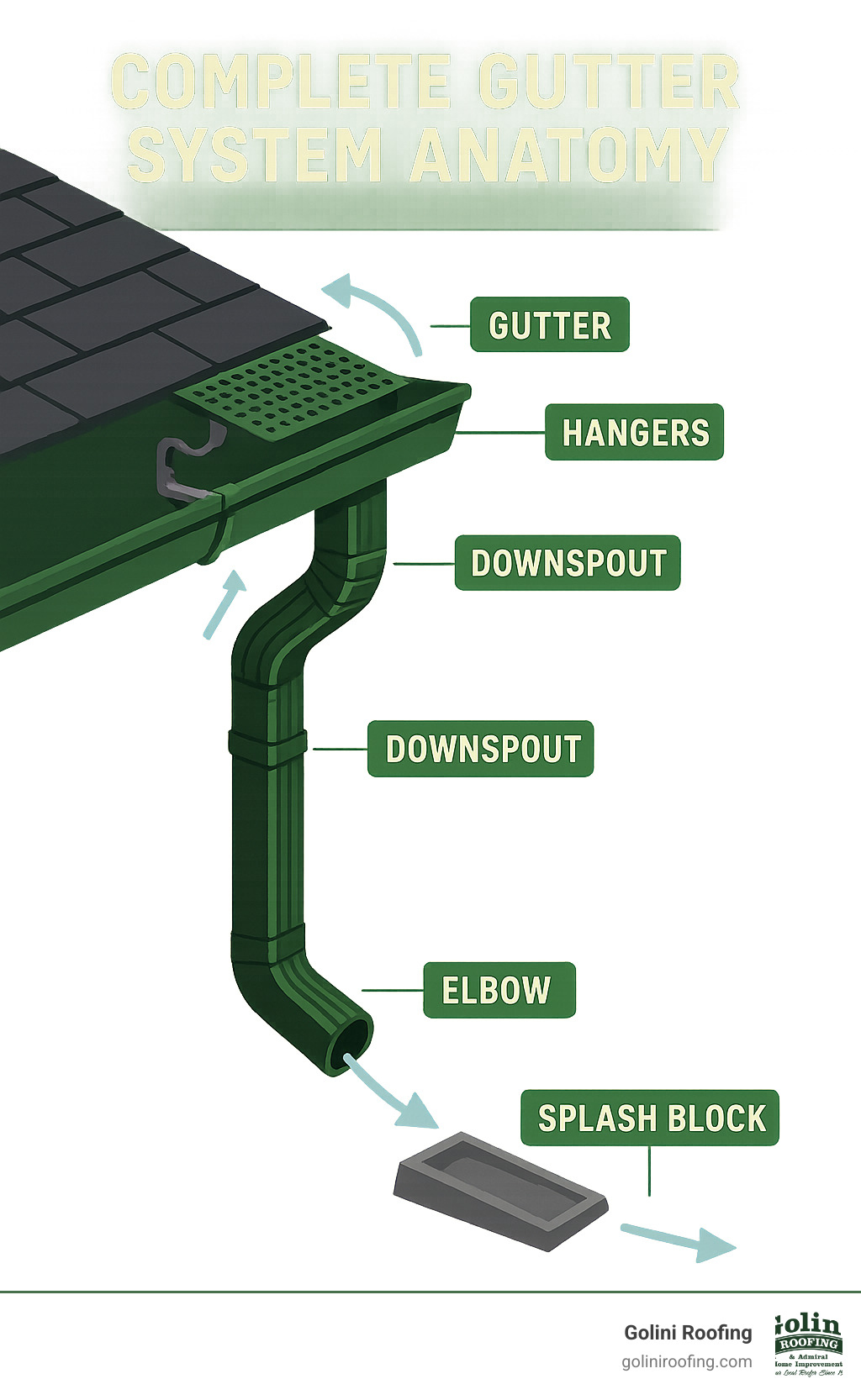
Essential gutter supplies include:
- Gutters: The main channels, available in styles like K-style (the most popular), half-round, or box, and materials such as aluminum, vinyl, or steel.
- Hangers and brackets: The support system that secures the gutters to the fascia board, including hidden hangers for a clean look or traditional brackets.
- Connectors: Components like end caps, outlets, and seamers that create watertight connections between gutter sections.
- Downspouts: The vertical pipes that carry water from the gutters to the ground, along with elbows and extensions to direct the flow.
- Accessories: Essential add-ons like splash blocks to prevent soil erosion, gutter guards to keep out debris, sealants for leak-proof joints, and various cleaning tools.
- Hardware: The nuts and bolts of the system, including screws, clips, and strainers.
When gutters fail due to poor materials, improper installation, or clogging, the consequences can be severe. As one contractor noted in our research, “If gutters are clogged over a long period, they may start to sag and pull away from the house.” This seemingly small issue can escalate quickly, leading to water pooling against your foundation, which can cause cracks, basement flooding, and long-term structural damage. The repair bills for these problems can easily run into the tens of thousands.
The right supplies make all the difference. Quality materials like heavy-gauge, rust-resistant aluminum or durable galvanized steel ensure your system lasts for decades with minimal maintenance. Proper hangers prevent sagging under the weight of water or snow, while well-designed outlets and downspouts manage even the heaviest New England downpours effectively.
I’m Jack Golini, and in my 35+ years as a roofing contractor serving communities like Wakefield, Reading, and Stoneham, I’ve seen how high-quality gutter supplies can save homeowners from expensive and stressful water damage repairs. My experience has taught me that investing in a professionally installed, top-tier gutter system is one of the smartest decisions a homeowner can make. It’s not just an expense; it’s an investment in the longevity and value of your property.
Gutter supplies definitions:
If you want a quick primer on how gutters fit into a building’s drainage system, this overview of a rain gutter explains the basic components and function in plain terms. No matter the profile or material, the mission is the same: capture runoff at the eave and move it quickly and safely away from your home.
Homeowners in Massachusetts face unique challenges. Nor’easters, freeze-thaw cycles, and wind-driven rain stress every connection point in a gutter system. Small weaknesses—like undersized downspouts, loose hangers, or aging sealant—can become big problems fast when heavy rain or snowmelt hits. That’s why selecting robust components and installing them correctly is every bit as important as the roof above them.
Best-practice tips that pay off in New England:
- Direct each downspout discharge at least several feet away from the foundation using extensions, leaders, or underground drain lines; add splash blocks where needed.
- Maintain a gentle, continuous pitch toward outlets, and split long runs to drain to multiple downspouts when possible.
- Use properly spaced hidden hangers to reinforce the gutter and protect the fascia; spacing is commonly tightened in snowy climates.
- Clean twice a year (more often under heavy tree cover), and inspect after major storms for loose fasteners or sealant failures.
Warning signs your gutters need attention:
- Water spilling over the front of gutters in moderate rain.
- Staining on fascia or siding, or peeling paint near the eaves.
- Mulch displacement and erosion lines below the roof edge.
- Damp basements or musty odors after storms.
- Drips at end caps, seamers, or outlets, and sections pulling away from the house.
Thinking about rainwater harvesting? A downspout diverter and a screened rain barrel can be great additions. Be sure to include an overflow hose that returns excess water to a safe discharge point so you don’t unintentionally send water back toward the foundation. This “roof to rain barrel” setup works best when paired with clog-resistant guards and adequately sized downspouts.
Gutter Systems and Materials: Making the Right Choice
Choosing the right gutter system for your home involves more than just picking a color that matches your trim. It’s a critical decision that involves understanding different styles, material durability, and how they will perform in your local climate. A system that works perfectly in a dry, arid region may not stand up to the heavy rain and snow of a Massachusetts winter. Let’s explore the options available for your gutter supplies needs to ensure you make an informed choice.
Common Gutter Styles Explained
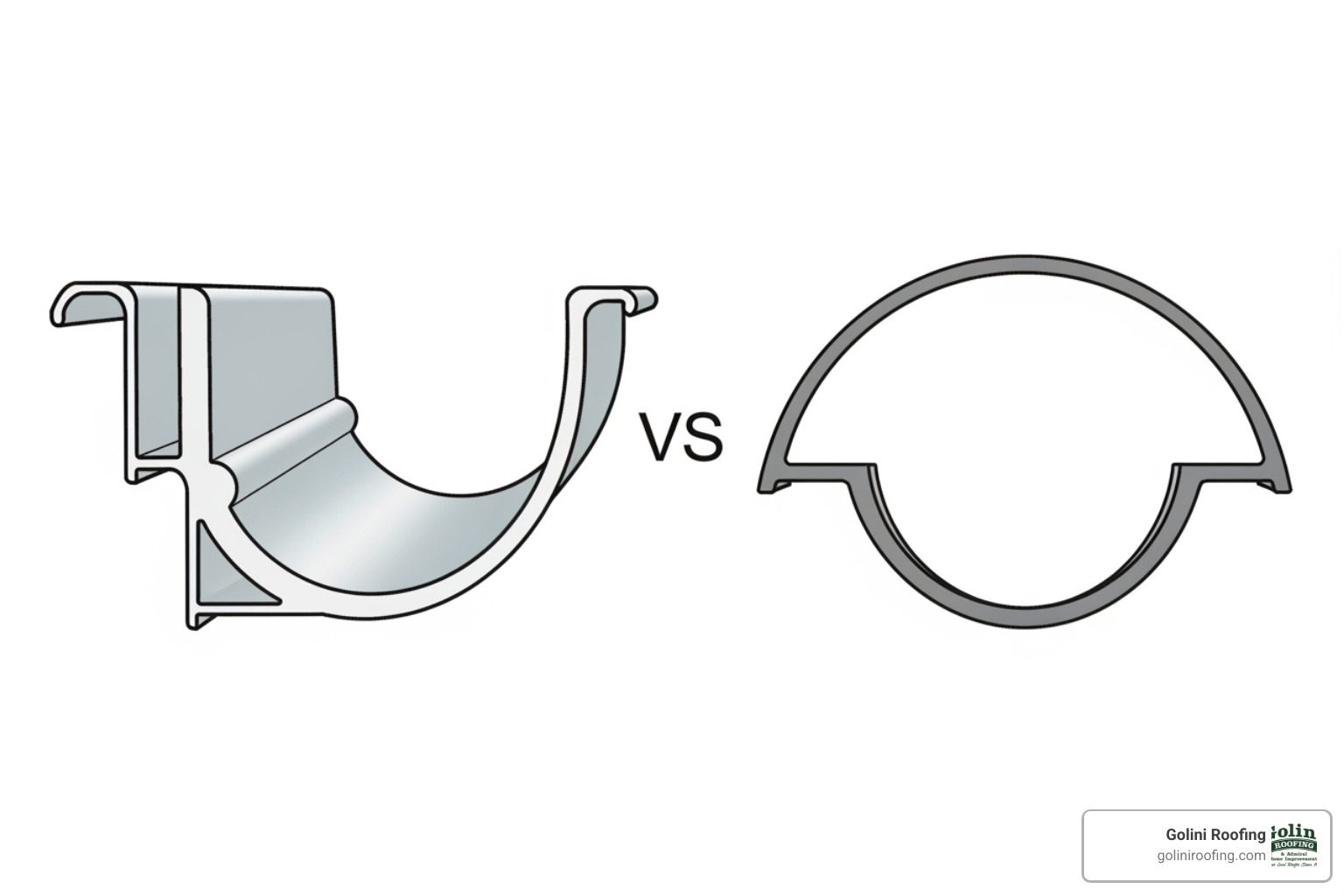
When it comes to gutter styles, you’ll primarily encounter three main types, each with its own look and functional characteristics:
- K-Style Gutters: These are, by far, the nation’s most popular gutter profile, and for good reason. Their front face resembles decorative crown molding, giving them a finished, architectural look that complements most modern homes. But they’re not just about looks; K-style gutters have a flat back and bottom, which allows them to carry more water than a half-round gutter of the same diameter. Their angular shape also provides structural rigidity. They typically come in 5-inch and 6-inch sizes for residential use, with larger 7-inch and 8-inch options available for commercial or industrial buildings with vast roof areas.
- Half-Round Gutters: Offering a more traditional and classic aesthetic, half-round gutters are essentially a half-circle tube. Their smooth, U-shaped appearance is popular on older, historic homes or those with a European architectural style, such as Tudors or Victorians. While their smooth interior surface can make them easier to clean, they generally hold less water than a K-style gutter of the same width. Half-round gutters are often chosen for their unique charm and are frequently crafted from premium materials like copper to improve a home’s curb appeal.
- Box Gutters: Less common in modern residential construction, box gutters are typically larger, rectangular, and more utilitarian. They are often built directly into the bottom of the roof structure or hidden behind a fascia board or cornice. This design makes them ideal for handling significant volumes of water from large roof surfaces, which is why they are primarily used on commercial, industrial, and institutional buildings. Some custom-built homes may also feature box gutters for a clean, integrated look.
Beyond style, a crucial decision is between sectional vs. seamless gutters:
- Sectional Gutters: These are the type you’ll find at most big-box home improvement stores. They are sold in pre-cut sections, typically 10 to 20 feet long, that are joined together on-site with connectors, sealant, and hangers. While they are often marketed as a good option for DIY installation due to their availability and ease of transport, they have a significant drawback: every seam is a potential point of failure. Over time, the sealant can degrade, leading to leaks that can damage your fascia and siding.
- Seamless Gutters: As the name implies, seamless gutters are custom-fabricated on-site to the exact measurements of your home using a specialized roll-forming machine. This process creates a single, continuous trough of aluminum, eliminating the risk of leaks along the length of the gutter. The only seams are at the corners and downspout outlets. This results in a stronger, more durable, and far more reliable system that requires less maintenance. This is why professional installers, like Golini Roofing, exclusively recommend and install seamless gutters for a professional, long-lasting solution. We offer more info about our gutter services for homeowners in the Wakefield area looking for a superior water management system.
Comparing Gutter Materials
The material you choose for your gutter supplies will significantly impact the system’s durability, appearance, maintenance requirements, and overall cost. Here’s a look at the most common options:
| Material | Pros – | Cons – | Lifespan | Cost |
|---|---|---|---|---|
| Aluminum | Lightweight, rust-proof, and available in a wide range of colors. It’s the most popular choice for residential homes due to its excellent balance of cost, durability, and ease of installation (especially for seamless systems). It holds up well to rain and snow. – | Can be dented by ladders or heavy impacts. While rust-proof, it can corrode over time, especially in coastal areas with salt spray. The color can also fade after many years of sun exposure. – | 20-30 years | $$ |
| Vinyl (PVC) | The most affordable option and very DIY-friendly. It’s lightweight, won’t rust or corrode, and comes in pre-cut sections. The color is molded through the material, so scratches are less noticeable. – | Can become brittle and crack in extreme cold or with prolonged sun exposure. Color options are often limited. The sectional design means more seams and a higher risk of leaks over time. – | 10-20 years | $ |
| Galvanized Steel | Extremely strong and durable, making it ideal for areas with heavy snow, ice, and strong winds. It can be painted to match any home exterior. It’s a heavy-duty, long-lasting option. – | Prone to rusting if the galvanized coating is scratched or wears away over time. It’s also much heavier than aluminum or vinyl, making installation more difficult and requiring very secure fastening. – | 20-25 years | $$$ |
| Copper | Best in beauty and durability. It doesn’t rust and develops a beautiful blue-green patina over time. It’s the ultimate choice for high-end, historic, or custom homes, adding significant curb appeal and value. – | The most expensive gutter material by a significant margin. Its high value can also make it a target for theft. Requires specialized installation by experienced professionals. – | 50+ years | $$$$$ |
Practical sizing and spec tips for New England homes
- 5-inch K-style gutters work for many average roofs, but 6-inch systems offer higher capacity and are a smart upgrade for large or steep roofs, or areas that see intense downpours.
- Upsize downspouts to 3×4 inches where possible; they move significantly more water than 2x3s and are less prone to clogging with leaves and pine needles.
- Aluminum thickness matters: 0.027-inch is common for residential use, while 0.032-inch adds rigidity and dent resistance—helpful in snowy or windy exposure. Some commercial applications use 0.040-inch.
- Factory-applied baked enamel finishes on aluminum provide long-lasting color; copper weathers naturally and should not be painted or coated.
- Use exterior-grade fasteners compatible with your gutter material to reduce corrosion risk, and avoid mixing metals that can cause galvanic reactions (especially near copper).
- Ensure a consistent pitch toward each outlet; for long runs, consider draining to outlets at both ends or to a centered outlet to balance flow.
Golini Roofing fabricates seamless aluminum gutters on-site for homes in Wakefield, Reading, Stoneham, Burlington, Lynnfield, North Reading, Wilmington, Winchester, and Woburn—so each run fits perfectly, looks clean, and performs when the weather turns.