House Roofing Cost Estimator: Top 5 Essential Tips
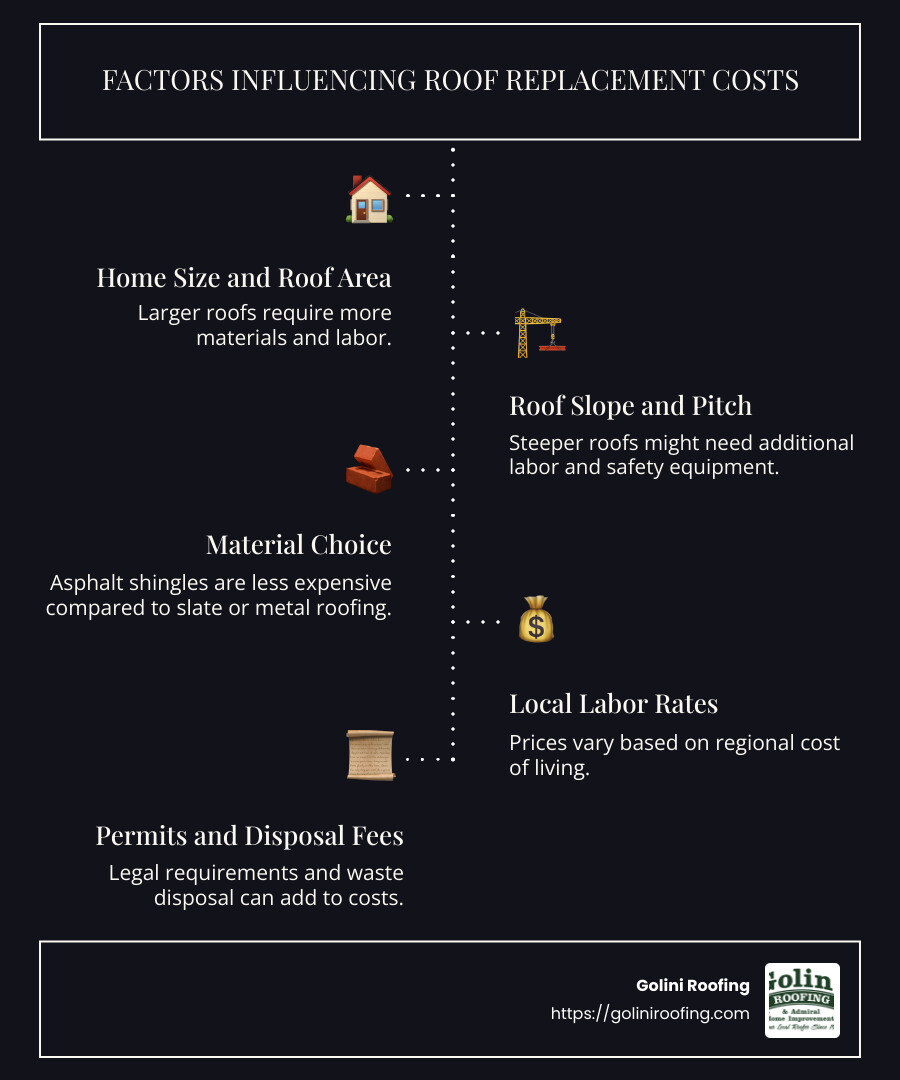
House roofing cost estimator is a key tool for homeowners looking to replace their roof. It provides a quick snapshot of potential expenses, making it easier to plan and budget. When estimating roofing costs, consider these factors:
- Home Size and Roof Area: Larger roofs require more materials and labor.
- Roof Slope and Pitch: Steeper roofs may need more labor and safety equipment.
- Material Choice: Asphalt shingles are cheaper than slate or metal roofing.
- Local Labor Rates: Prices depend on your region’s cost of living.
- Permits and Disposal Fees: Legal requirements vary by location and add to costs.
Understanding these elements before starting your project can significantly alleviate surprises, assuring a smooth operation from estimate to completion.
I’m Jack Golini from Golini Roofing. With over 35 years of hands-on experience, I’ve been dedicated to helping homeowners like you steer the complexities of roof replacement using an effective house roofing cost estimator. Let’s dive deeper into the factors influencing your roofing costs next.
Understanding Roofing Costs
When planning a roof replacement, understand the various costs involved. This knowledge can help you make informed decisions and avoid unexpected expenses. Let’s break it down into three key areas: roofing materials, labor costs, and installation factors.
Roofing Materials
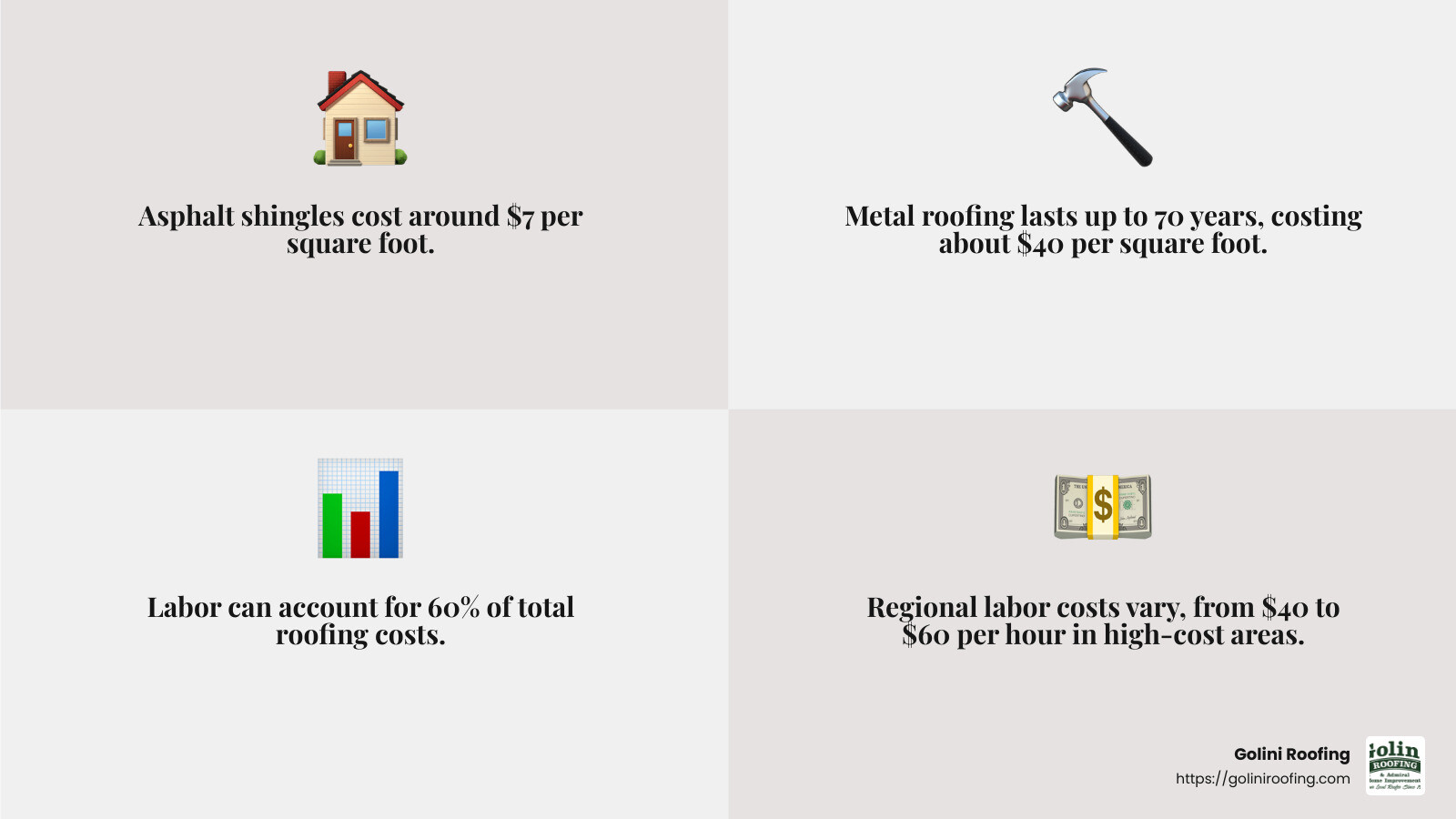
The choice of roofing materials significantly impacts your overall cost. Asphalt shingles are the most budget-friendly option, often costing about $7 per square foot. They’re popular for their affordability and ease of installation. However, if you’re looking for durability, metal roofing might be a better choice. It can last up to 70 years but costs more, around $40 per square foot.
Here’s a quick comparison:
| Material | Cost per Square Foot | Lifespan |
|---|---|---|
| Asphalt Shingles | $7 | 20-30 years |
| Metal Roofing | $40 | 40-70 years |
Labor Costs
Labor costs can account for up to 60% of your total roofing expenses. These costs vary by region. In high-cost areas like California, labor might range from $40 to $60 per hour. Meanwhile, in areas with a lower cost of living, such as Texas, labor charges could be more affordable.
Tip: It’s wise to get multiple quotes from local contractors to ensure you’re getting a fair price.
Installation Factors
Several installation factors can influence the cost:
- Roof Size: Larger roofs require more materials and labor, increasing costs.
- Roof Pitch: Steeper roofs are more challenging to work on, often requiring additional safety equipment and labor, which can drive up costs.
- Permits and Fees: Depending on your location, you’ll need permits, which add to the overall expense. These fees vary based on local regulations.
Understanding these components can help you better estimate your roofing costs and choose the right materials and contractors for your project. By considering these factors, you can ensure a smoother and more predictable roof replacement process.
Next, we’ll explore the tools and techniques, like AI-powered calculators, that can help you estimate your roofing costs accurately.
House Roofing Cost Estimator: Tools and Techniques
Estimating roofing costs can feel like piecing together a giant puzzle. But with the right tools and techniques, you can get a clear picture of what to expect financially. One of the most effective tools at your disposal is an AI-powered house roofing cost estimator. Let’s explore how these estimators work and why they’re so helpful.
AI-Powered Calculators
Modern roofing calculators leverage artificial intelligence (AI) to provide fast and accurate cost estimates. These tools analyze a variety of factors, such as roof size, material choice, and local labor rates, to give you a detailed breakdown of your potential expenses.
A standout feature of AI-powered calculators is their ability to incorporate real-time data, like current material prices and labor costs in your area. This ensures that the estimates you receive are as up-to-date as possible, helping you make informed decisions.
Cost Estimation Made Simple
Using a roofing calculator simplifies the cost estimation process significantly. Here’s how it typically works:
- Input Your Details: Enter basic information about your home, such as its location, roof size, and the type of roofing material you’re considering.
- Receive an Estimate: The calculator processes this data, applying algorithms to account for regional cost variations and other factors.
- Review the Breakdown: You’ll receive a detailed estimate, often broken down into materials, labor, and other associated costs like permits.
This approach not only saves time but also reduces the likelihood of unexpected expenses popping up later in the project.
Roofing Calculators in Action
Consider this: homeowners using AI-driven tools have reported more accurate estimates compared to traditional methods. This accuracy stems from the calculators’ ability to analyze complex data quickly and efficiently.
For example, if you’re planning to install metal roofing, the calculator might show that while the initial cost is higher, the long-term savings from durability and energy efficiency could offset these expenses.
The Benefits of AI in Roofing Cost Estimation
- Precision: AI calculators provide highly precise estimates, often within a small margin of error.
- Speed: Get an estimate in minutes rather than days.
- Convenience: Access these tools from anywhere, using your phone or computer.
By utilizing an AI-powered house roofing cost estimator, you can approach your roofing project with confidence, knowing you have a reliable estimate that reflects the latest market conditions. This not only helps in budgeting but also in selecting the right materials and contractors for your needs.
Next, we’ll explore the factors influencing roofing costs, including how roof size, pitch, and material choice can impact your overall budget.
Factors Influencing Roofing Costs
When it comes to roofing costs, several key factors play a significant role in determining the final price tag. Understanding these factors can help you prepare and budget effectively for your roofing project.
Roof Size
The size of your roof is one of the most straightforward cost drivers. Larger roofs require more materials and labor, which naturally increases the overall cost. For instance, a 1,000 sq. ft. roof might cost around $7,000, while a 3,000 sq. ft. roof could soar to $21,000.
Roof Pitch
The pitch or slope of your roof can also affect costs. A steeper roof is more challenging to work on, requiring specialized equipment and safety measures. This can lead to higher labor charges. A steep pitch might also demand more materials, as they need to be installed in a way that ensures proper coverage and drainage.
Material Choice
Your choice of roofing material significantly impacts costs. Asphalt shingles are the most affordable, costing around $7 per square foot. On the other hand, opting for metal roofing can set you back up to $40 per square foot. While metal roofs are pricier upfront, they offer longevity and energy efficiency, potentially saving you money over time.
Labor Rates
Labor rates can vary widely depending on your location. Areas with a high cost of living, like California, often have labor rates ranging from $40 to $60 per hour. In contrast, states like Texas may offer more affordable rates. Labor can account for up to 60% of your total roofing costs, so it’s crucial to consider local rates when planning your budget.
Permits and Fees
Don’t forget about permits and fees, which are a legal requirement for roofing projects in many areas. The cost of permits can vary, especially if your project involves additional complexities like installing solar panels. While permits might only represent about 10% of your total budget, they are essential to ensure compliance with local regulations.
By understanding these factors, you can better steer the complexities of roofing costs. This knowledge will help you make informed decisions, whether you’re selecting materials or negotiating with contractors.
In the next section, we’ll dig into the types of roofing materials available and their associated costs, helping you choose the best option for your home and budget.
Types of Roofing Materials and Their Costs
Choosing the right roofing material is a crucial decision that impacts both the look and longevity of your home. Let’s break down the most common options, along with their costs, to help you make an informed choice.
Asphalt Shingles
Asphalt shingles are the most popular roofing material in the U.S. due to their affordability and versatility. They come in a variety of colors and styles, making it easy to find a match for your home.
- Cost: Asphalt shingles are budget-friendly, typically ranging from $6.02 to $8.14 per square foot.
- Lifespan: With proper installation, they can last between 20 to 30 years.
- Pros: Easy to install, low maintenance, and widely available.
- Cons: Not as durable as some other materials and may not withstand extreme weather conditions as well.
Metal Roofing
Metal roofs are known for their durability and long lifespan. They are an excellent choice for homeowners looking for a low-maintenance option.
- Cost: Metal roofing can be more expensive, costing between $40 to $70 per square foot.
- Lifespan: These roofs can last 40 to 70 years with proper maintenance.
- Pros: Fire-resistant, energy-efficient, and available in various styles and colors.
- Cons: Higher upfront cost and potential for noise during rain or hail.
Tile Roofing
Tile roofing offers a classic aesthetic and excellent durability. It’s often seen in homes with a Mediterranean or Spanish style.
- Cost: Tile roofs are on the higher end, with costs ranging from $6.27 to $12.29 per square foot, depending on whether you choose concrete or clay tiles.
- Lifespan: Expect a lifespan of 50 to 100 years.
- Pros: Long-lasting, excellent noise isolation, and resistant to fire and insects.
- Cons: Heavy, requiring a strong roof structure, and higher installation costs.
Slate Roofing
Slate is the pinnacle of luxury roofing materials, offering unparalleled beauty and longevity.
- Cost: Slate roofing is the most expensive, with replacement costs between $39,925 and $54,020.
- Lifespan: Slate roofs can last up to 150 years, often outliving the buildings they’re installed on.
- Pros: Extremely durable, low maintenance, and aesthetically appealing.
- Cons: High cost and weight, requiring a reinforced roof structure.
When considering your options, it’s important to weigh the initial costs against potential long-term savings from durability and maintenance. Each material has its unique benefits and drawbacks, so consider your budget, climate, and aesthetic preferences before making a decision.
In the next section, we’ll address some frequently asked questions about roofing costs to further guide you in your roofing journey.
Frequently Asked Questions about Roofing Costs
How do I estimate the cost of a new roof?
Estimating the cost of a new roof can be daunting, but using a house roofing cost estimator can simplify the process. These tools consider factors like roof size, pitch, and material choice to give you a ballpark figure. For instance, an AI-powered roofing calculator can provide an estimate by analyzing your roof’s dimensions and local labor rates. This can save you from unexpected expenses and help you budget effectively.
The cost of materials like asphalt shingles, metal, or slate will significantly impact your total. Asphalt shingles are the most budget-friendly, while slate is on the higher end. Labor costs, which can account for up to 50% of the total cost, also vary by location.
Is $30,000 too much for a roof?
Whether $30,000 is too much depends on several factors, like the size of your roof, the materials used, and the complexity of the design. For example, a large, complex roof using premium materials like slate or metal could easily reach or exceed this price. However, for a standard asphalt shingle roof, this might be on the higher side unless there are additional costs for complex architecture or necessary structural repairs.
How much does it cost to replace 1,000 sq ft of roof?
Replacing a 1,000 sq ft roof largely depends on the material used and the local labor rates. On average, using asphalt shingles, you might expect to pay between $6,000 and $8,000. If you opt for metal roofing, costs could rise to $40,000 or more due to its durability and aesthetic appeal.
Complex roofs, with steep pitches or intricate designs, might increase labor time and costs. Always consider potential additional expenses like permits, disposal of old materials, and any necessary repairs to the roof deck.
Utilizing a roofing calculator can help you get a precise estimate custom to your specific needs and location, ensuring you’re prepared for all aspects of the project.
Conclusion
At Golini Roofing, we believe that our dedication to craftsmanship and customer satisfaction sets us apart in the roofing industry. With over 35 years of experience serving Massachusetts, our skilled team carefully hand-nails each shingle, ensuring durability and quality that stands the test of time.
Our commitment to excellence means we prioritize your needs and provide personalized service. Whether it’s a simple repair or a complete roof replacement, we guarantee a seamless experience from start to finish. We understand that roofing projects can be stressful, which is why we focus on clear communication and transparency throughout the process.
Choosing the right roofing contractor is crucial for the longevity and safety of your home. With Golini Roofing, you can rest assured knowing that your roof is in capable hands. Our expertise and attention to detail ensure that your new roof will not only protect your home but also improve its aesthetic appeal.
Ready to start your roofing project? Contact Golini Roofing today for a free estimate and experience the difference of working with a premier roofing contractor. Your satisfaction is our top priority, and we look forward to providing you with a roof that you can rely on for years to come.