
How Much Does a Roof Cost to Replace: Top 5 Surprising Facts
How much does a roof cost to replace? This is one of the most pressing questions for homeowners considering a roof replacement. While exact costs can vary, here’s a quick overview of what you might expect in terms of pricing:
- National Average: Around $7,000 to $21,000.
- Cost per Square Foot: Typically, between $7 and $40 depending on materials and labor specifics.
Roof replacement is a significant investment in your home, and understanding the various cost factors—such as material choice, roof size, and regional labor rates—is crucial for effective budgeting. Different materials, like asphalt shingles or metal roofing, come with their own price tags and benefits.
My name is Jack Golini, and I’ve been in the roofing industry since 1982, bringing extensive expertise in understanding how much does a roof cost to replace. With over 35 years of experience, I guide homeowners through the complex world of roof replacement costs by focusing on craftsmanship and minimal disruption. This ensures durability and quality for every project.
How Much Does a Roof Cost to Replace?
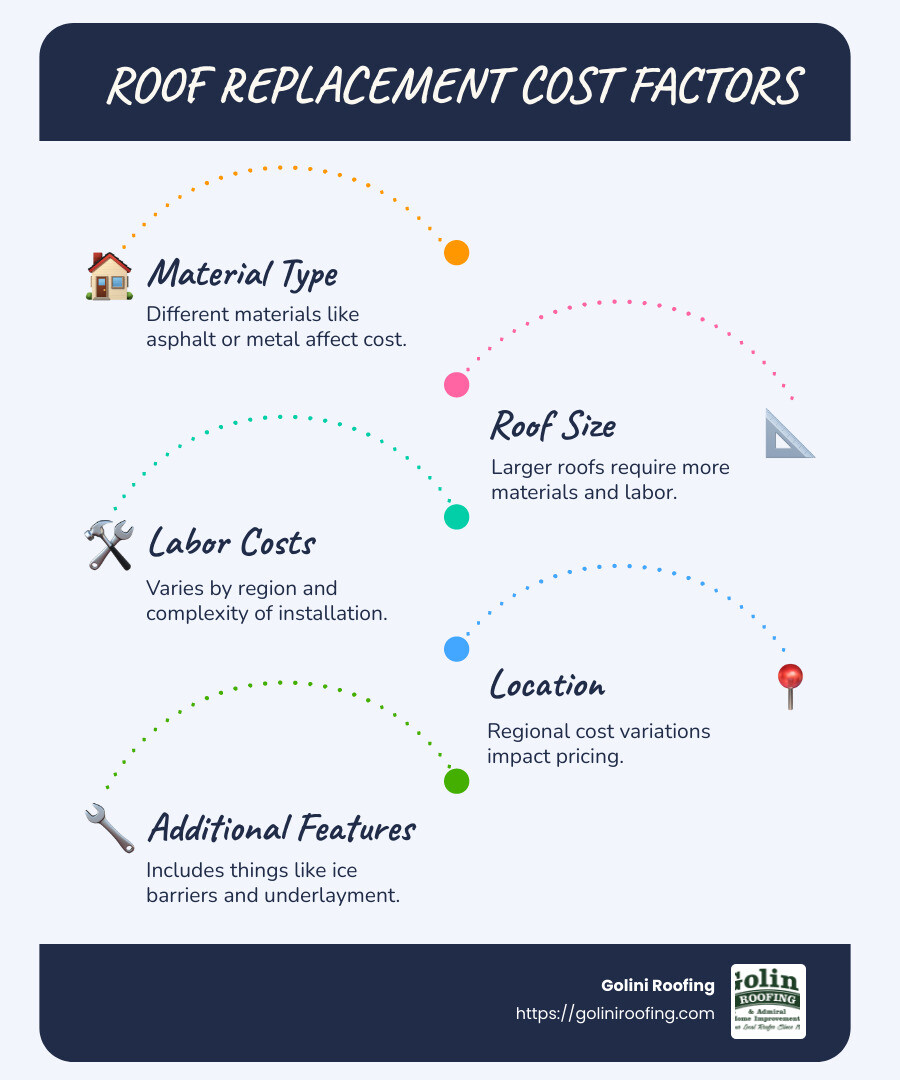
Replacing a roof is a big decision and a significant financial commitment. The cost can vary widely based on several factors, but let’s break it down to give you a clearer picture.
Factors Influencing Roof Replacement Costs
- Roof Size: The larger your roof, the more materials and labor you’ll need. For example, a 1,000 sq. ft. roof might cost around $7,000, while a 3,000 sq. ft. roof could go up to $21,000.
- Material Choice: Different materials come with different price tags. Asphalt shingles, a popular choice, typically cost around $7 per square foot. On the other hand, metal roofs can go up to $40 per square foot. Each material offers unique benefits and lifespans.
- Labor Costs: Labor is a significant part of the expense, often accounting for 60% of the total cost. This can vary by location. In areas like California, labor might cost $40 to $60 an hour, while it might be cheaper in other regions.
- Location: Where you live affects costs. States like New York and California tend to have higher roofing costs due to stricter building codes and higher living expenses.
Cost Breakdown: Materials vs. Labor
- Materials Cost: The choice of materials significantly impacts the overall cost. For instance, opting for slate tiles, known for their longevity, can be more expensive than asphalt shingles.
- Labor Percentage: As mentioned, labor costs can be a substantial part of the total cost. If your total roof replacement is $9,000, expect about $5,400 to cover labor.
- Installation Complexity: Roofs with steep pitches or complex designs might require more labor and time, increasing the overall cost.
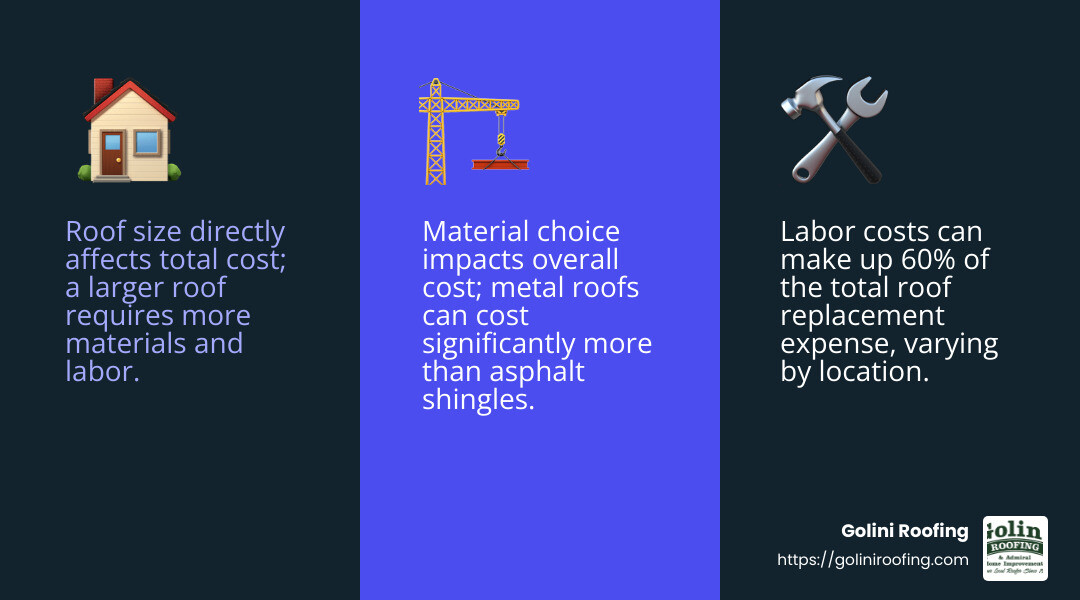
Understanding these factors can help you budget effectively and make informed decisions about your roof replacement. By choosing the right materials and understanding the labor involved, you can ensure you’re getting the best value for your investment.
Next, we’ll dive into the costs associated with different roofing materials, so you can choose the best option for your home.
Roof Replacement Costs by Material Type
When considering how much does a roof cost to replace, the material you choose plays a crucial role. Different materials not only affect the price but also the longevity and aesthetics of your roof. Let’s explore the most common roofing materials and their costs.
Asphalt Shingles
Asphalt shingles are the most popular roofing material in the U.S. They’re affordable, easy to install, and come in a variety of styles and colors. The average cost for asphalt shingles is around $4.46 per square foot. They typically last 30 to 35 years, making them a cost-effective choice for many homeowners.
Metal Roofing
Metal roofs, made from materials like aluminum or galvanized steel, offer durability and energy efficiency. On average, a metal roof costs about $8.76 per square foot. They can last anywhere from 30 to 50 years. While the upfront cost is higher than asphalt, the longevity and energy savings can make it worth the investment.
Tile Roofing
Tile roofs, often made from clay or concrete, are known for their aesthetic appeal and long lifespan. The cost for tile roofing is approximately $14.71 per square foot. These roofs can last 50 to 75 years, but they require a strong structural support due to their weight. Their durability and classic look make them a great option, especially in hot climates.
Wooden Shakes
Wooden shakes, typically made from cedar, offer a natural and rustic appearance. They cost around $10.88 per square foot. With proper maintenance, they can last 30 to 35 years. However, they require regular upkeep to prevent issues like mold and rot. They offer a unique look but may not be suitable for every climate.
Slate Roofing
Slate is one of the most durable roofing materials, with a lifespan that can stretch from 75 to 150 years. The cost of slate roofing is about $14.78 per square foot. While it’s a significant investment, its longevity and natural beauty can add substantial value to your home. Be sure your home can support the weight of a slate roof before choosing this option.
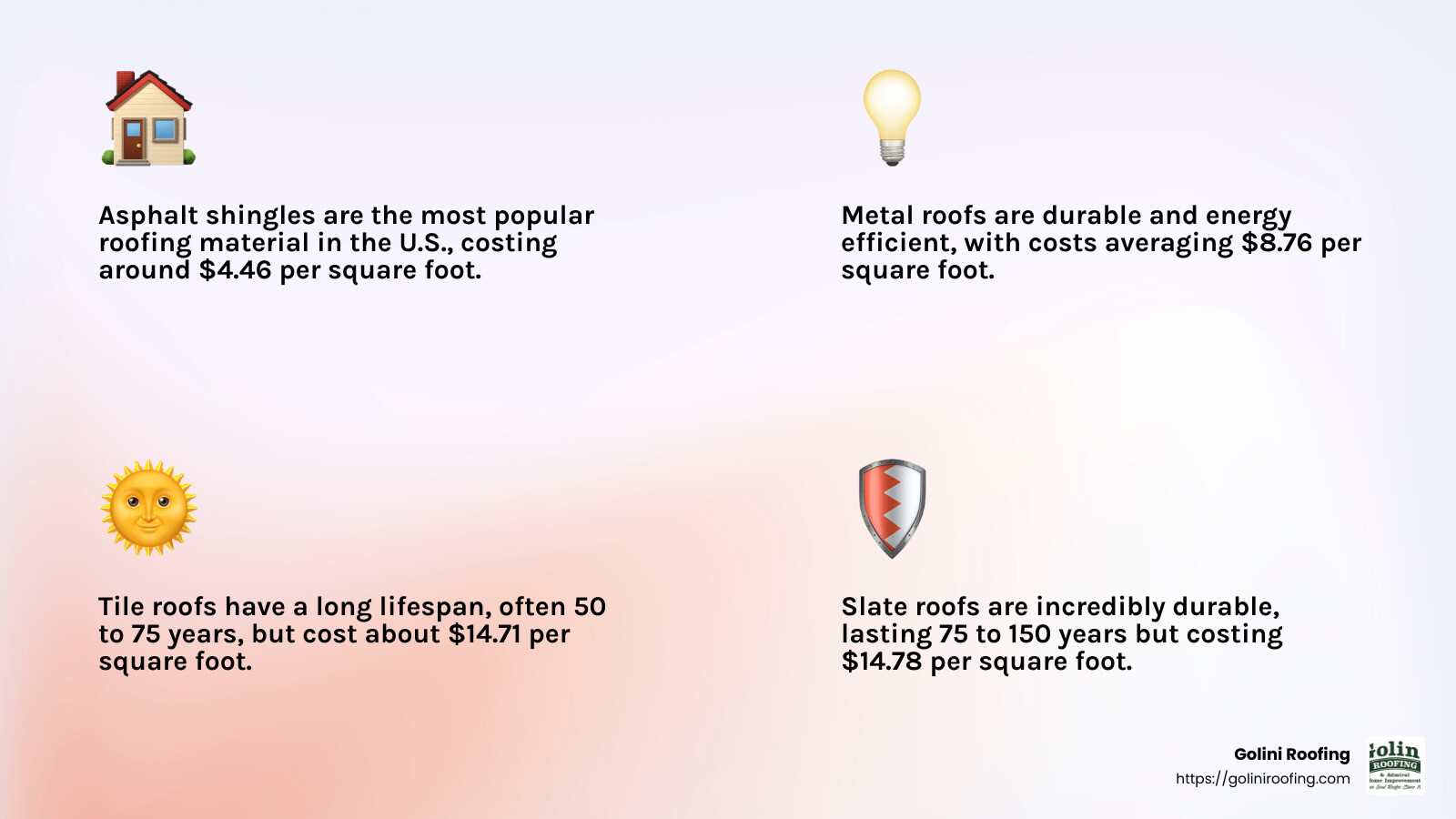
Choosing the right material depends on your budget, climate, and personal preference. Each option has its pros and cons, so consider what matters most for your home.
Next, we will explore the additional costs involved in a roof replacement, such as roof removal and underlayment.
Additional Costs in Roof Replacement
Replacing a roof involves more than just new shingles. There are several additional costs you might encounter. Let’s break them down.
Roof Removal
Before installing a new roof, the old one has to go. Removing old shingles and underlayment is labor-intensive. This process, known as roof removal, typically adds $1 to $5 per square foot to your total cost. This step ensures a clean slate for your new roof installation.
Decking Repair
Once the old roof is off, contractors can assess the condition of the roof decking. If there’s any rot or damage, it must be repaired or replaced. Decking repair costs vary, but you might pay an extra $2 to $7 per square foot. Fixing these issues is crucial for a stable and long-lasting roof.
Underlayment
The underlayment is a protective layer between the decking and shingles. It acts as a moisture barrier. Typically, asphalt-saturated felt paper is used, costing about $0.50 to $2 per square foot. Investing in quality underlayment ensures your roof can handle harsh weather conditions.
Ice and Water Barriers
In areas prone to ice dams or heavy rain, installing ice and water barriers is essential. These barriers prevent leaks and water damage. They add around $1 to $3 per square foot to your costs. While optional, they can save you from costly repairs in the future.
Fascia and Soffit
The fascia and soffit are key components of your roof’s structure. They help with ventilation and protect the roof’s edges. Replacing them is often a DIY-friendly task. However, if done professionally, expect to pay $6 to $20 per linear foot. Keeping these elements in good shape is vital for your roof’s health.
Understanding these additional costs helps you budget more accurately for your roof replacement. It’s not just about the shingles; each component plays a role in the overall durability and performance of your new roof.
Next, we’ll tackle some frequently asked questions about roof replacement costs.
Frequently Asked Questions about Roof Replacement Costs
How much does it cost to replace 1,000 sq ft of roof?
Replacing a 1,000 square foot roof can vary quite a bit in cost. On average, you might spend between $4,000 and $40,000, depending on the materials you choose.
Asphalt shingles, which are the most common, typically cost between $4 and $8 per square foot. If you opt for metal roofing, expect to pay more, around $8 to $40 per square foot. These costs can fluctuate based on your location and the complexity of the job.
Is $30,000 too much for a roof?
Whether $30,000 is too much for a roof depends on several factors. The size of your roof, the materials used, and the complexity of the installation all play a role.
For instance, if you’re using high-end materials like slate or copper, which can cost up to $40 per square foot, the price can easily reach $30,000 or more. However, for a standard asphalt shingle roof, this might be on the higher side. It’s always wise to get multiple quotes to ensure you’re getting a fair price.
How often should you replace your roofing?
The lifespan of your roof largely depends on the materials used. Here’s a quick overview:
- Asphalt shingles: Typically last 15 to 30 years.
- Metal roofs: Can endure for 50 to 75 years.
- Slate roofs: Known for their durability, lasting 125 to 200 years.
Regular maintenance and inspections can help prolong your roof’s life. Keep an eye out for signs of wear, like missing shingles or leaks, to know when it’s time for a replacement.
Understanding these aspects will help you budget wisely and make informed decisions about your roof replacement project. Up next, we’ll explore the different types of roofing materials and their costs.
Conclusion
Investing in a roof replacement is not just about addressing immediate issues; it’s a long-term investment in your home’s value and safety. At Golini Roofing, we understand the importance of this investment. With over 35 years of experience, we specialize in delivering high-quality roofing solutions that stand the test of time.
A new roof can improve your home’s curb appeal, increase its resale value, and improve energy efficiency. It’s crucial to choose a contractor who prioritizes craftsmanship and customer satisfaction. Our meticulous hand-nailing technique ensures that every shingle is securely in place, providing durability and reliability.
The long-term benefits of a roof replacement are significant. A well-installed roof can protect your home from harsh weather, reduce maintenance costs, and offer peace of mind knowing your home is safe and sound. Plus, with materials like metal or slate, your roof could last a lifetime, minimizing the need for future replacements.
When you choose Golini Roofing, you’re choosing a partner committed to excellence and quality. We serve various areas in Massachusetts, including Burlington, Lynnfield, and Wakefield, ensuring that our community has access to top-tier roofing services.
For more detailed information on how much a roof replacement might cost, including factors that influence pricing, visit our roof replacement cost page. Let us help you make a wise investment in your home today.
