Metal Roofs Cost: Top 3 Smart Investment Benefits 2024
Metal roofs cost is a crucial consideration for homeowners looking to invest in a reliable and durable roofing solution. Here’s what you need to know in a nutshell:
- Initial Cost: Ranges from $12.00 to $13.00 per square foot.
- Total Cost: Can span $18,000 – $26,000 for a typical single-family home.
- Lifespan: Lasts 40 to 100 years.
Metal roofs stand out for their notable benefits, like best durability, long lifespan, and energy efficiency, making them a wise investment. They can lower energy bills and withstand severe weather better than many other types of roofs. Additionally, they boost home resale values. However, there are some drawbacks to consider, including their higher upfront cost and the potential for noise during rain or hail, especially if not installed with adequate soundproofing materials.
I’m Jack Golini, owner of Golini Roofing with over 35 years of experience in the roofing industry. In Wakefield, MA, I’ve helped countless homeowners steer metal roofs costs to make informed decisions. In the following sections, I’ll help you dig deeper into the costs, benefits, and considerations of choosing a metal roof.
Quick metal roofs cost definitions:
Understanding Metal Roofs Cost
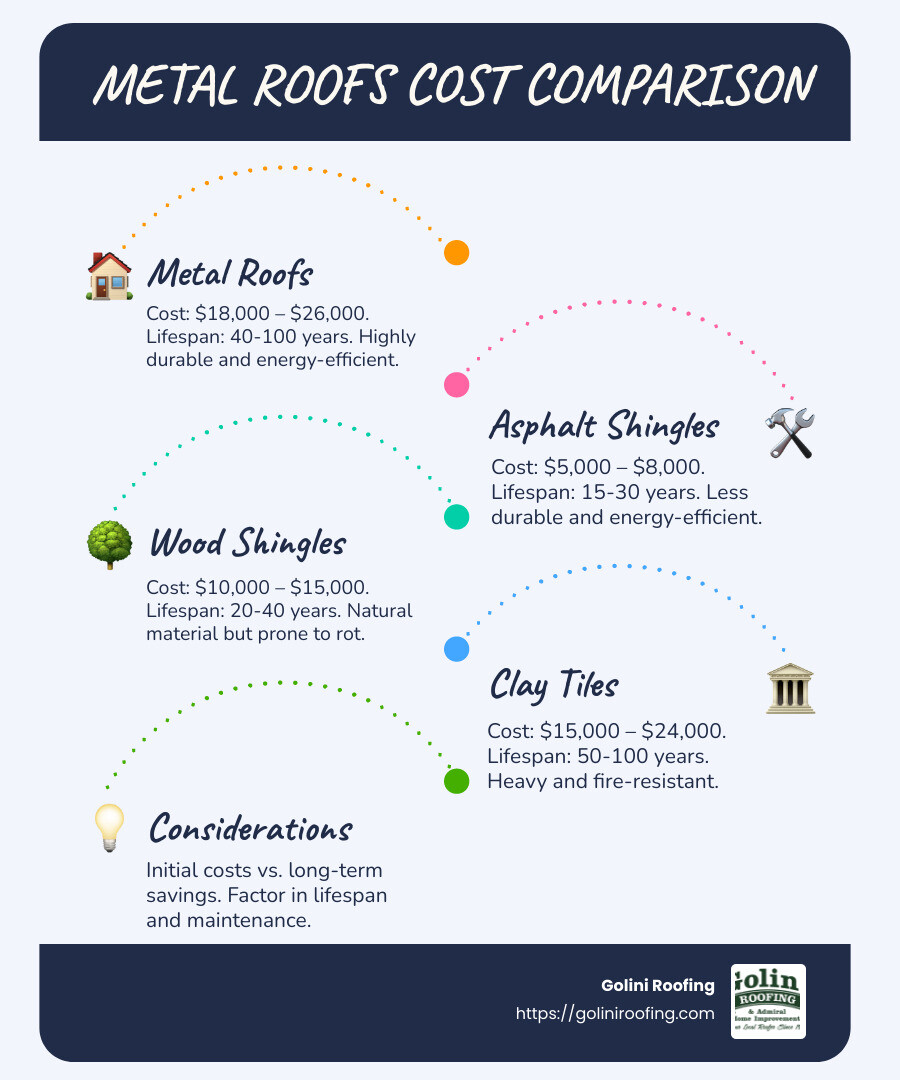
When considering a metal roof, it’s important to look beyond the initial price tag. Let’s break down the factors that influence metal roofs cost and how they compare to other roofing materials.
Factors Influencing Metal Roofs Cost
- Material Choice:
- Metal roofs come in various types like aluminum, steel, copper, and zinc. Each has its own price range and benefits.
- For instance, aluminum is lightweight and corrosion-resistant, making it a popular choice for coastal areas, while copper and zinc offer best longevity but at a higher price.
- Roof Size:
- Larger roofs require more materials and labor, increasing the overall cost.
- A small roof may cost less than $18,000, but a larger one could exceed $26,000.
- Labor Costs:
- Labor can be up to 60% of the total cost.
- The region affects labor rates—expect higher costs in areas with a high cost of living, like California or New York.
- Initial Cost vs. Long-Term Savings:
- While the upfront cost is higher, metal roofs offer long-term savings through durability and energy efficiency.
- They can last from 40 to 100 years, reducing the need for frequent replacements.
Comparing Metal Roofs Cost to Other Roofing Materials
- Asphalt Shingles:
- Initial cost: $4.25 – $8.25 per square foot.
- Lifespan: 20 – 30 years.
- More affordable upfront but may need replacement sooner.
- Wood Shingles:
- Initial cost: $6.53 – $9.90 per square foot.
- Lifespan: 15 – 30 years.
- Offers a natural look but requires more maintenance.
- Clay Tiles:
- Initial cost: $5.90 – $14.68 per square foot.
- Lifespan: 50 – 100 years.
- Heavy and durable, ideal for certain architectural styles.
| Material Type | Average Price Per Sq. Ft. | Lifespan (Years) |
|---|---|---|
| Metal Roofing | $10.38 – $18.28 | 40 – 70+ |
| Asphalt Shingles | $4.25 – $8.25 | 20 – 30 |
| Wood Shingles | $6.53 – $9.90 | 15 – 30 |
| Clay Tiles | $5.90 – $14.68 | 50 – 100 |
Choosing the right material depends on your budget, desired look, and how long you plan to stay in your home. Metal roofs may cost more initially, but their durability and efficiency can offer significant savings over time.
Pros and Cons of Metal Roofs
Metal roofs have become a popular choice for many homeowners due to their numerous advantages. However, they also have some drawbacks that should be considered before making a decision.
Advantages of Metal Roofs
1. Durability and Longevity
Metal roofs are incredibly durable and can withstand harsh weather conditions better than many other roofing materials. They have a lifespan of 40 to 70 years, with some materials like copper and zinc lasting up to 100 years. This longevity makes them a cost-effective option in the long run.
2. Energy Efficiency
Metal roofs reflect sunlight, which helps keep your home cooler and reduces the need for air conditioning. This energy efficiency can lead to significant savings on energy bills. According to the Federal Energy Management Program, you can save up to $1.11 per square foot with an ENERGY STAR-qualified cool roof.
3. Eco-Friendly
Metal roofs are often made from recycled materials and are fully recyclable at the end of their lifespan. This makes them an eco-friendly choice for environmentally conscious homeowners.
4. Fire Resistance
Metal roofs are non-combustible and have a Class A fire rating, which is the highest rating available. This fire resistance can provide peace of mind, especially in areas prone to wildfires.
Disadvantages of Metal Roofs
1. Higher Initial Cost
The metal roofs cost is generally higher than traditional roofing materials like asphalt shingles. While they offer long-term savings, the upfront investment can be a barrier for some homeowners.
2. Potential for Denting
Metal roofs can dent if hit by heavy objects like hail or falling branches. While these dents are usually cosmetic and do not affect the roof’s functionality, they can be a concern in areas with severe weather.
3. Installation Complexity
Installing a metal roof requires specialized skills and experience. Simple installation errors, such as overtightening screws, can lead to costly repairs. It’s crucial to hire a licensed and experienced contractor to ensure a proper installation.
4. Noise Levels
Some people worry that metal roofs might be noisier during rainstorms. However, when properly installed with insulation and underlayment, metal roofs are not significantly louder than other roofing types.
In the next section, we’ll discuss the best metal roof types for different climates, helping you choose the right option for your specific needs.
Best Metal Roof Types for Different Climates
Choosing the right metal roof type for your climate is crucial. Let’s explore which metal roofs work best in cold climates, coastal regions, and high wind areas.
Cold Climates
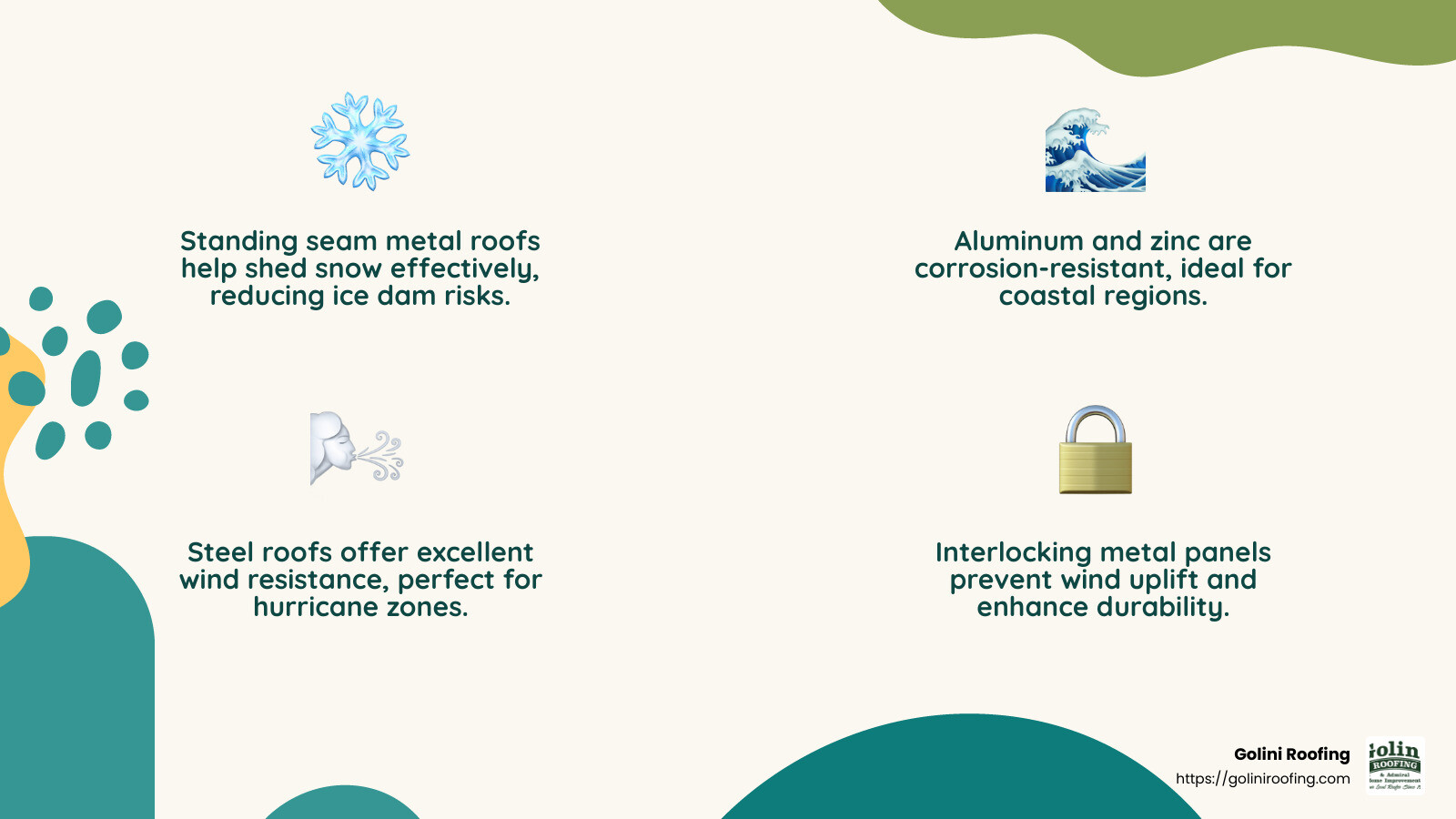
In cold climates, metal roofs excel due to their durability and ability to shed snow. Standing seam metal roofs are particularly effective. They have smooth surfaces that allow snow to slide off easily, reducing the risk of ice dams. This minimizes the weight on your roof and helps maintain its integrity over time.
Pro Tip: Consider installing a roof with a dark finish to absorb more heat from the sun, which can help with snow melting.
Coastal Regions
Coastal areas present a unique challenge due to high air salinity that can cause metal roofs to rust. For these regions, aluminum and zinc are the best choices. Both materials are corrosion-resistant, making them ideal for withstanding the salty air. Aluminum is lightweight and less expensive, while zinc offers a longer lifespan.
Remember: Always opt for a protective coating to further shield your roof from the elements.
High Wind Areas
If you live in an area prone to high winds, such as hurricane zones, steel roofs are your best bet. Steel is heavier and more durable, providing excellent resistance against strong winds. The interlocking design of metal panels also helps prevent wind uplift.
Expert Insight: Choose a professional with experience in high-wind installations to ensure your roof is secured properly.
In the next section, we will address frequently asked questions about metal roofs cost, helping you understand the financial aspects of this investment.
Frequently Asked Questions about Metal Roofs Cost
Is it cheaper to install metal roofs or shingles?
When comparing installation costs and material costs, metal roofs are generally more expensive upfront than asphalt shingles. The average price per square foot for metal roofing ranges from $10.38 to $18.28, whereas asphalt shingles cost between $4.25 and $8.25 per square foot. This means the initial investment for a metal roof can be significantly higher.
However, consider the long-term value. Metal roofs last between 40 to 70 years, while asphalt shingles typically last 20 to 30 years. This longevity means fewer replacements over time, potentially making metal roofs a more cost-effective option in the long run.
What are the long-term savings of metal roofs?
Metal roofs offer substantial energy efficiency benefits. Their ability to reflect sunlight reduces heat absorption, keeping your home cooler in the summer and potentially lowering air conditioning costs by up to 25-40%. This energy efficiency can lead to significant savings on utility bills over time.
Additionally, metal roofs require less maintenance compared to other materials. They are resistant to common roofing issues like leaks and pest damage. This durability translates into lower maintenance costs over the roof’s lifespan, saving homeowners money on repairs and upkeep.
Do metal roofs affect cell phone reception?
A common myth is that metal roofs interfere with cell phone reception. In reality, metal roofs do not significantly impact signal strength if the reception is strong in your area. Factors like distance from cell towers and building materials play a more crucial role in signal quality. Metal roofs are similar to the steel structures used in commercial buildings, which generally do not cause reception issues.
It’s worth noting that if you’re already in an area with weak reception, a metal roof might slightly exacerbate the problem. However, for most homeowners, the difference is negligible.
In the next section, we’ll explore how metal roofs compare to other roofing materials, helping you make an informed decision about your roofing investment.
Conclusion
Investing in a metal roof can be a wise decision for many homeowners. While the initial cost of metal roofs is higher than other options like asphalt shingles, the long-term benefits often outweigh the upfront expenses. Metal roofs are known for their longevity, lasting 40 to 70 years, which means fewer replacements and less hassle over time. This durability makes them a cost-effective option in the long run.
Moreover, metal roofs offer excellent energy efficiency. By reflecting sunlight, they can reduce heat absorption, leading to potential savings on cooling bills by up to 25-40%. This energy efficiency, combined with low maintenance costs, adds to the overall investment value of metal roofs.
At Golini Roofing, we understand the importance of making informed decisions about your roofing investment. With over 35 years of experience, we pride ourselves on delivering high-quality roofing solutions that ensure customer satisfaction. Our meticulous hand-nailing technique guarantees durable and reliable roofs, custom to withstand the specific needs of Massachusetts’ climate.
If you’re considering a metal roof, we invite you to request a new roof estimate from Golini Roofing. Our team is committed to providing you with the best roofing solutions, ensuring your investment stands the test of time.
Choose Golini Roofing for exceptional craftsmanship and a roof that offers both beauty and resilience. Experience the difference with a company that values quality and customer satisfaction above all.