New Flat Roof Cost Estimate: 10 Factors to Avoid
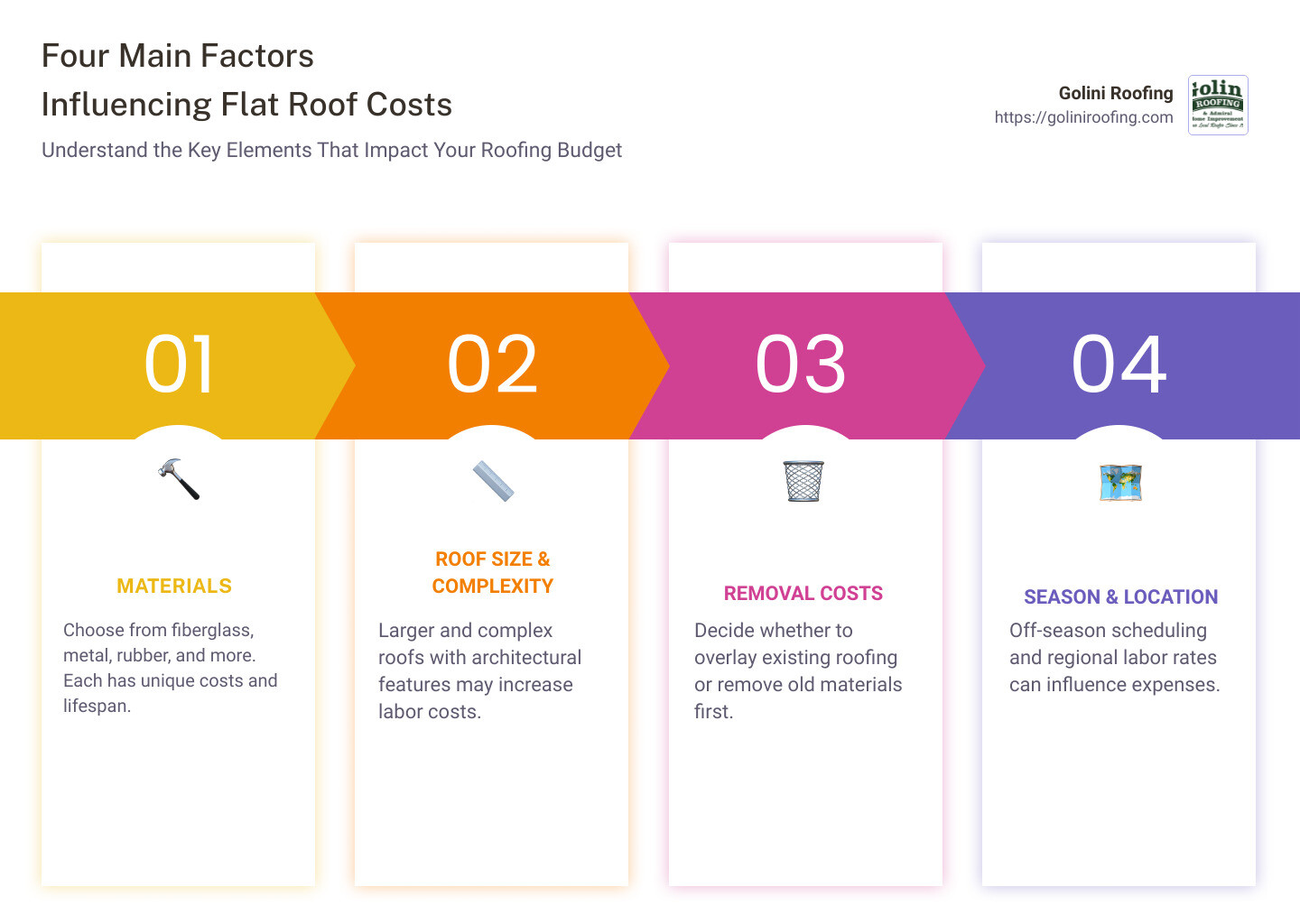
When considering a new flat roof cost estimate, have a clear understanding of the factors that can influence the final price. Homeowners often seek reliable and high-quality roofing solutions, particularly in areas like the North Shore where harsh weather can take a toll on roofing materials. The cost for a new flat roof generally varies based on several factors:
- Materials: From fiberglass to metal, each material comes with its own price range and life span.
- Roof Size and Complexity: Larger roofs or those with intricate architectural features may increase costs.
- Removal Costs: Deciding whether to overlay existing roofing or remove it first can influence expenses.
- Season and Location: Scheduling work during the off-season or considering regional labor costs can lead to savings.
It’s crucial to also factor in these aspects to get an accurate cost estimate.
I’m Jack Golini. With over 35 years in the roofing industry, I’ve helped numerous homeowners steer the complex world of new flat roof cost estimate with precision and care. My expertise ensures you receive a high-quality roof custom to your needs and budget.
New flat roof cost estimate terms you need:
– how many estimates to get for new roof
– new roof estimate calculator
– new shingle roof estimate
Average Cost of Flat Roof Replacement
When you’re planning for a new flat roof cost estimate, understanding the potential costs is key.
Cost Range
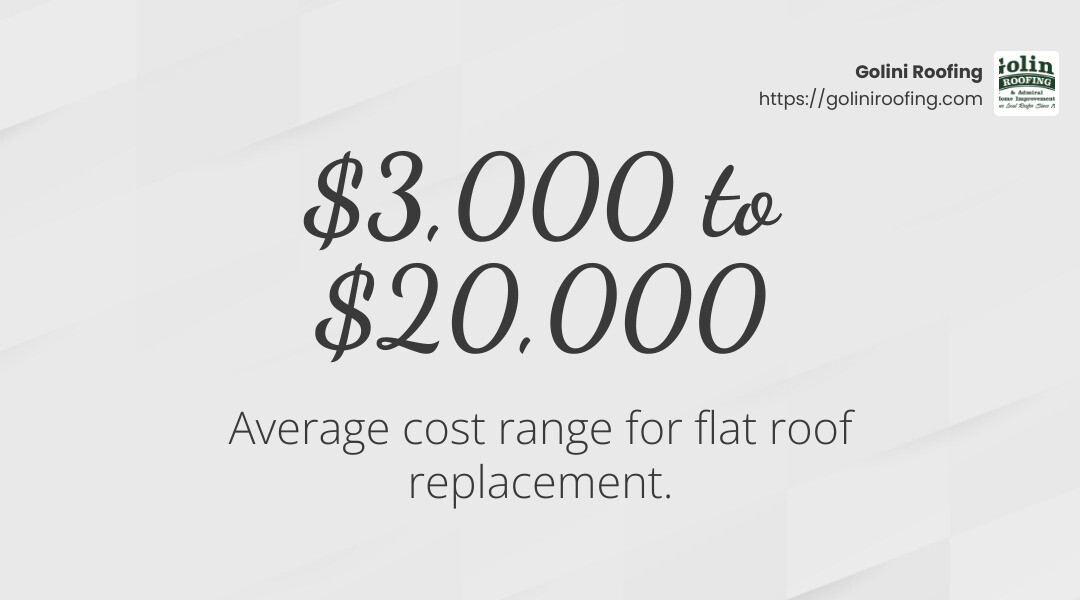
Flat roof replacement costs can vary widely. On average, you might spend anywhere from $3,000 to $20,000. Most homeowners find themselves paying around $9,000 for a flat roof replacement. The cost depends on several factors, including the size of the roof and the materials used.
Typical Costs
The cost of replacing a flat roof is typically calculated per square foot. Depending on the materials, expect to pay between $3 and $14 per square foot. For example, a 1,000 square foot roof could cost between $3,000 and $14,000.
Influencing Factors
Several factors can influence the overall cost:
- Materials: Different materials have different costs. For instance, fiberglass is affordable, while metal is more expensive but durable.
- Roof Size and Complexity: Larger roofs or those with unique features may require more labor and materials.
- Removal and Disposal: Tearing off an existing roof can add $1 to $2 per square foot to your total cost.
- Insulation and Underlayment: These components add to the cost but are essential for energy efficiency and durability.
It’s also worth noting that geographic location and market conditions can affect labor rates and material availability, impacting the final price.
By understanding these factors, you can better anticipate the costs involved in replacing your flat roof and plan your budget accordingly.
Major Cost Factors of Flat Roof Replacement
When considering a new flat roof cost estimate, several key factors can significantly influence the overall expense. Let’s break these down:
Roofing Material Costs
The choice of roofing materials plays a huge role in determining costs. Here’s a quick look at some common options:
- Fiberglass/GRP: Generally affordable, costing between $4 and $6 per square foot. This material is lightweight and corrosion-resistant.
- Metal: While durable and long-lasting, metal roofs are among the pricier options, ranging from $4 to $30 per square foot.
- Rubber (EPDM): Known for its weather resistance, costs average $4 to $13 per square foot.
- TPO: A popular choice for commercial buildings, priced between $3.50 and $14 per square foot.
- Built-Up Tar: This traditional option costs between $4 and $10 per square foot, offering good protection against water and UV rays.
- Modified Bitumen: Priced at $4 to $8 per square foot, this material improves flexibility and durability.
- PVC: Offers excellent water resistance, costing $4 to $7 per square foot.
- Concrete and Polyurethane: Both provide durability, with costs ranging from $4 to $8 per square foot.
Roof Size and Complexity
The size of your roof is a straightforward cost driver: larger roofs require more materials and labor. But complexity matters too. Roofs with multiple levels, unique architectural features, or intricate designs demand more time and expertise, increasing labor costs.
Here’s a look at how roof size impacts cost:
| Roof Size (sq ft) | Cost Range |
|---|---|
| 1,200 | $4,800 – $15,600 |
| 1,500 | $6,000 – $19,500 |
| 2,000 | $8,000 – $26,000 |
Removal and Disposal of Old Roofing
Removing an old roof, known as “tear-off,” can add $1 to $5 per square foot to your project cost. Consider overlaying a new roof over the old one to save money—if the existing structure is sound. This option isn’t feasible if the roof decking is damaged or can’t support additional weight.
Insulation and Underlayment
Insulation and underlayment are crucial for energy efficiency and roof longevity. Costs vary:
- Fiberglass Batting: Affordable, ranging from $0.30 to $1.50 per square foot.
- Spray Foam Insulation: More expensive but offers superior insulation, costing up to $2 per inch of thickness per square foot.
Choosing the right insulation and underlayment can improve your roof’s performance, but it requires careful consideration of installation complexity and long-term benefits.
Understanding these major cost factors helps in crafting a detailed and realistic budget for your flat roof replacement project. Next, we’ll explore additional factors that might influence your costs.
Additional Cost Factors
When planning for a new flat roof cost estimate, consider several additional factors that can impact your budget. These elements often go beyond the basics and dive into more specific details of your roofing project.
Roofing System Complexity
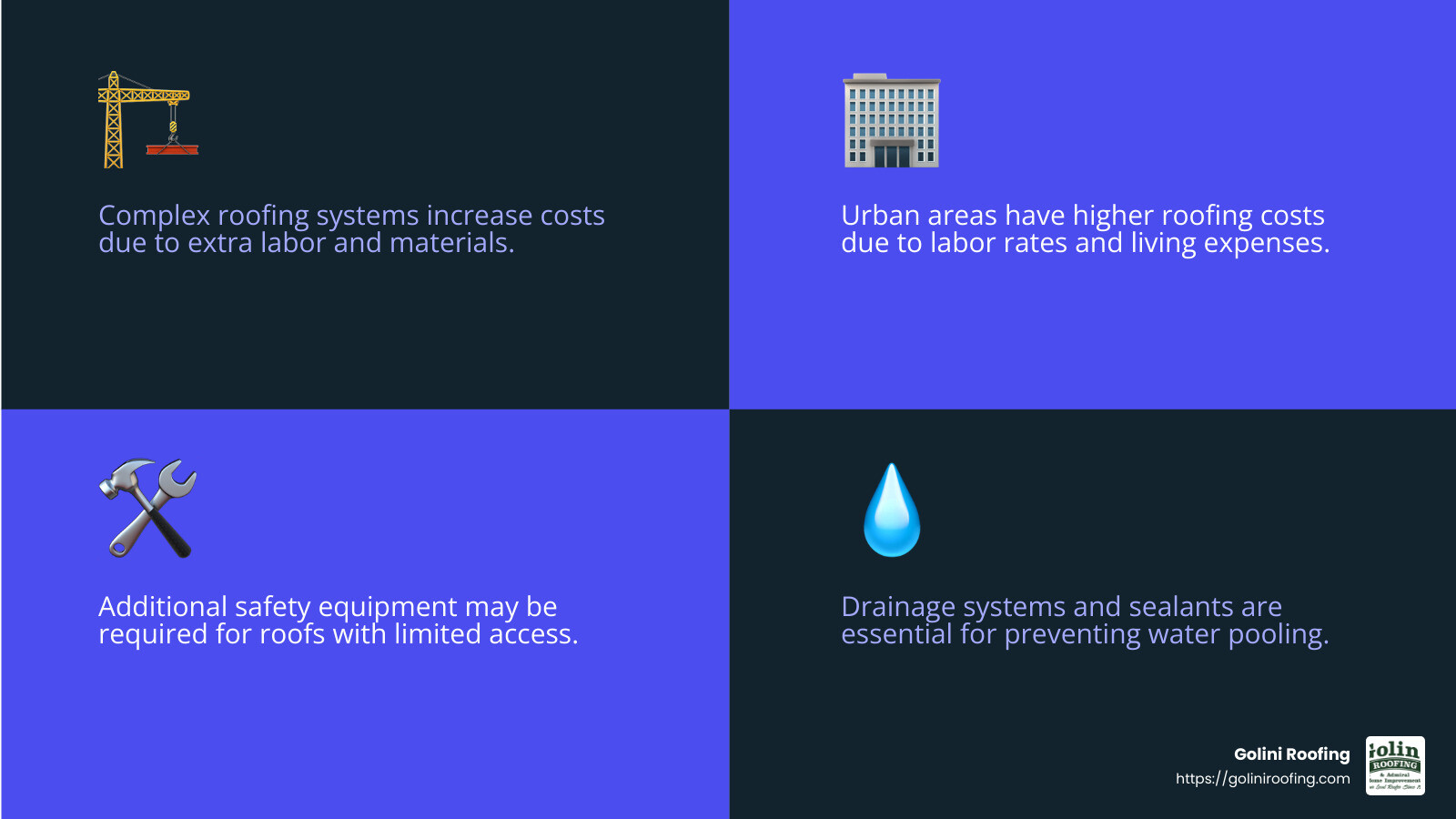
Complex roofing systems with multiple levels, slopes, or intricate features can increase costs. These designs require more labor and expertise to install correctly. For instance, a flat roof with varying slopes or unique architectural elements will need specialized techniques and potentially more materials, raising the overall expense.
Accessibility and Safety Requirements
The ease of access to your roof can significantly affect labor costs. Roofs that are difficult to reach may require special equipment like scaffolding or safety harnesses. These tools ensure the safety of the workers and add to the project expenses. If your building has limited access or is in a location that necessitates extra safety measures, expect to see this reflected in your cost estimate.
Warranties and Long-Term Considerations
Investing in extended warranties and material guarantees can offer peace of mind but might come with an additional upfront cost. These warranties can protect your investment by covering potential future repairs or replacements. It’s wise to evaluate the terms of these warranties and consider their value in the context of your long-term roofing needs.
Geographic Location and Market Conditions
Your geographic location plays a significant role in determining labor rates and material availability. For example, roofing costs in urban areas with a high cost of living tend to be higher than in rural areas. Additionally, regional variations in weather can influence the type of materials suitable for your roof, impacting both cost and availability.
Drainage Systems and Sealant
Proper drainage is critical for flat roofs to prevent water pooling and potential damage. Adding drainage systems can cost between $600 and $1,000, while applying a sealant for added waterproofing can range from $500 to $2,500. These features not only protect your roof but also improve its longevity, making them a valuable investment.
Understanding these additional cost factors allows for a more comprehensive and accurate budget for your flat roof project. Next, we’ll explore the pros and cons of professional versus DIY flat roof replacement.
Professional vs. DIY Flat Roof Replacement
When facing a new flat roof cost estimate, deciding between hiring a professional and doing it yourself is crucial. Both options come with their own set of benefits and challenges, impacting cost, quality, and safety.
Professional Flat Roof Replacement
Expertise and Equipment
Hiring a professional brings a wealth of expertise and access to specialized equipment. Roofing contractors have the skills to handle complex installations and ensure everything is done correctly. They use tools and materials that might not be available or affordable for DIY enthusiasts.
Warranties and Efficiency
One significant advantage of hiring professionals is the warranty they often provide. This means if something goes wrong, you won’t have to pay for repairs out of pocket. Professionals also tend to work more efficiently, completing the job faster than a DIY approach, which might drag on due to inexperience.
Safety and Quality
Roofing can be dangerous. Professionals are trained to handle safety risks and prevent accidents. They also follow industry standards, ensuring a high-quality finish that can withstand weather conditions and last longer.
DIY Flat Roof Replacement
Cost Savings
The main attraction of a DIY project is the potential cost savings. You can avoid labor costs, which range from $2 to $7 per square foot. However, this doesn’t mean the project will be cheap. You’ll need to buy materials and possibly rent or purchase tools.
Risks and Skill Requirements
DIY roofing isn’t without risks. You need to be comfortable working at heights and have the skills to complete the job correctly. Mistakes can lead to leaks, water damage, or even structural issues, which could end up costing more in repairs than hiring a professional would have.
Potential Issues
Without proper expertise, you might face unexpected challenges. For example, you might not notice structural problems or install materials incorrectly. These errors can shorten your roof’s lifespan and decrease its efficiency, leading to higher long-term costs.
In summary, while DIY can save money upfront, the risks and potential costs of mistakes often make hiring a professional the wiser choice. Next, we’ll explore ways to reduce flat roof replacement costs without compromising quality.
How to Reduce Flat Roof Replacement Costs
When you’re considering a new flat roof cost estimate, there are several strategies to keep costs manageable without sacrificing quality.
Get Multiple Quotes
Start by obtaining quotes from at least three roofing contractors. This gives you a range of prices and helps ensure you get a fair deal. Be sure to choose contractors who specialize in flat roofs for more accurate comparisons.
Overlay Existing Roof
If your current flat roof is in good condition, consider installing the new roof over it. This can save on removal and disposal costs. However, ensure your roof structure can support the additional weight and that local building codes allow this approach.
Invest in High-Quality Materials
While it might be tempting to opt for cheaper materials, investing in high-quality options can save money in the long run. Durable materials reduce the frequency of repairs and replacements. For instance, a fiberglass roof can last over 20 years, while a zinc roof might last up to 100 years.
Regular Maintenance
Maintaining your roof can extend its lifespan. Regular inspections and clearing debris from surfaces and gutters help prevent damage. This proactive approach can delay the need for a costly replacement.
Schedule Work During the Offseason
Roofing companies often have less work during certain times of the year. Scheduling your roof replacement during these off-peak periods can sometimes lead to discounts. This is an easy way to save money without compromising on quality.
By following these strategies, you can effectively manage your flat roof replacement costs, ensuring you get the best value for your investment. Next, we’ll discuss the life span of flat roofing systems and how to maximize their durability.
Life Span of Flat Roofing Systems
Material Longevity
The longevity of a flat roof depends heavily on several factors: maintenance, climate, installation quality, and the type of material used. Each of these plays a crucial role in determining how long your roof will last.
Regular maintenance is key to extending your roof’s life. This involves routine inspections, clearing debris, and checking drainage systems. Keeping up with maintenance can help prevent small issues from becoming major problems, potentially adding years to your roof’s life.
Climate Considerations
Climate also affects roof longevity. In areas with extreme weather, roofs may wear out faster. For example, heavy snowfall or intense sunlight can damage certain materials. Choosing a material suited to your climate can mitigate these effects.
Quality Installation
Installation quality is another critical factor. A poorly installed roof, regardless of material, won’t last as long. Hiring experienced professionals ensures your roof is installed correctly, which can significantly extend its lifespan.
Material Longevity
Different materials have varying lifespans:
- Fiberglass: Typically lasts 25 to 50 years. It’s durable and resistant to water, making it a solid choice for many climates.
- Zinc: Known for its incredible longevity, a zinc roof can last 60 to 100 years. It’s a more expensive option but offers excellent durability.
- Rubber (EPDM): This material usually lasts 15 to 25 years. It’s flexible and handles temperature changes well.
- TPO (Thermoplastic Olefin): Offers a lifespan of 10 to 25 years. It’s known for being energy-efficient due to its reflective properties.
- Built-Up Tar: This traditional option lasts 20 to 30 years. It’s made from layers of tar and gravel, providing excellent waterproofing.
- GRP (Glass Reinforced Plastic): Offers a lifespan of 25 to 50 years. It’s lightweight and strong, making it a popular modern choice.
- Modified Bitumen: Lasts 10 to 20 years. It’s a reliable option that’s easy to repair.
Choosing the right material for your new flat roof cost estimate is crucial. While some options may be more expensive upfront, their longevity and durability can offer better value over time.
How to Hire a Professional
When it comes to hiring a professional for your flat roof replacement, making the right choice is crucial. Here’s a simple guide to help you find the best contractor for the job.
References and Reviews
Start by asking potential contractors for references. Speaking to past clients can give you insight into the contractor’s work quality and reliability. Additionally, check online reviews on platforms like Yelp and the Better Business Bureau. Consistent positive feedback is a good indicator of a trustworthy contractor.
Written Estimates
Always ask for a written estimate after the initial inspection. This document should detail the scope of work, materials, labor costs, and any additional expenses. A clear estimate helps you understand the costs involved and prevents unexpected charges later. It also allows you to compare quotes from multiple contractors to find the best value.
Licensing and Insurance
Verify that the contractor is licensed in your state. Licensing ensures they meet local building codes and standards. Also, confirm that they carry both general liability and workers’ compensation insurance. This is crucial as it protects you from being liable for any accidents or damages during the project.
Bonding
A bonded contractor offers an additional layer of protection. Bonding means that a bonding company will provide compensation if the contractor fails to complete the job to your satisfaction or if they do not meet contractual obligations. This adds peace of mind, knowing you have financial protection.
By focusing on these key factors—references, reviews, written estimates, licensing, insurance, and bonding—you can confidently choose a professional who will deliver quality work for your flat roof replacement.
Next, let’s explore the Frequently Asked Questions about New Flat Roof Cost Estimate to address common concerns homeowners have when considering a new flat roof.
Frequently Asked Questions about New Flat Roof Cost Estimate
How does the cost of flat roof replacement compare to pitched roof replacement?
Flat roof replacements generally cost less than pitched roof replacements. The national average price for a flat roof replacement is about $6,949. Flat roofs typically require fewer materials and less labor due to their simpler design. This can lead to cost savings. However, the size of your roof, the quality of materials, and the complexity of the project can impact the final price.
Can I install a new flat roof over the existing one to save costs?
Yes, you can install a new flat roof over the existing one, which can save money on removal and disposal costs. However, this is only possible if your current roof is in good condition and the structure can support the additional weight. It’s essential to consult with a professional to assess whether this option is viable for your specific situation.
How long does a flat roof replacement typically take?
On average, a flat roof replacement takes professional roofers about five days to complete. The timeline can vary based on the size and complexity of the job. Some materials, like built-up tar, may require more time to install. Discussing the schedule with your contractor beforehand can help set clear expectations.
Now that we’ve addressed these common questions, let’s dig into the Conclusion to wrap up our insights on flat roof replacements.
Conclusion
In summary, replacing a flat roof is a significant investment, but understanding the various cost factors can help you make informed decisions. By considering elements such as roofing materials, roof size, insulation, and additional features, you can better estimate the total expenses involved. Choosing the right materials and maintaining your roof regularly can also extend its lifespan, adding long-term value.
At Golini Roofing, our 35 years of experience in both residential and commercial roofing set us apart. We pride ourselves on meticulous craftsmanship, hand-nailing each shingle to ensure durability. Our commitment to quality and customer satisfaction means you can trust us to handle every detail of your roofing project with care and expertise.
To keep costs manageable, we recommend obtaining multiple quotes, considering overlay options when viable, and scheduling work during the offseason. Regular maintenance and choosing high-quality materials can also reduce future repair and replacement costs.
For a reliable and professional flat roof replacement, reach out to Golini Roofing today. Our team is ready to provide you with a comprehensive estimate and guide you through every step of the process. Let us help ensure your flat roof stands strong for years to come.