
Rain Gutters: Top 5 Powerful Tips for 2025 Success
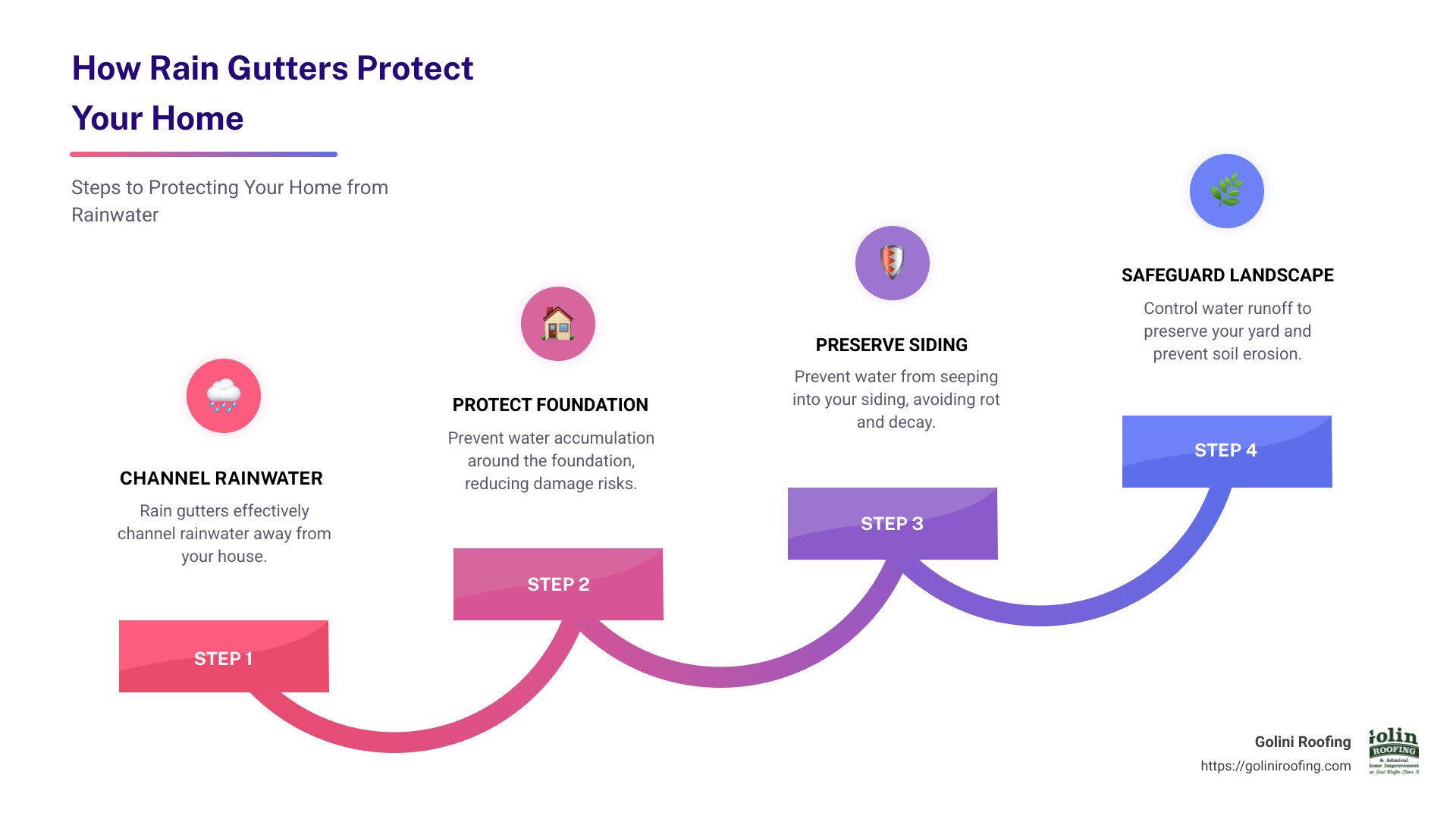
Rain gutters are an essential component in protecting your home from the potentially devastating effects of rainwater. They channel rainwater away from your house, preventing water from accumulating around your home’s foundation, which can lead to structural issues, basement leaks, and landscape erosion. Here’s a quick overview of why rain gutters are so crucial:
- Protection against Water Damage: They prevent water from seeping into your siding and foundation.
- Foundation Preservation: Proper drainage keeps water from pooling around the foundation, reducing the risk of cracks and shifts.
- Landscape Safeguarding: Gutters help control water runoff, preserving your yard and preventing soil erosion.
My name is Jack Golini, and I’ve been immersed in the roofing industry for over 35 years. As the owner of Golini Roofing, I’ve supervised countless installations and understand the importance of expertly installed rain gutters. With our services, I ensure your home not only stays safe but also maintains its structural integrity against the North Shore’s unpredictable weather.
Handy rain gutters terms:
– gutter cover installation service
– gutter installation cost
– gutter repair service
Types of Rain Gutters
When it comes to rain gutters, there are several styles to choose from, each with its own unique benefits. Let’s explore the most popular types: Half-round gutters, K-style gutters, Seamless gutters, and Seamed gutters.
Half-Round Gutters
Half-round gutters are a classic choice, featuring a semicircular shape that complements traditional and historic homes. They are known for their simple design, making them easier to clean and maintain. These gutters work best with round downspouts, efficiently channeling water away from the house. If you live in a historic area, you might even be required to install this type of gutter to maintain the architectural integrity of your home.
K-Style Gutters
Despite their name, K-style gutters don’t resemble the letter “K.” Instead, they have a flat back and a decorative front, which mimics the appearance of crown molding. K-style gutters are the most common option in the U.S. because they can handle more water than half-round gutters of the same width. A standard 5-inch K-style gutter is usually sufficient for most homes, providing excellent drainage with a sleek appearance.
Seamless Gutters
Seamless gutters are a modern innovation that reduces leaks and maintenance. These gutters are custom-made on-site to fit your home perfectly. Without seams, there are fewer places for debris to collect, which means less clogging and easier cleaning. Seamless gutters are generally made from aluminum, providing a durable and long-lasting solution for homeowners.
Seamed Gutters
Seamed gutters, also known as sectional gutters, are made from pre-cut sections joined together. They are a budget-friendly option and are easier to install for DIY enthusiasts. However, the seams can be prone to leaks and require more maintenance over time. Regular inspections and sealing can help extend the life of seamed gutters.
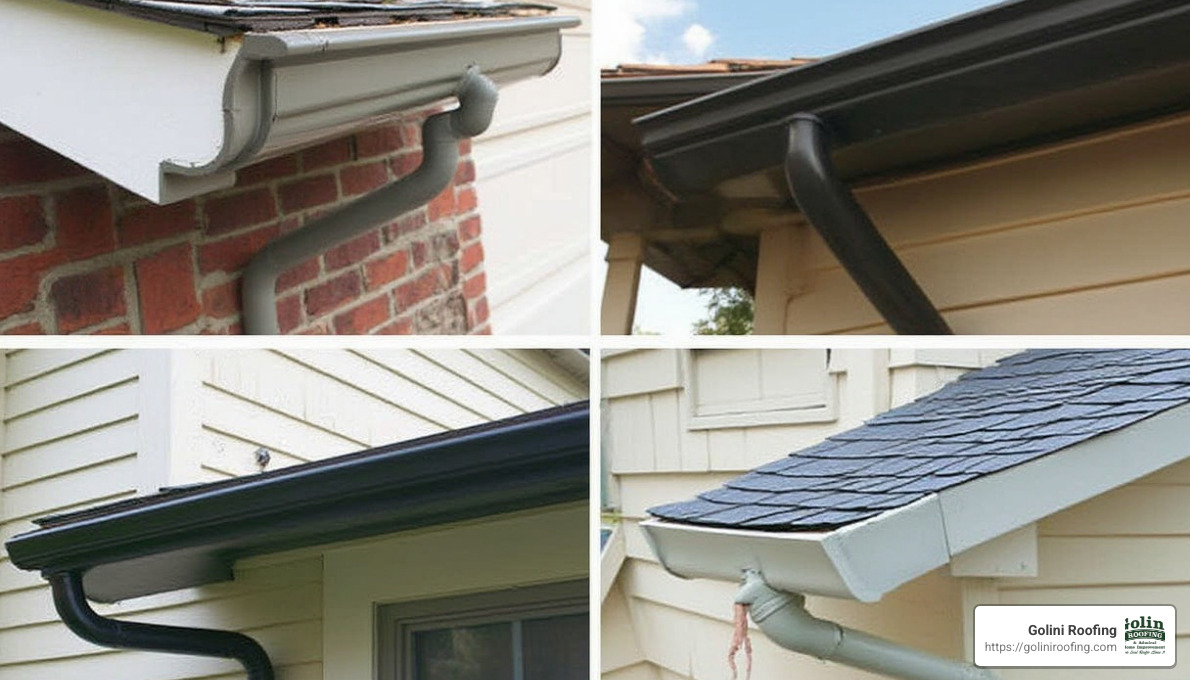
Understanding the different types of rain gutters can help you make an informed decision for your home. Whether you prioritize aesthetics, functionality, or budget, there’s a gutter style that fits your needs.
Next, we’ll explore the various materials available for rain gutters, from aluminum to copper, and how each affects performance and cost.
Materials for Rain Gutters
Choosing the right material for your rain gutters is crucial for ensuring durability, performance, and aesthetic appeal. Let’s take a closer look at the most popular materials: Aluminum, Vinyl, Copper, Steel, and Zinc.
Aluminum
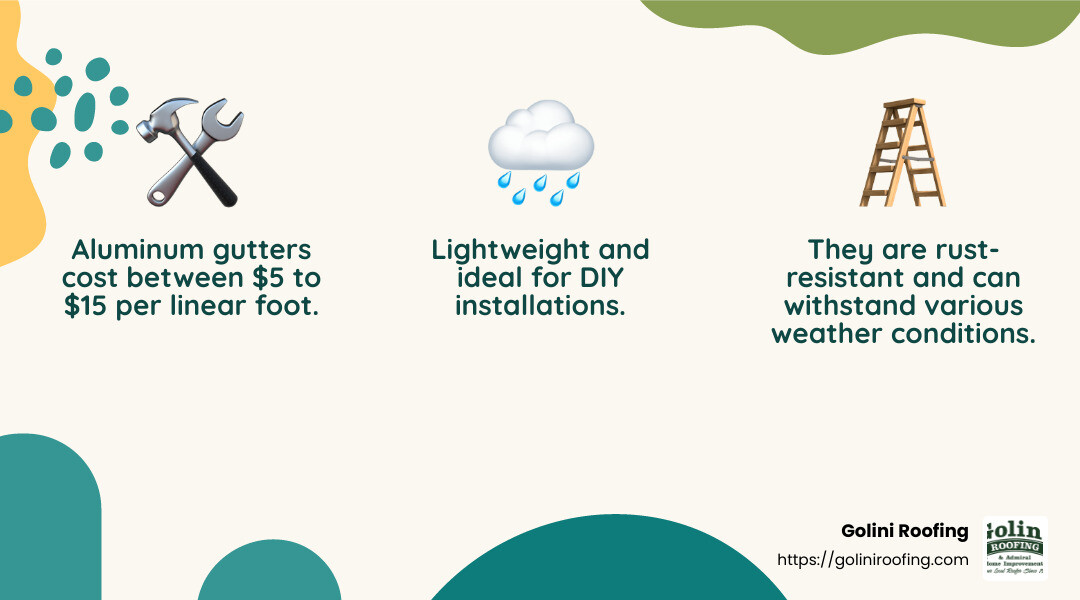
Aluminum gutters are a top choice for many homeowners due to their affordability and ease of installation. They range from $5 to $15 per linear foot, making them a cost-effective option. Aluminum is lightweight and rust-resistant, which means it can withstand various weather conditions. However, they can be prone to damage from debris and wind. Despite this, their durability compared to vinyl makes them a preferred option for DIY installations.
Vinyl
If budget is a concern, vinyl gutters are the most affordable, costing between $4 and $7 per linear foot. They are easy to install, making them a popular choice for DIY projects. However, vinyl is less durable than metal options and may crack over time, especially in harsh weather conditions. These gutters typically have a shorter lifespan, so they might need more frequent replacements.
Copper
For those seeking a premium and durable option, copper gutters are worth considering. Priced between $18 and $40 per linear foot, they are the most expensive but offer best durability and aesthetic appeal. Copper doesn’t rust and develops a beautiful patina over time, making it ideal for historic restorations and luxury homes. While the initial investment is high, copper gutters require fewer repairs, potentially saving money in the long run.
Steel
Steel gutters offer strength and durability, with costs ranging from $10 to $20 per linear foot. They are available in galvanized or stainless steel options, which resist dings and leaks. However, steel is heavy, and installation can be labor-intensive. Regular maintenance is required to prevent rust, making professional installation a wise choice. Steel gutters are not recommended for coastal areas due to their sensitivity to salty air.
Zinc
Zinc gutters are known for their longevity and self-healing surface, which resists scratches and scrapes. They cost between $12 and $32 per linear foot. Zinc is rust-resistant, making it suitable for areas with high moisture levels. However, zinc is vulnerable to saltwater staining, so it’s not ideal for homes near the ocean. Like copper, zinc gutters are best installed by professionals due to the welding required.
Each material offers distinct advantages and drawbacks, so consider your budget, climate, and home style when selecting rain gutters. The right material will not only improve your home’s appearance but also protect it from water damage.
In the next section, we’ll dig into the installation and maintenance of rain gutters, discussing both DIY and professional options to keep your gutters in top shape.
Installation and Maintenance
Once you’ve chosen the right material for your rain gutters, it’s time to think about installation and maintenance. Proper installation and upkeep are key to ensuring your gutters work effectively and last for years.
DIY Installation
For those who love tackling home projects, DIY gutter installation might be appealing. Vinyl gutters are often the go-to choice here. They’re lightweight and easy to handle, making them perfect for a weekend project. However, keep in mind that while DIY can save money upfront, mistakes can be costly. Misaligned gutters can lead to leaks, and improper sealing can cause water damage.
Professional Installation
If you’re not comfortable on a ladder or want to ensure everything is done right, hiring a professional is a smart move. Experts like those at Golini Roofing have the tools and experience to install gutters quickly and efficiently. They can handle more complex materials like copper or zinc that require precision and specialized tools. Plus, pros can create seamless gutters on-site, reducing the risk of leaks and enhancing durability.
Gutter Cleaning
Regular cleaning is crucial for keeping your gutters clear of debris like leaves and twigs. Clogged gutters can overflow, causing water to damage your home’s foundation or siding. Most homes need gutter cleaning at least twice a year, in the spring and fall. If you have many trees nearby, you might need to do it more often. Gutter guards can help reduce the frequency of cleanings by keeping debris out while letting water flow through.
Gutter Repair
Over time, gutters can develop issues like leaks, sagging, or rust. Quick repairs can prevent minor problems from becoming expensive headaches. Common repairs include fixing leaks with sealant, reattaching loose gutters, and replacing damaged sections. If your gutters are beyond repair, a professional can help assess if replacement is necessary.
Proper installation and maintenance of your rain gutters are essential to protect your home from water damage. Whether you choose to DIY or hire a professional, keeping your gutters in top shape will save you time and money in the long run.
Next, we’ll explore how to choose the right rain gutters based on factors like budget, local weather, and your home’s style.
Choosing the Right Rain Gutters
Selecting the perfect rain gutters for your home isn’t just about picking a style that looks good. It’s about finding the right balance between your budget, local weather conditions, and your home’s architectural style. Let’s break it down.
Budget Considerations
Start by figuring out how much you’re willing to spend. Vinyl gutters are often the most budget-friendly option, with prices as low as $3 per linear foot. They’re lightweight and easy to install, making them a popular choice for DIY enthusiasts. But if you’re looking for something more durable, consider aluminum or steel. They cost a bit more but offer better longevity and weather resistance.
For those willing to invest in aesthetics and durability, copper and zinc gutters are top-tier choices. These materials can cost $20 to $40 per linear foot, but they add a touch of elegance and can last a lifetime with proper care.
Rainfall Intensity
Your local climate plays a big role in the type of gutters you need. If your area experiences heavy rainfall, you’ll want gutters that can handle the load. K-style gutters are a great choice here. They can handle twice as much water as half-round gutters of the same width. This makes them ideal for regions with intense rainstorms.
On the other hand, if you live in an area with moderate rainfall, half-round gutters might be sufficient. They’re easier to clean and maintain, which can be a big plus if you’re looking to keep upkeep simple.
Home Style Compatibility
Finally, think about how the gutters will look on your home. K-style gutters have a modern look with their flat backs and decorative fronts, making them a good match for contemporary homes. Meanwhile, half-round gutters offer a classic, timeless appearance that pairs well with traditional or historic homes.
For those wanting to make a statement, copper and zinc gutters provide a distinctive, upscale appearance. They develop a natural patina over time, adding character and charm to your home’s exterior.
Choosing the right rain gutters involves more than just picking a color or material. By considering your budget, local weather, and home style, you can find the perfect fit that not only protects your home but also improves its curb appeal.
Next, we’ll tackle some of the most frequently asked questions about rain gutters, including the best types and cost considerations.
Frequently Asked Questions about Rain Gutters
What is the best type of rain gutter?
The best type of rain gutter depends on your specific needs and circumstances. Vinyl gutters are a great choice if you’re on a budget and want an easy DIY installation. They’re lightweight and cost-effective, typically ranging from $3 to $5 per linear foot. However, they might not be as durable in extreme weather conditions.
Aluminum gutters strike a balance between cost and durability. They’re rustproof and come in a variety of colors, making them a popular choice for many homeowners. At $5 to $10 per linear foot, they offer good value for money.
For those looking for something more robust, steel gutters provide strength and longevity. However, they require regular maintenance to prevent rust and can be more challenging to install. Expect to pay between $8 and $12 per linear foot for steel.
If you’re after a premium option, consider zinc or copper gutters. Zinc is durable and rustproof, with a weathered matte gray color that suits historic or luxury homes. Copper, on the other hand, doesn’t rust and develops a beautiful patina over time. Both materials are best installed by professionals and cost significantly more, ranging from $15 to $40 per linear foot.
How much do rain gutters cost?
The cost of rain gutters varies widely based on the material and length needed for your home. Here’s a quick breakdown of the average costs per linear foot:
- Vinyl: $3 – $5
- Aluminum: $5 – $10
- Steel: $8 – $12
- Zinc: $20 – $30
- Copper: $15 – $25
These prices give you a basic idea, but additional costs can arise from installation complexity, especially for multi-story homes or those with intricate rooflines. Professional installation can range from $600 to $4,100, depending on the size of your home and the materials used.
Which gutters are better, aluminum or vinyl?
When comparing aluminum and vinyl gutters, consider durability and weather resistance. Aluminum gutters are generally more durable and can withstand a variety of weather conditions without rusting. They’re lightweight, easy to install, and offer a wide selection of colors to match your home.
Vinyl gutters, while less expensive, can become brittle in extreme temperatures and may not last as long as aluminum. They’re best for areas with mild climates and for homeowners looking for a cost-effective, DIY-friendly option.
In summary, if you need a long-lasting solution that can handle different weather conditions, aluminum is the better choice. If budget constraints are your primary concern and you live in a milder climate, vinyl could be the way to go.
Next, we’ll dig into the conclusion and wrap up our guide on rain gutters, highlighting key takeaways and offering insights on choosing the right solution for your home.
Conclusion
Choosing the right rain gutters is crucial for protecting your home from water damage and maintaining its structural integrity. At Golini Roofing, we understand the importance of high-quality gutters and are committed to providing top-notch installation and maintenance services.
Gutter Lifespan and Maintenance
The lifespan of your gutters largely depends on the materials used and how well they are maintained. For example, aluminum gutters can last up to 20 years with regular maintenance, while copper gutters can serve you for over 50 years. Regular cleaning and timely repairs are essential for extending the life of your gutters, regardless of the material.
Customer Satisfaction
At Golini Roofing, customer satisfaction is our top priority. We pride ourselves on meticulous craftsmanship, especially with our hand-nailing techniques, ensuring that your gutters are not only functional but also improve your home’s aesthetic appeal. Our experienced team is here to assist you in selecting the best gutter system for your needs and budget, ensuring a seamless installation process.
Why Choose Golini Roofing?
With over 35 years of experience and a strong presence in Massachusetts, Golini Roofing is your trusted partner for all roofing and gutter needs. Our expertise in both residential and commercial projects guarantees that you’ll receive the best service possible. We are committed to quality, durability, and customer satisfaction.
Ready to protect your home with the right rain gutters? Contact Golini Roofing today for a consultation and experience our exceptional services firsthand. Let us help you find the perfect solution to keep your home safe, rain or shine.
