
Roof Inspection: 6 Vital Signs You Can’t Ignore
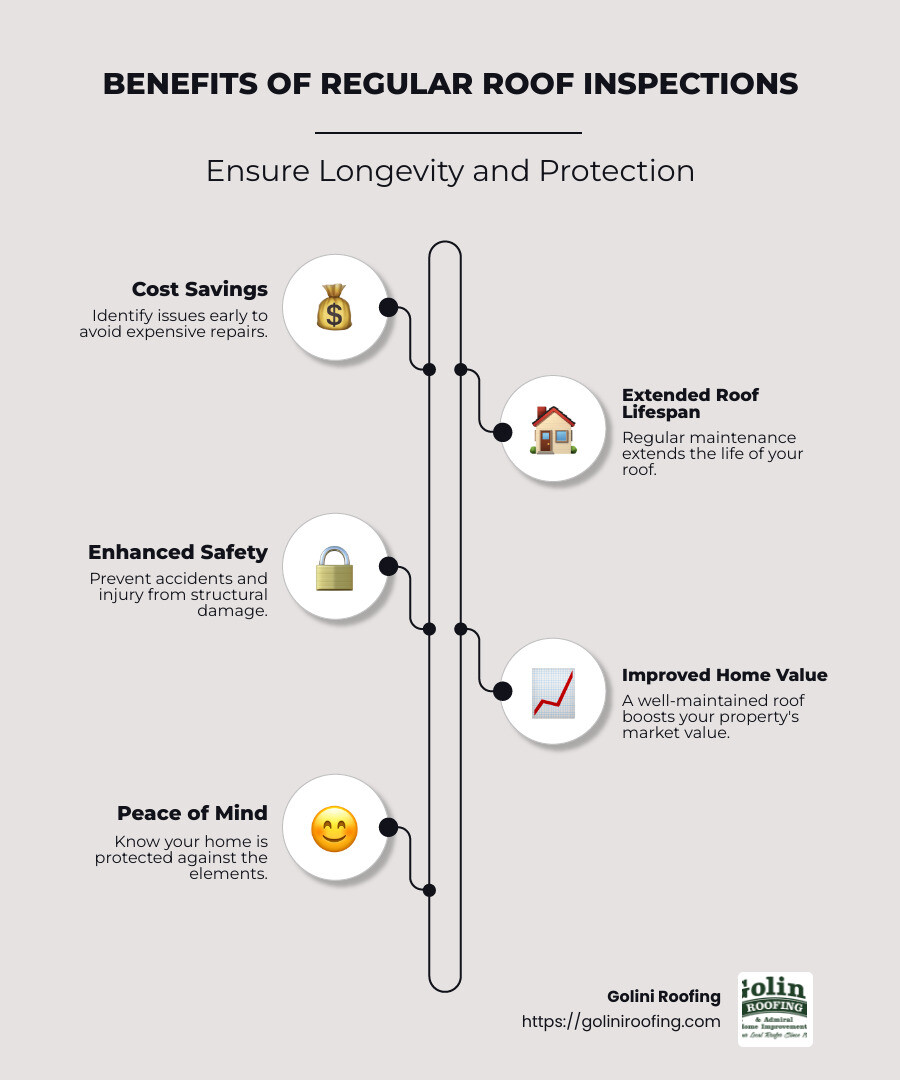
Roof inspection plays a crucial role in maintaining the longevity and integrity of your home. It’s not just about checking shingles; it’s about a thorough examination of your entire roofing system to ensure everything is in top shape. Here’s what you need to know at a glance:
- Purpose: Evaluate the condition and performance of your roof.
- Benefits: Detects potential issues early, extends roof lifespan, and ensures safety.
- Components Checked: Shingles, gutters, downspouts, flashing, attic, and more.
Regular roof inspection prevents small issues from becoming costly repairs. It also offers peace of mind, especially following extreme weather events. Homeowners often overlook this until it’s too late, leading to unnecessary expenses and stress.
My name is Jack Golini, with over 35 years in the roofing industry, specializing in top-notch roof inspection services. At Golini Roofing, I ensure your roof stands the test of time while protecting your property investment. In the upcoming sections, let’s explore how these inspections work and why they’re essential.
Roof inspection terms to learn:
– certified roof inspector
– free roofing inspection
– roofing certification
What is a Roof Inspection?
A roof inspection is a detailed examination of your roof’s condition, much like a check-up for your home. It’s about more than just spotting a missing shingle—it’s a comprehensive evaluation of all the components that make up your roofing system.
Purpose of a Roof Inspection
The main goal of a roof inspection is to assess how well your roof is performing its job: protecting your home from the elements. Regular inspections help catch small issues before they turn into big, expensive problems. They’re also important when buying or selling a home, or for insurance purposes.
Components Examined During a Roof Inspection
During a roof inspection, professionals will examine several key components:
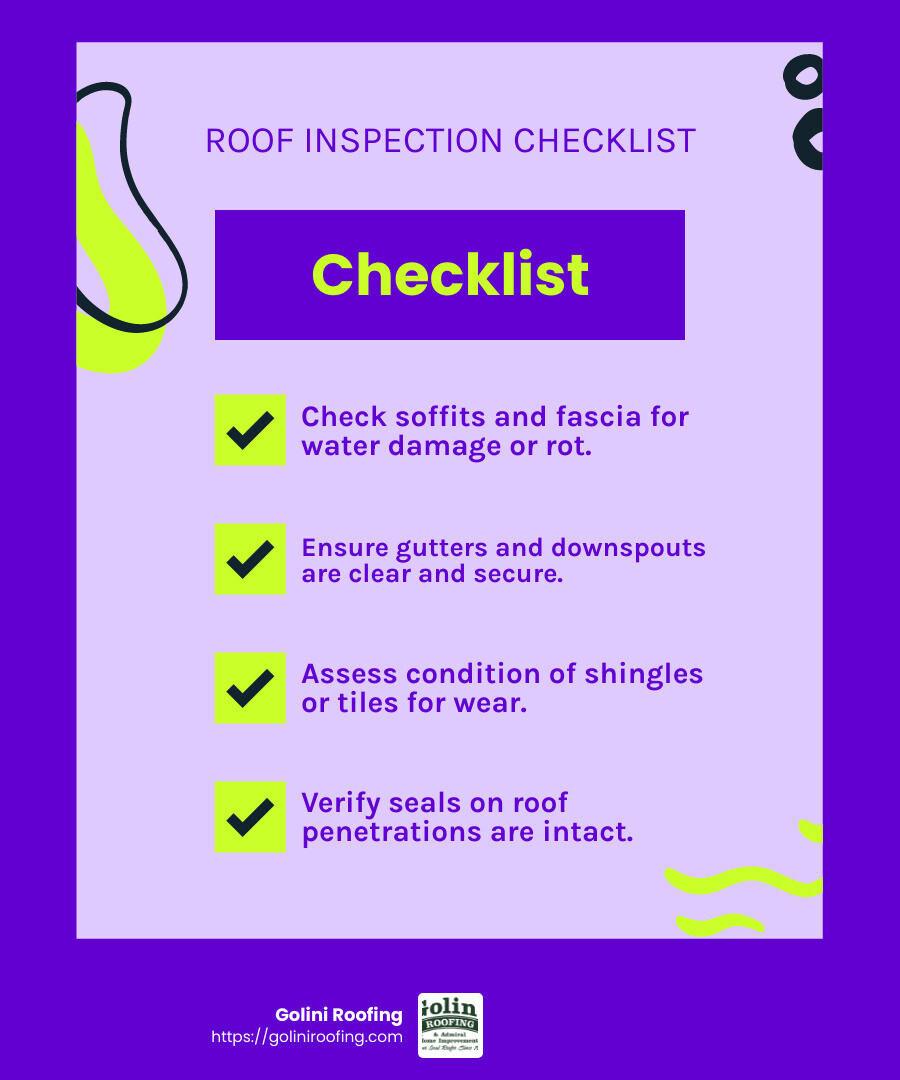
- Soffits and Fascia: These are checked for signs of water damage or rot.
- Gutters and Downspouts: Inspectors ensure they’re clear and securely attached to guide water away from your home.
- Roofing Material: The condition of shingles or tiles is carefully assessed for wear and tear.
- Roof Penetrations: Vents, pipes, and other installations are checked to ensure seals are intact and watertight.
- Flashing: This is inspected to make sure it’s properly diverting water away from joints and seams.
- Attic: If accessible, the attic is checked for signs of leaks, mold, or poor ventilation.
By examining these components, inspectors can provide a clear picture of your roof’s health and suggest any needed repairs or maintenance. This proactive approach can save money and extend the life of your roof.
In the next section, we’ll explore the different types of roof inspections available and what each entails.
Types of Roof Inspections
When it comes to maintaining your roof, not all inspections are created equal. Understanding the types of roof inspections can help you choose the right one for your needs. Let’s break down the three main types: basic, complex, and specialized inspections.
Basic Inspection
A basic inspection is your starting point for routine roof maintenance. It’s like a routine check-up for your roof, covering the essentials. During this inspection, the inspector will:
- Visually assess the roof from the ground to spot any obvious issues like missing or damaged shingles.
- Check the gutters and downspouts to ensure they are clear and properly directing water away from the house.
- Look for signs of wear and tear on the roofing material.
This type of inspection is quick and cost-effective, making it ideal for homeowners who want to keep an eye on their roof’s general condition.
Complex Inspection
A complex inspection goes deeper, often involving a climb onto the roof to get a closer look at potential problem areas. This type of inspection might include:
- Thorough examination of roofing materials for signs of aging or damage that aren’t visible from the ground.
- Inspection of roof penetrations, such as vents and chimneys, to ensure seals are intact and functioning.
- Detailed check of flashing around joints and seams to prevent water intrusion.
Complex inspections are more detailed and usually recommended if you suspect issues or after severe weather events.
Specialized Inspection
Specialized inspections are custom to specific concerns or situations. They might be necessary for:
- Storm damage assessment: After a hailstorm or high winds, a specialized inspection can evaluate the extent of the damage.
- Real estate transactions: When buying or selling a home, a specialized inspection can provide a detailed report on the roof’s condition.
- Insurance purposes: If required by your insurer, this inspection ensures your roof meets their standards.
These inspections often require a professional with specific expertise in the area of concern. They can be more costly but provide invaluable insights into specific issues.
Choosing the right type of roof inspection depends on your circumstances and what you’re hoping to achieve. Whether it’s a routine check-up or a deep dive into potential problems, each type has its place in maintaining the health of your roof.
In the next section, we’ll dive into the costs associated with roof inspections and what factors can influence these costs.
How Much Does a Roof Inspection Cost?
When you’re thinking about getting a roof inspection, one of the first questions that comes to mind is, “How much will it cost?” Let’s break it down.
Cost Range
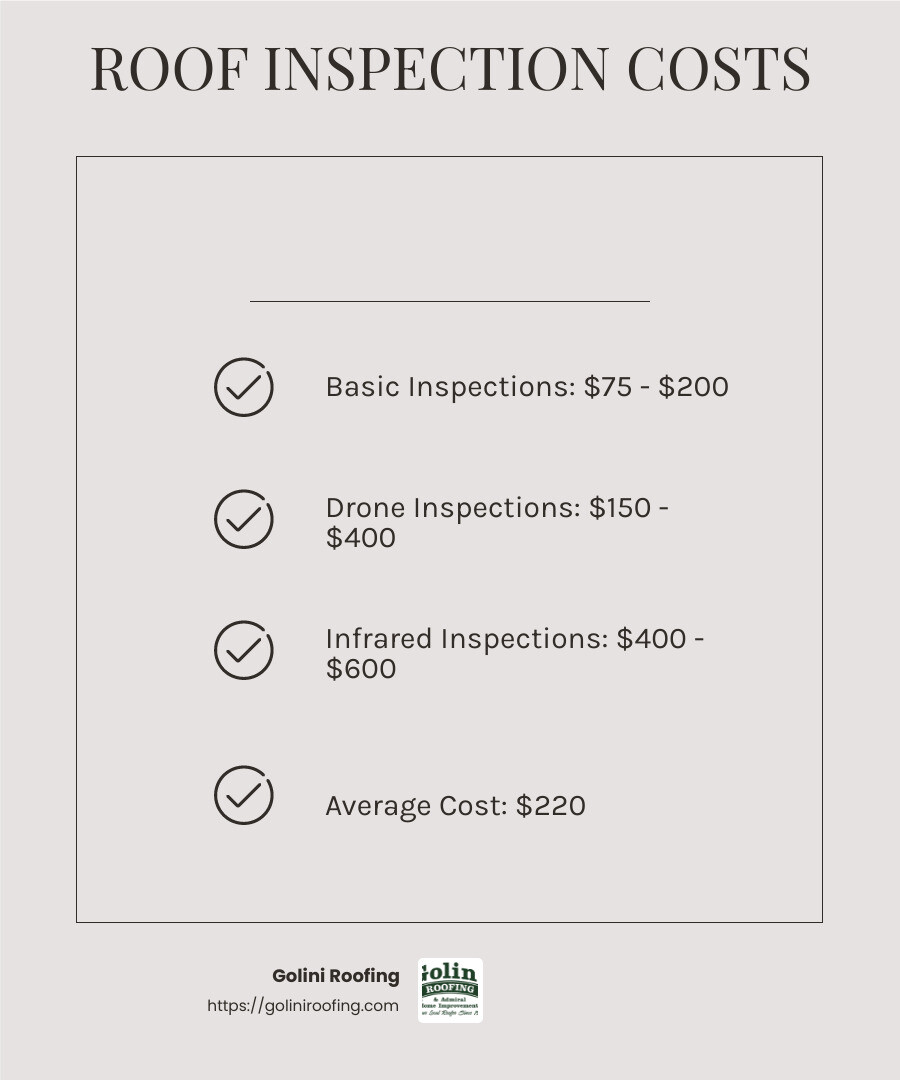
The cost of a roof inspection can vary widely. On average, you might pay around $220. However, the price can range from as low as $75 to as high as $600.
- Basic inspections: Typically cost between $75 and $200. These involve a visual check of the roof and are often the least expensive option.
- Drone inspections: Cost more, usually between $150 to $400. They offer a bird’s eye view of your roof and can spot issues not visible from the ground.
- Infrared inspections: These are the priciest, ranging from $400 to $600. They use advanced technology to detect hidden problems like moisture buildup.
Factors Affecting Cost
Several factors can influence the cost of your roof inspection:
- Roof size and complexity: Larger and more complex roofs take more time to inspect and may require special equipment.
- Inspection type: As mentioned, the method of inspection (basic, drone, infrared) impacts the cost.
- Location: Prices can vary based on your geographic location and the local cost of living.
- Time of year: Inspections during peak seasons or harsh weather conditions might cost more due to increased demand or difficulty.
Free Inspections
In some cases, you might qualify for a free roof inspection. Many roofing companies offer complimentary inspections if they see a potential for future work, like a roof replacement. For instance, some companies provide free inspections for roofs over 10 years old or those with suspected storm damage.
It’s also worth noting that some insurance companies might require an inspection before they provide coverage. In such cases, they might cover the cost of the inspection.
Understanding the costs and factors involved in a roof inspection can help you budget and plan effectively. In the next section, we’ll look at what you can expect during a roof inspection, from preparation to the final report.
What to Expect During a Roof Inspection
When it’s time for a roof inspection, knowing what to expect can help you feel prepared and confident. Here’s a step-by-step guide on the process.
Homeowner Preparation
Before the inspector arrives, there are a few things you can do to get ready:
- Conduct a Visual Check: Look for obvious signs of damage like missing shingles or debris on the roof.
- Clear the Area: Remove any obstacles around the house that might hinder the inspector’s access to the roof.
- Gather Documents: Have any relevant documents ready, such as past repair work or insurance policies, to discuss with the inspector.
Structural Inspection
The first part of a professional inspection involves checking the overall structure of your roof. The inspector will:
- Assess for Sagging: Look for signs of unevenness or sagging in the roof.
- Check Chimney and Vents: Examine the condition of chimneys, vents, soffits, and fascia for any structural issues.
- Inspect Gutters: Ensure gutters are clean and functioning properly, as clogged gutters can lead to water damage.
Material Inspection
Next, the inspector will look closely at the roofing materials:
- Shingle Condition: Check for missing or damaged shingles. In areas like Nashville, shingles might lose granules, exposing the material underneath.
- Seal Integrity: Inspect seals and rubber boots for gaps or deterioration that could allow water ingress.
- Moss and Stains: Identify any moss growth or staining that might indicate moisture issues.
Workmanship Inspection
Quality of installation is crucial for the roof’s longevity. The inspector will:
- Evaluate Installation: Look for signs of poor installation, like incorrect nailing patterns or misaligned shingles.
- Check for Code Compliance: Ensure that any flashing or other components meet local building codes.
Interior Inspection
Finally, the inspector will examine the interior of your home for any signs of roof-related issues:
- Ceiling and Walls: Look for water stains, mold, or rot on ceilings and walls that could indicate leaks.
- Attic Inspection: If accessible, the attic will be checked for signs of water damage or poor ventilation.
Understanding these steps can help you know what to expect during a roof inspection. With this knowledge, you can ensure your roof remains in top condition for years to come. Next, we’ll explore the critical elements every roofing contractor should look for during an inspection.
6 Things Every Roofing Contractor Should Look For
During a roof inspection, there are six critical elements that every roofing contractor must examine to ensure the health and longevity of your roof. Here’s a closer look at each:
1. Attic Ventilation
Proper attic ventilation is crucial for a healthy roof. Without it, heat and moisture can build up, leading to problems like mold growth and shingle damage. The contractor will check for adequate airflow and ensure vents are clear and functioning. Good ventilation can extend the life of your roof and even help with energy efficiency in your home.
2. Roof Layers
For asphalt shingle roofs, the number of layers is important. Some roofs have multiple layers of shingles, which can add weight and affect the roof’s structural integrity. The contractor will check how many layers are present. If there are more than one, it might be time for a complete tear-off during a replacement to ensure a fresh start.
3. Roof Decking
The roof decking, or sheathing, is the foundation of your roof. It’s important that it’s solid and free from rot or damage. The inspector will walk the roof to feel for spongy areas and check for nails that might be loose. Any compromised decking needs replacement, as it supports everything above it.
4. Roofing Material Lifespan
Every roofing material has a lifespan. For example, asphalt shingles might last 20 to 30 years, whereas metal roofs can last much longer. During the inspection, the contractor will assess the condition of the materials and estimate how much life is left. They’ll look for issues like granule loss, cracking, or blistering in shingles that signal the end of their useful life.
5. Roof Penetrations
Anything that sticks out of your roof, like chimneys, vents, or skylights, is a penetration point that can lead to leaks. The contractor will inspect these areas, checking seals and flashing for any signs of wear or damage. Ensuring these penetrations are properly sealed can prevent water from entering your home.
6. Roof Flashing
Flashing is the metal material placed in areas prone to leaks, such as where the roof meets a wall or around chimneys. The contractor will check the condition of the flashing, looking for rust or damage. If the flashing is compromised, it needs to be repaired or replaced to protect against water intrusion.
By focusing on these six key areas, a roofing contractor can provide a thorough assessment of your roof’s condition. This ensures that any potential issues are addressed before they become major problems, keeping your home safe and dry. Next, we’ll discuss the signs that indicate you need a roof inspection.
Signs You Need a Roof Inspection
Knowing when to schedule a roof inspection can save you from costly repairs and extend the life of your roof. Here are some key signs that it’s time to call in a professional:
Age of the Roof
Roofs have a lifespan that varies based on the material. Asphalt shingles, for example, typically last 20 to 30 years. If your roof is approaching or has surpassed this age, it’s wise to get it checked, even if there are no visible issues. As roofs age, they become more susceptible to damage and leaks.
Visible Damage
Visible signs of damage are a clear indicator that you need an inspection. Look for missing or curling shingles, granules in gutters, or moss and algae growth. These issues can lead to leaks and structural damage if not addressed promptly. A professional can assess the extent of the damage and recommend necessary repairs.
After Extreme Weather
Severe weather events like thunderstorms, hailstorms, or high winds can wreak havoc on your roof. Even if the damage isn’t immediately visible, have an inspection afterward. Hidden issues, such as lifted shingles or damaged flashing, can lead to leaks and further damage if left unchecked.
Buying or Selling a Home
When buying or selling a home, a roof inspection is often required. For buyers, it ensures that the roof is in good condition and won’t require immediate repairs. For sellers, it can provide peace of mind to potential buyers and help avoid last-minute negotiations or price reductions.
Insurance Requirements
Some homeowners’ insurance policies require regular roof inspections. This is especially true if you live in an area prone to severe weather. Regular inspections can also help when filing claims, as they provide documentation of the roof’s condition before any damage occurs.
By paying attention to these signs, you can ensure your roof remains in good condition and avoid unexpected surprises. Next, we’ll explore how to hire a roof inspector to ensure you get the best value and service.
How to Hire a Roof Inspector
Hiring a qualified roof inspector is crucial to ensuring your roof remains in tip-top shape. Here’s how to find the right professional for the job.
Qualifications
Start by checking the inspector’s qualifications. Look for certifications from reputable organizations like the International Association of Certified Home Inspectors (interNACHI). These certifications ensure that the inspector has received proper training and adheres to industry standards.
Make sure the inspector is also licensed and insured in your state. This protects you from any liabilities in case of accidents during the inspection.
Questions to Ask
Before hiring, ask potential inspectors a few key questions:
- How much experience do you have? Experienced inspectors are more likely to spot issues that others might miss.
- Do you specialize in certain types of roofs? If you have a unique roof type, ensure the inspector has the expertise to handle it.
- Can you provide references? Speaking to past clients can give you insight into the inspector’s reliability and quality of service.
- Will you provide a written report? A detailed report helps you understand the condition of your roof and any recommended repairs.
Red Flags
Be cautious of certain red flags that might indicate an inspector is not trustworthy:
- Lack of certification or insurance: This is a major red flag. Always verify these credentials.
- Pushy sales tactics: An inspector should provide an unbiased assessment, not try to upsell unnecessary services.
- No online presence or reviews: In today’s digital age, a lack of online reviews or a website could indicate a lack of transparency.
By focusing on these factors, you can confidently hire a qualified roof inspector who will provide valuable insights into the condition of your roof.
Next, we’ll address some frequently asked questions about roof inspections to further clarify the process.
Frequently Asked Questions about Roof Inspections
What is the overall goal of the roof inspection?
The main goal of a roof inspection is to assess the condition of your roof and identify any issues that might need attention. This includes checking for damage, wear and tear, and potential problems that could lead to leaks or other structural issues. A thorough inspection helps ensure your roof is in good shape, protecting your home from the elements and potentially saving you money on costly repairs down the line.
How many years does a roof last?
The lifespan of a roof can vary greatly depending on the materials used and the quality of installation. On average, asphalt shingle roofs last about 20 to 30 years, while metal roofs can last 40 to 70 years. Regular maintenance and inspections play a crucial role in extending the life of any roof. By catching small problems early, you can avoid bigger issues that could shorten your roof’s lifespan.
What does a roof inspector do in California?
In California, a roof inspector performs a detailed evaluation of the roof’s condition, similar to inspections elsewhere. However, they may also pay special attention to specific regional concerns such as earthquake resilience and wildfire risk. The inspector checks for proper installation, signs of damage, and compliance with local building codes. They also inspect components like flashing, gutters, and ventilation systems to ensure everything is functioning correctly. After the inspection, they provide a report detailing their findings and any recommended repairs or maintenance.
By understanding the importance and process of roof inspections, you can better maintain your roof and protect your home. Up next, we’ll wrap up our guide with a summary and information on how Golini Roofing can assist with your roofing needs.
Conclusion
In summary, roof inspections are essential for maintaining the health and longevity of your roof. Regular inspections help catch small issues before they become costly problems, ensuring your home remains protected from the elements. By understanding what a roof inspection entails and knowing when to schedule one, you can make informed decisions that safeguard your investment.
At Golini Roofing, we pride ourselves on delivering top-notch roofing services. With over 35 years of experience in the industry, our team is dedicated to providing meticulous care and exceptional craftsmanship. We specialize in both residential and commercial roofing, ensuring every shingle is hand-nailed for durability and quality. Our service areas include Burlington, Lynnfield, North Reading, Reading, Stoneham, Wakefield, Wilmington, Winchester, and Woburn, MA.
If you’re ready to ensure your roof is in peak condition, we’re here to help. Contact Golini Roofing for a free consultation and let us demonstrate why we are the trusted choice for roofing services in Massachusetts. Visit our roofing services page for more information. Our team looks forward to working with you and ensuring your roof stands the test of time.
Choose Golini Roofing—where quality meets reliability.
