Roof Inspections: Master the 5 Essential Steps Today
Roof Inspections are a critical component of home maintenance that can extend the lifespan of your roof and ensure the integrity of your home. Regular evaluations help spot minor issues before they escalate into costly repairs, thus safeguarding your investment.
Key Benefits of Roof Inspections:
– Extend your roof’s lifespan
– Prevent expensive repairs
– Improve home value and curb appeal
Homeowners residing in areas like Burlington, Reading, and Wakefield understand the importance of maintaining a durable roof against harsh weather conditions. Keeping your roof in top condition not only provides protection but also contributes to the energy efficiency of your home.
I’m Jack Golini, owner of Golini Roofing. With over 35 years in the roofing industry, I have been dedicated to ensuring homeowners have reliable roofing solutions. Whether you’re concerned about unseen roof damage or improving your home’s insulation, my team and I bring expertise in Roof Inspections to each project, ensuring quality and peace of mind.
Roof Inspections terms at a glance:
– certified roof inspector
– hail damage roof inspection
– roofing certification
Step 1: Understanding Roof Inspections
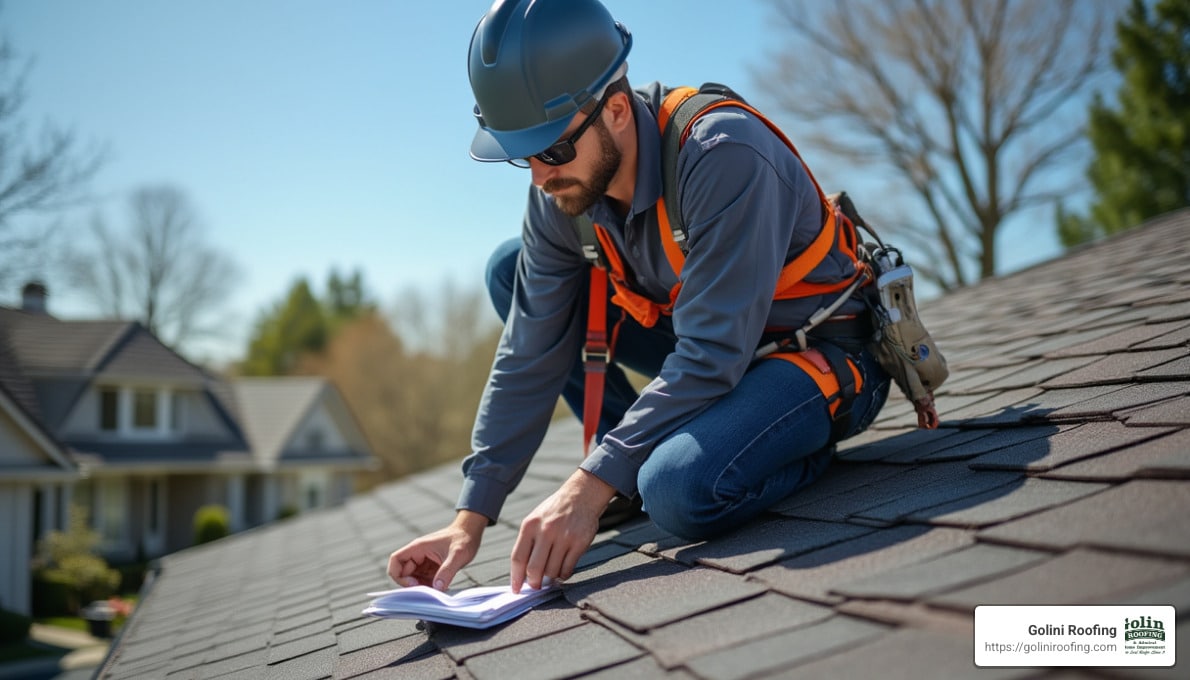
A roof inspection is a detailed examination of your roof’s condition, conducted by a professional to ensure its health and longevity. Roof Inspections are essential for identifying potential problems early, which can save you from costly repairs down the line.
What Does a Roof Inspection Involve?
A comprehensive roof inspection covers several key components:
- Interior Inspection: This involves checking your attic, ceilings, and interior walls for signs of water damage, mold, or pests. These issues often indicate leaks or structural weaknesses in your roof.
- Material Inspection: The inspector examines the roof’s outer layer, looking for damaged or missing shingles, tiles, or metal panels. They also check for moss, staining, and other signs of wear.
- Structural Inspection: This step assesses the overall integrity of the roof’s structure. Inspectors look for sagging, uneven areas, and damage to components like the soffit, fascia, and attic ventilation. They also check the condition of chimneys, skylights, and gutters.
Why Are Roof Inspections Important?
Regular Roof Inspections serve multiple purposes:
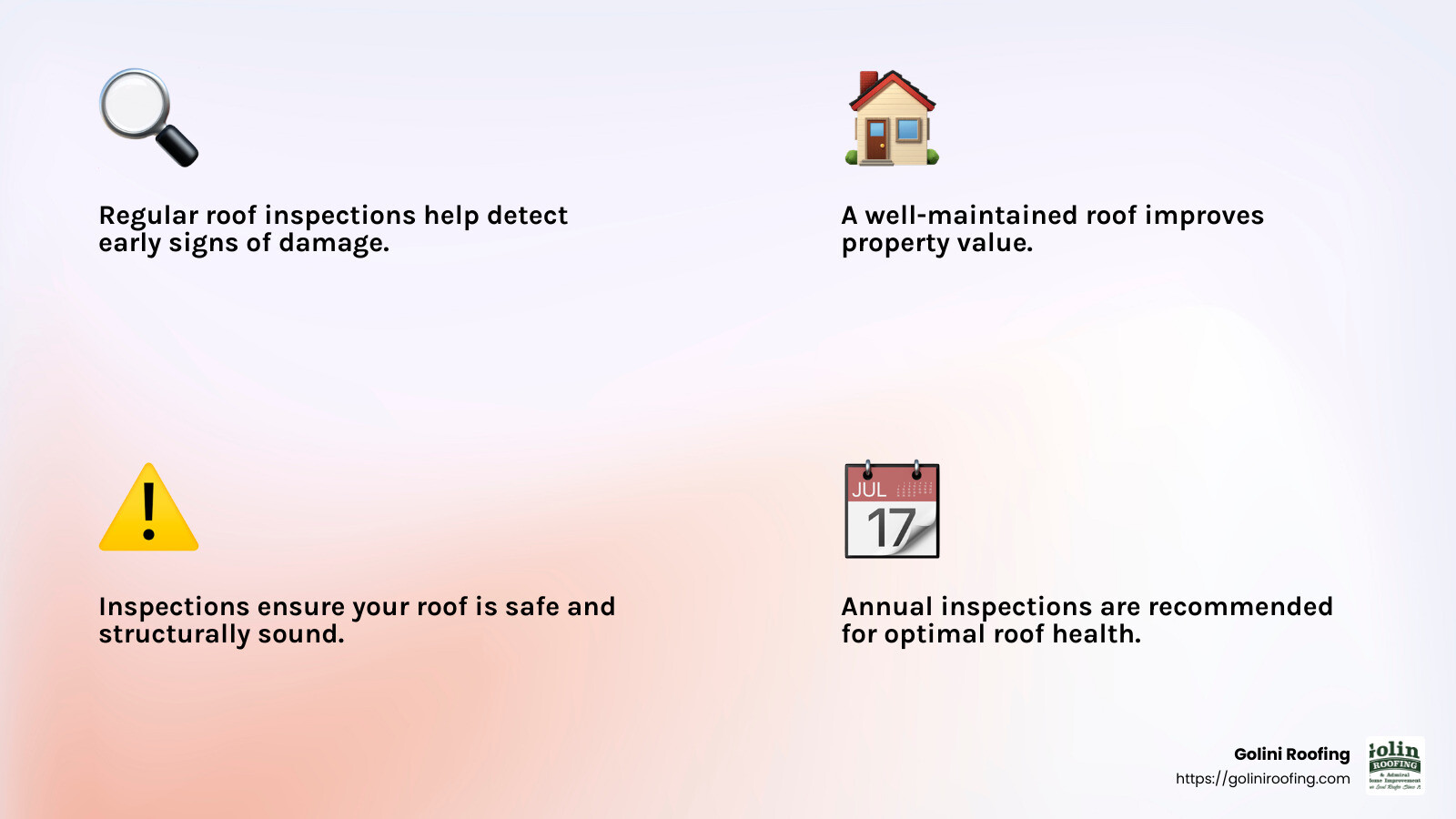
- Early Detection: Spotting issues early can prevent minor problems from becoming major expenses. For instance, a small leak can lead to significant water damage if left unchecked.
- Safety Assurance: Ensuring your roof is structurally sound protects your family and property from potential hazards like collapses or severe water damage.
- Property Value: A well-maintained roof improves your home’s curb appeal and can increase its market value.
In areas like Winchester and Stoneham, where weather conditions can be unpredictable, understanding the importance of regular roof inspections is key. By keeping your roof in prime condition, you not only protect your home but also ensure its efficiency and longevity.
Next, we’ll dig into how to prepare for a roof inspection, ensuring it’s both safe and effective.
Step 2: Preparing for a Roof Inspection
Preparing for a roof inspection is crucial to ensure the process goes smoothly and safely. Here’s how you can get ready:
Inspection Checklist
Before the inspector arrives, it’s helpful to have a checklist ready. This ensures that no aspect of the roof is overlooked. Here are key items to include:
- Clear Access Points: Ensure that the inspector can easily access all areas of your roof. This may involve clearing pathways or moving vehicles.
- Remove Debris: Clean off any leaves, branches, or other debris from the roof that might hinder the inspection.
- Check for Visible Damage: Note any obvious signs of damage, like missing shingles or sagging areas, and share these with the inspector.
- Prepare Interior Spaces: Make sure attics and other interior spaces are accessible for the interior inspection.
Roof Accessibility
Accessibility is a critical factor in a successful roof inspection. Here’s how you can help:
- Ladder Placement: Ensure there is a safe and stable place for the inspector to place their ladder. This could be a flat, non-slippery surface near the house.
- Roof Pitch: Be aware that steeper roofs may require additional safety equipment, affecting inspection time and cost.
- Safety Railings: If your roof is particularly high or steep, consider installing temporary safety railings or harness points.
Safety Precautions
Safety should always be a top priority during a roof inspection. Here are some precautions to consider:
- Weather Conditions: Schedule the inspection for a day with good weather. Avoid windy, rainy, or icy conditions that could make the roof slippery.
- Protective Gear: Ensure the inspector has appropriate safety gear, such as harnesses or helmets, especially for high or steep roofs.
- Drone Inspections: For hard-to-reach areas, consider using a drone. This can provide detailed images without the risk of climbing.
- Clear the Area: Keep pets and children away from the inspection area to prevent accidents.
By following these preparation steps, you can ensure a thorough and safe roof inspection. This preparation helps inspectors do their job effectively and provides you with the most accurate assessment of your roof’s condition.
Next, we’ll explore the actual inspection process, diving into the critical components that inspectors evaluate.
Step 3: Conducting the Roof Inspection
When it’s time to conduct the roof inspection, understanding the various components of the roof is crucial. Here are the key areas inspectors will focus on:
Roof Layers
A roof is made up of multiple layers, each serving a vital role in protection and insulation. Inspectors will ensure that these layers are intact and performing well. This includes checking the underlayment, a waterproof barrier that protects the roof deck from moisture.
Drip Edge
The drip edge is a metal flashing installed at the edges of the roof. Its job is to guide water away from the fascia and prevent it from seeping into the roof deck. Inspectors will check for any rust or damage that might impair its function.
Roof Decking
The roof decking is the foundation of the roof, providing structural support. Inspectors will look for signs of rot, warping, or other damage that could compromise the roof’s integrity.
Roofing Material
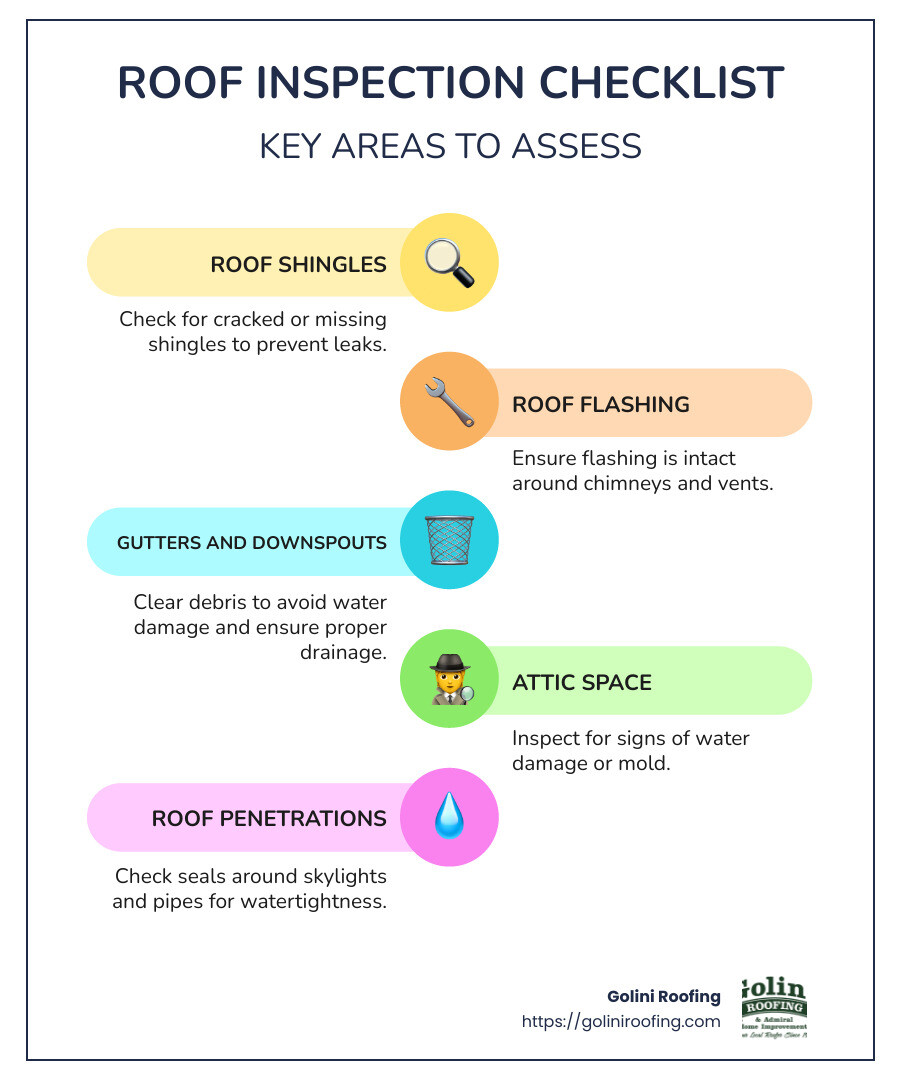
Inspectors will examine the condition of the roofing material, whether it’s shingles, metal, or another type. They’ll look for signs of wear, such as missing or damaged shingles, which can lead to leaks and other issues.
Roof Penetrations
Roof penetrations include chimneys, vents, and skylights. These areas are prone to leaks if not properly sealed. Inspectors will check for cracks, gaps, or deteriorated seals that could allow water to enter.
Roof Flashing
Flashing is used around penetrations and joints to prevent water infiltration. Inspectors will ensure that the flashing is properly installed and not rusted or damaged, which could lead to leaks.
Gutters and Downspouts
Gutters and downspouts play a critical role in directing water away from the roof and foundation. Inspectors will check for clogs, leaks, or damage that could hinder their function and lead to water damage.
Attic Space
The attic space is inspected from the inside to check for signs of leaks or moisture accumulation. Inspectors will look for water stains, mold, or insulation issues that might indicate a roof problem.
By thoroughly examining these components, inspectors can provide a comprehensive assessment of the roof’s condition. This detailed inspection helps identify potential issues early, preventing costly repairs down the line.
Next, we’ll discuss how to analyze the results of your roof inspection and what steps to take based on the findings.
Step 4: Analyzing the Inspection Results
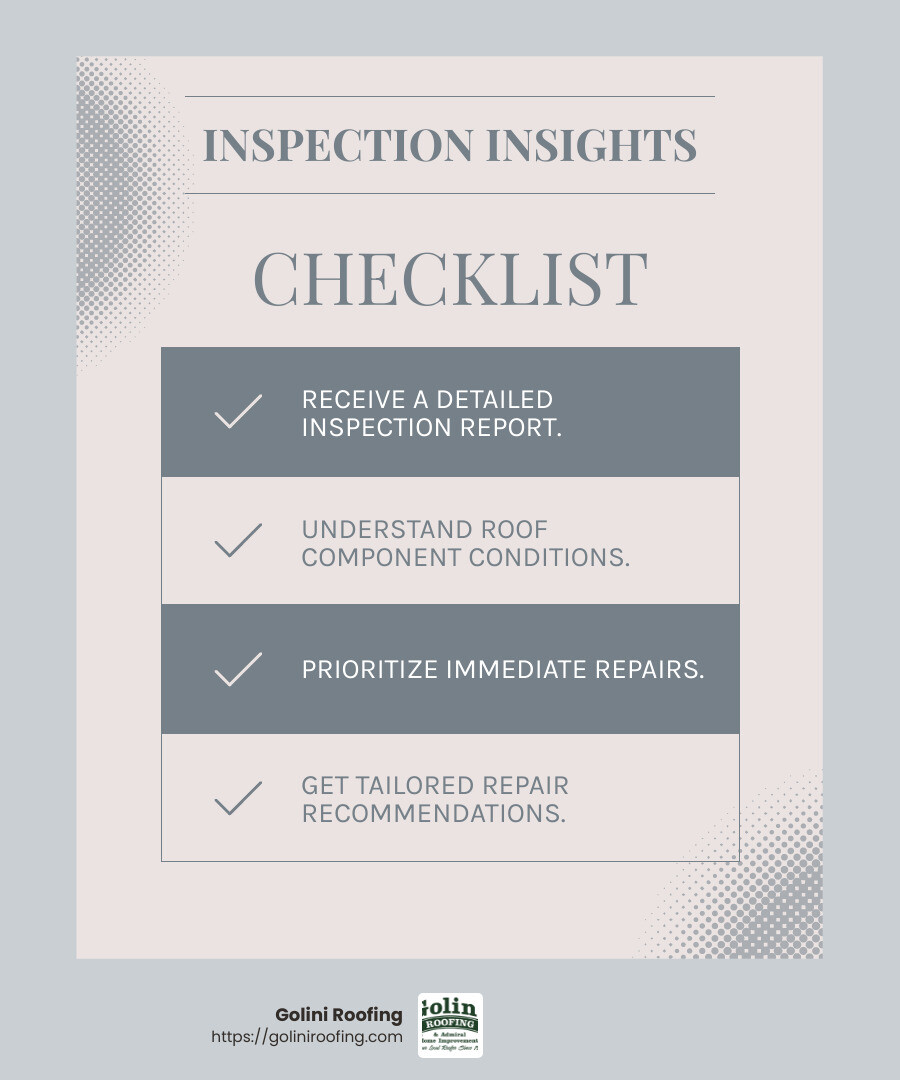
Once your roof inspection is complete, you’ll receive a detailed inspection report. This document is your key to understanding the current state of your roof and planning any necessary repairs or maintenance.
Inspection Report
The inspection report will include a summary of the findings, often accompanied by photos that highlight specific issues. Inspectors typically note the condition of each roof component, such as shingles, flashing, and gutters. This visual evidence helps you see exactly what the inspector observed and understand the severity of any problems.
Roof Condition Assessment
The report will offer a comprehensive assessment of your roof’s condition. This includes identifying any areas that require immediate attention, such as leaks or structural damage, and noting areas that may become problematic if not addressed soon. The assessment helps prioritize repairs and maintenance tasks, ensuring the most critical issues are dealt with first.
Repair Recommendations
Based on the inspection findings, the inspector will provide repair recommendations. These suggestions are custom to address the specific issues identified during the inspection. For instance, if shingles are missing or damaged, the inspector might recommend replacing them to prevent leaks. If the gutters are clogged, a cleaning might be suggested to ensure proper water drainage.
It’s crucial to act on these recommendations promptly to maintain the integrity of your roof. Delaying repairs can lead to more extensive damage and higher costs in the future.
Taking the time to thoroughly analyze the inspection results enables you to make informed decisions about your roof’s maintenance and repair needs. By following the inspector’s advice, you can extend the life of your roof and protect your home from potential water damage.
In the next section, we’ll explore the importance of scheduling regular roof inspections to keep your roof in top condition.
Step 5: Scheduling Regular Roof Inspections
Regular roof inspections are key to maintaining the health and longevity of your roof. Here’s how to keep your roof in top shape:
Annual Inspections
Scheduling a professional roof inspection once a year is a proactive way to catch potential problems early. This routine check-up helps ensure your roof remains in good condition and can prevent minor issues from turning into costly repairs. Think of it as a yearly health check for your home.
Weather-Related Inspections
After severe weather events, such as heavy storms or hurricanes, it’s crucial to inspect your roof for damage. High winds and hail can cause shingles to crack or go missing, while heavy rain can lead to leaks. A post-storm inspection helps identify and address any damage early, which is essential for preventing further deterioration.
Older Roofs
If your roof is nearing the end of its typical lifespan (usually 20-25 years for asphalt shingles), more frequent inspections are wise. Older roofs are more susceptible to wear and tear, making them more vulnerable to leaks and structural issues. Regular checks can help you plan for a roof replacement before problems escalate.
Insurance Claims
In case of significant roof damage, having a recent inspection report can be beneficial when filing an insurance claim. Insurance companies often require proof of the roof’s condition before and after the damage. Regular inspections provide this documentation and can support your claim, making the process smoother and more efficient.
By scheduling regular roof inspections, you can safeguard your home against potential damage and costly repairs. Up next, we’ll address common questions about the roof inspection process to further explain this essential home maintenance task.
Frequently Asked Questions about Roof Inspections
How much does a roof inspection cost?
The cost of a roof inspection can vary significantly based on several factors. On average, a standard physical inspection costs around $331. However, if your roof is difficult to access or requires advanced technology, such as drone or infrared inspections, the cost can rise to between $400 and $600.
Factors affecting the cost include:
- Roof Size and Complexity: Larger or more complex roofs may require more time and effort to inspect.
- Inspection Type: Infrared inspections, which detect hidden damage, are more expensive than basic visual inspections.
- Location and Accessibility: Hard-to-reach roofs might incur additional costs due to the need for special equipment or safety measures.
How often should you have your roof inspected?
Regular inspections are crucial to maintaining your roof’s health. Here’s a simple guide:
- Annual Inspections: Aim for at least one professional inspection per year. This helps catch potential issues early and ensures your roof is in good shape.
- Seasonal Checks: Consider inspections after harsh weather seasons, like winter or hurricane season, to spot any weather-related damage.
- Older Roofs: If your roof is approaching or past its expected lifespan, more frequent checks are advisable to monitor for signs of aging and wear.
What’s included in a roof inspection?
A comprehensive roof inspection covers several key components to assess the overall condition and functionality of your roof:
- Exterior Checks: This includes examining the roofing material, checking for missing or damaged shingles, and inspecting roof penetrations like chimneys and vents for proper sealing.
- Roof Decking: Inspectors will test the decking’s integrity to ensure it’s solid and free from rot or damage.
- Drip Edge and Flashing: Ensuring these components are correctly installed and in good condition is vital for preventing water damage.
- Gutters and Downspouts: Inspectors check for blockages and damage that could impede water flow.
- Interior Checks: Involves looking for signs of leaks or water damage in the attic space, which can indicate issues with the roof’s exterior.
By understanding these aspects of the roof inspection process, you can make informed decisions about maintaining your roof and protecting your home.
Conclusion
In conclusion, roof inspections are an essential part of maintaining your home’s safety and longevity. Regular inspections help identify potential issues before they escalate, saving you time and money in the long run. They also ensure that your roof remains in top condition, protecting your home from the elements and preserving its value.
At Golini Roofing, our expertise in roof inspections and our commitment to quality craftsmanship set us apart. With over 35 years of experience serving Massachusetts communities like Wakefield, Burlington, and Winchester, we take pride in offering professional inspection services custom to your needs. Our meticulous hand-nailing technique ensures that every shingle is securely in place, providing a durable and reliable roof for your home or business.
Choosing Golini Roofing means you are opting for a team that prioritizes your satisfaction and the integrity of your property. Our comprehensive inspection process covers all aspects of your roof, from the shingles and flashing to gutters and attic space, ensuring nothing is overlooked.
Don’t wait until a minor issue becomes a major problem. Schedule your roof inspection with Golini Roofing today and experience the peace of mind that comes with knowing your roof is in expert hands. Contact us for a free consultation and let us help you maintain a roof that stands the test of time.