
Roof Replacement Cost: Top 10 Factors to Consider in 2024
Why Roof Replacement Costs Matter
When it comes to roof replacement cost, many homeowners wonder what factors influence the final price tag and whether it’s a worthy investment. Understanding the costs involved is crucial for planning and budgeting, making sure you get the most value for your money.
Here’s a quick breakdown of what you can expect:
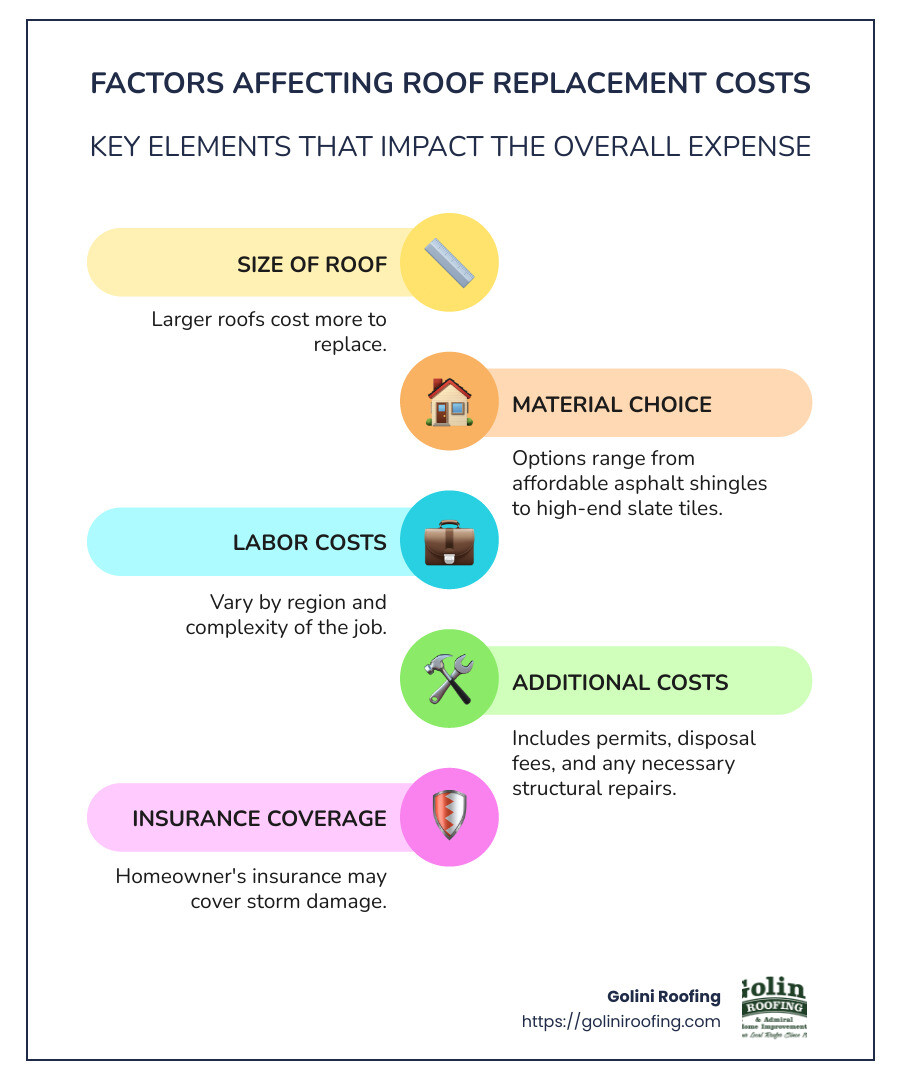
- Size of Roof: Larger roofs cost more to replace.
- Material Choice: Options range from affordable asphalt shingles to high-end slate tiles.
- Labor Costs: Vary by region and complexity of the job.
- Additional Costs: Includes permits, disposal fees, and any necessary structural repairs.
Replacing a roof is more than just a financial commitment; it’s a way to protect one of your biggest investments—your home. A new roof improves curb appeal, increases property value, and most importantly, provides shelter from the elements.
At Golini Roofing, we understand the complexities and costs involved in roof replacement. With over 35 years of experience, we’ve helped numerous homeowners steer these expenses effectively. As the owner, I’m committed to ensuring you get a durable, well-installed roof without breaking the bank.
Let’s transition into understanding the factors that dictate these costs in detail.
Roof replacement cost terms to remember:
– average cost of new roof
– how much is a new roof
– roofing estimate
Factors Affecting Roof Replacement Cost
When it comes to roof replacement cost, several factors can significantly influence the final price. Understanding these will help you budget effectively and avoid surprises.
Size
The size of your roof is a primary factor. Larger roofs require more materials and labor, which increases costs. Roof size is measured in square footage. For example, a 1,000 sq. ft. roof might cost around $7,000, while a 3,000 sq. ft. roof could go up to $21,000.
Roof Pitch
The pitch, or steepness, of your roof also affects costs. Steeper roofs (above a 6:12 ratio) require special equipment and more labor. This means higher costs for both materials and labor.
Materials
Different materials come with different price tags. Here’s a quick comparison for a 2,000 sq. ft. home:
- Asphalt Shingles: $8,000 – $17,000
- Galvanized Steel: $14,000 – $30,000
- Cedar Shakes: $14,000 – $32,000
- Concrete Tile: $15,000 – $40,000
- Aluminum: $16,000 – $34,000
- Slate Tiles: $19,000 – $52,000
- Clay: $22,000 – $50,000
- Copper: $42,000 – $80,000
Labor
Labor costs can make up to 60% of the total cost. Skilled labor is essential for a quality installation. Labor rates also vary by region. For instance, in California, labor can range from $40 to $60 per hour, while in Texas, it might be cheaper.
Location
Your location affects material prices, labor rates, and even permit costs. For example, in high-cost living areas, you can expect to pay more for both labor and materials.
Permits and Inspections
Most municipalities require permits for roof replacements. Permit costs range from $100 to $1,400. Inspections ensure the work complies with local codes and can cost around $240.
Removing Existing Roof
Removing the old roof incurs additional costs. Tear-off costs range from $1 to $5 per square foot. Disposal fees can add another $50 to $500.
Underlying Structural Repairs
Sometimes, replacing a roof reveals underlying issues like rotting wood, leaks, or pest problems. Repairing these can add to the overall cost. For example:
- Underlayment Replacement: $2 to $3 per square foot
- Repair Roof Trusses: $500 to $5,000
Roof Warranty
A good warranty can save you money in the long run. Contractor warranties range from $500 to $2,000. Manufacturer warranties can go up to $5,000.
Clean-Up and Disposal Fees
Clean-up costs can add another $50 to $500 to your bill. This includes hauling away old materials and debris.
Roof Insurance
Homeowner’s insurance might cover roof replacement if the damage is due to a storm or other covered events. Always check your policy for specifics.
Full vs. Partial Roof Replacement
Sometimes, only a portion of the roof needs replacing. This can save money on materials and labor. However, if the repair costs exceed 50% of a full replacement, it’s usually more cost-effective to replace the entire roof.
Understanding these factors helps you make informed decisions about your roof replacement cost. Next, let’s dive into the cost of different roofing materials.
Cost of Roof Replacement by Material
When it comes to replacing your roof, the type of material you choose plays a significant role in the overall cost. Each material has its own price range, benefits, and drawbacks. Below, we break down the most common roofing materials to help you make an informed decision.
Asphalt Shingle Roof
Cost Range: $8,000 – $17,000 for a 2,000 sq. ft. home
Asphalt shingles are the most popular roofing material in the U.S. They are affordable and easy to install.
Types of Asphalt Shingles:
– 3-Tab Shingles: Basic and inexpensive, but with a shorter lifespan (20-25 years).
– Architectural Shingles: More durable and aesthetically pleasing, lasting up to 30 years.
– Impact-Resistant Shingles: Designed to withstand hail and heavy winds, typically more expensive.
DIY Options: If you have experience with roofing, you might consider installing asphalt shingles yourself to save on labor costs. However, this is a labor-intensive job and mistakes can be costly.
Wood Shake Shingle Roof
Cost Range: $14,000 – $32,000 for a 2,000 sq. ft. home
Wood shake shingles offer a natural, rustic look but require more maintenance than other materials.
Natural Material: Usually made from cedar, redwood, or pine. They are eco-friendly but prone to mold and rot.
Maintenance: Wood shakes need regular treatment to prevent decay and insect infestation. Some regions have fire codes that prohibit wood roofing due to its flammability.
Fire Resistance: Some wood shakes are treated with fire retardants, which can add to the cost.
Metal Roofing
Cost Range: $14,000 – $50,000 for a 2,000 sq. ft. home
Metal roofs are known for their durability and energy efficiency.
Types of Metal:
– Galvanized Steel: Cost-effective and durable.
– Aluminum: Lightweight and resistant to rust.
– Copper: Premium option with a long lifespan but very expensive.
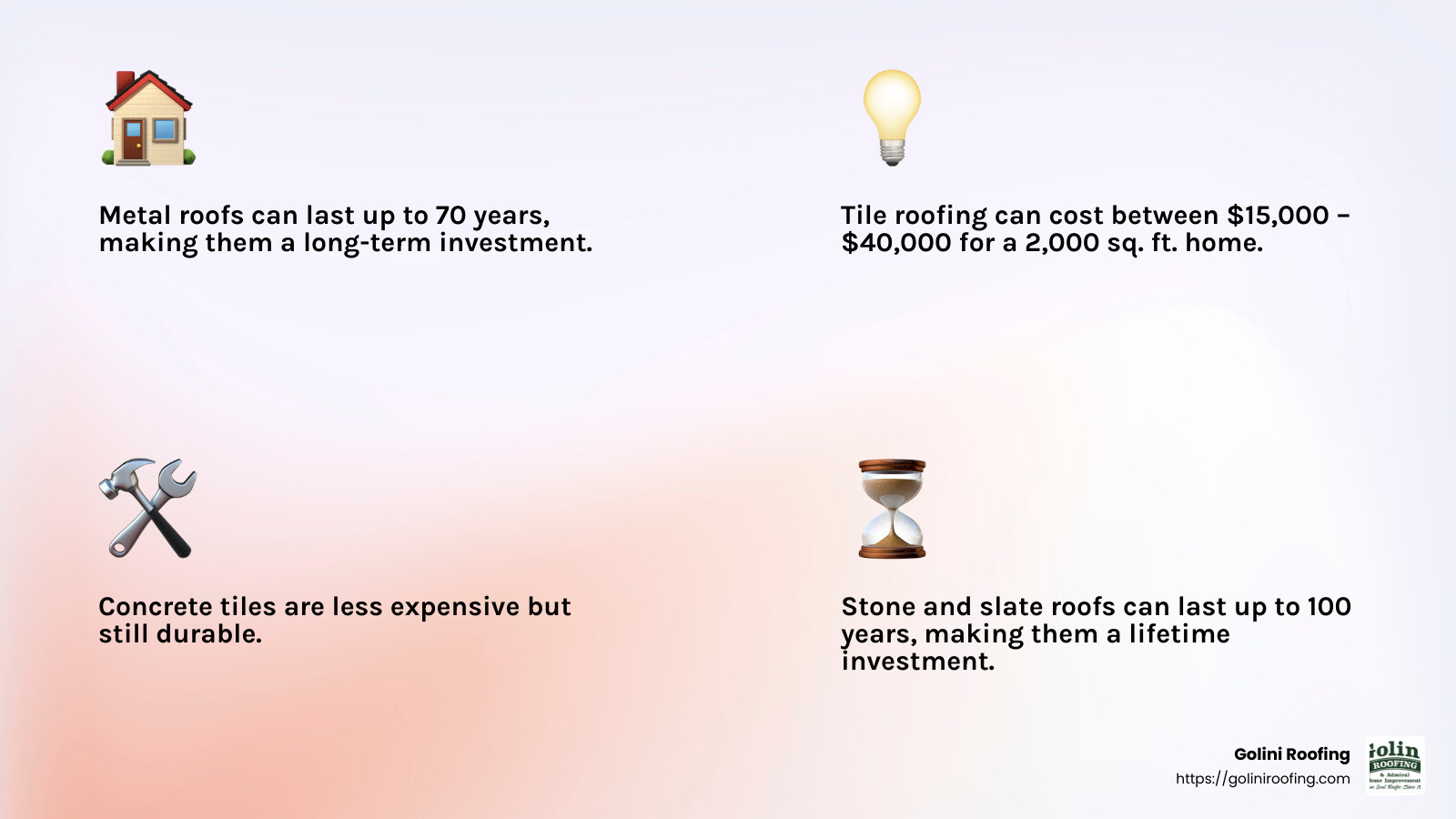
Durability: Metal roofs can last up to 70 years, making them a long-term investment.
Energy Efficiency: Reflects sunlight, reducing cooling costs in hot climates.
Tile Roofing
Cost Range: $15,000 – $40,000 for a 2,000 sq. ft. home
Tile roofs are long-lasting and aesthetically pleasing but heavy and expensive.
Types of Tiles:
– Concrete Tiles: Less expensive than clay but still durable.
– Clay Tiles: More traditional and often used in Mediterranean-style homes.
Longevity: Both concrete and clay tiles can last up to 50 years or more.
High-End Stone or Slate
Cost Range: $19,000 – $52,000 for a 2,000 sq. ft. home
Stone and slate roofs are the premium choice, known for their natural beauty and durability.
Natural Material: Slate is a natural stone that provides a unique look and is highly durable.
Durability: Can last up to 100 years, making it a lifetime investment.
Synthetic Options: There are synthetic slate options that mimic the look of natural slate but are lighter and less expensive.
Choosing the right material for your roof involves balancing cost, durability, and aesthetics. Each material has its own set of pros and cons, so consider your budget and long-term needs when making a decision.
Next, let’s explore the ongoing costs associated with maintaining your new roof.
Ongoing Roof Replacement Costs
Replacing a roof is just the beginning. To ensure it lasts, you need to consider ongoing maintenance, repairs, and cleaning. Let’s break down what you can expect.
Repairs
Broken Shingles: Over time, shingles can crack, curl, or fall off. Fixing these quickly prevents leaks and further damage. Repair costs can range from $150 to $7,000, depending on the extent of the damage.
Damaged Flashing: Flashing is crucial for preventing water from seeping into joints and edges. Damaged flashing can lead to leaks and structural issues. Replacing flashing typically costs between $9 and $11 per foot.
Hail Damage: Hail can cause significant damage to your roof, especially if you have asphalt shingles. Impact-resistant shingles can help, but if damage occurs, repairs can be costly.
Roof Leaks: Leaks are a common issue and can stem from various problems like broken shingles or damaged flashing. Repairing leaks promptly is essential to prevent water damage inside your home.
Sagging Roof: A sagging roof often indicates serious structural issues like rot or weakened supports. This requires immediate attention and can be a sign that a full roof replacement is necessary.
Maintenance and Cleaning
Gutter Cleaning: Keeping gutters clean prevents water buildup and potential leaks. Clogged gutters can cause water to back up under the roof, leading to damage. Regular gutter cleaning is a simple but essential task.
Roof Sealing: Sealing your roof can extend its life by protecting it from the elements. This is especially important for flat roofs or those in harsh climates.
Tree Trimming: Overhanging branches can damage your roof and lead to debris buildup. Regularly trimming trees near your roof helps prevent these issues.
Moss Removal: Moss and algae can deteriorate roofing materials over time. Removing them not only improves the appearance but also extends the life of your roof.
Roof Cleaning: Regular cleaning removes debris and prevents mold and moss growth. This is particularly important for roofs in shaded or damp areas.
Roof Inspections: Conducting regular roof inspections, at least twice a year, helps identify problems early. Inspections can catch issues like leaks, cracks, and wear and tear that might go unnoticed.
By staying on top of these maintenance tasks, you can prolong the life of your roof and avoid costly repairs. Regular upkeep is a small investment that pays off in the long run.
Next, let’s discuss the cost differences between replacing your roof yourself and hiring a professional.
DIY Roof Replacement vs. Hiring a Pro
Replacing a roof is a significant undertaking. You might think doing it yourself could save money, but there are many factors to consider. Let’s explore the pros and cons of DIY roof replacement versus hiring a professional.
Cost Savings
DIY Savings: By taking on the project yourself, you can save between $2 and $7 per square foot on labor costs. For a 1,300 sq. ft. roof, this could mean saving up to $9,100.
Hidden Expenses: However, DIY isn’t always cheaper. You’ll need to buy or rent tools, safety equipment, and materials. Plus, mistakes can lead to costly repairs later.
Hidden Expenses
Tools and Equipment: A proper roof replacement requires specialized tools. You’ll need a hammer, roofing nails, utility knife, roofing cement, and possibly a dumpster for old materials.
Material Costs: If you miscalculate your material needs, you might end up spending more. Professionals often get bulk discounts on materials, which can offset their labor costs.
Mistakes: Roofing errors can lead to water damage, mold, and structural issues. Fixing these mistakes can be more expensive than hiring a pro in the first place.
Safety Risks
Height and Slopes: Working on a roof is dangerous. Slips and falls from ladders or steep slopes can cause serious injuries.
Weather: Bad weather can make roofing even riskier. Professionals know how to handle these conditions safely.
Insurance Coverage
DIY Limitations: If you’re not a licensed contractor, your insurance might not cover DIY roof repairs. This means any damage resulting from your work could come out of your pocket.
Professional Coverage: Hiring a professional with general liability and workers’ compensation insurance protects you from liability in case of accidents.
Warranty
DIY Warranties: Most manufacturers won’t honor warranties on materials if they’re not installed by a certified contractor.
Professional Warranties: Professionals often provide warranties on their work, covering installation errors and offering peace of mind. These warranties can range from $500 to $2,000 for contractor warranties and up to $5,000 for manufacturer warranties.
Conclusion
While DIY roof replacement might seem like a good way to save money, the risks and potential hidden costs often outweigh the benefits. Hiring a professional ensures the job is done safely and correctly, with proper insurance and warranties to protect your investment.
Next, let’s explore the frequently asked questions about roof replacement costs.
Frequently Asked Questions about Roof Replacement Cost
How much does it cost to replace 1,000 square feet of roof?
Replacing a roof can be a significant investment. For a 1,000 square foot roof, you can expect to pay around $7,000 on average. This cost includes both materials and labor, with the price per square foot typically ranging from $4 to $40. The wide range is due to different factors like the type of material you choose and the complexity of your roof design.
For example, if you opt for asphalt shingles, which are more affordable, the cost will be on the lower end. However, if you choose a high-end material like slate, the cost can be much higher.
How do I calculate the cost of a new roof?
Calculating the roof replacement cost involves several key factors:
- Measure the Roof Size: First, determine the total square footage of your roof. If you don’t have the original blueprints, a professional can help with this.
- Choose Your Materials: The type of roofing material you select will significantly impact the cost. Asphalt shingles are around $7 per square foot, while metal roofing can go up to $40 per square foot.
- Labor Costs: Labor can account for up to 60% of the total cost. Contractors may charge between $40 and $60 per hour or provide a flat-rate estimate.
- Additional Costs: Don’t forget to factor in the cost of removing the old roof, any structural repairs, and permits. Removing existing roofing material can cost between $0.40 and $2.00 per square foot.
To get an accurate estimate, you can use this formula:
[
\text{Total Cost} = (\text{Roof Size in Square Feet} \times \text{Cost per Square Foot}) + \text{Additional Costs}
]
How much does it cost to replace a roof in different states?
The cost of replacing a roof can vary significantly based on where you live. Here are some factors that affect regional pricing:
- Local Labor Rates: In areas with higher living costs, like California, labor charges can be higher. In contrast, regions with lower costs of living, like Texas, might have cheaper labor rates.
- Material Prices: The price of materials can also vary by location due to shipping costs and local supply.
- Climate Considerations: In areas prone to heavy snowfall or hurricanes, additional features like ice barriers or stronger materials may be required, increasing the cost.
For example, in California, you might pay between $8,905 and $12,068 for a 2,000 square foot roof. In Texas, the same roof could cost between $7,000 and $10,000.
Understanding these variables can help you budget more accurately for your roof replacement project. For more detailed cost estimates custom to your location, it’s best to consult with a local roofing contractor.
Conclusion
Replacing your roof is a significant investment that requires careful consideration and planning. Understanding the various factors affecting roof replacement cost—from materials and labor to permits and structural repairs—can help you budget more effectively and make informed decisions.
Importance of Professional Roofing Services
While DIY roof replacement might seem like a cost-saving option, the risks often outweigh the benefits. Roofing errors can lead to costly repairs and even structural issues. Hiring a professional ensures the job is done right the first time, saving you money and stress in the long run.
A professional roofing contractor like Golini Roofing brings decades of experience and meticulous craftsmanship to the table. Our team specializes in both residential and commercial roofing services, ensuring your roof is durable, efficient, and aesthetically pleasing.
Why Choose Golini Roofing?
At Golini Roofing, we pride ourselves on our meticulous hand-nailing technique, which guarantees a high-quality, durable roof. With over 35 years of experience, we serve various areas in Massachusetts, emphasizing exceptional craftsmanship and customer satisfaction.
Our comprehensive services include:
- Roof tear-offs and replacements
- Skylight installations
- Chimney maintenance
- Ventilation solutions
- Roof flashing
- Carpentry
- Roof snow removal and ice shields
- Leak detection and repairs
- Gutter installation
Ready to take the next step? Experience the Golini Roofing difference today. Contact us for a free consultation and estimate. Let us show you why we are the best roofing company in the industry.
Contact us now to ensure your roof stands the test of time.
Choose Golini Roofing—the name synonymous with excellence, quality, and the best roofing solutions.
