Roof Square Footage Calculator: Top 5 Expert Tips
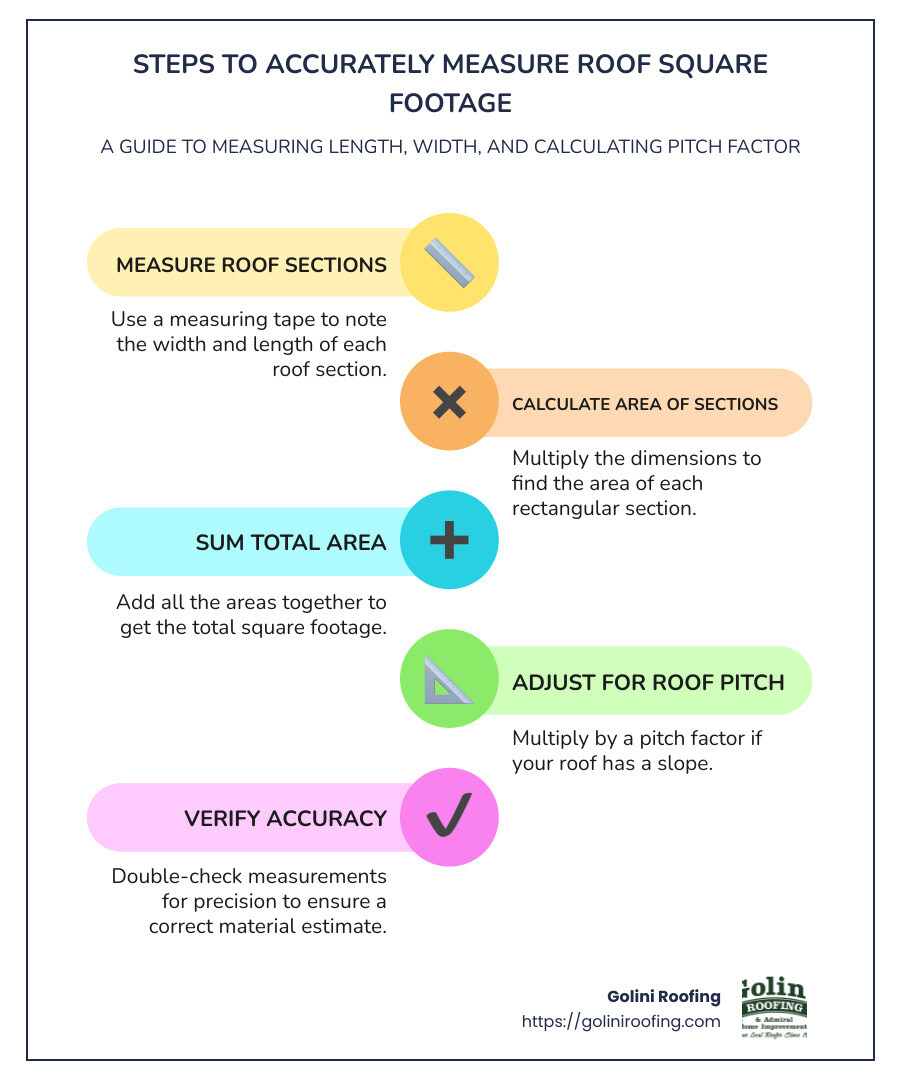
Roof square footage calculator tools play a pivotal role in simplifying the process of determining your roof’s size, ensuring accuracy and efficiency. Here’s a quick way to measure roof square footage:
- Measure the roof: Note the width and length of each section.
- Multiply dimensions: Calculate the area of each rectangular section.
- Sum the total: Add the areas together for the total square footage.
- Adjust for pitch: Multiply by a pitch factor if your roof has a slope.
Accurate roof measurement is crucial for proper roofing material calculations and cost estimates. Without precise measurements, you might overbuy or underbuy materials, leading to unnecessary expenses or project delays.
I’m Jack Golini, owner of Golini Roofing. With over 35 years in the roofing industry, I focus on providing accurate roof square footage calculations to ensure your investment in roofing solutions is spot on. Let’s explore understanding roof dimensions and why accuracy is key.
Easy roof square footage calculator glossary:
– calculating roof replacement cost
– house roofing cost estimator
– new shingles cost
Understanding Roof Square Footage
Calculating the square footage of a roof is more than just measuring its length and width. Several factors can influence the total square footage, including the roof’s dimensions, pitch, and complexity. Let’s break these down:
Roof Dimensions
The most straightforward aspect of calculating roof square footage is measuring the dimensions. You need to measure the length and width of each section of the roof. For simple, rectangular roofs, this might be all you need. However, most roofs have multiple sections with different shapes, requiring you to measure each one individually and then add them up for a total square footage.
Roof Pitch
Roof pitch refers to the steepness or slope of the roof. It’s a crucial factor because it affects the actual surface area that needs to be covered. A steeper roof will have a larger surface area than a flat one with the same base dimensions. To account for pitch, you multiply the basic area by a pitch factor, which adjusts the measurement to reflect the true size of the roof.
Here’s a simple pitch factor guide:
- Flat Roof (1/12 pitch): Multiply by 1.00
- Low Slope (4/12 pitch): Multiply by 1.06
- Moderate Slope (6/12 pitch): Multiply by 1.12
- Steep Slope (9/12 pitch): Multiply by 1.25
Roof Complexity
Complex roofs with multiple angles, dormers, and varying heights add another layer of complexity. Each additional feature requires separate measurements and calculations. For example, a roof with several dormers will have more sections to measure, and each will need its own pitch adjustment.
Key Takeaway: Accurate roof square footage calculations account for dimensions, pitch, and complexity. This ensures you buy the right amount of materials and avoid costly mistakes.
Understanding these elements helps you use a roof square footage calculator effectively, ensuring your roofing project stays on track and within budget. In the next section, we’ll explore how to use these calculators step-by-step.
How to Use a Roof Square Footage Calculator
Using a roof square footage calculator can simplify the process of measuring your roof’s total area. This tool helps ensure you purchase the right amount of materials and avoid unnecessary costs. Here’s a step-by-step guide on how to use it effectively:
Tools Needed
Before you start, gather these tools:
- Measuring Tape: Essential for taking accurate measurements of your roof’s dimensions.
- Ladder: Required for safely accessing the roof.
- Calculator: While not strictly necessary if using an online calculator, it helps double-check manual calculations.
- Pencil and Paper: Handy for jotting down measurements and calculations.
Step-by-Step Process
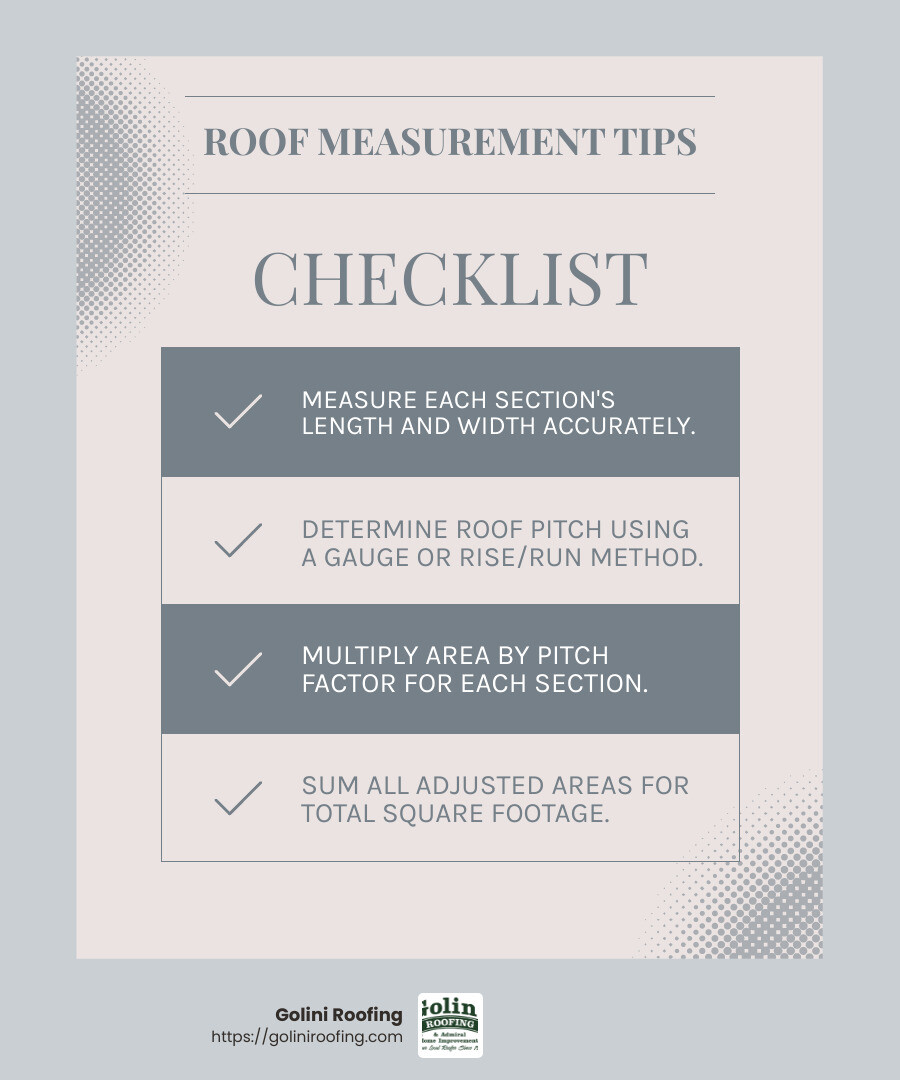
- Measure the Roof Sections:
- Start by measuring the length and width of each section of your roof. If your roof has multiple sections, measure each one separately.
- Record these measurements carefully, as accuracy is crucial.
- Determine the Roof Pitch:
- Identify the pitch of your roof using a pitch gauge or by measuring the rise over a 12-inch run.
- Refer to a pitch factor guide to find the correct multiplier for your roof’s slope.
- Calculate Each Section:
- For each section, multiply the length by the width to get the area.
- Adjust this area by multiplying with the pitch factor to account for the roof’s slope.
- Add Up All Sections:
- Sum the adjusted areas of all the sections to find the total roof square footage.
- Use the Roof Square Footage Calculator:
- Input your measurements and pitch factor into an online calculator for a quick verification.
- This tool will automatically adjust for pitch and complexity, providing an accurate total square footage.
Tips for Accurate Measurement
- Double-Check Measurements: Always verify your measurements to catch any errors before proceeding.
- Consider Overhangs: Include any roof overhangs in your measurements to ensure complete coverage.
- Safety First: Ensure you have the proper safety equipment when climbing onto your roof. If in doubt, consult professionals like Golini Roofing for assistance.
Using a roof square footage calculator streamlines the process and reduces the chance of mistakes. By following these steps, you can confidently calculate your roof’s square footage and move forward with your project.
Next, we’ll explore manual calculation methods for those who prefer a hands-on approach.
Manual Calculation Methods
If you prefer a hands-on approach to measuring your roof, manual calculation methods can be quite effective. This involves using basic tools like a measuring tape and some geometry skills. Let’s break it down.
Tools You’ll Need
- Measuring Tape: Essential for taking precise measurements of your roof’s dimensions.
- Ladder: Needed to safely access your roof and measure accurately.
- Notebook and Pen: Useful for jotting down measurements and calculations.
Geometry and Roof Pitch
1. Measure the Roof Sections:
- Length and Width: Start by measuring the length and width of each distinct section of your roof. For complex roofs, break them down into simple shapes like rectangles or triangles.
- Record Measurements: Write down each measurement carefully, as these will form the basis of your calculations.
2. Understanding Roof Pitch:
- What is Roof Pitch?: Roof pitch refers to the steepness or slope of your roof. It’s usually expressed as a ratio of the rise (vertical height) over a 12-inch run (horizontal distance).
- Why It Matters: The pitch affects the actual surface area of your roof. A steeper pitch means more material is needed.
3. Calculate the Area of Each Section:
- Rectangles: Multiply the length by the width to get the area.
- Triangles: Use the formula ( \text{Area} = \frac{1}{2} \times \text{Base} \times \text{Height} ).
- Adjust for Pitch: Once you’ve calculated the flat area, adjust for pitch by multiplying by a pitch factor. This factor accounts for the extra material needed due to the slope.
Example Calculation
Imagine a simple triangular roof section with a base of 10 feet and a height of 5 feet. The area would be:
[ \text{Area} = \frac{1}{2} \times 10 \times 5 = 25 \text{ square feet} ]
With a roof pitch of 6/12, use a pitch factor of 1.12 (you can find pitch factor charts online):
[ \text{Adjusted Area} = 25 \times 1.12 = 28 \text{ square feet} ]
Tips for Manual Calculation
- Double-Check Your Work: Mistakes can lead to costly errors. Measure twice, calculate once.
- Include Overhangs: Don’t forget to add any roof overhangs to your measurements.
- Safety First: Always prioritize safety when working at heights. Use a stable ladder and consider a harness.
By using these manual calculation methods, you can accurately determine your roof’s square footage. This approach is ideal for those who enjoy a detailed, hands-on project.
Next, we’ll look at common mistakes to avoid when measuring your roof to ensure your calculations are spot on.
Common Mistakes to Avoid
When calculating your roof’s square footage, it’s easy to make mistakes. Let’s explore some common pitfalls and how to avoid them.
Incorrect Measurements
Precision is Key:
- Why It Matters: Inaccurate measurements can lead to buying too much or too little roofing material. This can either waste money or cause project delays.
- Avoiding Errors: Always double-check your measurements. Use a reliable measuring tape and record each dimension accurately. Consider measuring twice to ensure consistency.
Ignoring Roof Pitch
Understanding the Slope:
- Why It Matters: The roof pitch affects the actual surface area. A steeper pitch means more material is needed than what the flat measurements suggest.
- Avoiding Errors: Use a roof square footage calculator that includes pitch factors. This ensures your calculations adjust for the slope, giving you an accurate estimate of the needed materials.
Complex Roof Shapes
Breaking It Down:
- Why It Matters: Roofs with multiple angles and levels can complicate calculations. Treating the roof as a single shape can lead to significant errors.
- Avoiding Errors: Break complex roofs into simple shapes like rectangles and triangles. Calculate each section separately, then sum the areas for the total square footage.
Real-World Example:
One of our clients, Greg W., had a sunroom with a flat roof that needed attention. Although there were no leaks, he opted for a new roof with a lifetime guarantee. This proactive approach ensured long-term protection and peace of mind.
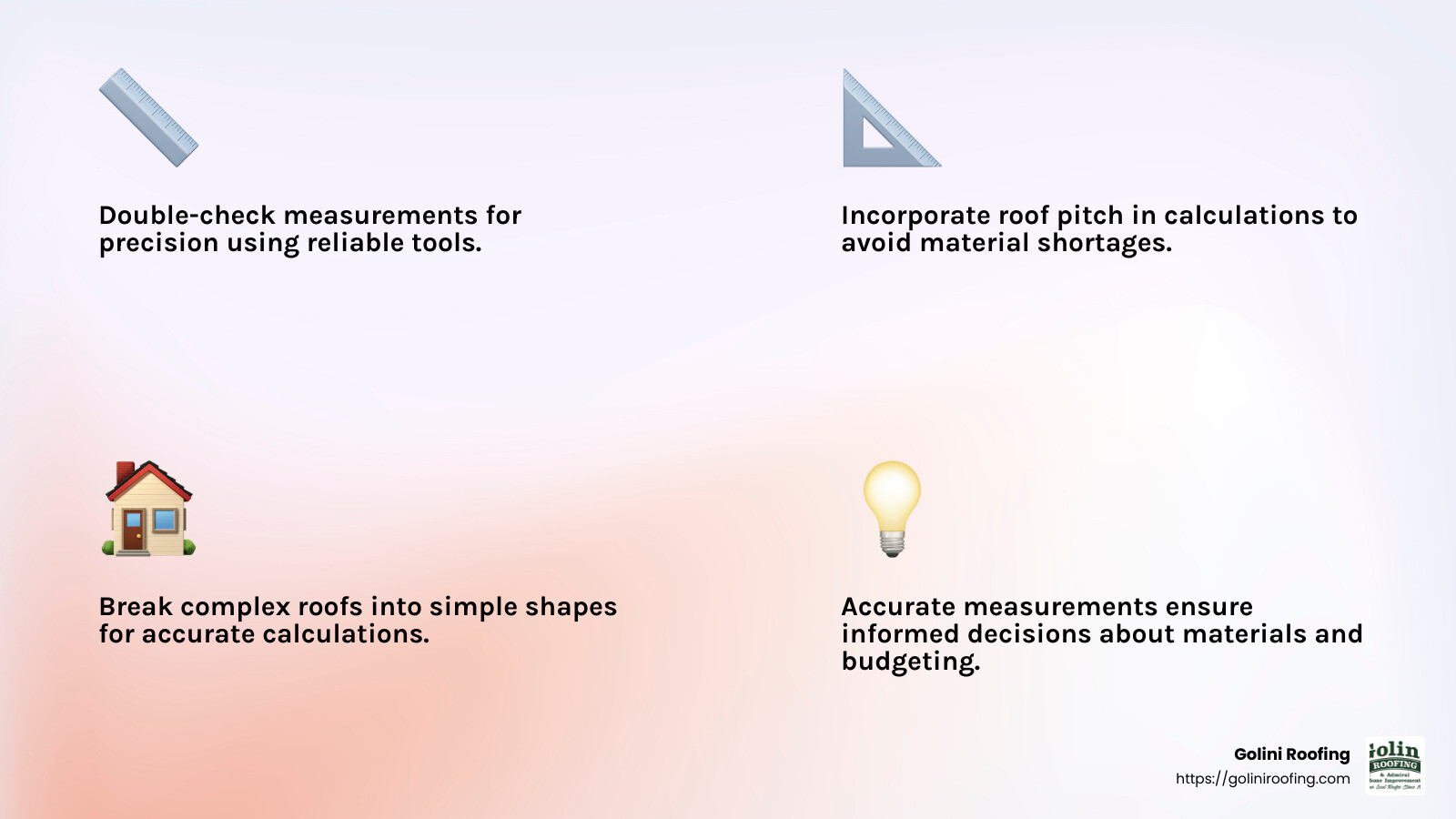
By steering clear of these common mistakes, you can ensure your roof measurements are accurate and reliable. This will help in making informed decisions about materials and budgeting.
Next, we’ll dive into frequently asked questions about roof square footage calculators to address any lingering queries you might have.
Frequently Asked Questions about Roof Square Footage Calculators
What is the best way to measure roof square footage?
The best way to measure roof square footage is by using a roof square footage calculator. This tool simplifies the process by taking into account the dimensions and pitch of your roof. Here’s how you can do it:
- Gather Your Tools: You’ll need a measuring tape and a calculator. If your roof is accessible and safe to walk on, you can measure it directly. Otherwise, use a drone or a ladder for a safer distance measurement.
- Measure the Roof: Start by measuring the length and width of each section of the roof. If your roof has multiple sections, measure each one separately.
- Adjust for Pitch: Roof pitch affects the actual surface area. A steeper roof requires more material. Use a calculator that factors in pitch by entering the rise over run ratio (e.g., 6:12).
- Calculate Total Area: Multiply the length by the width for each section. Then, apply the pitch factor to get the true square footage. Add up all sections for the total roof area.
Using a calculator saves time and reduces errors, ensuring you get an accurate measurement for your roofing project.
How does roof pitch affect square footage calculation?
Roof pitch is the slope or angle of the roof. It plays a crucial role in calculating square footage because it determines the actual surface area that needs to be covered.
- Steepness Matters: A steeper pitch means more material is needed. For example, a roof with a 12:12 pitch (45 degrees) has a greater surface area than a flat roof of the same base dimensions.
- Adjustment Factor: When you use a roof square footage calculator, it adjusts for pitch by applying a factor that accounts for the slope. This ensures that your measurements reflect the true area, preventing underestimation of materials needed.
- Example: If your roof has a 6:12 pitch, the pitch factor is approximately 1.12. So, if the base area is 1,000 square feet, the actual area is 1,120 square feet.
Understanding how pitch affects square footage helps in planning and budgeting for your roofing project accurately.
Can I calculate roof square footage without a calculator?
Yes, you can calculate roof square footage manually, but it requires more effort and precision. Here’s a simple method:
- Measure Dimensions: Use a measuring tape to get the length and width of each roof section.
- Calculate Base Area: Multiply the length and width for each section to get the base area.
- Adjust for Pitch: Use the pitch factor to adjust the base area. You can find pitch factors in roofing guides or online.
- Add Up Areas: Sum the adjusted areas of all sections to get the total roof square footage.
While doing this manually is possible, using a calculator is recommended for accuracy and ease, especially for complex roofs with multiple angles and pitches.
By addressing these frequently asked questions, you can better understand how to accurately measure and calculate your roof’s square footage, ensuring you make informed decisions for your roofing project.
Conclusion
At Golini Roofing, we understand that accurate roof measurements are crucial for any roofing project. Whether you’re considering a new roof installation or just need repairs, knowing the exact square footage helps in planning, budgeting, and ensuring the right amount of materials.
Our team, with over 35 years of experience, is here to provide expert advice and professional services custom to your needs. We specialize in both residential and commercial roofing and are known for our meticulous attention to detail, like hand-nailing each shingle for superior durability.
If you’re unsure about measuring your roof or using a roof square footage calculator, our experts are just a call away. We offer free consultations and estimates, ensuring you have all the information you need to make the best decision for your property.
Experience the Golini Roofing difference today. Let us handle the complexities of your roofing project, from accurate measurements to flawless installation. Our commitment to craftsmanship and customer satisfaction ensures your roof will stand the test of time.
Ready to get started? Contact us for a new roof estimate and find why Golini Roofing is synonymous with excellence and quality in Massachusetts. We look forward to serving you and making your roofing project a success.