
Roof tear off cost 2024: 7 Key Factors & Surprising Savings
Why Understanding Roof Tear Off Cost Matters for Your Home Investment
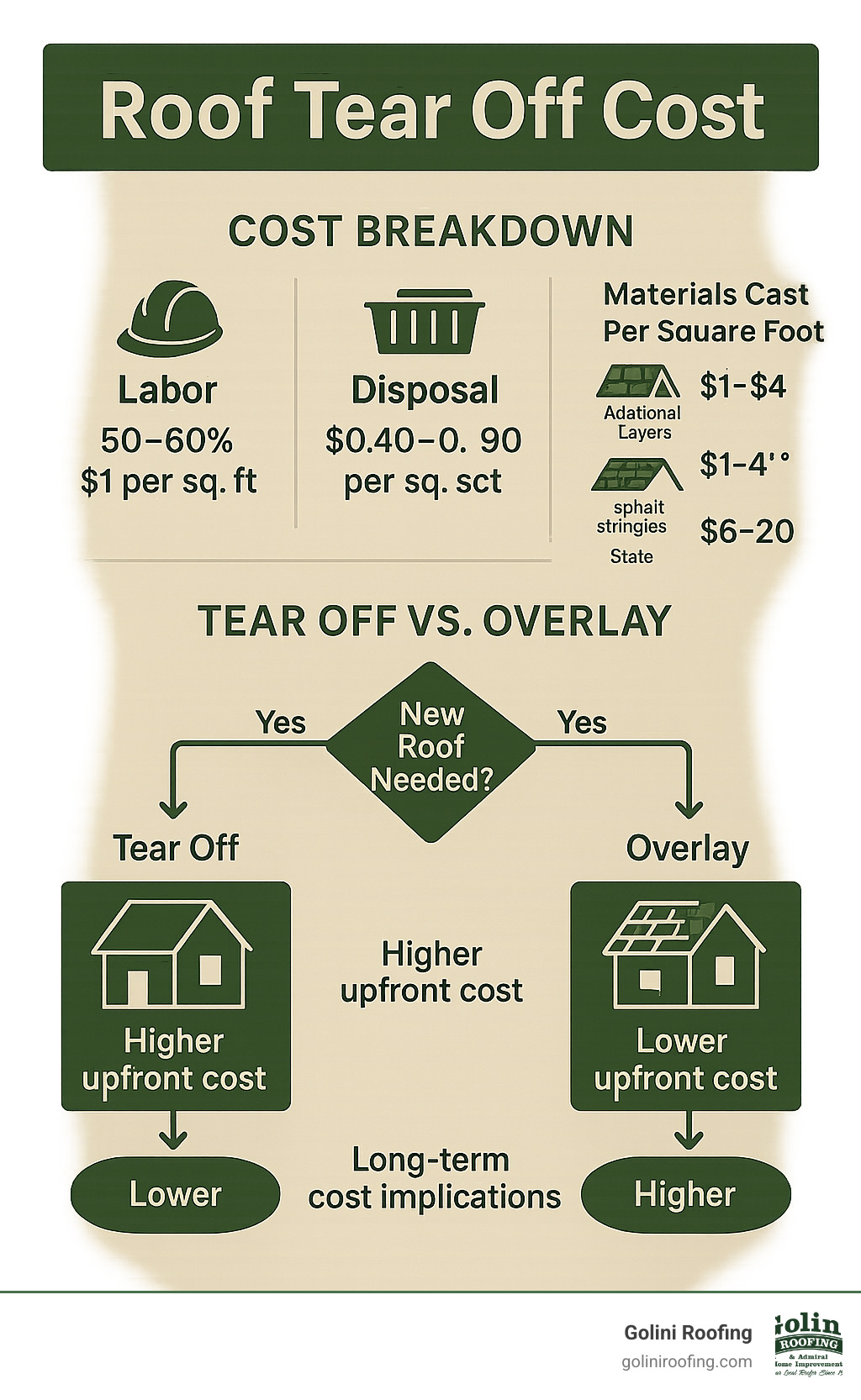
Roof tear off cost typically ranges from $5,700 to $16,000 for most homes, with high-end projects reaching $30,000 or more. Here’s what drives these costs:
Quick Cost Breakdown:
- Labor: $1-$5 per square foot (50-60% of total cost)
- Disposal: $0.40-$0.90 per square foot
- Additional layers: +$1-$2 per square foot extra
- Permits: $100-$500
- Total average: $3-$6 per square foot installed
When your roof shows signs of wear—curling shingles, persistent leaks, or reaches that 20-30 year mark—you’re facing a big decision. Should you tear off the old roof completely or just layer new shingles over the existing ones?
This choice affects more than just your wallet. A complete tear-off reveals hidden damage, ensures proper ventilation, and gives your new roof the best foundation for decades of protection. Yes, it costs more upfront than an overlay, but it’s often the smarter long-term investment.
The numbers can feel overwhelming. Labor shortages have pushed costs up 20-30% since 2020. Material choices range from basic asphalt shingles to premium slate that can cost 10 times more. Add in factors like roof pitch, multiple stories, and regional labor rates, and suddenly you’re looking at quotes that vary by thousands of dollars.
But here’s the thing—understanding these costs helps you make better decisions and avoid surprises.
I’m Jack Golini, and I’ve been helping homeowners steer roof tear off cost decisions since 1982 with over 35 years of hands-on roofing experience in the North Shore area. Through thousands of tear-off projects, I’ve seen how proper planning and understanding true costs leads to better outcomes for homeowners.
Tear Off vs. Overlay: Why Full Removal Matters
Picture this: your contractor shows up with two estimates that are thousands of dollars apart. The cheaper option? Just nail new shingles right over your old ones. Sounds tempting, right? But before you jump at those savings, let’s talk about why understanding the real roof tear off cost difference matters for your wallet—and your peace of mind.
When you’re facing roof replacement, you’ve got two main paths: complete tear-off (stripping everything down to the bare deck) or overlay (layering new shingles over the old ones). That overlay option can save you $1,000 to $3,000 upfront by skipping the labor-intensive removal and those hefty disposal fees.
But here’s where things get interesting. Most building codes allow a maximum of two roof layers—and if you’re already at that limit, tear-off becomes your only legal option. Even when overlay is allowed, it often creates a expensive headache down the road.
Think about it this way: each layer of asphalt shingles adds roughly 2.2 pounds per square foot to your roof. Your home’s structure wasn’t designed to carry unlimited weight, and pushing those limits can lead to sagging or worse. It’s like stuffing too many clothes in your closet—eventually, something’s got to give.
The hidden damage issue is even more concerning. When we overlay, we’re essentially putting a Band-Aid over problems we can’t see. Moisture detection becomes impossible, deck rot goes unnoticed, and ventilation issues get buried under new materials. We’ve seen homeowners find major structural damage just two years after an overlay—talk about an expensive surprise.
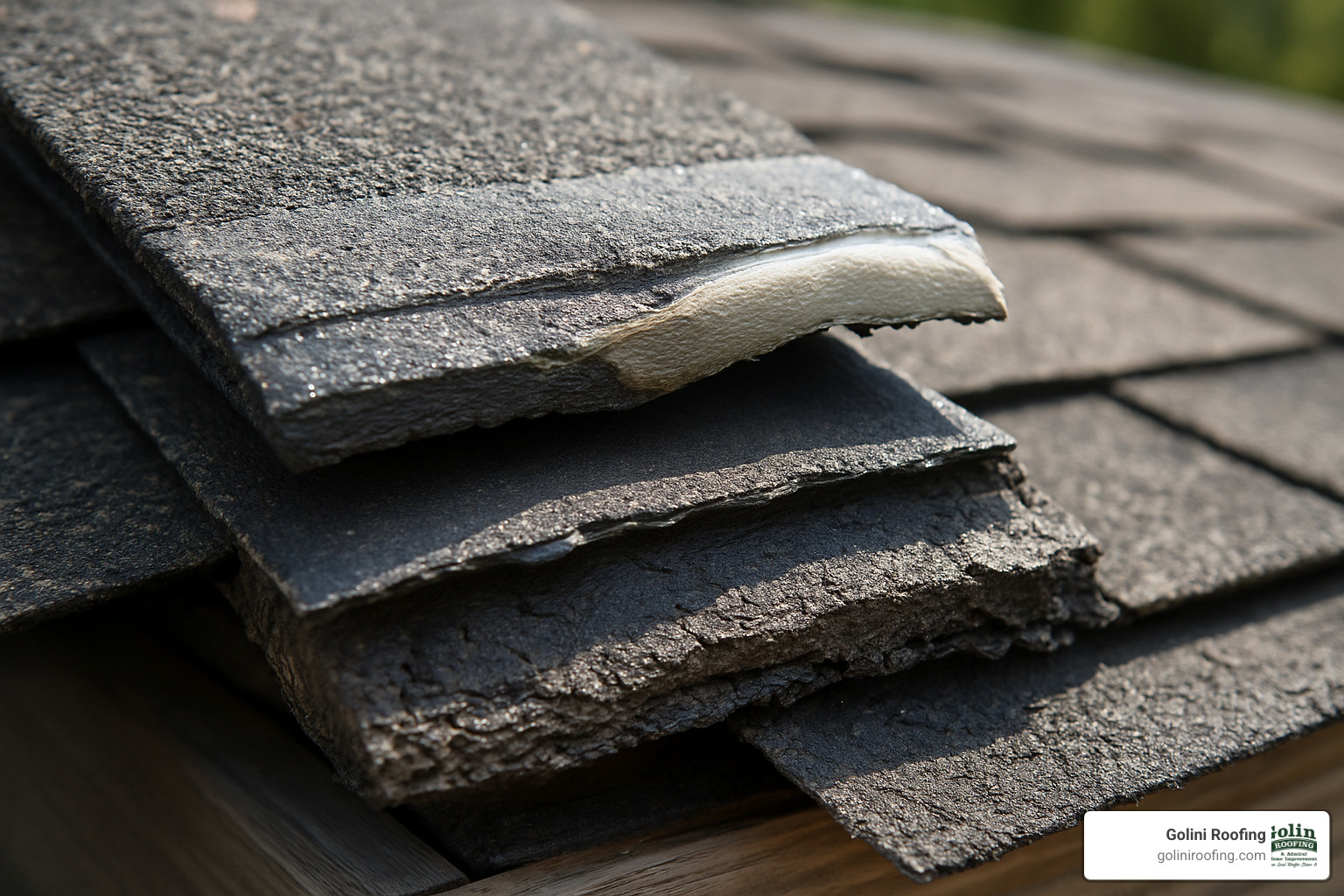
Here’s something most contractors won’t tell you upfront: warranty validity often depends on proper installation over a clean deck. Many manufacturers will void their warranties when shingles go over existing layers. That premium 30-year shingle warranty? It might be worthless if problems arise.
The lifespan reality is sobering too. New shingles over old ones typically last 15-20% less than those installed properly. The uneven surface creates hot spots, traps moisture, and prevents proper expansion and contraction. You’re essentially shortening the life of your investment from day one.
Signs You Need a Full Tear Off
Some situations make the tear-off decision easy. If your roof has hit that 20-30 year mark, you’re likely looking at systemic failure that overlay simply can’t fix. It’s like trying to paint over rust—you might hide it temporarily, but the problem keeps spreading underneath.
Curling or buckling shingles tell a clear story. These shingles have lost their flexibility and protective qualities. Installing new materials over this uneven, compromised surface is like building on quicksand—you’re setting yourself up for failure.
When you’re dealing with persistent leaks from multiple areas, that’s your roof crying out for help. Overlay won’t solve widespread water intrusion issues and actually makes future leak detection much harder. We’ve seen cases where homeowners spent thousands chasing leaks through multiple layers.
Heavy granule loss in your gutters is another red flag. Those granules protect your shingles from UV damage, and once they’re gone, the underlying material deteriorates rapidly. No amount of overlay can restore that protection.
If you notice any sagging in your roof deck, stop everything. This indicates structural issues that require immediate inspection and repair—something that’s impossible to address with overlay.
Roof overlay or tear off? Comparing short-term savings vs. long-term costs
Let’s crunch the real numbers on roof tear off cost versus overlay savings. For a typical 2,000 square foot roof, overlay might run $8,000 to $12,000, while complete tear-off and replacement ranges from $10,000 to $16,000. That $2,000 to $4,000 difference looks attractive initially.
But here’s the catch: overlay roofs typically need replacement 5-7 years sooner than properly installed new roofs. When that day comes, you’ll face removing two layers instead of one, adding $2,000 to $4,000 to your future roof tear off cost.
The hidden repair factor can be even more expensive. Without deck inspection during overlay, structural problems continue festering. We’ve seen emergency repairs costing $5,000 to $15,000 just two or three years after overlay installation—completely wiping out any initial savings.
Don’t forget the resale impact either. Home inspectors know what to look for, and buyers often view overlay roofs as deferred maintenance. This perception can hurt your home’s marketability and potentially reduce sale prices by more than your original overlay savings.
The math becomes clear when you factor in shortened lifespan, potential warranty issues, and future removal costs. That tempting upfront savings often transforms into a long-term expense that costs thousands more than doing it right the first time.
Roof Tear Off Cost Breakdown in 2024
Let’s talk numbers. I know this is probably the part you’ve been dreading—or maybe you’ve jumped straight here because you need to know what you’re facing. Either way, I get it. Roof tear off cost isn’t exactly pocket change.
The 2024 Cost vs Value Report shows the national average for asphalt shingle roof replacement at $30,680. Now, before you start hyperventilating, that’s a national average that includes some pretty expensive markets. Most homeowners in our Massachusetts area typically pay between $15,000-$25,000 for complete tear-off and replacement, though I’ve seen projects range from $12,000 to $40,000 depending on complexity.
Here’s where your money actually goes, and why understanding this breakdown helps you spot unrealistic quotes:
Labor takes the biggest bite—usually 50-60% of your total cost. This covers removal, disposal coordination, deck inspection, and installation of new materials. Labor rates have jumped significantly, with experienced crews now charging $40-$80 per hour. The shortage of skilled roofers means good crews are in high demand.
Materials account for 25-35% of your total investment. This includes shingles, underlayment, flashing, ventilation components, and all the fasteners. Material costs have climbed 15-20% since 2020, and unfortunately, they’re not coming back down anytime soon.
Disposal costs might seem minor at 5-10% of the total, but they add up quickly. Expect $0.40-$0.90 per square foot for disposal. That old roof has to go somewhere, and landfills aren’t getting cheaper.
Permits and inspections typically run 1-3% of your total cost. Most towns require permits for roof replacement, usually ranging from $100-$500. It’s not exciting, but it’s necessary.
Now, material choice dramatically affects your roof tear off cost. Here are average costs based on internet data (these aren’t actual costs for Golini Roofing):
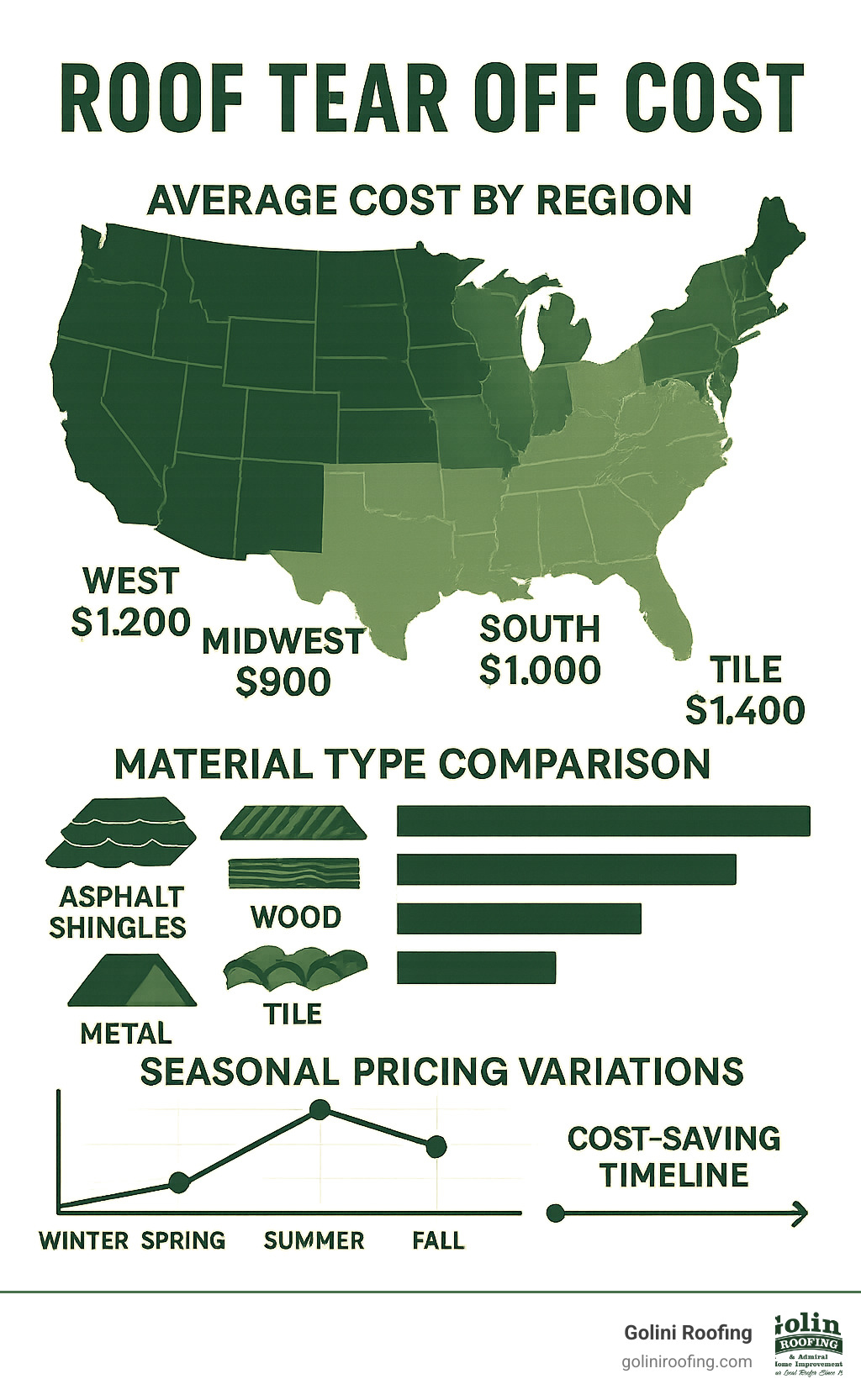
Asphalt shingles run $4.00-$15.00 per square foot installed. Metal roofing costs $7.00-$25.00 per square foot. Clay or concrete tile ranges from $8.00-$30.00 per square foot. Slate commands premium pricing at $15.00-$50.00 per square foot. Cedar shake falls between $8.00-$28.00 per square foot.
These ranges seem huge because they reflect different quality levels, regional variations, and project complexity. A simple ranch house with asphalt shingles hits the lower end. A steep Victorian with multiple dormers and premium materials reaches the higher end.
Cost Per Square Foot & Per Square Explained
Here’s something that confuses every homeowner: roofing contractors measure in “squares,” not square feet. Each square equals 100 square feet. So when I say your roof is 20 squares, that’s 2,000 square feet of roofing area.
Your roof area is usually larger than your home’s footprint because of pitch and overhangs. A 1,800 square foot ranch might have 2,200 square feet of actual roof surface.
When evaluating roof tear off cost, you’ll see pricing both ways. Per square foot is easier for homeowners to understand. Per square is industry standard for contractor estimates. If a contractor quotes $500 per square for tear-off and replacement, that equals $5.00 per square foot. Always clarify which measurement system quotes use—I’ve seen misunderstandings cost thousands.
Regional variations hit hard in Massachusetts. Our labor costs run 10-20% higher than national averages because of higher living costs, stricter building codes, seasonal demand swings, and frankly, limited contractor availability. Good roofers stay busy here.
Additional Layers & Specialty Materials Surcharges
Here’s where quotes can jump unexpectedly. Multiple shingle layers create extra work and disposal headaches. Expect an additional $1-$2 per square foot for each extra layer beyond the first. I’ve seen homeowners surprised by $50 per square surcharges for third layers, but honestly, that’s reasonable given the extra labor and disposal weight.
Specialty materials command premium removal costs. Cedar shingles require more labor-intensive removal, often needing careful dismantling to avoid deck damage. Slate tiles are extremely heavy, requiring special disposal considerations and safety equipment. Asbestos shingles require certified removal and disposal—potentially adding $4,000 for a 25-square roof.
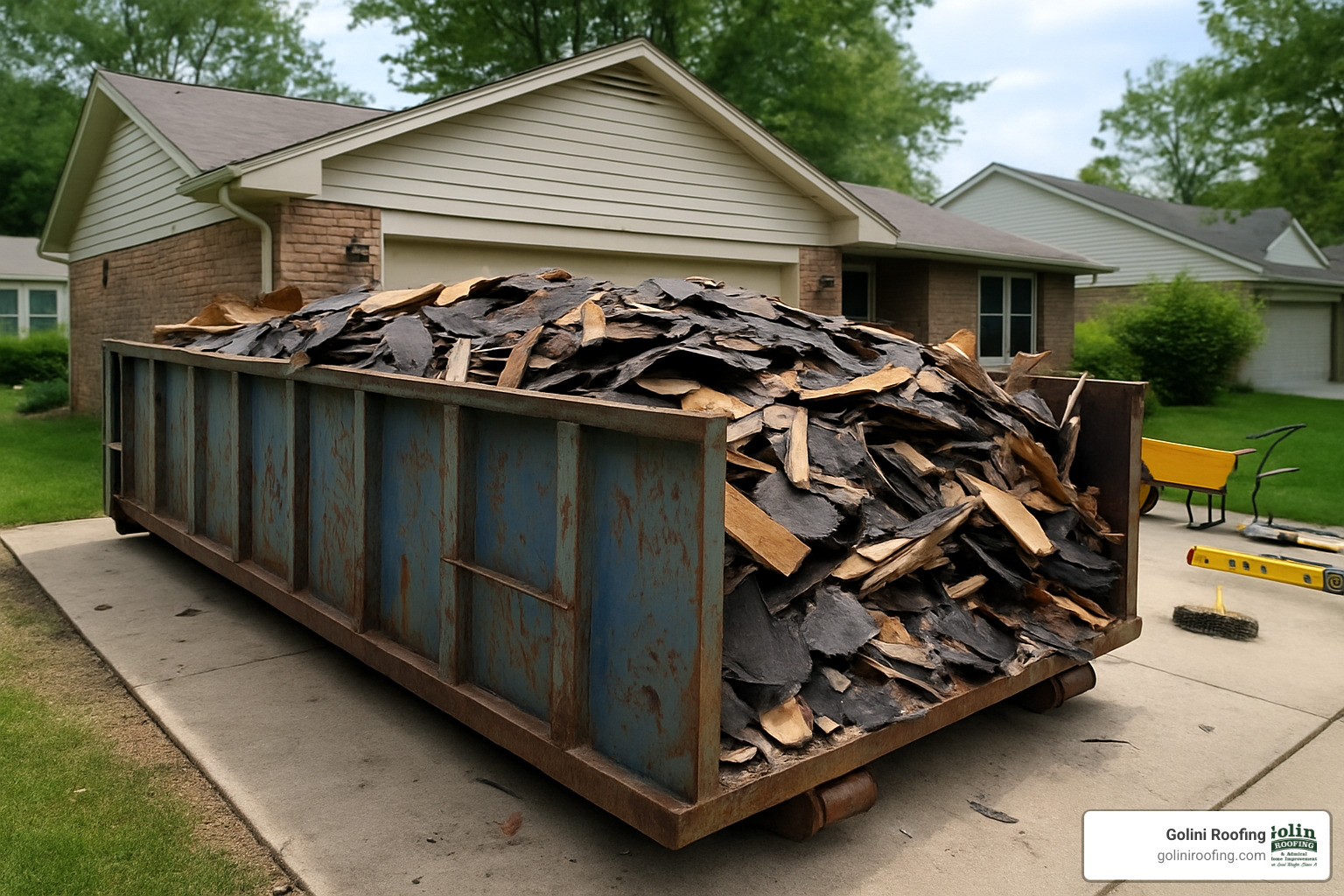
Dumpster considerations matter more than you’d think. A 20-square roof generates approximately 2 tons of waste. Basic dumpster rental costs $300-$600, but weight overages add $50-$100 per ton. Those old slate tiles add up fast.
Labor & Disposal: Where Your Money Goes
Let me explain what you’re actually paying for when labor represents the biggest chunk of your roof tear off cost.
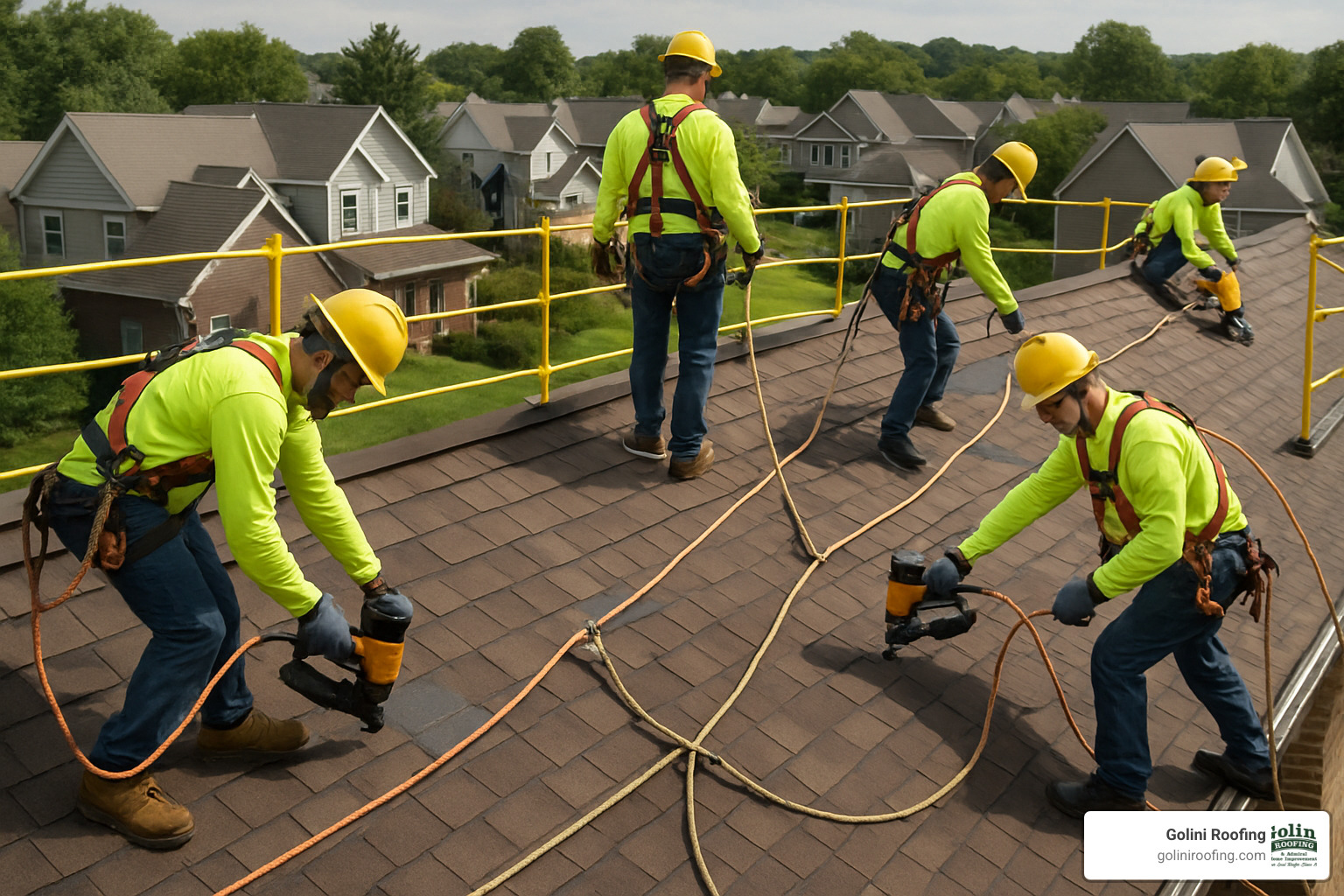
Skilled removal isn’t just ripping stuff off. Proper tear-off requires systematic removal to avoid deck damage. Crews use specialized tools like shingle rakes and tear-off forks to efficiently lift materials while preserving the underlying structure. Rushing this step costs more later.
Safety measures slow everything down but protect everyone. Steep roofs, multiple stories, and adverse weather require additional safety equipment and careful work pace. This isn’t corner-cutting—it’s protecting workers and your property from expensive accidents.
Deck inspection and repair happen during tear-off. Good contractors inspect every square foot of decking. Spot repairs cost $2-$4 per square foot, while full deck replacement runs $0.75-$1.50 per square foot. Finding problems early beats emergency repairs later.
Disposal coordination involves more than just filling a dumpster. Crews must sort materials, manage weight limits, and ensure proper disposal of specialty materials like asbestos or treated wood.
For accurate cost calculations specific to your project, the cost calculator tool factors in your location and specific requirements. It’s worth checking before meeting with contractors.
7 Factors That Drive Your Roof Tear Off Budget
Every time I meet with homeowners, they ask the same question: “Why do these quotes vary so much?” The truth is, roof tear off cost depends on seven key factors that can swing your budget by thousands of dollars.
Let me walk you through what really drives these costs, so you won’t be caught off guard when estimates arrive.
Roof size is the obvious starting point, but it’s not as straightforward as you might think. Yes, larger roofs cost more—a 3,000 square foot roof will cost more than a 1,500 square foot one. But here’s what surprises people: very small jobs often carry higher per-square costs. When we bring a crew out for a tiny 8-square roof, we still need the same truck, equipment, and minimum crew size. Those fixed costs get spread over fewer squares.
Roof pitch makes a huge difference in both safety and speed. Walk on a roof with a 4:12 pitch (that’s pretty gentle), and you’ll feel stable. Try the same thing on a 9:12 pitch, and you’ll understand why we need safety harnesses, special equipment, and move much slower. Steep roofs increase roof tear off cost by 15-25% because everything takes longer and requires more safety measures.
The number of stories affects more than you’d expect. Getting materials up to a second story, setting up proper safety equipment, and managing debris removal all add complexity. I’ve seen projects where difficult access—maybe a narrow driveway or mature landscaping we need to protect—adds $1,500 to the total cost.
Roof penetrations are where simple jobs become complex. Every skylight, chimney, plumbing vent, or dormer requires careful removal and custom work. A simple ranch with two pipe penetrations might take our crew 6 hours to tear off. The same size Victorian with three dormers, two chimneys, and four skylights? We’re looking at 12-14 hours of work.
Deck condition is the wildcard in every estimate. We can’t see what’s under those shingles until we start removing them. Homes built before 1980 often surprise us—sometimes pleasantly, sometimes not. I always tell homeowners to budget an extra 10-15% for potential deck repairs, especially on older homes.
Existing material type dramatically affects removal time. Standard asphalt shingles lift off relatively easily with the right tools. But cedar shakes often need individual removal to avoid deck damage. Slate tiles require careful handling—they’re beautiful but heavy and brittle. Multiple layers of any material can double the removal time.
Local market conditions and seasonality round out the major factors. Spring demand in Massachusetts drives prices up 20-30% compared to winter work. Weather delays become more likely in winter, but if you can be flexible with timing, you’ll often save significantly on roof tear off cost.
Roof Complexity Multiplier
I use simple gable roofs as my baseline for estimating. Two planes, a ridge, and minimal penetrations—that’s straightforward work that lets our crew develop a rhythm.
But most homes aren’t that simple. Valleys where roof planes meet require careful removal to separate materials properly. Hip roofs with four sloping sides have more edges and corners to work around. Dormers break up the work flow and require ladder repositioning.
Multiple angles on contemporary homes can be beautiful, but they’re challenging to work on. Each direction change means stopping, repositioning equipment, and carefully working around corners.
I’ve seen complex roofs increase total roof tear off cost by 40-50% compared to simple designs. This isn’t us padding the estimate—it’s the reality of how much longer intricate roofs take to tear off safely and properly.
Geographic & Climate Impact on Pricing
Working in Massachusetts for over 35 years, I’ve learned how regional factors affect every aspect of roofing work. Our Northeast climate creates unique challenges that impact roof tear off cost.
Snow loads here require stronger installation methods and often reveal more deck damage than warmer climates. Those freeze-thaw cycles are tough on roof structures. When we tear off a roof that’s endured 20 Massachusetts winters, we’re usually looking at more repairs than the same age roof in Arizona.
Coastal areas face additional challenges from salt air and higher wind requirements. Homes within five miles of the ocean often need specialized materials and installation techniques that add to project costs.
Our regional labor costs run 15-25% above national averages, reflecting both our higher cost of living and the skilled workforce required for our climate conditions. But this investment in quality pays off—proper installation techniques for our climate conditions are crucial for long-term performance.
The EPA’s detailed guidance on moisture control explains why climate-appropriate installation matters so much. Cutting corners on moisture management in our humid, freeze-prone climate leads to expensive problems down the road.
How to Save on Roof Tear Off & Replacement
Nobody wants to spend more than necessary on their roof, especially when roof tear off cost can feel overwhelming. The good news? There are smart ways to reduce expenses without cutting corners on quality.
Getting multiple quotes is your first line of defense against overpaying. Aim for 3-5 detailed estimates from reputable contractors. Don’t be surprised if quotes vary by 20-30%—different contractors have different overhead costs and approaches. However, if one quote comes in significantly below the others, proceed with caution. Rock-bottom prices often hide surprise charges or corner-cutting that’ll cost you later.
Timing can save you serious money. Most homeowners want their roofs done in spring and summer, which drives up demand and prices. If your roof can wait until late fall or winter (weather permitting), you might save 10-15% on labor costs. Contractors appreciate steady work during their slower periods and often pass those savings along.
Material choices offer another opportunity for savings. While premium shingles come with better warranties and longer lifespans, high-quality architectural shingles provide excellent value for most homes. The price difference between good and premium materials can easily reach $2,000-$5,000, so consider whether those extra features align with your budget and plans for the home.
Don’t overlook insurance coverage if you’ve had recent storm damage. Hail, wind, or fallen tree damage may be covered under your homeowner’s policy. The key is filing claims promptly—most policies require reporting within one year of the damage occurrence.
Tax credits and incentives can offset a significant portion of your costs. The federal Solar Investment Tax Credit (ITC) provides a 30% tax credit for solar roofing installations. Even if you’re not ready for solar panels, solar shingles might qualify while giving you a premium roof. Some states offer additional rebates for energy-efficient materials.
Strategic project bundling often reduces overall costs. If you need gutter replacement, siding repairs, or ventilation improvements, combining these with your roofing project can save money through shared setup costs and labor efficiency.
For more detailed guidance on planning your investment, our guide on calculating roof replacement cost walks through the complete process.
Here are proven money-saving strategies that work: Schedule during slow seasons when contractors offer better rates. Bundle exterior projects to share setup costs. Research energy-efficient materials that save money long-term through reduced utility bills. Maintain your current roof properly to extend replacement intervals. Look for manufacturer rebates and seasonal promotions. Compare financing options to find the most favorable terms for spreading costs.
DIY vs. Professional: Hidden Costs & Safety Risks
The idea of doing your own tear-off to save on roof tear off cost is tempting—after all, you could save $3,000-$6,000 in labor costs. But before you rent that dumpster, let’s talk about what DIY really involves.
Safety should be your first concern. Roofing consistently ranks among the most dangerous construction activities. Professional roofers undergo safety training and carry specialized equipment that costs thousands of dollars. They also carry insurance that protects both them and you if accidents happen.
Equipment costs add up quickly. Proper safety harnesses, roof jacks, tear-off tools, and dumpster rental can easily cost $1,000-$2,000. For a one-time project, these expenses significantly reduce your potential savings.
Warranty issues create another hidden cost. Many shingle manufacturers require professional installation to honor their warranties. If your DIY roof fails prematurely, you could be looking at thousands in replacement costs with no manufacturer support.
Time and weather exposure present practical challenges. What takes our professional crews 1-2 days might take you 1-2 weeks of weekends. Every day your home sits exposed increases the risk of weather damage.
Code compliance isn’t optional. Professional contractors understand local building requirements and permit processes. DIY mistakes finded during home inspections can require expensive corrections and delays.
Hidden problems finded during tear-off—rotted decking, structural issues, or ventilation problems—require professional expertise to address safely and correctly.
Financing & Incentives Cheat-Sheet
Home equity loans often provide the lowest interest rates for large roofing projects since they’re secured by your home’s value. Personal loans offer faster approval but typically come with higher interest rates. Contractor financing provides convenience but always compare rates with other options.
The federal Solar Investment Tax Credit remains one of the most significant incentives available, providing 30% tax credit for qualifying solar roofing systems. Some energy-efficient materials also qualify for federal tax benefits.
State and local programs vary by location. In Massachusetts, MassSave and local utilities offer various energy efficiency rebates and programs that might apply to your roofing project.
Manufacturer promotions come and go throughout the year. Major shingle manufacturers periodically offer cash rebates, extended warranties, or free upgrade incentives that can save hundreds or thousands of dollars.
The Roof Tear Off Timeline: What to Expect Day-By-Day
Once you’ve committed to your roof tear off cost investment, knowing what happens next reduces anxiety and helps you prepare. A well-organized tear-off and replacement project follows a predictable pattern, though weather and unexpected findies can shift timelines.
The preparation phase actually begins before crews arrive at your home. Your contractor should obtain all necessary permits—these typically cost $100-$500 and must be posted visibly during work. Materials get delivered and carefully staged to minimize lawn damage and maximize efficiency.
Smart contractors also install property protection before the first shingle comes off. This means tarps stretching from your gutters to the ground, plywood walkways to protect landscaping, and barriers around work areas. These steps might seem excessive, but they prevent thousands in landscape and siding damage.
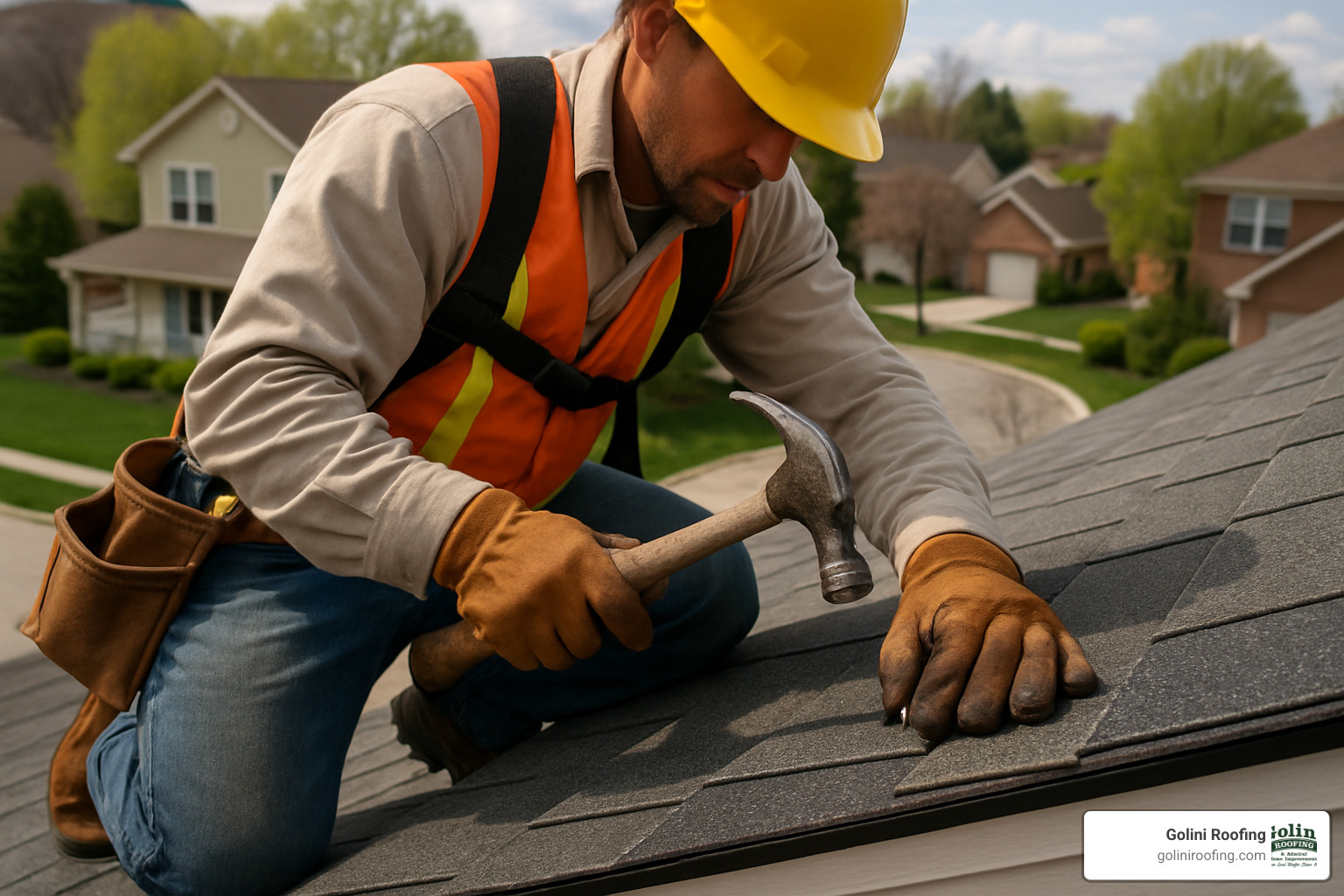
The actual tear-off day brings controlled chaos. Professional crews work systematically, starting at the ridge and moving downward. This prevents debris from damaging areas they’ve already cleared. You’ll hear the distinctive sound of shingle rakes and tear-off forks as workers efficiently lift old materials while preserving the underlying deck.
Deck inspection happens immediately after each section gets cleared. This is when surprises emerge—and they often do. Thirty-year-old roofs frequently hide soft spots, water damage, or inadequate ventilation. Good contractors stop work to discuss findings and costs before proceeding with repairs.
Emergency weather protection becomes critical if storms threaten during tear-off. Professional crews carry tarps and can quickly cover exposed areas, but this adds time and complexity to the project.
Step-By-Step Process From Inspection to Final Nail
Inspection sets the foundation for everything that follows. We’re not just measuring square footage—we’re evaluating deck condition, checking ventilation adequacy, and identifying potential complications that affect your roof tear off cost. This thorough assessment prevents most mid-project surprises.
Preparation demonstrates professionalism immediately. Protecting your property isn’t optional—it’s essential. We install comprehensive tarps, cover valuable landscaping, and establish safe work zones. These steps take time but prevent damage that could cost more than the roof itself.
Systematic tear-off requires skill and patience. Starting at the ridge and working downward prevents debris from damaging completed areas. We use specialized tools designed to lift shingles efficiently while preserving the deck surface underneath. Rushing this phase often creates deck damage that increases project costs.
Deck inspection and repair happens section by section as old materials come off. Every square foot gets examined for damage, rot, or structural concerns. When we find problems, we replace damaged areas with matching materials and ensure proper attachment to the structure below.
New installation separates quality contractors from the rest. Proper installation starts with quality underlayment installed according to manufacturer specifications. At Golini Roofing, our hand-nailing approach ensures each shingle receives optimal attachment—no pneumatic shortcuts that can lead to premature failure.
Final cleanup reflects overall professionalism. We conduct magnetic sweeps to collect stray nails that could damage tires or injure family members. Complete debris removal protects your neighbors and demonstrates respect for your community.
How Long Will My Project Take?
Project duration directly affects your roof tear off cost through weather exposure risk and crew scheduling efficiency. Understanding realistic timelines helps you plan accordingly.
Asphalt shingle projects typically require one to three days for most residential homes. Simple gable roofs move faster than complex designs with multiple dormers and angles. Weather delays can extend any project, but asphalt work resumes quickly once conditions improve.
Metal roofing installation takes two to four days due to precision requirements. Each panel must align perfectly, and fastener placement requires more care than shingle installation. The extra time investment pays dividends in longevity and performance.
Tile or slate projects demand four to eight days due to material weight and fragility. These premium materials require specialized handling and installation techniques. Rushing tile or slate work often leads to breakage and callbacks.
Complex roof designs add one to two days regardless of material choice. Multiple angles, dormers, skylights, and chimneys require custom flashing work and careful coordination. This isn’t padding the timeline—it’s ensuring proper installation around challenging features.
Weather delays remain the wild card in Massachusetts roofing projects. We monitor forecasts carefully and provide temporary protection when storms threaten exposed areas. Quality contractors never rush work to meet artificial deadlines when conditions compromise safety or installation quality.
Summer projects benefit from longer daylight hours and predictable weather patterns. Winter work requires additional preparation and may take 25-50% longer due to safety requirements and limited weather windows. However, off-season scheduling often reduces overall project costs through lower labor rates.
Frequently Asked Questions About Roof Tear Off Cost
What affects Roof tear off cost the most?
Labor takes the biggest bite out of your budget, representing 50-60% of total roof tear off cost. But it’s not just about the hourly wage—several factors work together to drive up those labor hours.
Roof complexity makes the biggest difference in how long your project takes. A simple ranch with a basic gable roof might take our crew one day to tear off, while a colonial with dormers, valleys, and multiple angles could take three days for the same square footage. Every corner, every dormer, every skylight adds time and precision work.
Material type also plays a huge role. Asphalt shingles come off relatively easily with the right tools. But if you’ve got slate tiles that need careful removal to avoid deck damage, or multiple layers that have practically fused together over decades, you’re looking at significantly more labor time.
Access and safety requirements can really add up. A single-story ranch is straightforward. A steep two-story colonial with narrow lot access? That requires more safety equipment, slower work pace, and sometimes creative solutions for material handling. We’d rather take extra time than risk anyone’s safety.
Hidden damage often surprises homeowners. We’ve peeled back shingles to find rotted decking that looked fine from below. Suddenly you’re adding deck replacement costs—typically $1,000-$5,000 depending on the extent of damage.
Regional factors matter more than many people realize. Here in Massachusetts, we deal with strict building codes, seasonal demand that drives up prices during peak times, and a skilled labor shortage that affects the entire industry.
Can I reroof over existing shingles to save money?
This question comes up on almost every estimate, and I understand why. The numbers look tempting—you might save $2,000-$4,000 upfront by skipping the tear-off. But after 35 years in this business, I’ve seen too many overlay jobs turn into expensive headaches.
The math doesn’t work long-term. Yes, you’ll save money today. But overlay roofs typically fail 5-7 years sooner than properly installed tear-off jobs. When that happens, you’ll pay to remove multiple layers instead of one, often adding $3,000-$5,000 to your future roof tear off cost.
Hidden problems stay hidden. When we tear off old shingles, we inspect every square foot of your deck. We’ve found everything from minor soft spots to major structural damage that would have caused serious problems if left unaddressed. With overlay, these issues stay buried until they become emergencies.
Warranty issues can cost you thousands. Many manufacturers void their warranties when shingles go over existing layers. That premium 30-year warranty you’re paying for? It might be worthless if you choose overlay installation.
Weight matters more than you think. Each layer of asphalt shingles adds about 2.2 pounds per square foot. Your roof structure has limits, and we’ve seen cases where the extra weight caused sagging or even structural damage.
Performance suffers when new shingles go over old ones. The uneven surface and trapped heat reduce the new shingles’ effectiveness and lifespan. You’re basically paying for premium materials but getting budget performance.
There are rare cases where overlay makes sense—usually on newer roofs with single-layer damage from hail or wind. But for most situations, proper tear-off gives you better value despite the higher upfront cost.
Is dumpster size included in estimates?
Most professional contractors include dumpster rental in their roof tear off cost estimates, but it’s worth confirming during your quote review. At Golini Roofing, we include appropriate container size in our pricing because we know exactly what each project will generate.
Standard inclusion covers a 20-30 yard container for typical residential projects. A 20-square roof (2,000 square feet) generates about 2 tons of debris, which fits comfortably in a 20-yard container with room for any minor deck repairs.
Weight considerations can affect costs. Our standard estimates assume normal asphalt shingle weight. But if you’ve got multiple layers, tile, or slate, we’ll factor in larger containers or potential weight surcharges upfront—no surprises.
Overage situations are rare with experienced contractors who estimate properly. But if unexpected deck replacement or additional layers push debris beyond container limits, expect $50-$100 per ton in additional fees.
Duration coverage typically includes 3-7 days, which handles most projects comfortably. Weather delays that extend timelines might incur additional rental days, but good contractors absorb reasonable delays.
Placement logistics matter more than many homeowners realize. We need clear driveway access and enough space for safe loading. Narrow driveways, overhead wires, or HOA restrictions sometimes require creative solutions that we’ll discuss during your estimate.
The key is working with contractors who include realistic disposal costs upfront rather than lowballing estimates and adding surprise charges later.
Conclusion
Understanding roof tear off cost puts you in control of one of your home’s biggest investments. Yes, that $5,700 to $16,000 price tag might make you wince at first—but think of it this way: you’re buying 20 to 50 years of protection for your family and everything you own.
Here’s what we’ve learned together: roof size and complexity drive the biggest cost differences, material choices can triple your budget, and local labor markets significantly impact what you’ll pay. Those hidden deck repairs that pop up during tear-off? They’re not surprises contractors spring on you—they’re genuine issues that overlay would have left festering underneath.
The overlay versus tear-off decision might seem like a no-brainer when you’re trying to save a few thousand dollars. But remember—shortcuts today often become expensive headaches tomorrow. Complete tear-off gives you warranty protection, longer roof life, and the peace of mind that comes from knowing what’s actually happening up there.
Smart homeowners find ways to reduce costs without cutting corners. Off-season scheduling can save you 10-15%, multiple quotes help you spot fair pricing, and bundling projects often reduces overall costs. Just remember—the cheapest estimate usually means someone’s cutting something important.
After 35 years of helping Massachusetts families through this process, I’ve seen too many homeowners regret choosing price over quality. At Golini Roofing, our hand-nailing approach takes longer, but it’s why our roofs still look great decades later. Whether you’re dealing with a leaky roof in Wakefield or planning ahead in Burlington, we believe in doing things right the first time.
Still feeling overwhelmed by all the numbers and decisions? That’s completely normal. For a deeper dive into overall project planning, check out our comprehensive guide on roof replacement cost.
Don’t let roof tear off cost anxiety keep you up at night—especially if your roof is already doing that job. Schedule a professional inspection today and get the honest assessment you need to plan confidently. Your roof protects everything you’ve worked for, and New England weather doesn’t mess around.
Ready to move forward? Contact us for a detailed evaluation that gives you real numbers, not guesswork. Because when it comes to protecting your home, you deserve quality workmanship and transparent pricing that helps you sleep soundly—rain or shine.
