
Roofing Shingles: 7 Best & Proven Picks for 2025
The Shingle Decision: Finding Your Perfect Roof Match
Roofing shingles are the most popular roof covering material in North America, providing essential protection while enhancing your home’s appearance. When comparing options, here’s what you need to know:
Types of Roofing Shingles at a Glance:
– Asphalt (3-tab): $100-$300/square, 15-20 year lifespan
– Architectural: $120-$450/square, 25-40 year lifespan
– Luxury/Designer: $200-$700/square, 30-50 year lifespan
– Metal: $300-$900/square, 50-100 year lifespan
– Slate: $600-$2,000/square, 80-400 year lifespan
– Composite: $350-$1,000/square, 30-50 year lifespan
– Solar: $800-$2,000/square, 25-30 year lifespan
Choosing the right roofing shingles involves balancing budget, climate needs, and aesthetic preferences. Each material offers distinct benefits—from asphalt’s affordability to slate’s best longevity. Your roof protects everything inside your home, from your family to your belongings, making this decision particularly important.
I’m Jack Golini, owner of Golini Roofing with over 40 years of experience installing and replacing roofing shingles throughout Massachusetts’ North Shore region. Since 1982, I’ve helped countless homeowners steer the sometimes confusing world of roofing materials to find their perfect match.
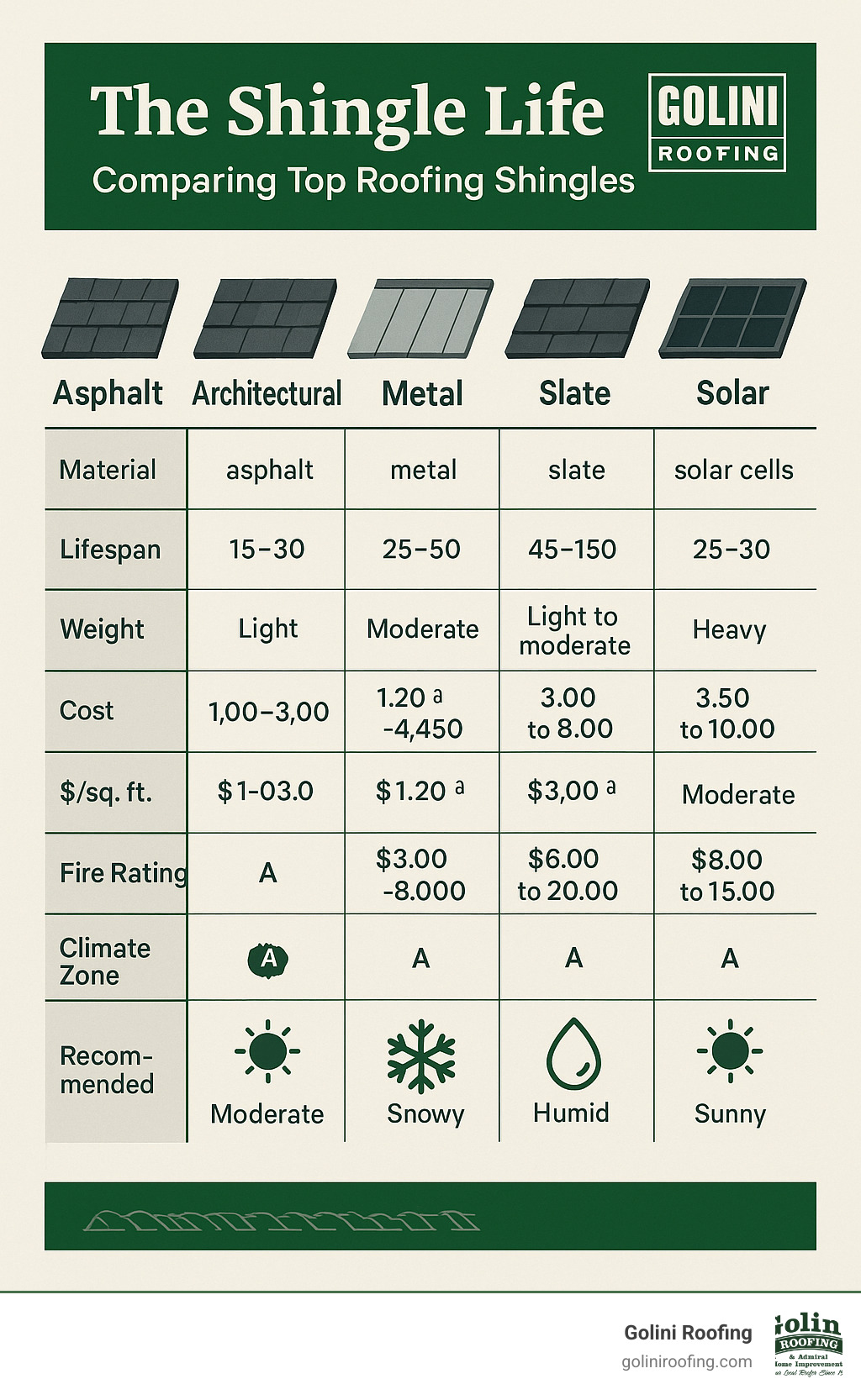
Roofing shingles terms explained:
– gutter installers near me
– roof installation services
– commercial roofing
Roofing Shingles 101: Purpose, Anatomy & Lifespan
Have you ever wondered what’s actually protecting your home from rain, snow, and everything else Mother Nature throws at it? Roofing shingles are those overlapping pieces that not only shield your home but also give it character and curb appeal.
Think of roofing shingles as your home’s first line of defense. They work together in a surprisingly simple yet effective system. Installed in overlapping courses (or rows) starting from the bottom edge of your roof, they create a continuous surface that guides water downward and away from your home. No single shingle is completely waterproof on its own—it’s their teamwork that keeps you dry!
Your roof is actually a carefully engineered system with several important parts working together. The underlayment provides a water-resistant barrier directly on your roof deck. Starter strips at the eaves prevent those frustrating wind blow-offs. The field shingles are what you actually see from the street. Ridge caps protect the vulnerable peaks of your roof, while flashing directs water away from danger zones like chimneys and valleys.
When shopping for roofing shingles, you’ll notice they come with ratings. Fire resistance ratings range from Class A (the best) to Class C. Impact resistance goes from Class 1 to Class 4, with Class 4 being what you want if you live in hail country. Most manufacturers recommend your roof have at least a 4:12 pitch—meaning it rises 4 inches for every 12 inches horizontally—for proper water shedding.
How long do different roofing shingles last?
Wondering how long your investment will protect your home? The lifespan varies dramatically depending on what you choose:
Basic 3-tab asphalt shingles typically last 15-20 years—perfect if you’re on a budget or planning to move within a decade or two. Step up to architectural asphalt shingles, and you’re looking at 25-40 years of protection with added dimensional appeal. Luxury asphalt varieties push that to 30-50 years with premium aesthetics.
Metal shingles offer impressive 50-100 year lifespans, while slate is the marathon runner of roofing—lasting anywhere from 80 to an astonishing 400 years in some cases! (Yes, there are slate roofs in Europe that have protected homes for centuries.) Engineered composite shingles offer 30-50 years of durability, while solar shingles typically produce energy for 25-30 years while protecting your home even longer.
Of course, these lifespans assume proper installation and maintenance. At Golini Roofing, we’ve seen how installation quality affects longevity. Our hand-nailing technique prevents the over-driving or under-driving of fasteners that often happens with pneumatic nail guns, giving your roof the best chance at a long, protective life.
From an environmental perspective, roofing shingles vary considerably in their impact. Traditional asphalt shingles contribute roughly 11 million tons of waste to U.S. landfills each year, though recycling programs are becoming more available. If sustainability matters to you, consider metal, slate, or composite shingles—their longer lifespans mean less frequent replacement, and many contain recycled materials. The scientific research on recycled asphalt shingles shows promising advances in this area as well.
Understanding what goes into your roof system helps you make informed decisions that balance protection, aesthetics, and value for your home’s specific needs.
Quick-Glance Comparison of Top Roofing Shingle Materials
Choosing the right roofing shingles can feel overwhelming with so many options available. Let’s break down the key differences in a way that makes your decision easier:
| Shingle Type | Cost Per Square* | Weight Per Square | Lifespan | Eco-Score** | Fire Rating | Impact Rating |
|---|---|---|---|---|---|---|
| 3-Tab Asphalt | $100-$300 | 200-300 lbs | 15-20 years | ★★☆☆☆ | Class A-C | Class 1-2 |
| Architectural Asphalt | $120-$450 | 240-340 lbs | 25-40 years | ★★★☆☆ | Class A | Class 1-4 |
| Metal | $300-$900 | 50-150 lbs | 50-100 years | ★★★★☆ | Class A | Class 3-4 |
| Slate | $600-$2,000 | 800-1,500 lbs | 80-400 years | ★★★★★ | Class A | Class 4 |
| Composite | $350-$1,000 | 250-400 lbs | 30-50 years | ★★★★☆ | Class A | Class 4 |
| Solar | $800-$2,000 | 350-450 lbs | 25-30 years | ★★★★★ | Class A | Class 3 |
Cost per square covers 100 square feet of roof area. These are average costs based on internet data and not actual costs for Golini Roofing.
*Eco-Score considers lifespan, recyclability, and production impact.
I’ve helped hundreds of Massachusetts homeowners steer these options, and I’ve found that different families prioritize different aspects. If you’re watching your budget, traditional 3-tab roofing shingles offer immediate savings, though they’ll need replacement sooner. Many of my customers find architectural shingles hit the sweet spot—they look great, last longer, and don’t break the bank.
For those thinking long-term, metal and slate are investments that truly pay off over decades. I’ve seen slate roofs in New England that have protected homes for over a century! They’re heavy though—your roof structure needs to be able to handle the weight.
Living in our region with its harsh winters, impact ratings matter. Class 4 roofing shingles stand up best to our hailstorms and falling branches during those nor’easters we get. And if you’re environmentally conscious, slate’s incredible longevity gives it the highest eco-score, though solar shingles offer the unique benefit of generating clean energy while protecting your home.
Structural considerations matter too—those beautiful slate roofing shingles might require additional framing support due to their weight, while lightweight metal can often be installed over existing roofing materials, saving on tear-off costs and landfill waste.
Your roof is both your home’s first line of defense and a major design element. The right roofing shingles should balance protection, appearance, and your budget in a way that gives you peace of mind for years to come.
Best Asphalt Roofing Shingles for 2024
Asphalt roofing shingles remain the most popular choice for North American homes, and for good reason. They offer an excellent balance of affordability, aesthetic options, and performance. As we head into 2024, the market continues to evolve with innovations in durability, algae resistance, and even recyclability – all while maintaining asphalt’s budget-friendly appeal.
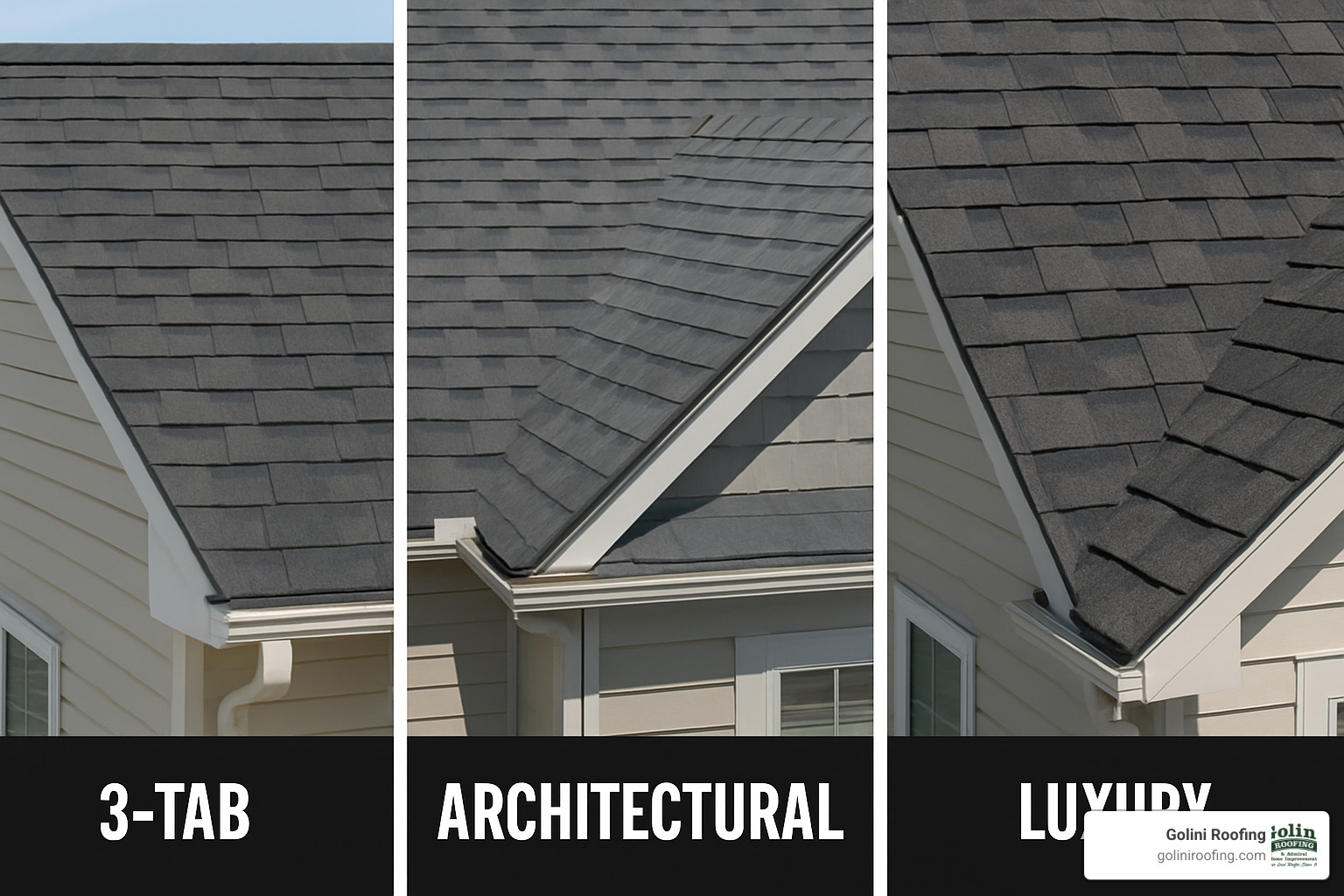
3-Tab Budget Picks – Roofing Shingles
3-tab shingles (also called “strip shingles”) are the original and most basic form of asphalt roofing shingles. If you’ve ever noticed a roof with a flat, uniform pattern where each shingle looks identical, you’re looking at 3-tabs. They get their name from the three cutouts along their bottom edge that create a simple, clean appearance.
These budget-friendly options typically cost between $100-$300 per square, making them the go-to choice for rental properties, tight renovation budgets, or homes you’re planning to sell soon. Weighing just 200-300 pounds per square, they’re particularly suitable for older homes where the roof structure might not support heavier materials.
The tradeoff for this affordability is longevity – expect about 15-20 years of service under normal conditions. Their thinner construction makes them more vulnerable to high winds (usually rated for just 60-70 mph) and faster weathering. That said, they’re still a solid option for many homeowners, especially in milder climates where extreme weather isn’t a regular concern.
Architectural Sweet Spot – Roofing Shingles
If you’re looking for the best value in roofing shingles, architectural shingles (also called dimensional or laminate shingles) hit the sweet spot for most homeowners. These multi-layered beauties have revolutionized residential roofing with their textured, three-dimensional appearance that adds visual interest and curb appeal.
Priced between $120-$450 per square, they typically cost only 20-40% more than 3-tab options but can last twice as long – generally 25-40 years. The magic happens in their construction: multiple layers of asphalt are fused together, creating a thicker, more durable shingle that stands up better to wind (110-130 mph ratings) and impacts from branches or hail (many achieve Class 3 or 4 impact ratings).
What I love about architectural roofing shingles is their versatility. They can mimic the look of cedar shakes or slate at a fraction of the cost and weight (240-340 lbs per square). Plus, many manufacturers now incorporate algae-resistant granules that prevent those unsightly black streaks on north-facing roof slopes. For most Massachusetts homes, they’re the perfect balance of performance and price.
Luxury & Impact-Resistant Leaders
At the premium end of the asphalt spectrum are luxury and impact-resistant roofing shingles – the thoroughbreds of the roofing world. These top-tier products make a statement while providing maximum protection for your home.
Luxury shingles are substantially thicker and heavier (often 300-400+ lbs per square) than standard architectural shingles, creating deeper shadow lines and dramatic visual appeal that can transform your home’s appearance. They’ll set you back $200-$700 per square, but the investment pays dividends in curb appeal and durability, with lifespans of 30-50 years being common.
Many premium shingles now feature SBS (styrene-butadiene-styrene) polymer modification – a fancy way of saying they’ve added rubber-like qualities to the asphalt. This makes them incredibly resilient against extreme temperature changes and impacts. The best can withstand winds up to 130-150 mph – particularly important in coastal areas like Massachusetts’ North Shore where nor’easters can pack a punch.
For homeowners in hail-prone regions, Class 4 impact-resistant shingles are worth their weight in gold. These tough performers can withstand impacts from 2-inch steel balls dropped from 20 feet without cracking – equivalent to severe hail. The best part? Many insurance companies offer premium discounts for homes with Class 4 rated roofs, potentially offsetting their higher initial cost.
In our decades of experience at Golini Roofing, we’ve found that the premium paid for high-quality roofing shingles is almost always worth it in the long run, especially when paired with proper installation techniques like our signature hand-nailing approach. The right shingle, properly installed, gives you peace of mind that’s simply priceless.
More info about installing roof shingles
Beyond Asphalt: Alternative Roofing Shingles Worth Considering
While asphalt roofing shingles dominate the residential market, several alternative materials offer unique advantages that might make them perfect for your home. These options often provide longer lifespans, better environmental credentials, and distinctive aesthetics that could be exactly what your property needs.
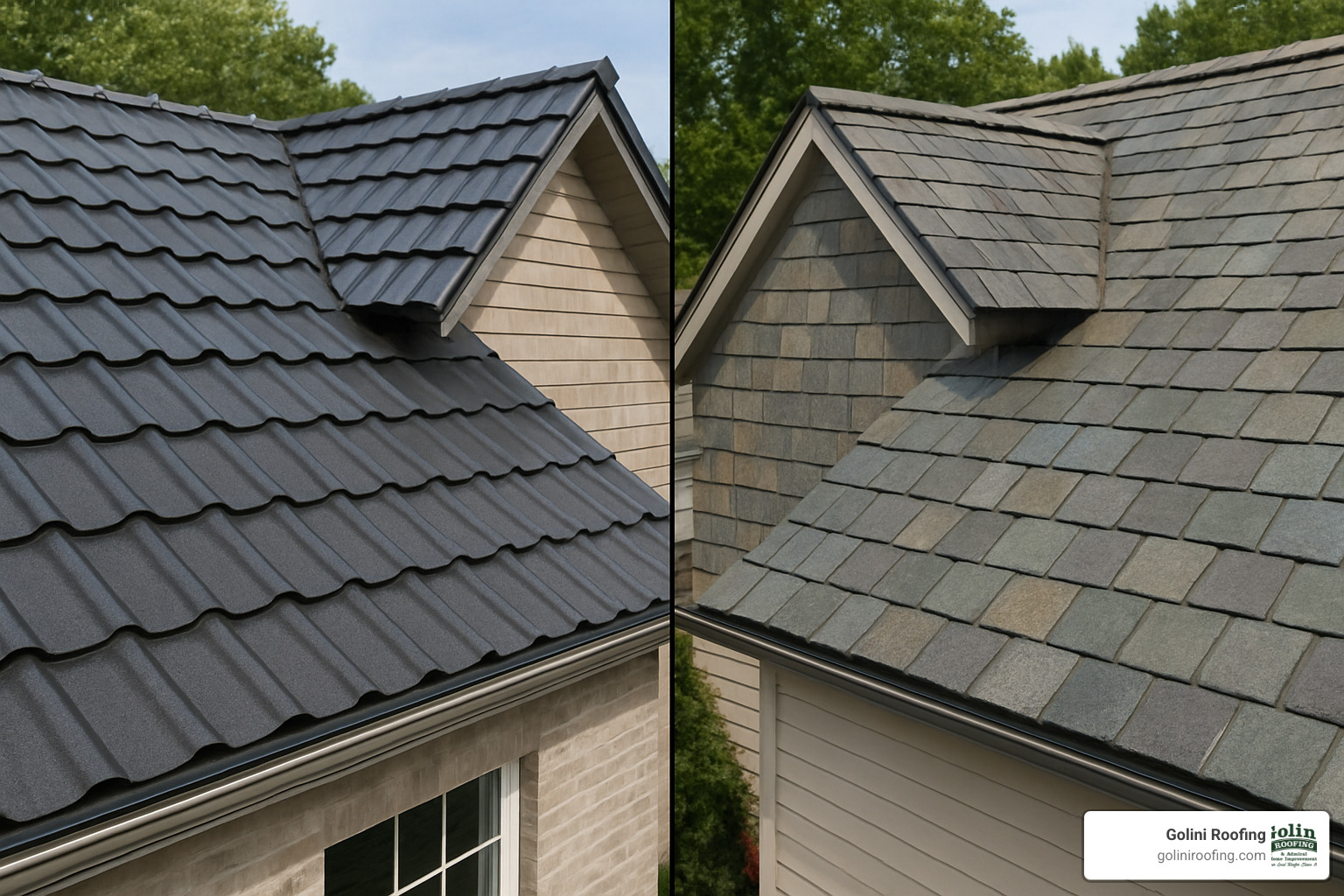
Metal Roofing Shingles
Unlike continuous metal panels you might picture on barns or commercial buildings, metal roofing shingles are individual pieces cleverly designed to mimic traditional shingles, wood shakes, or even slate tiles while offering superior performance.
Made typically from steel, aluminum, copper, or zinc alloys, these shingles cost between $300-$900 per square for steel or aluminum options, while premium copper or zinc varieties run $800-$1,500+ per square. These are average costs based on internet data and not actual costs for Golini Roofing.
What makes metal truly shine is its impressive lifespan of 50-100+ years—with copper potentially lasting a century or more with proper care. At just 50-150 pounds per square, they’re remarkably lightweight compared to other materials, reducing structural strain on your home.
Metal roofing shingles excel in harsh weather conditions. They’re completely impervious to rot and insect damage, carry a Class A fire rating, and many feature clever interlocking designs that withstand winds up to 160 mph. And that old myth about metal roofs being noisy during rainstorms? With proper installation including solid sheathing and quality underlayment, they can actually be quieter than many alternatives.
For environmentally conscious homeowners, metal shingles offer impressive credentials: they’re 100% recyclable, often contain recycled content, and their reflective properties can reduce cooling costs by 15-25% during hot summers—a benefit that adds up significantly over decades of service.
Natural Slate Shingles
If you’re seeking the ultimate in roofing elegance and longevity, slate roofing shingles represent the gold standard. These natural stone tiles have graced the finest homes and buildings for centuries—and for good reason.
Quarried directly from the earth, slate offers best beauty with subtle natural variations that create a distinctive, sophisticated appearance no manufactured product can truly replicate. This premium material comes with a premium price tag: $600-$2,000 per square, plus potentially higher installation costs due to the specialized expertise required. These are average costs based on internet data and not actual costs for Golini Roofing.
The extraordinary weight of slate—800-1,500 pounds per square—means your home’s structure must be evaluated to ensure it can support this substantial load. But this investment delivers remarkable returns in longevity. While 80-100 years is the typical expected lifespan, many slate roofs have protected homes for 150+ years, with some historic examples lasting up to four centuries.
This extraordinary durability makes slate possibly the most sustainable roofing option available. These roofing shingles often outlast the buildings they cover, and quality slate can potentially be salvaged and reused on future structures.
In our decades of experience at Golini Roofing, we’ve found slate particularly well-suited for historic homes, high-end custom builds, and properties where homeowners plan to maintain their home within the family for generations.
Engineered Composite Shingles
For homeowners seeking modern alternatives that combine the best aspects of traditional materials, composite roofing shingles offer innovative solutions made from engineered materials, often incorporating significant recycled content.
These versatile products typically cost between $350-$1,000 per square and weigh approximately 250-400 pounds per square—substantial but not requiring special structural support in most homes. These are average costs based on internet data and not actual costs for Golini Roofing.
The composition varies by manufacturer, but many incorporate recycled plastic, rubber, polymer resins, and natural fibers. The environmental benefits are significant, with many products containing 70-95% recycled materials while delivering 30-50 year lifespans.
What makes composite shingles particularly appealing is their ability to closely mimic the appearance of slate, wood, or clay tiles at a fraction of the weight and cost. They resist algae growth, withstand extreme temperatures, and typically require minimal maintenance while achieving impressive Class 4 impact and Class A fire ratings.
Rubber shingles, a specialized subset of composite materials, deserve special mention. Made primarily from recycled tires (approximately 95% recycled content), they offer excellent impact resistance and sound-dampening properties that many homeowners appreciate during storms.
Solar Energy Shingles
For forward-thinking homeowners interested in energy independence, solar roofing shingles represent the exciting frontier of roofing technology. These innovative products function as both protective roof covering and electricity-generating system in one integrated solution.
Unlike traditional rack-mounted solar panels that sit atop existing roofs, solar shingles fully integrate into your roofing system with a more streamlined appearance. This dual functionality comes at a premium price point: $800-$2,000 per square before applicable incentives and tax credits. These are average costs based on internet data and not actual costs for Golini Roofing.
Weighing 350-450 pounds per square, these systems typically generate between 13-67 watts per shingle (varying by manufacturer) and have a functional lifespan of 25-30 years for energy production, though they continue protecting your home beyond that period.
While the upfront investment is significant, federal tax credits (currently 30% of system cost), state incentives, and long-term energy savings can make solar shingles economically viable, especially if you have a south-facing roof with minimal shade and live in an area with high electricity costs.
For environmentally conscious homeowners working toward a net-zero energy future, solar roofing shingles represent an exciting option that combines essential protection with clean energy production. We at Golini Roofing are seeing increasing interest in these systems throughout Massachusetts as homeowners look to reduce both their carbon footprint and long-term energy costs.
The science behind recycled roofing materials continues to advance, with promising research on sustainable management of materials in construction helping drive innovation in this rapidly evolving field. For more information on recycled asphalt shingles and their environmental impact, the EPA provides excellent resources on sustainable construction materials.
Choosing the Right Roofing Shingle: 8 Key Factors
When it comes to selecting the perfect roofing shingles for your home, I’ve seen homeowners get overwhelmed by all the options. After helping hundreds of Massachusetts families make this important decision, I’ve found these eight factors make all the difference:
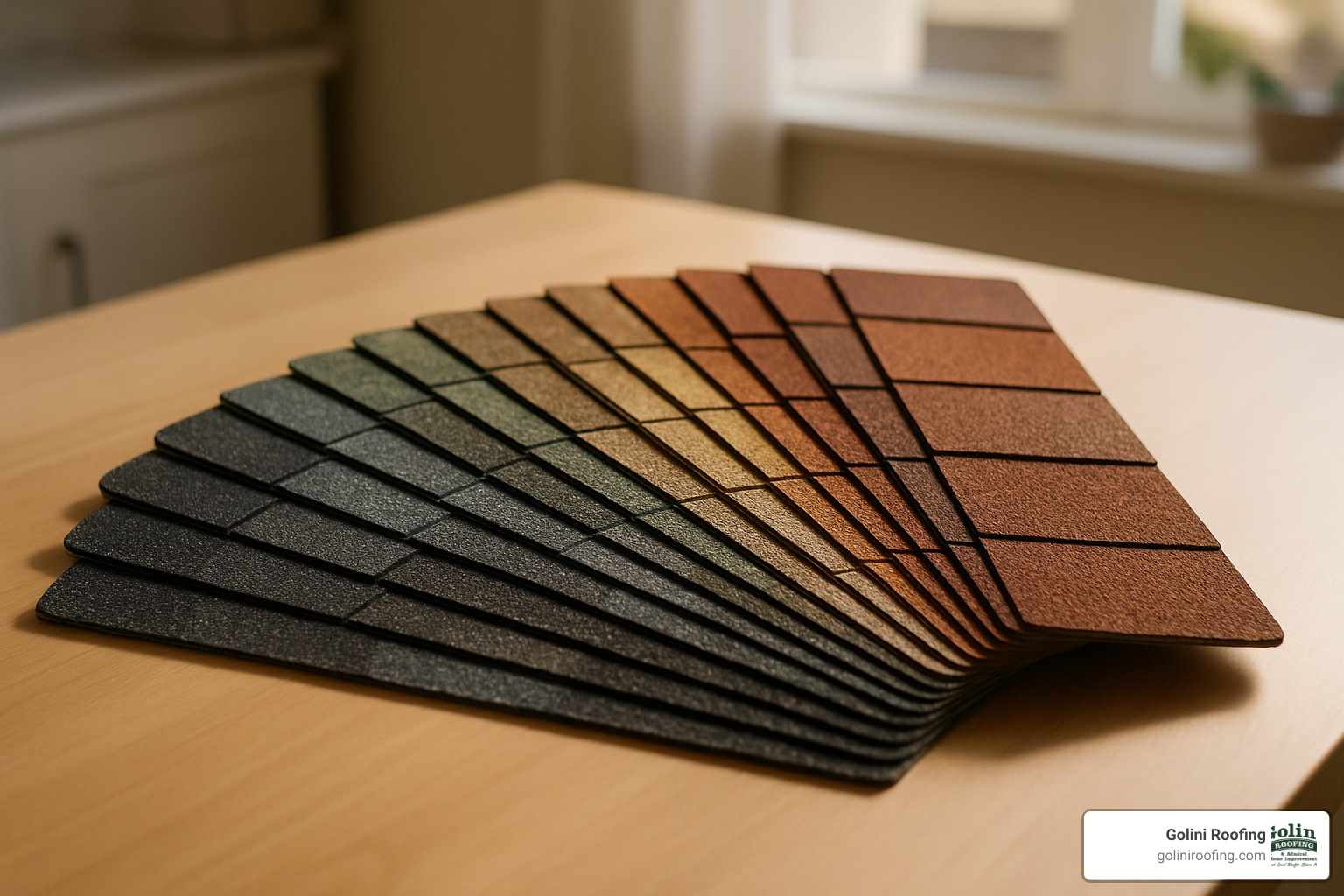
Your budget naturally comes first – but think beyond just tomorrow’s price tag. Those premium shingles might seem expensive today, but when they’re still protecting your home decades after the budget options would have failed, the math starts looking different. It’s like buying quality boots instead of cheap ones you’ll replace every year.
The durability and lifespan of your shingles should match your future plans. If this is your forever home, investing in materials that last 40+ years makes perfect sense. For a starter home you’ll sell in five years? Perhaps standard architectural shingles hit the sweet spot.
Your local climate deserves serious consideration. Here in New England, we deal with everything from nor’easters to summer heat waves. If you’re in a windy coastal area, look for shingles rated for 110+ mph winds. Worried about hail damage? Class 4 impact-resistant options provide peace of mind. In particularly sunny spots, reflective “cool roof” shingles can trim your summer cooling bills by 15-25%.
Don’t overlook your roof’s pitch and complexity. Those beautiful steep gables and multiple dormers might look stunning, but they affect which materials work best. Very low-slope roofs (less than 4:12 pitch) often require specialized installation techniques or different materials altogether.
Aesthetics matter more than many realize. Your roof makes up nearly 40% of your home’s visible exterior! Consider how different shingle styles complement your home’s architecture, your neighborhood’s character, and your personal taste. The dimensional shadow lines of architectural shingles can add depth and character that flat 3-tabs simply can’t match.
Structural considerations can limit your options. Those gorgeous slate tiles might be your dream, but at 800-1,500 pounds per square, they might require expensive structural reinforcement. Meanwhile, lightweight metal shingles (50-150 pounds per square) can sometimes be installed right over existing roofing, saving tear-off costs.
Fire resistance provides crucial protection for your family and belongings. Class A fire-rated materials offer maximum safety, which is essential in wildfire-prone areas but valuable everywhere. Many insurance companies even offer discounts for homes with highly fire-resistant roofing.
Finally, consider the environmental impact of your choice. Longer-lasting materials create less waste over time. Many newer shingles incorporate recycled content or can be recycled at the end of their life. Energy-efficient options can significantly reduce your carbon footprint and utility bills.
Through decades of installing roofing shingles across Wakefield, Burlington, Winchester, and beyond, we’ve helped countless Massachusetts families steer these considerations to find their perfect match.
More info about new shingles cost
Estimating How Many Roofing Shingles You Need
Nothing derails a roofing project faster than running out of materials halfway through. Getting your roofing shingles quantity right from the start saves headaches, delays, and unexpected costs.
In the roofing world, we measure everything in “squares” – enough material to cover 100 square feet of roof surface. Figuring out how many squares you need involves a bit more than basic math:
Start by calculating your roof’s square footage by measuring each section (remembering to account for those overhangs). But here’s where many DIYers go wrong – they forget about the pitch factor. A steep roof has significantly more surface area than its footprint suggests. For example, a 6:12 pitch roof (rising 6 inches for every 12 inches horizontally) has about 12% more surface area than its horizontal dimensions indicate.
Always build in a waste factor of 7-15%, depending on your roof’s complexity. A simple gable roof might need only 7-10% extra, while a complex design with multiple intersections could require 15% or more. This accounts for cuts, damaged pieces, and installation trimming.
Don’t forget those essential accessories! Starter strips, ridge caps, and hip caps are crucial components that need to be included in your calculations.
While online calculators can give you a rough estimate, nothing beats having a professional measure your roof. At Golini Roofing, we include detailed material breakdowns in our free estimates, ensuring you’re never caught short or paying for excess materials.
More info about new shingle roof estimate
Typical Installation & Maintenance Workflow
Understanding how roofing shingles are properly installed helps you appreciate what separates a roof that lasts decades from one that develops problems after just a few years.
A quality installation begins with a complete tear-off of existing materials down to the deck. While overlay installations (applying new shingles over old ones) are sometimes suggested as a money-saving option, they often lead to premature failure and void manufacturer warranties.
Once we reach the deck, we conduct a thorough inspection and repair phase, replacing any damaged or rotted wood. This foundation step is absolutely critical – even the best shingles will fail if installed over compromised decking.
Next comes the underlayment installation – applying water-resistant barrier materials across the entire roof, with special ice and water shield in vulnerable areas like eaves, valleys, and around penetrations. This secondary water barrier is your roof’s backup system should any shingles fail.
Starter strips then go along the eaves to prevent the wind from getting under and lifting your first row of shingles – a common failure point on improperly installed roofs.
The main event is the field shingle installation, where courses are laid in overlapping rows from bottom to top. This is where our hand-nailing approach makes a real difference. Unlike pneumatic nail guns that often drive nails too deep (puncturing the shingle) or too shallow (allowing lift), hand-nailing ensures perfect placement and pressure every time.
Proper flashing installation around chimneys, vents, valleys, and other vulnerable areas prevents water intrusion at these critical junctions. We use heavy-gauge metal flashing that will last as long as your shingles.
The roof peaks get protected with specialized ridge and hip caps that both shield these vulnerable areas and provide a finished appearance.
Finally, a proper ventilation system ensures adequate airflow through your attic space, preventing moisture buildup that can rot your deck from below and significantly extend your shingles’ lifespan.
To keep your new roof performing at its best, I recommend:
– Seasonal inspections in spring and fall
– Regular gutter cleaning to prevent water backup
– Prompt removal of debris that can trap moisture
– Installing zinc or copper strips at the ridge to prevent moss and algae growth
– Addressing even minor issues before they become major problems
With quality materials, proper installation, and regular maintenance, your roofing shingles can often exceed their expected lifespan by years or even decades.
More info about asphalt shingle roof installation
Signs Your Roofing Shingles Need Attention
After installing and repairing thousands of roofs over four decades, I’ve developed a keen eye for when roofing shingles are crying out for help. Here are the telltale signs you shouldn’t ignore:
Curling or buckling shingles are waving red flags. When shingles begin to curl at the edges or buckle in the middle, they’re becoming vulnerable to wind uplift and water infiltration. This often happens as shingles age and lose their flexibility.
Finding granule loss in your gutters or downspouts is concerning, especially beyond the normal shedding of new shingles. Those tiny granules aren’t just for appearance – they protect the asphalt from damaging UV rays. Once they’re gone, deterioration accelerates rapidly.
Even a single missing shingle creates a vulnerable spot where water can penetrate your roof system. What starts as a small leak can quickly lead to significant structural damage, mold growth, and insulation problems.
Cracked or brittle shingles signal that your asphalt has dried out and lost its protective oils. This happens naturally with age but accelerates with extreme temperature fluctuations. Once shingles become brittle, they’re much more likely to break during storms.
Visible leaks or water stains on your ceilings or walls are obvious indicators something’s wrong, though the actual leak source might not be directly above the stain. Water often travels along rafters before dripping onto your ceiling.
While algae or moss growth starts primarily as an aesthetic issue, extensive growth can eventually lift shingles and create water entry points. Those black streaks aren’t just unsightly – they’re potentially shortening your roof’s lifespan.
If you can see daylight through your roof boards when looking up in your attic, you’ve got a direct pathway for water to enter your home. This requires immediate attention.
A sagging roof deck indicates potential structural issues, often from long-term water damage that’s rotted the supporting wood. This is never a DIY fix – it requires professional evaluation and repair.
Unexpectedly high energy bills might not seem roof-related, but they often signal inadequate ventilation or compromised insulation due to roof leaks.
Finally, age itself is a factor. If your asphalt roof is approaching 20-25 years old, it deserves a professional inspection even without visible problems. Catching issues early can often mean the difference between simple repairs and complete replacement.
At Golini Roofing, we’ve saved countless homeowners thousands of dollars by identifying and addressing these warning signs before catastrophic failure occurs. An annual professional inspection is the best insurance against unexpected roof emergencies.
More info about fix roof shingles
Frequently Asked Questions about Roofing Shingles
How much do roofing shingles cost on average?
When homeowners ask me about roofing shingles costs, I always emphasize that this is an investment in your home’s protection and value. The price spectrum is quite broad, reflecting the diverse options available today.
Based on internet data (not actual costs for Golini Roofing), you can expect to pay anywhere from $100 per square for basic materials up to $2,000+ per square for premium options. A “square” covers 100 square feet of roof area.
3-tab asphalt shingles represent the budget-friendly option at $100-$300 per square, while architectural shingles offer better durability at $120-$450 per square. If you’re looking for top-tier protection, luxury asphalt shingles range from $200-$700 per square.
Alternative materials come with their own price points: metal shingles typically run $300-$900 for steel or aluminum (premium metals like copper can reach $1,500+), slate commands $600-$2,000 per square, composite options fall between $350-$1,000, and solar shingles start around $800-$2,000 before any tax incentives kick in.
Don’t forget installation costs! These typically add $150-$500 per square depending on your roof’s complexity and your location. For an average 1,500-2,000 square foot home, a complete roof replacement might range from $5,000 for basic materials to $50,000+ for premium options.
While premium materials require a larger upfront investment, they often deliver better long-term value through extended lifespans and reduced maintenance needs. It’s like buying quality shoes – they cost more initially but save money over time.
What’s the difference between architectural and 3-tab roofing shingles?
This is one of the most common questions we hear at Golini Roofing, and the differences are significant in both appearance and performance.
3-tab shingles are the traditional, flat option that dominated roofing for decades. They’re single-layer products with three uniform cutouts that create a simple, repeating pattern across your roof. They’re lightweight (about 200-300 pounds per square) and budget-friendly, typically carrying 20-25 year warranties and withstanding winds of 60-70 mph.
By contrast, architectural shingles (sometimes called dimensional or laminate shingles) feature multiple layers bonded together to create varied thickness and a more textured, three-dimensional appearance. This multi-layered construction makes them heavier (240-340 pounds per square) but significantly more durable, typically lasting 25-40 years and resisting winds up to 110-130 mph. Most come with limited lifetime warranties.
The price difference? Architectural shingles generally cost about 20-40% more than 3-tab options. However, when you consider their doubled lifespan and improved curb appeal, they often represent the better long-term value for most homeowners.
I often tell my customers that architectural shingles are like upgrading from a basic sedan to a luxury model – you’ll pay more upfront, but you’ll enjoy better performance and aesthetics for years to come.
Are roofing shingles recyclable?
Yes! The recyclability of roofing shingles has improved dramatically in recent years, though options vary by material type and your location.
Asphalt shingles – the most common roofing material in America – can absolutely be recycled. Instead of contributing to the approximately 11 million tons of shingle waste generated annually in the U.S., these materials can be processed into components for road construction. The reclaimed asphalt shingles (RAS) are particularly valuable in hot-mix asphalt for paving projects. This recycling pathway keeps roofing materials out of landfills while reducing the need for new petroleum products in our roads – a win-win!
Metal shingles shine in sustainability, being 100% recyclable and retaining their value in the scrap metal market. Unlike many materials that degrade during recycling, metal can be reprocessed indefinitely without losing quality.
Slate shingles embody sustainability through incredible longevity and reusability. These natural stone products can last centuries and are often carefully salvaged during demolition for use in historic restoration projects.
Composite shingles vary by manufacturer, but many are themselves made from recycled materials – some containing up to 95% recycled content from sources like rubber tires or plastic bottles.
Even wood shingles can find new life as mulch or compost if they haven’t been treated with harmful chemicals.
At Golini Roofing, we’re committed to responsible waste management and make every effort to direct roofing debris to appropriate recycling facilities when available. I always encourage homeowners to ask about recycling options when planning their roof replacement – it’s a simple way to reduce your environmental footprint while getting the protection your home deserves.
Conclusion
Selecting the perfect roofing shingles for your home isn’t just about picking a color you like. It’s about finding that sweet spot where budget, durability, and curb appeal all come together to protect your most valuable asset.
Throughout this guide, we’ve explored everything from basic asphalt to premium slate and cutting-edge solar options. Each material tells a different story and serves different needs. The humble 3-tab shingle might be perfect for your starter home, while architectural shingles could be the ideal middle ground for your forever home. And for those looking to make an environmental statement or investment in longevity, metal, slate, or solar options await.
As you weigh your options, remember these key takeaways:
Look beyond the price tag. That $100-per-square 3-tab shingle might seem like a bargain today, but if you’re replacing it twice as often as a premium option, are you really saving? Consider what roofing experts call the “lifetime cost” – the total expense spread across the material’s full lifespan.
Let your location guide you. Your roof faces different challenges depending on where you live. Coastal homes battle salt spray and high winds. Mountain properties endure heavy snow loads. Desert dwellings contend with blistering sun. Choose materials engineered for your specific climate challenges.
Don’t underestimate installation quality. Even the most expensive roofing shingles will fail prematurely when improperly installed. At Golini Roofing, we’ve seen countless examples where our meticulous hand-nailing approach has extended roof life far beyond manufacturer expectations. Each nail placement matters – it’s why we’ve committed to this time-honored technique rather than rushing with pneumatic guns.
For over 35 years, we’ve been protecting homes throughout Wakefield, Burlington, North Reading, Reading, Stoneham, Wilmington, Winchester, Woburn, and surrounding Massachusetts communities. We’ve weathered blizzards, nor’easters, and everything else New England throws our way. Through it all, our commitment to quality craftsmanship has never wavered.
Your roof silently protects everything that matters – your family, your possessions, your memories. When you’re ready to replace it, choose materials and installers who understand what’s at stake. Whether you’re building new or replacing what’s worn, we’re here to help you steer the sometimes overwhelming world of roofing shingles with honest, experienced guidance custom to your specific situation.
After all, the best roof isn’t just one that looks good on day one – it’s one that continues protecting your home through decades of weather, seasons, and memories.
More info about roofing contractors
