
Storm damage roof repair: Fast, Safe 5 Steps
When Mother Nature Strikes: Understanding Storm Damage to Your Roof
After severe weather, storm damage roof repair is an urgent priority to protect your home from further harm. From missing shingles to hail dents, a quick response can prevent minor issues from becoming costly structural problems.
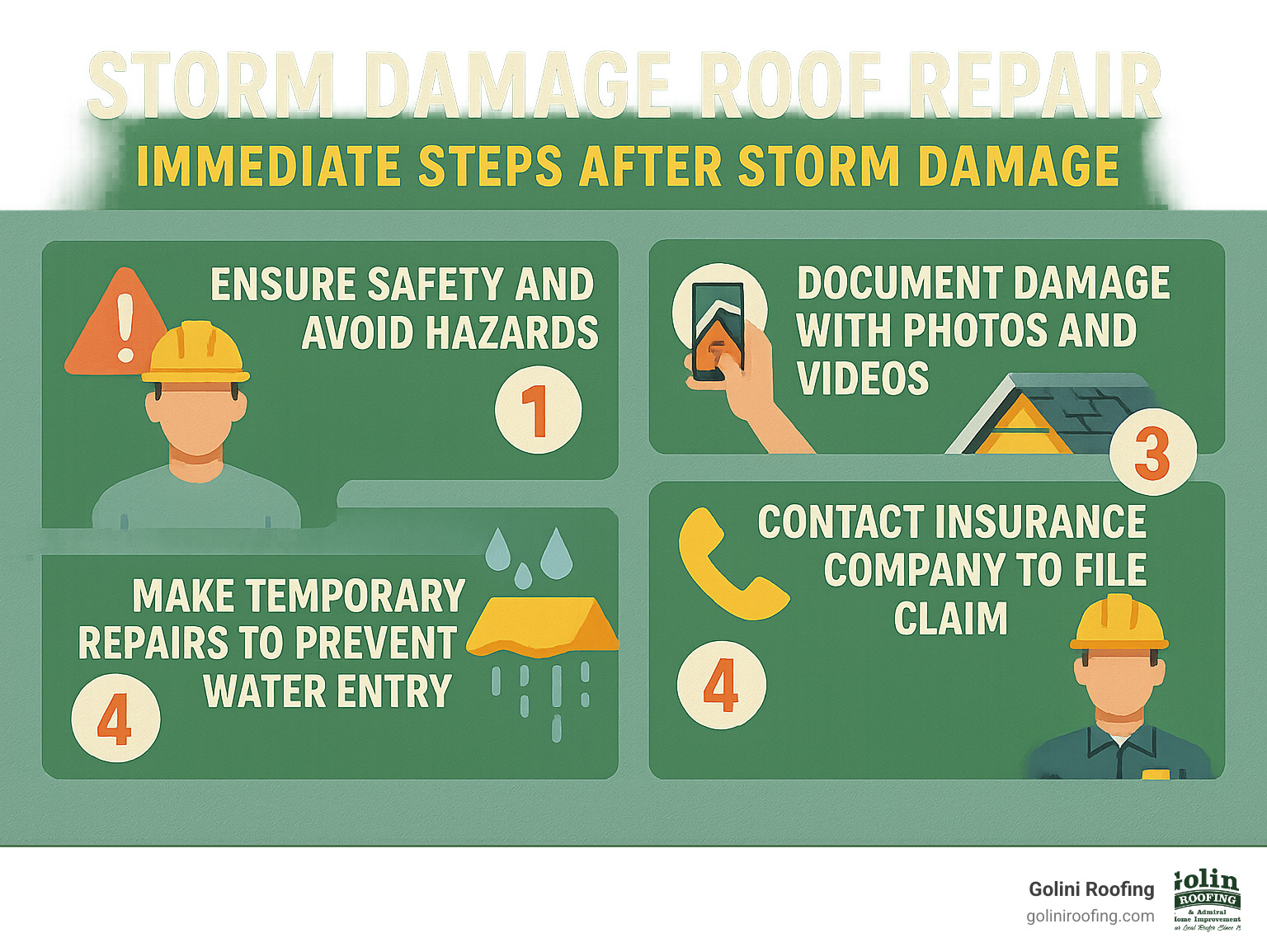
Here are the first steps to take:
- Safety First: Never climb on a damaged roof. Inspect it from the ground.
- Document Everything: Take photos and videos for your insurance claim.
- Make Temporary Fixes: Use a tarp to prevent water from entering your home.
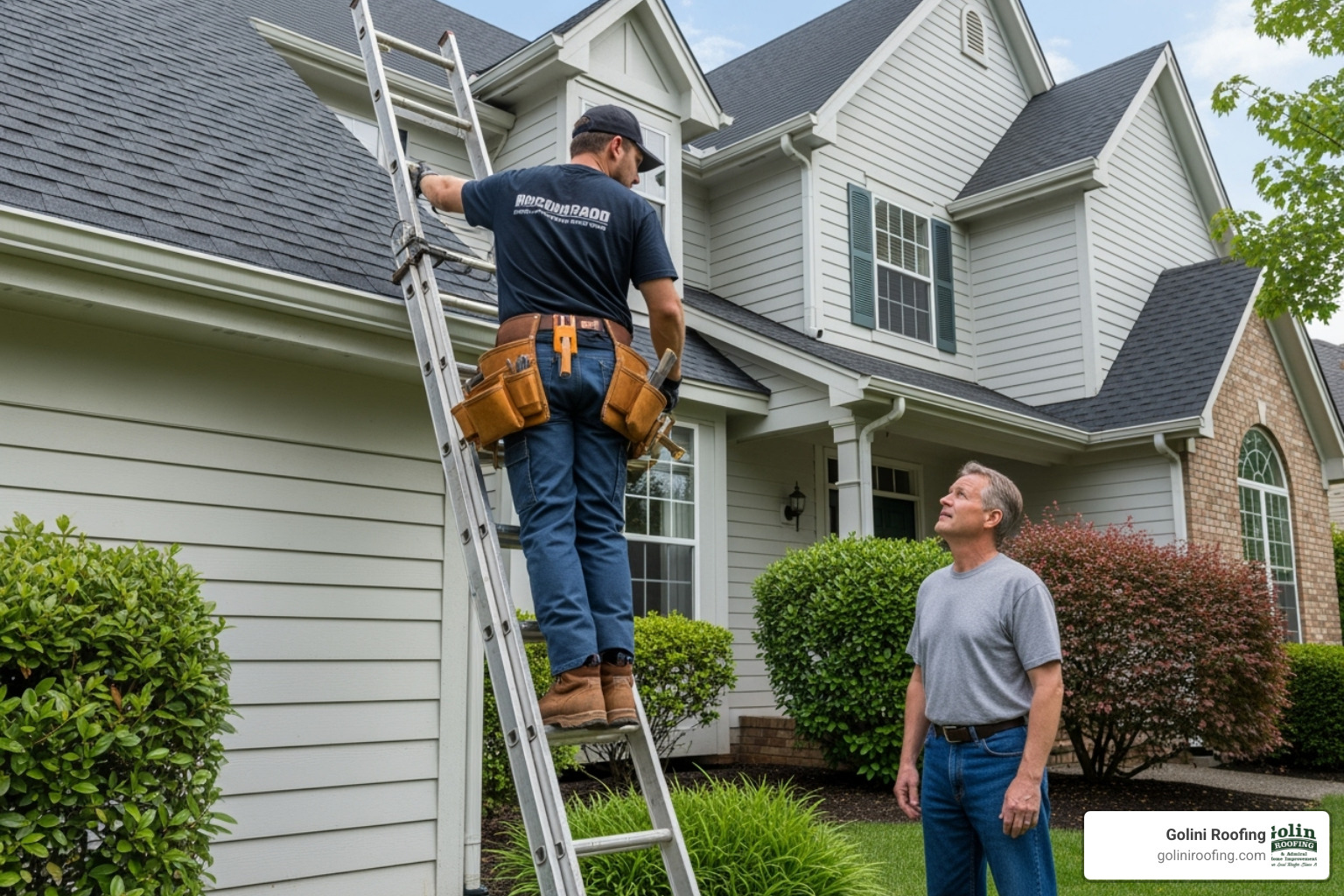
- Contact Professionals: A licensed contractor can assess the full extent of the damage.
- File Your Claim Promptly: Most insurance policies have strict time limits.
High winds can tear off shingles, while hail can knock off protective granules, creating “bruises” on asphalt shingles. Even small gaps can let in heavy rain, leading to water stains on your ceilings and walls. What looks like minor damage can quickly escalate if water gets inside.
I’m Jack Golini, and with over 35 years of experience, I’ve been helping Massachusetts homeowners with storm damage roof repair since 1982. My team at Golini Roofing is committed to protecting your property, and we have an impeccable record to prove it.
The First 24 Hours: Your Immediate Storm Response Plan
The moments after a storm are critical. Taking swift, informed action can prevent minor roof damage from escalating into a costly catastrophe. While the aftermath can be stressful, a clear plan helps you manage the situation effectively.
Prioritize Safety Above All Else
Before assessing any damage, your top priority must be safety. Storms leave behind hidden dangers.
- Downed Power Lines: Never approach downed power lines. Assume they are live and report them to your utility company.
- Unstable Structures: If you see sagging or leaning in your roof or attic, evacuate immediately and call for emergency help.
- Fallen Trees and Debris: Be wary of large branches on your roof, as they could be unstable. If a tree has fallen on your home, stay out and call a professional.
- Active Leaks: If water is leaking near electrical outlets, turn off the main power supply. Use buckets to catch water and protect your belongings.
Your family’s safety comes first. Do not climb onto a damaged roof; leave inspections to professionals.
Conduct a Safe, Ground-Level Inspection
Once it’s safe, begin your initial assessment from the ground. Use binoculars or walk across the street for a better view. This visual sweep can reveal many signs of trouble.
Look for these signs:
- Missing Shingles: High winds can rip shingles off, leaving exposed areas.
- Dents on Gutters and Downspouts: Dents on metal components are a strong indicator that hail also impacted your shingles.
- Debris on the Roof: Branches and other debris can cause punctures, cracks, or scrape away protective granules.
- Water Stains on Exterior Walls: Water entering the roof can travel down inside walls, staining the exterior siding.
- Granules in Gutters: An accumulation of shingle granules in your gutters indicates hail has knocked off the protective top layer, accelerating wear.
These observations will help you understand the scope of the damage.
Making Temporary Fixes to Prevent Further Damage
While professional storm damage roof repair is essential, immediate temporary fixes can prevent further water intrusion.
- Tarping Holes: Use a waterproof tarp to cover large holes or missing sections of roofing. Secure it tightly over the damaged area to prevent it from blowing away.
- Boarding Windows: If windows are cracked or shattered, board them up with plywood to prevent water, wind, and debris from entering.
- Removing Standing Water: Inside your home, remove any standing water immediately with a wet-dry vacuum or mops. Use fans and dehumidifiers to dry the area quickly and prevent mold growth.
For more detailed guidance, visit our guide on More info about emergency roof repairs.
The Aftermath: A Homeowner’s Checklist for Spotting Roof Damage
After a storm, it’s time to assess the damage. Not all problems are obvious; some of the most costly issues start small and hide in plain sight. Knowing what to look for is key to understanding the extent of the damage.
Common Types of Exterior Roof Damage
Your roof’s surface often shows clear evidence of a storm’s impact.
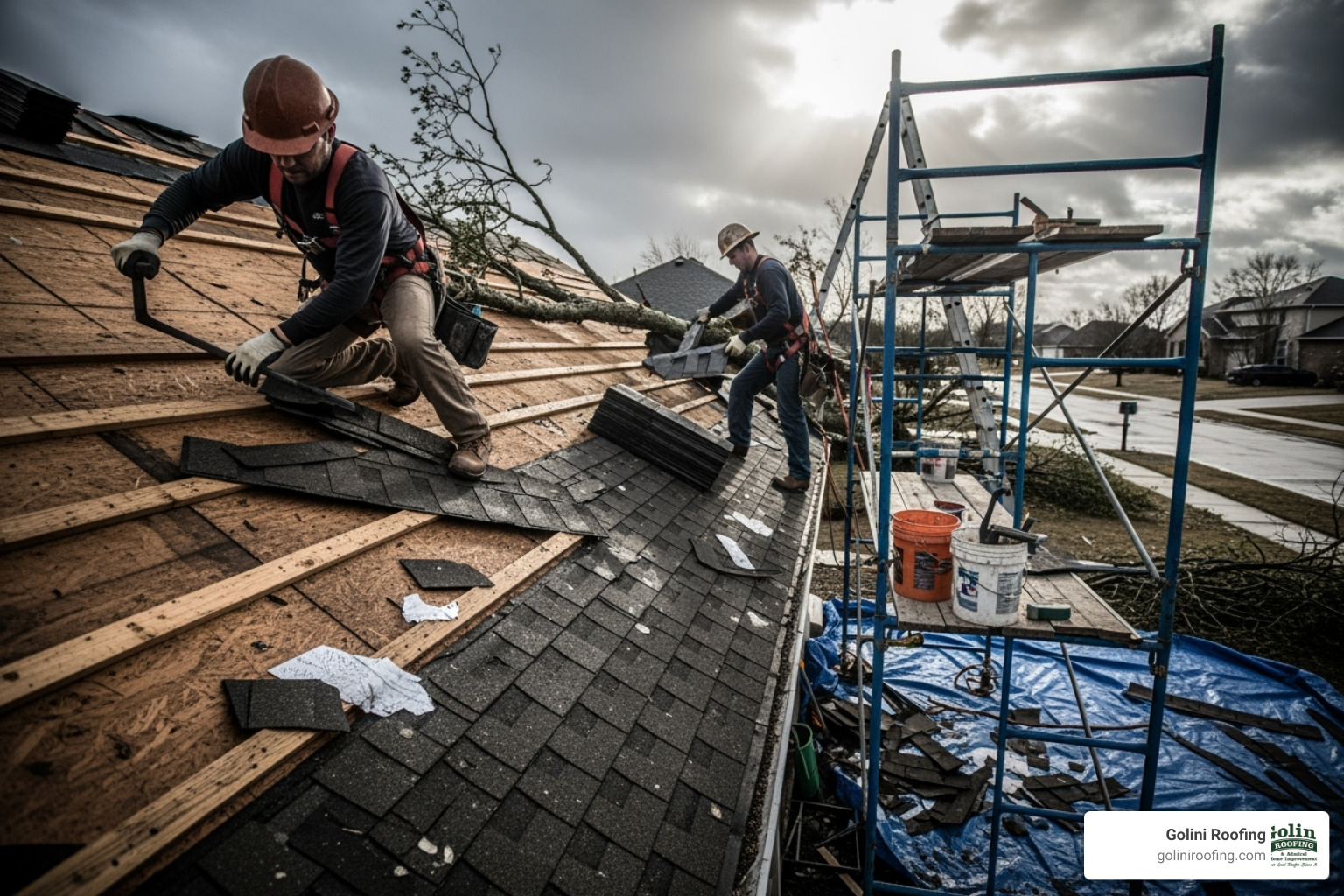
- Missing or broken shingles are an obvious sign of high winds, leaving your roof deck vulnerable.
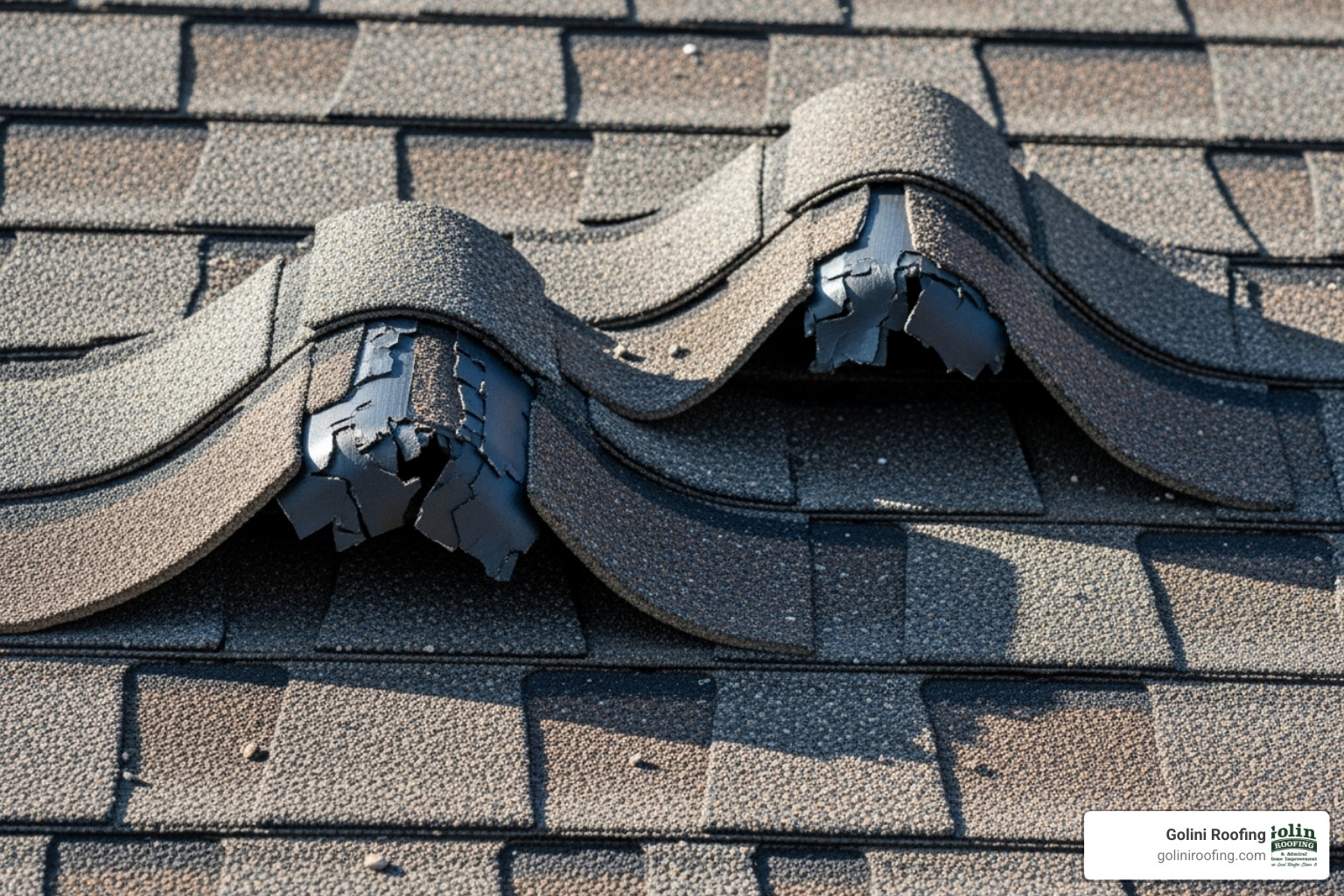
- Wind-lifted shingles with broken seals may still be attached, but the compromised adhesive bond allows water and debris underneath.
- Bruised or dented shingles appear as dark spots where hail has knocked away protective granules, accelerating aging.
- Granule loss in gutters is another clue. A sudden accumulation of these sand-like granules indicates significant hail impact.
- Damaged flashing around chimneys and vents is a serious issue, as it creates direct paths for water to enter.
- Dented vents and gutters are excellent indicators of hail. If these soft metal parts are damaged, your shingles likely are too.
- Exposed nail heads can occur when wind lifts shingles. These become potential leak points as they rust and loosen.
How Different Roofing Materials Are Affected
Different roofing materials show storm damage in unique ways.
- Asphalt shingles are vulnerable to hail, which creates bruises, and wind, which can tear them off. Repairs are typically straightforward.
- Metal roofing handles wind well but can be permanently dented by hail, which may affect drainage over time.
- Tile roofs (clay or concrete) can crack or break from hail or debris impact. High winds can also loosen tiles.
- Slate roofs are durable but can crack under severe hail or from falling branches. These hairline cracks are hard to spot but still allow water in.
- Wood shake roofs can split from wind or hail, and debris can cause punctures or gouges.
Don’t Forget to Check Inside Your Home
Some of the most expensive storm damage roof repair projects start with hidden leaks. An interior inspection is critical.
- Water stains on ceilings and walls are a major red flag. Water can travel along beams, so the stain may not be directly below the leak.
- Peeling paint or wallpaper can indicate moisture infiltration before visible stains appear.
- Sagging drywall is a serious sign of collected water. Puncture a small hole to drain it and prevent a larger collapse.
- An attic inspection can reveal damp insulation, dark streaks on wood, or daylight peeking through the roof deck.
- Musty odors often indicate hidden moisture and the potential for mold growth.
- Visible mold or mildew requires immediate attention, as it poses health risks and causes property damage.
A thorough assessment requires looking at your home from the outside-in and the inside-out.
Your Guide to Professional Storm Damage Roof Repair and Insurance Claims
Navigating storm damage roof repair and insurance claims can feel overwhelming, but it’s a manageable process with the right steps. We’ll guide you through documenting damage and finding a trustworthy contractor.
How to Document for a Storm Damage Roof Repair Claim
Thorough documentation is crucial for a smooth insurance claim. Your smartphone is your most valuable tool in this process.
- Photographs: Take wide shots of your property and close-ups of specific damage like dents, cracks, or missing shingles. Don’t forget to photograph interior damage like water stains.
- Videos: A walk-around video where you narrate what you see can provide valuable context for your claim.
- Written Notes: Keep a log of the storm date, your observations, and every conversation with your insurer or contractors.
- Professional Report: A detailed report from a roofing contractor provides a professional assessment that carries weight with insurance companies.
- Receipts: Keep all receipts for emergency repairs, such as tarps or plywood. These costs are often covered by your policy.
For additional help, the government provides disaster recovery resources at Get help with disaster recovery.
Navigating the Insurance Claim Process
Understanding the basics of the insurance process helps you advocate for yourself effectively.
- Contact Your Agent Promptly: Most policies have strict deadlines for reporting claims, so don’t wait.
- Understand Your Policy: Know your deductible and coverage limits before speaking with an adjuster. Pay close attention to whether you have Replacement Cost Value (RCV) or Actual Cash Value (ACV) coverage.
- RCV vs. ACV: RCV coverage pays to replace your roof with new materials of similar quality. ACV coverage pays the depreciated value of your roof based on its age. An RCV policy often means you only pay your deductible for a full replacement, as insurers prefer to prevent larger future claims from a compromised roof.
- Meet the Adjuster: Be present when the insurance adjuster inspects your property. Share your documentation and point out all the damage you’ve found.
- Handling Denials: If your claim is denied, understand the reason. You can gather more evidence and file a dispute. We work with insurance companies regularly and can help you steer this process. For more information, Learn about our roofing services.
Choosing a Reputable Local Roofing Contractor
After a storm, be wary of “storm chasers” from out of state who often perform shoddy work and disappear. Choosing a trusted local contractor is your best protection.
- Look for Local Roots: A contractor who lives and works in your community, like we do in towns from Wakefield to Reading, has a reputation to uphold.
- Verify License and Insurance: This is non-negotiable. Ask to see certificates for both liability and worker’s compensation insurance to protect yourself.
- Check for Storm Damage Experience: A contractor experienced in storm damage roof repair knows how to spot subtle issues and document them for insurance.
- Get a Written Contract: Always get a detailed contract outlining the scope of work, materials, costs, and workmanship warranties.
At Golini Roofing, we take pride in our old-school craftsmanship, including hand-nailing every shingle for maximum durability. You can Read our customer testimonials to see what our clients say.
Long-Term Strategy: Repair, Replace, and Reinforce
Once the immediate crisis is over, it’s time to decide on a long-term solution. This involves choosing between repair and replacement and taking steps to protect your home from future storms.
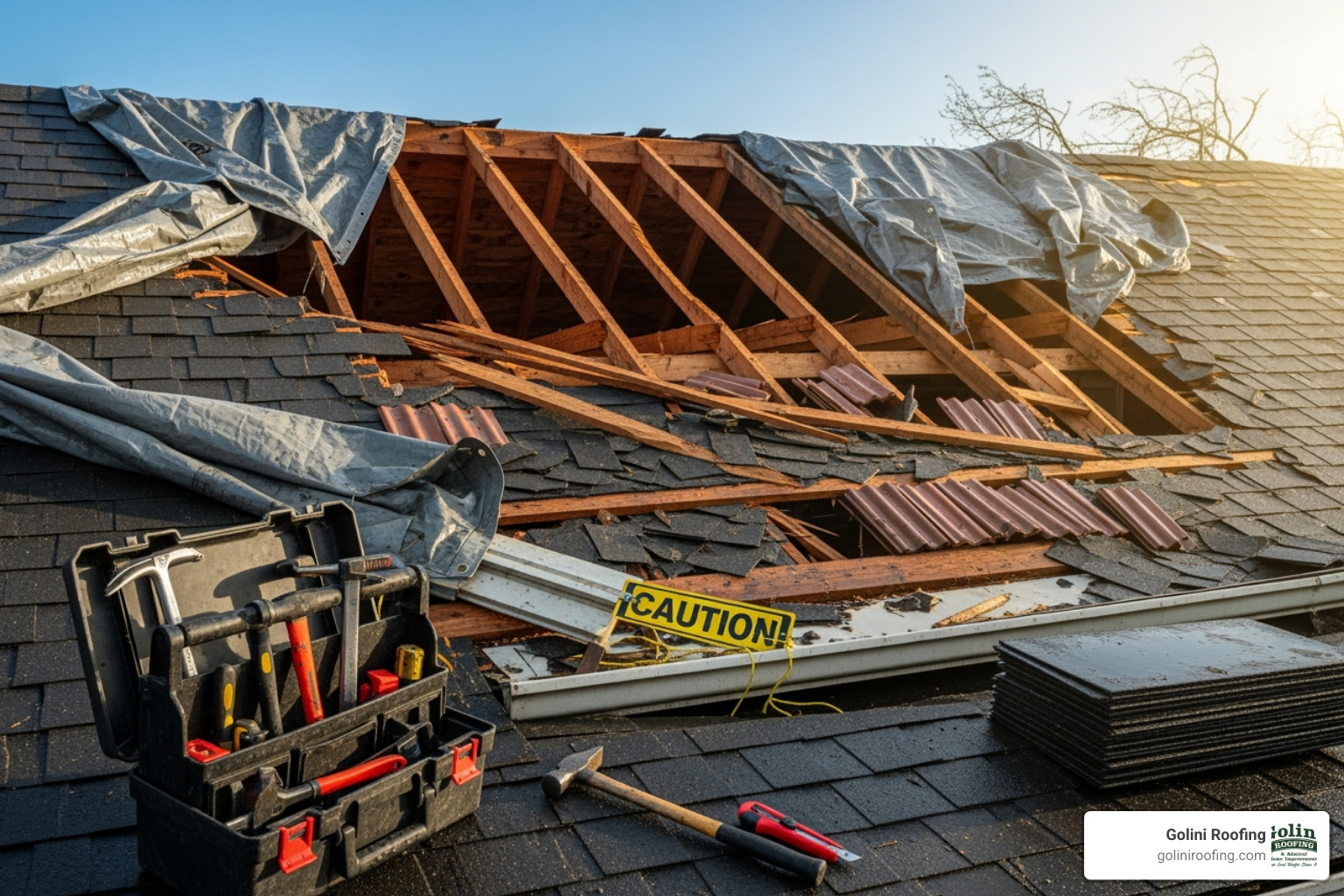
Deciding Between Storm Damage Roof Repair and Full Replacement
Clear guidelines can help you make the right choice for your home and budget.
- Extent of Damage: If damage is minor and localized, a repair is often sufficient. If it’s widespread, replacement is usually the smarter financial choice.
- Roof’s Age: If your asphalt shingle roof is over 18-20 years old, replacing it may be more sensible than patching it. For younger roofs with localized damage, repairs can extend its life for many more years.
- Cost-Benefit Analysis: While replacement costs more upfront, it provides a new warranty and decades of protection. If repairs are becoming frequent or costly, replacement is a better investment.
- Future Plans: A new roof boosts curb appeal and home value, which is a major benefit if you plan to sell. Modern materials also offer improved energy efficiency.
The Dangers of Delaying Repairs
Putting off storm damage roof repair will only lead to worse and more expensive problems.
- Water Infiltration: Even small breaches allow water into your attic and walls, often traveling far from the initial entry point.
- Structural Damage: Trapped moisture leads to rotting wood, which can compromise your home’s structural integrity.
- Mold Growth: Damp conditions are a breeding ground for mold, which poses serious health risks and is costly to remediate.
- Reduced Roof Lifespan: Minor damage accelerates your roof’s aging process, causing it to fail sooner than expected.
- Vulnerability to Future Storms: A compromised roof is far more likely to suffer catastrophic damage in the next storm.
Proactive Steps to Minimize Future Storm Damage
While we can’t control the weather, we can prepare our homes to withstand it.
- Regular Inspections: Have a professional inspect your roof annually and after any major storm to catch problems early.
- Clean Gutters: Clogged gutters cause water to back up under shingles, leading to leaks and ice dams.
- Trim Overhanging Branches: This eliminates a major source of impact damage during high winds.
- Upgrade Materials: When it’s time for a new roof, consider impact-resistant shingles or metal roofing for superior storm protection.
- Reinforce Components: Proper installation with better fastening and stronger underlayment creates a more durable roof system.
With over 35 years of experience in Massachusetts, we know that quality installation makes all the difference. Our hand-nailing technique ensures every shingle is properly secured for maximum durability. See our work in Winchester, MA.
Frequently Asked Questions about Storm Damage
After a storm, homeowners have many questions about storm damage roof repair. With over 35 years of experience helping Massachusetts families, we’ve compiled answers to some of the most common concerns.
How much does storm damage roof repair typically cost?
Costs vary widely depending on the extent of the damage. Minor repairs, like replacing a few shingles, might cost a few hundred dollars. More significant damage can range from $3,000 to over $10,000. A full roof replacement typically starts around $10,000 and can exceed $30,000 for larger homes or premium materials.
These are general industry averages, not a quote from Golini Roofing. We provide detailed estimates after a thorough inspection. The good news is that your homeowners insurance often covers most of these costs, leaving you to pay only your deductible.
Will filing a storm damage claim increase my insurance premium?
This is a common worry, but claims for “acts of God” like wind or hail storms typically have less impact on your individual premium than claims related to negligence. Insurers understand that severe weather affects entire regions. However, filing multiple claims in a short period or widespread regional storm activity could lead to rate adjustments. It’s always best to discuss the potential impact with your insurance agent.
How long does a roof repair or replacement take after a storm?
The timeline depends on several factors. The initial inspection and estimate usually take a few days. Insurance approval can take anywhere from a few days to several weeks, especially after a widespread storm. Material availability and weather delays can also affect the schedule.
Once work begins, minor repairs can often be done in a single day. More extensive repairs might take 2-5 days. A full roof replacement on a standard home usually takes a few days to a couple of weeks. We keep you informed throughout the process and work efficiently without compromising our commitment to quality, which includes hand-nailing every shingle for long-term durability.
Secure Your Home with an Expert Repair
When the storm clears, your response in the following days determines whether you face a manageable repair or a homeowner’s nightmare. The key to a quick recovery is working with the right roofing contractor. Storm damage roof repair isn’t just about fixing what’s broken; it’s about protecting your family and your home’s future.
At Golini Roofing, we’ve helped Massachusetts homeowners steer these exact situations for over 35 years. We’ve seen every type of storm damage imaginable and know how to spot both obvious and hidden issues.
What sets us apart is our commitment to doing things the right way. We take the time to hand-nail every single shingle—a detail that ensures your roof will protect your home for decades, not just years. When you choose us, you’re getting a roof that’s ready for the next New England storm.
Don’t let storm damage escalate. The longer you wait, the more complex and expensive repairs become. What starts as a few missing shingles can quickly lead to water damage, mold, and structural issues.
Ready to restore your peace of mind? Contact us today for a comprehensive storm damage assessment. We provide straight answers, fair pricing, and the expert craftsmanship your home deserves.
