
Types of Rain Gutters: Ultimate Guide 2025
The Essential Guide to Rain Gutters
Understanding the various types of rain gutters is key to protecting your home from water damage, erosion, and basement flooding. Gutters catch rainwater from your roof and guide it safely away from the foundation, preserving your home’s structural integrity and appearance.
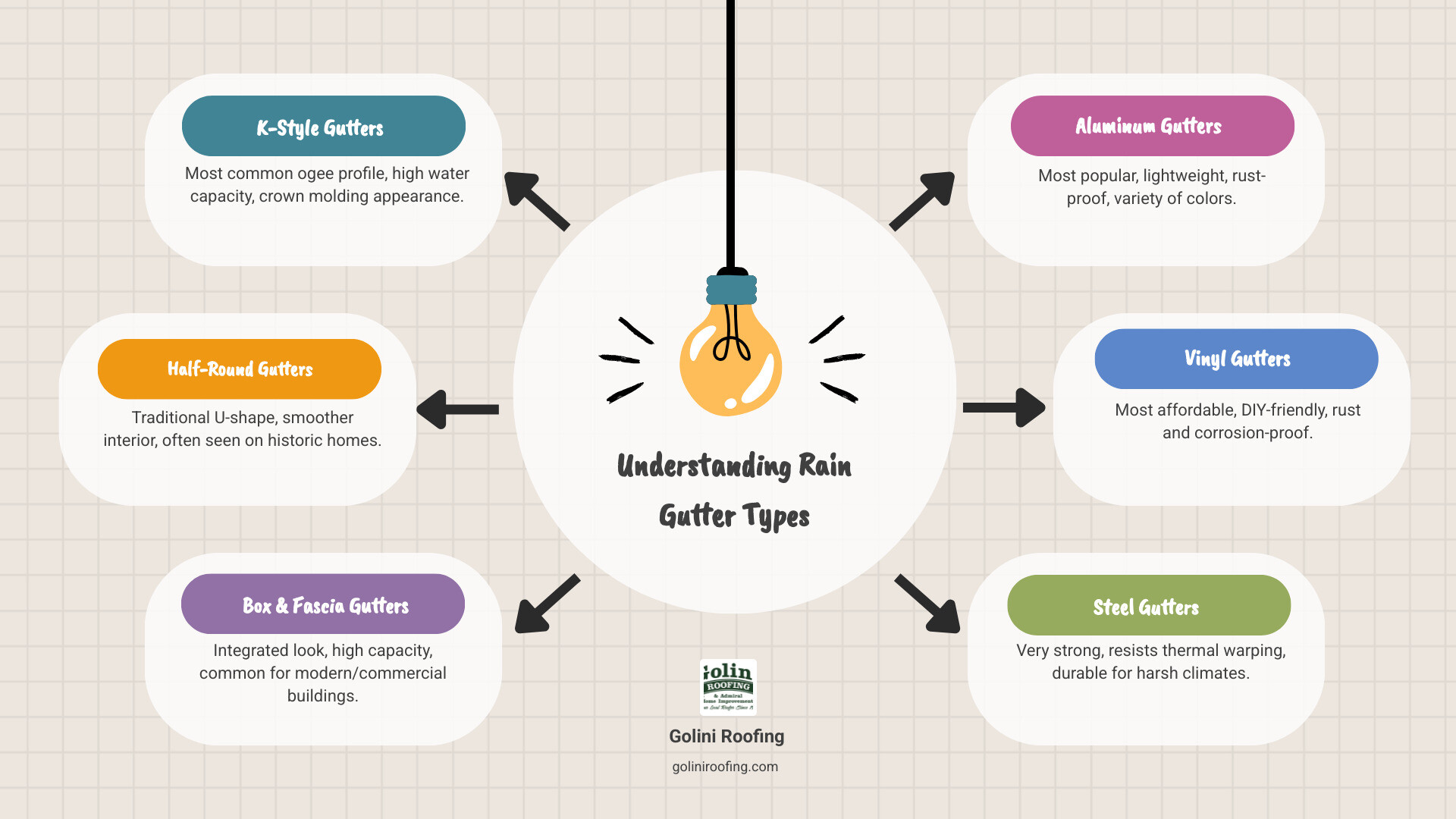
Gutters are categorized by their shape and the material they are made from.
Gutter Styles:
- K-Style: The most common shape, resembling crown molding.
- Half-Round: A traditional, U-shaped gutter.
- Box Gutters: Large, custom-built, and integrated into the roofline.
- Fascia Gutters: A type of box gutter that covers the fascia board for a clean look.
- Seamless Gutters: Made from one continuous piece.
- Sectional Gutters: Come in pre-cut pieces joined together.
Common Gutter Materials:
- Aluminum: Lightweight, rust-proof, and popular.
- Vinyl: Affordable and easy for DIY.
- Steel: Strong, durable, and often galvanized.
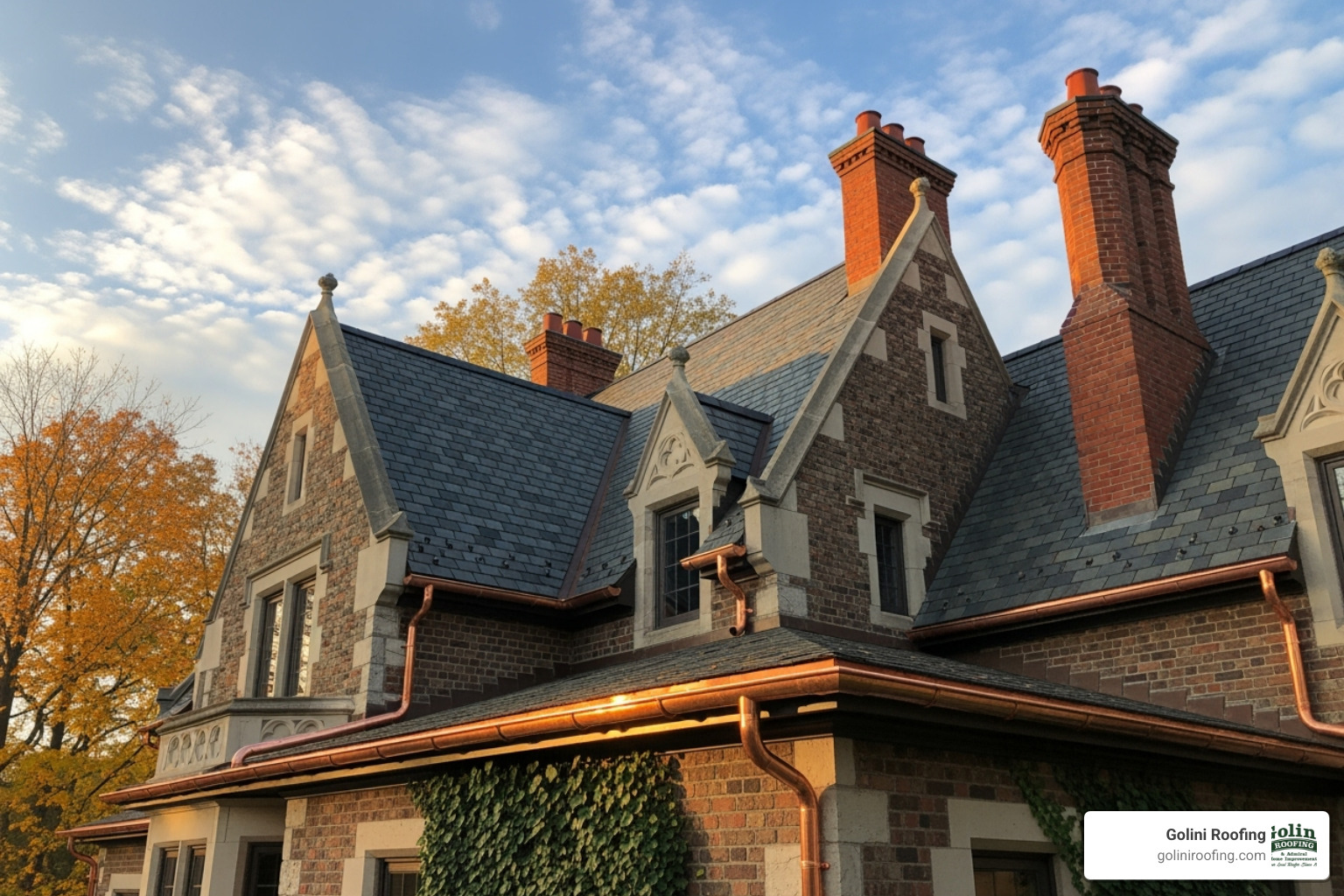
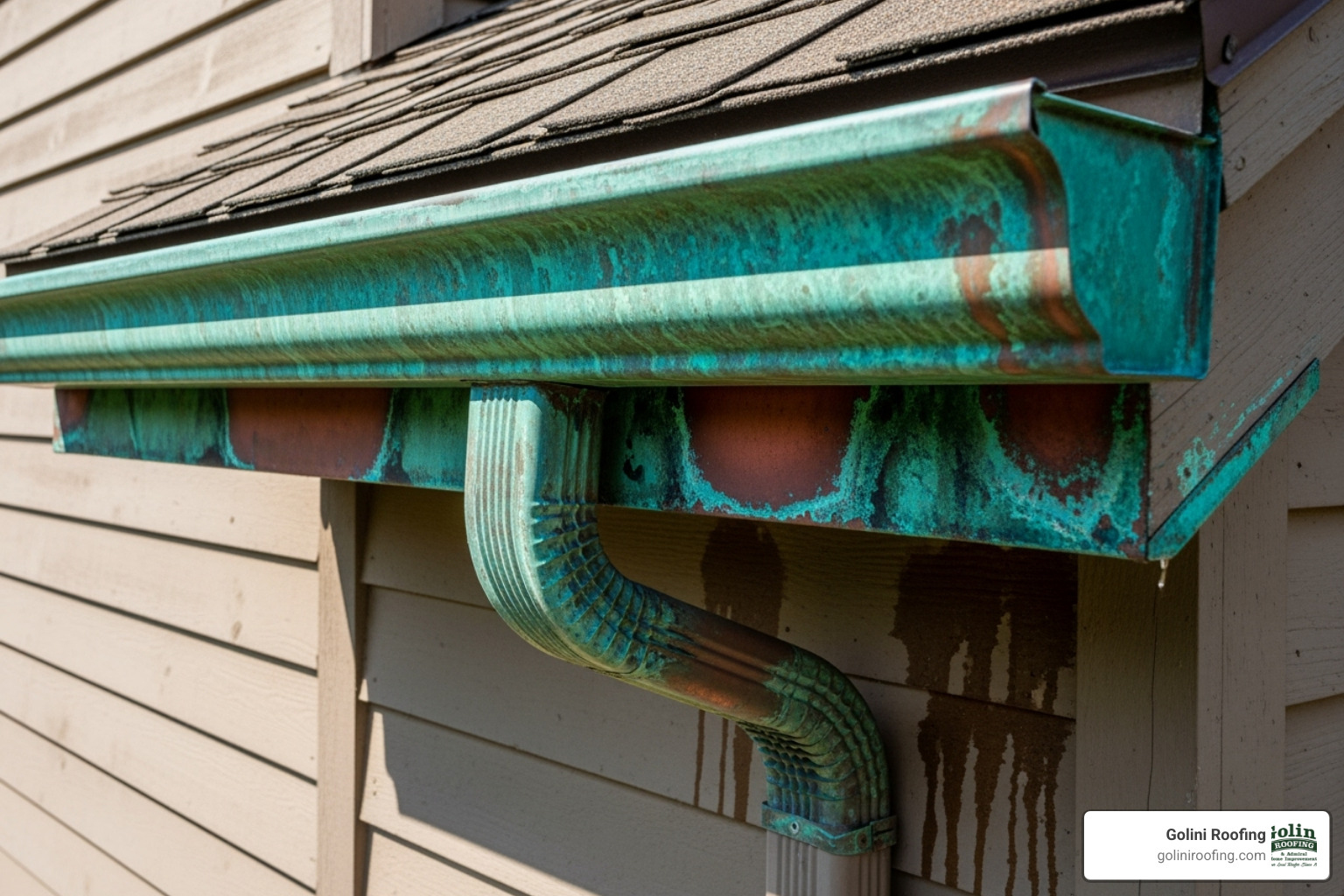
- Copper: Premium, very durable, with a unique patina.
- Zinc: Another long-lasting and strong premium option.
Choosing the right gutter system depends on your home’s style, local climate, and budget.
I’m Jack Golini, owner of Golini Roofing. With over 35 years in the industry, I know how crucial the right types of rain gutters are for protecting your home. My team focuses on expert craftsmanship to ensure your home is well-protected.
Gutter Styles: Matching the Shape to Your Home’s Architecture
Gutter style refers to the gutter’s profile or shape. Each style offers a distinct look and performance level, matching different home architectures and water management needs. A complete system includes essential parts like downspouts (to carry water to the ground), hangers (to secure the gutter), end caps (to seal the ends), and elbows (to direct downspouts). Understanding these components is key to a functional system.
K-Style Gutters
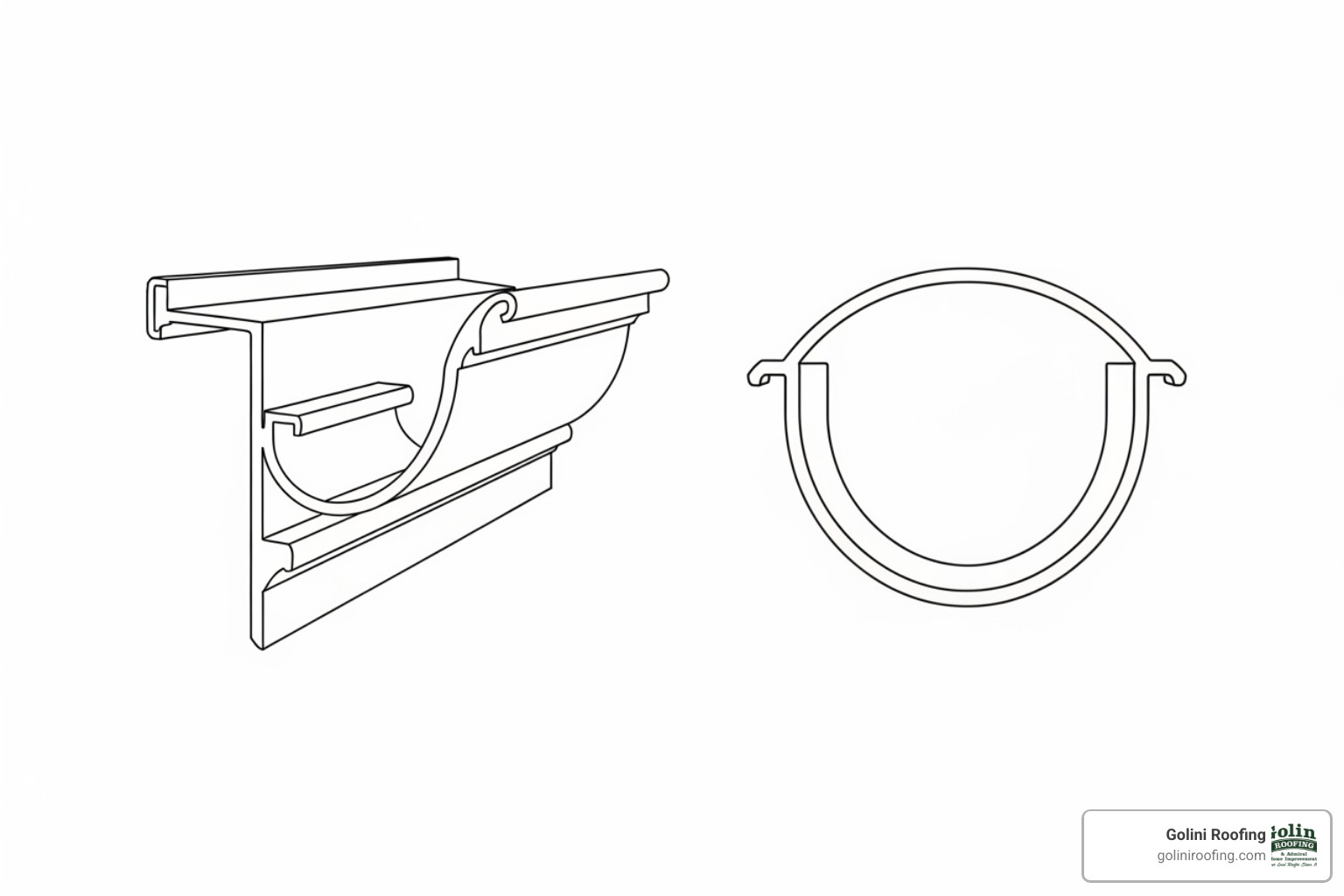
K-style gutters are the most common type in the U.S., found on most homes built in the last 50 years. Their ogee profile resembles crown molding, blending with traditional and modern architecture. Functionally, their shape allows them to carry more water than half-round gutters of the same width, making them ideal for areas with heavy rainfall. They typically come in 5- or 6-inch sizes, with larger options available. The flat back allows for easy installation directly to the fascia board. However, their angular corners can collect debris, requiring more frequent cleaning. For more information on how gutters integrate with your home’s roofing system, check out our insights on More info about Gutters and Roofing.
Half-Round Gutters
Half-round gutters have a traditional, U-shaped profile, often seen on older or historic homes. Their smooth, rounded interior is easier to clean and less prone to corrosion because debris doesn’t snag on corners. While they carry less water than K-style gutters, they are an excellent choice for preserving a classic aesthetic. They typically come in 4- or 5-inch sizes and require external brackets for installation, which adds to their traditional look but also the installation complexity.
Box and Fascia Gutters
Box and fascia gutters offer an integrated approach to water management, ideal for commercial buildings and modern homes seeking a streamlined look. Box gutters are built into the roof structure, hiding them from view and providing very high water capacity. Fascia gutters are a type of box gutter that replaces the fascia board, creating a sleek, seamless line. Both are custom-built, making them more expensive and requiring professional installation due to their complexity. Industry sources suggest that fascia gutters can cost twice as much as K-style or half-round options. They are recommended for those who prioritize a minimalist aesthetic and superior water handling. For comprehensive information on professional gutter installation services, visit our page on More info about Gutter Installation.
Gutter Materials: A Deep Dive into Durability, Cost, and Lifespan
Choosing the right gutter material is a critical decision that impacts your system’s longevity, weather resistance, maintenance needs, and overall cost. Key factors include the local climate, your home’s aesthetic, and your budget for both upfront and long-term investment. Here’s a look at the most common types of rain gutters materials:
| Material | Average Cost per Linear Foot (Installed)* | Lifespan (Years) | Pros | Cons |
|---|---|---|---|---|
| Vinyl | $3 – $7 | 10 – 20 | Most affordable, DIY-friendly, rust-proof, lightweight | Can become brittle in cold, colors may fade, less durable |
| Aluminum | $6 – $12 | 20 – 30 | Lightweight, rust-proof, wide range of colors, popular | Can dent easily, may warp in extreme heat |
| Steel | $8 – $20 (Galvanized), $15 – $40 (Stainless) | 20 – 25 (Galvanized), 50+ (Stainless) | Very strong, resists thermal warping, good for harsh climates | Heavy, galvanized rusts over time, higher cost, difficult DIY |
| Zinc | $30 – $60 | 50 – 100 | Extremely durable, develops attractive patina, no rust | Very expensive, requires specialized welding, not ideal for salty air |
| Copper | $15 – $40 (up to $80 for high-end) | 50 – 100+ | Premium aesthetics, extremely durable, no rust, distinctive patina | Most expensive, requires specialized welding, professional installation |
*Note: These are average costs based on internet data and not actual costs for Golini Roofing. Prices can vary widely based on location, complexity of installation, and specific product choices.
Aluminum Gutters
Aluminum is the most popular residential gutter material, accounting for about 70% of installations. It offers a great balance of features: it’s lightweight, rust-proof, and available in a wide variety of colors. For best results, we recommend a thickness of at least .027 or .032 inches to resist denting. With proper installation, aluminum gutters can last 20 to 30 years. While DIY materials are cheaper, professional installation typically ranges from $6 to $12 per linear foot. For more details on the costs associated with seamless aluminum gutters, please visit our page on More info about Average Cost Seamless Gutters.
Vinyl Gutters
Vinyl gutters are the most budget-friendly and DIY-friendly option due to their low cost and lightweight nature. They are also naturally rust and corrosion-proof. The downsides include becoming brittle and cracking in cold climates and colors fading in direct sunlight. Vinyl gutters typically last around 20 years, though this can be shorter in extreme weather.
Steel Gutters
Steel gutters offer superior strength, making them ideal for harsh climates with heavy snow as they resist thermal warping. Galvanized steel is coated in zinc to prevent rust but will eventually corrode. Stainless steel offers better rust resistance and a longer lifespan at a higher cost. Steel is heavy, making installation challenging and best left to professionals. Steel gutters generally last 20 to 25 years. If you’re experiencing issues with your existing steel gutters, our team can help. Learn more about our More info about Gutter Repair Service.
Copper and Zinc Gutters
Copper and zinc are premium gutter materials known for incredible durability, long lifespans, and distinct aesthetics, often chosen for luxury or historic homes. Neither material will rust. Copper is famous for developing a beautiful greenish patina over time, which protects the metal, and can last 100 years or more. Zinc also offers exceptional longevity of 50 to 100 years, developing a soft, matte gray patina. Both require specialized welding and professional installation. Zinc may not be ideal for coastal homes due to salt in the air.
Seamless vs. Sectional Gutters: Which is Right for You?
Beyond style and material, you must decide between seamless and sectional construction. This choice impacts your gutter’s appearance, performance, and maintenance needs. Sectional gutters come in pre-cut pieces (usually 10 feet long) joined on-site. Seamless gutters are custom-formed from one continuous piece at your home. Understanding the pros and cons of each will help you choose the best fit.
Seamless Gutters
Seamless gutters are the modern gold standard. A specialized machine forms a single, continuous piece of metal (usually aluminum) on-site to perfectly fit your roofline. The primary advantage is the lack of seams, which drastically reduces the potential for leaks and protects your foundation and landscaping. Fewer seams also mean fewer places for debris to snag, resulting in less maintenance. Seamless gutters provide a sleek, clean appearance that improves curb appeal. While the upfront cost is higher due to specialized equipment and professional installation, the long-term benefits of reduced leaks and maintenance make them a worthwhile investment. Seamless gutters always require professional Gutter Installation.
Sectional Gutters
Sectional gutters are the traditional option, available in pre-cut 10-foot sections from home improvement stores. Their lower material cost makes them a popular choice for DIYers. Sections are joined using connectors and sealants. However, these seams are the primary drawback. Each joint is a potential weak spot where leaks can develop as sealants degrade over time. The seams can also snag debris, leading to more frequent clogs and maintenance. While economical upfront, the higher risk of leaks and need for more upkeep can make them less cost-effective in the long run.
Essential Gutter Knowledge: From Installation to Maintenance
Now that you know the different types of rain gutters, let’s cover other essential knowledge. Choosing the right system involves considering installation and ongoing care. Making smart choices about your home, climate, and budget is key. We’ll cover the factors to consider, maintenance tips, and when to hire a professional.
Factors to Consider When Choosing Your Gutters
When choosing gutters, consider these key factors for your Massachusetts home:
- Local Climate: Our region’s heavy rain and snow impact gutter choice. A standard 5-inch gutter works for many homes, but larger roofs or areas with heavy precipitation may need 6-inch or 7-inch gutters to handle the water volume. Materials like steel are excellent for heavy snow, while aluminum is a versatile all-rounder.
- Architectural Style: Gutters affect curb appeal. Half-round gutters suit historic homes, while K-style gutters blend with most traditional and modern designs. For a minimalist look, box and fascia gutters offer a clean, integrated line.
- Overall Budget: Balance cost with durability. Vinyl is the most budget-friendly option, while premium copper and zinc offer exceptional longevity and a unique look. For a deeper dive into what you might expect to pay, check out our guide on More info about Gutter Replacement Cost.
Gutter Protection and Maintenance
Gutter protection systems help keep debris out, reducing cleanings and preventing clogs. Common options include screens, micro-mesh, brushes, foam filters, and solid covers like helmets or hoods.
Even with protection, regular maintenance is vital. Clean your gutters at least twice a year (spring and fall), or more often if you have overhanging trees. Also, watch for signs of damage:
- Visible cracks or splits
- Peeling paint on or around gutters
- Rust on steel gutters
- Water stains on your fascia or foundation
- Sagging or gutters pulling away from the house
Catching these issues early prevents costly damage. If you suspect a problem like a clogged downspout, our team can help! Learn more about our More info about Clogged Downspout Repair.
DIY Installation vs. Hiring a Professional
Installing sectional vinyl or aluminum gutters can be a DIY project if you’re handy. These materials are lightweight and require basic tools. However, risks include incorrect pitch (leading to clogs), improper fastening (causing sagging), and the danger of working on a ladder.
For complex systems like seamless, box, or fascia gutters, or for heavy materials like copper and zinc, professional installation is strongly recommended. These require specialized equipment, expertise like welding, and a deep understanding of roof drainage.
At Golini Roofing, we apply the same meticulous detail to gutters as we do to hand-nailing shingles. Our 35+ years of experience ensure your gutters are pitched perfectly and secured safely for optimal performance. For peace of mind and a job done right, call a professional Gutter Company like ours.
Frequently Asked Questions About Types of Rain Gutters
Curious about your gutters? You’re not alone! At Golini Roofing, we hear a lot of great questions about types of rain gutters and how to care for them. Let’s tackle some of the most common ones we receive from homeowners like you:
How long do different types of gutters last?
The lifespan of your gutters depends heavily on the material. Here’s a general guide for the different types of rain gutters:
- Vinyl: 10-20 years
- Aluminum: 20-30 years
- Galvanized Steel: 15-20 years
- Stainless Steel: 50+ years
- Zinc: 50-100 years
- Copper: 100+ years
Regular cleaning and prompt repairs can significantly extend the life of any gutter system.
What is the most common gutter size?
The most common gutter size for residential homes is 5 inches wide, which is adequate for typical rainfall. However, a 6-inch width is a better choice for homes with large or steep roofs, or for areas that experience heavy rain, as it can handle a greater volume of water and prevent overflows. Larger, custom sizes are also available for commercial buildings or unique designs. Choosing the correct size is key to effective water management.
How often should gutters be cleaned?
We recommend cleaning your gutters at least twice a year: once in the spring to clear out pollen and winter debris, and again in the late fall after the leaves have fallen. If your home is surrounded by trees, more frequent cleanings may be necessary. Regular cleaning prevents clogs, which can lead to water overflow, foundation damage, and pest infestations.
Protect Your Investment with the Right Gutters
We’ve covered the various types of rain gutters, including their styles, materials, and construction. Making the right choice is a big decision that impacts your home’s curb appeal and its long-term protection. A well-chosen, expertly installed gutter system is a crucial investment in your home, safeguarding your foundation and preventing costly water damage.
With over 35 years of experience serving Massachusetts communities like Burlington, Lynnfield, North Reading, Reading, Stoneham, Wakefield, Wilmington, Winchester, and Woburn, we’ve seen the difference quality makes. We apply the same dedication and craftsmanship to our gutter installations as we do to hand-nailing every shingle. Our goal is to ensure your home is protected year after year.
Don’t let faulty gutters put your home at risk. For expert advice and professional rain gutter services you can trust, contact us today. We’re here to help keep your home safe and sound!
Like us on Facebook!
