
What is a Roofing Square in Measurement: 2025 Master
Understanding the Basics of Roofing Square Measurement
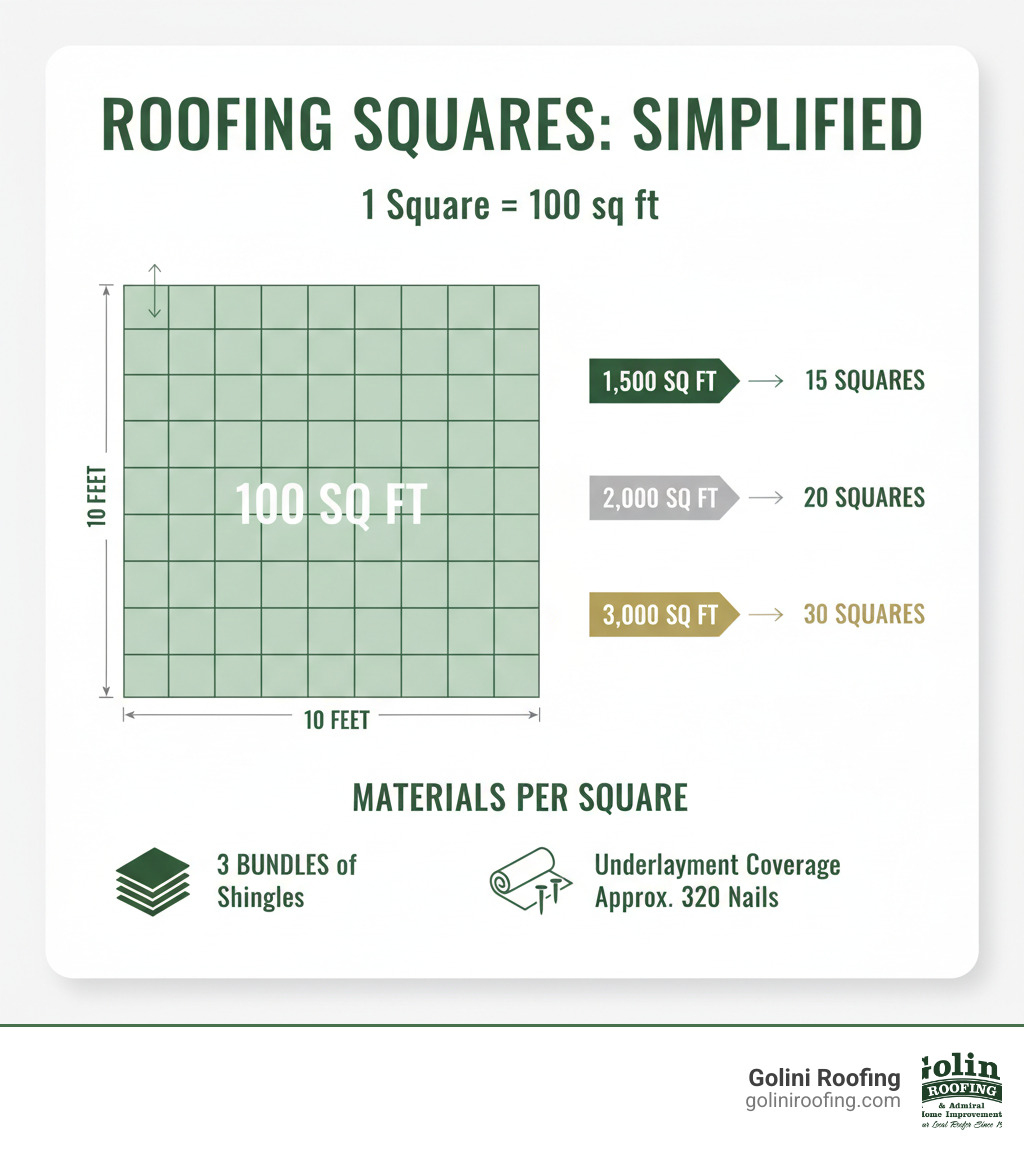
What is a roofing square in measurement? A roofing square is a standardized unit of measurement used in the roofing industry that equals exactly 100 square feet of roof surface, or a 10-foot by 10-foot area. This measurement simplifies material ordering, cost estimation, and communication between contractors and homeowners.
Quick Reference:
- 1 Roofing Square = 100 square feet
- Dimensions: 10 feet × 10 feet
- Example: A 2,000 sq ft roof = 20 roofing squares
- Standard materials per square: Approximately 3 bundles of asphalt shingles
If you’ve ever received a roofing estimate and heard your contractor mention “squares,” you might have felt confused. This industry term is essential to understanding your roof replacement project, from material quantities to final costs. Unlike measuring your home’s interior square footage, roofing squares account for the actual surface area that needs to be covered—including pitch, complexity, and waste.
The concept emerged because contractors needed a simpler way to calculate large roof areas. Instead of saying “2,500 square feet of shingles,” professionals say “25 squares.” This standardization makes ordering materials easier and helps ensure everyone—from manufacturers to installers—speaks the same language.
I’m Jack Golini, and since 1982, I’ve been helping North Shore homeowners steer roofing projects with clarity and precision. Understanding what is a roofing square in measurement is the first step to getting accurate estimates and avoiding costly mistakes on your roof replacement. Let me walk you through everything you need to know.
What is a Roofing Square in Measurement?
If you’ve ever scratched your head when a contractor mentioned “squares” during a roofing consultation, you’re not alone. What is a roofing square in measurement? It’s the industry’s standard unit of measurement that equals exactly 100 square feet of roof surface. Picture a perfect 10-foot by 10-foot area on your roof—that’s one square.
This standardized unit simplifies everything. Instead of juggling massive numbers for a 2,500 square foot roof, we simply say “25 squares,” and everyone from the manufacturer to the installer understands the project’s scope. This creates a universal language that reduces errors and ensures clear communication. When I tell you your roof is 24 squares, you can immediately understand how that translates to materials and costs, making the whole process smoother.
Why Professionals Use ‘Squares’ Instead of Square Feet
Homeowners often ask why we don’t just use square feet. The answer is pure efficiency. Imagine buying milk by the gallon instead of asking for 128 fluid ounces—it’s technically correct but unnecessarily complicated. That’s why roofing professionals adopted squares.
When working with roof areas that routinely exceed 2,000 square feet, a larger unit is faster and reduces the chance of mathematical errors that could cost you time and money.
The real magic is that roofing materials are packaged based on squares. A typical bundle of asphalt shingles covers about one-third of a square, meaning three bundles equal one square. Other materials follow similar patterns, which makes ordering straightforward.
This system also simplifies pricing. We can provide a cost per square that bundles materials and labor, making it much easier for you to compare quotes from other local roofing companies and understand what you’re paying for. To see how this pricing structure works in detail, visit our page on Roofing Price Per Square.
Is a Roof’s Square Footage the Same as a Home’s?
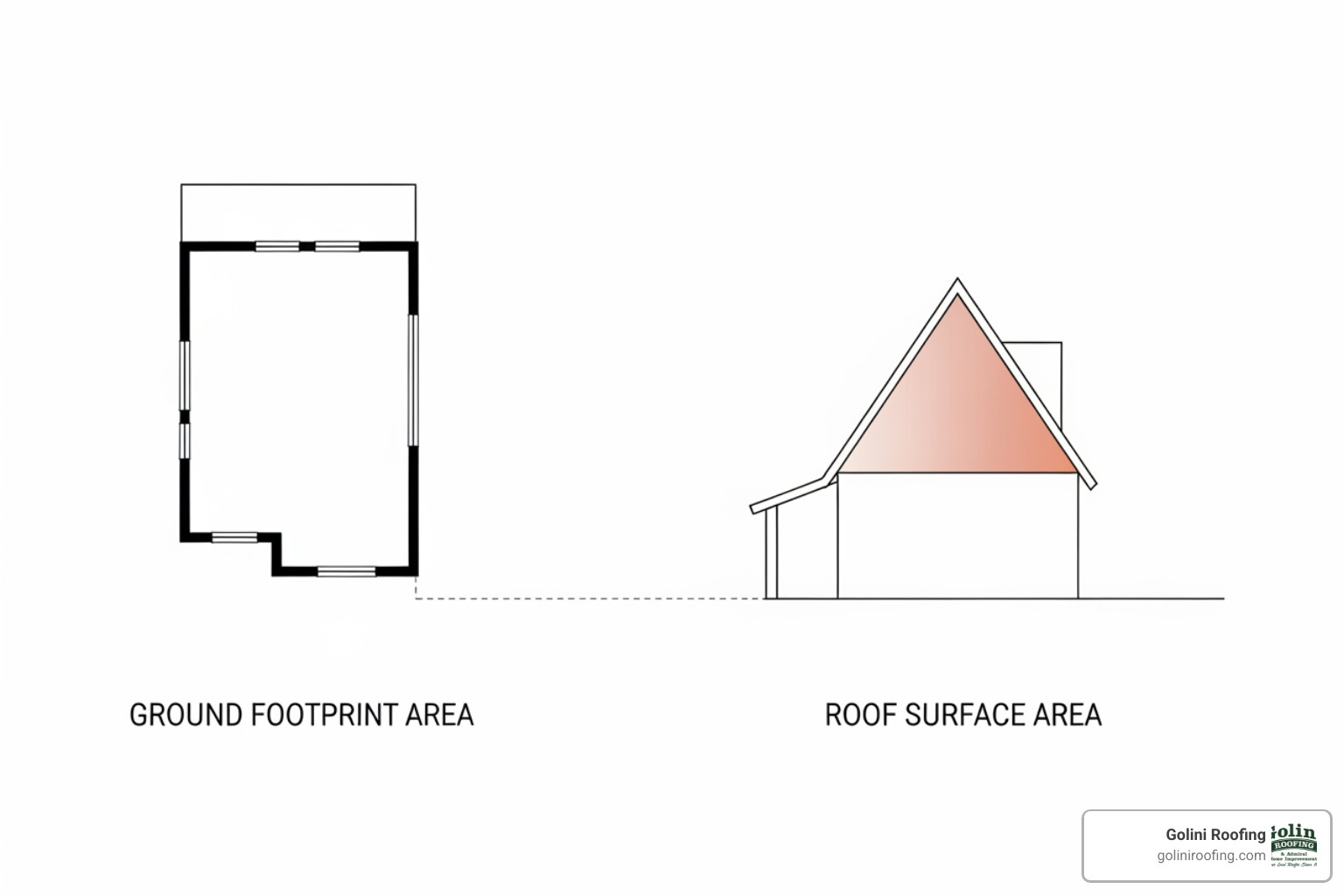
This is one of the most common misconceptions. Many people assume their 2,000 square foot home has a 2,000 square foot roof, but the roof’s surface area is almost always significantly larger—sometimes by 20% to 40% or more.
Roof pitch is the biggest factor. A sloped roof creates more surface area. Think of wrapping a present—the paper needs to be larger than the box’s footprint to cover the sides. The steeper your roof’s pitch, the more surface area it has.
Overhangs and eaves add considerable area too. Your roof extends beyond your walls to protect your siding and foundation, and this extra surface needs to be covered.
Finally, your roof covers spaces that aren’t part of your home’s living area, like a garage, a covered porch, or an attic. These all have roof surfaces that need shingles.
This is why we can’t use your home’s size to calculate material needs. We must measure the actual roof surface to give you an accurate estimate.
How to Calculate Roofing Squares for Your Home
Understanding how to calculate roofing squares yourself can be incredibly helpful when you’re planning a roof replacement. While we always recommend getting a professional measurement from an experienced team like ours at Golini Roofing for the most accurate results, knowing the basics gives you a solid starting point for budgeting and helps you better understand the quotes you receive.
If you’re thinking about doing a DIY estimation, safety must come first. Please don’t climb onto your roof if you’re uncomfortable with heights, if the roof is steep or wet, if there’s any damage, or if you lack proper safety equipment. The good news? You can actually take many useful measurements right from the ground using tools like measuring wheels or laser distance meters.
Step 1: Measure the Area of Each Roof Plane
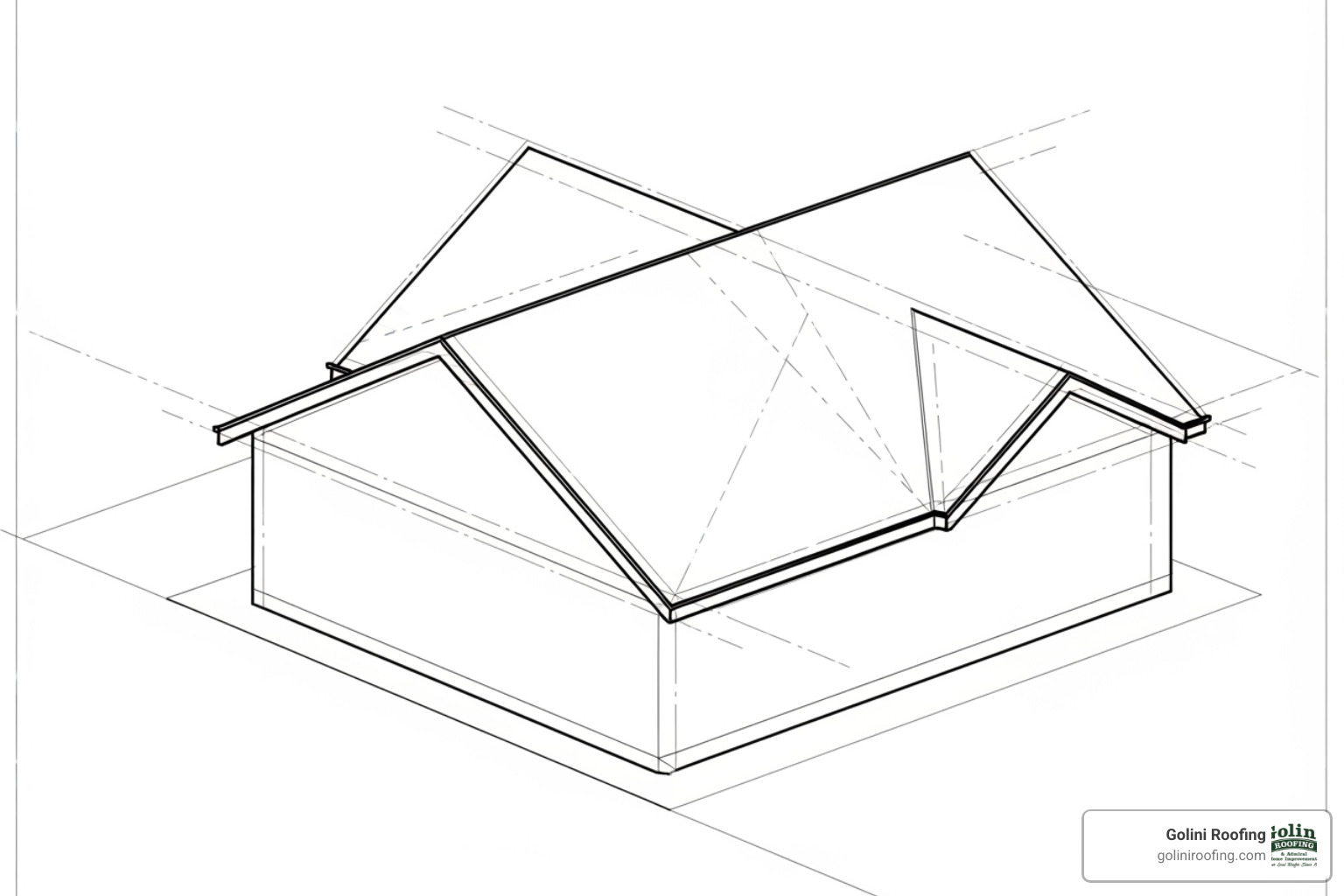
Your roof isn’t just one big flat surface—it’s made up of multiple sections called planes. Even a basic gable roof has at least two main planes (the front and back), while more complex roofs can have many more, including sections for dormers, hips, and valleys.
Here’s the approach that works best. Start by sketching your roof from a bird’s-eye view. Don’t worry about creating a masterpiece—just break your roof down into simple shapes like rectangles and triangles. This sketch becomes your roadmap for organizing all your measurements.
Next, measure the length and width of each rectangular plane in feet. Make sure you include the overhangs that extend past your home’s walls—these count as part of your roof surface! For any triangular sections, you’ll need to measure the base and the height instead.
Now comes the math part, but it’s easier than you might think. For each rectangular section, multiply length by width to get the square footage. For triangular sections, use the formula (base × height) ÷ 2. Write down the area for each plane as you go.
Finally, add all those individual areas together. This gives you your roof’s total square footage. Don’t forget any dormers or smaller sections—they all need to be included in your final number!
Step 2: Convert Total Square Footage to Roofing Squares
Once you know your roof’s total square footage, converting it to roofing squares is wonderfully simple. Here’s the formula that answers what is a roofing square in measurement in practical terms:
Total Roof Area (square feet) ÷ 100 = Number of Roofing Squares
Let’s walk through a real example. Say your measurements show your roof has 2,400 square feet of total surface area. You’d calculate it like this:
2,400 sq ft ÷ 100 = 24 roofing squares
You’ll often end up with a decimal number, like 24.5 squares. That’s completely normal! When ordering materials, we always round up to the nearest whole number. In this case, you’d order for 25 squares. It’s much better to have a bit of extra material for cuts, waste, or any surprises than to run short halfway through your project and face delays.
This conversion is exactly how we calculate material needs for every project at Golini Roofing, ensuring you get accurate estimates and the right amount of supplies delivered to your home.
Key Factors That Affect Your Roof’s Total Squares
Understanding what is a roofing square in measurement is just the beginning. While dividing your roof’s total square footage by 100 is a helpful start, other factors are critical for calculating the actual amount of material you’ll need. These elements, like pitch and complexity, can significantly impact your final quote.
Two homes with the same basic footprint can require substantially more materials than the other due to the roof’s design. These aren’t just technical details—they directly affect how much material we order and the labor time your project will require.
How Roof Pitch Increases Surface Area
Your roof’s pitch—its slope or steepness—is one of the most significant factors affecting its total surface area. A sloped roof covers much more surface area than a flat one, just as a blanket draped over a tent covers more ground than one laid flat.
Roof pitch is expressed as a ratio of rise over run, like 4/12 or 8/12. This means for every 12 inches of horizontal distance (the “run”), your roof rises a certain number of inches vertically (the “rise”). A 4/12 pitch is a gentle slope, while a 12/12 pitch is a steep 45-degree angle.
The steeper your pitch, the more surface area needs covering, and that means more roofing squares. We account for this using a pitch multiplier—a factor we apply to your roof’s flat measurements to get the true surface area.
Here’s how common roof pitches translate to actual coverage needs:
| Roof Pitch (Rise/Run) | Description | Approximate Multiplier |
|---|---|---|
| Flat to 3/12 | Low Pitch | 1.00 – 1.03 |
| 4/12 | Medium Pitch | 1.05 |
| 5/12 | Medium Pitch | 1.08 |
| 6/12 | Medium Pitch | 1.12 |
| 7/12 | Medium Pitch | 1.16 |
| 8/12 | Medium Pitch | 1.20 |
| 9/12 | High Pitch | 1.25 |
| 10/12 | High Pitch | 1.30 |
| 12/12 | Steep Pitch | 1.41 |
For example, a home with a 2,000 square foot footprint and a 6/12 pitch would be multiplied by 1.12, giving us 2,240 square feet—or about 22.4 roofing squares. That’s an extra 240 square feet of material compared to a flat calculation, which is why we can’t just use your home’s square footage.
Accounting for Roof Complexity and Waste
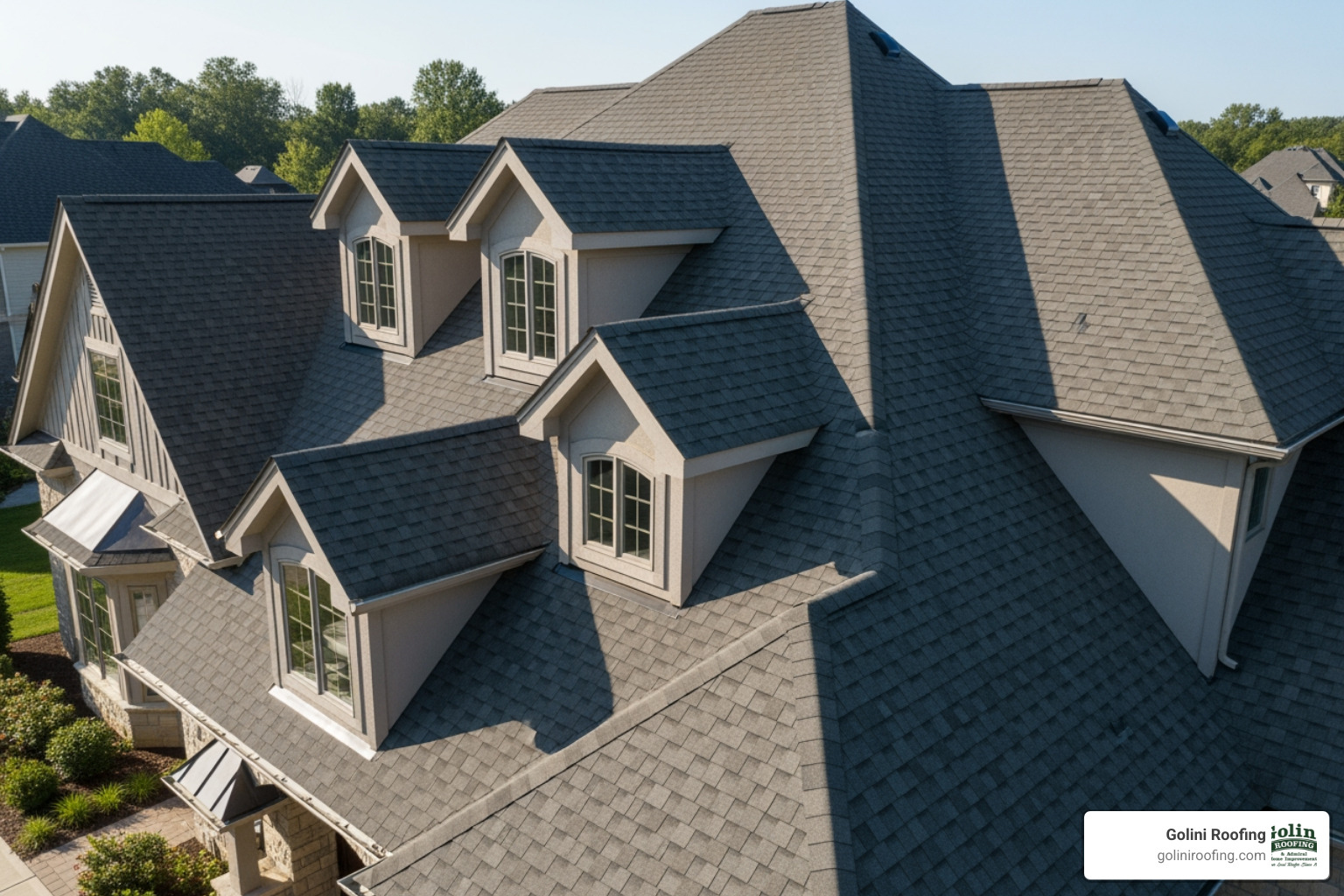
Beyond pitch, your roof’s design complexity plays a major role in determining the total squares needed. Every time we cut shingles to fit around hips, valleys, skylights, chimneys, or dormers, some material becomes unusable. This is an unavoidable part of creating a properly fitted, weather-tight roof.
For a simple rectangular roof, we typically add a standard waste factor of about 10%. This accounts for basic cuts and trimming. However, if your roof has multiple dormers, valleys, or other penetrations, that waste factor can easily climb to 15% or even 20%.
When we provide your estimate, we carefully examine your roof’s unique features and factor in the appropriate waste percentage. A roof with multiple valleys and dormers requires more material than a basic gable roof of the same footprint—and that’s reflected in both material costs and labor. Our goal is to order exactly what’s needed: enough to complete your project perfectly without running short, but not so much that you’re paying for excess materials.
Understanding these complexities helps explain why professional measurements are so valuable. We’ve spent over 35 years calculating these factors, and our experience ensures you get an accurate quote the first time. For a deeper dive into how all these elements affect your overall investment, check out our guide on Estimate the Cost of a New Roof.
How Roofing Squares Translate to Project Costs and Materials
Now that you understand what is a roofing square in measurement, let’s connect it to your budget and the materials needed to protect your home. The ‘square’ creates a clear, straightforward link between measurement and cost.
When we know your roof is 25 squares, we can immediately calculate material quantities and provide accurate labor estimates. This standardization allows us to give you transparent, reliable quotes. Without accurate square measurements, costs would be guesswork, leading to unwanted surprises.
To get a comprehensive understanding of how these measurements impact your overall investment, check out our guide on How Much Does a Roof Cost to Replace?.
What is a roofing square in measurement for materials like shingles?
When you look at your roof, it’s hard to visualize what goes into covering those squares. Here’s a practical breakdown.
For asphalt shingles, the most common residential roofing material, you’ll typically need three bundles to cover one roofing square. Manufacturers package their shingles this way for convenience.
However, if you’re choosing thicker architectural or luxury shingles, you might need four or more bundles per square. These premium shingles are bulkier and have different exposure rates, so we always check the manufacturer’s specifications.
Beyond shingles, each square requires approximately 320 nails to ensure a secure installation against New England weather. We also need underlayment (the protective barrier under the shingles), drip edge for the perimeter, and ridge caps to seal the peaks—all estimated based on your total squares.
This standardization means we can order precisely what your project needs, avoiding both shortages and excessive waste.
The Consequences of Inaccurate Measurements
In my three decades of roofing, I’ve learned that precision is critical. When measurements are off—even by a square or two—it can trigger a domino effect of problems.
Material shortages are a primary concern. If we run out of shingles mid-project, work stops, leaving your roof vulnerable to weather and causing frustrating delays.
Even worse are mismatched shingle batches. Shingles from different manufacturing runs can have subtle color variations. If we have to order more, the new shingles might not perfectly match, leaving a visible patch on your new roof.
Financially, these errors lead to increased costs from expedited shipping, additional labor, and potential rework—all outside the original budget.
The flip side, ordering too much material, means you’re paying for supplies you’ll never use, and you may even have to pay disposal fees for the excess.
This is precisely why we at Golini Roofing take measurements so seriously. We use specialized tools and account for every detail of your roof’s complexity. It’s a critical step to delivering the quality and value you deserve.
To understand how measurements translate to costs per square foot, visit our page on Cost of New Roof Per Sq Ft. Getting this foundation right means everything else falls into place smoothly.
Frequently Asked Questions about Roofing Squares
Over my 35+ years in the roofing business, I’ve heard just about every question imaginable about roofing squares. These are the ones that come up most often, and I want to make sure you have clear, straightforward answers.
How many bundles of shingles are in one roofing square?
Here’s the simple answer: typically three bundles of asphalt shingles cover one roofing square. This has been the industry standard for as long as I’ve been in business, and it makes ordering materials straightforward.
But—and this is important—that number isn’t set in stone for every shingle type. If you’re looking at architectural shingles, which are those beautiful dimensional shingles with extra depth and texture, most still follow the three-bundle rule. However, some premium lines might need a bit more coverage.
When you step up to luxury shingles, all bets are off. These are the heavyweight champions of the roofing world—thick, substantial, and designed to make a real statement. They might require four, five, or even six bundles to properly cover that same 100 square feet. It all depends on the shingle’s size, thickness, and how much exposure each shingle provides.
The bottom line? Always check the manufacturer specifications for your specific shingle choice. When we provide your estimate at Golini Roofing, we’ll tell you exactly how many bundles you’ll need—no guesswork involved.
Can I calculate my roof’s squares myself?
Absolutely, and I actually encourage homeowners to try! Getting a rough estimate of your roof’s squares is a great way to understand your project better and start planning your budget. The basic calculation we walked through earlier—measuring planes, adding them up, and dividing by 100—can give you a ballpark figure.
That said, I wouldn’t recommend using your DIY calculation for ordering materials or making final decisions. Here’s why:
Professionals use specialized tools that you probably don’t have sitting in your garage. We use aerial measurement technology, laser distance finders, and sophisticated software that accounts for every inch of your roof’s surface. These tools catch details that are easy to miss from ground level.
Safety is a real concern. I’ve seen too many homeowners take unnecessary risks trying to get up on their roofs. Between steep pitches, slippery surfaces, and the very real danger of falls, it’s just not worth it. Our crew has decades of experience, proper safety equipment, and insurance for a reason.
Hidden factors can throw off your calculations. There might be sections of roof you can’t see from the ground, unusual architectural features, or subtle pitch changes that significantly affect material needs. We’ve been doing this long enough to spot these issues immediately.
For the most accurate measurements and the peace of mind that comes with professional expertise, our comprehensive Roofing Services include detailed roof assessments at no obligation.
What is a roofing square in measurement for project cost?
When you’re budgeting for your roof, understanding what is a roofing square in measurement for pricing purposes is crucial. Most roofing contractors, including us, often quote a “cost per square” that bundles together both materials and labor for that 100-square-foot section.
This cost per square isn’t a fixed number—it varies quite a bit based on several key factors:
The material you choose makes the biggest difference. According to internet data, standard residential asphalt shingles typically range from $100 to $600 per square installed. But if you’re looking at premium materials like tile or slate, those costs can jump to anywhere from $300 to $1,800 or more per square. These are average costs based on internet data and are not actual costs for Golini Roofing.
Your roof’s complexity also plays a major role. A simple ranch with a gentle pitch and easy access? That’s going to cost less per square in labor than a Victorian with multiple dormers, steep pitches, and intricate valleys. More complexity means more time, more skill, and sometimes specialized equipment.
Where you live matters too. Labor rates and material costs vary by region. Here in the North Shore area—Burlington, Lynnfield, Wakefield, and surrounding communities—costs reflect our local market conditions.
The cost per square is a key component in estimating your total project cost. To get a personalized estimate based on your specific roof, try our New Roof Estimate Calculator. It’ll give you a much better sense of what to expect for your particular situation.
Get an Accurate, Professional Roof Measurement
Now that you understand what is a roofing square in measurement, you’re no longer in the dark when it comes to your roofing project. You can read estimates with confidence, ask the right questions, and truly appreciate the skill and planning that goes into protecting your home. We genuinely believe that when homeowners understand the process, everyone benefits.
You’ve learned the basics of calculating roofing squares yourself, and that knowledge is valuable for initial planning and budgeting. But here’s the honest truth: when it comes to actually ordering materials and scheduling your roof replacement, precision isn’t just important—it’s everything. A measurement that’s even slightly off can mean delays, mismatched shingles, or unexpected costs that nobody wants to deal with.
This is where professional experience makes all the difference. At Golini Roofing, we’ve been serving homeowners throughout Reading, Stoneham, Woburn, and surrounding Massachusetts communities for over 35 years. We’ve measured thousands of roofs, from simple Cape Cod styles to complex colonials with multiple dormers and valleys. Our team uses specialized tools and proven techniques to account for every inch of your roof—including those tricky areas that are easy to miss when you’re estimating from the ground.
Our commitment to quality doesn’t stop at measurements. We take pride in our meticulous hand-nailing of each shingle, a time-honored technique that ensures your roof will stand strong against New England’s harsh winters and humid summers. When we provide you with a quote, you can trust that it’s based on accurate calculations that factor in your roof’s pitch, complexity, and the appropriate waste allowance for your specific situation.
The difference between a rough estimate and a professional measurement can mean the difference between a smooth project and a stressful one. We carefully assess every aspect of your roof’s unique characteristics, so there are no surprises once work begins. You’ll know exactly what materials are needed, how long the project will take, and what investment you’re making in your home’s protection.
Ready to move forward with confidence? Our Roof Square Footage Calculator is a great starting point to get a ballpark figure. But when you’re ready for the precision your project deserves, we’re here to provide a thorough, no-obligation assessment. Contact us today, and let’s protect your home with a roof that’s built to last—one carefully measured square at a time.
Like us on Facebook!
