
Average cost to roof a house: 5 Key Facts You Must Know 2025
Understanding the Average Cost to Roof a House in 2025
The average cost to roof a house ranges from $8,000 to $15,000 nationwide, with most homeowners paying around $10,000 for a standard asphalt shingle roof on a 2,000 square foot home.
| Roof Type | Low End | Average | High End |
|---|---|---|---|
| Asphalt Shingles | $5,100 | $9,400 | $16,000 |
| Metal Roofing | $8,000 | $15,000 | $30,000 |
| Tile/Slate | $12,000 | $21,000 | $45,000 |
Replacing your roof is one of the most significant home improvement investments you’ll make. While the upfront cost might seem substantial, a quality roof protects everything beneath it—your family, possessions, and the structural integrity of your entire home.
The price varies widely based on several key factors:
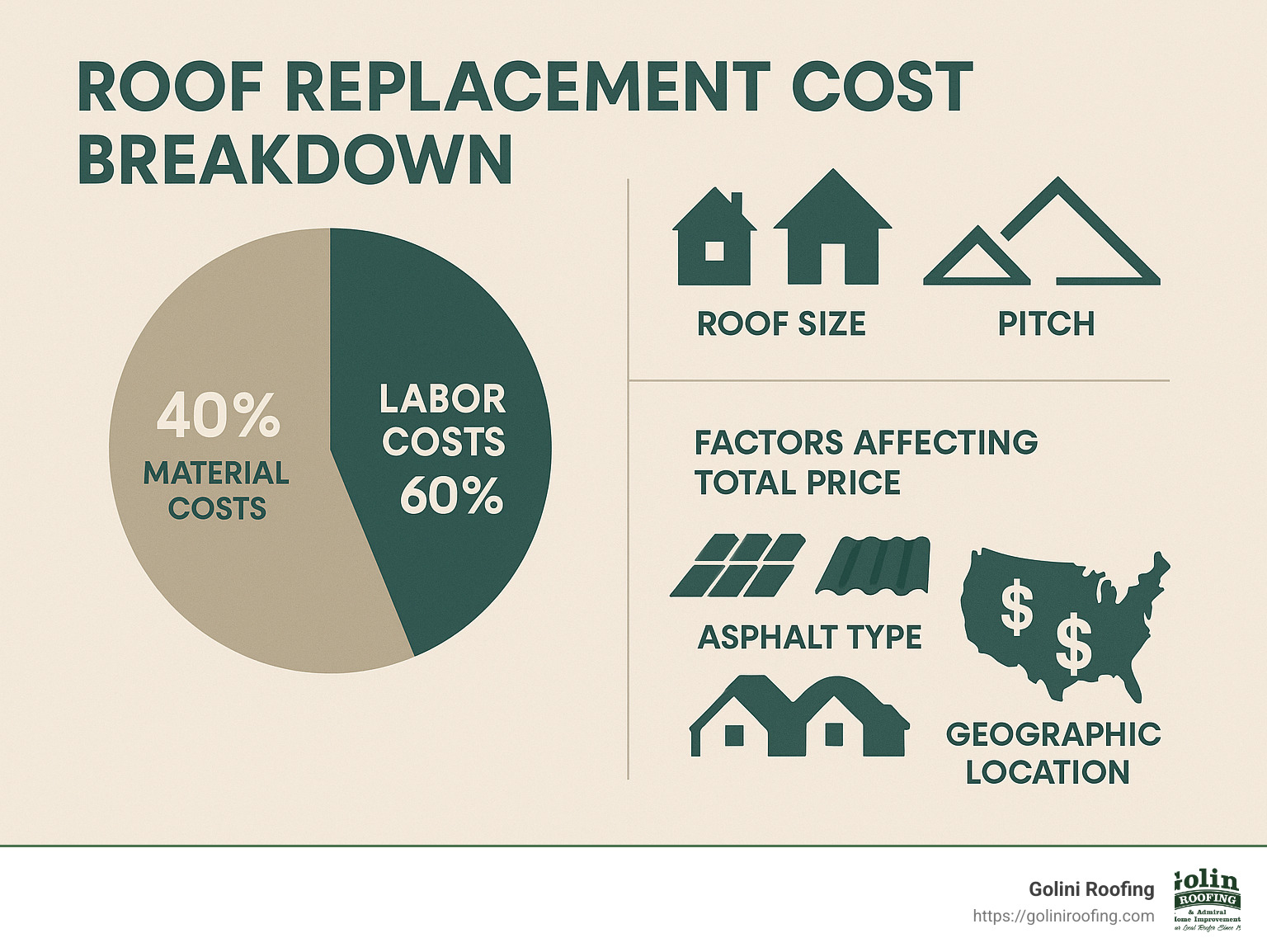
- Size of your roof (measured in “squares” of 100 sq ft)
- Materials selected (from basic asphalt to premium slate)
- Roof complexity (pitch, dormers, skylights)
- Labor costs in your region
- Additional components (underlayment, flashing, ventilation)
Understanding these variables helps you budget realistically and avoid surprises when it’s time for a replacement.
I’m Jack Golini, owner of Golini Roofing, and with over 40 years of experience installing roofs throughout Massachusetts, I’ve helped thousands of homeowners steer the average cost to roof a house while ensuring exceptional craftsmanship that stands the test of time. My team and I are dedicated to providing transparent pricing and superior service for every roofing project we undertake.
Average cost to roof a house terms explained:
– flat roof cost
– flat roof repair cost
– how much does it cost to replace a flat roof
Average Cost to Roof a House
If you’re like most homeowners, you’re probably hoping for a simple answer to the question: “How much will my new roof cost?” While I wish I could give you a one-size-fits-all number, the average cost to roof a house varies significantly based on several factors. Currently, most American homeowners spend between $5,855 and $13,113 for a complete roof replacement, with the national average hovering around $9,419. For larger homes or those using premium materials like slate or metal, costs can climb to $30,000 or more.
In the roofing world, we measure roofs in “squares” rather than square feet. One roofing square equals 100 square feet of roof area. This industry-standard measurement helps us provide consistent estimates regardless of whether your roof is simple or complex.
Understanding where your money goes helps you make informed decisions. As the Roofing Industry Association points out: “Materials typically make up 40% of the total cost of a roof replacement, with labor accounting for the remaining 60%.” This split makes sense—quality materials ensure your roof lasts decades, while skilled installation prevents costly problems down the road.
| Project Scale | Materials Cost | Labor Cost | Total Project Cost |
|---|---|---|---|
| Basic (1,500 sq ft) | $2,340 – $3,900 | $3,510 – $5,850 | $5,850 – $9,750 |
| Mid-range (2,000 sq ft) | $3,120 – $5,200 | $4,680 – $7,800 | $7,800 – $13,000 |
| High-end (3,000 sq ft) | $4,680 – $7,800 | $7,020 – $11,700 | $11,700 – $19,500 |
Note: These figures represent average costs based on internet data and not actual costs for Golini Roofing.
What “average” really means in 2025
The roofing industry has weathered some significant storms recently (pun intended!), and these challenges have directly impacted the average cost to roof a house. Since 2020, we’ve experienced:
Material inflation has hit hard, with asphalt shingle prices jumping 20-30% due to petroleum cost fluctuations. When oil prices rise, so do shingle prices—it’s that simple.
Supply chain disruptions continue to plague the industry. Where we once could get materials within days, specialty roofing products now sometimes require 8-12 weeks lead time. This affects scheduling and can impact pricing.
Labor shortages remain a persistent challenge. With skilled roofer vacancy rates at 10-20% in many regions, quality installation teams are in high demand, affecting both scheduling and costs.
As Ryan Westfall from Westfall Roofing wisely notes: “The lifespan of metal is greater than shingle or tile, reaping the financial return over time. In addition, savings can occur with metal from their energy efficiency (deflecting heat).” This perspective highlights an important point—sometimes paying more upfront can save money in the long run.
At Golini Roofing, we’ve built strong relationships with suppliers and plan our projects strategically to minimize these challenges for our Massachusetts customers.
Average cost to roof a house per square foot
When breaking down the average cost to roof a house per square foot, you’ll typically see prices ranging from $4 to $12 for standard materials. Premium options like slate or copper can push that figure to $30 per square foot or higher. Material choice and installation complexity are the main factors driving this wide range.
As of April 2025, basic asphalt shingle installation starts around $4.41-$5.76 per square foot, making it the most budget-friendly option for most Massachusetts homeowners.
One important decision that affects your bottom line is whether to completely remove your old roof (a “tear-off”) or install new shingles over the existing ones (an “overlay”):
Tear-off costs an additional $1-$5 per square foot but allows for inspection of the decking underneath and generally results in a longer-lasting roof.
Overlay saves on removal costs upfront but may void manufacturer warranties and typically reduces your roof’s lifespan by several years.
Here in New England, our harsh winters and freeze-thaw cycles can cause hidden damage that only becomes visible once the old roofing is removed. That’s why at Golini Roofing, we generally recommend complete tear-offs for Massachusetts homes—it’s an investment in peace of mind and roof longevity.
Want to dive deeper into material costs? Visit our detailed guide on estimated cost of new roof per square foot for a comprehensive breakdown of options and pricing factors.
Roofing Cost Breakdown: Size, Material & Region
When you’re trying to understand the average cost to roof a house, it helps to think of your roof as a complex puzzle with many pieces. Each piece – from the size and slope to the materials and your location – plays a crucial role in determining your final price tag.
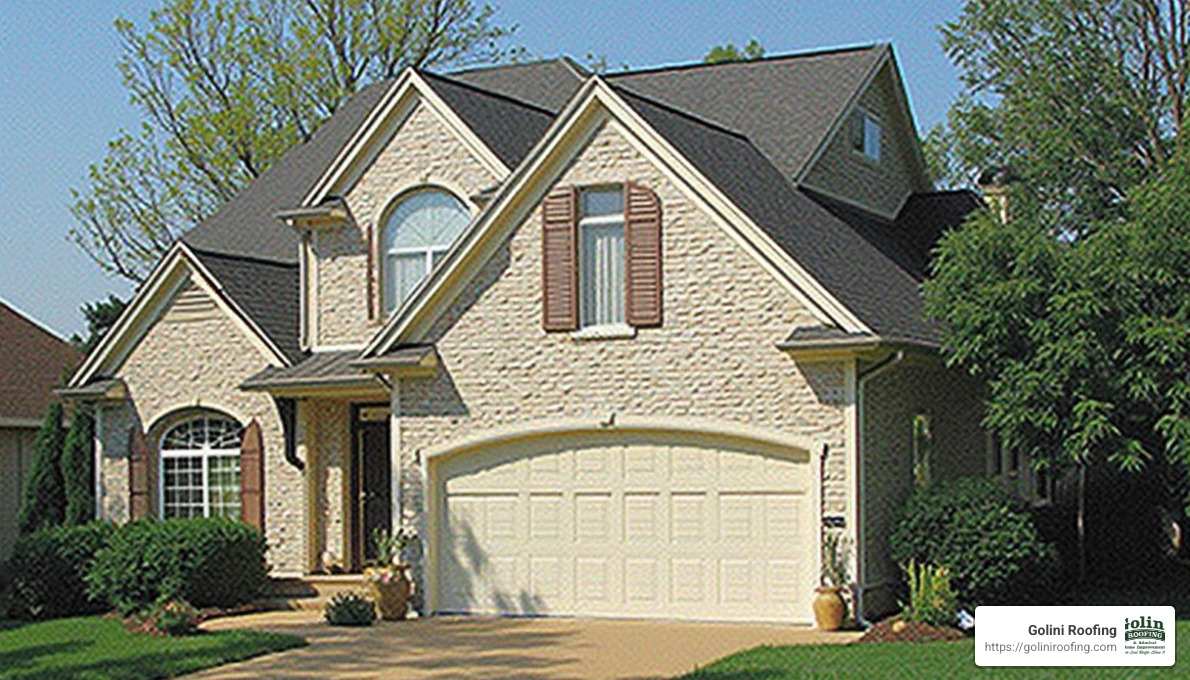
That roof pitch (the steepness of your roof) you might not think much about? It actually has a huge impact on your bottom line. A steeper roof isn’t just more challenging to work on – it literally has more surface area to cover! When our crews tackle a roof with a 6:12 pitch (rising 6 inches for every horizontal foot), we’re looking at costs about 15-20% higher than a gentler 4:12 pitch of the same square footage. Once we get into the really steep territory of 8:12 or beyond, prices typically jump 25-30% because of the extra safety equipment, slower installation pace, and additional materials needed.
The height of your home matters too. Two-story homes typically cost $1-$3 more per square foot than single-story homes. This isn’t us trying to charge more for the view – it’s because accessing higher roofs requires more equipment, additional safety precautions, and more complicated logistics for getting materials up and down.
Here in Massachusetts, we see labor rates that run about 20-30% higher than what you’d find in the Midwest. That’s just the reality of our higher regional cost of living, stricter building codes (especially important with our snow loads!), and our shorter working season. And don’t forget about permits – around Wakefield and our other service areas, you’ll typically see permit fees ranging from $150 to $500 depending on your town and project scope.
Cost per square foot & roof size affects the average cost to roof a house
One of the most common misunderstandings I see with homeowners is assuming their home’s floor area equals their roof area. In reality, your roof is almost always significantly larger than your home’s footprint. Those roof overhangs, the pitch we just talked about, and any attached structures like garages or porches all add up.
For perspective, here’s how costs typically scale with different roof sizes:
| Roof Size | Average Cost Range |
|---|---|
| 1,000 sq ft | $4,000 – $12,000 |
| 2,000 sq ft | $8,700 – $24,000 |
| 3,000 sq ft | $11,200 – $33,600 |
Note: These figures represent average costs based on internet data and not actual costs for Golini Roofing.
When we prepare estimates at Golini Roofing, we always include a “waste factor” of 10-15%. This isn’t padding the bill – it’s accounting for the inevitable trimming around edges, the occasional damaged shingle during installation, and the extra materials needed for complex areas. It’s always better to have slightly more material than to run short in the middle of your project!
Those charming architectural features that give New England homes their character? The dormers, skylights, and chimneys that make your home unique also make your roof more complex to install. Each of these features requires special attention to flashing (the material that prevents water intrusion at joints), more detailed water management, and careful hand-work around penetrations.
This is actually where our hand-nailing approach at Golini Roofing really shines. After 35+ years working on Massachusetts homes, we’ve found that machine installation just can’t match the precision of hand-nailing around these intricate areas. It takes more time, but the water-tight seals we create last significantly longer.
Material price comparison & lifespan
Choosing your roofing material is a bit like choosing a car – you can go economical and practical, or splurge on something that’ll turn heads and last decades longer. The material you select dramatically impacts both the initial average cost to roof a house and its long-term value.
The humble 3-tab asphalt shingle remains the most affordable option at $2.38-$7.00 per square foot with a lifespan of 15-30 years. It’s the Toyota Corolla of roofing – nothing fancy, but reliable and budget-friendly. Step up to architectural asphalt shingles at $4.25-$8.50 per square foot, and you’ll get a more dimensional look with better durability, lasting 20-50 years.
For durability champions, metal roofing runs $7.00-$15.00 per square foot for steel (40-70 year lifespan) and $15.00-$30.00 for copper, which can literally outlast your home at 50-100+ years. Yes, metal costs more upfront, but as Ryan Westfall of Westfall Roofing points out: “The lifespan of metal is greater than shingle or tile, reaping the financial return over time. In addition, savings can occur with metal from their energy efficiency.”
Want the distinctive look of tile? Clay tile ($8.00-$20.00 per square foot) offers incredible durability for 50-100 years, while concrete tile provides a similar aesthetic at $7.50-$21.00 per square foot with a 30-50 year lifespan. Both require your home’s structure to support their considerable weight.
Natural slate represents the ultimate in prestige and longevity, costing $10.00-$30.00 per square foot but potentially lasting 75-200+ years. For a similar look without the extreme weight, synthetic slate runs $7.00-$12.00 per square foot with a still-impressive 40-50 year lifespan.
For the tech-forward homeowner, solar shingles represent the cutting edge at $21.00-$40.00 per square foot. They typically last 25-30 years while also generating electricity for your home.
Note: These figures represent average costs based on internet data and not actual costs for Golini Roofing.
When helping our Massachusetts customers choose materials, we consider several factors beyond just price: the material’s ability to handle our freeze-thaw cycles, its performance under snow loads, its contribution to your home’s curb appeal (your roof can make up 40% of your home’s visible exterior!), and its energy efficiency. We source our quality materials from trusted suppliers like Builders Warehouse Roofing Supplies to ensure the perfect balance of performance and value.
Regional price variations across the U.S.
If you’ve been researching the average cost to roof a house online, you’ve probably noticed some wildly different price estimates. That’s because roofing costs vary dramatically depending on where you live in the country.
Here in the Northeast (including our Massachusetts service area), you’ll typically pay between $350-$700 per square (100 sq ft) for asphalt shingle roofing. That’s on the higher end nationally, reflecting our higher labor costs, seasonal limitations (we can’t roof year-round like they can in Florida!), and stricter building codes designed for our weather challenges.
By comparison, the Midwest sees costs of $300-$600 per square, the South enjoys more affordable rates at $280-$550 per square thanks to their extended working season, while the West Coast ranges from $350-$750 due to their higher labor costs and earthquake considerations.
Note: These figures represent average costs based on internet data and not actual costs for Golini Roofing.
Our Massachusetts climate also drives specific material requirements that affect cost. We need ice and water shield to prevent those dreaded ice dams that can cause interior water damage. Homes in coastal areas benefit from wind-resistant shingles rated for 110+ MPH winds. And with our cold winters and increasingly hot summers, energy-efficient roofing options have become more popular despite their higher upfront costs.
The U.S. Department of Energy has actually conducted fascinating scientific research on energy-efficient roofs showing that the right roof can reduce energy costs by 15-30% in many climate zones. When you’re looking at a major investment like a new roof, these long-term savings are definitely worth considering.
After more than three decades of installing roofs throughout Massachusetts, we’ve developed deep expertise in exactly what works best for our local conditions. When you get an estimate from Golini Roofing, you’re benefiting from that specialized regional knowledge that ensures your roof will stand up to whatever New England weather throws at it.
Extra Costs & How to Save
Beyond the basic average cost to roof a house, several additional factors can impact your total project price. Being aware of these potential extra costs helps you budget more accurately and avoid those dreaded mid-project surprises that can strain your wallet.
Common Additional Costs:
When we sit down with Massachusetts homeowners to discuss their roofing projects, I always make sure to explain the potential “extras” that might come into play.
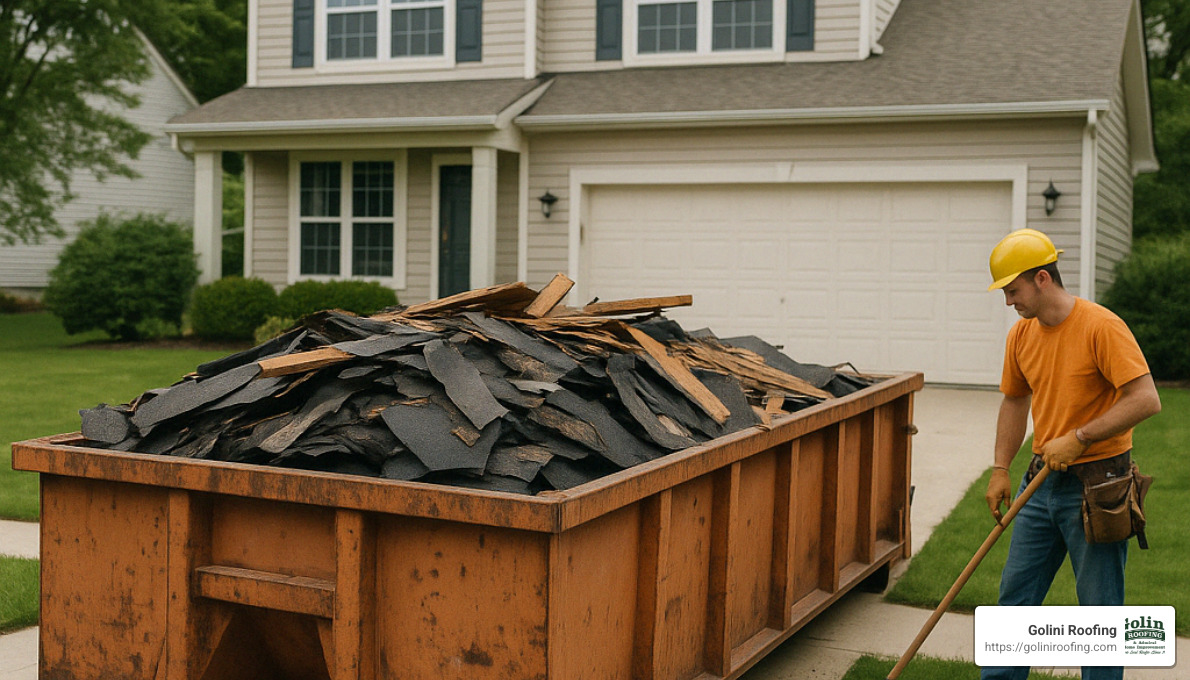
Tear-off and disposal is a big one, typically adding $1-$5 per square foot to your project. This covers the labor-intensive process of removing your old roof and properly disposing of the materials. Disposal fees have been climbing in recent years as landfill regulations tighten – something many homeowners don’t initially consider.
Once we’ve stripped away your old roofing, we might find structural repairs that need addressing. Think of it like going to the dentist – sometimes they find issues that weren’t visible on the surface! These repairs can range from $1,000 for minor fixes to $10,000+ for major structural issues.
Roof decking replacement is another common surprise. If your plywood or OSB sheets have rotted or warped over time (often due to previous leaks), they’ll need replacing at roughly $70-$100 per 4’x8′ sheet, plus installation labor. In Massachusetts, where our freeze-thaw cycles can be tough on roofing systems, we see this fairly often in older homes.
Upgrading your underlayment might seem optional, but in our New England climate, premium ice and water shield can be a lifesaver during those harsh winters. These upgrades add $0.50-$2.00 per square foot but provide significantly better protection against ice dams – a worthwhile investment for most Massachusetts homes.
Don’t forget about flashing replacement around chimneys, vents, and valleys – typically adding $200-$500 to your project. This critical component prevents water from seeping into vulnerable areas of your roof.
Permit fees in Massachusetts typically range from $150-$500 depending on your town’s requirements. At Golini Roofing, we handle all the permitting paperwork for you, but the actual fees get passed through to homeowners.
Debris disposal is another consideration, with dumpster rental and hauling fees typically ranging from $300-$1,000. The size of your roof and local disposal rates both factor into this cost.
Finally, warranty upgrades may add $500-$2,000 but provide longer coverage periods and more comprehensive protection. I often tell homeowners to think of this as insurance for your investment – especially if you plan to stay in your home long-term.
At Golini Roofing, we pride ourselves on providing detailed, transparent estimates that account for these potential extras. There’s nothing worse than an estimate that looks great on paper but balloons once work begins!
Reducing the average cost to roof a house
While quality roofing isn’t cheap, there are several smart strategies to bring down the average cost to roof a house without cutting corners on quality.
Timing is everything. In Massachusetts, roofing demand peaks during summer months. If you’re flexible, scheduling your project during our off-season (late fall through early spring) can often save you money. At Golini Roofing, we sometimes offer more competitive pricing during these slower periods to keep our experienced crews busy year-round.
Shop around – but smartly. Getting multiple quotes is wise, but look beyond just the bottom line. I’ve seen too many homeowners choose the cheapest option only to pay more in the long run. Make sure each estimate includes identical scope, materials, and warranty coverage so you’re comparing apples to apples.
Roll up your sleeves. While I’d never recommend DIY roof installation (trust me, I’ve seen those projects gone wrong!), you can reduce labor costs by helping with prep work. Clearing the work area around your home, removing satellite dishes, trimming overhanging branches, and relocating vehicles and outdoor furniture all save our crew time – savings we can pass on to you.
Take advantage of tax incentives. Energy-efficient roofing may qualify for federal tax credits or local utility rebates. The Inflation Reduction Act of 2022 expanded these opportunities, potentially putting money back in your pocket after installation.
Talk to your insurance company. Installing Class A fire-rated or impact-resistant Class 4 roofing materials can reduce your homeowners insurance premiums by 5-35% in many cases. Over time, these savings can significantly offset your initial investment.
If your roof has been damaged by a covered event like wind or hail, your homeowners insurance may cover partial or complete replacement. The insurance claim process can be intimidating, but we’re here to help:
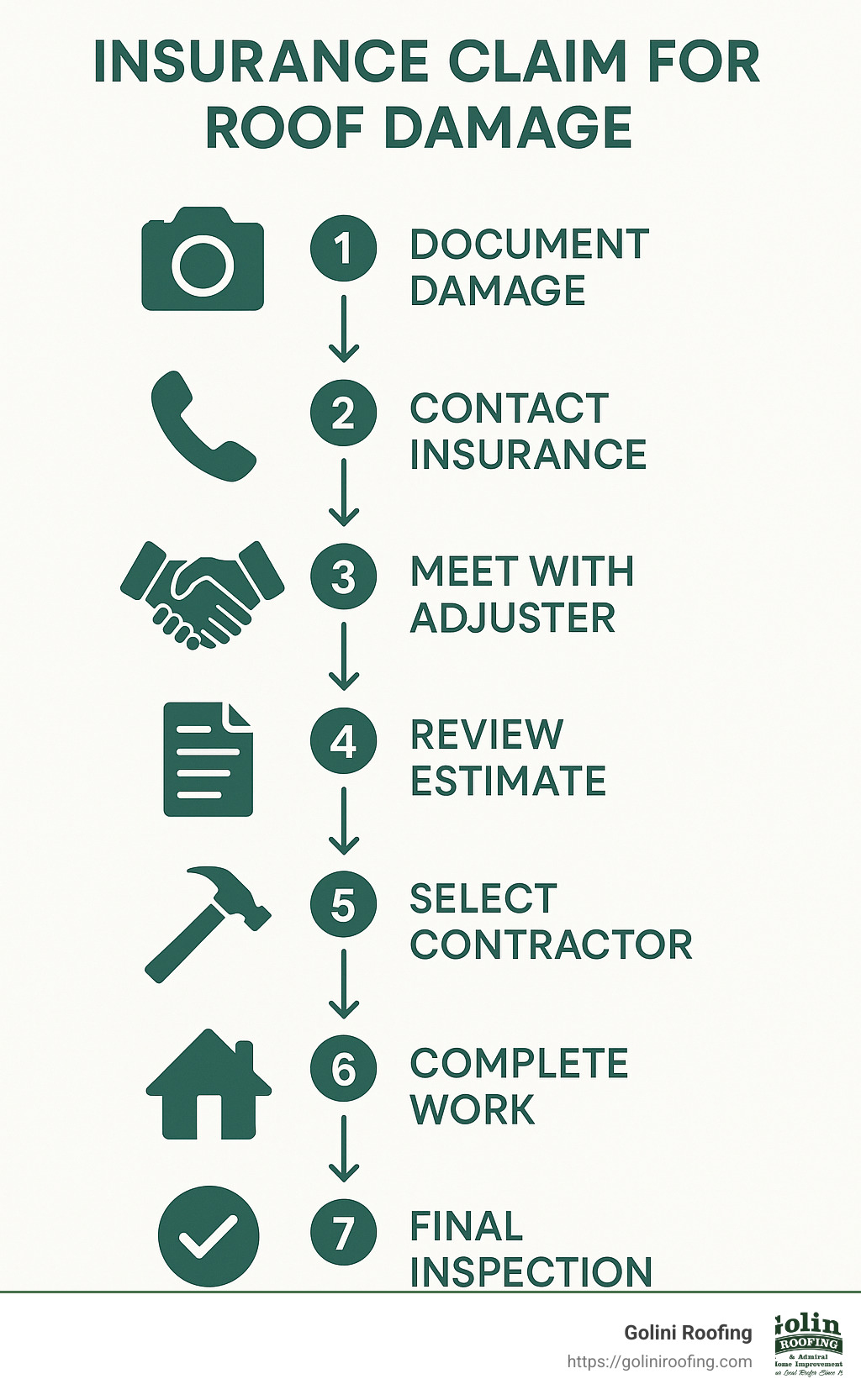
At Golini Roofing, we’ve worked with countless insurance claims over our 35+ years in business. We know how to document damage properly, communicate effectively with adjusters, and ensure Massachusetts homeowners receive fair compensation for qualifying roof damage.
Financing & insurance options
Let’s face it – the average cost to roof a house represents a significant investment. But don’t worry! Several financing options can make this essential home improvement more manageable for your monthly budget.
Home equity loans often provide the most affordable option, with current interest rates between 6-9%. These fixed-rate loans spread payments over 5-20 years, making even substantial roofing projects feel more manageable. Plus, the interest may be tax-deductible (though you should consult your tax advisor about your specific situation).
Home Equity Lines of Credit (HELOCs) offer flexibility with variable interest rates currently ranging from 6-10% depending on your credit score. With a HELOC, you can draw funds as needed during your project and only pay interest on what you use.
If you don’t have sufficient home equity or prefer not to use your home as collateral, personal loans are another option. These unsecured loans typically have higher interest rates (8-36%) but process quickly and don’t put your home at risk.
Many Massachusetts homeowners appreciate the convenience of contractor financing plans. While Golini Roofing doesn’t provide direct financing, we work with reputable third-party financing partners who specialize in home improvement loans. These typically feature quick approval processes, fixed monthly payments, terms from 1-10 years, and interest rates from 6-26% based on your credit profile.
For qualifying homeowners, especially seniors or those with limited income, government assistance programs may help offset costs. USDA Rural Development grants or HUD home repair assistance could make a new roof more affordable for those who meet specific criteria.
When weighing financing options, I always advise homeowners to compare interest rates, term length, monthly payment amounts, and any prepayment penalties. Also, consider whether the interest might be tax-deductible, as this can significantly impact the true cost of borrowing.
For forward-thinking Massachusetts homeowners, setting aside 1-3% of your home’s value annually in a dedicated home maintenance fund can help prepare for eventual replacement needs. This proactive approach prevents roof replacements from becoming financial emergencies.
For more detailed information about calculating the total investment required for your specific roof, I encourage you to visit our comprehensive guide on calculating roof replacement cost. Every roof is unique, and understanding your specific requirements is the first step toward making informed decisions about this important home investment.
Frequently Asked Questions about Roofing Costs
How much does a 2,000 sq ft asphalt shingle roof cost?
When homeowners ask me this question, I always take a deep breath before answering. For a 2,000 square foot roof (about 20 “squares” in roofing lingo), the average cost to roof a house with quality architectural asphalt shingles typically falls between $8,700 and $18,000.
This estimate includes the works: tearing off one layer of old shingles, laying down standard underlayment, installing those beautiful architectural shingles, replacing basic flashing, adding ridge vents for proper breathing, and of course, cleaning everything up when we’re done.
But here’s where it gets interesting. Your actual cost might nudge toward the higher end if you’re dealing with multiple layers of old roofing that need removal, a particularly steep or complex roof design, or if you’ve fallen in love with premium shingles (and who could blame you?). Extensive deck repairs or upgraded underlayment will also add to the bottom line.
One common misconception I hear all the time: many homeowners assume their roof’s square footage matches their home’s floor area. In reality, your roof is typically 15-30% larger than your home’s footprint because of the pitch, overhangs, and garage space. That 2,000 square foot ranch might actually have 2,200-2,600 square feet of roof area!
At Golini Roofing, we’re sticklers for precise measurements. Our hand-nailing approach might take a bit longer than using pneumatic nail guns, but the superior fastening dramatically extends your roof’s lifespan through those brutal Massachusetts winters and summer storms.
Is $30,000 too much for a roof replacement?
I get this question a lot, usually accompanied by wide eyes and a concerned expression. While $30,000 certainly exceeds the average cost to roof a house with standard materials, this price point can make perfect sense in several scenarios.
First, premium materials will quickly push you into this range. Metal roofing, genuine slate, or tile can easily reach or exceed this figure for a 2,000 square foot roof. Copper roofing? You might be looking at $40,000-$50,000 or more – but boy, does it look stunning for decades!
Complex roof structures also justify higher costs. If your beautiful New England home features multiple dormers, steep pitches, turrets, or unusual architectural details, you’re looking at significantly more labor hours and material waste. Those charming features that give your home character also make roofing more challenging.
Location matters too. Here in Massachusetts, our higher labor costs and stringent building codes (which keep us safe!) naturally result in pricing that trends above national averages.
Finally, comprehensive projects that include complete removal of multiple layers, extensive deck replacement, ventilation upgrades, new gutters, insulation improvements, and structural repairs can easily reach or exceed $30,000.
If you’re evaluating a $30,000+ estimate, I recommend getting multiple detailed quotes, asking for line-item breakdowns, confirming the scope includes all necessary components, and verifying warranty coverage. At Golini Roofing, our transparent, detailed estimates clearly explain all costs. While our meticulous hand-nailing approach might not always result in the lowest bid, our Massachusetts customers appreciate the superior craftsmanship and longevity this method provides.
Does a new roof increase home value?
Absolutely! A new roof typically increases your home’s value, though usually not quite dollar-for-dollar on your investment. Research shows that new roofs provide a return on investment (ROI) of approximately 60-85%, depending on material quality, local real estate conditions, energy efficiency improvements, and warranty transferability.
But the financial return is just part of the story. A new roof delivers several additional benefits that significantly impact your property’s overall value and appeal:
Improved curb appeal makes an enormous difference. Real estate agents consistently rank roof appearance among the top factors influencing buyer first impressions. When potential buyers pull up to a home with a crisp, clean roof, they’re already mentally moving in.
Increased buyer confidence translates to faster sales and fewer inspection headaches. Homes with new roofs typically sell more quickly and with fewer contingencies because buyers aren’t worrying about immediate replacement costs looming over their heads.
Insurance benefits often surprise homeowners pleasantly. Many insurance companies offer premium discounts for new roofs, especially those with impact-resistant or fire-resistant ratings, putting more money in your pocket month after month.
Energy efficiency improvements from modern roofing materials with better insulation and reflective properties can reduce your energy costs by 10-30%. In Massachusetts, where winter heating costs can be brutal, these savings add up quickly.
Our Massachusetts homes particularly benefit from quality new roofing that addresses our region’s unique weather challenges, from proper ice dam prevention to wind resistance for coastal properties. At Golini Roofing, we help homeowners select materials and systems that maximize both immediate curb appeal and long-term value. Our attention to detail ensures that your roof not only looks fantastic but performs optimally for decades – something both you and future buyers will appreciate.
Conclusion & Next Steps
Understanding the average cost to roof a house is just the first step in your roofing journey. As we’ve explored throughout this article, your specific investment will depend on numerous factors unique to your home—from the materials you choose to the complexity of your roof structure and your location in Massachusetts.
At Golini Roofing, we’ve been climbing ladders and hand-nailing shingles for over 35 years throughout Wakefield, MA and surrounding communities. There’s something special about the way a hand-nailed roof holds up to those brutal New England winters and scorching summers. While it takes a bit longer than using pneumatic guns, the precision and care translate into roofs that simply last longer.
All the pricing information shared in this article represents average costs based on internet data and industry research—not actual quotes from Golini Roofing. Every home tells its own story, and we need to see your specific roof to provide an accurate estimate that addresses your unique situation.
Your next steps are straightforward:
Schedule a free, no-obligation inspection and estimate with our experienced team. We’ll thoroughly evaluate your roof’s condition and provide clear, transparent pricing for your specific needs.
Don’t be shy about asking questions! We love talking about roofing (maybe a little too much) and are happy to explain different material options, our installation methods, and warranty coverage in detail.
Take some time to browse our portfolio of completed projects in your neighborhood. Seeing our work often helps homeowners visualize what’s possible for their own homes.
Check our references from homeowners throughout Massachusetts who’ve trusted us with their roofing projects. Their experiences can provide valuable insights as you make your decision.
For even more detailed information about specific aspects of roof replacement costs, our comprehensive guide on roof replacement cost dives deeper into the topics we’ve covered here.
A quality roof is more than just protection from the elements—it’s an investment in your home’s appearance, energy efficiency, and long-term value. While budget considerations are certainly important, we’ve found that superior materials installed with meticulous attention to detail provide the best value over time for Massachusetts homeowners.
When you’re ready to discuss your roofing needs, our team at Golini Roofing is here to provide the guidance, craftsmanship, and service you deserve. After all, your home deserves nothing less than the best protection overhead.
