
Average Roof Cost Calculator: 2024’s Ultimate Stress-Free Guide
Why Every Homeowner Needs to Know Their Roof Replacement Costs
An average roof cost calculator is an online tool that estimates your roof replacement costs based on your home’s size, material choices, and local labor rates. Here’s what you need to know:
Key Cost Ranges (2024)
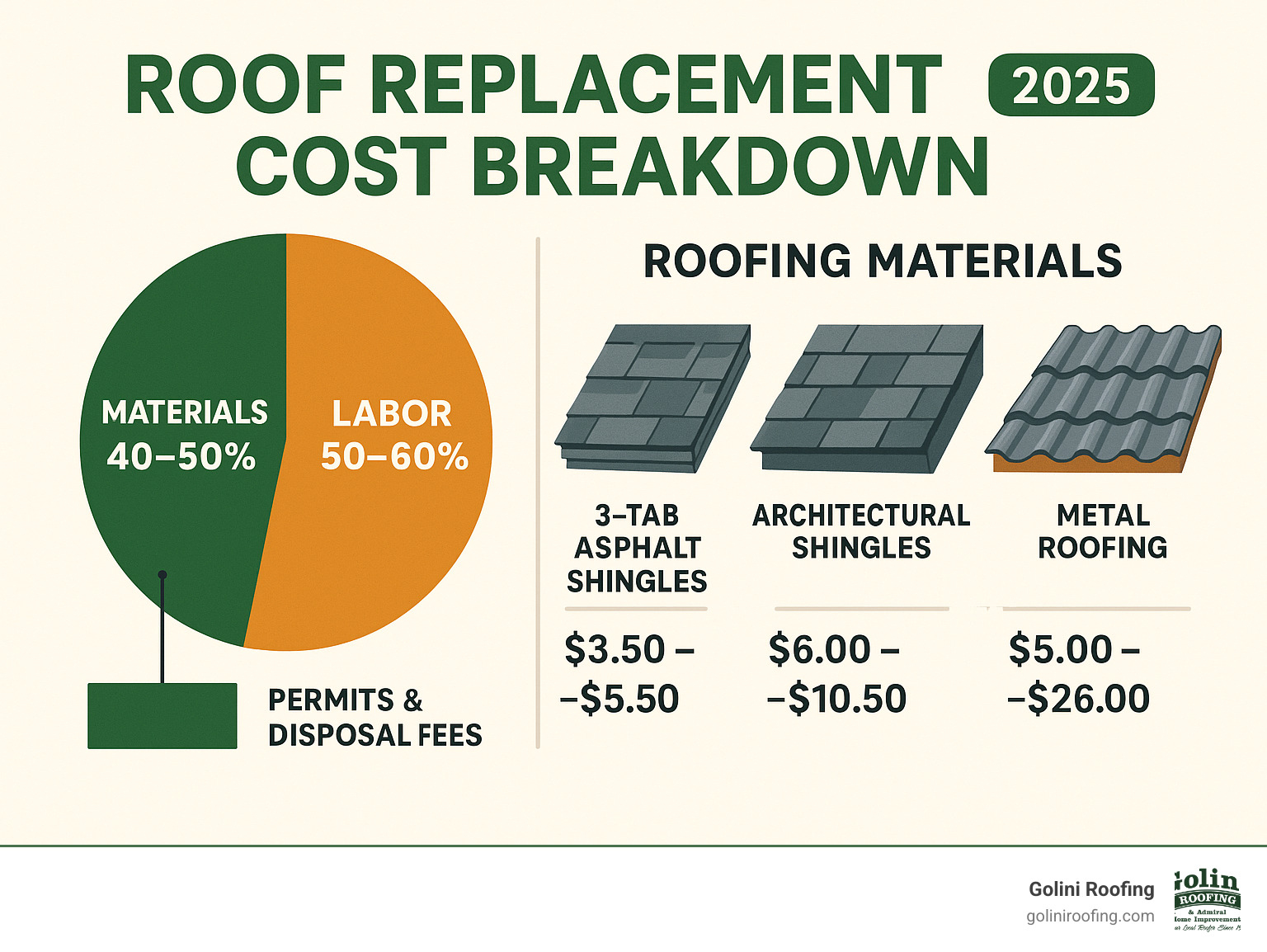
- Total roof replacement: $5,400 – $19,800
- Average 2,000 sq ft home: ~$14,000
- Cost per square foot: $3.50 – $26.00 (varies by material)
- Labor portion: 50-60% of total cost
Most Common Materials
- 3-tab asphalt shingles: $3.50 – $5.50 per sq ft
- Architectural shingles: $6.00 – $10.50 per sq ft
- Metal roofing: $5.00 – $26.00 per sq ft
- Tile roofing: $8.00 – $18.00 per sq ft
Note: These are average costs based on internet data and not actual costs for Golini Roofing.
Planning a roof replacement can feel overwhelming, especially when you’re staring at estimates that range from thousands to tens of thousands of dollars. The good news? You don’t have to guess anymore. Modern roof cost calculators use satellite imagery and local pricing data to give you realistic estimates before you even pick up the phone.
Whether you’re dealing with missing shingles after a storm or planning ahead for an aging roof, knowing your numbers helps you budget smart and avoid surprises. These tools factor in everything from your roof’s pitch to local permit fees, giving you a clearer picture of what you’re really looking at cost-wise.
I’m Jack Golini, and I’ve been helping North Shore homeowners steer roofing decisions since 1982. Over the years, I’ve seen how an average roof cost calculator can save homeowners from sticker shock and help them make informed decisions about their biggest home investment.
Average roof cost calculator terms to know:
What Is a Roof Cost Calculator & Why You Need One
A roof cost calculator is essentially your digital crystal ball for roofing expenses. These online tools combine satellite imagery, local labor rates, and material costs to give you a realistic estimate of what your roof replacement will cost. Think of it as having a roofing contractor’s expertise available 24/7, minus the sales pitch.
The beauty of modern calculators lies in their sophistication. They don’t just multiply your square footage by a generic price. Instead, they factor in your roof’s complexity, local building codes, and even seasonal pricing variations. Some advanced calculators use LiDAR technology or permit data to measure your roof more accurately than you could with a tape measure.
Here’s why every homeowner should use one before calling contractors:
Budget Planning: No more guessing whether you need $8,000 or $18,000. You’ll know your ballpark before you start shopping.
Contractor Conversations: Armed with realistic numbers, you can spot lowball estimates (which often come with hidden costs) and overpriced quotes.
Material Decisions: Want to know if upgrading from 3-tab to architectural shingles is worth it? The calculator shows you the exact cost difference.
Timing Decisions: Some calculators factor in seasonal pricing, helping you decide whether to wait for off-season discounts.
For more detailed guidance on roof replacement costs, check out our helpful cost guide and learn about more info about roof cost factors.
Tech Behind the Numbers
Modern average roof cost calculators are surprisingly sophisticated. They use satellite imagery and LiDAR data to measure your roof’s actual surface area, not just your home’s footprint. This matters because a steep roof has significantly more surface area than a flat one.
The calculator applies pitch multipliers to account for this. A 6/12 pitch roof (common in New England) has about 18% more surface area than the home’s footprint. A steeper 12/12 pitch increases the area by 41%. These multipliers directly impact your material needs and labor costs.
Waste allowance is another crucial factor. Calculators typically add 7.5% for simple gable roofs and 15% for complex hip roofs. This accounts for cuts, overlaps, and the inevitable pieces that don’t fit perfectly.
The most advanced calculators also pull local permit data to include inspection fees and disposal costs in your estimate. In Massachusetts, permit fees can range from $50 to $500 depending on your municipality.
Using an Average Roof Cost Calculator: Step-by-Step
Using an average roof cost calculator is straightforward, but getting accurate results requires attention to detail. Here’s how to get the most reliable estimate:
Step 1: Enter Your Address
Start with your complete address. The calculator uses this to determine local labor rates, material costs, and permit fees. Labor rates in Winchester, MA, for example, are typically higher than in rural areas due to higher costs of living and stricter building codes.
Step 2: Confirm Roof Size
Most calculators will auto-populate your roof size using satellite data. Double-check this number if possible. If you know your home’s square footage, your roof area is typically 15-40% larger depending on pitch and overhangs.
Step 3: Select Roof Pitch
This is crucial for accuracy. Most New England homes have pitches between 4/12 and 8/12. If you’re unsure, a 6/12 pitch is a safe default for most colonial and cape-style homes in our service area.
Step 4: Choose Your Material
This is where costs can vary dramatically. Asphalt shingles remain the most popular choice, but metal roofing is gaining popularity for its longevity and energy efficiency.
Step 5: Add Extras
Don’t forget tear-off costs (removing old shingles), skylights, chimneys, and other roof penetrations. Each skylight can add $200-$500 to your project cost.
For a more detailed breakdown of the estimation process, visit our more info about New Roof Estimate Calculator.
Average Roof Cost Calculator Inputs
The accuracy of your average roof cost calculator estimate depends heavily on the quality of information you provide. Here are the key inputs that make the biggest difference:
Home Footprint: This is your home’s ground-level square footage. Most calculators can pull this from property records, but verify it if possible. A 2,000 sq ft colonial might have a 2,400 sq ft roof area once you factor in pitch and overhangs.
Number of Stories: Two-story homes often cost more per square foot due to safety requirements and slower work pace. Expect a 10-15% premium for multi-story installations.
Regional Labor Rates: Labor costs vary significantly even within Massachusetts. Our service areas of Burlington, Lynnfield, North Reading, Reading, Stoneham, Wakefield, Wilmington, Winchester, and Woburn all have different prevailing wage rates.
Roof Complexity: Simple gable roofs cost less than complex hip roofs with multiple dormers, valleys, and chimneys. Each additional feature adds time and materials.
Reading Your Estimate
A good average roof cost calculator will give you a range rather than a single number. Typically, you’ll see low, mid, and high estimates. Here’s how to interpret them:
Low Estimate: Basic materials, minimal complications, favorable conditions. This assumes 3-tab shingles, simple roof geometry, and no surprises during tear-off.
Mid Estimate: Architectural shingles, average complexity, standard conditions. This is your most likely scenario for a typical New England home.
High Estimate: Premium materials, complex geometry, or challenging conditions. This might include slate, metal roofing, or dealing with structural issues finded during tear-off.
The best calculators break down costs by line item: materials, labor, tear-off, disposal, and permits. This transparency helps you understand where your money goes and identify potential savings.
Factors That Drive Your Average Roof Cost
Understanding what drives roofing costs helps you make informed decisions about your project. After 35 years in the business, we’ve seen how these factors can make or break a budget.
Roof Size: This is the most obvious factor. Roofing is typically priced “per square” (100 square feet). A 2,000 sq ft home might need 23-25 squares depending on pitch and waste.
Pitch and Complexity: Steep roofs require more safety equipment and slower work pace. A 12/12 pitch can increase labor costs by 25-40% compared to a 6/12 pitch.
Material Choice: This is where costs can explode. Premium materials like slate or copper can cost 5-10 times more than basic asphalt shingles.
Labor Rates: In Massachusetts, skilled roofers command premium wages. Our hand-nailing approach takes more time but delivers superior results that last decades.
Seasonality: Spring and summer command premium pricing due to high demand. Fall and winter installations can save 10-20% on labor costs.
Disposal Fees: Removing old shingles costs $1-$5 per square foot. Multiple layers increase this cost significantly.
Permits and Inspections: Massachusetts requires permits for most roofing work. Factor in $100-$500 for permits and inspections.
Material Matters
Material choice is the single biggest variable in your roofing budget. Here’s what you need to know about each option:
Asphalt Shingles: The workhorse of American roofing. 3-tab shingles cost $3.50-$5.50 per sq ft installed, while architectural shingles run $6.00-$10.50 per sq ft. They’re reliable, affordable, and come in dozens of colors.
Architectural Shingles: These dimensional shingles offer better curb appeal and longer warranties. They’re our most popular choice for Massachusetts homes, offering the best balance of cost and performance.
Metal Panels: Standing seam metal roofing costs $5-$26 per sq ft but can last 40-70 years. It’s excellent for energy efficiency and handles our harsh winters beautifully.
Tile Roofing: Concrete or clay tiles cost $8-$18 per sq ft. They’re fire-resistant and energy-efficient but require structural reinforcement on many homes.
Slate: The premium choice at $12-$30+ per sq ft. Natural slate can last over 100 years but requires specialized installation and maintenance.
Note: These are average costs based on internet data and not actual costs for Golini Roofing.
Roof Geometry & Pitch
Roof pitch dramatically affects both material needs and labor costs. Here’s how:
Slope Factor: A 4/12 pitch increases roof area by about 5% over the home’s footprint. A 12/12 pitch increases it by 41%. More area means more materials and labor.
Safety Requirements: Steep roofs require additional safety equipment, harnesses, and slower work pace. OSHA requires specific safety protocols for roofs over 6/12 pitch.
Time on Roof: Our crews can install about 15-20 squares per day on a simple 6/12 pitch roof. That drops to 8-12 squares on a steep 12/12 pitch with multiple dormers.
Complex roof geometries with multiple valleys, dormers, and chimneys require more cutting, flashing, and detail work. Each valley adds 2-4 hours of labor. Each dormer can add half a day to your project.
What Do the Numbers Say? Average Roof Replacement Costs in 2024
Let’s cut through the confusion and look at real numbers. Based on current market data, here’s what homeowners are actually paying for roof replacements in 2024:
National Range: $5,400 – $19,800 for complete roof replacement
Average 2,000 sq ft Home: Approximately $14,000
Cost Per Square Foot: $3.50 – $26.00 (varies dramatically by material)
Labor Portion: 50-60% of total project cost
In Massachusetts, costs tend to run 15-25% higher than national averages due to:
- Higher labor rates
- Stricter building codes
- Weather-related installation challenges
- Higher disposal and permit fees
Disposal Costs: $1-$5 per square foot for tear-off and disposal
Permit Fees: $100-$500 depending on municipality
Seasonal Variations: 10-20% premium during peak season (April-August)
For detailed cost breakdowns, check out our data-rich calculator and learn more info about Cost of New Roof Per Sq Ft.
Note: These are average costs based on internet data and not actual costs for Golini Roofing.
Breaking It Down by Material
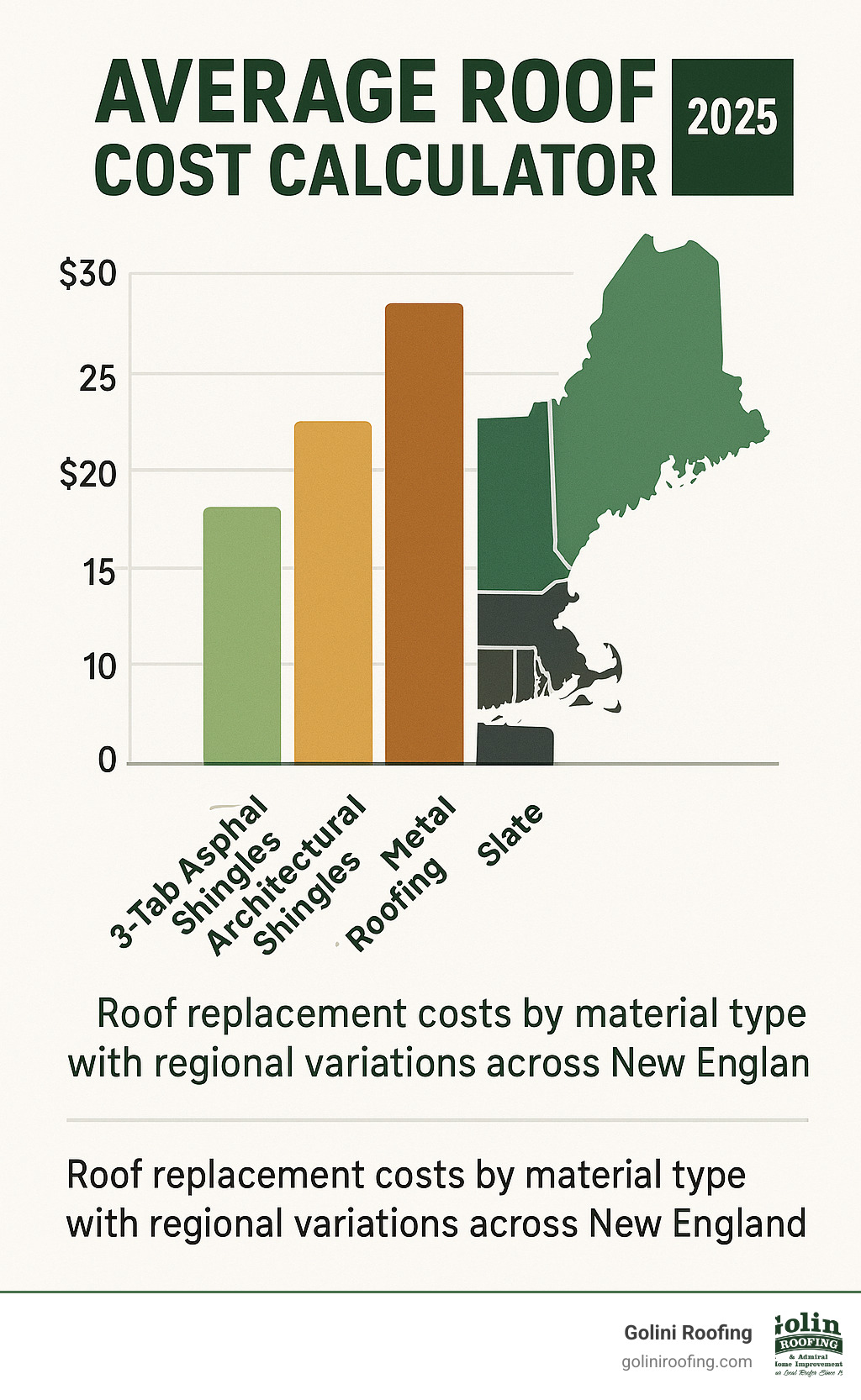
Here’s what you can expect to pay for different roofing materials in 2024:
3-Tab Asphalt Shingles: $3.50 – $5.50 per sq ft installed
- Most economical option
- 20-25 year lifespan
- Basic warranty coverage
Architectural Shingles: $6.00 – $10.50 per sq ft installed
- Improved curb appeal
- 25-30 year lifespan
- Better wind resistance
Metal Roofing: $5.00 – $26.00 per sq ft installed
- 40-70 year lifespan
- Energy efficient
- Excellent for harsh weather
Tile Roofing: $8.00 – $18.00 per sq ft installed
- 50+ year lifespan
- Fire resistant
- Requires structural evaluation
Slate: $12.00 – $30.00+ per sq ft installed
- 75-100+ year lifespan
- Best durability
- Requires specialized installation
The wide price ranges reflect quality differences, regional variations, and installation complexity. Premium materials at the high end can cost 10 times more than basic options.
Note: These are average costs based on internet data and not actual costs for Golini Roofing.
Region, Season & Supply Chain
Location and timing significantly impact your roofing costs. Here’s what we’ve observed in our Massachusetts service area:
New England Premiums: Our region commands higher prices due to:
- Skilled labor shortage
- Harsh weather requirements
- Stricter building codes
- Higher cost of living
Hurricane and Storm Zones: Coastal areas often require hurricane-rated materials and installation methods, adding 15-30% to costs.
Winter Discounts: Off-season installations (November-March) can save 10-20% on labor costs. However, weather delays are more likely.
Material Shortages: Supply chain disruptions can affect pricing and availability. We’ve seen 18-20% price swings in recent years due to raw material costs.
Local Competition: Areas with more contractors typically have more competitive pricing. Our North Shore market has healthy competition, which benefits homeowners.
Beyond the Estimate: How to Get the Most Accurate Quote
While an average roof cost calculator gives you a solid starting point, getting the most accurate quote requires additional steps. Here’s how to refine your estimate:
Professional Inspection: Nothing beats having an experienced roofer examine your roof in person. We can spot issues that satellite imagery misses, like structural problems or ventilation deficiencies.
Satellite vs. On-Site Measurements: Satellite measurements are surprisingly accurate, but on-site measurements account for details like exact overhang dimensions and roof penetrations.
Repair vs. Replace Decision: Sometimes a partial repair makes more financial sense than full replacement. We can help you evaluate whether your roof needs complete replacement or targeted repairs.
Insurance Claims: If storm damage prompted your roofing project, document everything with photos and work with your insurance company to maximize coverage.
Return on Investment: A new roof typically recoups 60-70% of its cost in added home value. Premium materials may offer better ROI in high-end markets.
Energy Credits: Some roofing materials qualify for federal tax credits or local utility rebates. Cool roofs and solar-ready installations may offer additional savings.
For more insights on getting accurate estimates, visit our more info about Average Estimate for New Roof.
When Repair Beats Replace
Not every roofing problem requires complete replacement. Here’s when targeted repairs make more sense:
Localized Damage: Storm damage affecting less than 25% of your roof often calls for repair rather than replacement.
Age Factor: If your roof is less than 10 years old and damage is limited, repairs are usually more cost-effective.
Matching Materials: If we can match your existing shingles, spot repairs maintain your roof’s appearance and warranty.
Budget Constraints: Strategic repairs can extend your roof’s life by 5-10 years, buying you time to save for full replacement.
However, extensive repairs on an aging roof often cost more than replacement in the long run. We’ll give you honest advice about whether repair or replacement makes more financial sense.
Insurance & Financing Tips
Navigating insurance claims and financing options can significantly impact your out-of-pocket costs:
Claim Documentation: Take detailed photos of damage before any temporary repairs. Document dates, weather events, and affected areas.
Deductible Planning: Know your deductible amount. Sometimes it makes sense to combine multiple small claims into one larger project.
Financing Options: Low-interest home improvement loans or HELOCs often offer better terms than contractor financing.
Seasonal Timing: Insurance companies often expedite claims during storm season but may offer better settlements during slower periods.
Contractor Selection: Choose contractors experienced with insurance work. We handle the paperwork and communicate directly with adjusters to streamline your claim.
Frequently Asked Questions about Average Roof Cost Calculators
How accurate is an online average roof cost calculator?
Online average roof cost calculators are surprisingly accurate for ballpark estimates, typically within 15-25% of actual costs. The most sophisticated calculators using LiDAR data and local pricing can get within 10-15% of professional estimates.
However, accuracy depends on several factors:
- Quality of satellite imagery
- Accuracy of local pricing data
- Complexity of your specific roof
- Current market conditions
Calculators excel at estimating standard installations on typical homes but may miss unique challenges like structural issues, accessibility problems, or code compliance requirements that only an on-site inspection can identify.
Do calculators include tear-off and disposal costs?
Most quality average roof cost calculators include tear-off and disposal costs, but you need to specify this option. These costs typically add $1-$5 per square foot to your project, depending on:
- Number of existing shingle layers
- Local disposal fees
- Accessibility for dumpster placement
- Hazardous material disposal (asbestos in older homes)
Always verify that your calculator estimate includes:
- Complete tear-off of existing materials
- Disposal and dump fees
- Cleanup of job site
- Permit fees where applicable
Some calculators separate these costs as line items, which helps you understand the full scope of your project.
How does roof pitch change the estimate?
Roof pitch dramatically affects your estimate through several mechanisms:
Surface Area: A 6/12 pitch increases roof area by about 18% over your home’s footprint. A 12/12 pitch increases it by 41%. More area means more materials and labor.
Labor Complexity: Steep roofs require:
- Additional safety equipment
- Slower work pace
- Specialized installation techniques
- Higher insurance costs for contractors
Material Waste: Steep roofs generate more waste due to difficult cuts and accessibility challenges.
Most calculators apply pitch multipliers automatically, but verify that your pitch selection is accurate. A one-step error in pitch selection can change your estimate by 10-20%.
Conclusion
An average roof cost calculator is your first step toward making an informed roofing decision, but it’s just the beginning of your journey. These tools provide valuable baseline estimates that help you budget and compare options, but they can’t replace the expertise of a skilled roofing professional.
The key is using calculator estimates as a starting point, then refining them with professional input. At Golini Roofing, we’ve seen too many homeowners make costly decisions based solely on online estimates without considering the unique aspects of their specific situation.
Next Steps:
- Use a quality average roof cost calculator to establish your budget range
- Schedule a professional inspection to identify issues calculators can’t detect
- Get detailed quotes from licensed, insured contractors
- Compare estimates that include all project phases: tear-off, installation, cleanup, and disposal
The cheapest estimate isn’t always the best value. Our hand-nailing approach takes more time and costs more upfront, but it delivers superior results that last decades. After 35 years serving the North Shore, we’ve learned that quality craftsmanship pays for itself through longevity and performance.
Whether you’re in Burlington, Lynnfield, North Reading, Reading, Stoneham, Wakefield, Wilmington, Winchester, or Woburn, we’re here to help you steer the roofing process with transparency and expertise.
Ready to move beyond estimates and get a precise quote for your roofing project? Contact us today to schedule your professional inspection and learn more about our roof estimate process.
Your roof protects everything you value most. Don’t leave its replacement to guesswork—start with a solid estimate, then work with professionals who stand behind their craftsmanship.
