
Average Cost for a Roof: Top 5 Vital Facts in 2025
Understanding the Investment: What to Expect for Your Roof Replacement
The average cost for a roof replacement in the United States typically ranges from $5,867 to $13,210, with most homeowners paying around $9,500 for a standard asphalt shingle installation on a 2,000 square foot home.
| Roofing Material | Average Cost Range |
|---|---|
| Asphalt Shingles | $5,000 – $15,000 |
| Metal Roofing | $8,000 – $24,000 |
| Wood Shakes | $6,800 – $20,000 |
| Tile Roofing | $8,500 – $25,000 |
| Slate Roofing | $10,000 – $30,000+ |
Your roof is one of the most critical components of your home, protecting everything beneath it from the elements. While the thought of replacing it might seem overwhelming, understanding the costs involved can help you budget appropriately and make informed decisions.
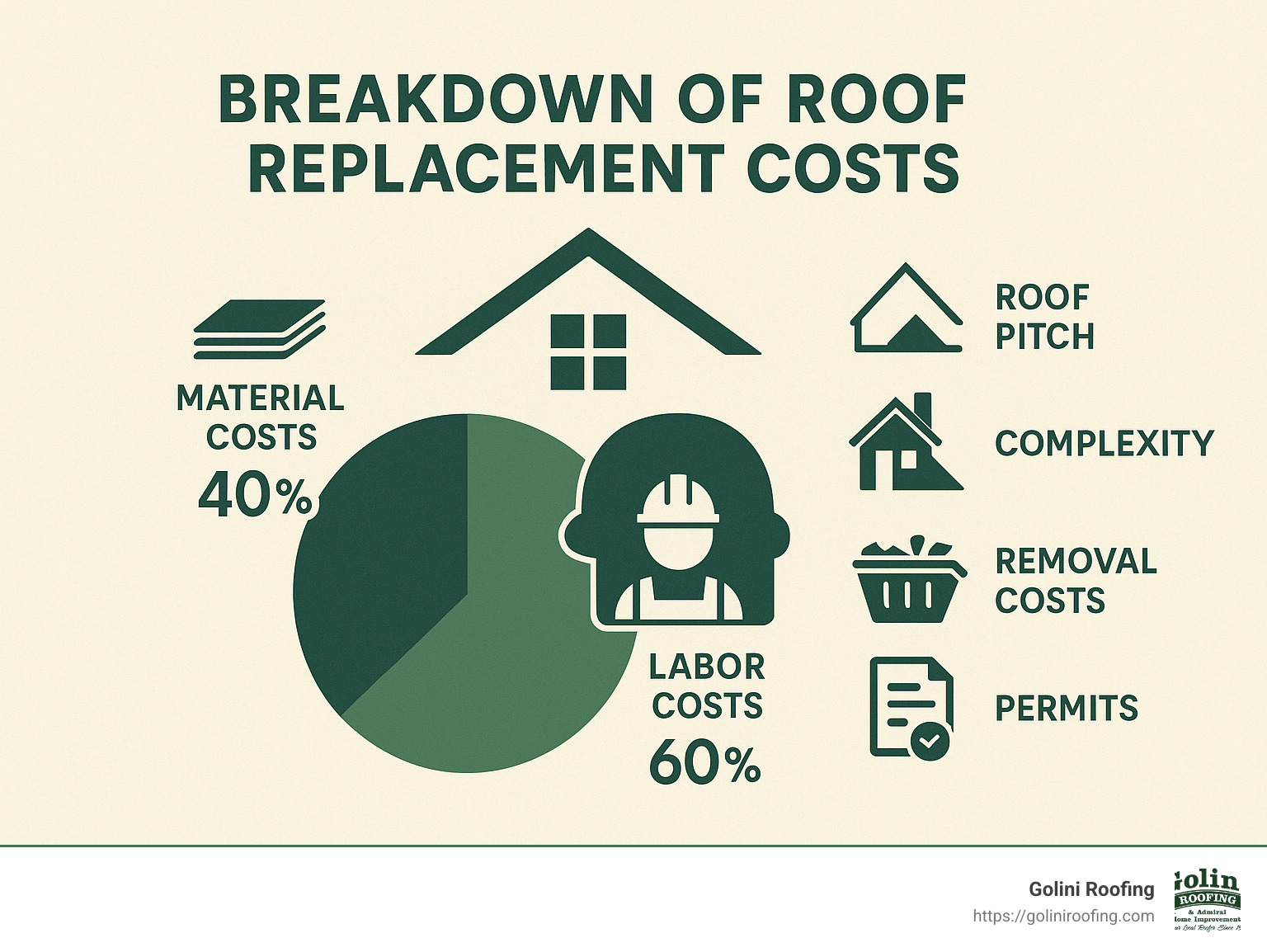
The final price of your roof replacement will depend on several key factors:
- Roof size and square footage
- Roofing materials selected
- Roof pitch and complexity
- Labor costs in your region
- Removal of existing roofing
- Permits and inspection fees
These are average costs based on internet data and not actual costs for Golini Roofing services. Regional differences, material availability, and unique home features can significantly impact your specific project cost.
I’m Jack Golini, owner of Golini Roofing with over 35 years of experience helping homeowners understand the average cost for a roof replacement and providing quality roofing solutions throughout Massachusetts. Having completed thousands of roof replacements since 1982, I’ve guided countless homeowners through the process of budgeting for this essential home investment.
Average cost for a roof terms to learn:
- how long does it take to replace a roof
- how much hail damage to replace roof
- how often should a roof be replaced
Factors Influencing Roof Replacement Costs
When you’re planning for a new roof, understanding what drives the cost can save you from sticker shock and help you budget wisely. Let’s walk through the key elements that will shape your investment in this essential home protection system.
Roof Size and Complexity
Your roof’s size forms the foundation of any estimate. In the roofing world, we measure in “squares,” with one square equaling 100 square feet of roofing area.
Most homes in America have roofs around 1,700 square feet (or 17 squares). But here’s something many homeowners don’t realize: your roof’s square footage is almost always larger than your home’s floor plan. Those overhangs, slopes, and multiple levels add up quickly!
For instance, if you have a 2,000 square foot home, your actual roof might measure 2,200 to 2,400 square feet. At typical installation costs between $4.35 and $11 per square foot, those extra feet matter to your bottom line.
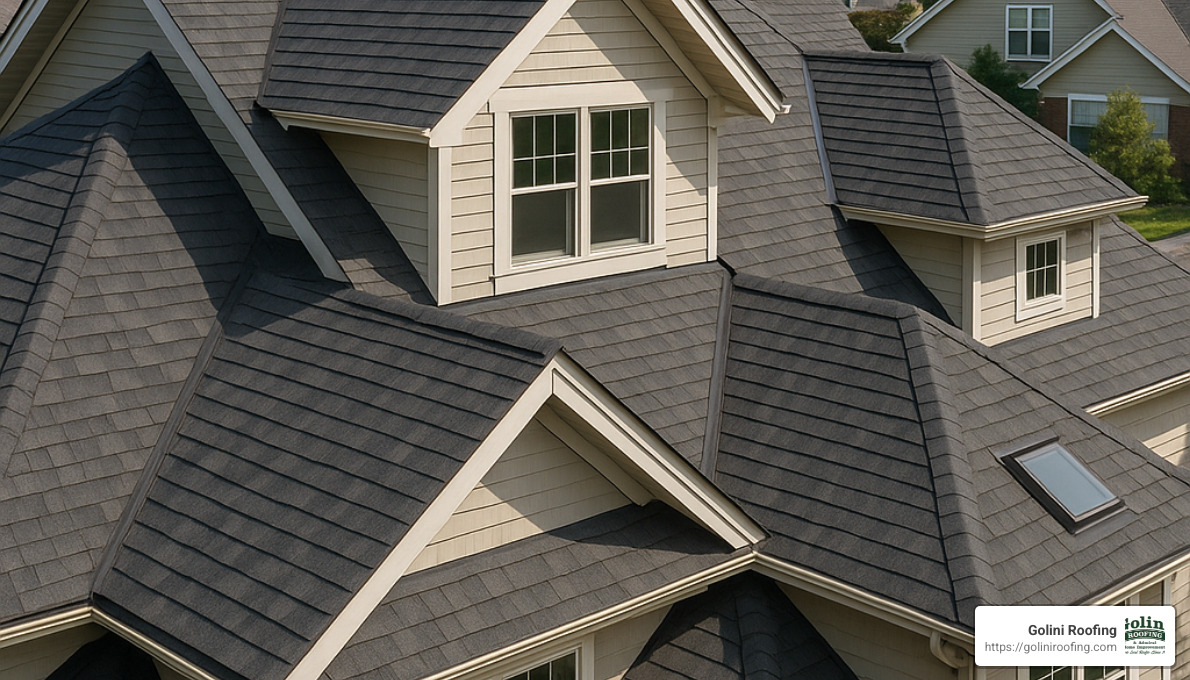
The design complexity of your roof dramatically impacts costs too. A simple gable roof with two straight planes is the budget-friendly option. Add in dormers, skylights, multiple levels, and valleys, and your costs climb with each complication. Each feature requires more precise cutting, additional materials, and extra labor time.
Your roof’s pitch (steepness) also plays a major role in pricing:
- Low-slope roofs (barely angled) often need specialized materials
- Standard pitch roofs (4/12 to 8/12) are the most economical to work with
- Steep roofs (9/12 or greater) can add $1,000-$3,000 to your total because they require special safety equipment and slow down installation
Don’t forget about accessibility. If your roof is difficult to reach or requires special equipment, expect additional charges. A multi-story home or one with limited access for equipment naturally costs more to work on than a simple ranch with clear access.
Roofing Materials Impact on Costs
Your material choice might be the most visible decision you make—and it significantly impacts both immediate costs and long-term value.
Asphalt shingles remain America’s favorite, covering about 70% of residential roofs. They’re the most affordable option, with basic three-tab shingles at the lower end and architectural or dimensional shingles offering improved looks and durability for a bit more money.
Metal roofing costs 2-3 times more upfront than asphalt, but many homeowners find the 40-70 year lifespan and energy efficiency worth it. Options range from practical standing seam panels to neat metal shingles that mimic slate or wood.
Wood shakes and shingles bring natural beauty to your home, but they require more maintenance and might face restrictions in fire-prone areas. The charm comes at a moderate premium over asphalt.
Tile roofing in clay or concrete offers distinctive character and excellent longevity (50+ years) at a premium price. Just be aware their weight might require additional structural support for your home.
Slate roofing sits at the top of the price range but can last an incredible 75-100+ years. This premium natural stone offers best elegance but requires specialized installation expertise.
Synthetic roofing materials represent newer technology that can mimic premium materials like slate or wood while offering improved durability and lighter weight.
The price gap between basic and premium options is substantial. While basic asphalt shingles might cost $4.25 to $8.25 per square foot installed, premium designer asphalt shingles can range from $5.50 to $10.50 per square foot.
Labor Costs
Did you know labor typically accounts for about 60% of your total roof replacement cost? This makes it the most significant expense factor—and for good reason. Professional installation ensures proper techniques, valid manufacturer warranties, and long-term performance.
Several factors influence what you’ll pay for labor:
Local market rates vary significantly by region. Urban areas and regions with higher costs of living generally command higher labor rates. A roof replacement in California might average around $8,925, while the same project in a more affordable state could cost substantially less.
Contractor experience and reputation affect pricing too. Established contractors with proven track records typically charge more than newer companies, but often deliver superior results and reliability. At Golini Roofing, we’ve spent over 35 years perfecting our craft.
Project complexity directly impacts labor hours. More complex roofs with multiple penetrations, valleys, and details require additional time and expertise.
Seasonal demand can drive prices up during peak roofing season (late spring through early fall). Scheduling during off-peak times can sometimes yield savings of 5-10% if your roof replacement can wait.
At Golini Roofing, we take special pride in our meticulous hand-nailing technique for each shingle. While this approach takes slightly longer than using pneumatic nail guns, it ensures superior installation quality and longevity, providing better value over the life of your roof.
Geographic Location
Your address significantly impacts your average cost for a roof replacement through several factors you might not have considered:
Regional material costs vary based on transportation expenses, local availability, and regional preferences. Materials simply cost more in some parts of the country than others.
Labor markets differ dramatically by region. Areas with higher costs of living typically have higher labor rates. For example, roof replacement in metropolitan areas often costs 15-20% more than in rural regions.
Building codes and requirements vary by location. Local building codes may mandate specific materials, installation methods, or additional components like ice and water shields in northern climates like Massachusetts.
Climate considerations should guide your material choices. In Massachusetts, we must account for snow loads, ice damming potential, and seasonal temperature fluctuations when recommending roofing systems.
Permit costs vary widely by municipality, typically ranging from $100 to $1,000 depending on your location and project scope. These are non-negotiable expenses that must be factored into your budget.
Additional Factors
Several other elements can significantly impact your final roof replacement cost:
Removal of existing roofing typically costs $3-$5 per square foot. Multiple layers require more labor and increase disposal costs. This often-overlooked expense can add $1,000 or more to your project.
Structural repairs may be necessary if your roof deck or framing has water damage or rot. These issues are often only finded once the old roof is removed, which is why experienced contractors often include a contingency in their estimates.
Ventilation improvements might be recommended during your roof replacement. Proper attic ventilation is crucial for roof longevity and energy efficiency. Upgrading ventilation systems might add $300-$600 to your project, but can extend roof life and reduce energy costs.
Flashing replacement around chimneys, vents, and valleys is essential for preventing leaks. New flashing typically adds $200-$500 to the project, but is absolutely worth it for preventing costly water damage.
Underlayment quality affects both price and performance. Premium synthetic underlayments cost more than traditional felt but provide superior protection against water infiltration—a worthwhile upgrade in most cases.
Disposal fees for your old roofing materials can range from $500 to $1,500 depending on volume, local rates, and whether recycling is required or available in your area.
These are average costs based on internet data and not actual costs for Golini Roofing services. Every home is unique, and your specific project might fall outside these ranges depending on your home’s particular needs and characteristics.
Understanding the Average Cost for a Roof
When homeowners ask me about the average cost for a roof replacement, I always explain that national averages only tell part of the story. Your specific project will have its own unique factors that influence the final price tag.
National Average Roof Replacement Costs
Based on the latest industry data, the national average cost for a roof replacement typically falls between $5,867 and $13,210, with most homeowners investing around $9,500 for a complete replacement.
For more information on typical roof replacement costs, check out this external resource from NerdWallet.
But don’t let these figures mislead you. The actual range is much wider in practice. I’ve seen simple roofing projects on smaller homes with basic materials cost as little as $3,000, while large homes with premium materials can easily exceed $50,000.
What creates this wide pricing spectrum? It really comes down to your choices and your home’s specific needs:
A modest home with basic 3-tab asphalt shingles might run $4,500-$8,000, while upgrading to architectural shingles typically costs between $5,994 and $9,791. If you’re considering metal roofing, prepare for a range of $9,150 to $16,743. Tile roofing installations generally fall between $8,202 and $24,645, and premium slate roofing
– the Rolls Royce of roofing materials – can range anywhere from $20,000 to $50,000 or more.
For my Massachusetts neighbors, it’s worth noting that our regional costs tend to run slightly higher than the national average. Our climate demands certain materials and installation techniques, plus our local building codes and labor rates affect the bottom line.
Cost Per Square Foot and Roofing Squares
Understanding how roofing contractors measure and price jobs can help explain your estimate:
In the roofing world, we measure in “squares” – each square equals 100 square feet of roof area. This industry-standard measurement makes material ordering and pricing more consistent.
When broken down by square foot, the average cost for a roof replacement ranges from $4.35 to $11 per square foot for standard materials. Premium materials can push this figure up to $40 per square foot or even higher for luxury options.
Translated to roofing squares, you’re typically looking at $435 to $1,100 per square for standard materials and installation.
Want a rough estimate of your roof’s size? Take your home’s square footage, divide by 100, then multiply by 1.1-1.2 to account for your roof’s pitch and overhangs. For instance, a 2,000 square foot home typically has a 22-24 square roof (about 2,200-2,400 square feet).
| Roofing Material | Cost Per Square Foot | Cost Per Square (100 sq ft) | Lifespan |
|---|---|---|---|
| 3-Tab Asphalt | $4.25 – $8.25 | $425 – $825 | 15-20 years |
| Architectural Asphalt | $5.50 – $10.50 | $550 – $1,050 | 25-30 years |
| Metal | $7.00 – $15.00 | $700 – $1,500 | 40-70 years |
| Wood Shake | $6.00 – $10.00 | $600 – $1,000 | 20-40 years |
| Clay/Concrete Tile | $8.00 – $20.00 | $800 – $2,000 | 50+ years |
| Slate | $10.00 – $30.00 | $1,000 – $3,000 | 75-100+ years |
Factors Affecting the Average Cost for a Roof
Your specific project will likely deviate from these national averages based on several key factors:
Material grade makes a significant difference, even within the same category. Premium architectural shingles with improved wind ratings and longer warranties typically cost 25-40% more than standard options – but that extra investment often pays dividends in durability and peace of mind.
Roof complexity dramatically impacts labor costs. A straightforward gable roof might cost 20-30% less than a complex roof with multiple dormers, valleys, and penetrations of the same square footage. Each additional cut, corner, and angle requires more time and expertise.
Regional variations can’t be overlooked. Labor rates can swing by 30-50% between different parts of the country. Here in Massachusetts, our rates reflect the skilled craftsmanship required to handle our challenging New England weather conditions.
Project timing matters too. Scheduling during the summer rush might increase your costs by 5-10% compared to off-season work when contractors have more availability.
Contractor selection plays a crucial role in both cost and quality. Established contractors with proven track records and proper insurance typically charge more than newer companies. At Golini Roofing, our 35+ years of experience and meticulous hand-nailing technique reflects our commitment to quality that lasts decades, not just years.
These are average costs based on internet data and not actual costs for Golini Roofing services. For a precise estimate custom to your specific home, it’s always best to schedule a professional roof inspection and consultation.
Comparing Roofing Materials and Their Costs
When it comes to replacing your roof, the material you choose impacts everything from your upfront investment to how long your roof will last. Let’s walk through the most popular options to help you find the perfect match for your home and budget.
Asphalt Shingles
If you drive around any Massachusetts neighborhood, you’ll notice asphalt shingles dominating the landscape – and for good reason. These affordable workhorses cover about 70% of American homes today.
Cost Range: $3.50-$5.50 per square foot installed ($350-$550 per square)
Lifespan: 20-30 years
Weight: Approximately 2.2-4 pounds per square foot
Asphalt shingles offer the best bang for your buck in the roofing world. They come in countless colors and styles to match any home’s character. Installation is straightforward, which helps keep labor costs manageable. They also provide good fire resistance when installed with proper underlayment.
The main drawback? They won’t last as long as premium materials. In our Massachusetts climate, quality architectural shingles make more sense than basic 3-tab varieties. The upgrade costs about 20-30% more but offers significantly better wind resistance and curb appeal – a worthwhile investment when facing our notorious nor’easters.
After 35 years in the business, I’ve seen homeowners consistently satisfied with architectural shingles’ balance of affordability and performance. For most families, they represent the sweet spot of value and durability.
Metal Roofing
Metal roofing has surged in popularity, and I’m not surprised. These durable systems offer exceptional longevity that many homeowners find worth the higher initial investment.
Cost Range: $7-$15 per square foot installed ($700-$1,500 per square)
Lifespan: 40-70 years
Weight: 1-3 pounds per square foot (varies by type)
Metal roofs truly shine in our Massachusetts winters. The smooth surface allows snow to slide off more easily than textured materials, reducing the weight burden on your home. They’re also remarkably energy-efficient, reflecting solar heat in summer and helping lower cooling costs.
Standing seam metal roofs, with their clean vertical panels and hidden fasteners, offer the most sophisticated look at $9-$15 per square foot. Metal shingles designed to mimic slate or wood provide another attractive option at $7-$12 per square foot.
The biggest objection I hear about metal roofs is noise during rainstorms. However, with proper installation including solid sheathing and underlayment, this concern is largely eliminated. The investment pays off through decades of virtually maintenance-free protection.
Tile Roofing
There’s something undeniably charming about a tile roof. These distinctive materials create a sophisticated, upscale appearance that stands out in any neighborhood.
Cost Range: $8-$20 per square foot installed ($800-$2,000 per square)
Lifespan: 50+ years
Weight: 6-10 pounds per square foot
Tile roofing comes in two main varieties: traditional clay tiles that create that classic Mediterranean or Spanish colonial look ($10-$20 per square foot), and concrete tiles that offer similar aesthetics at a somewhat lower price point ($8-$15 per square foot).
The incredible durability of tile is its major selling point – these roofs can easily last half a century or more. They’re also excellent insulators, helping maintain comfortable temperatures year-round.
I should mention that tile roofing presents some special considerations for Massachusetts homes. Their significant weight often requires structural reinforcement before installation. Our freeze-thaw cycles can also be tough on tiles, making proper underlayment and ice and water shield absolutely essential. That’s why many homeowners in our region who love the tile look opt for lightweight synthetic alternatives that mimic the appearance without the structural concerns.
Slate Roofing
Slate represents the crown jewel of roofing materials. When I walk by a century-old home with its original slate roof still performing beautifully, I’m always impressed by this natural stone’s remarkable longevity.
Cost Range: $10-$30 per square foot installed ($1,000-$3,000 per square)
Lifespan: 75-100+ years
Weight: 8-10 pounds per square foot
Many of Massachusetts’ most distinguished historic homes feature slate roofs, and for good reason. This premium material offers best durability against our harsh New England weather. A properly installed slate roof might be the last roof your home ever needs.
The natural beauty of slate comes in various thicknesses and qualities. Standard slate (3/16″ to 1/4″ thick) typically lasts 75-100 years and costs $10-$20 per square foot installed. Premium slate (3/8″ to 1/2″ thick) can protect your home for over a century and runs $15-$30 per square foot installed.
The significant upfront investment and structural requirements make slate a serious commitment. Your home must have adequate support to handle the 8-10 pounds per square foot weight. Repairs also require specialized expertise, which is why we’ve made sure our Golini Roofing team has mastered proper slate installation and repair techniques.
Wood Shakes
There’s something warmly authentic about wood roofing. These natural materials weather to a beautiful silver-gray patina that gives homes a distinctive character impossible to replicate with manufactured products.
Cost Range: $6-$10 per square foot installed ($600-$1,000 per square)
Lifespan: 20-40 years
Weight: About 3-4 pounds per square foot
Wood shakes (which are hand-split for a rustic texture) typically cost $7-$10 per square foot installed, while more uniform wood shingles run $6-$8 per square foot. Cedar is the most popular choice due to its natural oils that resist moisture and insects.
The natural insulating properties of wood make these roofs energy-efficient in both summer and winter. However, they do require more maintenance than other options. In our humid Massachusetts climate, proper ventilation is essential to prevent moisture problems.
Many homeowners are surprised to learn that treated wood shakes offer good fire resistance. However, some municipalities restrict their use in fire-prone areas, so it’s always worth checking local building codes before setting your heart on this option.
The average cost for a roof replacement varies widely based on your material choice, but the cheapest option upfront isn’t always the most economical in the long run. Materials with longer lifespans often provide better value despite higher initial costs. At Golini Roofing, we’re happy to walk you through these options to find the perfect balance of aesthetics, performance, and budget for your specific situation.
These are average costs based on internet data and not actual costs for Golini Roofing services.
Additional Expenses to Consider in Roof Replacement
When planning your roof replacement budget, it’s important to look beyond just the basic material and installation costs. Several additional expenses can significantly impact your final investment. Let’s explore these often-overlooked costs to help you prepare for your roofing project without any surprises.
Roof Removal and Disposal
Before your beautiful new roof goes on, the old one needs to come off. This removal and disposal process typically adds between $3-$5 per square foot to your project cost.
The final price tag for this phase depends on several factors. If your home has multiple layers of old roofing, you’ll pay more for the extra labor and increased disposal weight. Heavier materials like slate or tile naturally cost more to remove than lightweight asphalt shingles.
Your location matters too. Different municipalities have varying regulations for construction waste disposal, which can impact your costs. For homes with difficult access or multiple stories, expect to pay a premium for the additional labor required.
For perspective, on an average 2,000 square foot roof, removal and disposal might add $1,000-$3,000 to your project. While many contractors include these costs in their estimates, it’s always wise to confirm this detail before signing any agreement.
At Golini Roofing, we always include complete cleanup and disposal in our estimates. We use specialized equipment to protect your landscaping and property during the removal process, ensuring we leave your home looking better than when we arrived.
Structural Repairs
One of the most unpredictable aspects of roof replacement is what might be hiding underneath those old shingles. Once the existing roofing comes off, various structural issues may be revealed that need addressing before the new roof goes on.
Roof deck problems are among the most common issues. Water damage, rot, or warping in the plywood or OSB decking typically costs $70-$100 per 4×8 sheet plus labor to replace. For more serious problems, rafter or truss repairs might be necessary, adding carpentry work at $40-$80 per hour.
The fascia and soffit – those finishing elements along your roofline – often show damage when a roof has been leaking and may need replacement at $10-$30 per linear foot installed.
Since these issues typically remain hidden until the old roof comes off, experienced contractors recommend budgeting an additional 5-10% of your total project cost as a contingency for potential repairs. While a thorough inspection before your project begins might identify some potential issues, certain problems will only become apparent during the removal process.
Permits and Inspections
Most municipalities require permits for roof replacements, with costs typically ranging between $100 and $1,000 depending on your location and project scope. Here in Massachusetts, permit requirements and costs vary significantly from town to town.
The permitting process generally includes application submission, possibly a plan review, fee payment, and inspections during or after installation. Though it might be tempting to skip this expense, doing so can lead to significant headaches later on, including code violation fines, difficulties when selling your home, insurance claim denials, or even being required to remove and reinstall your roof if finded.
At Golini Roofing, we handle all permitting requirements for our customers as part of our service, ensuring your project fully complies with local building codes and giving you one less thing to worry about.
Gutter and Flashing Replacements
Your roof replacement presents the perfect opportunity to address related components that work together as a system to protect your home.
Flashing creates critical watertight seals around roof penetrations (like chimneys and vents) and transitions between different roof planes. Replacing flashing during a roof replacement typically adds $200-$500 to the project but is absolutely essential for preventing future leaks. This metal barrier directs water away from vulnerable areas and is a crucial part of any quality roof installation.
While not strictly necessary with every roof replacement, gutters often reach the end of their useful life around the same time as your roofing. New gutters typically cost $4-$9 per linear foot installed (approximately $800-$1,800 for an average home). When your roofers are already set up with ladders and equipment, adding gutter replacement can be more efficient than having it done separately later.
The often-overlooked drip edge is another important component. This metal trim along roof edges helps direct water into gutters and protects fascia boards from rot. Adding or replacing drip edge costs approximately $1-$2 per linear foot but provides significant protection for your home’s structure.
Addressing these complementary components during your roof replacement is typically more cost-effective than scheduling separate projects later. With labor and equipment already on site, you’ll save on setup costs while ensuring all parts of your roofing system work together seamlessly.
These are average costs based on internet data and not actual costs for Golini Roofing services. The actual price for your specific project may vary based on your home’s unique characteristics and your location within Massachusetts.
How to Save Money on Your Roof Replacement
Let’s face it – a new roof isn’t cheap. But there are smart ways to manage costs without cutting corners on quality. After helping thousands of Massachusetts homeowners with their roofing projects since 1982, I’ve gathered some practical money-saving strategies that actually work.
Get Multiple Estimates
One of the simplest yet most effective ways to ensure you’re getting a fair price is to collect 3-5 detailed estimates from reputable contractors. But don’t just look at the bottom line – the details matter tremendously.
When comparing quotes, make sure each estimate covers identical work scope and similar materials. Check whether removal, disposal fees, and permit costs are included or will be tacked on later. Pay attention to warranty offerings alongside the price, as stronger coverage might justify a slightly higher cost.
I’ve seen many homeowners get burned by suspiciously low estimates that seemed too good to be true – because they were. These bargain quotes often exclude critical components or come from contractors with inadequate insurance, potentially leaving you exposed to significant liability.
At Golini Roofing, we believe in transparency. Our estimates clearly outline every aspect of your project in plain language, helping you make accurate, apples-to-apples comparisons with other quotes you receive.
Timing Your Replacement
Strategic timing can potentially trim 5-10% off your roof replacement costs:
Off-Peak Savings: Many homeowners don’t realize that roofing has seasons too. Scheduling during less busy periods (typically late fall through early spring in Massachusetts) often results in better pricing as contractors have more availability and are eager to keep their crews working.
Preventative Approach: Replacing your roof before it completely fails can save thousands in potential water damage repairs to your home’s interior and structure. Those water stains on your ceiling are warnings that shouldn’t be ignored!
Project Coordination: Planning other exterior work alongside your roof replacement can reduce overall costs through shared setup, equipment, and labor efficiencies. For example, if you’re also replacing gutters or adding skylights, doing everything simultaneously usually costs less than separate projects.
Material Price Awareness: Roofing material costs fluctuate based on petroleum prices (for asphalt shingles) and metal market conditions. A good contractor can often advise on favorable purchasing windows if your project timeline is flexible.
Material Selection
Choosing the right materials involves balancing initial costs with long-term value:
Quality Tiers Matter: Within each material category, there are varying quality levels with significant price differences. Mid-grade materials often deliver the best balance of performance and cost. For example, a good architectural shingle might cost just 15-20% more than basic 3-tab shingles but offer 50% longer lifespan and much better wind resistance.
Think Long-Term: When you calculate cost over the full lifespan, premium materials often win out. For instance, a $15,000 metal roof lasting 50+ years might be more economical than an $8,000 asphalt roof needing replacement after 20 years – that’s before factoring in inflation on future replacements.
Energy Efficiency Benefits: Some materials offer substantial energy savings that offset their higher initial cost. “Cool roof” options can reduce summer cooling costs by 15-25% in some homes, putting money back in your pocket every month.
Warranty Value: Not all warranties are created equal. A slightly more expensive material with stronger coverage (especially non-prorated coverage) provides better protection for your investment. Always read the warranty details rather than just the years of coverage.
Financing and Insurance Options
Several financial approaches can help make your roof replacement more affordable:
Insurance Coverage: If your roof was damaged by a covered event like wind, hail, or falling trees, your homeowner’s insurance may cover part or all of the replacement cost. Have a professional inspection to document the damage before filing a claim – proper documentation makes a world of difference in claim approval.
Home Equity Solutions: With today’s home values, many homeowners have significant equity they can tap into through home equity loans or lines of credit, often at favorable interest rates compared to credit cards or personal loans.
Manufacturer Financing: Some roofing manufacturers partner with financial institutions to offer special financing programs through their certified contractors. These programs sometimes include promotional periods with deferred interest.
Tax Incentives: Energy-efficient roofing improvements may qualify for federal or state tax credits or incentives. The available programs change frequently, so consult with your tax professional about current options before making your final material selection.
Payment Timing: Some contractors offer modest discounts (typically 3-5%) for larger deposits or prompt payment. It never hurts to ask about available payment schedules when obtaining estimates.
While saving money is important, your roof protects everything beneath it. The average cost for a roof replacement should be viewed as an investment in your home’s long-term value and your family’s comfort and safety. Sometimes spending a bit more upfront for quality materials and expert installation pays dividends for decades to come.
Choosing the Right Roofing Contractor
Selecting the perfect contractor for your roof replacement might be even more important than choosing your materials. Think of it this way: even the best roofing materials won’t perform well if they’re installed incorrectly. The right contractor makes all the difference in how your roof performs, how long it lasts, and whether your warranty remains valid.
Checking Credentials and Experience
Before you hand over your hard-earned money to anyone with a ladder and a hammer, take time to verify their qualifications:
Proper Licensing matters tremendously. Here in Massachusetts, legitimate roofing contractors must be registered as home improvement contractors. This isn’t just a formality—it’s your first layer of protection against fly-by-night operators.
Insurance Coverage is non-negotiable. Don’t just take their word for it! Request certificates directly from their insurance provider showing both workers’ compensation and liability insurance. This protects you from potential lawsuits if someone gets injured on your property.
Manufacturer Certifications tell you the contractor has received specialized training for specific materials. Many premium roofing brands like GAF, CertainTeed, and Owens Corning only honor their warranties when certified contractors do the installation. At Golini Roofing, we maintain these certifications to ensure your warranty remains fully protected.
Business Longevity speaks volumes about reliability. A company that’s been around for decades (like our 35+ years serving Massachusetts homeowners) has clearly satisfied enough customers to stay in business through economic ups and downs.
Local Presence with a physical address you can actually visit provides accountability. Local contractors understand our unique Massachusetts weather challenges and building codes, plus they’re invested in maintaining their reputation in the community.
Reviewing Warranty and Workmanship
Understanding your warranty coverage helps protect your investment for decades to come:
Manufacturer Warranty covers the roofing materials themselves. These typically range from 20-50 years depending on what you choose. A 30-year architectural shingle warranty means the manufacturer stands behind the shingles themselves—but there’s a catch. Many manufacturers only honor these warranties when certified contractors handle the installation.
Workmanship Warranty is provided by your contractor and covers the quality of the installation. These typically range from 2-10 years, with 5 years being common. When a contractor offers a longer workmanship warranty, they’re essentially saying, “We’re so confident in our work that we’ll fix any installation-related problems for years to come.”
Transferable Warranties can add value to your home if you sell. Some warranties can be transferred to new owners, which becomes a nice selling point if you move within the warranty period.
Warranty Limitations are the fine print you need to understand. Did you know improper attic ventilation can void some roofing warranties? Or that having non-certified contractors perform repairs might nullify your coverage? Understanding these details upfront prevents unpleasant surprises later.
At Golini Roofing, we take pride in explaining warranty coverage in plain English, ensuring you understand exactly what protection you have for your investment.
Reading Reviews and Getting References
You can learn a lot about a contractor before they ever set foot on your property:
Online Reviews across multiple platforms tell a story. Check Google, Yelp, BBB, and specialized sites like Angie’s List. Look for patterns rather than fixating on a single negative review (even the best contractors occasionally have an unhappy customer). What matters is how the company responds to criticism.
References from past customers provide valuable insights. Don’t just ask for references—actually call them! Ask specific questions: Was the project completed on time and within budget? Were there unexpected charges? How did the contractor handle any complications? Try to speak with homeowners whose projects were completed several years ago to assess how the roof has performed over time.
Portfolio examples show the quality of a contractor’s work. Ask to see completed projects using materials similar to what you’re considering. Photos of finished roofs, especially before-and-after comparisons, help you visualize what to expect.
Community Reputation matters in roofing perhaps more than any other home improvement project. Ask neighbors, friends, and local building professionals for recommendations. Word-of-mouth referrals remain the gold standard in the roofing industry.
Important Questions to Ask
When interviewing potential contractors, the right questions can reveal their professionalism and attention to detail:
Who will supervise the installation? The answer matters tremendously. You want a knowledgeable supervisor on-site throughout the project—not just workers with minimal experience making critical decisions about your roof.
What steps do you take to protect my property during installation? Professional contractors have clear protocols for protecting your landscaping, windows, and outdoor items. At Golini Roofing, we use specialized equipment and tarps to ensure your property remains pristine throughout the project.
How do you handle unexpected issues like decking replacement? Surprises happen when the old roof comes off. Understanding their process and pricing for addressing hidden problems prevents disagreements later. Good contractors build some contingency into their estimates.
What is your inclement weather policy? New England weather is notoriously unpredictable. Know how they’ll protect exposed areas if work is interrupted by a sudden downpour or storm.
How do you ensure proper ventilation? Proper attic ventilation is crucial for roof performance, energy efficiency, and warranty compliance. A knowledgeable contractor will evaluate your current ventilation and recommend improvements if needed.
What is your payment schedule? Be wary of contractors requiring full payment upfront—this is often a red flag. A reasonable deposit followed by payments tied to project milestones is standard practice among reputable companies.
How will you handle clean-up? The last thing you want is finding roofing nails in your garden for months after your project. Ensure thorough clean-up is included, specifically asking about magnetic sweeping for nails.
At Golini Roofing, we understand that replacing your roof represents a significant investment in your home’s protection and value. Our decades of experience serving Massachusetts homeowners means we’ve encountered virtually every roofing situation possible, and we’re happy to share that knowledge with you—even if you ultimately choose another contractor. After all, an informed homeowner makes better decisions about their average cost for a roof replacement and the value they receive for their investment.
Frequently Asked Questions about Roof Replacement Costs
Is it more cost-effective to repair or replace a roof?
One of the most common questions homeowners ask me is whether they should repair their existing roof or invest in a complete replacement. The answer isn’t always straightforward, but I can help you steer this important decision.
The age of your roof plays a crucial role in this decision. If your asphalt shingle roof is already 15+ years into its lifespan, putting money into repairs often becomes like patching an old pair of jeans – they’ll just keep tearing in new places. At this point, replacement typically offers better long-term value.
Consider the extent of the damage too. I’ve seen many homeowners spend good money on repairs only to need more work a few months later. As a general rule of thumb, when damage affects more than 30% of your roof’s surface, replacement usually makes more financial sense than extensive repairs.
Your long-term plans for the home matter as well. If you’re planning to stay in your home for many years, a new roof provides not just better protection but also peace of mind – something that’s hard to put a price tag on. On the other hand, if you’re selling soon, strategic repairs might be more appropriate.
Don’t overlook underlying issues that might be causing those leaks or damaged shingles. Problems like poor ventilation or improper installation can lead to recurring issues that repairs will only temporarily address.
Here’s my practical advice after 35 years in the business: if repair costs would exceed 30% of replacement costs, or if your roof has already lived through 75% of its expected lifespan, replacement will usually be the more economical choice in the long run.
How does the pitch and accessibility of a roof affect replacement cost?
Your roof’s pitch (or slope) significantly impacts your replacement costs in ways many homeowners don’t initially consider.
Those beautiful steep roofs you see on Tudor or Victorian-style homes? They’re certainly eye-catching, but they also require additional safety equipment and harnesses when we work on them. For roofs with a 9/12 pitch or steeper (meaning the roof rises 9 inches for every 12 horizontal inches), these safety requirements can add $1,000-$3,000 to your project costs.
Steeper slopes also dramatically slow down the installation time. What might take our crew one day on a moderate pitch might require two days on a steep roof, as workers must move more cautiously and secure themselves properly. This careful work increases labor costs by 25-50% compared to standard pitches.
There’s also the matter of material requirements. Steeper roofs need special installation methods to prevent shingles from slipping over time, which means additional fasteners and sometimes special underlayment products.
Something that surprises many homeowners is that a steeper roof actually has more surface area than a flatter roof with the same footprint. Think about it like a pizza box versus a pizza box with the lid partially opened – the angled lid has more surface area, requiring more materials to cover it.
Accessibility challenges create additional costs too. Working on multi-story homes requires extra equipment and safety precautions. Properties with limited access for equipment or material delivery add complexity. I remember one project where we had to hand-carry all materials through a narrow garden path because we couldn’t get our equipment close to the house – that additional labor time significantly impacted the cost.
Features like multiple chimneys, skylights, solar panels, or satellite dishes require our crews to work carefully around these obstacles, adding time and complexity to your project.
At Golini Roofing, we carefully evaluate all these factors during our initial inspection so you won’t face surprise charges later. Our decades of experience help us accurately account for your roof’s specific characteristics in our estimates.
Can I install a new roof over my old one to save money?
It’s tempting to consider overlaying a new roof on top of your existing one – after all, it could save you 25-30% on removal and disposal costs. But before you go this route, let me share some important considerations from my 35 years of roofing experience.
First, building codes may make this decision for you. Many Massachusetts municipalities limit homes to a maximum of two roof layers. If you already have multiple layers, an overlay simply isn’t permitted by law.
Then there’s the matter of weight. Each layer of asphalt shingles adds about 2-3 pounds per square foot to your home’s structure. That might not sound like much, but multiply that across a 2,000 square foot roof, and you’re adding several tons of weight that your home’s structure may not have been designed to support.
One of my biggest concerns with overlays is the inspection limitations. Without removing the old roof, we can’t see what’s happening underneath. I can’t tell you how many times we’ve removed an old roof to find rotted decking or damaged flashings that would have caused serious problems if we had simply covered them up.
There’s also the matter of reduced lifespan. Overlaid roofs typically last 20-25% less time than properly installed new roofs because they don’t lay as flat and tend to trap more heat, accelerating shingle deterioration.
Many manufacturers have warranty implications for overlays too. Some void their warranties entirely for overlay installations, while others reduce the coverage period substantially.
Finally, consider the future costs. Eventually, all those layers will need to be removed, making your next replacement more expensive and complicated.
For these reasons, I generally recommend complete removal and replacement for the best long-term value and performance. This is especially important in our Massachusetts climate, where proper ice and water shield installation is crucial for preventing those destructive ice dams that can cause thousands in interior damage.
While the upfront savings of an overlay might seem attractive, my experience has shown that starting fresh usually provides better protection and value over the life of your roof.
Conclusion
Understanding the average cost for a roof replacement is essential when preparing for this significant home investment. While national averages give you a starting point, your specific project will likely differ based on your roof’s unique characteristics, material choices, and local factors that affect pricing.
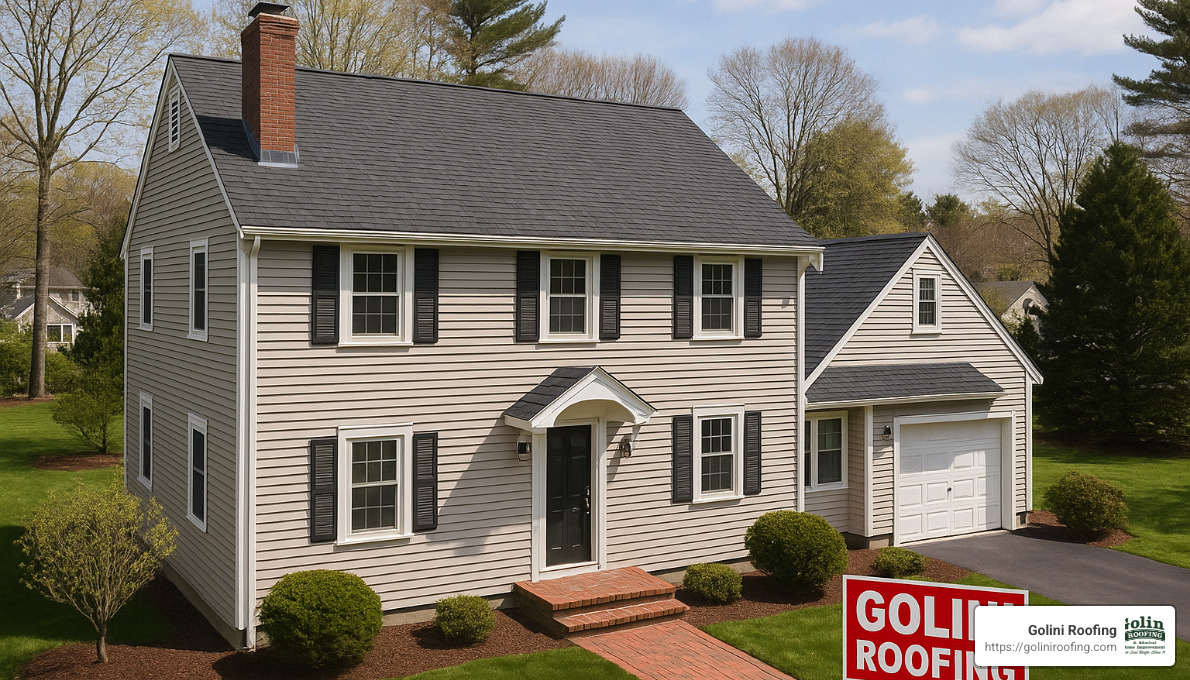
At Golini Roofing, we’ve spent over three decades helping Massachusetts homeowners steer the complexities of roof replacement. We believe in honest pricing and exceptional craftsmanship. Our signature hand-nailing technique might take a bit longer than using pneumatic guns, but the superior installation quality means your roof will stand strong against our region’s harsh winters, summer storms, and everything in between.
When you’re planning your roof replacement project, I’d recommend following these key steps:
First, start with a professional inspection to truly understand what your roof needs. Those missing shingles might be hiding bigger issues that should be addressed during replacement.
Next, take time to weigh both the upfront costs and long-term value of different materials. Sometimes spending a bit more initially can save thousands down the road through extended lifespan and reduced maintenance.
Always gather multiple detailed estimates from established contractors with solid reputations in your community. This gives you a clearer picture of fair market pricing for your specific project.
Before signing any contract, verify credentials, insurance coverage, and warranty details. These protections are just as important as the physical roof over your head.
Finally, be prepared for potential additional expenses that might arise once work begins. Setting aside a contingency of 5-10% of your project cost can help manage surprises like decking repairs or ventilation improvements.
I’ve seen too many homeowners regret choosing the lowest bid only to face problems a few years later. Quality installation by experienced professionals using premium materials isn’t just about protection—it’s about peace of mind and value for your investment.
Since 1982, our team at Golini Roofing has proudly served homeowners throughout Burlington, Lynnfield, North Reading, Reading, Stoneham, Wakefield, Wilmington, Winchester, Woburn, and surrounding communities. We’ve weathered economic ups and downs by focusing on one simple principle: treating each home as if it were our own.
Your roof does more than just keep the rain out—it protects everything and everyone you value most. A quality replacement improves your home’s value, improves its curb appeal, and provides reliable protection for decades to come.
For more information about roof replacements or to schedule your free, no-obligation inspection, visit our website or give us a call. We’d be happy to answer your questions and help you make the best decision for your home and budget.
