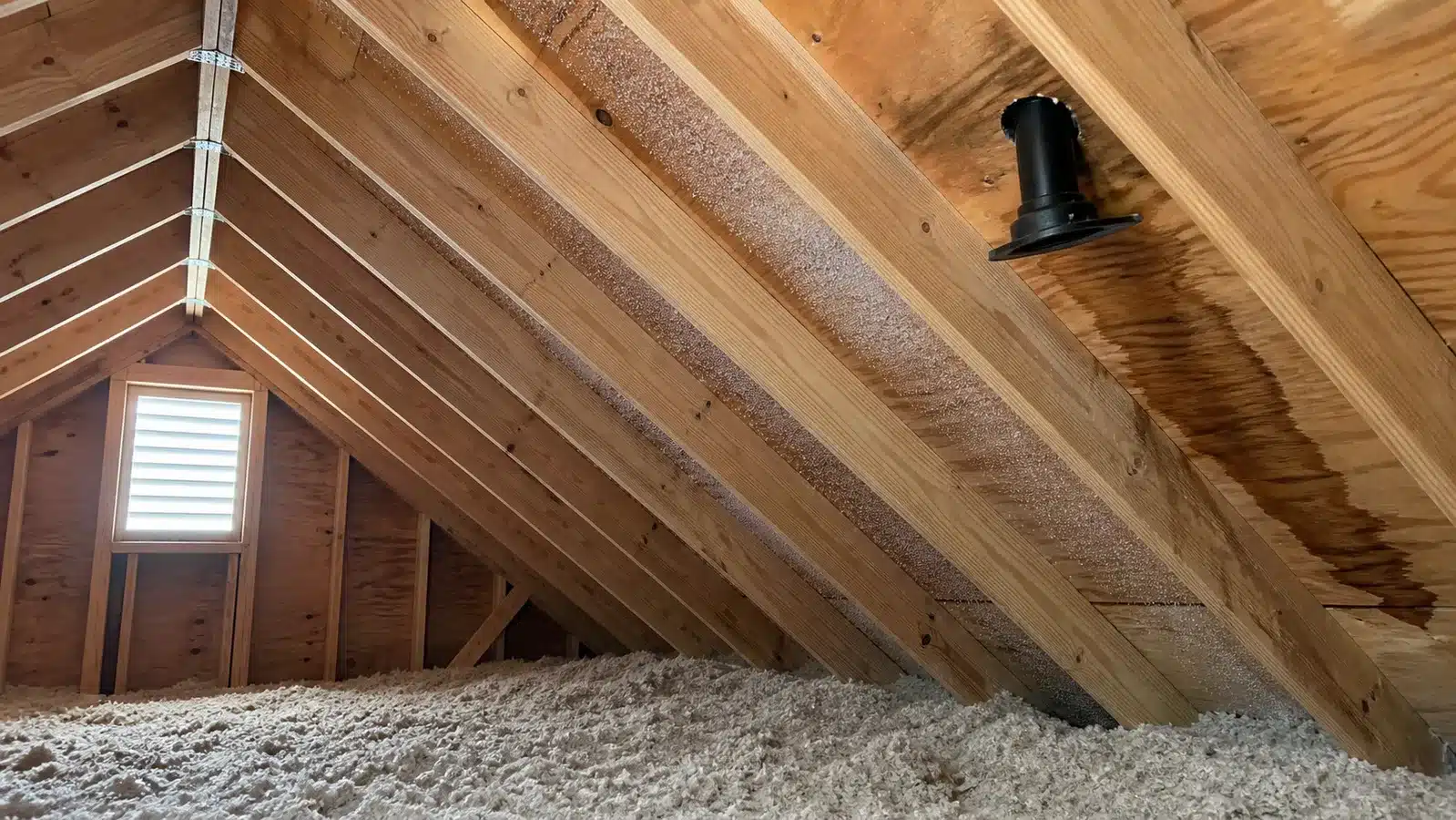
A brown ceiling mark or damp attic does not identify its own source. Exterior water can enter through the roof, while warm indoor air can carry moisture into a cold attic and condense on the roof deck. A practical roof leak vs condensation check compares timing, weather, location, and the moisture pattern before anyone recommends a roofing or ventilation fix.
You do not need to climb onto the roof. Document the symptom from a safe location, protect the interior from active dripping, and arrange an inspection when the source is uncertain. If water is near an electrical fixture, a sagging ceiling, or another immediate hazard, keep people away from the area and contact the appropriate qualified professional promptly.
Start with the pattern, not the stain color
| Observation | More consistent with exterior water entry | More consistent with attic condensation |
|---|---|---|
| Timing | Appears during or after rain, wind-driven rain, or snowmelt | Appears during cold spells or after indoor moisture rises, even without precipitation |
| Distribution | Localized below or downslope from a penetration, valley, flashing detail, or damaged roof area | Frost, droplets, damp sheathing, or rusted fasteners across a broader cold surface |
| Repeatability | Returns with a particular storm direction or melt condition | Returns with cold outdoor temperatures, high indoor humidity, or moisture vented into the attic |
| Attic evidence | A defined wet trail or isolated area near a roof detail | Moisture on multiple nails or deck areas, damp insulation, or frost over a wider zone |
| Next inspection question | Where is the exterior entry point and how far did water travel? | How are indoor moisture, air leakage, insulation, ducts, and attic ventilation interacting? |
No single row proves the cause. A roof can leak and an attic can have condensation at the same time. The table helps you describe the evidence and choose the right inspection path.
Why cold-weather condensation can resemble a roof leak
Condensation forms when warm, moisture-laden air meets a colder surface. GAF’s explanation of roof condensation describes this process at a cool roof deck and points homeowners toward evaluating ventilation, insulation, and vapor control rather than assuming the roof covering is the only factor.
Air leakage matters too. The U.S. Department of Energy’s Building Science Education resource explains that air sealing at attic access points helps prevent attic moisture problems. Bathroom or kitchen exhaust that ends in the attic, gaps around ceiling penetrations, and an unsealed attic hatch are evidence to report. They are not items to alter blindly; the complete assembly and any combustion-safety requirements need qualified review.
On the North Shore, a cold morning after a humid evening can produce a different evidence pattern from a leak that follows northeast wind and rain. Record both indoor and outdoor conditions rather than relying on memory.
Why exterior leaks can appear away from the entry point
Water may travel along decking, rafters, fasteners, or insulation before it reaches a ceiling. The indoor mark may therefore sit below a different roof area than the actual opening. Golini Roofing’s roof component guide maps the transitions, penetrations, valleys, and edges that help an inspector describe that path. If the damp area is near a skylight, the skylight repair versus replacement checklist helps separate the unit, its flashing, and the nearby roof.
Useful weather clues include:
- rain intensity and duration;
- wind direction;
- whether snow or ice was melting;
- whether the symptom appeared immediately or hours later; and
- whether the same area stayed dry during a different storm.
A hose test or roof walk can create damage and still miss an intermittent path. Leave exterior testing to someone who can control the water, inspect the assembly, and work safely.
Make a safe interior and attic record
Start with the living space. Mark the edge of a stain lightly with the date, or photograph it with a fixed reference so growth is visible. Note odors, peeling paint, damp trim, and whether a bathroom, laundry, or kitchen is nearby.
If the attic has a stable walkway and can be entered safely, look without disturbing insulation or stepping between framing members. Record:
- the location of wet or compressed insulation;
- frost or droplets on fasteners and sheathing;
- darkened wood or a defined water trail;
- bath, kitchen, or dryer ducts that appear loose or terminate in the attic;
- blocked soffit areas or disconnected baffles; and
- which attic zones are inaccessible.
Do not touch suspected mold, damaged electrical equipment, or unstable materials. The U.S. EPA advises addressing moisture sources and drying wet materials promptly; its guide to mold and moisture in the home also explains when broader water damage or health concerns call for professional help.
Send the evidence to the right inspection
For a suspected exterior entry point, ask the roofer to inspect the roof area above and upslope from the symptom, not just the ceiling mark. A roof repair inspection should identify the failed detail and explain how the proposed repair connects to the surrounding roof.
For a broad cold-weather moisture pattern, the answer may involve more than roof vents. Bring the same evidence to a roofing assessment and ask whether an insulation, air-sealing, HVAC, or remediation specialist should also be involved. Golini Roofing’s roof ventilation questions explain why intake, exhaust, attic zones, insulation, air leakage, and exhaust ducts must be evaluated as one system.
Use a four-item handoff
Before the appointment, send four things:
- Location: room, ceiling area, attic zone, and roof feature above or upslope.
- Timing: first occurrence, precipitation, wind, snowmelt, outdoor temperature, and indoor moisture activity.
- Pattern: isolated trail versus broad frost, droplets, or dampness.
- Change: whether the area grows, dries, returns, or appears under different conditions.
That record will not replace an inspection, but it gives the inspector a better starting point and reduces the chance that a one-time dry visit produces a guess.
Fix the moisture source, not only the visible mark
Paint and new insulation do not solve active water entry or recurring condensation. The next step is to verify the source, define which roof or attic systems are involved, and assign each part of the correction to the right trade. The difference between a roof leak and condensation is not academic: it determines what must be repaired and how the result should be checked.