
Average Roof Replacement Time: 7 Key Facts for 2025 Success
Why Understanding Roof Replacement Duration Matters
Average roof replacement time varies significantly based on your home’s size, roofing materials, and weather conditions. Most homeowners need a clear timeline to plan for noise, debris, and daily disruptions during this major home improvement project.
Quick Answer for Average Roof Replacement Time:
- Small homes (under 2,000 sq ft): 1 day
- Medium homes (2,000-4,000 sq ft): 2-3 days
- Large homes (4,000+ sq ft): 4-7 days
- Complex roofs with premium materials: Up to 2 weeks
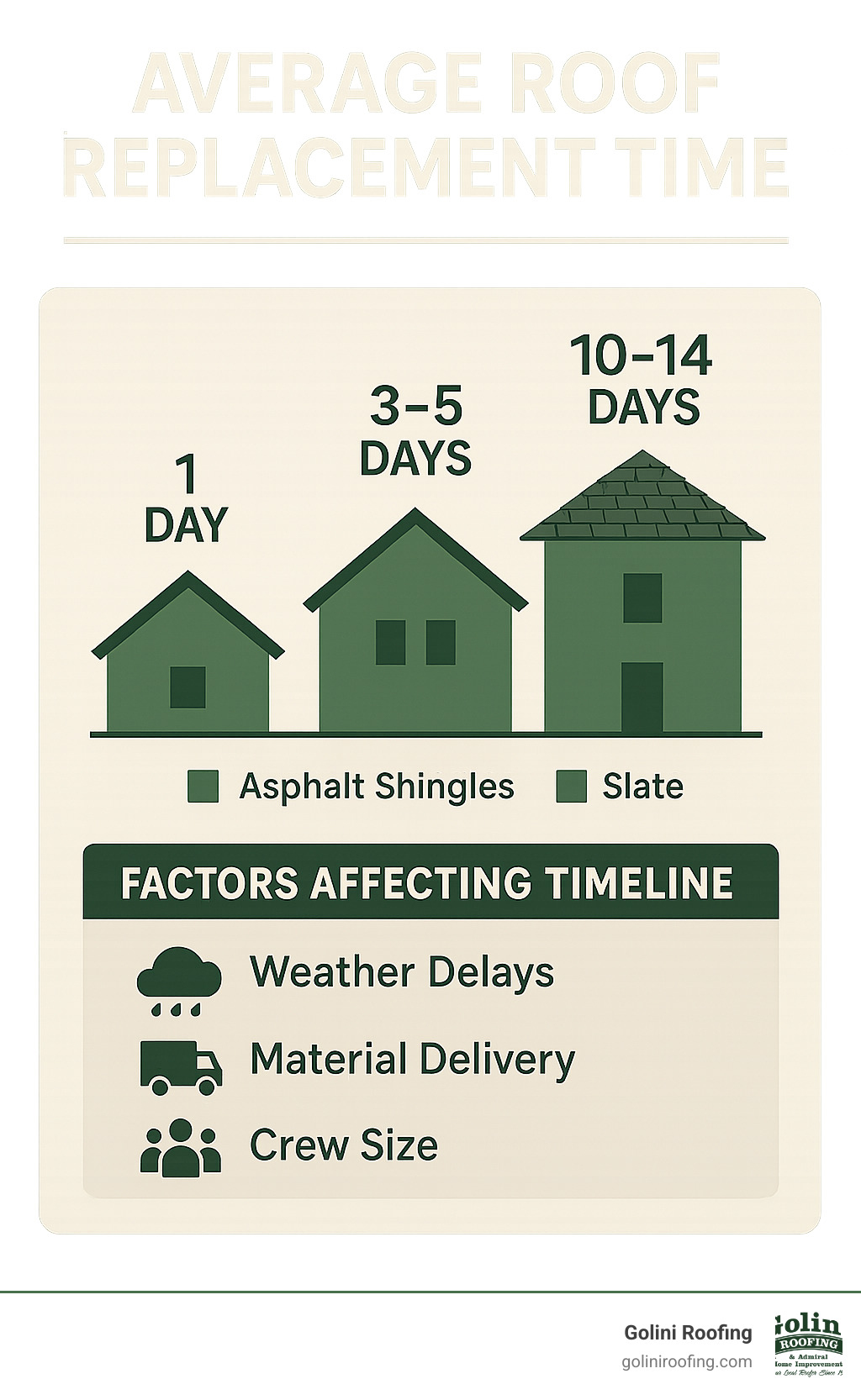
Most residential roof replacements take 1 to 3 days under normal conditions. However, material choice can dramatically change this timeline – asphalt shingles typically install in 1-2 days, while slate roofs can take 6-14 days.
Weather plays a huge role too. Rain, snow, or temperatures below 40°F can halt work completely since asphalt shingles won’t seal properly in cold conditions.
Your roof’s complexity matters just as much as size. A simple ranch home might finish in one day, while a house with multiple levels, steep angles, chimneys, and skylights could take a full week.
I’m Jack Golini, and I’ve been installing roofs in the Wakefield area since 1982, giving me over 35 years of experience with average roof replacement time planning and execution.
Key Average roof replacement time vocabulary:
– Roof tear off cost
– average cost to replace 2000 sq ft roof
– cost of new roof per sq ft
Average Roof Replacement Time: Key Numbers
When planning your roof replacement, understanding the average roof replacement time helps you prepare for everything from noise disruptions to scheduling time off work. Most residential roof replacements take 1-3 days under normal conditions.
Small homes under 2,000 square feet often surprise homeowners with how quickly we can complete them. With good weather and an experienced crew, many of these projects wrap up in a single day.
Medium-sized homes between 2,000-4,000 square feet typically require 2-3 days to complete properly. The extra day accounts for more complex roof lines and additional safety setup.
Larger homes over 4,000 square feet usually take 4-7 days, especially when they have multiple levels, dormers, or intricate architectural features.
Complex roofs with premium materials can extend well beyond a week. Slate installations can take nearly two weeks, but deliver stunning results built to last generations.
Weather plays a huge role in these timelines. Smart contractors always build weather buffers into their schedules. We typically recommend blocking off 1-2 extra days beyond our estimated completion time.
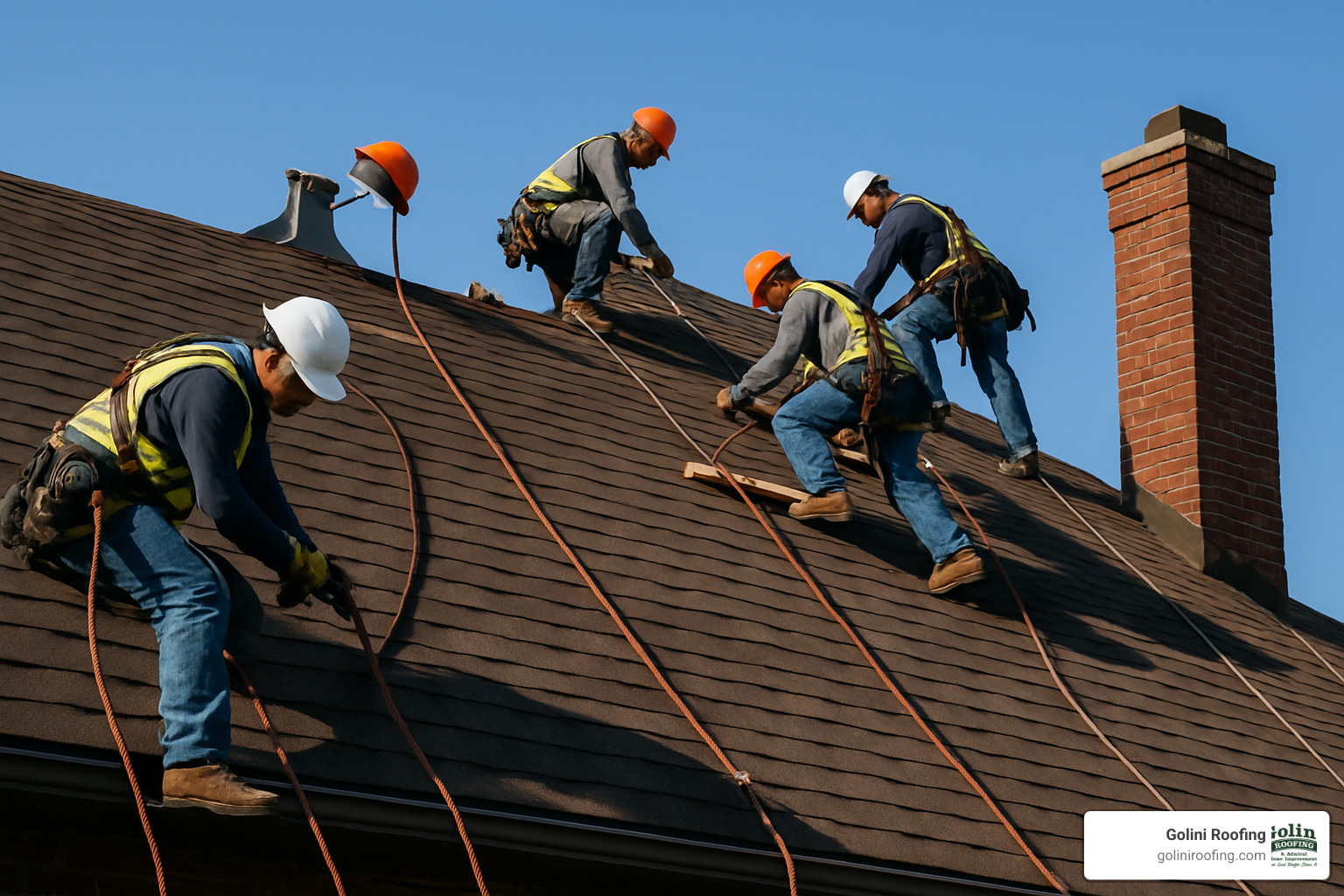
Crew size makes a dramatic difference in timing. A professional crew of 5-6 experienced roofers can accomplish in hours what might take a smaller crew all day.
Here’s how different materials affect your timeline:
| Material Type | Installation Time | Key Factors |
|---|---|---|
| Asphalt Shingles | 1-2 days | Most common, fastest install |
| Metal Roofing | 2-4 days | Custom fastening required |
| Wood Shakes | 2-8 days | Hand-placement needed |
| Slate | 6-14 days | Heavy, requires precision |
| Concrete Tile | 8-9 days | Weight and complexity |
For more detailed information about project timelines, this roof replacement timeline resource provides additional insights.
Typical timelines by home size
Homes under 2,000 square feet represent the sweet spot for single-day completions. Most ranch-style homes with straightforward roof lines can be finished in one day when everything goes according to plan.
Homes between 2,000-4,000 square feet need that extra day or two for good reason. Two-story homes require more safety equipment and setup time. Add in features like dormers, valleys, or multiple roof sections, and you’re looking at the longer end of that 2-3 day timeline.
Large homes over 4,000 square feet require 4-7 days not just because of size, but because of complexity. These homes often feature multiple levels, extensive safety requirements, and architectural details that demand careful attention.
Average roof replacement time by season
Seasonal timing can make or break your average roof replacement time schedule, with spring and fall offering the most predictable timelines.
Daylight hours create natural scheduling constraints. Summer projects benefit from 14+ hour daylight windows, while winter installations must squeeze everything into 8-10 hour days.
Temperature limits aren’t just about comfort – they’re about quality installation. Asphalt shingles need temperatures above 40°F for proper adhesion and sealing.
Spring and fall represent the sweet spot for roof replacements. These seasons offer moderate temperatures, more predictable weather patterns, and adequate daylight hours.
Winter installations require special considerations that can extend your timeline. Cold weather demands extra handling care for materials, and we might need heating strips or specialized adhesives for proper installation.
For more detailed information about weather challenges, check out this resource on unfavorable weather conditions.
Factors That Influence Your Average Roof Replacement Time
After 35 years in this business, I’ve learned that several key factors can either speed up or slow down your average roof replacement time. No two roofs are exactly alike.
Roof size and complexity play the biggest role in timing. A 2,000 square foot ranch with a straightforward design is completely different from a 2,000 square foot colonial with multiple levels, valleys, and chimneys.
Material weight affects everything from how we stage supplies to how quickly we can install. Slate tiles are gorgeous but heavy – requiring careful handling and often additional structural support. Meanwhile, asphalt shingles are lightweight and forgiving.
The choice between tear-off versus overlay can add or subtract a full day from your project. Full tear-offs take longer but give us a chance to inspect and repair the roof deck.
Existing damage is where timelines can really shift. We never know what we’ll find under those old shingles until we start tearing them off. Rotten decking or structural issues can add 1-2 days to any project.
Site accessibility matters more than most homeowners realize. A house with plenty of staging area moves much faster than a tight urban lot where we’re carrying materials through narrow spaces.
Finally, crew experience makes a huge difference. Our team has been working together for years, and that familiarity shows in our efficiency.
For more details about how we approach each step, check out our complete Roof Installation Process.
How roof size affects the average roof replacement time
Size definitely matters, but it’s not as straightforward as you might think. Square footage gives us a baseline, but the real story is in the details.
A 3,000 square foot ranch with a simple roof line often finishes faster than a 2,000 square foot two-story home with complex angles and multiple roof sections.
Story count changes everything about how we work. Multi-story homes require more safety equipment, careful debris management, and strategic material staging.
Roof pitch is another game-changer. Steep roofs – anything above a 6/12 pitch – require additional safety measures and slow our work pace considerably.
Roofing materials & installation speed
Material choice creates the biggest swing in average roof replacement time. After installing thousands of roofs, I can tell you exactly how each material affects your timeline.
Asphalt shingles are the speed champions at 1-2 days for most homes. They’re lightweight, forgiving, and familiar to every crew member.
Metal roofing requires 2-4 days because precision matters. Each panel needs exact measurements and specialized fastening.
Wood shakes can range from 2-8 days depending on the style and weather sensitivity. Each shake gets placed individually.
Slate is the marathon runner of roofing materials at 6-14 days. These heavy, beautiful tiles require structural assessment, specialized techniques, and extreme care.
Concrete tile typically takes 8-9 days due to weight considerations and precise alignment requirements.
Weather, season, and daylight windows
Weather is the wild card that can throw any timeline out the window. Even with the best planning, Mother Nature has the final say.
Rain stops everything immediately. We tarp exposed areas and wait for safe, dry conditions.
Temperature matters more than most people realize. Asphalt shingles won’t seal properly below 40°F, and we follow manufacturer guidelines religiously.
Snow and ice make roofing impossible, period. We never compromise crew safety to meet a deadline.
Site accessibility & property layout
Your property’s layout affects timing more than you might expect. Driveway clearance is essential – blocked access can delay our start by hours.
Landscaping obstacles like mature trees or fencing can limit our equipment access and complicate material staging.
Urban lots present unique challenges with tight spaces and limited staging areas.
Condition of the existing roof
The biggest surprises come when we start tearing off your old roof. The condition underneath directly impacts your average roof replacement time.
Rotten decking is probably the most common issue we encounter. Water damage or rot requires complete plywood replacement before we can install new roofing.
Multiple layers of old roofing take longer to remove and often hide problems underneath.
Structural repairs must be addressed before any new roofing goes on.
Crew size & expertise
The difference between a professional crew and inexperienced installers shows up clearly in timing and quality. Our standard crew of 5-6 roofers creates an efficient workflow with proper safety oversight.
Hand-nailing versus pneumatic tools is where we differ from many contractors. While pneumatic nailers are faster, our hand-nailing approach ensures each shingle is properly secured.
Our GAF Master Elite certification means we follow strict installation standards that less experienced crews might skip.
Experience makes all the difference. After 35+ years, we anticipate problems before they become delays and work efficiently without sacrificing quality.
For current crew safety protocols, you can review this crew safety documentation that guides our daily operations.
Step-by-Step Roof Replacement Schedule
When you’re planning a roof replacement, knowing what happens when makes all the difference. Let me walk you through exactly how the process unfolds.
Delivery and Staging happens 1-2 days before your crew arrives. We strategically position materials around your property to minimize handling time during installation.
The tear-off phase kicks off the actual work day and typically takes 2-4 hours depending on your roof size. This is when things get loud and dusty, but it’s also when you’ll see the fastest progress.
Deck repairs follow immediately after tear-off. We inspect every square inch of your roof deck and replace any damaged plywood or OSB.
Underlayment and flashing installation comes next – the phase that determines whether your roof will leak or not. We install ice and water shield in vulnerable areas and carefully flash around every penetration.
Shingle or panel installation represents the longest phase of your project. This is where our hand-nailing approach really shows its value.
Ridge caps and vents complete the weather protection system. Proper ridge cap installation and ventilation setup ensure your new roof performs optimally for decades.
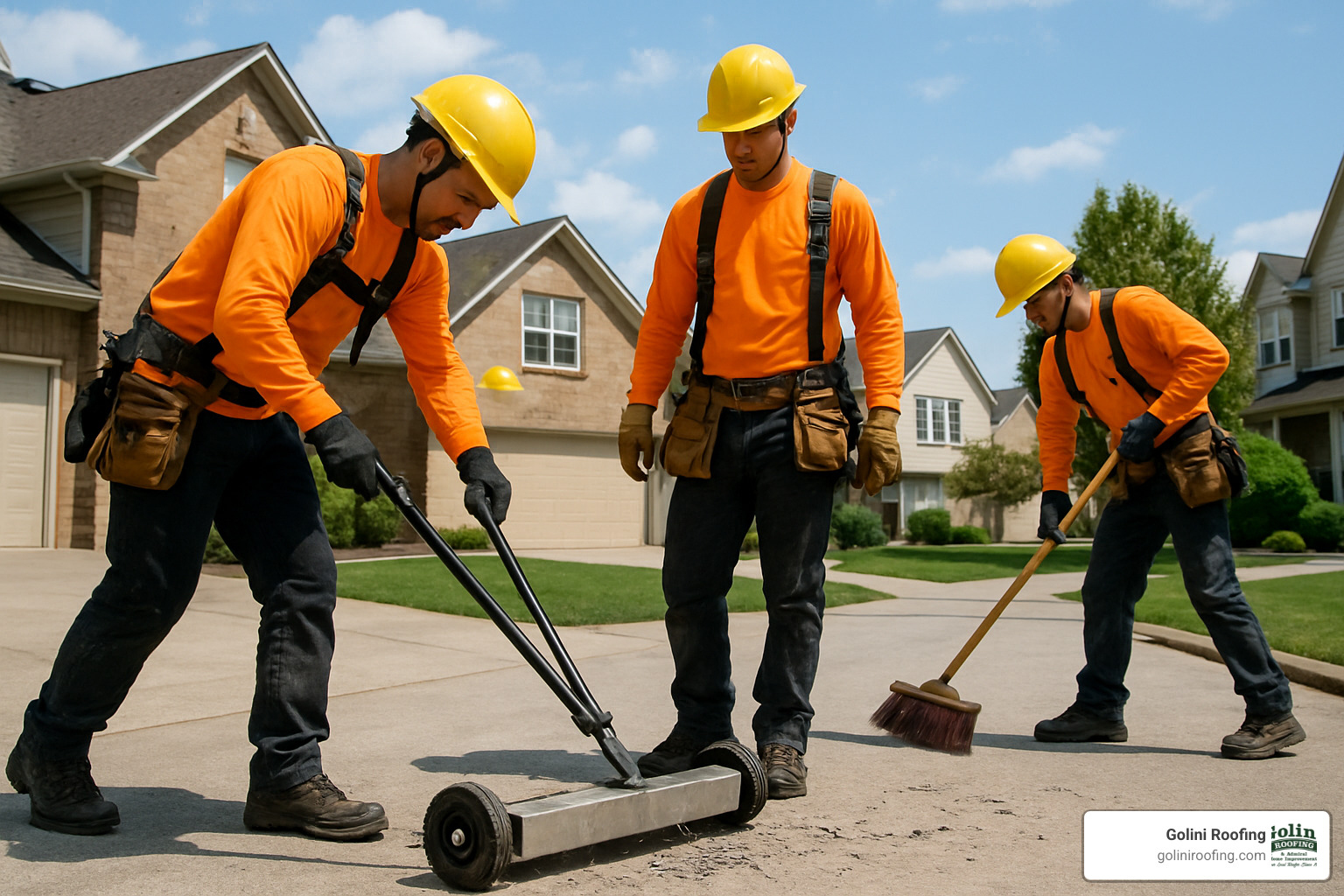
Cleanup and inspection wrap up each day’s work. Our thorough site cleanup includes magnetic sweeps for nails.
For comprehensive information about our replacement process, visit our Complete Roof Replacement page.
Pre-install (1-2 weeks before)
The real work starts well before our trucks arrive at your house. Permits top the list – most municipalities require roofing permits, and we handle this entire process for you.
HOA approvals can be the wild card in your timeline. Some homeowner associations breeze through architectural reviews in a few days, while others take 2-4 weeks.
Material ordering happens 1-2 weeks before installation to ensure everything arrives on time.
Day-of timeline (hour-by-hour)
Here’s how a typical average roof replacement time day unfolds at your home:
6:30 AM – Crew Arrival: We start early to take advantage of cooler morning temperatures and maximize productive daylight hours.
7:00 AM – Property Protection: Before any real work begins, we protect your landscaping and set up safety equipment.
7:30 AM – Tear-off Begins: The noisy phase starts now. Complete removal of existing materials typically takes 2-4 hours.
11:30 AM – Deck Inspection: We inspect every square foot of decking for damage. Any necessary repairs get completed before we move forward.
12:30 PM – Installation Phase: The new roofing system installation begins. This phase typically takes 4-6 hours for average homes.
5:30 PM – Cleanup: Every day ends with a thorough magnetic sweep for nails and complete debris removal.
Can the average roof replacement time be completed in a single day?
Absolutely! Many roof replacements can be completed in a single day when conditions align perfectly. After 35 years in this business, we’ve completed hundreds of one-day projects.
Ideal candidates for single-day completion include asphalt shingle roofs under 2,500 square feet with simple roof lines and no complex features. Good weather conditions are non-negotiable.
The magic combination requires a perfect weather forecast, an experienced crew of 5-6 professionals, no structural surprises during tear-off, and efficient material staging.
Our hand-nailing approach might add a few hours compared to pneumatic installation, but we never sacrifice quality for speed. The reality is that single-day completion works best on straightforward ranch homes and simple colonials.
Preparing for a Smooth, On-Time Replacement
The difference between a chaotic roof replacement and a smooth one often comes down to preparation. After 35 years of roofing projects, I’ve seen how proper planning can keep your average roof replacement time on track.
Clear your space before we arrive. Move all vehicles from driveways and carports – our material delivery trucks need easy access. Remove patio furniture, grills, and decorative items from around your house perimeter.
Protect your attic treasures. The vibrations from tear-off can be surprisingly strong. Secure or temporarily relocate fragile items stored in your attic before we start.
Give your neighbors a heads up. Let them know we’ll be starting early (usually around 6:30 AM) and that the loudest phase – tear-off – typically happens in the morning.
Plan for your pets. Dogs and cats can get pretty stressed with all the banging. If you have noise-sensitive animals, consider arranging a playdate elsewhere during the loudest phases.
Consider your material choice carefully. If staying on schedule is your top priority, asphalt shingles offer the fastest installation while still providing excellent protection.
Time it right with the weather. Choose installation windows with several consecutive dry days predicted – it makes a huge difference in keeping your project on track.
Build in some breathing room. Always plan for 1-2 extra days beyond our estimated completion time. Weather delays happen, and occasionally we find issues that need addressing.
For detailed cost information to help with your planning, visit our Roof Replacement Cost page.
Homeowner checklist to reduce delays
Getting ready for installation day doesn’t have to be overwhelming. Here’s what makes the biggest difference:
Clear the stage by moving all vehicles from driveways and nearby streets. Remove or secure outdoor furniture and decorations. Trim tree branches within 6 feet of your roof line if possible. Arrange pet care for noise-sensitive animals. Notify your neighbors about project timing. Cover or move sensitive plants near the house. Ensure clear access paths for our crew and equipment.
Communication makes everything smoother. Establish daily check-in times with your project manager. Ask about our weather delay protocols. Request daily progress photos for your records.
Winter or rainy-season projects
Winter roofing isn’t impossible, but it does require extra planning that can extend your average roof replacement time. We’ve successfully completed hundreds of cold-weather installations.
Cold-weather adhesives become necessary when temperatures drop below 40°F. Extra safety gear is non-negotiable – ice, frost, and wet conditions require additional equipment and a slower work pace.
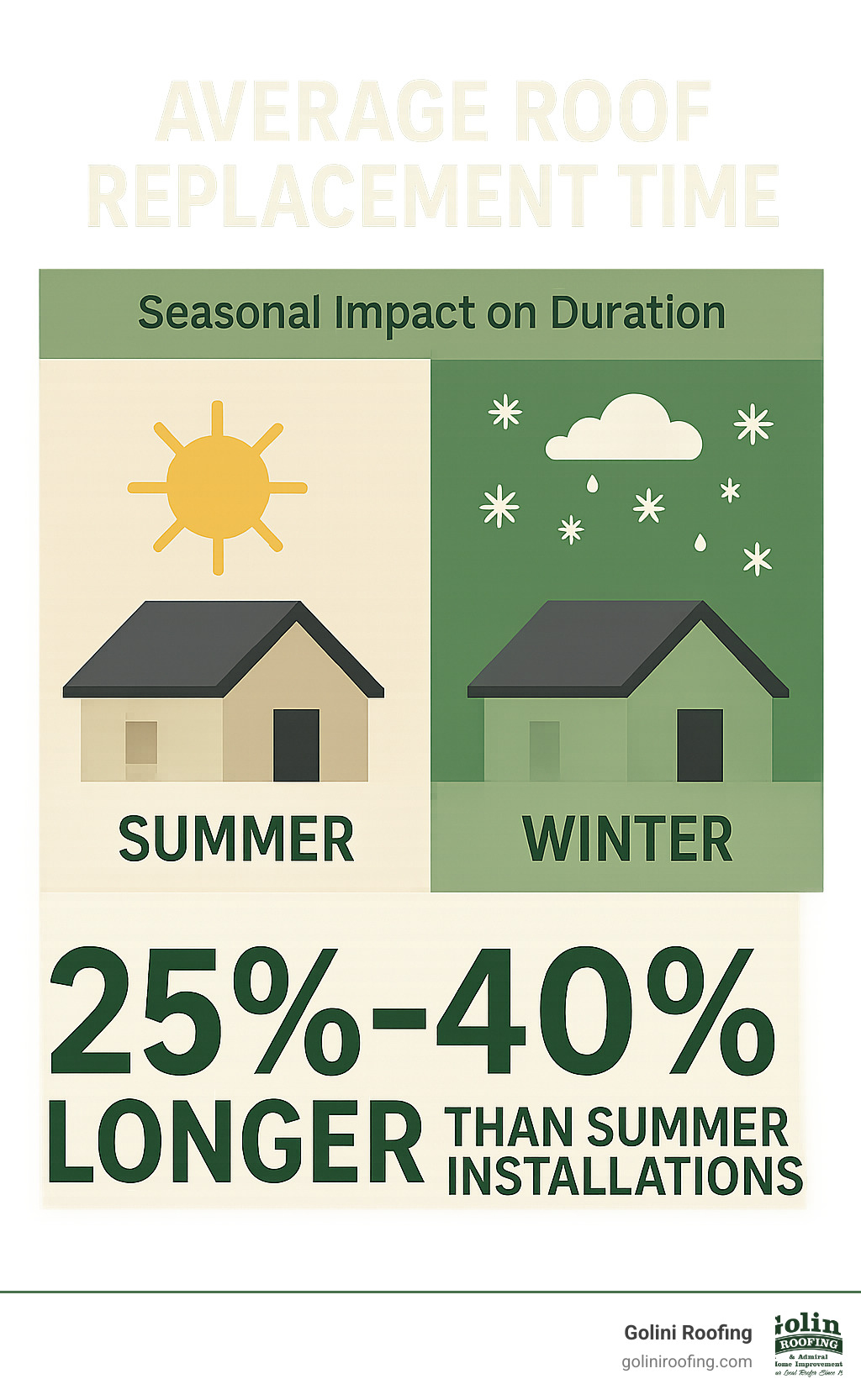
Budget extra time for winter projects – typically 1-2 additional days compared to summer installations. Shorter daylight hours mean fewer productive work hours each day.
The good news? Winter installations often mean better availability and sometimes lower pricing due to reduced demand.
Frequently Asked Questions about Average Roof Replacement Time
How does a full tear-off compare to an overlay?
When homeowners ask about speeding up their project, overlay installation often comes up as a “quick fix” option. While skipping the tear-off phase can save you half a day to a full day on your average roof replacement time, this shortcut comes with significant trade-offs.
Full tear-off projects take longer upfront but deliver better long-term value. We get to inspect your roof deck thoroughly, catching any problems before they become bigger issues. Most manufacturers also provide better warranty coverage when their products are installed over a clean deck.
Overlay installations can shave 4-8 hours off your timeline, but they’re only possible if you have just one existing layer of shingles. Many areas now require full tear-off for code compliance.
Is roof replacement possible during winter?
Absolutely! We’ve completed hundreds of winter roof replacements, though they do require special considerations that can extend your average roof replacement time.
The key factor is temperature – asphalt shingles need to be installed above 40°F to seal properly. Below that threshold, we use specialized cold-weather techniques including modified adhesives and sometimes heating equipment.
Winter projects typically take 1-2 days longer than summer installations. Shorter daylight hours mean we’re working within an 8-10 hour window instead of the 14+ hours available in summer.
The good news? Winter often brings lower material costs and more flexible scheduling since many homeowners wait for spring.
How can I minimize disruptions while ensuring quality?
Smart planning makes all the difference in keeping your average roof replacement time on track while maintaining quality standards.
Hiring a certified, experienced crew is your best investment. Our team’s 35+ years of experience means we work efficiently, anticipate problems before they cause delays, and handle unexpected issues quickly.
Clear your schedule for daily check-ins with our project manager, but resist the urge to hover over the crew during work hours.
Daily cleanups are part of our standard service – including thorough magnetic sweeps for nails and proper debris management.
The final walkthrough is crucial. We’ll review every aspect of the installation with you, answer any questions, and ensure you’re completely satisfied before considering the job complete.
Conclusion
Planning your average roof replacement time doesn’t have to feel overwhelming once you understand the key factors involved. While most homes see their roofs completed within 1-3 days, your specific timeline depends on everything from your home’s size and complexity to Mother Nature’s cooperation.
The biggest mistake homeowners make? Choosing speed over quality. You want your normal routine back quickly, but rushing a roof replacement often creates problems that cost far more than the extra day or two of proper installation would have taken.
Here’s what we’ve learned after 35 years of roofing in Massachusetts: quality craftsmanship and realistic expectations create the best outcomes. When contractors promise impossibly fast timelines, they’re usually cutting corners somewhere. Our hand-nailing approach might add a few hours to your project, but it ensures every single shingle stays put through decades of New England weather.
Weather delays happen – it’s just part of the process. Professional contractors plan for these delays. We’d rather wait for safe conditions than risk your safety or the quality of your new roof.
The investment in doing things right the first time pays off in ways you might not expect. Proper installation techniques prevent callbacks, warranty issues, and the stress of dealing with leaks or wind damage down the road. A roof replacement done right protects your home and your peace of mind for decades.
Whether you’re in Burlington, Lynnfield, North Reading, Reading, Stoneham, Wakefield, Wilmington, Winchester, or Woburn, the best average roof replacement time is whatever it takes to do the job properly.
Ready to get started with realistic timeline planning and quality craftsmanship? Visit our Roof Replacement Services page to learn more about our approach and schedule your consultation.
