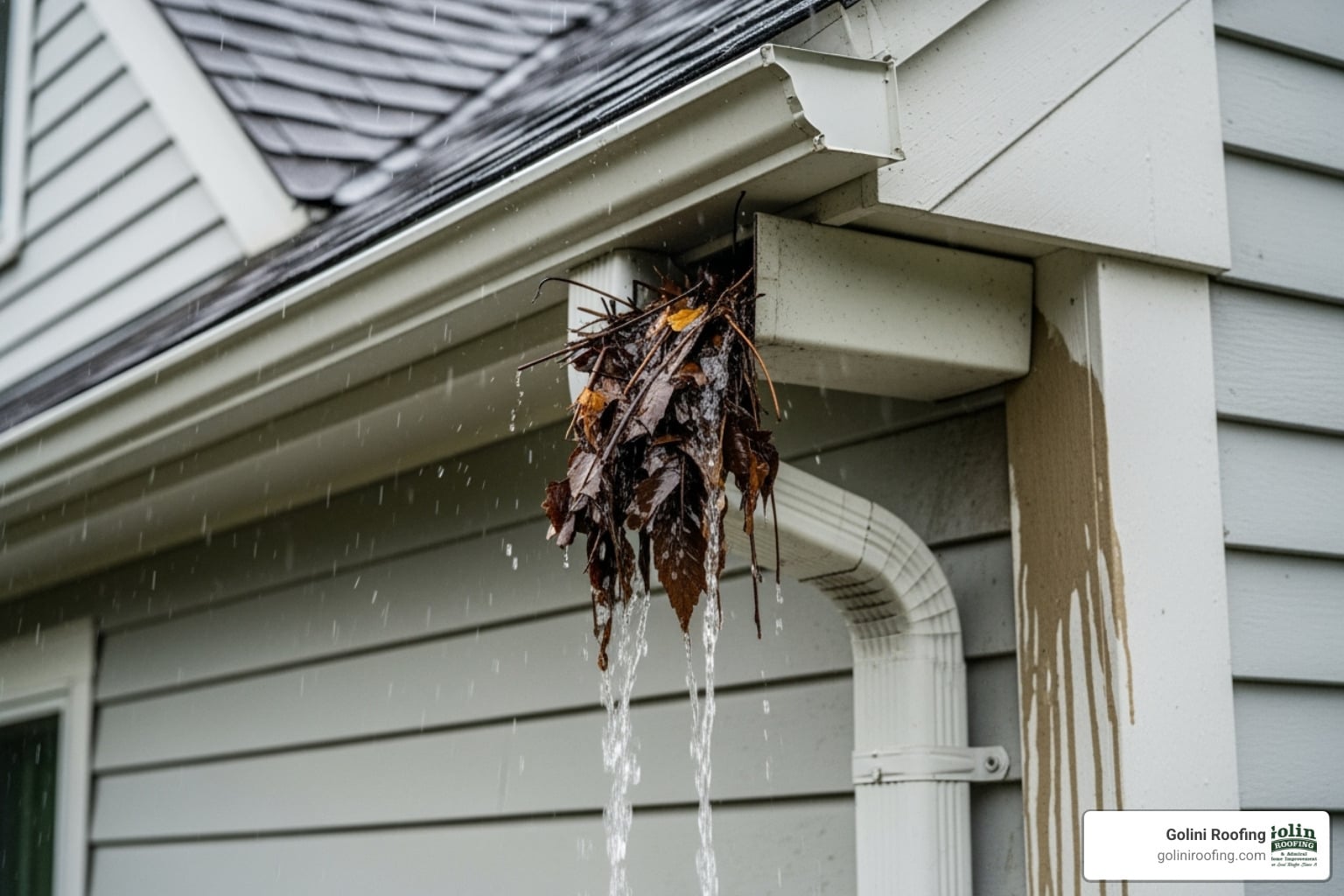
Clogged Downspout Repair: Your Ultimate 2025 Guide
Introduction: Spotting the Signs of a Downspout Dilemma
To quickly perform clogged downspout repair and restore proper drainage, follow these core steps:
- Safety First: Always use a sturdy ladder and have a helper. Wear gloves and eye protection.
- Clear Gutters: Remove debris from the gutter leading into the downspout.
- Flush with Water: Use a garden hose to flush from the top down. If that fails, try flushing from the bottom up to dislodge the clog.
- Use a Snake: For stubborn clogs, a plumber’s snake (hand auger) can be pushed through the downspout from either end.
- Tap Gently: Lightly tap the downspout’s exterior, especially at elbows, to loosen stuck debris.
- Disassemble (if needed): If the clog persists, unmount sections of the downspout from the bottom up to access and remove the blockage directly.
Your home’s gutter system, especially the downspouts, is crucial for directing rainwater safely away from your foundation. When a downspout gets blocked, it can cause a cascade of problems, from a waterlogged landscape to severe structural damage. Ignoring a clog can lead to costly repairs.
This guide will show you how to spot and fix these issues, ensuring your drainage system works correctly. I’m Jack Golini, owner of Golini Roofing. With over 35 years of experience, my team and I have tackled countless roofing and drainage challenges, including complex clogged downspout repair scenarios, ensuring homes are protected from the elements.
Why You Can’t Ignore a Clogged Downspout
Your downspout is a crucial part of your gutter system, guiding rainwater safely away from your house. When this pathway gets blocked, it creates a clogged downspout repair challenge. Ignoring this problem can lead to significant and costly damage.
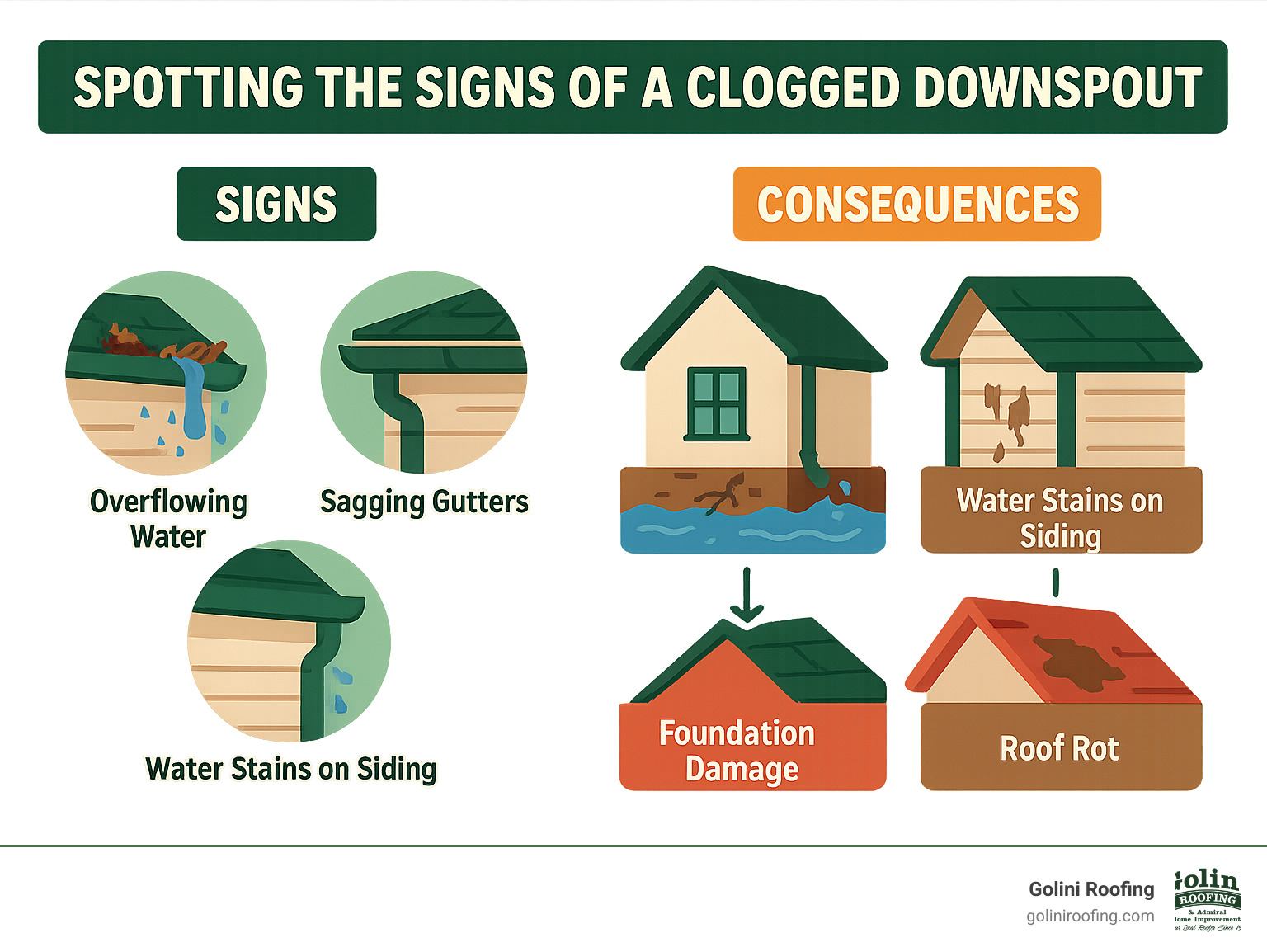
The Telltale Signs of a Blockage
Your home will give you clear signals when a downspout is clogged. Be on the lookout for these signs:
- Water spilling over gutter sides: If your gutters overflow during rain, water isn’t draining properly.
- Lack of water from the spout during rain: In a downpour, if little or no water exits the downspout, you likely have a clog.
- Sagging gutters: The weight of trapped water and debris can cause gutters to pull away from the house.
- Water stains on siding: Persistent moisture from overflowing gutters will leave streaks and stains.
- Peeling paint near the roofline: Overflow can saturate fascia and soffit boards, causing paint to peel and wood to rot.
- Damp or flooded basement: Water that isn’t diverted away can seep into your basement or crawl space.
- Eroded soil around the foundation: Consistent overflow will wash away soil, exposing your home’s foundation.
The Cost of Procrastination: Potential Home Damage
Ignoring a clogged downspout can escalate into serious issues. When downspouts fail, your home is vulnerable to a cascade of problems:
- Cracked foundations: Water pooling around your foundation creates immense pressure, leading to structural cracks.
- Leaking roofs: Water backing up from clogged gutters can get under shingles, causing leaks and damaging the roof deck.
- Rotted fascia and soffit boards: Constant exposure to moisture will rot the wooden components at your roof’s edge.
- Mold and mildew growth: Persistent dampness encourages mold growth on walls, in basements, and in attics.
- Damaged landscaping: Overflow can erode soil, drown plants, and ruin garden beds.
- Structural integrity issues: Over time, water intrusion can weaken your home’s framework.
- Ice dams: In winter, trapped water can freeze and expand, forcing melting snow under your roof and causing severe interior damage.
- Pest infestations: Standing water creates a breeding ground for mosquitoes and other pests.
Addressing downspout issues promptly is critical. For more information on how your gutters and roof protect your home, explore our insights on Gutter And Roof Repair.
Safety First: Gearing Up for Gutter and Downspout Work
Before tackling a clogged downspout repair, safety must be your priority. A fall from a ladder can be serious, with over 650,000 ladder-related injuries occurring annually in the U.S. Proper preparation is essential to avoid an accident.
Essential Safety Gear and Precautions
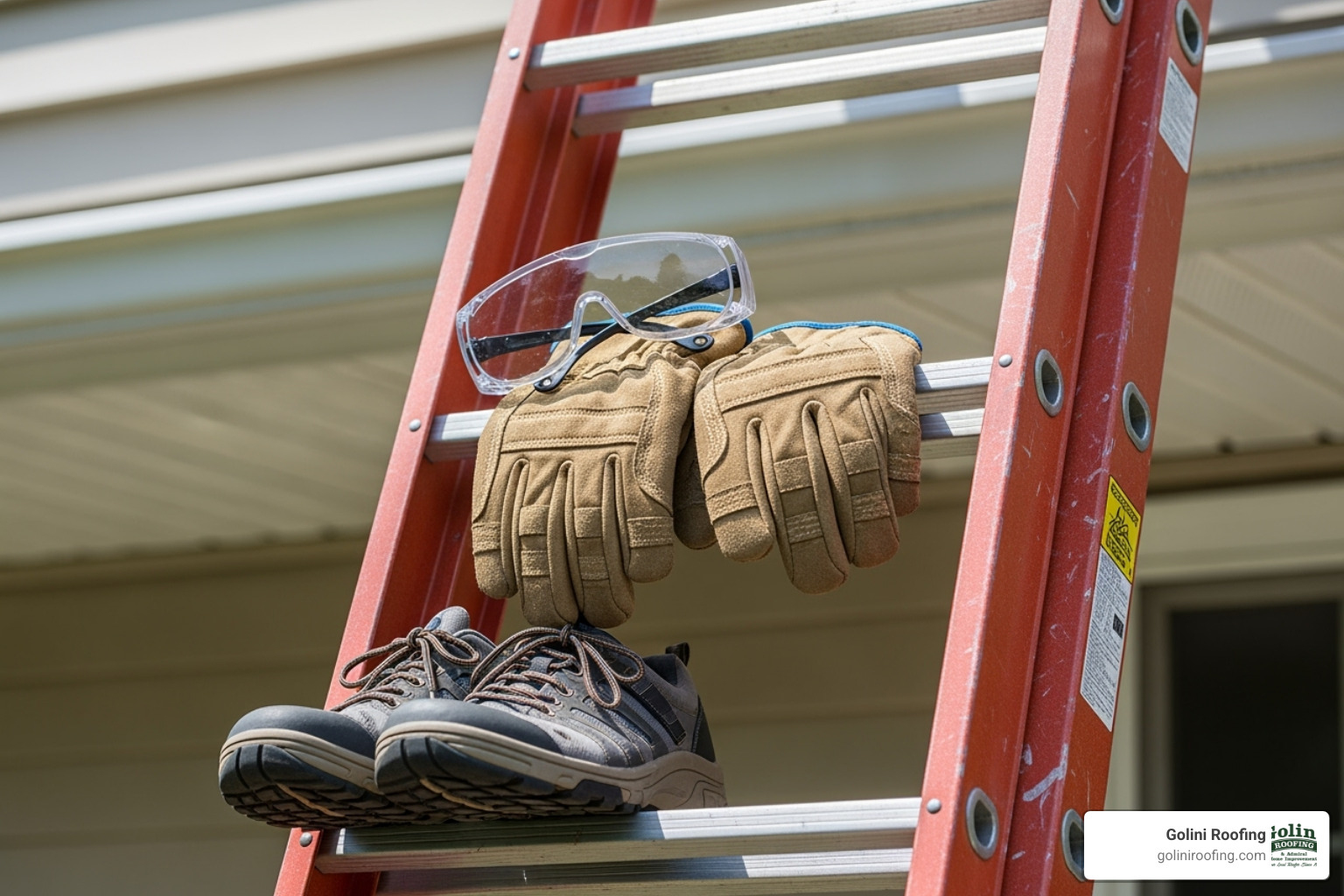
Gear up properly and think ahead to stay safe. Here’s what you need:
- Sturdy Ladder: Use an extension ladder placed on a firm, level surface. Never set it up on uneven ground.
- Proper Attire: Wear non-slip shoes for good traction and heavy-duty gloves to protect your hands from sharp debris and grime.
- Eye Protection: Always wear safety glasses or protective eyewear. Debris can fly out unexpectedly when clearing a clog.
- Work with a Helper: A spotter can hold the ladder steady, pass you tools, and call for help if needed.
- Be Aware of Surroundings: Keep your ladder and tools well clear of any overhead power lines.
- Never Overreach: It’s tempting to stretch, but this is a common cause of falls. Reposition your ladder as needed to keep your body centered between the rails.
Safety is the most important part of any home maintenance project. If you’re uncomfortable with heights or the job seems too risky, it’s always best to call a professional.
Your Step-by-Step Guide to Clogged Downspout Repair
Most clogged downspout repair is a manageable DIY project if you have the right tools and patience.
Step 1: Gather Your Tools
Having your tools ready makes the job smoother. You may need:
- Garden Hose with a powerful spray nozzle
- Plumber’s Snake (Hand Auger)
- Leaf Blower or Wet/Dry Vacuum
- Small Trowel or Gutter Scoop
- Bucket
- Protective Gloves and Eyewear
- Hammer or Rubber Mallet
Step 2: Clearing the Clog – DIY Methods for Clogged Downspout Repair
Start with the least invasive methods and escalate as needed.
- Clear the Gutter First: Use a trowel to scoop leaves and debris from the gutter leading to the downspout. A clogged gutter prevents the downspout from draining.
- Tapping the Downspout: Gently tap the outside of the downspout with a rubber mallet, focusing on elbows where debris collects. This can loosen compacted material.
- Flushing with Water: Insert a garden hose into the top of the downspout and turn on the water to push the clog out. If that fails, try flushing from the bottom up. Wrap a rag around the hose at the opening to increase pressure.
- Using a Plumber’s Snake: For tough clogs, feed a plumber’s snake into the downspout from either end. Twist the handle as you push to break up or grab the blockage. Retract the snake and flush with water.
- Using a Leaf Blower or Wet/Dry Vac: A powerful leaf blower can blast out clogs. Alternatively, use a wet/dry vac on suction or blower mode to pull out or push out debris.
- Disassembly (Last Resort): If nothing else works, you may need to disassemble the downspout. Start by removing screws or drilling out rivets on a lower section to access the clog directly. Reattach the section once it’s clear.
After clearing the clog, run water through the system to ensure it flows freely. For more guidance, see our page on More info about Rain Gutter Repair.
Here’s a quick comparison of some DIY clearing methods:
| Method | Pros | Cons |
|---|---|---|
| Garden Hose | Easy to use, readily available, eco-friendly. | May not clear stubborn or compacted clogs; can push debris further into underground systems. |
| Plumber’s Snake | Effective for breaking up tough clogs like compacted leaves. | Can be tricky to maneuver around bends; risk of damaging downspout if not used carefully. |
| Leaf Blower | Quick for loose, dry debris; no water mess. | Less effective for wet, compacted clogs; requires a powerful blower. |
| Wet/Dry Vacuum | Can both suck out and blow out debris; versatile. | May struggle with very wet or heavy clogs; can be bulky to use on a ladder. |
| Tapping Downspout | Simple, no special tools needed initially. | Only effective for loosely stuck clogs; won’t clear full blockages. |
| Power Washer | High pressure can clear very stubborn clogs. | Requires special nozzles; can damage downspout if pressure is too high or used improperly. |
| Disassembly | Direct access to clog; highly effective. | Time-consuming; requires tools for removal/reattachment; risk of damaging downspout connections. |
Step 3: Tackling Stubborn Underground Clogs
Underground clogs are the trickiest, as they are out of sight. These pipes, often corrugated plastic or PVC, can fill with silt, leaves, and tree roots. Standard drain augers are often unsuitable for corrugated pipes as they can snag and tear the material.
- Use High Pressure: A powerful spray jet nozzle on a garden hose or a power washer with a specialized drain-cleaning attachment can often clear underground clogs. Always follow Safety tips for using high-pressure hoses effectively.
- Check the Exit Point: Locate where your underground drain terminates (e.g., a pop-up emitter or ditch). The clog may be at the exit and easier to clear from that end.
- Consider Replacement: If your corrugated pipes clog frequently, consider replacing them with more durable PVC DWV (Drain, Waste, Vent) pipe, which is less prone to clogs and can be serviced with a mechanical auger. Adding surface cleanouts makes future maintenance easier.
For more on this topic, see our information on More info about Downspout Extension Repair.
Prevention is the Best Medicine: Keeping Your Downspouts Clear
Preventing clogs is far easier than dealing with a clogged downspout repair. With regular care and foresight, you can keep your downspouts clear. Smart landscaping helps, too. Keep trees trimmed back from the roofline to reduce falling leaves and twigs, and ensure sprinklers aren’t spraying debris into your gutters.
How Often Should You Clean Your Gutters and Downspouts?
Cleaning frequency depends on your surroundings, especially the number of nearby trees.
For most homes, we recommend semi-annual cleaning:
- Late Spring: To clear out pollen, blossoms, and leftover winter debris.
- Late Fall: This is crucial. Clean out fallen leaves to prevent winter clogs and ice dams.
If your home is surrounded by trees, especially heavy shedders like oaks or pines, you may need to clean them more frequently. Also, perform quick visual inspections after heavy storms. If you see water overflowing, it’s time for a cleaning. Regular maintenance also helps you spot other potential issues, like loose gutter sections.

Installing Gutter Guards for Long-Term Protection
Gutter guards are a game-changer for preventing clogs. They act as a barrier, letting water in while keeping out leaves, twigs, and other debris. There are many types of gutter guards, from mesh screens to solid covers. While DIY installation is an option, professional installation ensures a perfect fit and maximum effectiveness.
We are particularly impressed with advanced systems that have debris-shedding designs and larger downspouts to prevent clogs. These high-quality systems are made from durable aluminum and feature downspouts that are 30% larger than standard ones, making blockages a distant memory.
Investing in quality gutter guards is a proactive move that saves time, effort, and the cost of future repairs. For more details on gutter types, visit our page on More info about Rain Gutters. If you’re considering a new system or guards, our team can help with professional More info about Gutter Installation.
When to Call a Professional for Clogged Downspout Repair
While many homeowners can handle a simple clogged downspout repair, some situations are smarter and safer to leave to professionals. With over 35 years of experience, we know when a job requires expert tools and knowledge that go beyond typical homeowner capabilities. Knowing when to call for help is key to avoiding frustration and potential danger.
Signs It’s Time to Hire an Expert
Here are clear signals that it’s time to let an expert handle your downspout dilemma:
- The clog remains after multiple DIY attempts. If flushing, snaking, and other methods fail, the clog is likely too stubborn or complex for standard tools.
- The downspout or gutter is damaged. If you see cracks, bent sections, or loose brackets, you’re dealing with more than just a clog. A professional can fix both the blockage and the system damage.
- The clog is in an underground drain pipe. These are notoriously tricky and often require specialized equipment like high-pressure water jetters to clear silt, leaves, or tree roots.
- The work requires a very tall ladder or access to a steep roof. Multi-story homes and steep roofs are dangerous without the right training and safety equipment.
- You are not comfortable working at heights. There is no shame in recognizing your limits. Hiring an expert is a small price to pay for your safety and peace of mind.
For reliable downspout repair near me in areas like Wakefield, Burlington, Lynnfield, North Reading, Reading, Stoneham, Winchester, Woburn, and Wilmington, MA, our team at Golini Roofing is ready to help. We have the expertise to diagnose and fix even the most challenging downspout issues, ensuring your home stays protected.
Conclusion: Protect Your Home with Clear, Functional Gutters
We’ve covered how to spot the signs of a clog, perform a hands-on clogged downspout repair, and prevent future blockages. Your gutter and downspout system is your home’s first line of defense against water damage, protecting everything from the roof to the foundation.
While many clogs can be cleared with a DIY approach, knowing when to call a professional is just as important. For stubborn clogs, damaged systems, or when safety is a concern, expert help is invaluable.
At Golini Roofing, we have dedicated over 35 years to protecting homes in Massachusetts. We understand the complexities of roofing and drainage systems, and our meticulous approach, like hand-nailing every shingle, extends to all our work.
Whether you’re facing a complex issue or want professional-grade Gutter Services, you can trust a local expert to protect your home. We are here to help keep your home safe, dry, and beautiful.