Commercial Roof Inspections: 10 Essential Tips for 2024
The Crucial Role of Commercial Roof Inspections
Commercial roof inspections are essential for maintaining your building and protecting your assets. Regular inspections help spot minor issues before they become major problems, saving you money and extending the life of your roof.
If you’re dealing with leaks or unsightly stains, here’s a quick rundown on what you need to know:
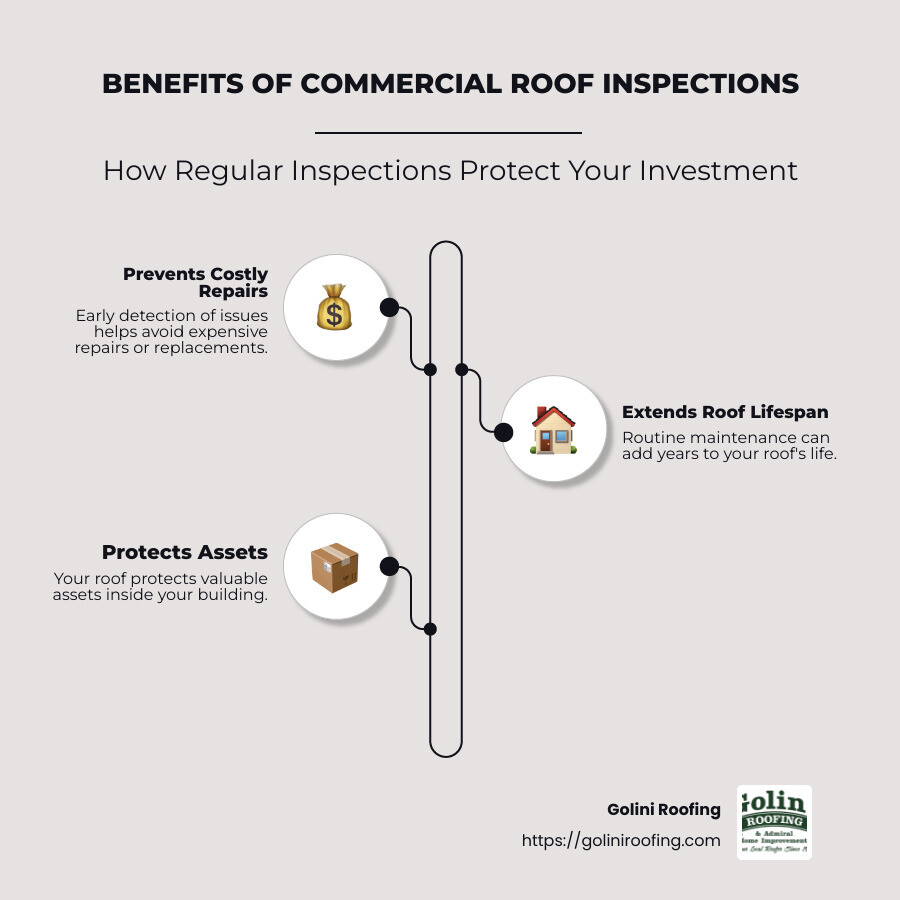
– Prevents costly repairs: Early detection of issues helps avoid expensive repairs or replacements.
– Extends roof lifespan: Routine maintenance can add years to your roof’s life.
– Protects assets: Your roof protects valuable assets inside your building.
– Improves safety: Identifies potential hazards like structural damage or leaks.
For over 35 years, I’ve been committed to providing top-notch commercial roof inspections. My team and I ensure your roof remains in excellent condition, safeguarding your property and peace of mind.
Find more about commercial roof inspections:
– are roof inspections free
– how much are roof inspections
– how much does a roof inspection cost
Why Are Commercial Roof Inspections Important?
When it comes to maintaining your commercial building, commercial roof inspections are crucial. You might not think about your roof often, but it plays a vital role in protecting your assets, preventing damage, and extending your roof’s life. Let’s explore why these inspections are so important.
Protect Assets
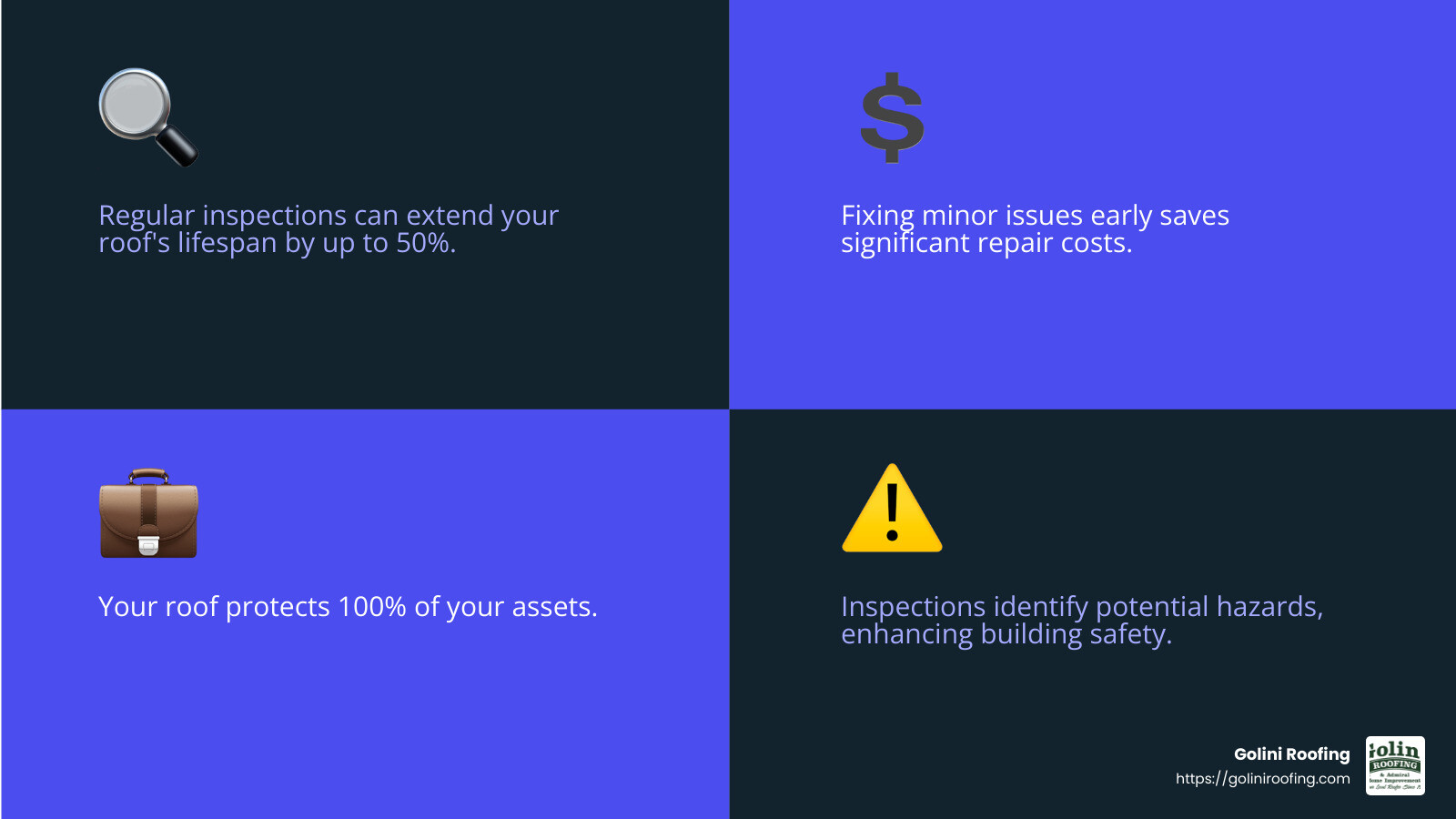
Your roof covers about 30% of your building but protects 100% of your assets. Imagine the cost and disruption if a leak damages your inventory, office equipment, or important documents. Regular inspections ensure your roof remains a strong barrier against the elements, keeping everything inside safe and dry.
Prevent Damage
Small issues like minor leaks or tiny cracks can quickly escalate into major problems. Routine inspections catch these issues early, preventing costly damage. For example, ponding water can lead to leaks that damage your roof deck and interior ceilings. By addressing these problems early, you save money and avoid major headaches.
Extend Roof Life
Routine maintenance can significantly extend the life of your roof. Experts say proper upkeep can add up to 50% more years to your roof’s lifespan. This means fewer replacements and more savings in the long run. Regular inspections catch wear and tear early, allowing for timely repairs that keep your roof in top condition.
Cost-Effective Maintenance
Think of inspections as an investment. The cost of regular inspections is minimal compared to the expense of major repairs or a full roof replacement. By spending a little on maintenance now, you save a lot later. For example, fixing a small leak is much cheaper than replacing an entire section of the roof.
Improve Safety
A well-maintained roof is a safe roof. Inspections identify potential hazards like structural damage, loose materials, or leaks that could compromise the safety of your building. Ensuring your roof is in good shape means fewer risks for everyone who uses the building.
Conclusion
In summary, commercial roof inspections are essential for protecting your assets, preventing damage, extending your roof’s life, and saving money through cost-effective maintenance. Regular inspections keep your roof—and your business—in excellent condition.
Next, we’ll explore how often you should schedule these inspections to ensure your roof remains in optimal shape.
How Often Should a Commercial Roof Be Inspected?
To keep your commercial roof in top condition, you should schedule biannual inspections. These inspections should occur in the spring and fall. Here’s why:
Spring and Fall Inspections
Spring inspections are crucial for identifying damage caused by winter weather. Snow, ice, and freezing temperatures can lead to cracks, leaks, and other issues. By catching these problems early, you can make necessary repairs before they worsen.
Fall inspections prepare your roof for the upcoming winter. This is the time to fix any summer damage and ensure your roof is ready to handle snow, ice, and cold temperatures. Addressing issues before winter hits can prevent significant damage and costly repairs.
Post-Severe Weather Inspections
In addition to biannual inspections, you should also inspect your roof after severe weather events like heavy rain, hailstorms, or high winds. These conditions can cause immediate damage that needs prompt attention. For example, a hailstorm might puncture your roof, leading to leaks if not repaired quickly.
Routine Maintenance
Regular maintenance is key to extending your roof’s lifespan. Routine inspections help catch small issues before they become major problems. This proactive approach can save you money and prevent disruptions to your business. Consider scheduling informal inspections between your biannual check-ups, especially if your roof has noticeable wear or damage.
Benefits of Regular Inspections
- Prevent Major Damage: Early detection of issues like leaks, cracks, and ponding water can prevent major damage.
- Extend Roof Life: Regular maintenance can add up to 50% more years to your roof’s lifespan.
- Save Money: Fixing small problems early is much cheaper than large-scale repairs or replacements.
- Ensure Safety: Regular inspections help identify and fix potential hazards, keeping your building safe.
In summary, biannual inspections in the spring and fall, along with post-severe weather check-ups and routine maintenance, are essential for maintaining your commercial roof. This proactive approach ensures your roof remains in excellent condition, protecting your assets and saving you money in the long run.
Next, let’s dive into what you can expect during a commercial roof inspection to better understand the process.
What to Expect During a Commercial Roof Inspection
A commercial roof inspection involves a thorough review of both the interior and exterior components of your roof. This process helps identify potential issues that could lead to costly repairs or replacements if left unchecked. Here’s what to expect:
Interior Inspection
Water Damage and Ceiling Stains
Inspectors will look for signs of water damage on the ceilings and walls inside your building. Stains or discoloration can indicate leaks that need immediate attention.
Roof Deck
The roof deck is inspected for any signs of deterioration or structural issues. This includes checking for rot, sagging, or other damage that could compromise the roof’s integrity.
HVAC Systems
Since HVAC systems often penetrate the roof, inspectors will check these areas for leaks and ensure the equipment is securely fastened and functioning properly.
Exterior Inspection
Roof Surface
Inspectors will walk the roof surface, looking for issues like ponding water, cracks, blisters, and uplifted seams. These problems can lead to leaks and further damage if not addressed promptly.
Ponding Water
Ponding water, or water that remains on the roof surface for more than 48 hours, is a red flag. It can indicate drainage issues and lead to roof deterioration.
Cracks, Blisters, and Uplifted Seams
These signs of wear and tear are common in older roofs. Inspectors will identify these issues to prevent them from becoming larger problems.
Drainage Systems
Gutters, downspouts, and scuppers are checked to ensure they are clear of debris and functioning correctly. Proper drainage is crucial for preventing water buildup and damage.
Additional Inspection Methods
To supplement the visual inspection, additional methods can provide a clearer picture of the roof’s condition.
Core Samples
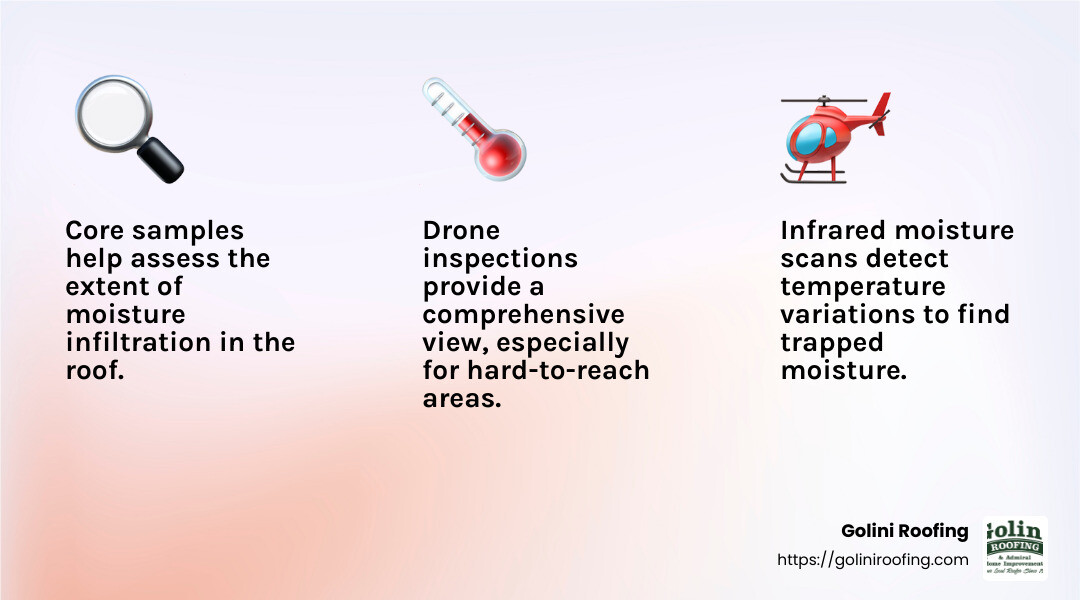
A core sample involves extracting a small portion of the roof to examine its layers. This helps determine the number of layers, the condition of the insulation, and the type of decking material. Core samples are particularly useful for assessing the extent of moisture infiltration.
Infrared Moisture Scans
Infrared cameras detect temperature variations in the roof, which can indicate moisture trapped beneath the surface. This method is usually performed at night when the roof begins to cool down, making it easier to spot saturated areas.
Drone Inspections
Drones equipped with cameras provide a comprehensive view of the roof, especially in hard-to-reach areas. They can also be used with infrared technology to assess the roof’s thermal signature and identify potential issues.
Inspectors will use these methods to gather detailed information about your roof’s condition. This data is compiled into a comprehensive report, which includes photos, descriptions of any issues, and recommendations for repairs or replacements.
Benefits of Comprehensive Inspections
- Detailed Insight: Core samples and infrared scans offer a deeper understanding of the roof’s condition.
- Accurate Diagnosis: These methods help pinpoint issues that might not be visible during a visual inspection.
- Preventative Measures: Identifying problems early can prevent costly repairs or replacements in the future.
Next, we’ll explore some of the common problems that affect commercial roofs to help you understand what issues might be uncovered during an inspection.
Common Problems Affecting Commercial Roofs
Commercial roofs face a variety of challenges due to constant exposure to the elements. Understanding these common problems can help you take proactive measures to maintain your roof’s integrity and extend its lifespan.
Sun Exposure
Sun Exposure can be harsh on commercial roofs. UV rays can cause roofing materials to deteriorate over time. This leads to cracking, fading, and weakening of the roof surface.
Inclement Weather
Inclement Weather, including heavy rain, snow, and hail, can cause significant damage. Severe weather can lead to punctures, tears, and other forms of physical damage. High winds can uplift roofing materials and compromise the roof’s structure.
Ponding Water
Ponding Water is water that remains on the roof for more than 48 hours. This can indicate drainage problems and lead to roof deterioration. Ponding water adds weight and can seep into the roofing materials, causing leaks and structural damage.
Rust and Corrosion
Rust and Corrosion are common issues, especially with metal roofs. Exposure to moisture can cause metal components to rust and weaken. This is particularly problematic around fasteners and seams, where corrosion can compromise the roof’s integrity.
Punctures and Tears
Punctures and Tears can occur due to severe weather, mechanical damage, or foot traffic. These openings allow water to penetrate the roof, leading to leaks and potential interior damage. Regular inspections can help identify and repair these issues before they worsen.
Debris
Debris such as leaves, branches, and dirt can accumulate on the roof. This can block drainage systems, leading to ponding water and increased weight. Debris can also trap moisture, which can cause roofing materials to deteriorate faster.
Biological Growth
Biological Growth like algae, moss, fungi, and lichen can thrive on roofs with moisture buildup. These organisms can damage roofing materials and block drainage systems. In extreme cases, they can compromise the roof’s structure.
By being aware of these common problems and conducting regular commercial roof inspections, you can address issues early and maintain the health of your roof. Next, we’ll provide a detailed checklist to help you ensure a thorough inspection of your commercial roof.
Commercial Roof Inspection Checklist
A thorough commercial roof inspection is essential to maintain the longevity and integrity of your roof. Here’s a detailed checklist to guide you through the process:
Roof Deck
The roof deck is the structural foundation of your roof. Inspect it for any signs of:
- Cracks or Structural Defects: Look for visible cracks or any signs of structural weakness.
- Water Damage: Check for moisture marks or stains that indicate water penetration.
Roof Surface Membranes
The roof surface membranes protect your building from the elements. Here’s what to look for:
- Ponding Water: Identify areas where water has collected and remained for more than 48 hours.
- Cracks and Blisters: Look for any cracks, blisters, or uplifted seams in the membrane.
- Holes or Punctures: Check for any physical damage that could allow water to seep through.
Roof Vents
Roof vents are crucial for proper ventilation. Inspect these areas carefully:
- Blockages: Ensure vents are clear of debris and functioning correctly.
- Seals and Flashings: Check that seals around vents are intact and free from cracks or wear.
Metal Flashing
Metal flashing prevents water from entering at joints and seams. During your inspection, look for:
- Rust and Corrosion: Identify areas with rust or corrosion, especially around fasteners and seams.
- Secure Attachment: Ensure that the flashing is securely attached and not lifting away from the roof surface.
Gutters
Gutters direct water away from your roof. Here’s what to inspect:
- Clogs and Blockages: Make sure gutters are free of leaves, branches, and other debris.
- Proper Drainage: Check that water flows freely through the gutters and downspouts.
Drainage Pipes
Drainage pipes are key to preventing water buildup. Inspect the following:
- Blockages: Ensure pipes are not clogged and are draining water effectively.
- Leaks: Look for any signs of leaks or damage to the pipes.
This checklist covers the key areas of a commercial roof inspection. By regularly inspecting these components, you can catch problems early and avoid costly repairs. A professional roofing contractor can provide a more detailed and accurate inspection.
Next, we’ll discuss the cost of a commercial roof inspection and what factors can affect it.
How Much Does a Commercial Roof Inspection Cost?
Understanding the cost of a commercial roof inspection is crucial for budgeting and maintenance planning. Let’s break down the average costs, the factors influencing these costs, and some cost-effective solutions.
Average Cost
A commercial roof inspection generally costs between $200 and $600. This range varies based on the inspection’s complexity and the methods used.
- Visual Inspection: Typically costs around $200 to $300.
- Advanced Inspection Methods: Using drones, thermal imaging, or other specialized equipment can increase the cost to $500 or $600.
Factors Affecting Cost
Several factors can influence the cost of a commercial roof inspection:
- Roof Size: Larger roofs require more time and resources to inspect.
- Roof Type: Different materials and structures may need specific inspection techniques.
- Inspection Methods: Advanced methods like infrared moisture scans or drone inspections add to the cost.
- Accessibility: Hard-to-reach areas or complex roof designs can increase inspection time and cost.
- Location: Costs can vary based on the local cost of living and regional labor rates.
- Seasonal Factors: Inspections during harsh weather conditions or peak seasons may cost more.
Cost-Effective Solutions
While the cost of a commercial roof inspection might seem high, it is a valuable investment. Here are some cost-effective strategies:
- Regular Inspections: Schedule biannual inspections to catch issues early before they become major problems.
- Preventive Maintenance: Invest in routine maintenance to extend the life of your roof and reduce repair costs.
- Bundled Services: Some roofing companies offer bundled inspection and maintenance services at a discounted rate.
- Use of Technology: Drones and thermal imaging can quickly identify issues without extensive labor, potentially reducing overall costs.
By understanding these factors and implementing cost-effective solutions, you can ensure your commercial roof remains in good condition without breaking the bank.
Next, we’ll answer some frequently asked questions about commercial roof inspections.
Frequently Asked Questions about Commercial Roof Inspections
What is the minimum schedule for preventive roof inspections?
Annual inspections are a must, but ideally, you should have your commercial roof inspected twice a year. Spring and fall are the best times. This way, you can catch any damage from winter storms or summer heat before it becomes a bigger issue.
Post-severe weather inspections are also crucial. Heavy storms can cause hidden damage that only a professional can spot.
How long does a commercial roof inspection take?
The duration of a commercial roof inspection depends on several factors, but typically, it takes about one hour for an average-sized roof (around 20,000 sq. ft.).
Factors affecting time:
- Roof Size: Larger roofs take longer to inspect.
- Roof Type: Different materials and structures may require more detailed checks.
- Number of Penetrations: More HVAC units or vents mean more time.
- Accessibility: Hard-to-reach areas can slow down the process.
- Inspection Methods: Advanced methods like drone inspections or infrared scans can add time.
What should I do after receiving the inspection report?
After you get the inspection report, follow these steps:
- Review the Report: Go through the pictures and descriptions of any issues found. This will help you understand the condition of your roof.
- Repair Options: Your contractor will outline the necessary repairs. Discuss these options and decide on the best course of action.
- Restoration: If the damage is extensive but not beyond repair, consider a restoration. This can extend the life of your roof without the cost of a full replacement.
- Replacement: In cases where the roof is severely damaged, a replacement might be the best option. Your contractor will provide a quote and timeline for this.
By following these steps, you can ensure your commercial roof stays in top condition, protecting your building and its contents.
Next, we’ll explore the common problems affecting commercial roofs and what you can do to address them.
Conclusion
In summary, commercial roof inspections are essential for maintaining the integrity of your building. Regular inspections help you catch minor issues before they turn into major problems, saving you time and money in the long run. They also extend the life of your roof, protect your assets, and ensure the safety of everyone in the building.
At Golini Roofing, we bring over 35 years of experience to every project. Our team is dedicated to providing meticulous, high-quality service, including hand-nailing each shingle for maximum durability. We offer a comprehensive range of services custom to meet the unique needs of commercial properties, from routine inspections to emergency repairs.
Ready to take the next step? Contact us for a free consultation and estimate. Let us show you why we are the best in the industry.
Reach out to us through our contact page. We look forward to working with you and ensuring your commercial roof stands the test of time.
Choose Golini Roofing—the name synonymous with excellence, quality, and the best roofing solutions.
Contact Golini Roofing Today!