
Commercial Roofing Resources: 10 Essential Tips for 2025 Success
Why Commercial Roofing Resources Are Essential for Smart Building Decisions
Commercial roofing resources are the foundation of successful building projects, helping owners, facility managers, and contractors make informed decisions about roofing systems that protect millions of square feet of commercial space.
Key Commercial Roofing Resources:
- Industry Manuals – NRCA technical guides and installation standards
- Design Tools – Roof Wind Designer and EnergyWise Calculator
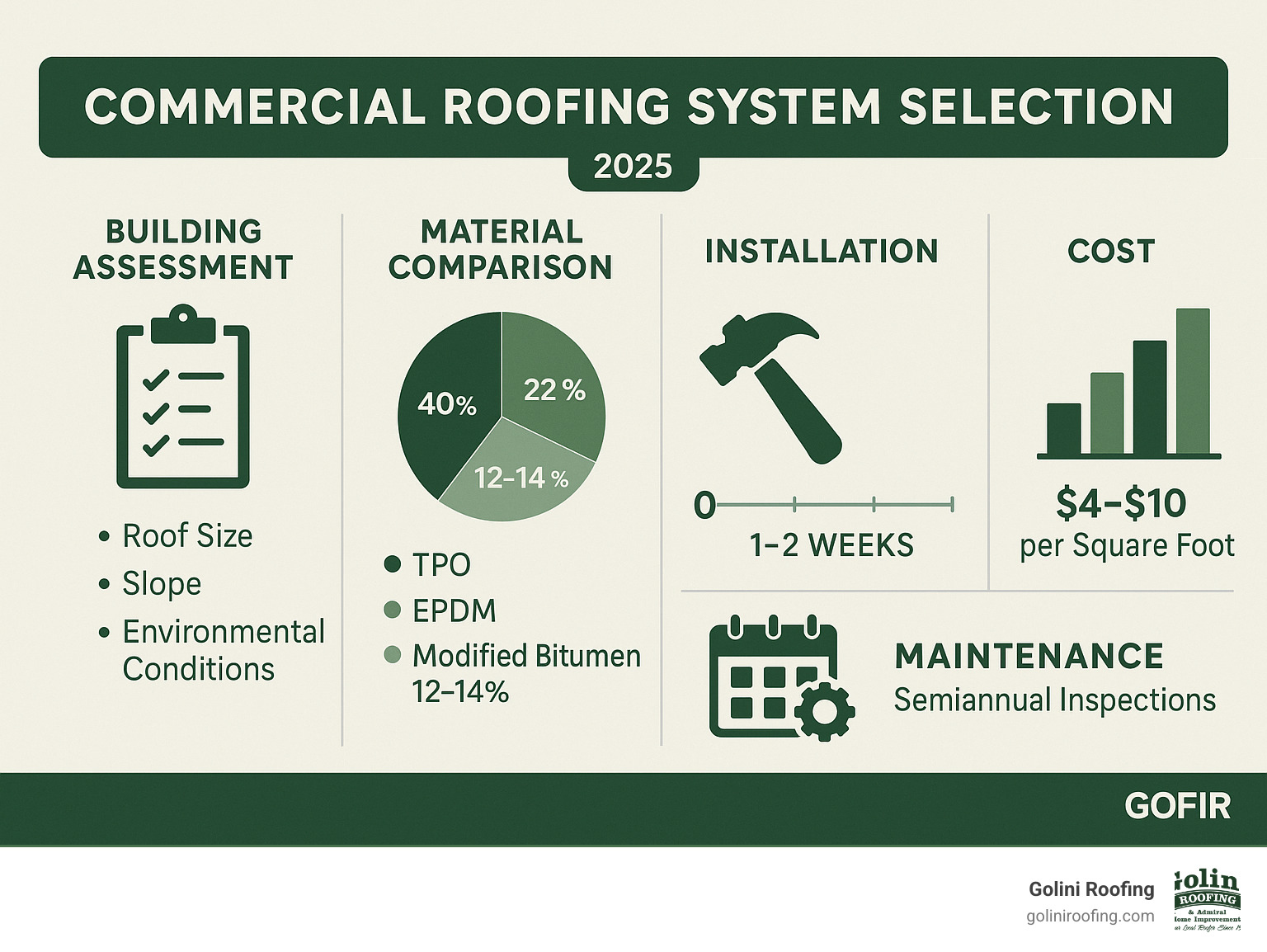
- Material Data – TPO (40% market share), EPDM (22-26% market share), Modified Bitumen (12-14% market share)
- Professional Organizations – NRCA, SPRI, Cool Roof Rating Council
- Training Programs – Certification courses and safety protocols
- Compliance Resources – Building codes and energy efficiency standards like Title 24
Commercial roofs face unique challenges compared to residential systems. They’re typically flat or low-slope (ranging from ¼:12 to 3:12 pitch), must support heavy equipment like HVAC units, and need to withstand foot traffic for maintenance. A failed commercial roof can shut down operations and cost thousands in lost revenue.
Built-up roofing systems have protected North American buildings for over 100 years, and modern materials like TPO and EPDM membranes offer even better performance. California’s Title 24 building efficiency standards alone have saved more than $56 billion in energy costs since 1978, proving that smart roofing choices pay off long-term.
I’m Jack Golini, owner of Golini Roofing, and I’ve been helping property owners steer commercial roofing resources since 1982 with over 35 years of hands-on experience.
What You’ll Learn
This comprehensive guide will equip you with the essential commercial roofing resources you need to make informed decisions about your building’s roof system.
By the end of this article, you’ll have access to:
- Decision-making frameworks for selecting the right roofing system
- Industry calculators and tools for wind load and energy calculations
- Professional associations that provide ongoing education and standards
- Maintenance strategies that extend roof life and protect your investment
- Cost benchmarks to help you budget effectively
Whether you’re a building owner, facility manager, or contractor, these resources will help you steer the commercial roofing landscape with confidence.
Commercial vs. Residential Roofing 101
Commercial roofing resources reveal fascinating differences that go far beyond just appearance between commercial and residential systems.
Commercial roofing covers vast areas with flat or low-slope systems that need to do much more than just keep the rain out. These roofs support massive HVAC units, handle maintenance crews walking around regularly, and often serve as equipment storage areas.
The numbers tell the story. While your home’s roof might cover 2,000 square feet, commercial roofs routinely span 50,000 square feet or more.
Residential roofing takes a completely different approach. Those sloped roofs with asphalt shingles, metal panels, or clay tiles rely on gravity to shed water quickly. They’re designed for looks and longevity, but they rarely need to support anything heavier than the occasional repair technician.
Commercial roofs must handle dead loads from all the roofing materials and equipment permanently installed, live loads from snow accumulation and maintenance crews, and wind uplift forces that can be brutal on large, flat surfaces.
Thermal expansion and contraction across these massive roof areas creates stresses that residential roofs simply don’t experience. When a 100,000-square-foot roof heats up on a summer day, it can expand several inches in every direction.
Why Commercial Roofs Are (Mostly) Flat
Commercial roofs are flat because it makes practical sense.
HVAC equipment placement is the big driver. Commercial buildings need serious heating and cooling systems – units the size of small cars. Flat roofs provide the perfect platform, keeping equipment accessible while freeing up valuable interior space.
Cost efficiency becomes crucial when covering massive areas. Flat roofs require less material per square foot than sloped systems and install much faster.
Structural spans in commercial buildings often stretch across huge open areas without interior support columns. Wide-open floor plans work perfectly with flat roof designs that distribute weight evenly.
The “flat” designation is misleading though. These roofs actually have a slight slope – typically ¼ inch per foot minimum – to ensure proper drainage.
Core System Types at a Glance
TPO (Thermoplastic Polyolefin) has become the clear favorite, capturing 40% of new construction projects. This bright white membrane reflects heat and creates incredibly strong seams through heat welding.
EPDM (Ethylene Propylene Diene Monomer) holds steady with 22% of new construction and 26% of reroofing market share. This black rubber membrane is the reliable workhorse of commercial roofing.
PVC (Polyvinyl Chloride) brings serious chemical resistance and warranties stretching up to 30 years. If your building deals with harsh chemicals or extreme weather, PVC systems often prove their worth.
Modified Bitumen captures 12.4% of new construction. These multi-layer systems excel in cold climates where flexibility matters.
Built-Up Roofing (BUR) systems have been protecting buildings for over 100 years. These multi-layer systems can last up to 30 years with proper maintenance.
Metal roofing systems deliver exceptional longevity and fire resistance, with some installations lasting 50+ years.
Selecting the Right Commercial Roofing System
Choosing the right commercial roofing system requires understanding your building’s unique needs and matching them with appropriate materials and design.
Building use plays a huge role. A restaurant with grease-laden exhaust systems has completely different requirements than a clean manufacturing facility. Chemical plants need membranes that resist specific compounds, while schools prioritize safety and longevity.
Climate zone considerations can make or break your investment. Northern climates demand systems that handle freeze-thaw cycles and heavy snow loads. Southern regions need superior UV resistance and cooling properties. Coastal areas require improved wind resistance and salt air tolerance.
Code compliance isn’t optional. Local building codes specify minimum requirements for fire ratings, wind resistance, and energy efficiency. Understanding these requirements early prevents costly changes during construction.
Wind uplift resistance deserves special attention because large, flat roofs act like airplane wings in high winds. The attachment method must be calculated based on your building’s height, location, and exposure.
Insulation R-value requirements keep increasing as energy codes become more stringent. Polyiso boards are commonly used, but vapor retarders may be needed to prevent condensation issues.
Performance Factors That Matter Most
Durability tops the list for most building owners. A roof that fails prematurely can cost far more than any initial savings from choosing a cheaper system. Modified bitumen roofs typically last about 20 years, while built-up roofing systems can reach 30 years with proper care.
Fire rating is often mandated by building codes and insurance requirements. Metal roofing systems offer exceptional fire resistance, while other materials achieve proper ratings through careful assembly design.
Ponding resistance becomes critical for flat roofs because some water accumulation is inevitable after heavy rains. Your roofing system must withstand this exposure without degrading.
Hail impact resistance varies dramatically between materials. Some TPO and EPDM membranes offer superior hail resistance, while others may puncture under severe impact.
Reflectivity affects both energy costs and roof surface temperature. Black surfaces can become up to 90°F hotter than reflective white surfaces, translating directly to higher cooling costs.
Energy Efficiency & Cool Roof Compliance
Energy efficiency has become a driving force in commercial roofing decisions. Commercial roofing resources now emphasize cool roof technologies that can reduce air conditioning costs by 10-15%.
Solar reflectance measures how much sunlight your roof reflects rather than absorbs. Higher reflectance values keep buildings cooler and reduce energy costs.
Title 24 compliance in California has saved more than $56 billion in energy costs since 1978. These standards require specific reflectance and emittance values for different roof types and climate zones.
Tax incentives are available for qualifying energy-efficient roofing systems, which can offset initial costs significantly.
For detailed information on cool roof standards, visit the Cool Roof Rating Council for scientific research and rating data.
Sustainability & Green Options
Vegetative roofs provide insulation, stormwater management, and habitat creation. These require specialized waterproofing and structural support but offer unique benefits.
Recyclable membranes like TPO and PVC can be recycled at end of life, reducing landfill waste and supporting circular economy principles.
Coatings restoration extends existing roof life without tear-off, saving materials and disposal costs. Liquid-applied coatings can add 10-15 years to a structurally sound roof.
Metal roofing offers exceptional sustainability benefits, with many systems containing recycled content and being fully recyclable. For comprehensive information about sustainable metal roofing options, visit our Commercial Metal Roofing Services page.
Installation, Inspection & Maintenance Best Practices
Proper installation, regular inspection, and proactive maintenance separate roofs that last decades from those that fail prematurely.
Project planning sets the foundation for success. Experienced contractors assess everything from weather patterns to building occupancy schedules. Getting permits sorted early prevents costly delays.
Safety protocols protect workers while reducing liability exposure. OSHA-certified personnel and proper fall protection systems are essential.
Quality assurance and quality control (QA/QC) programs ensure your investment delivers expected performance through material inspections, installation monitoring, and comprehensive system testing.
Modern leak detection using infrared scanning identifies problems before they become visible disasters, allowing for targeted repairs that save thousands.
Seasonal maintenance addresses unique challenges each season brings, from spring damage assessment to winter snow load monitoring.
Step-by-Step Installation Flow
Professional installation follows a systematic approach. The process begins with tear-off when required, removing existing materials down to the structural deck.
Substrate preparation ensures a clean, dry, smooth surface. Insulation installation provides thermal barrier while creating proper slopes for drainage.
Membrane or metal placement follows manufacturer specifications precisely. Flashing installation seals penetrations and transitions – these details often determine whether a roof succeeds or fails.
Punch-list completion addresses final details and conducts quality checks before project completion.
Regular Inspection Schedules
Routine inspections are your best defense against costly emergency repairs. Semi-annual inspections in spring and fall catch minor issues before they escalate.
Post-storm follow-ups after severe weather document damage and initiate prompt repairs. Quick assessment prevents small issues from becoming major problems.
Annual professional inspections by qualified consultants provide detailed condition assessments and maintenance recommendations.
For comprehensive inspection services, visit our Commercial Roof Inspections page.
Maintenance Plans That Pay Off
Proactive maintenance dramatically extends roof life and prevents emergency repairs.
Drain cleaning prevents ponding water, which accelerates membrane deterioration. Clogged drains are one of the most common – and preventable – causes of commercial roof failures.
Penetration sealing around pipes, vents, and equipment maintains watertight integrity. These areas experience the most movement and stress.
Walk pad installation around equipment protects the roof surface during routine HVAC maintenance.
Data logging tracks maintenance activities, costs, and system performance over time, helping identify patterns and plan future maintenance.
Learn more about our systematic approach on our Commercial Roof Maintenance Plan page.
The Ultimate Commercial Roofing Resources Hub
Having access to reliable commercial roofing resources is essential for making informed decisions about your building’s roof system.
Industry Manuals provide the foundation for proper roofing practices. The NRCA maintains comprehensive technical libraries covering design, materials, and installation techniques.
Design Calculators take the guesswork out of critical calculations. Tools like the Roof Wind Designer and EnergyWise Calculator help determine proper wind loads and energy performance.
Professional Associations offer ongoing education, certification programs, and industry standards development.
Training Portals like the GAF Learning Portal offer courses for roofing professionals, ensuring proper installation techniques and safety protocols.
Certification Programs validate expertise and often open up improved warranty options. Only 1% of roofing contractors achieve GAF Master Select status.
Top Online Commercial Roofing Resources
The internet has revolutionized access to commercial roofing resources:
NRCA Technical Resources provide comprehensive guidelines on roofing systems, materials, and installation practices, keeping professionals current with industry standards.
Roof Wind Designer calculates design wind loads for common building types, ensuring code compliance and proper attachment methods.
EnergyWise Calculator evaluates thermal performance and estimates energy costs for different roof assemblies, helping optimize insulation configurations.
SPRI ANSI Standards cover single-ply roofing systems and provide testing protocols for materials and assemblies, ensuring consistent quality across the industry.
For detailed technical standards on single-ply membrane systems, visit SPRI for comprehensive resources.
Industry Associations: Commercial Roofing Resources You Can Trust
Professional associations serve as the backbone of the commercial roofing industry:
NRCA (National Roofing Contractors Association) is the leading voice for roofing professionals, with over 25,000 professionals following their updates. They develop technical standards, provide education, and advocate for the industry.
CRRC (Cool Roof Rating Council) provides independent ratings for solar reflectance and thermal emittance of roofing materials.
MCA (Metal Construction Association) focuses on metal roofing and wall systems, providing technical resources and industry standards.
RCMA (Roof Coatings Manufacturers Association) represents roof coating manufacturers, promoting liquid-applied roofing systems for extending roof life.
IIBEC (International Institute of Building Enclosure Consultants) provides education and certification for building envelope professionals.
For comprehensive information about commercial roofing systems and services, visit our Commercial Roofing page.
Costs, Warranties & Hiring the Right Contractor
Understanding the financial aspects of commercial roofing is crucial for proper budgeting and decision-making.
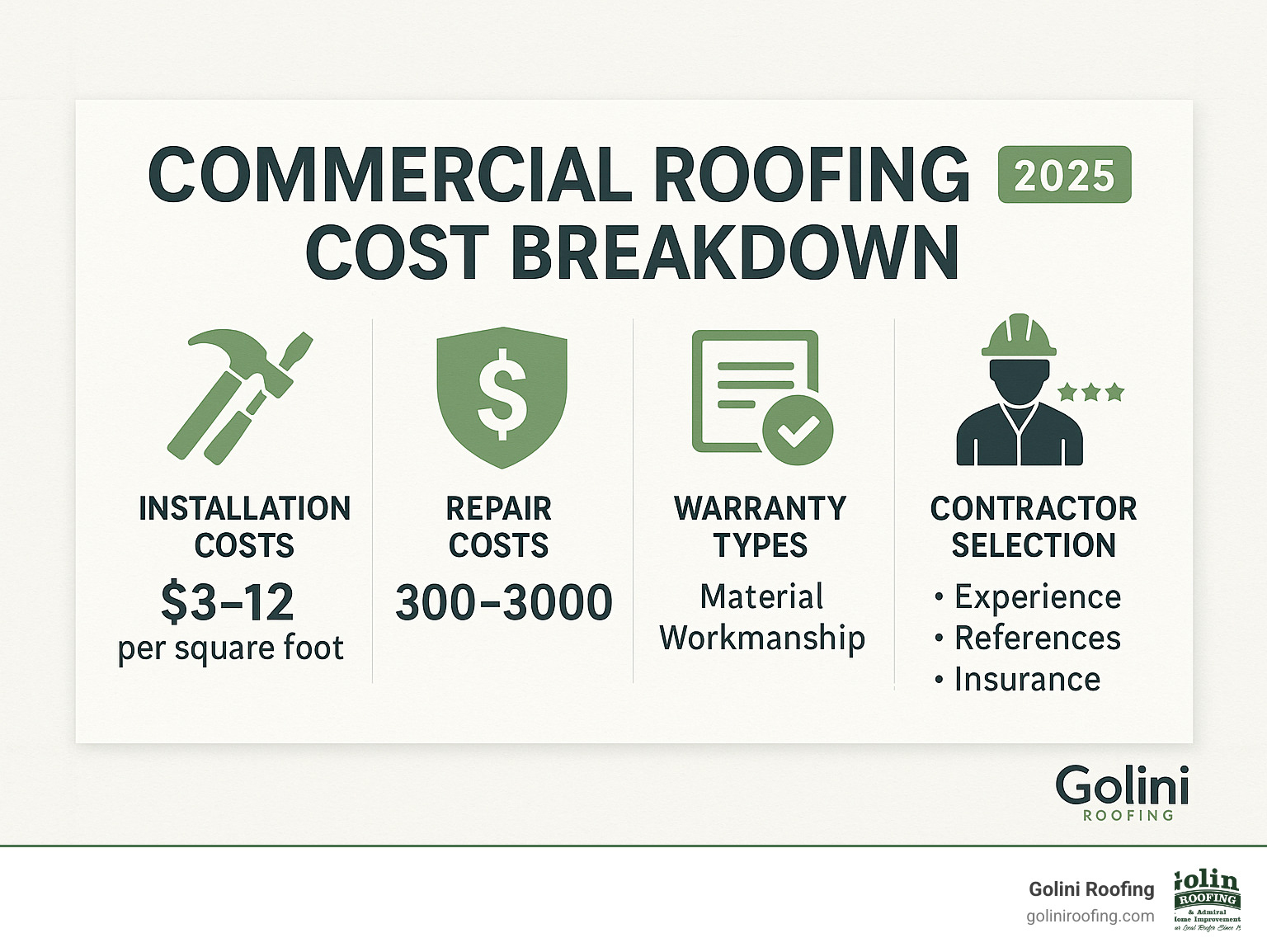
Installation Costs typically range from $3 to $12 per square foot for most commercial systems, though complex projects can exceed $20 per square foot. These are average costs based on internet data and not specific to Golini Roofing pricing. Factors affecting cost include:
- System Type: TPO and EPDM are generally less expensive than PVC or metal systems
- Building Height: Multi-story buildings require additional safety measures
- Roof Complexity: Multiple penetrations and irregular shapes increase costs
- Insulation Requirements: Higher R-values add to material costs
- Local Labor Rates: Urban areas typically have higher installation costs
Repair Costs range from $300 to $3,000 depending on damage extent and system type. Emergency repairs often carry premium pricing due to urgency.
Understanding Warranty Options
Commercial roofing warranties fall into several categories:
Material Defect Warranties cover manufacturing flaws, typically ranging from 10 to 30 years depending on material and manufacturer.
No Dollar Limit (NDL) Warranties provide comprehensive coverage without financial caps. These premium warranties offer the highest protection but require certified installers.
System Warranties cover the entire roofing assembly, including materials, installation, and sometimes maintenance.
Wind and Hail Warranties offer specific protection against weather-related damage, particularly valuable in severe weather areas.
Workmanship Warranties protect against installation errors and typically last 1-10 years.
For expert repair services backed by solid warranties, visit our Commercial Roof Repair Near Me page.
Contractor Checklist
Selecting the right contractor is perhaps the most important decision:
Licensing and Insurance: Verify current licenses, general liability insurance, and workers’ compensation coverage.
Safety Record: Ask about OSHA training, safety protocols, and incident history.
References and Portfolio: Request recent project references and inspect completed work when possible.
Financial Stability: Check Better Business Bureau ratings and financial references.
Technical Expertise: Ensure contractors have experience with your specific roofing system and building type.
Core-Cut Reporting: Professional contractors provide detailed analysis to assess existing roof conditions.
Bid Comparisons: Obtain multiple detailed bids and compare scope, materials, and warranties. The lowest bid isn’t always the best value.
Frequently Asked Questions about Commercial Roofing Resources
What are the most common problems with commercial roofs and how are they fixed?
After 35 years in the roofing business, I’ve seen the same problems repeatedly. Most are preventable with proper maintenance and the right commercial roofing resources.
Ponding water tops the list. When drainage systems get clogged, water pools on your roof. This standing water accelerates deterioration and can cause structural damage. We fix this by clearing drains, installing additional drain systems, or adding tapered insulation.
Membrane damage from constant heating and cooling cycles causes splitting, ridging, and blistering. The fix involves cutting out damaged sections and installing new membrane patches with proper overlap and sealing.
Penetration leaks around pipes, vents, and equipment are common where different materials meet. We address these by removing old sealants, installing new flashing systems, and applying compatible sealants.
Regular maintenance catches most issues before they become expensive emergencies.
How long does it take to install or replace a typical commercial roof?
A typical 10,000 square foot TPO roof might take 3-5 days in good weather conditions. A complex 50,000 square foot project could stretch to 2-3 weeks, especially with multiple roof levels or lots of equipment.
Weather conditions are the biggest variable. Rain, high winds, and extreme temperatures can halt work completely.
System complexity plays a huge role. Single-ply membrane installation is faster than multi-layer systems like built-up roofing.
Building occupancy can affect timelines. If your building needs to stay operational, we might work during off-hours or weekends, extending the timeline.
Tear-off requirements add time. Removing existing roofing sometimes reveals more layers than expected.
Professional contractors develop detailed schedules accounting for these variables and provide realistic expectations upfront.
When is roof restoration with coatings a viable alternative to replacement?
Roof restoration with coatings can save serious money while extending your roof’s lifespan when conditions are right.
Ideal candidates are roofs where the structure is solid but the surface shows age. Minor leaks, surface weathering, or energy efficiency concerns are perfect scenarios for restoration.
Coatings work exceptionally well on metal roofs with surface rust or coating failure. Single-ply membranes with minor punctures or seam issues are also excellent candidates, as are built-up roofs with surface deterioration but intact underlying layers.
Benefits of restoration include cost savings of 40-60% compared to full replacement, minimal business disruption, 10-15 year life extension, improved energy efficiency, and keeping materials out of landfills.
However, restoration isn’t suitable for roofs with structural damage, extensive leaks, or wet insulation. Professional assessment determines if restoration is right for your specific situation.
Conclusion
Making smart decisions about commercial roofing resources doesn’t have to feel overwhelming. With the right information and a trusted partner, you can confidently protect your building investment for decades.
At Golini Roofing, we’ve been helping property owners in Wakefield, Burlington, Lynnfield, North Reading, Reading, Stoneham, Wilmington, Winchester, and Woburn make these important decisions for over 35 years. Our meticulous approach – including our signature hand-nailing technique – ensures every commercial project meets the highest standards.
The commercial roofing landscape offers tremendous opportunities when you know how to steer it. TPO’s commanding 40% market share proves that modern materials deliver real value, while built-up roofing systems continue protecting buildings after 100+ years of proven performance.
Throughout this guide, we’ve covered the essential commercial roofing resources that separate successful projects from costly mistakes. Professional organizations like NRCA and SPRI provide the technical backbone, while tools like the Roof Wind Designer and EnergyWise Calculator eliminate guesswork from critical decisions.
Commercial roofing is a marathon, not a sprint. While initial costs may seem significant, a properly installed and maintained roof delivers exceptional value over its 20-30 year lifespan. The difference between a roof that lasts and one that fails prematurely often comes down to using the right resources and working with experienced professionals.
Whether you’re planning a new installation, exploring restoration options, or developing a maintenance strategy, the resources we’ve outlined will help you make confident, informed decisions.
For comprehensive commercial roofing services backed by decades of experience and a commitment to excellence, visit our Commercial Roofing Services page. We’re here to help you protect your investment and ensure your roof performs reliably for years to come.
Contact Golini Roofing today to discuss your commercial roofing needs and find how our expertise and attention to detail can benefit your property. Your building deserves a roof that works as hard as you do.
