

Why Rain Gutter Downspout Repair Matters for Your Home
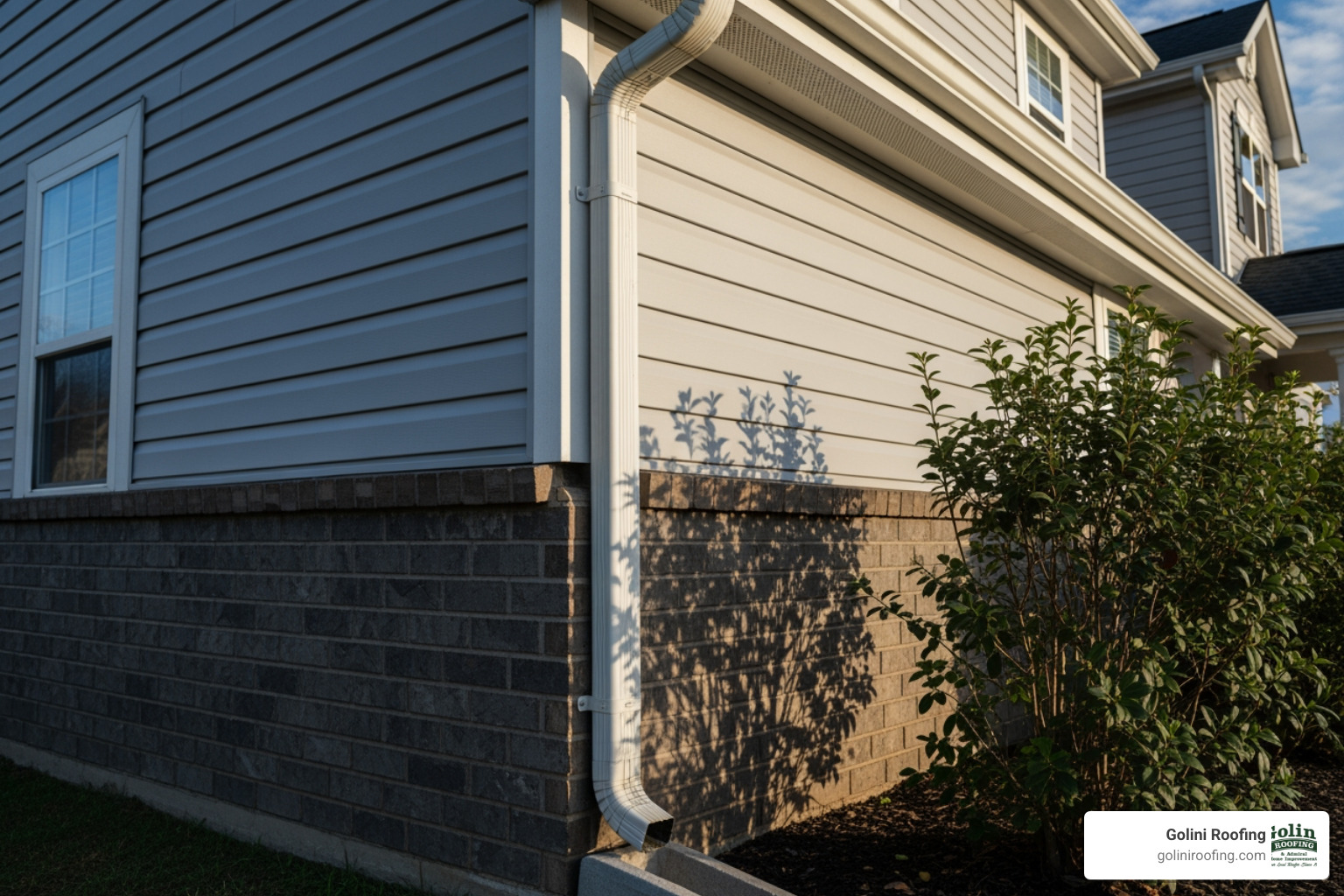
Rain gutter downspout repair keeps water flowing away from your home’s foundation, preventing thousands of dollars in damage. When downspouts fail, water pools around your foundation, erodes landscaping, stains siding, and can even lead to basement flooding.
Quick Answer: Common Downspout Repairs
- Loose Downspouts – Tighten or replace mounting straps with new screws
- Leaking Joints – Clean and reseal seams with gutter sealant
- Damaged Sections – Cut out and replace with new downspout pieces
- Clogs – Flush with a hose or disassemble to remove debris
- Rust or Corrosion – Replace affected sections before leaks spread
Most downspout repairs cost between $15-$50 in materials for DIY fixes, while professional repairs range from $100 to $500 depending on complexity. The good news? Many common problems are surprisingly easy to fix yourself with basic tools and a little know-how.
Your downspouts do critical work. They channel rainwater and melting snow from your roof, through your gutters, and safely away from your home’s structure. When they’re clogged, leaking, or pulling away from the wall, that water goes exactly where you don’t want it – soaking into your foundation, damaging your siding, and destroying your landscaping.
The consequences of neglected downspouts are serious:
- Foundation cracks and structural issues
- Basement flooding and water intrusion
- Rotted fascia boards and soffit damage
- Stained or damaged siding
- Eroded soil around your home
- Mold and mildew growth
I’m Jack Golini, owner of Golini Roofing, and over my 35+ years serving homeowners in the Wakefield area, I’ve seen how proper rain gutter downspout repair prevents expensive foundation and structural damage. This guide will walk you through the most common downspout problems and show you exactly how to fix them yourself, while also helping you recognize when it’s time to call in a professional.
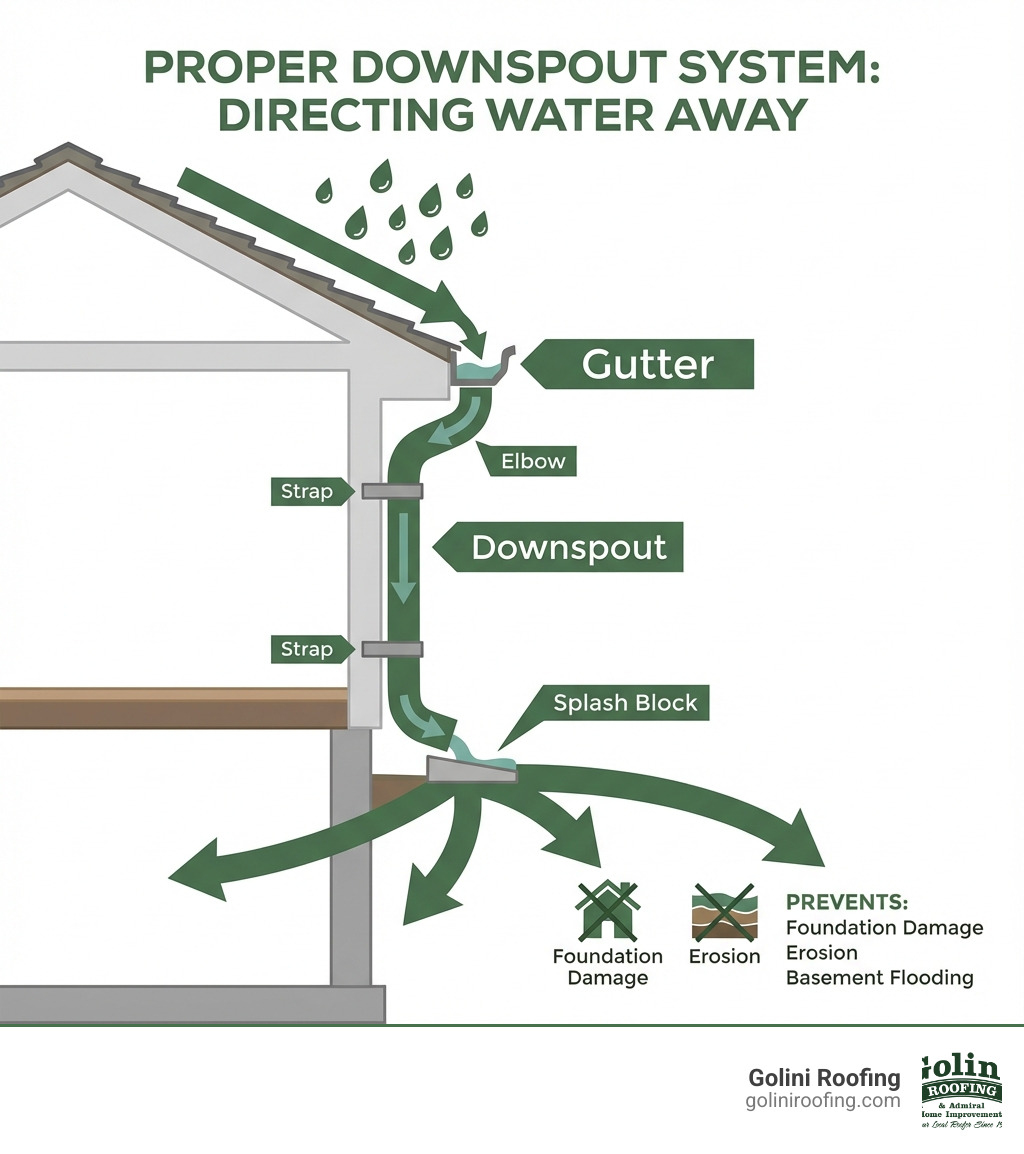
Key rain gutter downspout repair vocabulary:
Signs Your Downspout Needs Attention
Recognizing the early warning signs of a failing downspout can save you a lot of headache and money down the line. A properly functioning gutter system is your home’s first line of defense against water damage, and downspouts are integral to that defense. If you notice any of these indicators, it’s time to consider some rain gutter downspout repair.
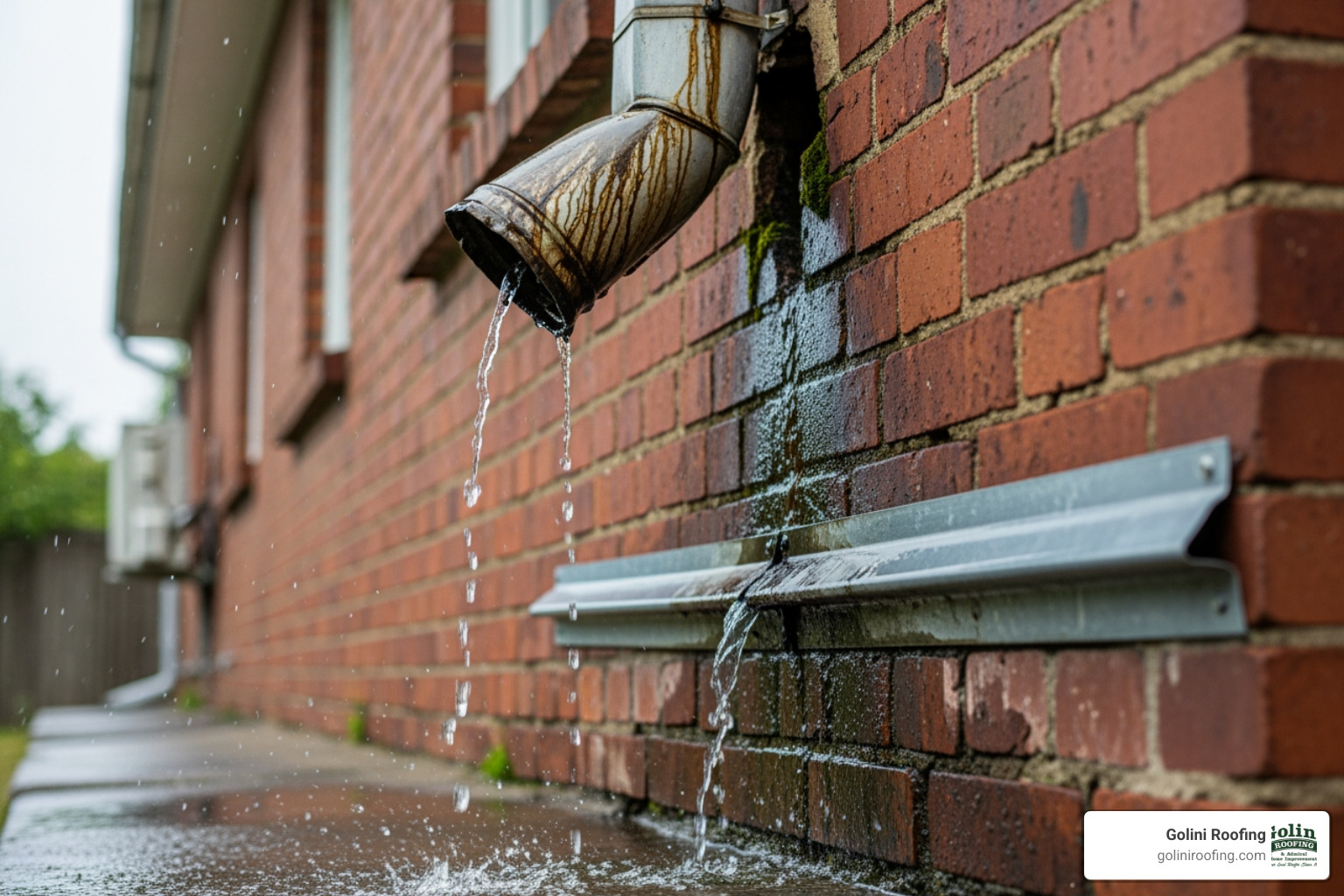
One of the most obvious signs is water pooling around your home’s foundation. This indicates that water isn’t being channeled far enough away, or it’s escaping before it reaches the ground. This pooling water can lead to serious issues like foundation cracks and instability. Another tell-tale sign is siding stains or streaks, which occur when water overflows or leaks from the downspout, running down the side of your house. Over time, this can cause mold or mildew growth and even peeling paint on your home’s exterior.
Visually inspect your downspouts for sagging gutters, which often mean the downspout is struggling to handle the water volume or is pulling away from the house. Clogs and overflow are also clear indicators; if water is spilling over the top of your gutters during rain, or you hear gurgling sounds, you likely have a blockage. Look for visible cracks or holes in the downspout material itself, which can be caused by age, impact, or ice damage. Rust spots, especially on metal downspouts, signal corrosion and potential leaks. Finally, loose straps or a downspout that has completely detached from the wall are immediate red flags that require prompt attention. Sometimes, a musty smell in your basement can even point to issues with your gutters and downspouts allowing water intrusion.
Common Downspout Problems
Let’s dive deeper into the common issues that often lead to the need for rain gutter downspout repair. Understanding these problems will help you diagnose what’s going on with your system.
- Clogged downspouts: This is perhaps the most frequent culprit. Leaves, twigs, shingle grit, and other debris can accumulate, especially in elbows and curves, blocking the flow of water. This leads to water backing up into the gutters, overflowing, and potentially damaging your fascia, roof, and foundation. We have more information on clogged downspout repair.
- Leaking joints and seams: Over time, the sealant at the seams where downspout sections connect can degrade, or the connections themselves can loosen. This allows water to drip out, potentially damaging the siding below or creating puddles near your foundation.
- Loose or detached downspouts: Strong winds, heavy rain, or even accidental impacts can cause downspouts to pull away from the house. If the straps that secure the downspout to your home become loose or break, the downspout can hang precariously or even fall completely, rendering it useless. Ice buildup, common in our Massachusetts winters, is a significant factor here, often pulling downspouts away from their connections.
- Physical damage from storms or ladders: Hail, falling branches, or even improperly placed ladders can dent, crack, or completely break sections of your downspouts. Vinyl downspouts, while affordable, are particularly susceptible to damage from ice if not kept carefully clean. Even a weed wacker can damage a corrugated plastic downspout that runs into the ground!
- Improper slope: While more common with gutters, downspouts can also be misaligned, preventing efficient water flow. This can lead to standing water within the downspout, promoting rust or ice buildup.
- Ice dams: In colder climates like ours, ice dams can form in gutters and extend into downspouts. This can cause downspouts to fill with ice, putting immense strain on fasteners and potentially causing them to pull away from the house or even burst.
Gathering Your DIY Toolkit: Tools & Materials
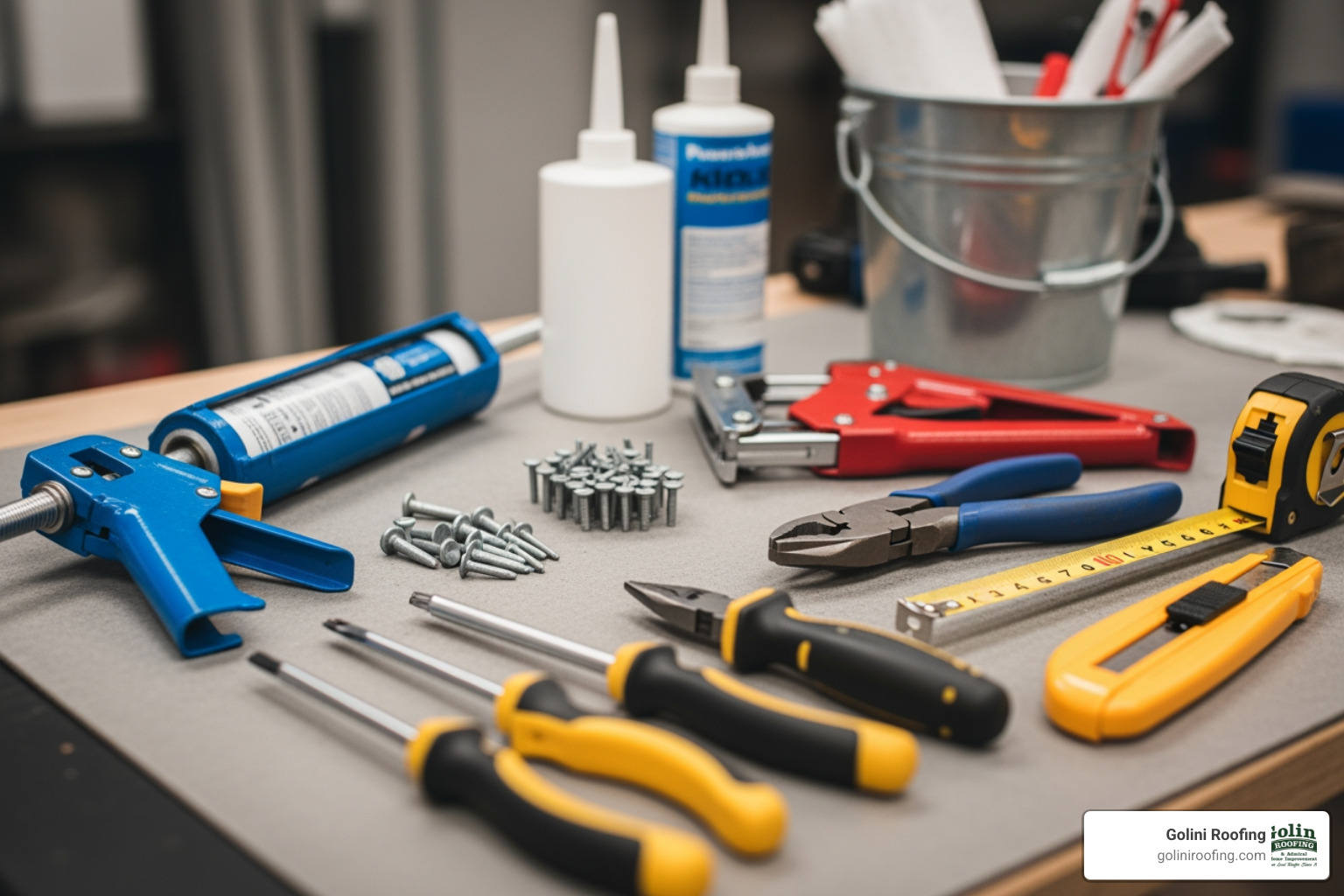
Before you tackle any rain gutter downspout repair, it’s crucial to gather the right tools and materials. Having everything on hand will make the job smoother and safer.
First and foremost, safety first! Always prioritize your well-being. When working at heights, ladder safety is paramount. Ensure your ladder is stable on even ground, and if possible, have a partner to assist you. Always wear protective gloves to prevent cuts from sharp metal edges and safety glasses to shield your eyes from debris or flying particles. Most ladder injuries happen at less than 6 feet, so even seemingly low-level tasks require caution. For anything beyond a single story, or if you feel uncomfortable, it’s always wise to call a professional.
[LIST] of Essential Supplies
Here’s a list of what you’ll likely need for most common downspout repairs:
- Ladder: A sturdy extension ladder for reaching high areas.
- Power drill/Impact driver: Essential for driving screws quickly and securely.
- Screwdriver: For manual tightening or smaller adjustments.
- Tin snips or hacksaw: For cutting new downspout sections to size.
- Putty knife: Useful for scraping off old sealant or debris.
- Caulking gun: To apply gutter sealant evenly.
- Gutter sealant: A high-quality, waterproof sealant for sealing joints and small holes.
- Sheet metal screws: Typically 3/8″ or 1/2″ zip screws, often color-matched, for securing downspout sections and straps. For attaching to wood, wood screws offer better grip than sheet metal screws.
- Replacement downspout sections: If you have physical damage, you’ll need sections that match your existing downspout material (aluminum, vinyl, steel) and dimensions.
- Downspout straps or brackets: For reattaching loose downspouts or adding extra support.
- Measuring tape: For accurate measurements.
- Wire brush: For cleaning surfaces before sealing.
You can find most of these items at your local hardware store. For more specific components, check out our gutter supplies overview.
Your Step-by-Step Guide to Rain Gutter Downspout Repair
This section provides actionable steps for common repairs, empowering you to protect your home. With the right tools and a little patience, you can tackle many rain gutter downspout repair tasks yourself.
How to Fix a Loose Downspout
A loose downspout is a common issue, often caused by degraded fasteners or impact. Fixing it promptly prevents further damage and ensures water flows correctly.
- Inspecting straps: First, carefully inspect all the downspout straps that secure it to your home. Are they bent, broken, or simply loose? Sometimes the screws have pulled out of the siding or fascia.
- Replacing old screws: If the existing screws are stripped or have lost their grip, remove them. If you’re attaching to wood siding or fascia, consider using wood screws for better purchase. For masonry, brick, or concrete siding, you might need to drill a pilot hole into the mortar (not the brick itself) and use a wall anchor before fastening.
- Adding new straps: If a strap is broken or if your downspout needs more support, add new ones. Position new straps so they are 2-8 inches from connecting pieces (elbows, top, bottom). If reusing existing holes isn’t an option, mark a new location slightly above or below the previous one.
- Proper screw types: Use 1 1/2″ zinc zip screws for attaching the strap to the wall. Once the strap is secured to the wall, wrap it tightly around the downspout. Then, use a 1/2″ color-specific zip screw to fasten the strap to the downspout itself.
- Securing to siding: Ensure the strap is pulled taut around the downspout before fastening. This prevents the downspout from wobbling or pulling away in strong winds.
- Ensuring vertical alignment: Gently push the downspout back into its correct vertical alignment before tightening all fasteners. If the downspout has slid down vertically, you may need to temporarily remove all straps, reposition it, and then re-fasten, possibly adding an extra screw through the center of the strap into the downspout itself for added security against vertical movement.
For more detailed guidance, check out our insights on drain spout repair.
How to Seal Leaking Joints in Your Downspout
Leaking joints are not just annoying; they can cause significant water damage to your home’s siding and foundation. This is a relatively easy rain gutter downspout repair you can often do yourself.
- Cleaning the joint: The first step is crucial: thoroughly clean the area around the leaking joint. Use a wire brush or putty knife to scrape away any old, degraded sealant, dirt, or rust. The surface must be clean and dry for the new sealant to adhere properly.
- Removing old sealant: Take your time with this step. Old sealant that is peeling or cracked needs to be completely removed. If you’re dealing with metal downspouts, address any minor rust spots by cleaning them thoroughly.
- Applying new gutter sealant: Once the joint is clean and dry, load your caulking gun with a high-quality gutter sealant. Apply a continuous, even bead of sealant along all seams and connections of the joint. Ensure complete coverage to create a watertight barrier.
- Ensuring a watertight seal: After applying the sealant, you can smooth it with a wet finger or a specialized tool for a neat finish. Allow the sealant to cure according to the manufacturer’s instructions before testing.
- Checking elbows and connectors: Pay special attention to elbows and other connectors, as these are common leak points due to the stress they endure. If possible, consider adding extra screws to reinforce these connections before sealing.
For a broader understanding of gutter issues, explore our general gutter repair service info.
The Process for Replacing Damaged Sections of a Downspout
Sometimes, a downspout section is beyond simple repair – it might be severely dented, cracked, or corroded. In these cases, replacing the damaged section is the most effective rain gutter downspout repair.
- Measuring the damaged section: Accurately measure the length of the downspout section you need to replace. Also, note the diameter and material of your existing downspout to ensure the new piece matches.
- Cutting a new piece: Using tin snips for aluminum or vinyl, or a hacksaw for steel, carefully cut your new downspout section to the exact length. Smooth any rough edges with a file or sandpaper to ensure a clean fit.
- Removing the damaged section: You’ll typically need to unfasten the straps holding the damaged section to the wall. If the sections are riveted or screwed together, you’ll need to drill out the rivets or remove the screws. Gently pull the damaged section away from the sections above and below it.
- Connecting new sections: Slide the new downspout section into place. Upper sections should feed into lower sections to prevent leaks. This means the top of your new piece will slide inside the bottom of the section above it, and the bottom of your new piece will be inserted into the top of the section below it.
- Using slip joints: For seamless integration, especially if you can’t easily access the existing connections, you might use a slip joint or a downspout connector. These pieces bridge the gap and allow for a clean, secure fit.
- Securing with screws: Once the new section is in place and properly aligned, use sheet metal screws (typically 1/2″ zip screws) to secure the connections. Drive at least two screws per joint, ensuring they go through both layers of the downspout.
- Sealing new joints: As with leaking joints, apply a generous bead of gutter sealant to all new connections to ensure they are watertight. This is a critical step to prevent future leaks.
- Re-fastening to the wall: Finally, re-attach the downspout straps to the wall, making sure the downspout is securely fastened and vertically aligned. Add new straps if necessary for extra support. This is a key part of comprehensive rain gutter downspout repair.
Proactive Maintenance to Extend Downspout Life
An ounce of prevention is worth a pound of cure, especially when it comes to your home’s drainage system. Regular maintenance is key to avoiding costly rain gutter downspout repair and ensuring your system functions efficiently year-round.
We recommend a regular inspection schedule for your downspouts and gutters. At a minimum, plan for twice-yearly cleaning: once in late spring after tree pollen and light debris have settled, and again in late fall after all the leaves have dropped. In our Massachusetts climate, especially with the abundant trees in areas like Wakefield, Boxford, and Ipswich, this is incredibly important.
Beyond scheduled cleanings, perform post-storm checks. After any heavy rain or wind storm, take a quick walk around your house to visually inspect your downspouts. Look for obvious damage, loose straps, or signs of overflow.
When cleaning, focus on removing all debris from your gutters, starting from the furthest point from the downspout and working your way towards it. Once the gutters are clear, use a flushing with a hose technique. Run water down your downspouts to ensure there are no hidden clogs. If water doesn’t flow freely, you may need to disconnect the downspout elbows to clear a blockage. Avoid forcing debris down into underground drains, as this can cause even bigger problems.
Consider the benefits of gutter guards. While they don’t eliminate the need for cleaning entirely, they significantly reduce the frequency and effort required. Gutter guards prevent large debris like leaves and twigs from entering your gutters and downspouts, allowing water to flow freely. There are various types, and choosing the right one can make a big difference. You can learn about different gutter types and their compatibility with guards.
For more in-depth guidance on keeping your system in top shape, refer to this official maintenance guidance. Consistent cleaning and inspection can prevent small issues from becoming major, expensive repairs.
When to Call a Professional for Rain Gutter Downspout Repair
While many rain gutter downspout repair tasks are DIY-friendly, there are times when it’s simply safer, more efficient, or necessary to call in the experts. Recognizing your limits is crucial for both your safety and the long-term health of your home.
One of the primary reasons to call a professional is safety concerns. If the repair involves significant heights, especially on multi-story homes, climbing ladders can be dangerous. We’ve seen the risks involved, and it’s simply not worth a fall. Professionals have the right equipment and training to work safely at any height.
Another scenario is extensive damage. If you’re dealing with multiple leaks, severely bent or corroded downspout sections, or damage that impacts the gutter system itself, a DIY fix might only be a temporary band-aid. A professional can assess the full extent of the damage and recommend a comprehensive solution. For instance, if you find rotted fascia boards behind your gutters, that’s a structural issue that needs expert attention before any downspout repair can be truly effective.
Sometimes, the problem isn’t just with the downspout but indicates a need for a full gutter system replacement. If your gutters are old (typically over 20 years), constantly clogging, or have improper slope, a professional can advise on whether repair or replacement is the better long-term investment. They can also handle complex installations, such as those around intricate architectural features.
We understand the urge to save money with DIY projects, but for significant issues or when in doubt, a professional assessment can provide peace of mind and prevent more costly repairs down the road. For comprehensive care, including downspout and roof and gutter repairs, don’t hesitate to reach out.
How to Choose the Right Service Provider
When it’s time to bring in the pros for rain gutter downspout repair or replacement, choosing the right contractor is essential. Here’s how we recommend finding a reliable service provider:
- Checking for licenses and insurance: Always verify that any contractor you consider is fully licensed and insured. This protects you in case of accidents or damage during the job. Golini Roofing, for example, is fully licensed and insured, reflecting our commitment to professional standards.
- Reading customer reviews: Online reviews on platforms like Google, Yelp, or Angie’s List can offer valuable insights into a company’s reputation, customer service, and quality of work. Look for patterns in feedback, both positive and negative.
- Asking for local references: A reputable company will be happy to provide references from satisfied customers in your area, such as Burlington, Lynnfield, North Reading, or Wilmington. Speaking directly with past clients can give you a clear picture of their experience.
- Understanding warranties: Inquire about the warranties offered on both labor and materials. A strong warranty demonstrates a company’s confidence in their work and provides you with protection.
- Getting multiple quotes: Don’t settle for the first estimate. Obtain at least three detailed quotes from different contractors. This allows you to compare pricing, proposed solutions, and the scope of work. Be wary of quotes that are significantly lower or higher than the average, as they might indicate cutting corners or overcharging.
For a deeper dive into what constitutes professional standards in the industry, you can refer to organizations like the Rain Gutter Association. We believe in transparency and quality, ensuring every client receives top-notch service.
Frequently Asked Questions about Downspout Repair
How often should downspouts be inspected and maintained?
Downspouts should be inspected at least twice a year, typically in the late spring and late fall. It’s also wise to check them after major storms to ensure they are clear of debris and securely attached. In areas like Wakefield, MA, where we experience all four seasons, this routine check is critical to prevent winter ice damage and spring runoff issues. Regular inspection can help you avoid clogs and leaks, protecting your home from water damage and saving on potentially high repair costs.
What are the most common signs of a failing downspout?
Key signs include water pooling near your foundation, visible cracks or rust on the downspout, peeling paint on siding directly below the gutter, and the downspout being loose or detached from the wall. During rain, watch for water overflowing from the top of the downspout or leaking from its seams. A musty smell in your basement could also indicate a failing system allowing water intrusion. These signs suggest that your downspout is not effectively channeling water away from your home.
What is the average cost for professional downspout repair?
While many minor fixes are inexpensive DIY projects, professional rain gutter downspout repair can range from $100 to $500. The actual cost depends on the extent of the damage, the height and accessibility of your home (e.g., a multi-story home in Stoneham or Woburn might incur higher labor costs), and the materials required. For example, a simple reattachment might be at the lower end, while replacing a long, damaged section or addressing complex clogs could be at the higher end of this range. Always remember these are average costs based on internet data and not actual costs for Golini Roofing; we provide detailed, transparent quotes custom to your specific needs.
Conclusion
DIY downspout repair is an achievable and rewarding task for many homeowners, helping to prevent costly water damage. By regularly inspecting your system and tackling minor issues like loose straps and small leaks, you can extend the life of your gutters. However, for extensive damage, high-to-reach areas, or if you’re unsure about the repair, it’s always best to trust a professional. For expert assessment and high-quality repairs in the Wakefield, MA area, consider the experienced team at Golini Roofing. Contact us for professional gutter services.