
Flat Roof Repairs Ipswich: 7 Powerful Signs to Prevent Costly Damage 2025
Why Your Flat Roof Deserves Expert Attention in Massachusetts
Flat roof repairs massachusetts services are essential for maintaining one of your home’s most vulnerable areas. When ponding water appears after rain, interior stains develop, or you notice sagging sections, prompt professional attention prevents costly structural damage.
Quick Guide to Flat Roof Repairs in Massachusetts:
• Common signs: Ponding water, interior stains, blistered felt, sagging areas
• Materials used: Felt, EPDM rubber, GRP/fibreglass, liquid waterproofing systems
• Typical costs: $300-$1,800 for patches, $1,500-$5,400+ for full replacement (internet averages only)
• Repair timeframes: 1 day for patches, 2-3 days for overlays, 3-5 days for full replacement
• Warranties available: 20-30 year guarantees with insurance backing
• Emergency services: 24/7 call-out available from local specialists
Flat roofs face unique challenges in Massachusetts’ climate. Heavy rainfall, temperature swings, and UV exposure create the perfect storm for membrane deterioration. Unlike pitched roofs that shed water quickly, flat roofs rely entirely on proper drainage and waterproof membranes to protect your home.
The good news? Most flat roof problems are highly repairable when caught early. Modern materials like EPDM rubber and GRP fibreglass offer 25+ year lifespans with minimal maintenance. Local specialists report that “over 35 years of experience” shows traditional repair methods deliver better longevity than quick-fix solutions.
I’m Jack Golini, and I’ve been helping homeowners protect their properties since 1982 with over 35 years of roofing expertise including flat roof repairs massachusetts area homeowners trust. My commitment to quality craftsmanship and property protection ensures your flat roof repair experience minimizes disruption while maximizing long-term performance.
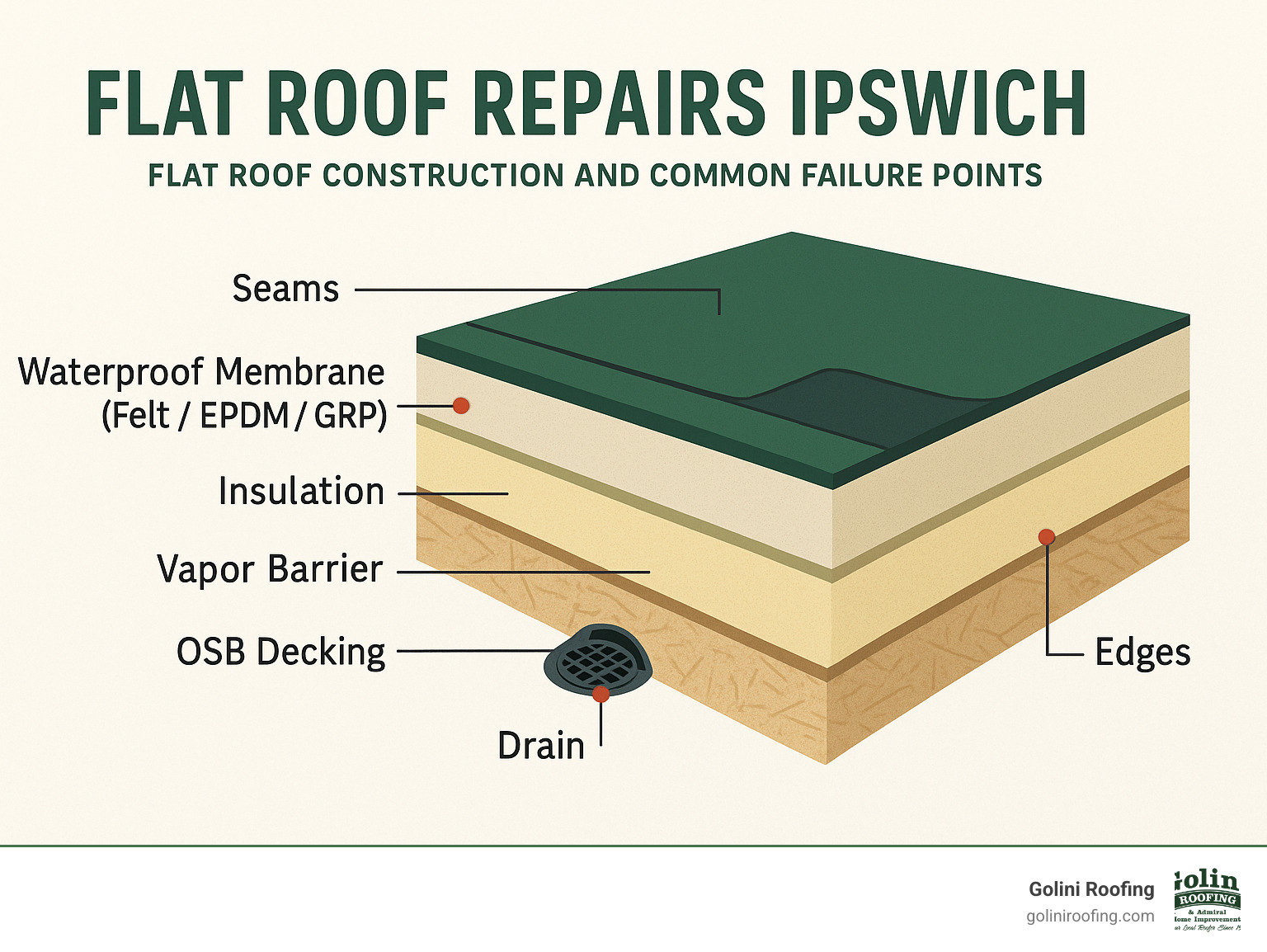
Flat Roof Repairs Ipswich Massachusetts: Early Warning Signs & Inspections
Your flat roof doesn’t fail overnight—it gives you plenty of warning signs if you know what to look for. Think of these early indicators as your roof’s way of asking for help before things get expensive.
Damp spots appearing on your ceiling are like your roof waving a red flag. These telltale patches often show up as yellowish or brown discoloration that gets darker after it rains. If you’re seeing these, your membrane has likely developed a breach somewhere above.
Ponding water is another clear cry for help. Water that sits on your roof for more than 48 hours after rainfall means either your drains are blocked or your roof structure is starting to sag. Either way, standing water will find its way through eventually.
Those blistered felt patches that look like bubbles on your roof? They’re actually pockets where moisture has snuck between the roofing layers. When these blisters pop—and they will—you’ll have direct water pathways into your home.
A sagging deck is perhaps the most serious warning sign. This suggests prolonged moisture has weakened the underlying structure, and you’ll want professional eyes on this immediately.
Routine surveys twice a year keep small problems from becoming big headaches. Spring and autumn are ideal times to check for loose edge trims, cracked sealants around vents, and debris that could clog your drainage.
When to Call for Flat Roof Repairs Massachusetts
Some situations demand immediate professional attention—no waiting for a convenient weekend. Popped seams where sections of your membrane have pulled apart create instant highways for water infiltration.
Cracked flashing around chimneys, vents, or where your roof meets walls is equally urgent. These cracks bypass your main waterproof membrane entirely, sending water straight into your roof structure.
Interior staining that appears suddenly or spreads quickly means you have an active leak happening right now. After storms, always inspect for punctures from flying debris or displaced membrane sections that could have been damaged by high winds.
The golden rule? Don’t wait for multiple problems to develop. Early intervention saves both your wallet and your home’s structural integrity. More info about roof repairs can help you understand what professional repair services can do for your specific situation.
Flat Roof Repairs Massachusetts Inspection Checklist
A methodical approach ensures you won’t miss the subtle signs that could save you thousands later. Start with your drain outlets—these hardworking components should be completely clear of leaves, debris, and properly sealed where they penetrate your membrane. Blocked drains cause more flat roof failures than almost any other single factor.
Parapet joints deserve special attention since they’re where your roof membrane meets vertical walls. These transition zones expand and contract with temperature changes, making seal failure common over time.
Don’t forget your skylight seals, which combine waterproofing challenges with glazing systems. These complex installations need regular checking to ensure both the glass and surrounding membrane remain watertight.
Inside your home, keep an eye out for ceiling mould that often appears before visible water damage. That musty smell in upstairs rooms? It could be your first hint that moisture is building up somewhere in your roof structure, even before you see obvious staining.
Common Issues & Causes for Flat Roofs in Massachusetts
Your flat roof faces a daily battle against nature’s elements, and understanding these challenges helps you spot trouble before it becomes expensive. The most relentless enemy is UV damage from our New England sun, which gradually breaks down membrane materials like a slow-motion sunburn. Those south-facing sections of your roof take the biggest beating, becoming brittle and prone to cracking over time.
When heavy rain arrives—and we certainly get our share in Massachusetts—your roof’s drainage system gets put to the ultimate test. It’s not just about handling the water; it’s about preventing that water from finding every tiny weakness in your membrane. Standing water is like a detective, methodically searching for the smallest crack to exploit.
Freeze-thaw cycles create their own special brand of havoc. Water that seeps into hairline cracks expands when it freezes, forcing those small problems into bigger ones. It’s nature’s way of turning minor maintenance into major repairs if you’re not paying attention.

Foot traffic might seem harmless, but every step on your flat roof matters. Whether it’s the cable guy installing a dish or someone retrieving a wayward frisbee, unsuitable footwear or careless movement can create punctures that won’t show up as leaks until months later.
The most frustrating cause of flat roof repairs Massachusetts homeowners face? Poor installation from the previous contractor. When corners are cut during initial installation—whether it’s inadequate surface preparation or substandard materials—those shortcuts always come back to haunt you within the first few years.
The Usual Suspects Behind Leaks
Aged felt roofing tells its own story of decline. After 15-20 years of faithful service, the bitumen that keeps felt flexible starts breaking down, leaving you with a roof that’s increasingly vulnerable to cracking. It’s like watching your favorite leather jacket slowly lose its suppleness.
Punctured EPDM rubber might seem indestructible, but it has its weak spots. The membrane itself can handle decades of abuse, but poor seaming work during installation creates failure points that eventually give way. Quality installation makes all the difference with EPDM systems.
Shrinkage affects virtually all roofing materials as they age and cure. Liquid-applied systems are particularly susceptible—they contract slightly over time, pulling away from edges and creating gaps where water can sneak in. It’s a gradual process that catches many homeowners off guard.
Blocked gutters might seem unrelated to your flat roof, but they’re actually one of the biggest culprits behind water damage. When gutters overflow, that water has to go somewhere, and it often ends up overwhelming your roof’s drainage capacity.
Massachusetts-Specific Climate Pressures
Living in Massachusetts brings unique challenges that other regions don’t face. Wind uplift from Atlantic storm systems constantly tests how well your membrane stays attached to the roof deck. Those powerful gusts gradually work at membrane edges, looking for any weakness in the installation.
Coastal moisture in eastern Massachusetts creates a humidity level that promotes condensation problems within your roof structure. Even when your membrane stays perfectly intact, this hidden moisture can slowly deteriorate the wooden deck underneath—a problem you won’t notice until it’s already caused significant damage.
Temperature swings between our maritime-influenced mild spells and those bitter continental cold snaps put your membrane through constant expansion and contraction cycles. It’s like repeatedly stretching and relaxing a rubber band—eventually, the material fatigues and develops stress points that become tomorrow’s leak sources.
Repair vs Replace: Materials, Process, Timelines & Costs
Making the right choice between repair and replacement can save you thousands while ensuring your home stays dry for decades. The decision hinges on your roof’s current condition, your budget, and how long you plan to stay in your home.
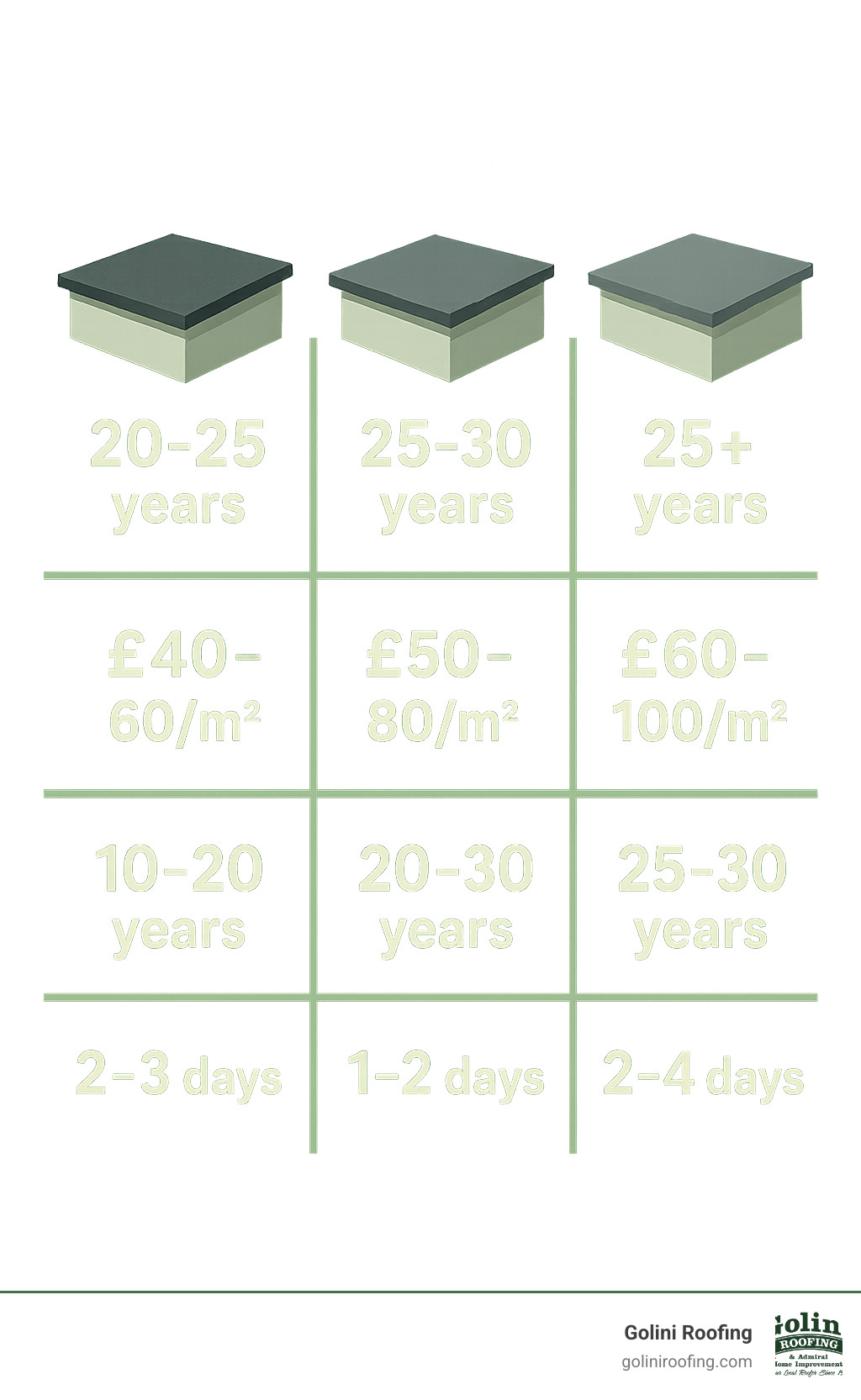
Felt roofing still holds its ground as the traditional choice for many homeowners. It’s like the reliable old friend of flat roofing—familiar, affordable upfront, and when installed properly, can protect your home for 20-25 years. The three-layer felt system has been keeping American homes dry for generations, though it does require more maintenance than modern alternatives.
EPDM rubber is the marathon runner of roofing materials. This single black membrane laughs at UV rays, shrugs off temperature swings, and keeps going strong for 25-30 years. Think of it as the athletic shoe sole of roofing—flexible, durable, and designed to handle whatever weather throws at it.
GRP/fibreglass creates a surface so seamless and tough, it’s practically the superhero of flat roofing. Once cured, this rigid system becomes virtually maintenance-free and can easily last over 25 years. It’s like having a boat hull protecting your home—completely waterproof and incredibly strong.
Liquid systems offer the flexibility to work around awkward roof shapes, pipes, and obstacles that would challenge other materials. These systems flow into every nook and cranny before curing into a seamless waterproof barrier. They’re particularly clever because they can often be applied over existing membranes, saving time and disposal costs.
The overlay vs strip decision often comes down to what’s hiding underneath. Overlays work brilliantly when the existing roof structure remains sound—you’re essentially giving your roof a new waterproof jacket. Complete stripping, while more expensive, lets us see exactly what we’re dealing with and fix any hidden problems lurking beneath.
Selecting the Right Material
Budget considerations need to look beyond the initial price tag. Yes, felt costs less upfront, but when you factor in its shorter lifespan and higher maintenance needs, premium materials often prove more economical over time. It’s like buying shoes—sometimes the expensive pair that lasts ten years costs less per year than cheap ones you replace annually.
Durability requirements depend largely on your specific situation. A roof that gets regular maintenance visits might handle different materials than one where you prefer a “fit and forget” approach. Consider how often you want to think about your roof over the next 25 years.
Aesthetics have become increasingly important as flat roofs evolve from purely functional to part of outdoor living spaces. Modern materials come in various colors and finishes that can complement your home’s style rather than detract from it.
Fire safety deserves serious consideration, especially in urban areas. Scientific research on fire-retardant roofing demonstrates how modern materials incorporate safety features that far exceed traditional felt performance, potentially affecting your insurance premiums too.
Step-by-Step Repair Process
Professional flat roof repairs massachusetts specialists follow a methodical approach that ensures lasting results. The site inspection phase goes far beyond the obvious leak spots—we’re looking for the story your roof is telling about stress points, drainage issues, and potential future problems.
Strip & re-board work reveals the truth about your roof’s condition. Sometimes what looks like a simple membrane problem turns out to involve damaged decking or inadequate insulation. It’s like renovating a kitchen and finding the plumbing needs updating too—better to know now than later.
Membrane installation is where craftsmanship really shows. Every seam, every edge detail, every penetration seal needs precise attention. This stage determines whether your roof will perform flawlessly for decades or develop problems within a few years.
Edge trims might seem like finishing touches, but they’re actually critical structural elements. These areas face the highest stress from wind uplift and thermal movement. Proper edge work prevents the membrane from gradually peeling away from the roof perimeter.
Quality checks before we pack up ensure everything meets professional standards. We verify membrane adhesion, test seam integrity, and confirm proper drainage flow. It’s like a final dress rehearsal before the roof faces its first real weather test.
How Long & How Much?
1-day patch jobs handle urgent repairs like small punctures or separated seams. These emergency interventions typically range from $300-$900 based on internet averages, though complex access or extensive damage can push costs higher.
2-3-day overlays involve installing complete new membrane systems over existing roofs. Internet data suggests costs between $960-$2,880, but premium materials or challenging roof layouts can increase these figures significantly.
Full replacement projects requiring 3-5 days include complete strip-out and rebuild work. Internet averages indicate $1,500-$5,400+ for complete roof replacement, though complex projects with multiple penetrations or structural repairs can exceed $7,200.
These are average costs based on internet data and not actual costs for Golini Roofing. Real project costs depend on specific roof conditions, material choices, access difficulties, and current market factors. More info about flat roof cost provides detailed guidance custom to your specific situation.
Repairing vs Replacing—Which Pays Off?
Short-term saving through targeted repairs makes perfect sense when damage remains localized and the underlying structure stays sound. A well-executed patch repair can extend roof life by 5-10 years at a fraction of replacement cost—like getting your car serviced instead of buying a new one.
Long-term peace-of-mind comes from complete replacement using modern materials and techniques. New roofs eliminate multiple potential failure points and provide decades of worry-free protection. There’s something deeply satisfying about knowing your roof won’t need attention until your mortgage is paid off.
Resale value benefits significantly from complete roof replacement, especially when upgrading to premium materials with transferable warranties. Potential buyers appreciate knowing they won’t face immediate roofing expenses, and modern systems can actually become selling points rather than concerns.
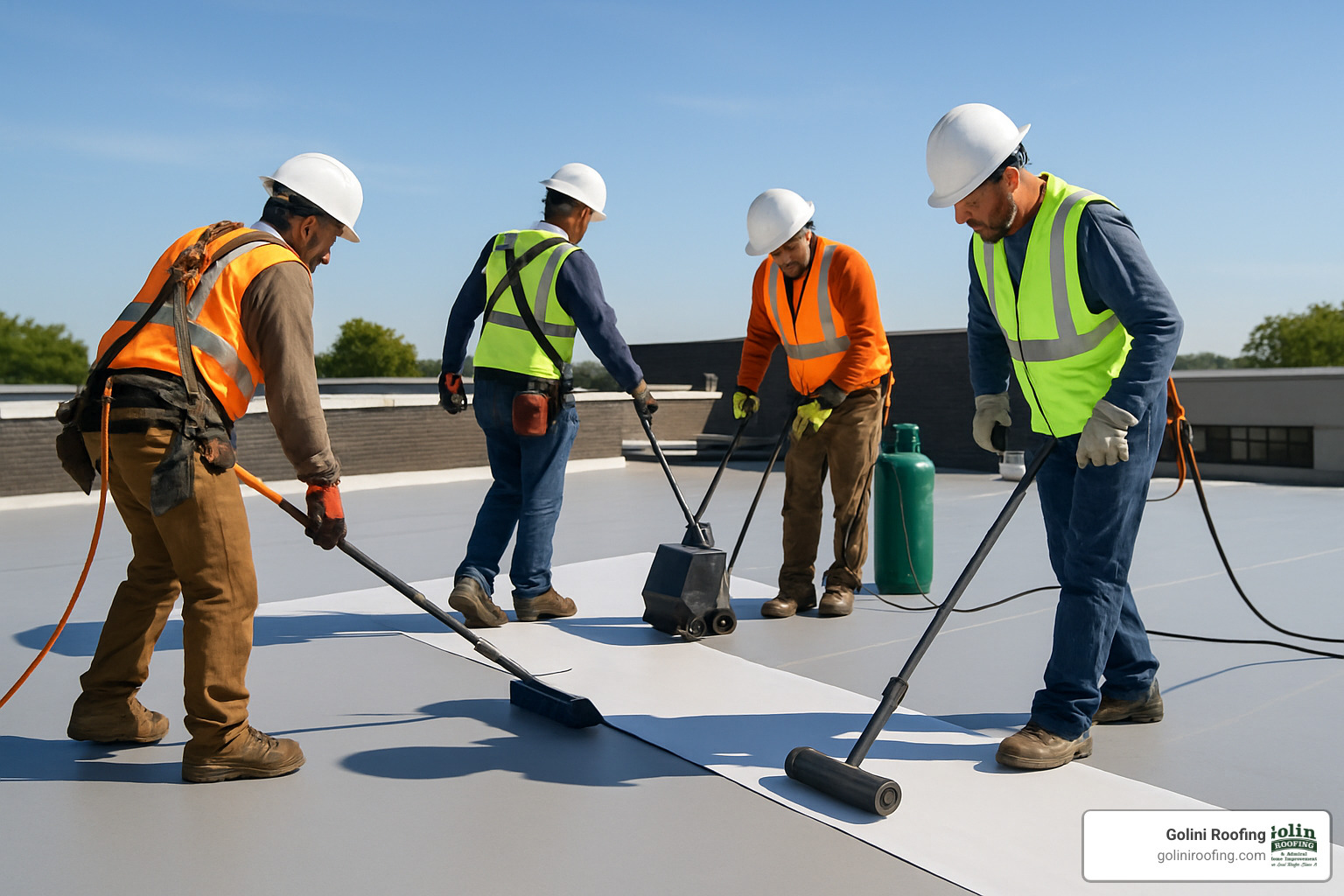
Keeping Your Flat Roof Fantastic: Maintenance, Energy Efficiency, Guarantees & Choosing a Specialist
Think of your flat roof like a car—regular maintenance keeps it running smoothly and prevents expensive breakdowns. Annual check-ups by roofing professionals catch small problems before they turn into wallet-draining disasters. These inspections typically cost a fraction of emergency repairs and can literally add years to your roof’s life.
Debris clearing might seem boring, but it’s your roof’s best friend. Those autumn leaves look harmless, but they’re actually moisture magnets that can slowly damage your membrane. Clear debris quarterly, and give your roof extra attention after storms when branches and other unwelcome visitors might have landed up there.
Modern flat roofs aren’t just about keeping water out—they’re energy powerhouses too. Insulation upgrades during roof replacement bring your home up to current building standards while slashing heating bills. Solar-ready roofs are becoming increasingly popular, letting you plan for renewable energy without compromising your waterproofing.
Quality materials and professional installation come with impressive 20-30-year warranties. These aren’t just marketing promises—they reflect genuine confidence in how long modern roofing systems actually last.
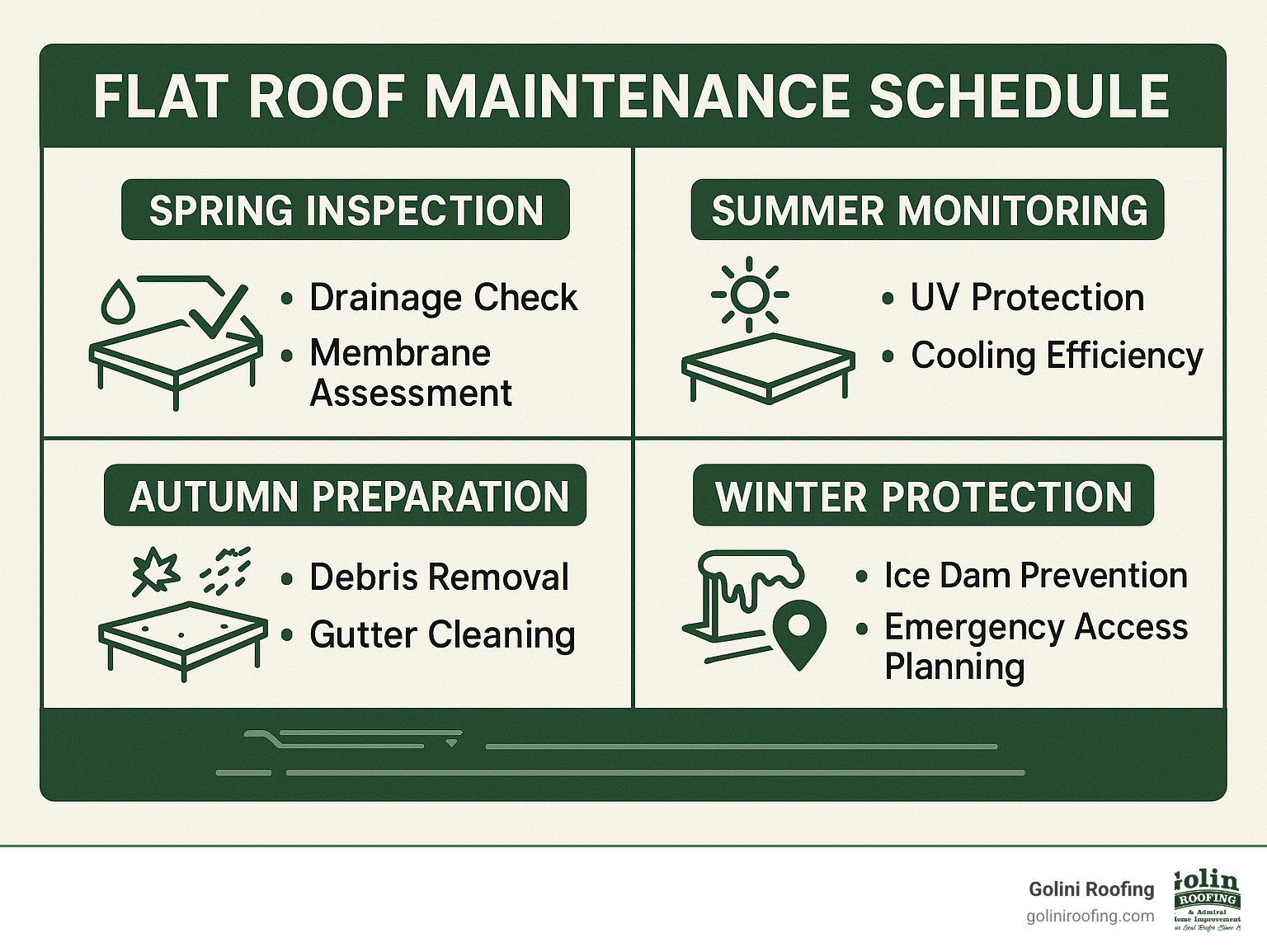
Pro Maintenance Tips
Seasonal inspections work best when you focus on different things throughout the year. Spring checkups reveal winter damage from ice and storms, while autumn preparations ensure your drainage can handle increased rainfall. It’s like giving your roof a seasonal health check.
Prompt patching saves serious money. Fix a small membrane tear for hundreds of dollars, or wait until water damage requires thousands in structural repairs. The choice seems obvious when you put it that way.
Drain cleaning prevents most emergency calls we receive. Blocked drains cause water backup that can overwhelm even perfectly good membranes. This simple maintenance task takes minutes but prevents major headaches.
Protective coatings give your roof an extra layer of defense against weather while potentially reducing cooling costs. Reflective coatings can make your roof significantly cooler during hot summer days.
Energy-Smart Flat Roofs
Warm-roof build-ups represent modern roofing at its finest. By placing insulation above the structural deck, these systems eliminate cold spots and condensation problems while keeping your home comfortable year-round.
Reflective membranes work like sunglasses for your roof. Light-colored surfaces can reduce roof temperatures by 20-30°F compared to dark materials, which translates directly into lower air conditioning bills.
Lower bills aren’t just a nice bonus—they’re a genuine benefit of energy-efficient roofing. Many homeowners find their improved roofs actually pay for themselves through utility savings over time.
Guarantees & Insurance Backing
Understanding warranty coverage helps you know exactly what protection you’re getting. Workmanship warranties cover installation quality, while material warranties protect against manufacturing defects. Both matter, but they cover different potential problems.
Transferability makes your home more attractive to buyers. When warranties transfer to new owners, it signals that your roof won’t become their immediate problem. Smart buyers appreciate this kind of peace of mind.
Insurance-backed guarantees provide an extra safety net beyond standard manufacturer warranties. Find out about insurance-backed guarantees to understand how these programs add another layer of protection to your investment.
Picking the Right Expert
Experience in flat roof repairs massachusetts area means understanding local weather patterns, building codes, and common challenges. Contractors who’ve worked locally for decades know what works and what doesn’t in your specific climate.
Accreditations from manufacturers and trade organizations show ongoing commitment to quality standards. These credentials aren’t just wall decorations—they represent real training and professional development.
24/7 emergency call-out services provide genuine peace of mind during severe weather. When storms hit at midnight, knowing qualified help is just a phone call away reduces stress considerably.
Clear quotes should spell out everything: materials, labor, timeline, and warranty coverage. Be wary of contractors who provide vague estimates or push for immediate decisions without giving you time to think.
Professional installation makes all the difference in flat roof performance. More info about flat roof replacement explains what to expect from experienced contractors who take pride in their craftsmanship.
Frequently Asked Questions – Flat Roof Repairs Massachusetts
How fast can emergencies be addressed?
Most reputable contractors offer 24-hour emergency response for urgent leaks. Temporary repairs can often be completed within hours to prevent further damage while permanent solutions are planned. Emergency doesn’t mean rushed—it means responsive.
Are winter repairs feasible?
Absolutely, though weather conditions may limit material choices and extend project timelines. Emergency repairs happen regardless of season because leaks don’t wait for spring. Major replacements might be scheduled for better weather when possible, but urgent problems get immediate attention.
Do repairs void existing warranties?
Not necessarily, but unauthorized repairs by unqualified contractors definitely can. Always consult your original installer or warranty provider before proceeding with repairs. It’s worth a phone call to protect potentially valuable warranty coverage.
Conclusion
Quality flat roof repairs massachusetts require expertise, proper materials, and attention to detail that separates lasting solutions from temporary fixes. The difference between a patch job and professional repair often determines whether you’ll face the same problems again next year or enjoy decades of worry-free protection.
When minor issues start appearing—those first damp spots, slight membrane blistering, or drainage concerns—acting quickly saves both money and stress. Today’s small leak can transform into tomorrow’s structural damage, ceiling collapse, or costly mold remediation project. The investment in prompt professional attention always costs less than emergency repairs during the next major storm.
Modern flat roofing technology offers homeowners incredible options. Whether you choose EPDM rubber for its flexibility, GRP fibreglass for seamless durability, or upgraded liquid systems for complex roof shapes, today’s materials provide 25+ year lifespans that our predecessors could only dream about. These aren’t your grandfather’s tar and gravel roofs—they’re sophisticated building systems designed for long-term performance.
At Golini Roofing, our 35 years of experience have taught us that hand-nailed craftsmanship and meticulous attention to detail create roofs that protect homes for decades. While we’re based in Massachusetts, the principles of quality roofing remain constant across all locations. Proper preparation, quality materials, and skilled installation deliver results that stand the test of time, whether you’re dealing with coastal moisture or inland temperature swings.
The peace of mind that comes from knowing your roof is properly protected extends far beyond just staying dry. Energy-efficient installations reduce utility bills, insurance-backed warranties provide long-term security, and quality workmanship increases your home’s resale value. These benefits compound over time, making professional roof care one of the smartest investments you can make.
Don’t wait for multiple leak points to develop or for that next major weather event to test your roof’s limits. Whether you need emergency patching, overlay installation, or complete roof replacement, choose contractors who demonstrate genuine expertise through decades of successful projects. Your home deserves protection that lasts, not quick fixes that fail when you need them most.
Take action now—inspect your flat roof using the checklists we’ve provided, address any concerns promptly, and establish a relationship with qualified professionals before emergencies arise. Your future self will thank you for the peace of mind that comes from knowing your roof is truly fantastic.
More info about roofing services can help you understand the full range of professional options available for protecting your most important investment—your home.
