
Flat Roofing Repair: 5 Proven DIY Fixes
Getting Started: Understanding Flat Roofing Repair
A drip, a damp spot. Flat roofing repair can feel overwhelming. Many homeowners think a leaky flat roof means a total replacement. Not always. Often, you can fix these issues yourself. This saves time and money.
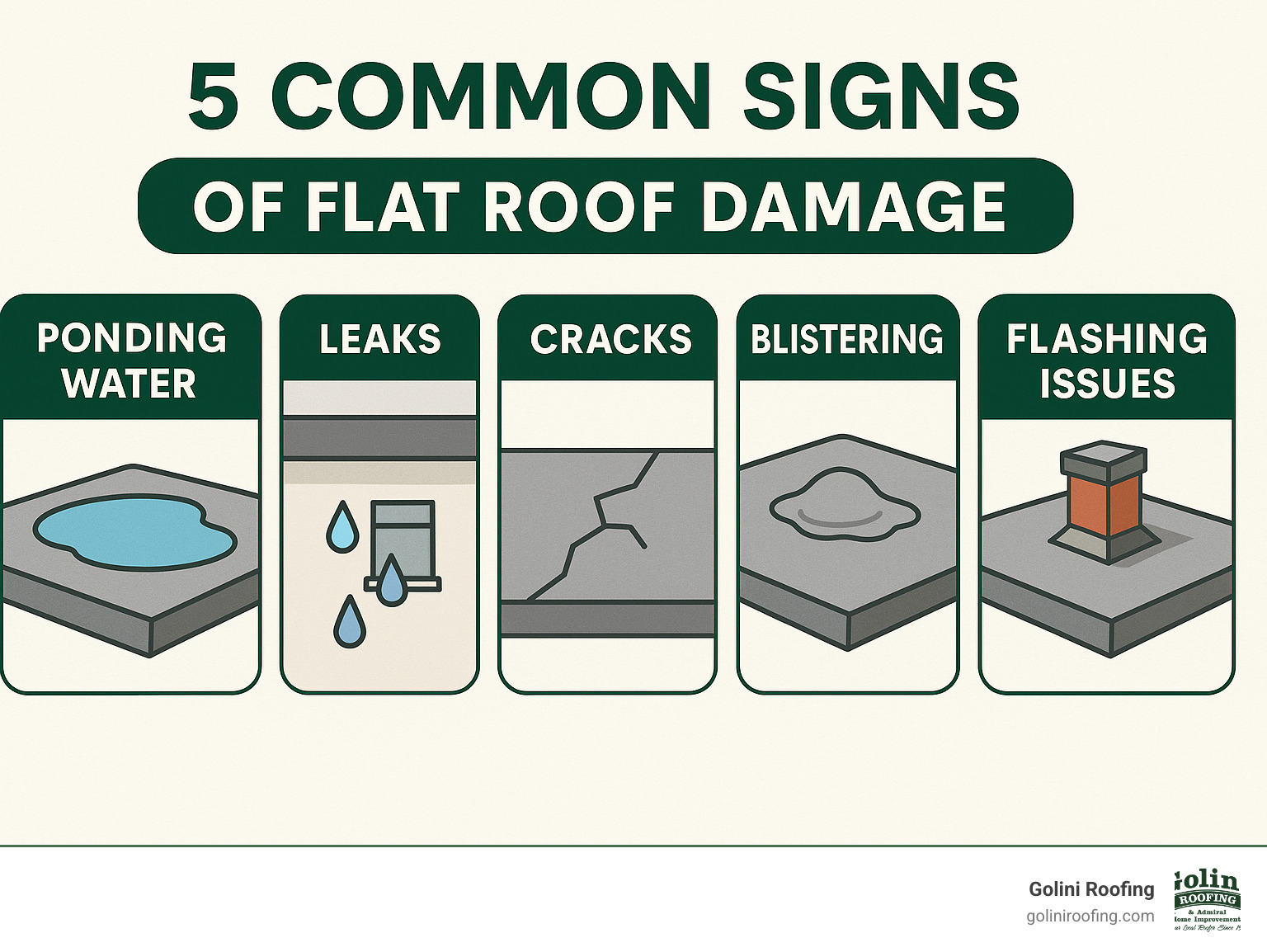
Here are the common signs that your flat roof needs attention:
- Water Pooling (Ponding): Puddles of water that don’t drain within 48 hours.
- Leaks and Interior Water Stains: Visible water dripping inside or discoloration on ceilings and walls.
- Cracks and Blisters: Visible splits, tears, or bubbles in the roof’s membrane.
- Damaged Flashing: Tears or detachment around chimneys, vents, skylights, or roof edges.
- Membrane Shrinkage: The roof material pulling away from walls or edges, creating gaps.
It’s often said that “There are only 2 types of flat roofs, those that are leaking and those that are going to leak!” While that’s a cynical view, it highlights how common flat roof issues can be. The good news is, many problems have straightforward fixes. This guide will show you how to tackle common flat roof repairs effectively and safely.
I’m Jack Golini, owner of Golini Roofing. With over 35 years of experience, I’ve seen how effective flat roofing repair can be in protecting homes and extending roof life.
Terms related to flat roofing repair:
Identifying the Problem: Signs and Causes of Flat Roof Damage
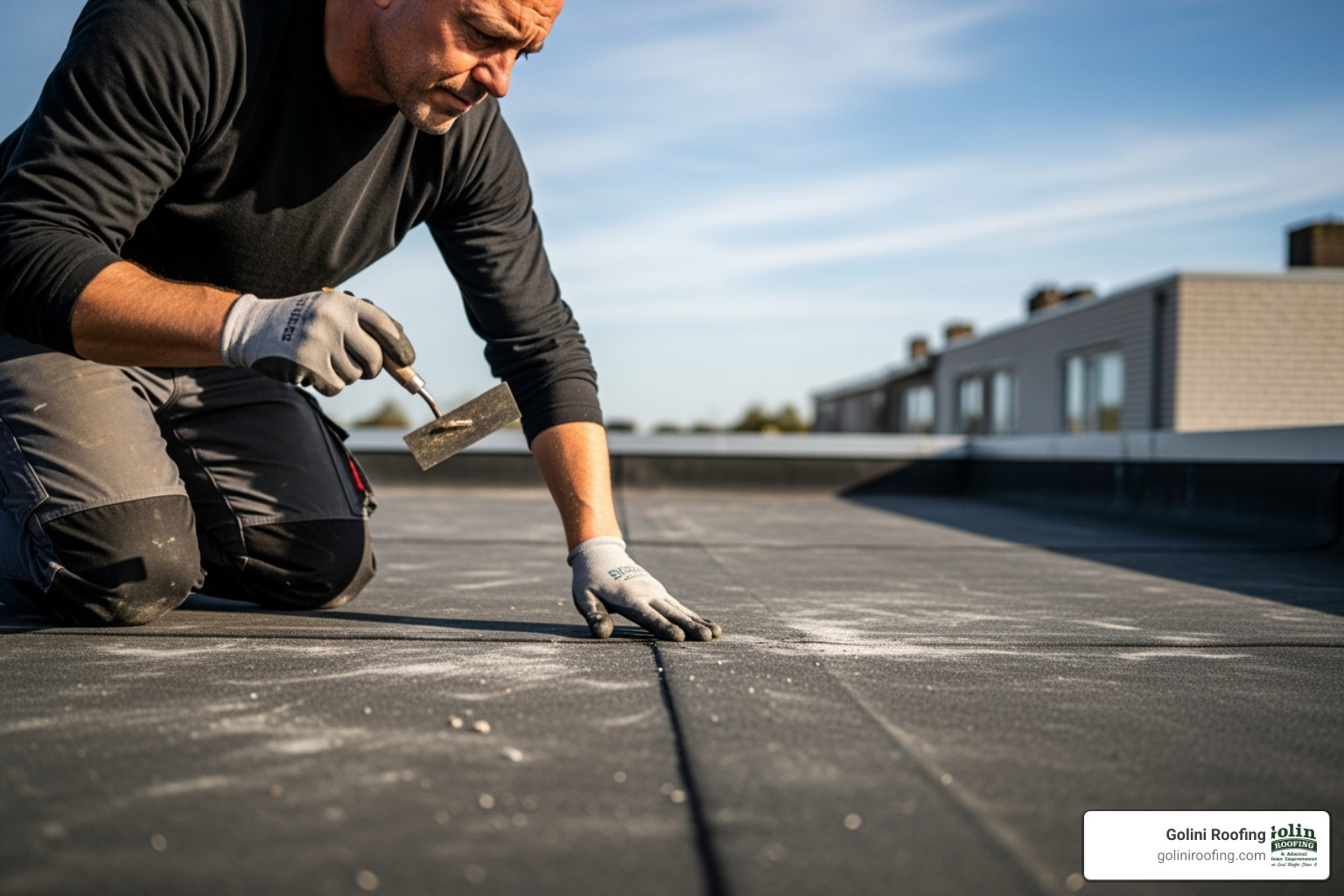
Understanding the root cause of damage is the first step in any successful flat roofing repair. It ensures you apply the right fix, not just a temporary band-aid. Common red flags like ponding water, visible leaks, cracks, blisters, or membrane shrinkage, and flashing issues are your roof’s way of signaling a problem that could threaten your home’s structural health.
So, what’s behind these issues? The main culprits causing flat roof problems are:
- Weather Exposure: The sun’s UV rays break down materials, while temperature swings cause cracks and blisters. Wind can lift roofing, and ice dams can force water into small openings.
- Poor Installation: Improperly sealed flashing around roof penetrations (like vents or chimneys) is a common entry point for water.
- Lack of Maintenance: Small issues like cracks or clogged drains can quickly escalate into major problems. Regular checks can save you headaches and money.
- Foot Traffic: Careless walking can puncture or tear the roof membrane, especially on roofs with HVAC units or patios.
- Age: Even the best materials degrade over time, becoming brittle and less effective.
Knowing these signs and causes is the most important step in successful flat roofing repair. For a deeper dive, our resources on roof inspections can be helpful.
Common Flat Roof Materials and Their Vulnerabilities
Flat roofs come in various materials, each with its own strengths and weaknesses. Knowing your roof type helps you choose the right repair method.
Here’s a quick look at the most common types:
| Material Type | Lifespan (Years) | Key Characteristics & Vulnerabilities |
|---|---|---|
| EPDM (Rubber) | 15-30 | A durable synthetic rubber sheet. It’s vulnerable to punctures from sharp objects and seam failures if not properly glued during installation. |
| TPO (Single-Ply) | 20-30 | A white, reflective membrane great for energy efficiency. Vulnerabilities include seam integrity issues if not welded properly and susceptibility to extreme temperatures. |
| PVC (Single-Ply) | 20-30 | A lightweight, reinforced, and flame-resistant single-ply. It’s highly durable but can still be punctured by sharp objects or debris. |
| Modified Bitumen | 12-25 | An asphalt-based material, often installed in layers. It’s durable but vulnerable to cracking or blistering from UV exposure and age. Torch installation carries a fire risk. |
| Built-Up Roofing (BUR) | 15-30 | A traditional system with multiple layers of asphalt and gravel. It’s heavy and durable but prone to ponding water if drainage is poor and requires specialized installation. |
While these materials are designed to last, expect to see signs of wear around the 12 to 15-year mark, especially without regular maintenance. A little TLC helps your roof reach its full potential lifespan.
A Step-by-Step Guide to Your First Flat Roofing Repair
Now that we understand the signs and materials, let’s get to fixing things. Safety is paramount when working at heights.
Safety First: What You’ll Need and How to Stay Safe
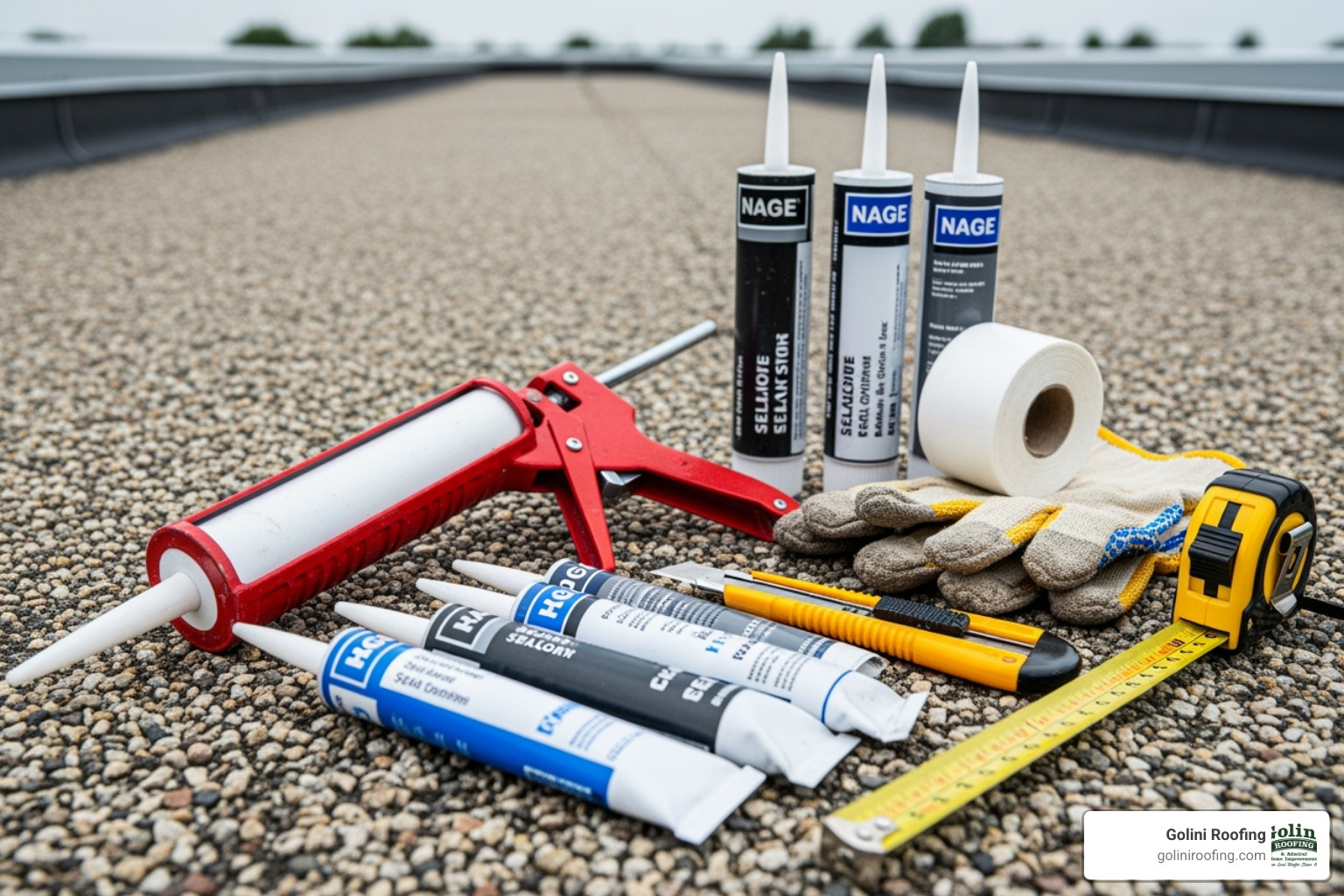
Before you start, gather your tools and prioritize safety:
- Safety Gear: Gloves, safety glasses, and sturdy, non-slip footwear are essential.
- Ladder Safety: Use a sturdy ladder on level ground, and have someone help steady it. Consider a safety harness for high roofs. Never work in wet or windy conditions.
- Tools: Utility knife, trowel, stiff-bristle brush, and cleaning supplies.
- Materials: Roofing cement, exterior-grade caulk, fiberglass mesh, and patching materials specific to your roof type (EPDM, TPO, PVC, Mod-Bit).
Always ensure the roof surface is clean and completely dry before any repair. Dirt or moisture will prevent materials from adhering properly.
Sealing Small Cracks and Holes (Under 1 Inch)
For minor damage like small holes and cracks (under 1 inch or 2.5 cm), a simple sealing method works well and can prevent larger problems.
Steps for Small Flat Roofing Repair:
- Clean and Dry the Area: Sweep away all dirt, gravel, and debris. The area must be completely dry for the sealant to bond.
- Apply Caulk or Roofing Cement: For tiny cracks, use exterior-grade caulk. For larger cracks, use a trowel to apply a thin layer of roofing cement (about 1/8 inch or 0.32 cm thick), spreading it 6 inches (15 cm) beyond the damage.
- Smooth and Seal: Use your trowel to smooth the cement, ensuring it’s even and completely covers the crack to create a watertight seal.
This simple repair can buy you valuable time and protect your roof from further water intrusion.
Patching Larger Holes and Blisters
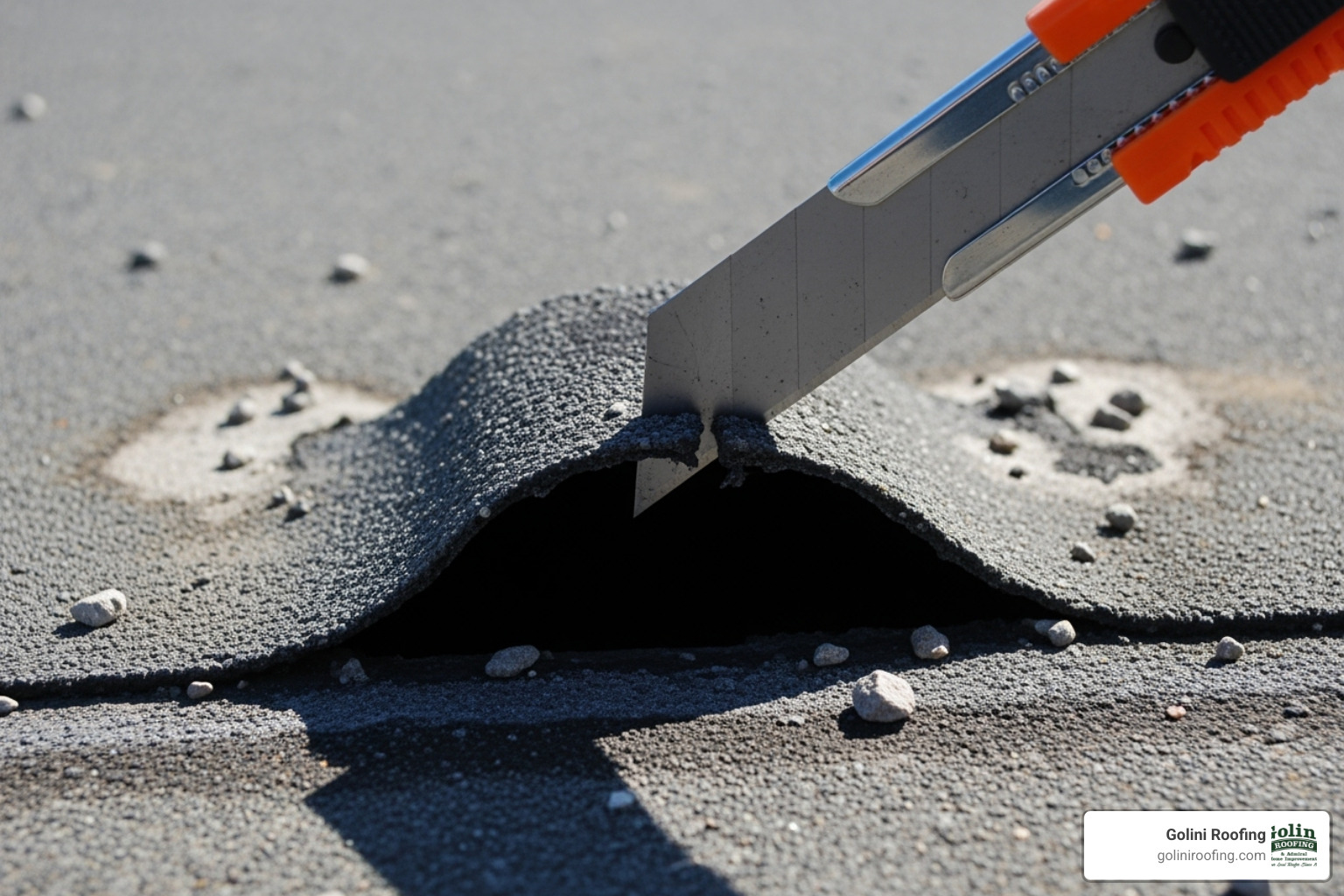
For larger rips, punctures, or blisters, a more robust patch is required. Blisters are bubbles caused by trapped moisture and heat.
Steps for an Advanced Flat Roofing Repair:
- Clean and Prepare: Ensure the damaged area is completely clean and dry.
- Address Blisters: Carefully slice open blisters in an ‘X’ shape with a utility knife. Peel back the flaps to let trapped moisture escape and dry completely. Cut out any damaged underlying material.
- Apply First Layer of Roofing Cement: Spread a generous layer of roofing cement 2 inches (5.1 cm) beyond the edges of the damage. For a blister, apply cement to the underside of the peeled-back flaps and press them down firmly.
- Lay Fiberglass Mesh (Optional but Recommended): For added strength, press a piece of fiberglass mesh, cut slightly larger than the damage, into the wet cement until it’s fully embedded.
- Apply the Patch: Cut a patch from material specific to your roof type that overlaps the damage by 6 inches (15 cm) on all sides.
- For EPDM roofs: Clean the area, apply a compatible adhesive to the patch and the roof, then press the patch firmly with a roller.
- For TPO and PVC roofs: Clean the area, apply the patch, and use a heat gun to weld it to the existing membrane for a strong, watertight bond.
- Apply Final Layer of Cement/Sealant: Cover the entire patch with another thick layer of roofing cement, about 1/2 inch (1.3 cm) thick, feathering the edges to blend with the roof surface.
- Curing Time: Allow the repair to cure fully according to the manufacturer’s instructions.
Patching is a more involved flat roofing repair, but it can significantly extend your roof’s life.
Beyond the Patch: Maintenance and Knowing When to Call a Pro
While DIY repairs can save you money, they are often temporary solutions. The goal is to protect your home for the long haul through preventative maintenance and knowing when to call in professionals.
Delaying flat roofing repair allows minor issues to escalate. Water can travel, causing hidden structural damage, rot, and mold growth. A small, inexpensive fix can quickly become a costly, extensive repair or even a full roof replacement, jeopardizing your building’s structure and value.
Preventative Maintenance That Saves You Money
Proactive maintenance is the best way to extend your roof’s life and prevent major headaches. It can add years to your roof’s lifespan, with some restoration techniques extending it by 10-15 years.
Here’s a simple maintenance plan:
- Regular Inspections: Check your roof twice a year (spring and fall) and after major storms for cracks, blisters, and ponding water.
- Debris Removal: Regularly sweep off leaves and branches to prevent moisture buildup and clogs.
- Gutter and Drain Cleaning: Keep all drainage systems clear to prevent ponding water.
- Checking Drainage: Confirm your roof has a slight slope to ensure proper water runoff.
- Trimming Overhanging Branches: Cut back branches that hang over your roof to prevent punctures and debris.
- Applying Reflective Coating: A protective coating shields your roof from UV damage, extending its life and improving energy efficiency. It’s a great way to buy time before a full replacement is needed.
Repair vs. Restoration: What’s the Difference?
It’s important to know the distinction:
- Flat Roof Repair: This involves fixing isolated issues like patching a hole or sealing a crack. It’s a targeted fix for immediate problems.
- Flat Roof Restoration: This is a more comprehensive process where a new, seamless membrane or coating is applied over the entire existing roof. This is done when the roof structure is sound but the surface is aging. Restoration can extend a roof’s life by 10-15 years, offering significant savings over a full replacement.
Essentially, repair is a fix, while restoration is a significant upgrade.
When to Skip the DIY and Hire a Professional
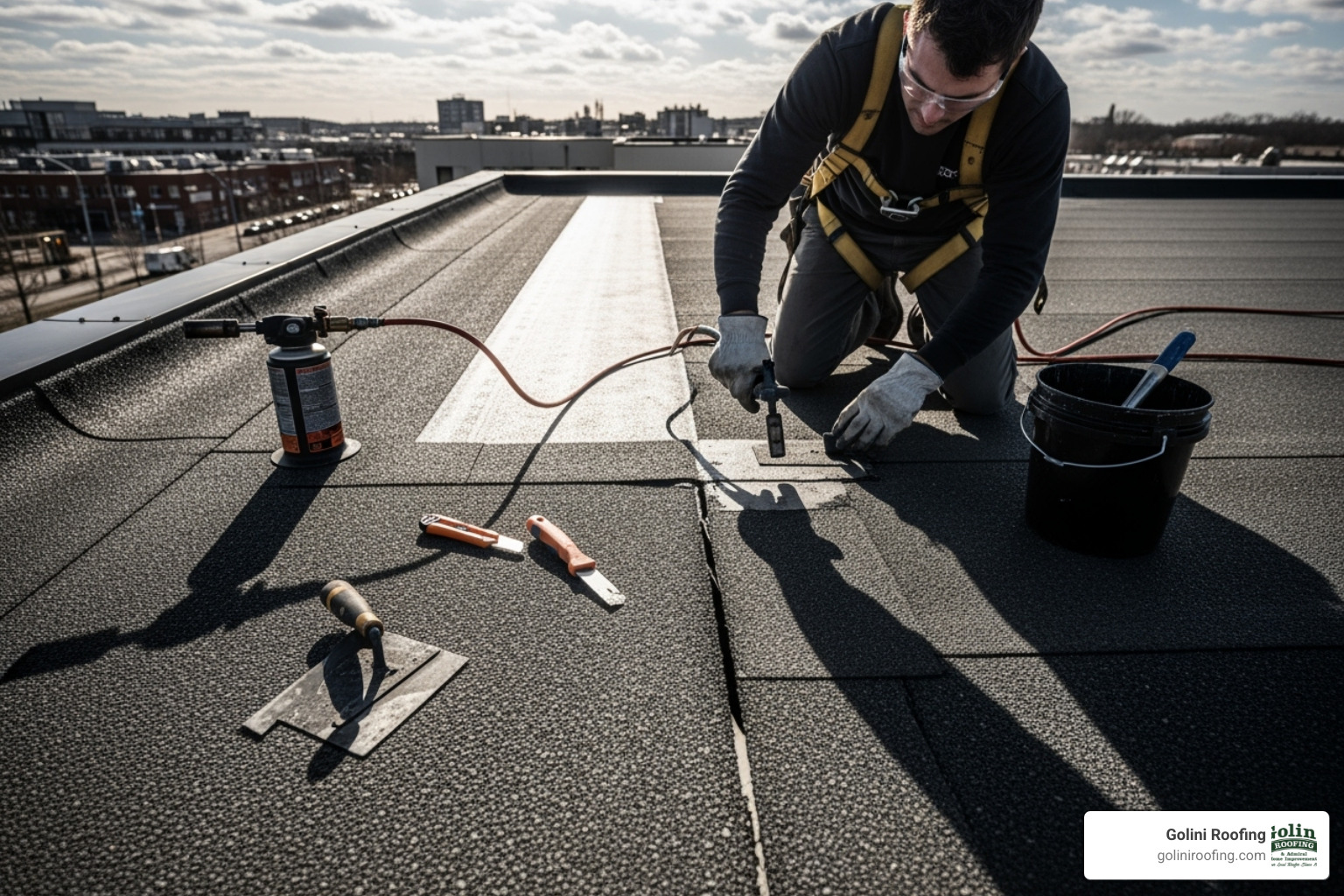
While we encourage minor DIY flat roofing repair, knowing your limits is crucial for safety and the health of your roof. Call a professional when:
- The Damage is Extensive or Structural: Large damaged areas, significant sagging, or suspected structural issues require a professional assessment.
- You Can’t Locate the Leak: Water can travel far from the entry point. Professionals use tools like infrared scanners to find tricky leaks not visible on the surface.
- Your Roof is Under Warranty: DIY repairs might void your warranty. Always check with the installer first.
- Safety Risks are Too High: If you’re uncomfortable with heights or conditions are poor, it’s safer to call a pro.
- Lack of Experience or Specialized Tools: Some materials (like TPO/PVC) require special equipment like heat welders.
Hiring an experienced flat roofing contractor provides expertise, quality workmanship, proper insurance, emergency roof repair services, and warranty protection for the repair. They bring peace of mind and ensure the job is done right.
Frequently Asked Questions about Flat Roof Repair
It’s natural to have questions about flat roofing repair. Here are some of the most common ones we hear from homeowners.
How long do flat roof repairs typically last?
The longevity of a flat roofing repair depends on the extent of the damage, the quality of materials, and the workmanship. A small, well-executed patch can last for years, but most repairs are considered temporary fixes. For instance, simply resealing a flat roof might extend its life by up to a year. A full restoration, however, can add an impressive 10-15 years to its lifespan. A properly maintained flat roof can last 20-25 years.
What are the biggest risks of delaying a flat roof repair?
Delaying repairs is risky. It can lead to severe structural damage, rotted wood, ruined insulation, and dangerous mold and mildew growth. What starts as a minor issue can quickly escalate into much more expensive repairs or even require a full roof replacement. It’s always better to address issues sooner rather than later.
Can I repair my flat roof in any weather?
No. Flat roofing repair requires dry, mild weather. Most sealants and adhesives need a clean, dry surface to bond correctly, and extreme temperatures can affect how they cure. Most importantly, for your own safety, never work on a roof during rain, snow, high winds, or icy conditions. A slippery roof is incredibly dangerous. If you have an emergency leak during bad weather, our team offers emergency services to provide a temporary solution until a permanent repair can be made safely.
Protecting Your Home and Your Investment
Well, there you have it! We hope this guide has given you a clear picture of how to approach flat roofing repair with confidence. It’s incredibly empowering to tackle those smaller issues yourself, isn’t it? And remembering to keep up with regular preventative maintenance is truly your very best defense against bigger, costlier problems down the road. It’s amazing how a little proactive care can save you so much hassle (and money!) in the long run.
However, just as important as knowing what you can do, is knowing when to step back and call in the experts. For extensive damage, those sneaky leaks that just won’t show themselves, or any concerns about your roof’s underlying structure, a professional assessment isn’t just helpful – it’s absolutely invaluable. Trying to DIY a major issue can sometimes lead to more headaches than it solves.
At Golini Roofing, we bring over 35 years of experience to every job. Our unique commitment to quality, like our meticulous hand-nailing techniques on every shingle, ensures that your flat roof receives the best possible care and a truly durable, long-term solution. We’ve seen it all, and we’re dedicated to protecting your home as if it were our own.
Whether your home is in Wakefield, Burlington, Lynnfield, North Reading, Reading, Stoneham, Wilmington, Winchester, or Woburn, we’re here to help you find the right solution. For a comprehensive evaluation of your flat roof’s needs and to understand all your options, including what goes into flat roof repair costs, please don’t hesitate to reach out. We’re committed to providing solutions that genuinely work, protecting your home and your investment for many years to come.
Like us on Facebook!
