Cost to replace a flat roof: Avoid 2025 Sticker Shock!
Why Understanding Flat Roof Replacement Costs Matters
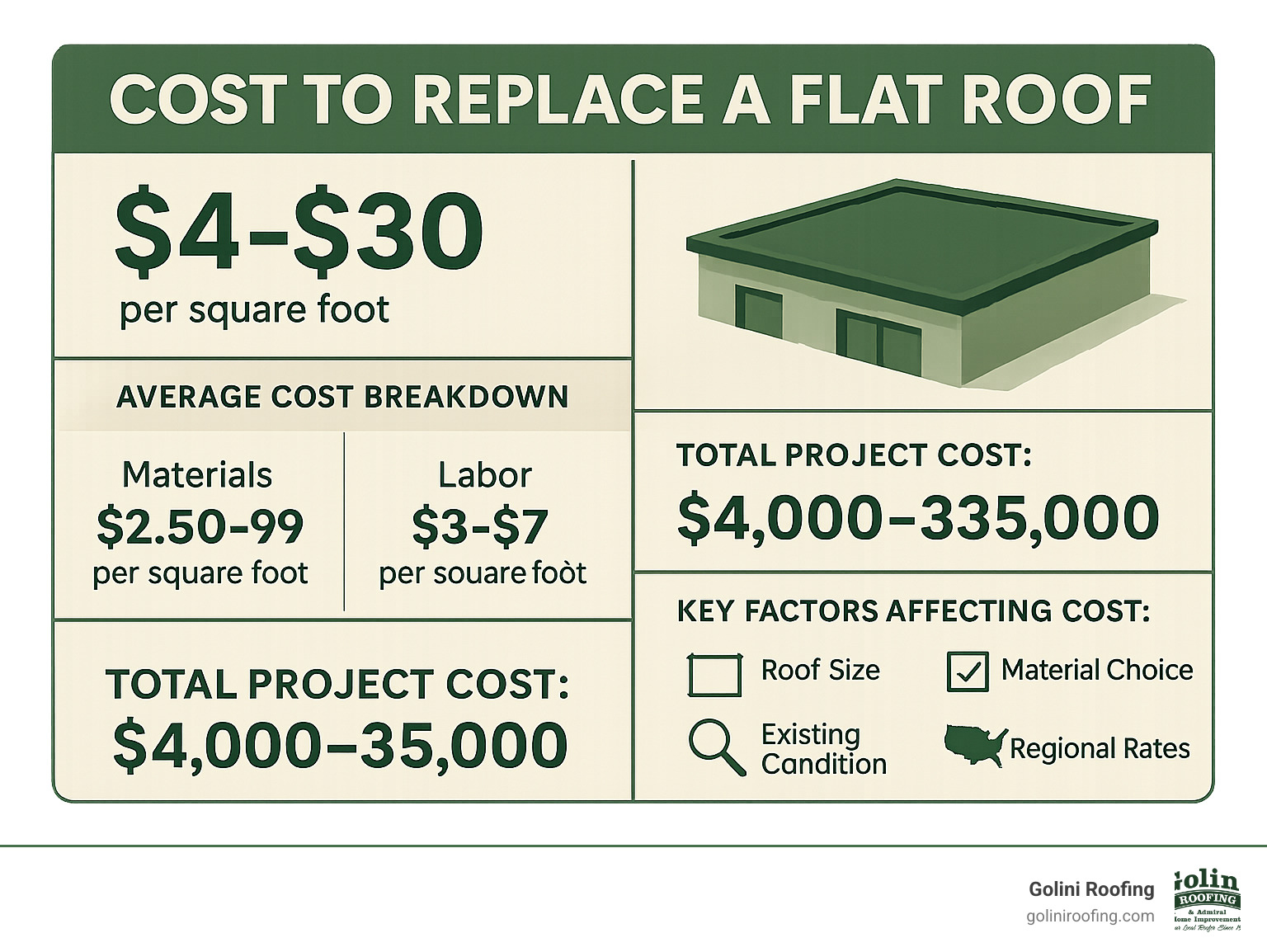
The cost to replace a flat roof typically ranges from $4 to $30 per square foot, with most homeowners spending between $6,000 and $22,500 for a 1,500 square foot roof. Facing a replacement can be daunting, especially with confusing online price ranges that don’t tell the whole story.
Average Cost Breakdown:
- Materials: $2.50 – $9 per square foot
- Labor: $3 – $10 per square foot
- Total Project Range: $4,000 – $35,000 (depending on size and material)
Note: These are average costs based on internet data and not actual costs for Golini Roofing.
Unlike pitched roofs, flat roofs require specialized materials and installation techniques, making their costs highly variable. The membrane material alone can range from basic modified bitumen at around $4 per square foot to premium PVC systems costing $12 or more. Hidden factors like the condition of the roof deck, drainage needs, insulation, and the complexity of vents or HVAC units also significantly impact the final price.
I’m Jack Golini, and for over 35 years, I’ve helped homeowners in the Wakefield, MA area steer the cost to replace a flat roof. I’ve seen how understanding the true costs upfront can save thousands and ensure a roof that lasts.
The National Average Cost of Flat Roof Replacement
Nationally, expect to pay between $4 and $15 per square foot for most flat roof replacements, though premium materials or complex jobs can push that figure to $30 per square foot or more. For a typical 1,500 square foot residential flat roof, the total project cost generally ranges from $6,000 to $22,500. However, projects can span from $4,000 for basic jobs to over $35,000 for high-end installations.
These are average costs based on internet data and not actual costs for Golini Roofing. Every roof is unique, which is why we always recommend getting a personalized assessment.
Typically, materials account for $2.50 to $9 per square foot, while labor runs between $3 and $10 per square foot. Labor often represents nearly half the total investment, which is why hiring experienced professionals is crucial for both quality and efficiency. You can find more details on our How Much Does It Cost To Replace A Flat Roof page.
Regional variations also play a huge role. In busy metropolitan areas, residential flat roofing can range from $12 to $40 per square foot, while commercial projects might run $9 to $30 per square foot, often benefiting from economies of scale on larger buildings. Whether it’s a Residential or commercial property, our team has the experience to handle both.
Understanding the Cost to Replace a Flat Roof by Material
Your choice of material is the single biggest factor affecting your project’s cost. Each option offers a different balance of price, durability, and long-term value.
| Material | Average Cost per Sq. Ft. ($) | Average Lifespan (Years) |
|---|---|---|
| EPDM (Rubber) | $4 – $13 | 15 – 30 |
| TPO | $3.50 – $14 | 10 – 25 |
| PVC | $6 – $20 | 20 – 30 |
| Modified Bitumen | $4 – $12 | 10 – 20 |
| Built-Up Roof (BUR) | $2.50 – $8 | 15 – 30 |
| Fiberglass/GRP | $4 – $12 | 25 – 30 |
| Metal | $3.25 – $30 | 30 – 80+ |
These costs are averages based on industry data and not actual prices for Golini Roofing. Prices fluctuate based on product lines, thickness, and market conditions.
Investing in higher-quality materials, such as a thicker membrane, often costs more upfront but saves money over time through improved durability and a longer lifespan. For a detailed breakdown, visit our Flat Roof Cost guide.
Key Factors That Determine Your Final Price
Beyond material choice, several factors influence the final cost to replace a flat roof.
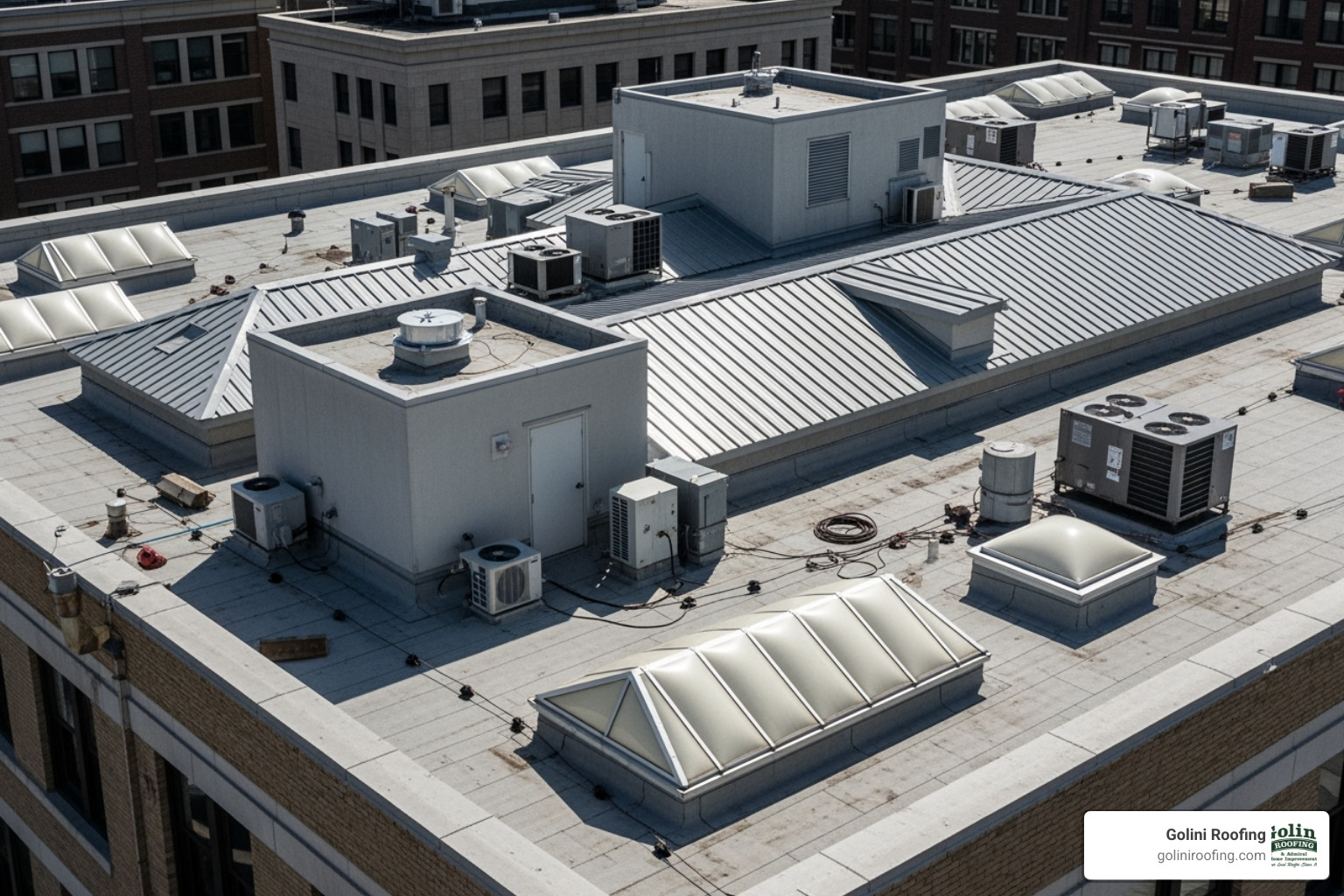
- Roof Size and Complexity: While larger roofs benefit from economies of scale, a complex design with skylights, vents, or HVAC units requires intricate labor that increases costs.
- Existing Roof Condition: A thorough Roof Inspection is vital. Rot, water damage, or structural issues must be addressed before installing a new roof, adding to the cost.
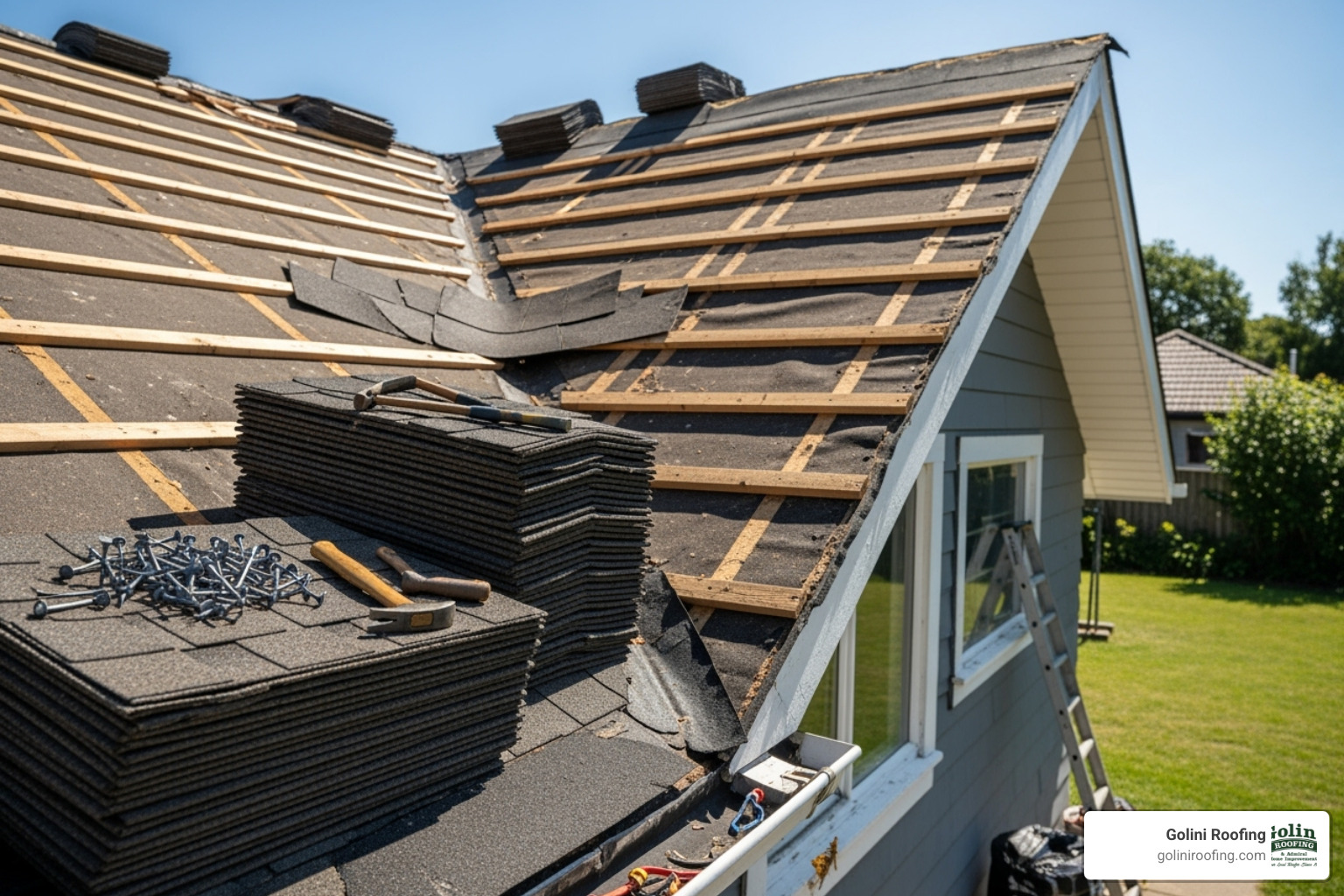
- Tear-Off vs. Overlay: An overlay (installing a new roof over the old one) can save $1-$2 per square foot initially. However, it’s risky, as it can trap moisture and hide damage. A full tear-off is usually recommended for long-term performance.
- Number of Layers: Removing multiple existing roof layers is labor-intensive and can add 30% or more to removal and disposal costs for each additional layer.
- Structural Repairs: Issues like rotted roof boards or inadequate drainage slopes must be fixed, often to meet modern building codes that require a minimum grade for drainage.
- Insulation: Flat roofs require proper insulation (e.g., tapered systems with PIR, EPS, or spray foam) to improve energy efficiency and prevent condensation. Higher R-value insulation costs more but provides greater energy savings.
- Roof Accessibility: Difficult access due to height, tight spaces, or overhead wires increases labor time and costs.
- Permits and Inspections: Most municipalities require permits, typically costing $200 to $700, plus inspection fees. We handle all necessary permitting for our projects.
A Breakdown of Popular Flat Roofing Materials
Choosing the right material for your flat roof depends on your budget, climate, and long-term goals. Think of it less as finding the lowest price and more as making a strategic investment in your home. The cost to replace a flat roof varies significantly by material, so let’s review the most popular options.
Note: The following costs are industry averages based on internet data and not actual prices for Golini Roofing. A personalized quote is necessary for accurate pricing.
EPDM (Rubber Roofing): A cost-effective and durable synthetic rubber membrane, EPDM is a longtime industry workhorse. It’s lightweight and stays flexible in extreme temperatures, perfect for the New England climate. The standard black color absorbs heat, but a more expensive white version is available. Expect to pay $4 to $13 per square foot for a roof that lasts 15 to 30 years.
TPO Roofing (Thermoplastic Polyolefin): The energy-efficient champion, TPO’s white surface reflects sunlight, potentially cutting summer cooling costs. Its heat-welded seams create incredibly strong, leak-resistant bonds. Quality varies by manufacturer, making professional installation key. Costs range from $3.50 to $14 per square foot, with a lifespan of 10 to 25 years.
PVC Roofing (Polyvinyl Chloride): The heavyweight champion of durability, PVC is highly resistant to punctures, chemicals, and grease, making it ideal for harsh environments. Its heat-welded seams are exceptionally strong. It’s a premium option, costing $6 to $20 per square foot for 20 to 30 years of protection.
Modified Bitumen: This asphalt-based material uses polymer additives for flexibility, making it great for handling foot traffic and freeze-thaw cycles. It’s a versatile and dependable option that costs $4 to $12 per square foot and lasts 10 to 20 years.
Built-Up Roof (BUR): Often called “tar and gravel,” BUR systems use multiple layers of asphalt and reinforcing fabrics. They are robust and offer excellent waterproofing and fire resistance but are heavy and messy to install. At $2.50 to $8 per square foot, it’s a budget-friendly choice with a lifespan of 15 to 30 years.
Metal Roofing: For low-slope applications, standing seam metal panels offer the best in longevity and durability. Metal is fire-resistant, energy-efficient, and can last 30 to 80+ years. The cost ranges widely from $3.25 to $30 per square foot, but it may be the last roof you ever buy.
We ensure proper disposal of all old materials. For more details, visit our Residential Flat Roof Details page.
Lifespan and Long-Term Value
Focusing only on the upfront price is a common mistake. Instead, consider the “lifetime cost.” A metal roof might cost more initially than modified bitumen, but it could last over twice as long, making it a better long-term investment.
Your roof comes with two warranties: a manufacturer warranty covering material defects and a workmanship warranty covering the installation. A reputable contractor’s workmanship warranty is crucial, as even the best materials will fail if installed improperly.
The secret to maximizing your investment is regular maintenance. Annual inspections, cleaning debris, and ensuring proper drainage can add years to your roof’s life and prevent costly water damage. For more on getting the best value, see our Flat Roof Replacement guide.
How to Save Money on Your Flat Roof Replacement
Managing the cost to replace a flat roof is possible without sacrificing quality. Here are some smart strategies to consider.
- Get Multiple Quotes: Obtain at least three detailed quotes from reputable local contractors. Compare not just the final price but the scope of work, materials, and warranties to ensure you’re getting a competitive rate.
- Consider Repair vs. Replace: If damage is localized and your roof is otherwise in good condition, a professional repair may be a cost-effective solution to extend its life. However, if repair costs exceed 50% of a replacement, or if damage is widespread, replacement is the better long-term investment. Learn more from our Flat Roof Repair Cost guide.
- Choose Long-Lasting Materials: Durable materials like PVC or metal have a higher upfront cost but a lower lifetime cost. They require less frequent replacement and maintenance, saving you money and hassle in the long run.
- Schedule in the Off-Season: Contractors are busiest in spring and summer. Scheduling your replacement for late fall or early winter may lead to better rates as contractors look to keep their crews busy.
- Prioritize Regular Maintenance: Proactive maintenance is the best way to prevent small issues from becoming major expenses. Keeping drains clear and addressing minor damage promptly can significantly extend your roof’s lifespan and prevent costly water damage.
DIY vs. Professional: Impact on the Cost to Replace a Flat Roof
While a DIY approach seems like a way to save on labor, it’s incredibly risky with flat roofs and can lead to much higher costs down the road. Here’s why hiring a professional is the smarter financial choice:
- Safety Hazards: Roofing is inherently dangerous. Professionals have the training and equipment to work safely at heights.
- Specialized Knowledge: Proper installation of flat roofing systems requires specific techniques, like heat welding seams, that are not easily mastered.
- Risk of Leaks: Improperly sealed seams or flashing are a primary cause of leaks, which can lead to devastating and expensive interior water damage.
- Voided Warranties: Most manufacturers require installation by a certified professional for their material warranties to be valid. A DIY job will likely void this protection.
Professional installation from our experienced crews ensures a faster, more efficient job with proper sealing and drainage. It comes with a workmanship warranty, giving you long-term peace of mind. While a small repair might be a DIY task, a full replacement is a complex job best left to experts who provide comprehensive Roof Installation Services.
How to Choose a Reliable Contractor and Get an Accurate Estimate
Finding the right contractor is as important as choosing the right material. A skilled professional ensures your cost to replace a flat roof is transparent and the result is a durable, long-lasting roof.
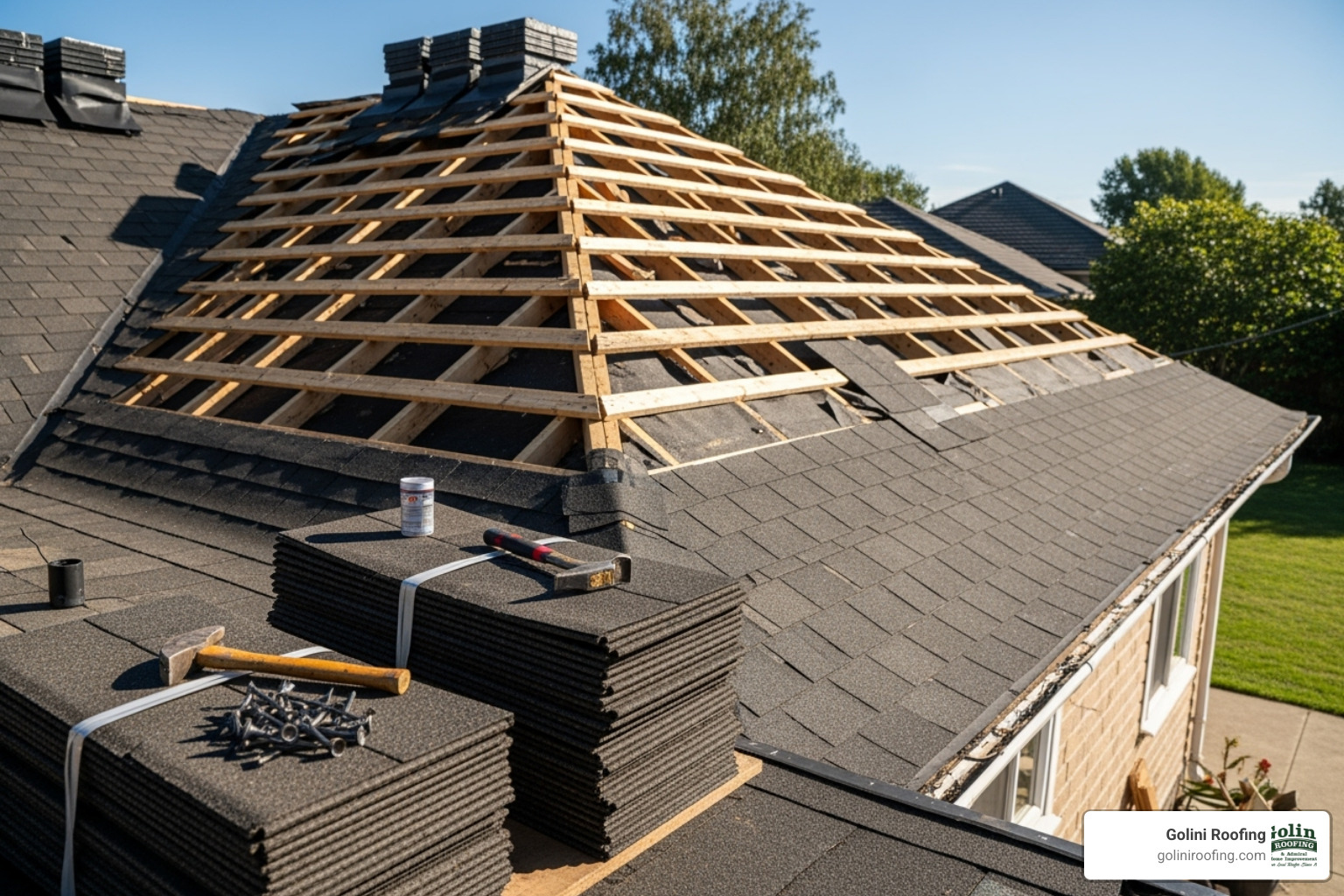
- Check License and Insurance: Your first step is to verify the contractor’s license to work in Massachusetts, along with comprehensive liability insurance and workers’ compensation. This protects you from liability. Golini Roofing is fully licensed and insured.
- Verify Local Experience: A contractor familiar with the Wakefield, MA area understands local building codes and how our New England climate affects flat roofs. Local contractors also have a community reputation to uphold.
- Read Reviews and Testimonials: Check independent platforms like Google and the Better Business Bureau for consistent feedback on communication, timeliness, and quality. A personal referral is even better.
- Ask for an Itemized Quote: A trustworthy contractor provides a detailed written estimate breaking down all costs: materials (brand and thickness), labor, removal/disposal, permits, potential repairs, and warranty information.
- Understand the Scope of Work: Ask questions until you are comfortable. Will it be a full tear-off? How will drainage be handled? A professional will patiently explain their process.
Be wary of these red flags that signal bad contractors:
- Unusually low bids that seem too good to be true.
- High-pressure sales tactics or demands for large upfront payments.
- Lack of a written contract or vague terms.
- Reluctance to provide proof of license or insurance.
Following these guidelines will help you find a reliable contractor. When you’re ready, you can search for Roofing Contractors Near Me. The right partner provides not just a roof, but peace of mind.
Frequently Asked Questions about Flat Roofs
With over 35 years in the business, we’ve heard every question about flat roofs. Here are answers to the most common ones that arise when homeowners are evaluating the cost to replace a flat roof.
How long does a typical flat roof last?
The lifespan of a flat roof depends heavily on the material, quality of installation, and maintenance. Here are some general expectations:
- EPDM, TPO, and PVC: These single-ply membranes typically last 15 to 30 years.
- Modified Bitumen and BUR: These asphalt-based systems generally last 10 to 30 years, depending on the specific system.
- Metal: The longest-lasting option, metal roofs can endure for 30 to 80+ years.
Our harsh New England climate, with its freeze-thaw cycles and heavy snow, puts significant stress on any material. This makes professional installation and regular maintenance essential for maximizing your roof’s lifespan.
Can you install a new flat roof over an old one?
While installing a new roof over an old one (an overlay or roof-over) is sometimes possible and cheaper upfront, we generally advise against it. Here’s why:
- Building Codes: Most local codes limit roofs to two layers maximum.
- Trapped Moisture: An overlay can trap moisture, leading to mold, rot, and structural decay.
- Hidden Damage: It prevents a proper inspection of the roof deck, potentially covering up serious issues.
- Reduced Lifespan: The new roof’s performance and longevity can be compromised by an unstable base.
A full tear-off, while adding to the initial cost to replace a flat roof, allows for a thorough inspection and provides the best foundation for a long-lasting, reliable new roof.
What are the most common problems with flat roofs?
Most flat roof problems stem from water not draining as effectively as on a pitched roof. Key issues to watch for include:
- Water Pooling: Also known as standing water, this is the biggest enemy. It occurs from improper slope or clogged drains, accelerating material deterioration and adding stress to the structure.
- Leaks at Seams and Penetrations: Seams between membrane sheets and flashing around vents, skylights, and pipes are the most common leak points, especially if not installed or maintained carefully.
- Blistering and Cracking: UV exposure and temperature fluctuations can cause the roofing membrane to bubble or crack over time, creating entry points for water.
- Flashing Failures: Damaged or improperly installed flashing at the roof’s edges is a primary cause of leaks.
Fortunately, proper installation and regular inspections can prevent most of these common problems.
Protect Your Investment with a Professional Replacement
Understanding the cost to replace a flat roof is the first step. The real value, however, comes from making a smart investment in your home’s long-term protection.
The final price is a balance of upfront cost and long-term durability. While a premium PVC or metal roof may seem expensive initially, you’re buying decades of protection and reduced maintenance, potentially saving you from future replacements.
But even the best materials will fail if not installed correctly. Quality installation is paramount. A professionally installed roof ensures proper drainage, watertight seals, and adherence to building codes—the essential elements that separate a roof that lasts from one that fails.
For over 35 years, Golini Roofing has provided expert Roofing Services in the Wakefield, MA area, ensuring every project is built to last. Our commitment to meticulous craftsmanship and transparent pricing has been our foundation. We understand your roof is more than a project; it’s protection for everything you value.
We never cut corners, always use quality materials, and stand behind our work with comprehensive warranties. Don’t leave your home’s protection to chance.
Contact us for a detailed and accurate estimate for your flat roof project. We’ll walk you through your options and help you make an informed decision that fits your budget and provides peace of mind for years to come.