
Gutter Installation Cost: Top 2024 Savings Guide
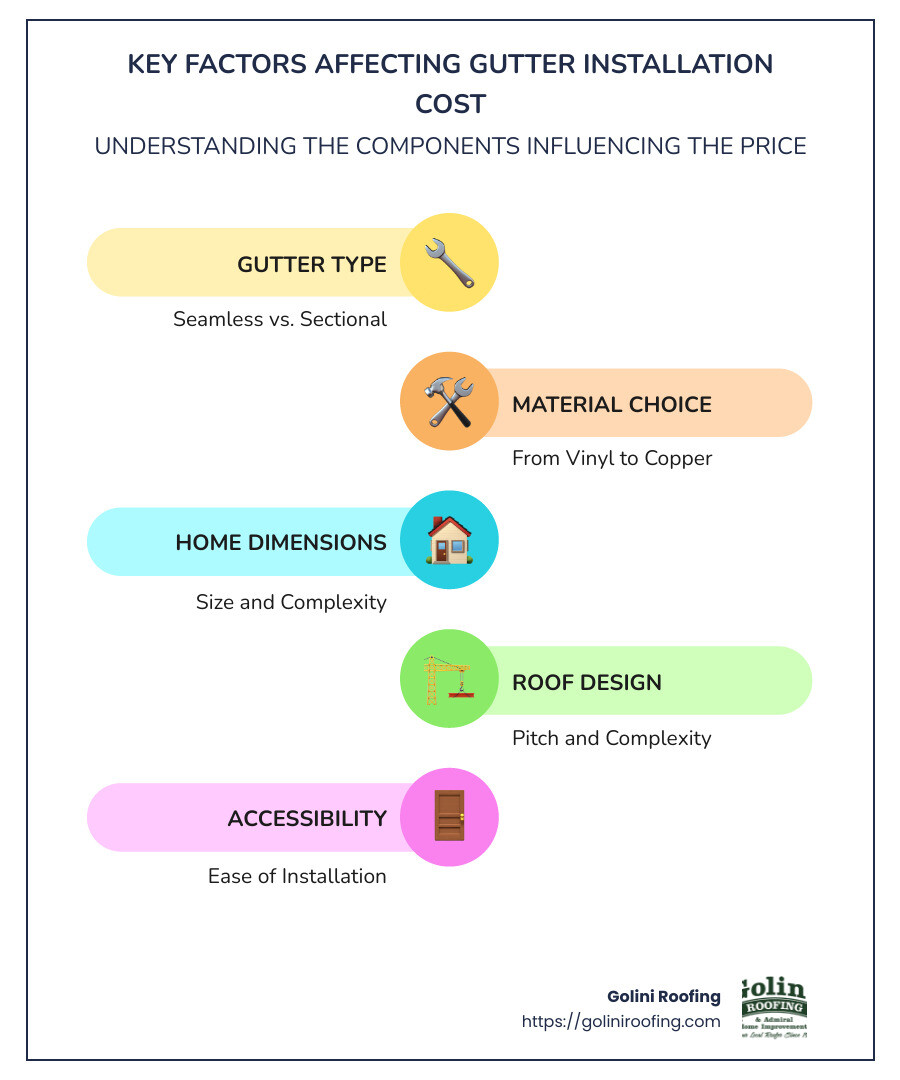
When considering new gutters for your home, understanding the gutter installation cost is essential. This cost can vary widely based on several factors:
- Gutter Type: Seamless options are more expensive upfront but offer longevity, while sectional ones are budget-friendly but require more maintenance.
- Material Choice: From low-cost vinyl to high-end copper, each gutter material has its own price point, impacting the overall cost.
- Home Dimensions and Roof Design: Larger homes or more complex rooflines increase installation difficulty, thus raising costs.
Investing in quality gutters is crucial for protecting your home from water damage, preserving its foundation, and ensuring the longevity of your roof and landscaping.
I’m Jack Golini, owner of Golini Roofing, with over 35 years of experience. My expertise ensures you have the right information on gutter installation cost for informed decisions.
Quick gutter installation cost terms:
– gutter replacement cost
– how much do gutters cost
– best gutter installation services
Average Gutter Installation Cost
When planning for gutter installation, understanding the cost is key. Prices can vary significantly, depending on several factors, including the materials you choose.
Cost Range
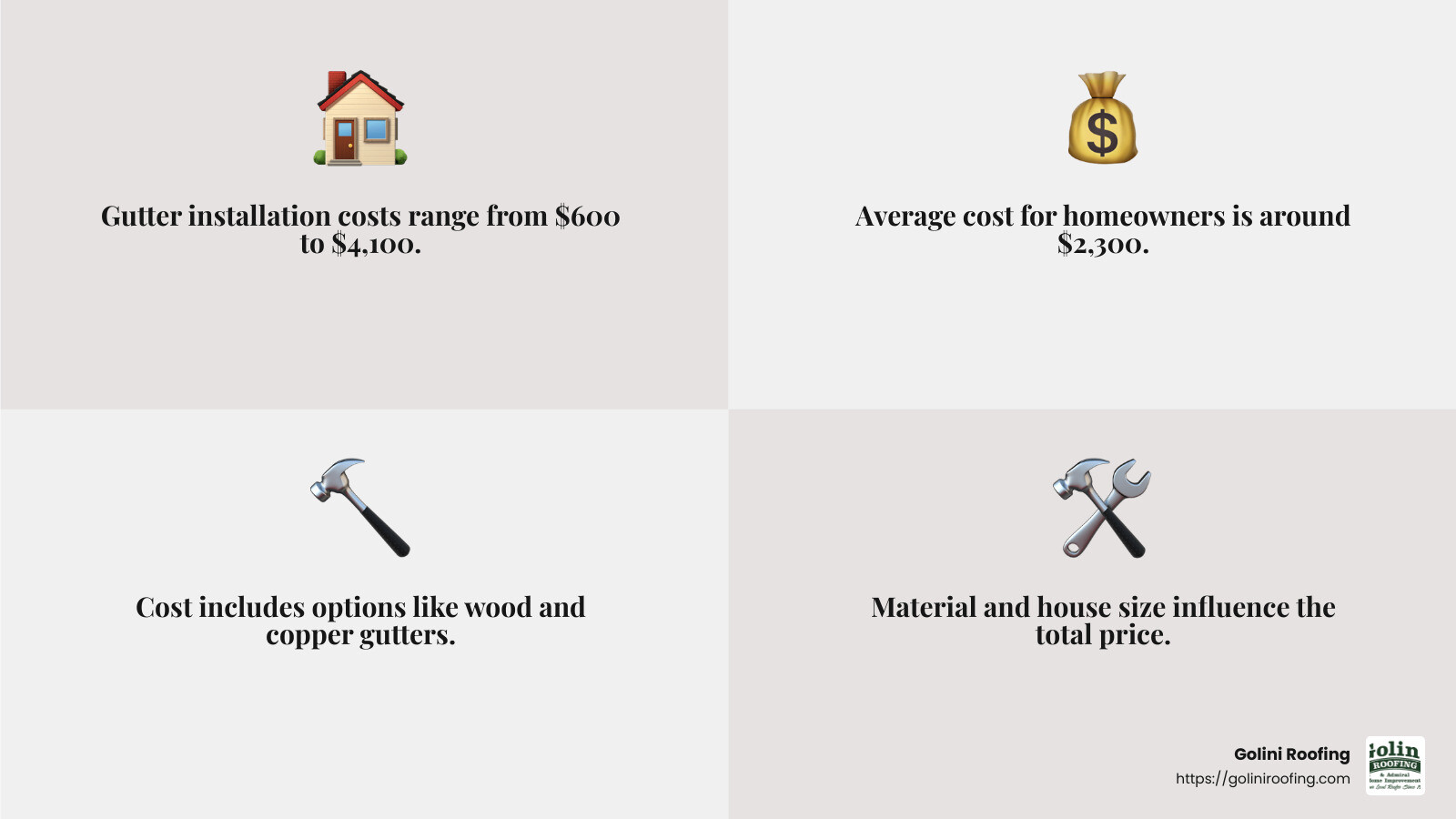
The cost of hiring a professional to install or replace gutters typically ranges from $600 to $4,100. This wide range accounts for different house sizes, materials, and additional services like downspouts and gutter guards.
Average Cost
Most homeowners spend an average of $2,300 on gutter installation. This figure includes more expensive materials like wood and copper, which can drive costs up.
Material Types
The type of material you choose for your gutters is one of the biggest factors influencing cost. Here’s a quick breakdown:
- Vinyl Gutters: The most budget-friendly option, costing $4 to $7 per linear foot. They’re easy to install but less durable.
- Aluminum Gutters: A popular choice with a good balance between cost and durability, priced at $5 to $15 per linear foot.
- Steel Gutters: More durable than aluminum, costing around $8 to $20 per linear foot. However, they require proper maintenance to prevent rust.
- Copper Gutters: A high-end option, costing $15 to $40 per linear foot. They offer durability and a unique aesthetic but need regular maintenance.
- Wood Gutters: The most expensive, ranging from $20 to $40 per linear foot. Often used in historic homes for their authentic look.
Each material has its pros and cons, so consider your budget and your home’s needs when making a choice.
Understanding these costs will help you plan your budget effectively and make informed decisions about your gutter installation project.
Next, we’ll explore the factors that influence these costs, including home size and roof complexity.
Factors Influencing Gutter Installation Cost
When it comes to determining the gutter installation cost, several factors come into play. Understanding these can help you anticipate expenses and make decisions that fit your budget.
Home Size
The size of your home is a significant factor. Larger homes require more linear feet of gutters, which increases both material and labor costs. For example, a small single-story home might need only 100 to 150 linear feet of gutters, while a larger two-story home could require 150 to 300 linear feet or more. This difference directly impacts the overall cost.
Roof Pitch
The pitch of your roof also affects the cost. Steeper roofs may require more complex gutter systems and additional labor to ensure proper installation. A steep roof often needs a gutter hanger system with spikes and ferrules, which can be more expensive than the screw-in hangers used for shallow-pitched roofs.
Roof Complexity
Complex rooflines with multiple valleys and angles demand more intricate gutter installations. This complexity not only requires more materials but also more time and expertise to install, which can drive up the price.
Accessibility
The accessibility of your roof can significantly impact installation costs. Multi-level homes or those with high peaks may require special equipment like scaffolding or lifts, adding to the labor expenses. In contrast, a single-story home with easy access will generally be less costly to outfit with new gutters.
Existing Hardware Condition
The condition of your home’s existing hardware, such as soffits and fascia boards, is another crucial factor. If these components are rotted or damaged, they will need repair or replacement before new gutters can be installed. This necessary prep work can add to the overall project cost but ensures a stable foundation for the new system.
Understanding these factors will help you budget more effectively and make informed choices when planning your gutter installation. Next, we’ll dive into the cost of gutters by material, exploring how your choice of material can further influence the installation expense.
Cost of Gutters by Material
When planning for new gutters, the choice of material is a major factor in determining the gutter installation cost. Different materials offer varying benefits and drawbacks, impacting both the initial investment and long-term value. Let’s break down the options:
Aluminum
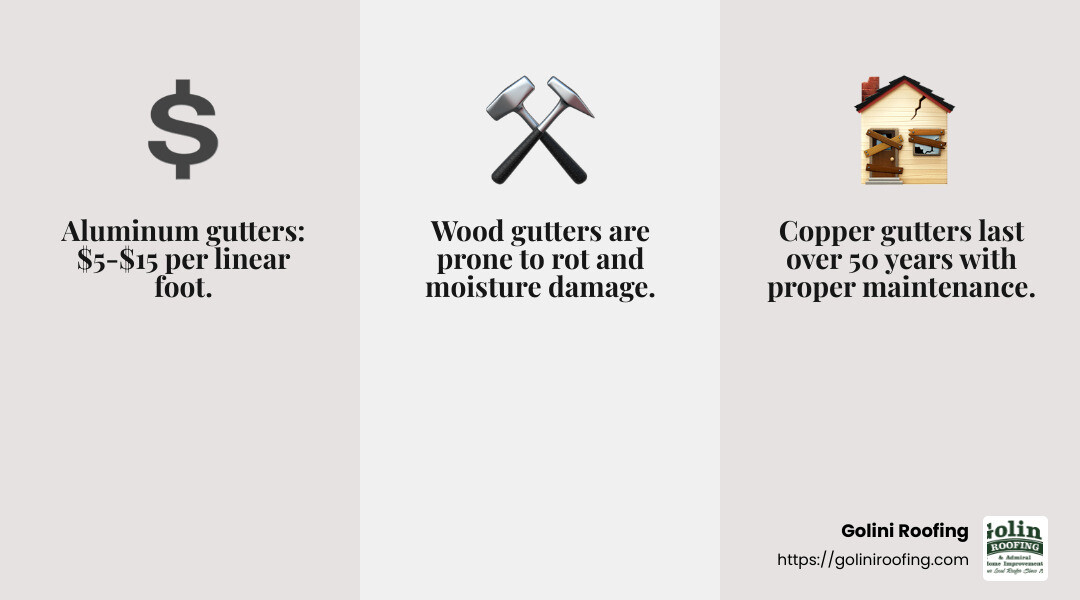
Aluminum gutters are a popular choice due to their balance of cost and performance. They range from $5 to $15 per linear foot. Aluminum is lightweight, easy to install, and resistant to rust, making it a cost-effective option. However, they can be prone to dents from debris and wind, which might require occasional repairs.
Vinyl
For those on a tighter budget, vinyl gutters offer the lowest upfront cost, ranging from $4 to $7 per linear foot. They’re easy to install and available in various colors. However, vinyl is less durable than metal options, often cracking in extreme weather. They typically have a shorter lifespan, so consider if the cost savings are worth more frequent replacements.
Copper
Copper gutters are the premium choice, known for their durability and aesthetic appeal. However, they come with a hefty price tag of $18 to $40 per linear foot. Copper is extremely durable, often lasting over 50 years with proper maintenance. Their striking appearance can add a touch of elegance to any home, but the initial cost is significantly higher than other materials.
Zinc
Zinc gutters are another high-end option, priced between $12 to $32 per linear foot. They develop a self-healing patina that hides scratches and prevents rust, offering longevity similar to copper. However, they are susceptible to staining from saltwater, making them less ideal for coastal areas. Despite the cost, their long lifespan can make them a worthwhile investment.
Stainless Steel
Stainless steel gutters are virtually indestructible, priced at $10 to $20 per linear foot. They resist dings, leaks, and severe weather damage. However, their weight makes installation more labor-intensive, potentially increasing labor costs. They are also not recommended for coastal environments due to potential corrosion from salty air.
Wood
Wood gutters are the most expensive, ranging from $20 to $32 per linear foot. They are chosen primarily for their aesthetic appeal, especially for historic homes. However, wood is prone to rot and moisture damage, requiring significant maintenance. While they can improve a home’s appearance, the upkeep and durability issues often make them less practical.
Each material has its pros and cons, affecting both upfront costs and long-term maintenance. Your choice will depend on your budget, aesthetic preferences, and the specific needs of your home. Next, we’ll explore the differences between sectional and seamless gutters, and how these choices can further impact your costs.
Sectional vs. Seamless Gutters
When selecting gutters for your home, you have two main options: sectional and seamless gutters. Each type has its own set of advantages and disadvantages, which can influence your gutter installation cost and long-term maintenance needs.
Sectional Gutters
Sectional gutters are made from smaller segments that are joined together during installation. These are often the go-to choice for DIY enthusiasts due to their simplicity and lower initial cost.
Pros:
– Cost-effective: Sectional gutters are generally less expensive upfront, making them a budget-friendly option.
– DIY-friendly: Their design allows for easier installation without professional help, saving on labor costs.
– Easy to replace: If a section gets damaged, you can replace just that part instead of the entire gutter system.
Cons:
– More seams: Each joint is a potential point for leaks and clogs, leading to more frequent maintenance.
– Durability issues: Over time, the seams can weaken, especially in areas with harsh weather, requiring more repairs.
Seamless Gutters
Seamless gutters are custom-made to fit the dimensions of your home, resulting in fewer joints and a more streamlined appearance.
Pros:
– Reduced leaks: With fewer seams, there’s a lower risk of leaks and clogs, which means less maintenance.
– Aesthetic appeal: Seamless gutters offer a cleaner, more polished look, enhancing your home’s curb appeal.
– Long-term savings: Though they cost more initially, their durability can lead to savings on repairs and replacements over time.
Cons:
– Higher initial cost: The custom nature of seamless gutters makes them more expensive upfront.
– Professional installation required: Due to their complexity, seamless gutters typically require professional installation, adding to labor costs.
Choosing the Right Type
The decision between sectional and seamless gutters will depend on your budget, DIY skills, and long-term maintenance preferences. If you’re looking for a short-term, cost-effective solution, sectional gutters might be the way to go. However, if you’re aiming for a durable, low-maintenance option with a sleek appearance, investing in seamless gutters could be more beneficial in the long run.
Next, we will dig into additional costs to consider, such as gutter guards and other accessories that can improve your gutter system’s performance.
Additional Costs to Consider
When planning for gutter installation, account for additional components that can improve the functionality and longevity of your gutter system. Here are some key add-ons to consider:
Gutter Guards
Gutter guards are designed to keep leaves and debris out of your gutters, reducing the need for frequent cleaning. Investing in high-quality guards like micro-mesh can be more cost-effective in the long run, despite their higher upfront cost. They prevent clogs and minimize maintenance, ensuring your gutters work efficiently.
Downspout Extensions
Downspout extensions help direct water away from your home’s foundation, preventing potential water damage. They are a simple yet effective addition to your gutter system, and they generally come at a low cost per extension. This small investment can save you from costly foundation repairs down the line.
Wire Mesh Screens
Installed at around $1 per linear foot, wire mesh screens are a budget-friendly option for keeping debris and pests out of your gutters. While not as effective as micro-mesh guards, they offer a basic level of protection that can reduce maintenance efforts.
Heat Tape
In colder climates, heat tape can prevent gutters from icing over, costing between $1 to $6 per linear foot. While it doesn’t stop ice dams, it can reduce the risk of ice-related damage to your gutters and roof.
Downspout Screens
Downspout screens, costing about $8 each, are crucial for preventing clogs in your downspouts by blocking debris. This can help maintain the efficiency of your gutter system, especially during heavy rainfalls.
Gutter Foam
Gutter foam is inserted into your gutters to block debris while allowing water to flow through. Priced at approximately $1.50 per linear foot, it is a short-term solution that typically lasts one to two years before needing replacement.
Rodent Guards
For about $5 each, rodent guards can be installed to stop pests from nesting in your downspouts, which can lead to blockages and damage. This is a small price to pay for keeping your gutter system free from animal interference.
Gutter Flashing
Gutter flashing is vital for directing water away from the roofline, preventing water damage. Expect to pay around $20 per length for this protective measure. Proper flashing can extend the life of both your roof and gutter system.
These additional costs can vary based on your home’s specific needs and location. Discussing these options with a professional can help you determine the best choices for enhancing your gutter system’s performance and longevity.
Next, let’s explore how gutter installation costs differ by state, highlighting the impact of regional factors on pricing.
Gutter Installation Cost by State
Gutter installation costs can vary significantly depending on where you live. Factors like labor expenses, material prices, and local demand greatly influence the overall cost. Here’s a closer look at how these costs differ across various states and regions.
State Averages
The average cost of gutter installation per linear foot can range widely. For example, in states like Idaho, prices can soar from $4.80 to $10.50, while in Tennessee, they are more budget-friendly, ranging from $3.42 to $4.13. This stark contrast highlights the importance of understanding local pricing when planning your gutter installation.
Regional Differences
Regional differences can also play a significant role in determining gutter installation costs. In metropolitan areas, labor costs tend to be higher due to increased demand and the higher cost of living. For instance, installing gutters in New York can cost between $4.97 and $6.02 per linear foot, reflecting the higher urban labor rates. Conversely, rural areas might offer more competitive pricing due to lower labor costs and less demand.
Urban vs. Rural
Whether you live in an urban or rural area can further impact the cost. Urban areas typically have higher labor rates, making the overall installation more expensive. In contrast, rural areas may offer lower labor costs but could incur additional charges for transporting materials over longer distances.
When planning your gutter installation, it’s wise to get multiple quotes from local contractors to ensure you’re getting a fair price. This approach allows you to compare costs and choose the best option for your budget and needs.
Understanding these state and regional cost variations can help you plan more effectively for your gutter installation project. Next, we’ll dig into the pros and cons of DIY versus professional gutter installation.
DIY vs. Professional Gutter Installation
When it comes to gutter installation, you have two main options: doing it yourself (DIY) or hiring a professional. Each approach has its own costs, pros, and cons. Let’s break it down.
DIY Costs
DIY gutter installation can be a cost-effective route if you’re handy and have some experience with home improvement projects. The main expenses include:
- Materials: Depending on the type of gutters you choose, materials can cost between $3 to $6 per linear foot for more budget-friendly options like vinyl or aluminum.
- Tools: You might need to invest in tools like a cordless drill, a hacksaw, and safety equipment, which can add up to around $100 to $200 if you don’t already own them.
Overall, going the DIY route can save you on labor costs, which often comprise up to 60% of the total project cost if you hire professionals.
Professional Costs
Hiring professionals for gutter installation ensures you get the job done right the first time. Here’s what to expect:
- Labor Costs: These can significantly add to your expenses, with professional installation often making up a large portion of the total cost. For example, labor can cost anywhere from $2 to $7 per linear foot.
- Total Cost: Including materials and labor, professional installation might range from $4 to $12 per linear foot, depending on the complexity of the job and the materials used.
Pros and Cons
DIY Pros:
– Cost Savings: Avoid labor fees.
– Flexibility: Work on your own schedule.
DIY Cons:
– Time-Consuming: It may take a full day or more.
– Skill Requirement: Requires precision and experience.
– Safety Risks: Working on ladders can be dangerous.
Professional Pros:
– Expertise: Professionals bring years of experience.
– Quality Assurance: Often come with warranties and guarantees.
– Safety: Trained to handle heights and tools safely.
Professional Cons:
– Higher Costs: More expensive due to labor fees.
– Schedule Coordination: Must align with the contractor’s availability.
Safety Considerations
Safety should be a top priority, whether you choose DIY or professional installation. Professional installers are trained in safety protocols, reducing the risk of accidents. If you opt for DIY, ensure you have the right safety gear and never work alone on a ladder.
In conclusion, while DIY installation can save money upfront, hiring professionals often provides peace of mind and long-term savings by avoiding potential drainage issues. Consider your budget, skills, and safety when deciding which route to take.
Next, we’ll address some frequently asked questions about gutter installation cost to help you make an informed decision.
Frequently Asked Questions about Gutter Installation Cost
How long do gutters last?
The lifespan of gutters largely depends on the material used and how well they are maintained. Aluminum and galvanized steel gutters typically last around 20 years. If you’re looking for something more durable, copper gutters can last 50 years or more. However, regular cleaning and inspections are crucial to prevent clogs and damage, which can shorten their lifespan. Gutters in areas with harsh weather conditions may need more frequent maintenance or replacement.
Is it cheaper to install your own gutters?
Yes, installing your own gutters can be cheaper since you save on labor costs. DIY installation typically involves purchasing materials like vinyl or aluminum, which can cost between $3 to $6 per linear foot. However, you should also consider the cost of necessary tools and safety equipment, which can add another $100 to $200. While the initial cost may be lower, DIY installation requires skill and can be time-consuming. Mistakes can lead to additional expenses down the line, so weigh the potential savings against the risks and your comfort level with home improvement projects.
Do new gutters increase your home’s value?
While new gutters might not directly increase your home’s market value, they can improve its curb appeal and functionality. Efficient gutters help prevent water damage, which is a major concern for homeowners and potential buyers. By showcasing that your home is well-maintained, new gutters can positively impact the perceived value of your property. This is especially true if they are part of a comprehensive water management system that includes features like gutter guards. Well-maintained gutters can prevent costly damage, which indirectly contributes to preserving or even boosting your home’s value.
Next, we’ll explore the additional costs you might encounter when installing gutters, including optional extras like gutter guards and downspout extensions.
Conclusion
Understanding the ins and outs of gutter installation cost can help you make informed decisions that benefit your home and wallet. From the choice of materials like aluminum and copper to the decision between DIY and professional installation, each factor plays a crucial role in the overall expense. It’s essential to consider not just the upfront costs, but also the long-term benefits and potential savings from reduced maintenance and increased home protection.
At Golini Roofing, we bring over 35 years of experience to every project, ensuring that your gutter installation is handled with the utmost care and expertise. Our commitment to quality craftsmanship means we carefully hand-nail each shingle, providing a durable and reliable roofing system that complements your gutters perfectly. We serve various areas in Massachusetts, focusing on delivering exceptional service and customer satisfaction.
Whether you’re looking to install new gutters or replace an old system, choosing the right contractor is key. Golini Roofing is here to guide you through the process, offering a seamless experience from consultation to completion. Our expertise ensures that your gutters not only improve your home’s functionality but also its aesthetic appeal.
Ready to improve your home with top-notch gutter installation? Contact Golini Roofing today for a free consultation and estimate. Let us show you why we are the trusted choice for roofing and gutter services in Massachusetts. Your home’s protection is our priority, and we look forward to working with you to ensure it stands strong for years to come.
