
How to Figure Roof Pitch: 3 Safe Pro Methods
What is Roof Pitch and Why it Matters?
Understanding how to figure roof pitch is a key skill for any homeowner planning a renovation or estimating material needs. In simple terms, it’s a measure of how steep your roof is.
Want to quickly figure out your roof pitch? Here’s how:
- Grab your tools. You’ll need a 12-inch level and a tape measure.
- Go to the attic or a safe spot on the roof. The attic is the safest option.
- Place the level. Hold the 12-inch level horizontally against the underside of a roof rafter.
- Measure the rise. From the 12-inch mark on your level, measure straight up to the rafter.
- Read your pitch. This vertical measurement is your “rise.” Your roof pitch is expressed as “rise” over 12. For example, a 6-inch measurement means a 6/12 pitch.
Your roof’s pitch is crucial. It affects drainage, material choice, cost, and how well your roof handles snow and rain.
I’m Jack Golini, owner of Golini Roofing. With over 35 years of experience, I’ve helped countless homeowners understand how to figure roof pitch and ensure their roofs are built to last.
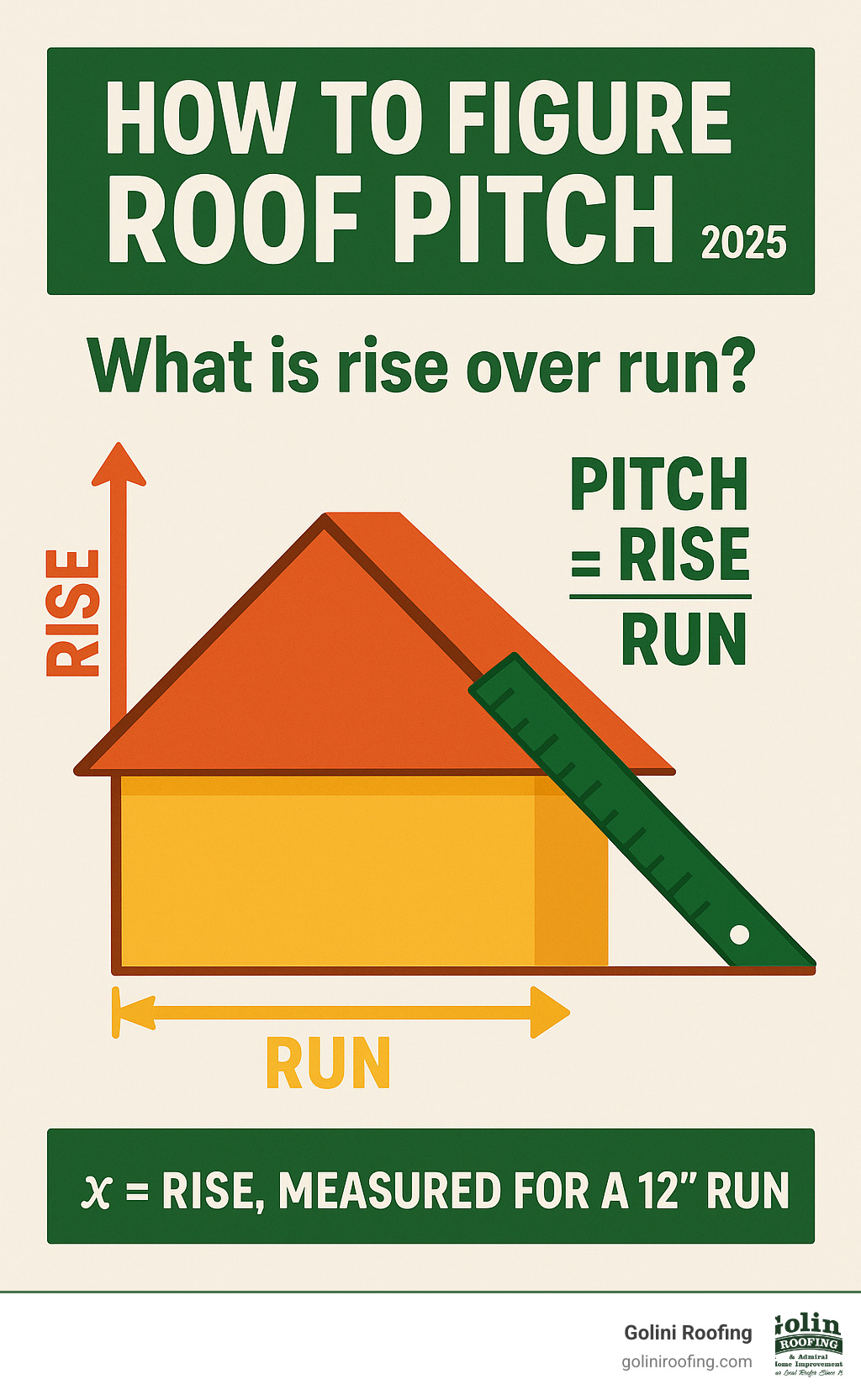
How to figure roof pitch terms made easy:
Understanding Roof Pitch Fundamentals
Roof pitch is simply a measurement of your roof’s steepness. It’s expressed as a ratio of the vertical “rise” for every 12 inches of horizontal “run.”
To understand how to figure roof pitch, you should know these terms:
- Rise: The vertical distance from the top of a wall to the roof’s peak.
- Run: The horizontal distance from the outside wall to the point directly under the roof’s peak (usually half the span).
- Span: The total horizontal distance from one outside wall to the other.
While technically different, “pitch” and “slope” are often used interchangeably in roofing to refer to the rise-over-run ratio (e.g., 6/12). For a deeper dive into the technical distinction, see Measuring Roof Slope and Pitch.
Knowing your roof pitch is vital because it impacts:
- Water Drainage: A proper pitch ensures rain and snowmelt drain effectively, preventing leaks and water damage.
- Structural Integrity: The pitch affects the framing required to handle loads like heavy snow and high winds.
- Material Costs: Steeper roofs have a larger surface area, requiring more materials and increasing costs.
- Energy Efficiency: Pitch can influence attic ventilation, which affects your home’s heating and cooling costs.
- Attic Space: A steeper pitch creates more usable attic space for storage or conversion.
- Aesthetics: The roof’s angle is a defining feature of your home’s architectural style.
At Golini Roofing, we know your roof is a critical protection system. Understanding its pitch is the first step in making smart decisions about its care. For more on materials, see What Are the 4 Main Types of Residential Roofing?.
Roofs are generally grouped into three categories based on pitch:
- Low-Pitch Roofs: A gentle slope of 3/12 or less. Even “flat” roofs have a slight pitch (at least 0.5/12) for drainage. They require special materials to prevent leaks.
- Conventional-Pitch Roofs: The most common range for U.S. homes, from 4/12 to 9/12. They are generally easier and safer to build and maintain.
- Steep-Pitch Roofs: A dramatic pitch of 8/12 or more. They excel at shedding water and snow but are more complex and costly to build and work on.
Advantages and Disadvantages of Different Pitches
Choosing a roof pitch involves balancing aesthetics, cost, and climate. The table below compares the key differences between low-pitch and steep-pitch roofs.
| Feature | Low-Pitch Roofs (3/12 or less) | Steep-Pitch Roofs (8/12 or greater) |
|---|---|---|
| Cost | Generally more budget-friendly to build; lower material costs | More expensive due to larger surface area, more materials, and labor |
| Walkability | Easier and safer to walk on for maintenance and installation | Often non-walkable, requiring special safety equipment and higher labor costs |
| Drainage | Slower water drainage; higher risk of pooling and leaks | Excellent water and snow shedding; minimal risk of pooling |
| Attic Space | Limited attic space; often requires less heating/cooling | Provides more usable attic space or potential for vaulted ceilings |
| Lifespan | Can be shorter due to increased exposure to standing water/debris | Often longer lifespan due to efficient water shedding and less exposure to wear |
| Aesthetics | Modern, sleek appearance | Dramatic, traditional, often architectural focal point |
| Material Suitability | Requires specialized low-slope materials (e.g., EPDM, TPO) | Compatible with a wide range of materials (e.g., asphalt shingles, tiles, slate) |
Low-pitch roofs offer a modern look and are easier to maintain, but they have a higher risk of drainage issues and require specific materials. If you need information on replacing one, visit Flat Roof Replacement.
Steep-pitch roofs provide excellent drainage, a longer lifespan, and more attic space, but they come with higher construction and labor costs due to their complexity and safety requirements.
How Climate and Architecture Influence Roof Pitch
Your home’s roof pitch is a practical choice influenced by local climate and architectural style.
Climate Factors:
- Snow Load: In snowy regions like Massachusetts, a steeper pitch (at least 6/12 or 7/12) is crucial for shedding snow and preventing heavy, damaging loads.
- Heavy Rain: Steeper pitches drain heavy rain more efficiently, reducing the risk of water intrusion.
- High Winds: A moderate pitch (between 4/12 and 6/12) is often considered ideal for windy areas, as it offers good resistance to wind uplift forces.
Architectural Styles:
- Colonial: Often feature medium to steep pitches (e.g., 8/12 or 9/12).
- Ranch-Style: Typically have low to medium pitches (e.g., 3/12 to 5/12).
- Modern: Frequently use very low-slope or flat roofs for a minimalist aesthetic.
Building Codes:
Local building codes, like the International Residential Code (IRC), set minimum pitch requirements for different roofing materials to ensure structural safety and proper drainage. Always consult a professional to ensure your project is compliant.
How to Figure Roof Pitch: 3 Safe & Simple Methods
Now, let’s get into the “how.” You can measure your roof pitch in several ways, but safety should always be your top priority, especially when working at heights.
Safety Precautions:
Always use a sturdy, properly placed ladder. When on the roof, use fall protection like a safety harness, especially on steeper pitches. In the attic, watch for exposed nails, use good lighting, and only step on secure joists. Wear protective gear like gloves and a hard hat.
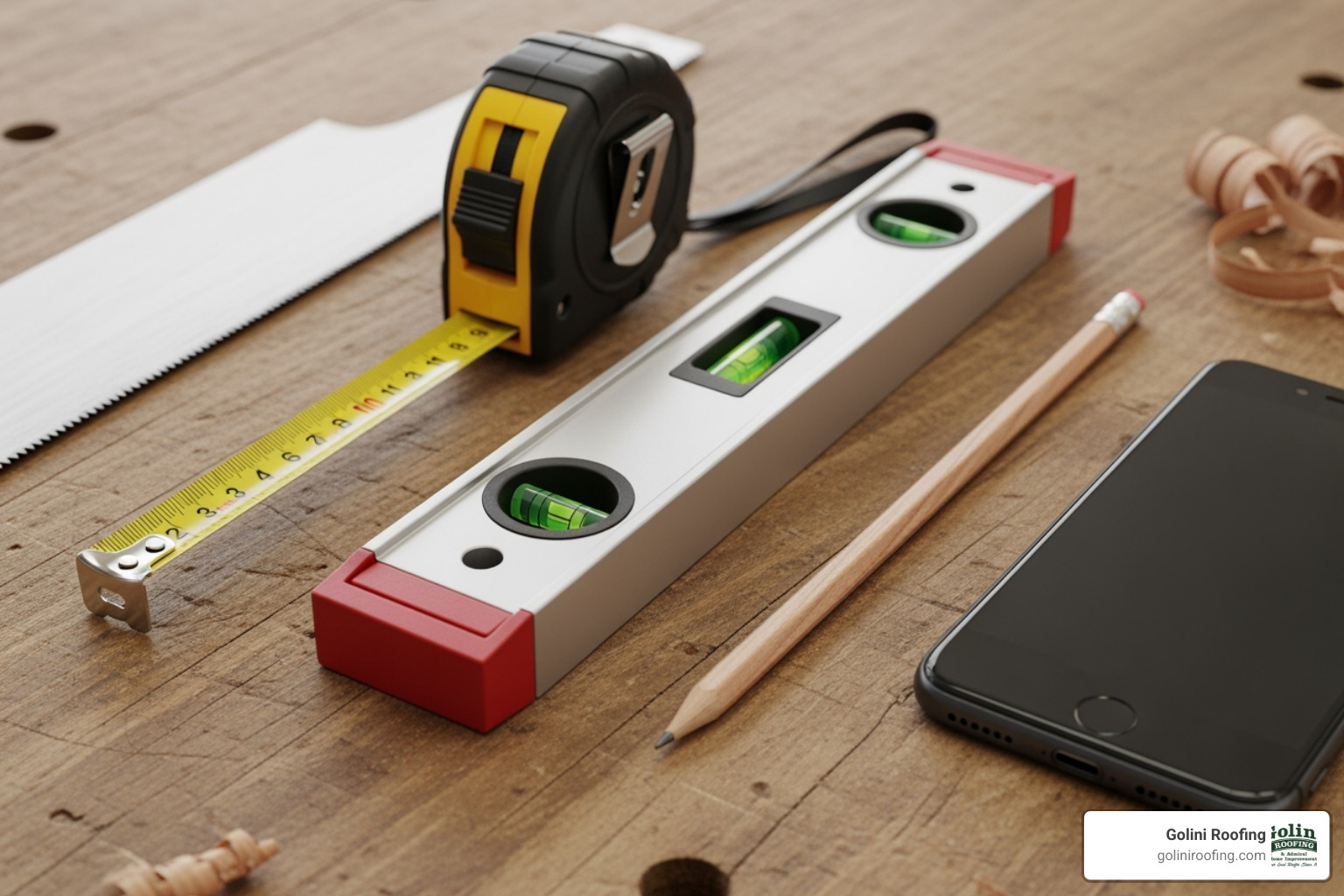
Essential Tools for How to Figure Roof Pitch
Before you start, gather these tools:
- Tape Measure
- Level (12-inch or 24-inch)
- Pencil and Paper
- Smartphone with a Pitch-Finder App: Apps like the Roof Pitch Factor App use your phone’s sensors to measure angles.
- Safety Gear
Method 1: Measuring from the Attic (The Safest Way)
This is our preferred method for homeowners because it avoids the risks of climbing onto the roof.
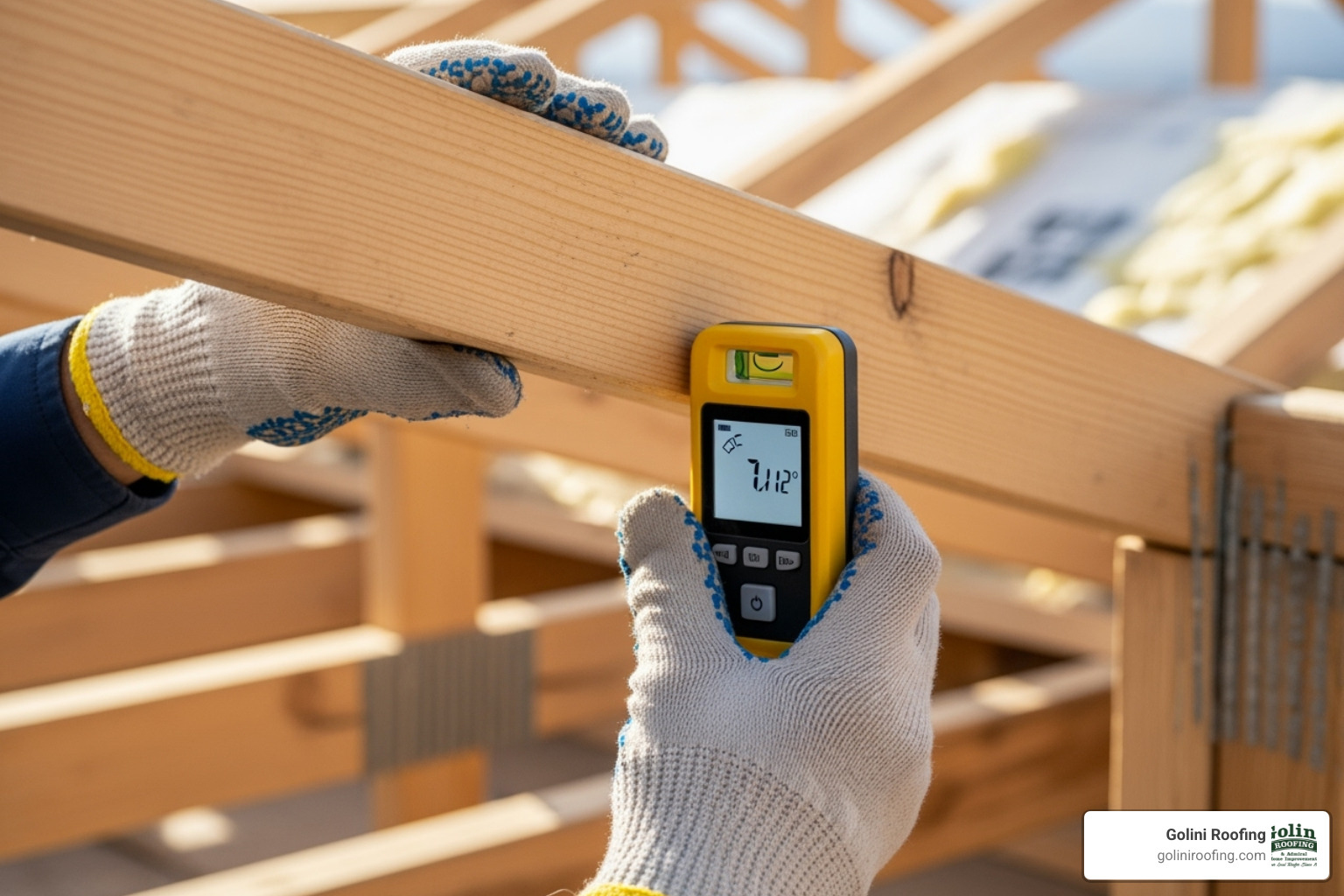
Step-by-Step Instructions:
- Access the Attic: Safely enter your attic and ensure it’s well-lit.
- Locate a Rafter: Find an exposed, angled roof rafter.
- Position Your Level: Hold a 12-inch level horizontally against the bottom of the rafter, making sure the bubble is centered.
- Measure Vertical Rise: From the 12-inch mark on the level, measure straight up to the underside of the rafter. This measurement in inches is your “rise.”
- Calculate Your Ratio: The roof pitch is the “rise” over 12. If you measured 5 inches, your pitch is 5/12.
Method 2: Measuring on the Roof Surface
This method is accurate but requires strict safety protocols. Only attempt this if you are comfortable with heights and have proper fall protection. If you’re unsure, call a professional.
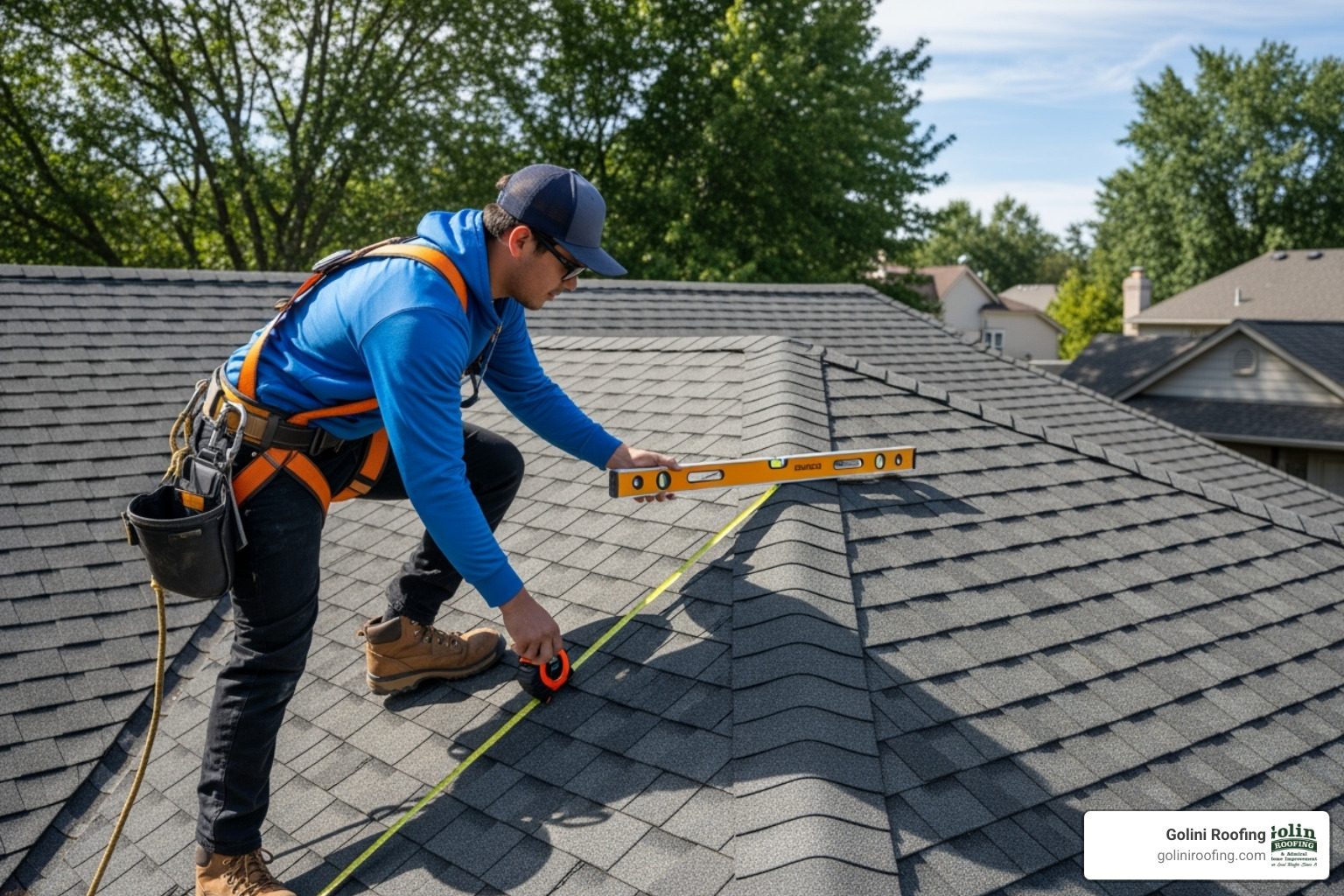
Step-by-Step Instructions:
- Secure Your Ladder and Gear: Place your ladder securely and put on all safety gear.
- Ascend Safely: Carefully climb onto the roof.
- Place Your Level: Lay your 12-inch level flat on the roof surface.
- Ensure Level Position: Adjust the level until it is perfectly horizontal.
- Measure Vertical Rise: From the 12-inch mark on your level, measure vertically down to the roof surface. This is your “rise.”
- Read Your Pitch: Your roof pitch is this “rise” over 12. A 7-inch measurement means a 7/12 pitch.
If you have any doubts, it’s always best to call a professional for any Roof Repair needs.
Step-by-Step: How to Figure Roof Pitch from the Ground
For a quick estimate when you can’t access the attic or roof, you can measure from the ground.
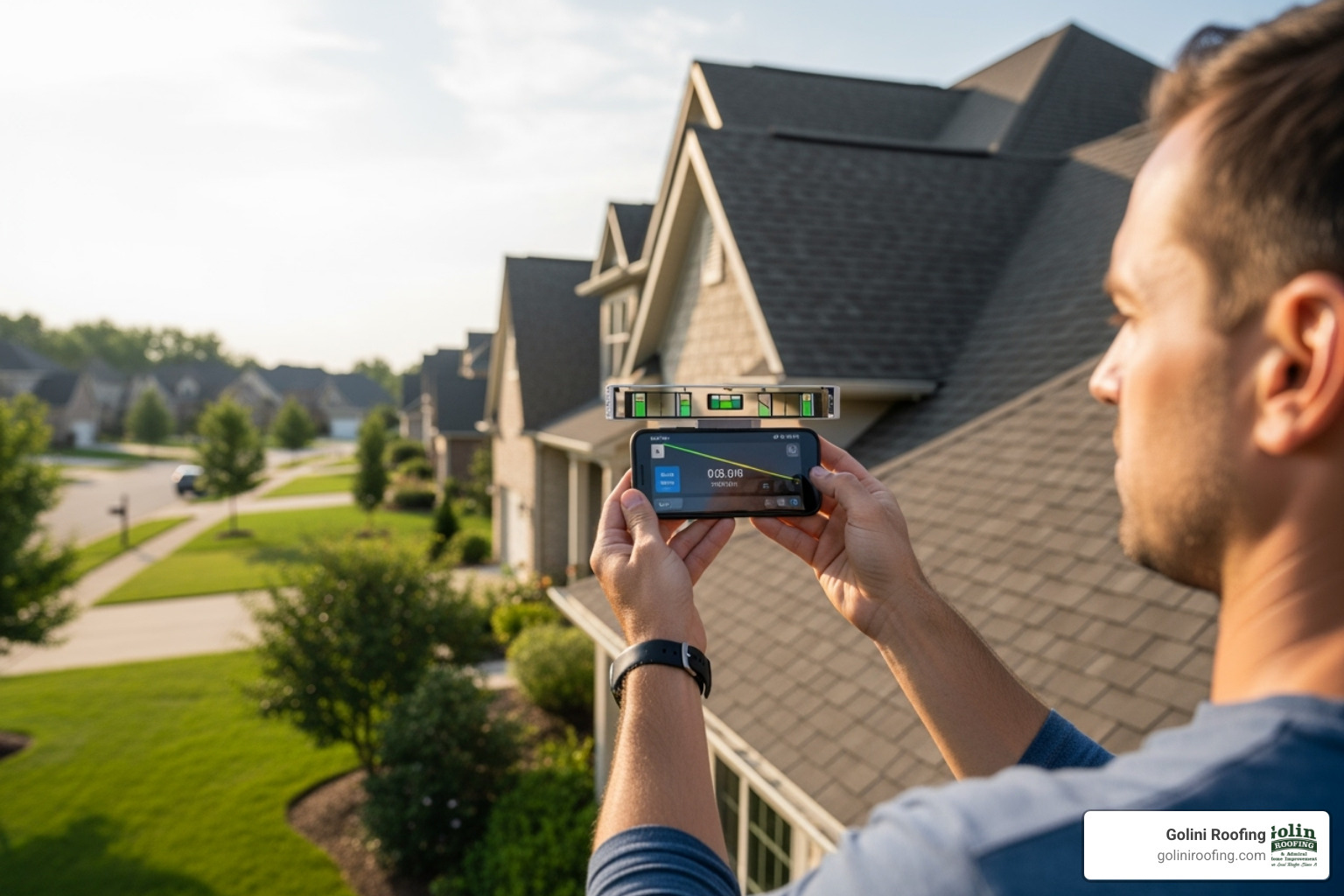
Using a Pitch-Finder App:
- Download a “roof pitch calculator” or “inclinometer” app.
- Stand back from your house to see the roofline clearly.
- Align your phone with the slope of the roof. The app will display the pitch.
Visual Estimation Method:
This method is less precise but can provide a rough idea. It involves measuring the gable width to find the run and counting siding courses to estimate the rise. You can find visual guides online that demonstrate this technique.
From Pitch to Project: What Your Roof’s Angle Means
Once you’ve figured out your roof pitch, you can understand what it means for your roofing project. This X/12 ratio is critical for material selection, cost estimation, and project planning.
Knowing your pitch is essential for:
- Material Selection: Many materials have minimum pitch requirements to prevent leaks and honor warranties.
- Cost Estimation: Steeper roofs require more materials and labor, increasing the project cost.
- Structural Design: The pitch dictates the design of the roof frame to support loads safely.
- Project Planning: Professionals use pitch to calculate roof area and determine necessary safety equipment.
At Golini Roofing, understanding pitch is a key part of our Roofing Process Step by Step, allowing for accurate estimates and high-quality installations.
Minimum Pitch Requirements for Roofing Materials
Your roof’s pitch dictates which materials can be safely installed. The International Residential Code (IRC) specifies minimum slopes to ensure proper water shedding.
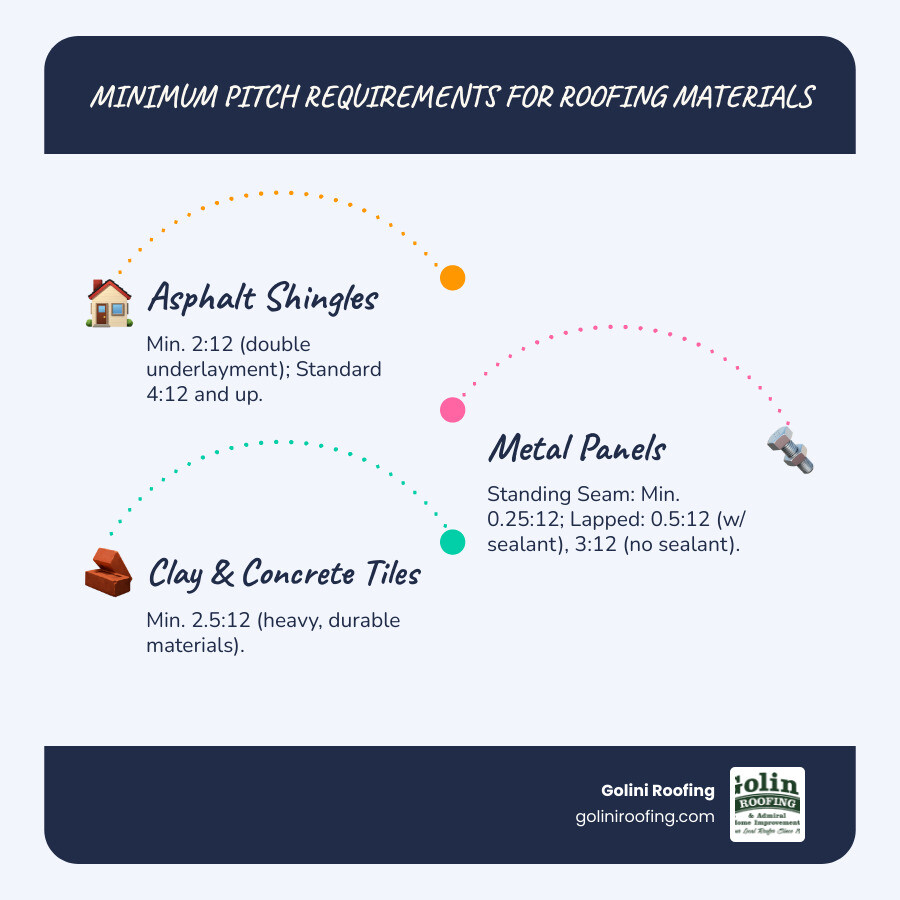
Here’s a brief guide to common materials and their minimum pitch:
- Asphalt Shingles: Minimum pitch of 2:12. For low-slope applications (between 2:12 and 4:12), special underlayment is required. Learn more about Asphalt Shingle Roof Installation.
- Metal Panels (Standing Seam): Can be used on very low slopes, often down to 0.25:12.
- Clay and Concrete Tiles: Typically require a minimum pitch of 2.5:12.
- Slate Shingles: A premium material requiring a pitch of 4:12 or greater.
- Wood Shakes and Shingles: Need a minimum pitch of 3:12 or greater.
- Low-Slope Materials (BUR, TPO, EPDM): Designed for “flat” roofs, these can handle pitches as low as 0.25:12.
Using a material below its recommended pitch can lead to premature failure and costly repairs. To learn more about roof longevity, see How Long Do Residential Roofs Last?.
Converting Pitch to Degrees and Calculating Roof Area
While the X/12 ratio is standard, it’s sometimes useful to convert it to degrees or calculate the roof’s true surface area.
Calculating the actual surface area of your roof is vital for accurate material estimation. A sloped roof has a larger surface area than its flat footprint. To account for this, professionals use a roof pitch multiplier (or correction factor).
This multiplier is used to convert the horizontal footprint of your roof into the actual, larger surface area. This ensures you order the correct amount of shingles, underlayment, and other materials. You don’t have to do these calculations manually; our Roof Square Footage Calculator can help!
What is Considered a ‘Walkable’ Roof Pitch?
“Walkability” refers to how safely a person can walk on a roof without specialized equipment. This impacts safety and labor costs.
General Rule of Thumb:
- Easily Walkable (6/12 or less): Generally considered safe to walk on with standard precautions.
- Cautionary Range (7/12 to 8/12): Manageable but requires significant caution and increased safety measures.
- Non-Walkable (Above 8/12): Considered too steep for foot traffic without specialized equipment.
For non-walkable roofs, professionals use equipment like roofing jacks, planks, and safety harnesses. This is why steeper roofs have higher labor costs. For all Roof Installation Services, we always prioritize safety.
Frequently Asked Questions about Figuring Roof Pitch
What is the most common roof pitch on houses in the U.S.?
The most common range for residential roofs in the U.S. is between 4/12 and 9/12. This offers a good balance of effective drainage, structural stability, and pleasing aesthetics.
Variations depend on regional climate and architectural style. For example, areas with heavy snowfall, like we see in Massachusetts, often require steeper pitches (6/12 or higher) to help shed snow. In contrast, modern architectural designs may feature lower, sleeker pitches. Understanding how to figure roof pitch helps you appreciate these important design choices.
What is the minimum pitch required for asphalt shingles?
This is a critical question for any homeowner. According to the International Residential Code (IRC), the absolute minimum pitch for asphalt shingles is 2:12.
However, the installation method changes based on the pitch:
- For pitches of 4:12 and up, standard installation methods are used.
- For low-slope applications between 2:12 and 4:12, special procedures are required. This typically involves installing a waterproof membrane, like an ice-and-water shield, under the shingles to prevent leaks from slow-draining water.
Using the correct installation method for your roof’s pitch is vital for its performance and longevity. For more information on shingle options, visit our page on Roofing Shingles.
Can I change my home’s roof pitch?
Yes, it is possible to change your home’s roof pitch, but it is a major structural renovation that is both complex and costly. This is not a DIY project.
Changing the pitch involves modifying or replacing the roof’s trusses or rafters. This requires a structural engineer or architect to design a new frame that is safe, meets all local building codes, and can handle environmental loads like snow and wind. The cost is significantly higher than a standard roof replacement because it involves reframing the entire roof.
Homeowners typically consider this major project for a few key reasons:
- To create usable attic space or vaulted ceilings.
- To solve chronic drainage problems on a low-pitch roof.
- To achieve a completely new architectural look.
If you are considering a project of this scale, or even a standard Roof Replacement, we recommend consulting with experienced professionals to assess your options.
Get a Precise, Professional Roof Assessment
By now, you know how to figure roof pitch—a valuable skill for any homeowner. It provides invaluable information for planning repairs, renovations, or simply understanding your home’s design.
While DIY methods are great for an estimate, a full roof replacement or complex repair demands professional accuracy. An incorrect measurement can lead to wasted materials, structural issues, and costly future repairs. Don’t leave it to guesswork.
That’s where we come in. At Golini Roofing, we bring over 35 years of experience to every residential and commercial project. Based in Wakefield, MA, we are committed to delivering durable, high-quality roofs, a promise we back by carefully hand-nailing each shingle. We proudly serve communities across Massachusetts, including Burlington, Lynnfield, North Reading, Reading, Stoneham, Wakefield, Wilmington, Winchester, and Woburn.
For a guaranteed accurate measurement and a comprehensive plan for your next roofing project, trust the experts. We provide a precise Roof Inspection and will guide you through every step of the process.
Ready to take the next step? For a free estimate and to see how our expertise can benefit your home, try our handy New Roof Estimate Calculator or contact us directly. We look forward to helping you build a roof that’s not just beautiful, but built to last.
