

Why Proactive Maintenance is Your Roof’s Best Friend
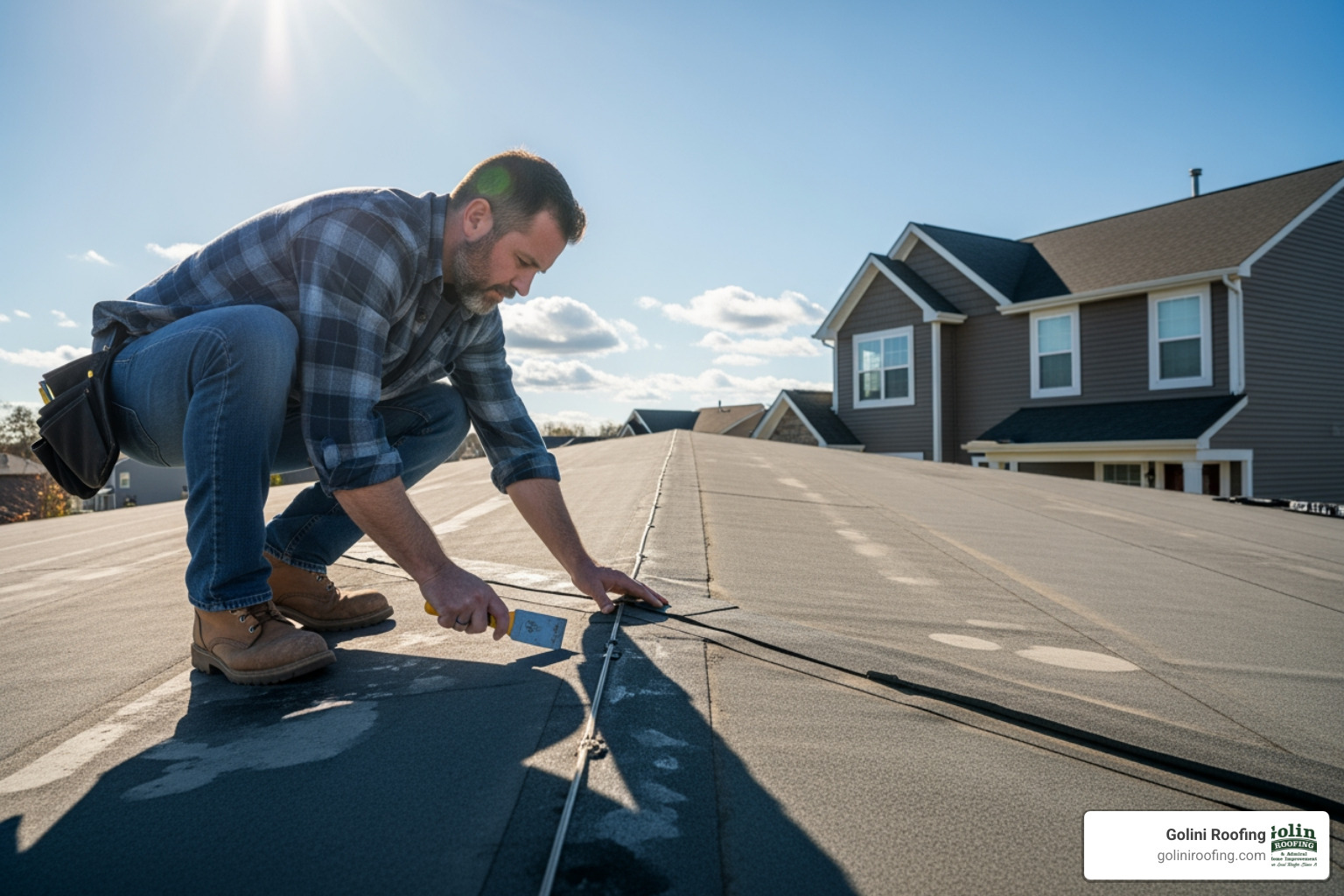
Flat roof maintenance is crucial for protecting your home and maximizing your roof’s lifespan. Because flat roofs don’t shed water and debris like sloped roofs, they need regular checks to catch leaks, surface damage, and drainage issues before they become expensive repairs.
Key Flat Roof Maintenance Tasks:
- Inspect twice yearly for damage, cracks, and ponding water.
- Clear debris regularly from the roof surface and drainage systems.
- Examine flashing and seams for any gaps or separation.
- Address ponding water that remains for more than 48 hours.
- Schedule annual professional inspections.
The good news? Regular maintenance can extend your flat roof’s lifespan by up to 50%, adding years of protection and helping you avoid water damage repairs that can cost thousands. A proactive approach also minimizes disruptive emergency repairs, protecting your investment and giving you peace of mind.
The cost of neglect is real. While routine maintenance is an investment, it’s a fraction of the cost of a premature roof replacement. Preventive care saves money.
I’m Jack Golini, and with over 35 years of experience in the Wakefield, MA area, I’ve seen how consistent flat roof maintenance transforms a vulnerable roof into a durable barrier against New England’s harsh weather. Let me share what I’ve learned.
Similar topics to flat roof maintenance:
A Guide to Common Flat Roof Materials and Their Needs
Flat roofs come in various materials, each with unique characteristics and maintenance requirements. Understanding your roof’s specific material is the first step in effective flat roof maintenance. Let’s explore the most common types we encounter in residential settings across Massachusetts.
| Material | Lifespan (Years) | Average Cost (Per Sq Ft) | Specific Maintenance Needs -|
| EPDM (Ethylene Propylene Diene Monomer) | 15-25 | $4 – $10 | Known as “rubber roofing,” this durable material can be punctured. Regularly inspect seams and flashing for tears. Clean with a soft brush and mild detergent. -|
| TPO (Thermoplastic Polyolefin) | 20-30 | $5 – $12 | An energy-efficient choice with strong, heat-welded seams. Keep the surface clean to maintain its reflective properties and check for punctures after severe weather. -|
| PVC (Polyvinyl Chloride) | 20-30+ | $6 – $14 | Highly durable with heat-welded seams. It can become brittle in extreme cold, so avoid walking on it during freezing temperatures. – |
|---|---|---|---|
| Modified Bitumen | 10-20 | $4 – $9 | An asphalt-based system. Look for signs of granule loss, which exposes the underlying material to UV damage. Also, check for blisters or cracks that can allow water to seep in. – |
Why Proactive Maintenance is Your Roof’s Best Friend
Flat roof maintenance is essential for protecting your home and extending your roof’s lifespan. Here’s what you need to know:
Key Flat Roof Maintenance Tasks:
- Inspect twice yearly – Check in spring and fall for damage, cracks, and ponding water
- Clear debris regularly – Remove leaves, branches, and dirt from the roof surface
- Check drainage systems – Keep drains, scuppers, and gutters clear and flowing
- Examine flashing and seams – Look for gaps, cracks, or separation around penetrations
- Address ponding water – Water remaining more than 48 hours signals a drainage problem
- Schedule professional inspections – Have experts assess your roof annually
Flat roofs offer homeowners a unique roofing solution, but they demand more attention than their sloped counterparts. Without proper maintenance, even a well-installed flat roof can develop leaks, membrane damage, and costly structural problems.
The good news? Regular maintenance can extend your flat roof’s lifespan by up to 50%. That’s potentially an extra 10-15 years of protection for your home. More importantly, addressing minor issues early can prevent water damage that costs anywhere from $1,000 to $5,000 or more to repair.
Many homeowners worry about property damage during roof work, and rightfully so. A proactive maintenance approach means catching small problems before they require disruptive emergency repairs. It’s about protecting your investment and maintaining your peace of mind.
The cost of neglect is real. Professional flat roof maintenance typically ranges from $4 to $13 per square foot, while premature roof replacement can cost between $7 to $30 per square foot – or even higher for complex installations. The math is simple: preventive care saves money.
I’m Jack Golini, and I’ve been helping homeowners in the Wakefield, MA area protect their roofs since 1982. Over these 35+ years, I’ve seen how consistent flat roof maintenance transforms a vulnerable roof into a durable, long-lasting barrier against New England’s harsh weather. Let me share what I’ve learned about keeping your flat roof in top condition.
Similar topics to flat roof maintenance:
A Guide to Common Flat Roof Materials and Their Needs
Flat roofs come in various materials, each with unique characteristics and maintenance requirements. Understanding your roof’s specific material is the first step in effective flat roof maintenance. Let’s explore the most common types we encounter in residential settings across Massachusetts.
EPDM (Ethylene Propylene Diene Monomer)
Often called “rubber roofing,” EPDM is a durable synthetic rubber. For flat roof maintenance, focus on inspecting seams for separation and checking for punctures. Clean with a soft brush and mild detergent.
TPO (Thermoplastic Polyolefin)
A popular, energy-efficient single-ply membrane, TPO has heat-welded seams for a strong, monolithic surface. Maintenance involves inspecting seams, checking for punctures, and keeping the surface clean to maintain its solar reflectivity.
PVC (Polyvinyl Chloride)
PVC is a premium, highly durable membrane with heat-welded seams. It’s known for its chemical resistance but can become brittle in extreme cold, so avoid walking on it during freezing temperatures. Repairs are best left to professionals.
Modified Bitumen
This asphalt-based system is known for its flexibility. Maintenance involves checking for granule loss, which exposes the asphalt to UV rays, and looking for blisters or cracks that could lead to leaks. Gentle cleaning is recommended to avoid dislodging the protective granules.
Your Essential Guide to DIY Flat Roof Maintenance
While professional inspections are invaluable, homeowners can perform regular DIY flat roof maintenance to catch small issues before they become big headaches.
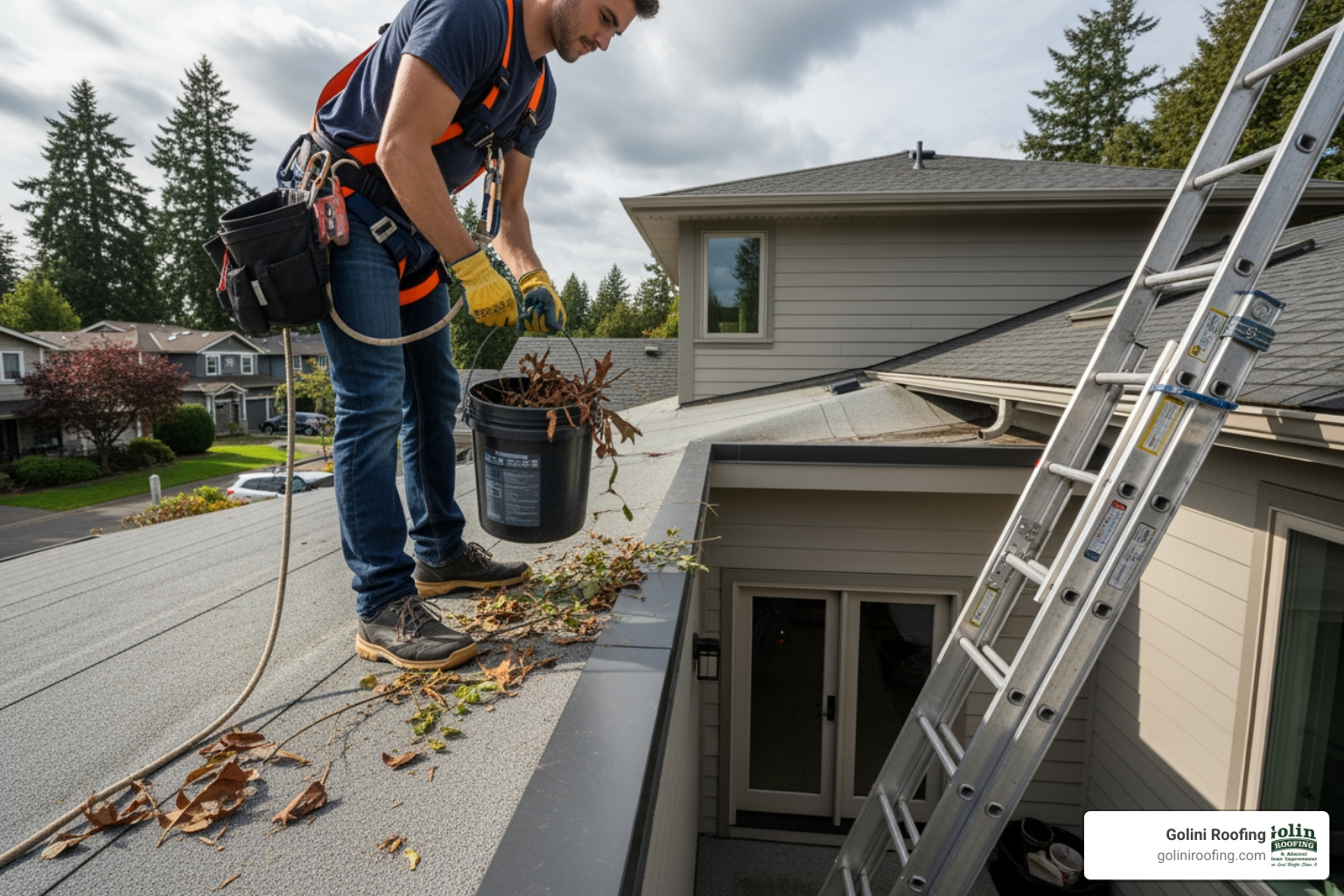
Before you get on your roof, remember safety is paramount. Avoid wet or windy conditions, use a sturdy, well-secured ladder, and wear non-slip shoes.
The Importance of Regular Flat Roof Maintenance Inspections
Inspect your roof twice a year (spring and fall) and after severe weather. During these inspections, look for:
- Blisters and Cracks: Bubbles or cracks in the membrane can indicate trapped moisture or material fatigue.
- Ponding Water: Water remaining on your roof for more than 48 hours is a clear sign of a drainage problem.
- Flashing Integrity: Check the material used to seal joints around vents, skylights, and chimneys for any signs of rust, cracks, or gaps.
- Seam Separation: Look for any lifting, peeling, or separation along the seams, as these are vulnerable points.
- Sagging: Noticeable dips in the roof surface could indicate underlying structural issues.
Understanding your residential flat roof details can help you spot problems.
Clearing Debris and Managing Drainage
Debris like leaves and branches can block drains, causing water to pool and damage the roof. Clear your roof monthly, especially in the fall, using a soft broom or leaf blower. Don’t forget to clean your gutters and downspouts twice a year.
Caring for Flashing, Seals, and Penetrations
Flashing protects vulnerable spots like chimneys and vents. Check for rust, cracks, or gaps. Minor issues can be resealed with a compatible roofing sealant, but for extensive damage, it’s best to call a professional. Proper flashing maintenance is crucial for preventing leaks.
Tackling Common Flat Roof Problems
Even with diligent care, flat roofs can encounter issues. Knowing how to identify and respond to common problems quickly is a cornerstone of effective flat roof maintenance.
How to Address Ponding Water
Ponding water—water that remains on your roof for more than 48 hours after rain—is a major threat. It can accelerate membrane deterioration and lead to leaks. Common causes include an improper slope, clogged drains, or structural sagging. The first step is to regularly clear all drains and gutters. If ponding persists, a professional assessment is needed to determine the best solution, such as adding tapered insulation. Learn more about the cost to repair flat roof ponding.
Responding to Leaks and Water Damage
A flat roof leak can be tricky because the water often travels before appearing indoors. The actual entry point on the roof might be far from the visible water stain.
- Interior Signs: Look for water stains on your interior walls or ceilings, peeling paint, or a musty odor. If you see these, don’t delay!
- Locating the Source: To find a leak, measure from the interior water spot to the nearest walls, then use those measurements to find the corresponding area on the roof. Check for damage at seams, flashing, and any penetrations. Professionals can use tools like thermal cameras to pinpoint the exact source of a leak.
- Prompt Action: Act quickly to prevent mold, rot, and more extensive and costly repairs. For more information, see our Guide to flat roof leak repair costs.
Mitigating Weather and Environmental Damage
New England weather is tough on flat roofs. Here’s how to protect yours:
- UV Exposure and Heat: The sun’s rays can cause materials to crack. Reflective roof coatings or light-colored membranes can reduce heat and extend the roof’s life.
- Snow and Ice Accumulation: The weight of snow and ice can strain your roof’s structure and cause ice dams. Use a roof rake to safely remove snow from the ground. For persistent ice, consider professionally installed heat cables.
- Overhanging Trees: Trim branches near your roof to prevent scratches and debris. Promptly remove any moss or algae, as it holds moisture and can weaken the roof.
Professional vs. DIY: Knowing When to Call for Help
While many maintenance tasks are DIY-friendly, knowing when to call in the professionals can save you money, stress, and potential damage in the long run.
Safe DIY Maintenance Practices
Safety is paramount when working on your roof. Always use a sturdy, well-secured ladder, wear non-slip shoes, and never work on a wet, icy, or windy roof. Use a soft-bristled broom or leaf blower for debris. For minor sealant touch-ups, use a compatible product. If a task feels too risky or you’re unsure, it’s time to call us. Attempting repairs without the right knowledge can cause more harm than good.
The Benefits of a Professional Inspection
While DIY checks are great, a professional inspection offers a level of expertise that’s hard to match. We recommend a professional inspection at least once a year. An expert can use tools like infrared cameras to detect hidden moisture, assess the roof’s structural integrity, and ensure your warranty remains valid. A comprehensive maintenance plan custom to your residential roof can help you stay ahead of potential issues and maximize your roof’s lifespan.
Budgeting for Professional Flat Roof Maintenance and Repairs
A proactive maintenance plan is a smart investment that prevents expensive emergency repairs and premature roof replacement. Professional maintenance typically ranges from $4 to $13 per square foot, while a full replacement can cost $7 to $30+ per square foot. These are average costs based on internet data and not actual costs for Golini Roofing. Set aside a small annual budget for routine care to avoid being caught off guard by the high cost of neglect. For more detailed financial planning, understanding flat roof repair costs is essential.
Frequently Asked Questions about Flat Roof Care
How often should I inspect my flat roof?
At least twice a year, in the spring and fall, and after any severe weather event like a heavy storm or snowfall. Regular checks help catch small issues before they become costly problems.
What are the most urgent signs that my flat roof needs repair?
Immediate attention is needed if you see significant ponding water (lasting more than 48 hours), visible punctures or tears in the membrane, separating seams, damaged flashing, or water stains appearing on your interior ceilings.
Is it safe to walk on my flat roof?
It depends on the material and structure. While some flat roofs are designed for foot traffic, many are not. Always minimize walking on the roof, wear soft-soled shoes, and avoid stepping on seams or flashing to prevent damage.
Maximizing Your Roof’s Lifespan with Consistent Care
Consistent, proactive flat roof maintenance is the key to ensuring your roof protects your home for decades. Understanding your roof’s material, performing regular inspections, clearing debris, and responding to leaks promptly are all crucial steps.
Keeping detailed records of all maintenance and repairs is also important. This documentation helps track your roof’s condition, can be useful for warranty claims, and adds value to your home.
A well-maintained flat roof can last 20-30+ years, but neglect can significantly shorten its lifespan. A proactive approach to care is an investment in your entire property.
For expert assessment and repairs in the Wakefield, MA area, trust the meticulous craftsmanship of Golini Roofing. We’re here to help you keep your flat roof in top shape. Get a professional estimate for your flat roof repair costs.