Industrial Roofing: Top 5 Expert Secrets Revealed 2025
Why Industrial Roofing Matters
Industrial roofing plays a vital role in protecting large-scale manufacturing facilities from harsh environmental conditions and potential operational hazards. The integrity of a roof can make or break a business; it’s crucial for shielding sensitive equipment and maintaining a safe and efficient workspace.
Here’s a quick overview of what makes industrial roofing essential:
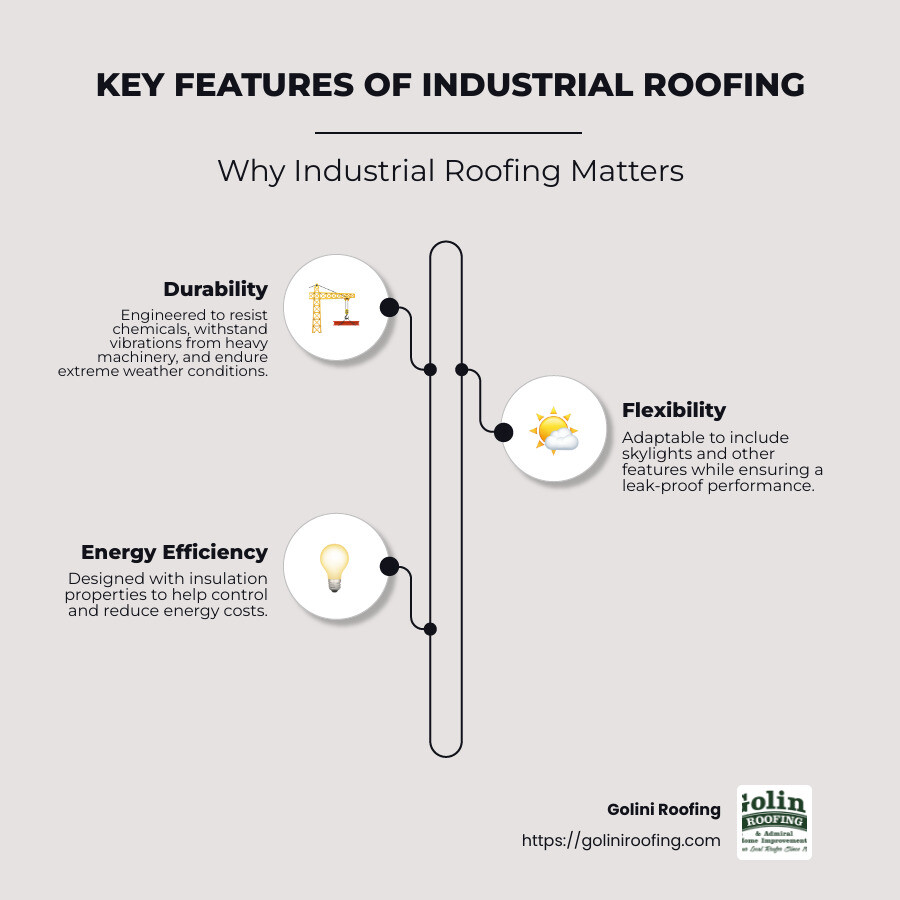
- Durability: Designed to withstand chemicals, heavy machinery vibrations, and extreme weather.
- Flexibility: Accommodates skylights and other features while maintaining leak-proof performance.
- Safety: Prevents disruptions, protecting both assets and workers.
- Energy Efficiency: Helps control energy costs with superior insulation.
I’m Jack Golini, with over 35 years of expertise in the roofing industry, I’ve built a reputation for excellence in industrial roofing solutions. Our commitment to craftsmanship ensures your roofing investments last, minimizing disruptions and costs.
Quick industrial roofing definitions:
– commercial roofing services
– commercial roof companies
– commercial roofing repair
Understanding Industrial Roofing
Industrial roofing is more than just a protective cover over a building—it’s a complex system designed to meet the specific needs of manufacturing and storage facilities. These roofs must endure unique challenges that don’t typically affect residential or even standard commercial roofs.
Roofing Systems
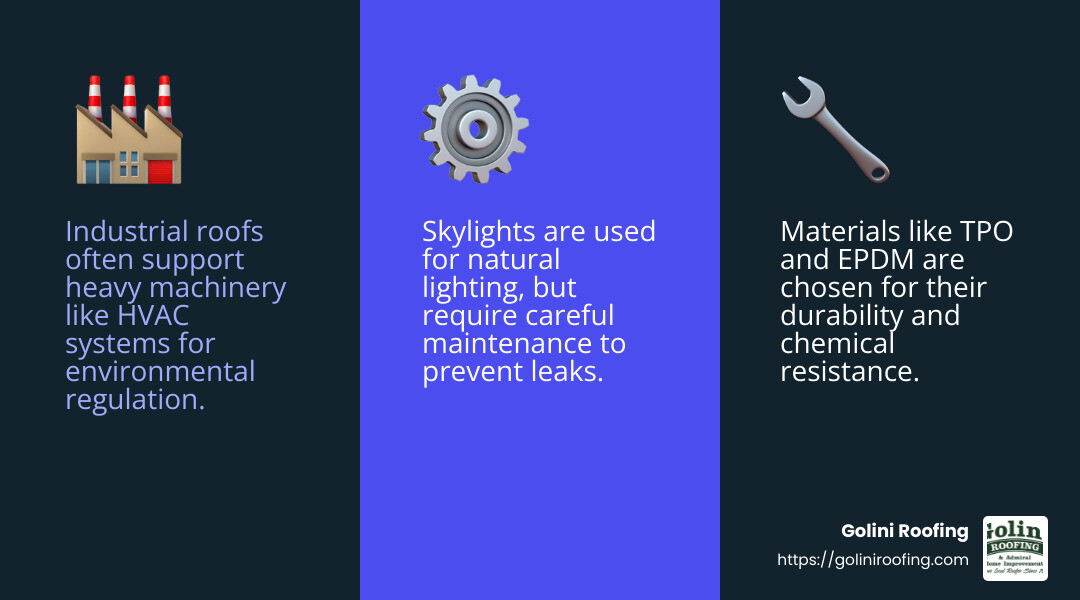
Industrial roofs often feature flat or low-slope designs, which are ideal for large buildings. This design supports the installation of heavy machinery like HVAC systems, which are crucial for regulating indoor environments. The choice of roofing material is critical, as it must withstand not just weather but also chemicals and pollutants from industrial processes.
Common materials include TPO and EPDM, known for their durability and resistance to UV rays and chemicals. These materials are flexible, which helps them accommodate the dynamic nature of industrial environments.
Heavy Machinery
Industrial facilities house heavy machinery that can cause vibrations and stress on the roof structure. This means the roofing system must be robust enough to absorb these stresses without compromising integrity. A well-designed industrial roof reduces the risk of leaks and other failures that could disrupt operations and lead to costly repairs.
Storage Facilities
For storage facilities, the roof plays a crucial role in protecting inventory from environmental damage. Whether it’s raw materials or finished products, keeping them safe from leaks and temperature fluctuations is essential. A durable roof helps maintain consistent conditions inside, which can be vital for sensitive goods.
In addition, many industrial roofs include skylights to provide natural lighting, reducing energy costs. However, these features require meticulous installation and maintenance to prevent leaks.
In summary, industrial roofing is a specialized field that requires careful consideration of materials and design to meet the unique demands of industrial facilities. It’s about more than just keeping the rain out—it’s about ensuring the entire operation runs smoothly and safely.
Popular Industrial Roofing Materials
When it comes to industrial roofing, choosing the right material is crucial for ensuring long-term performance and sustainability. Let’s explore some of the most popular materials used in this field: TPO, EPDM, and metal roofing.
TPO: The Modern Choice
TPO (Thermoplastic Polyolefin) is a favorite in the industrial roofing world. It’s a single-ply membrane known for its energy efficiency and resistance to UV rays, chemicals, and ozone. TPO roofs are typically bright white, reflecting sunlight and helping to keep buildings cooler. This energy efficiency can lead to significant savings on cooling costs.
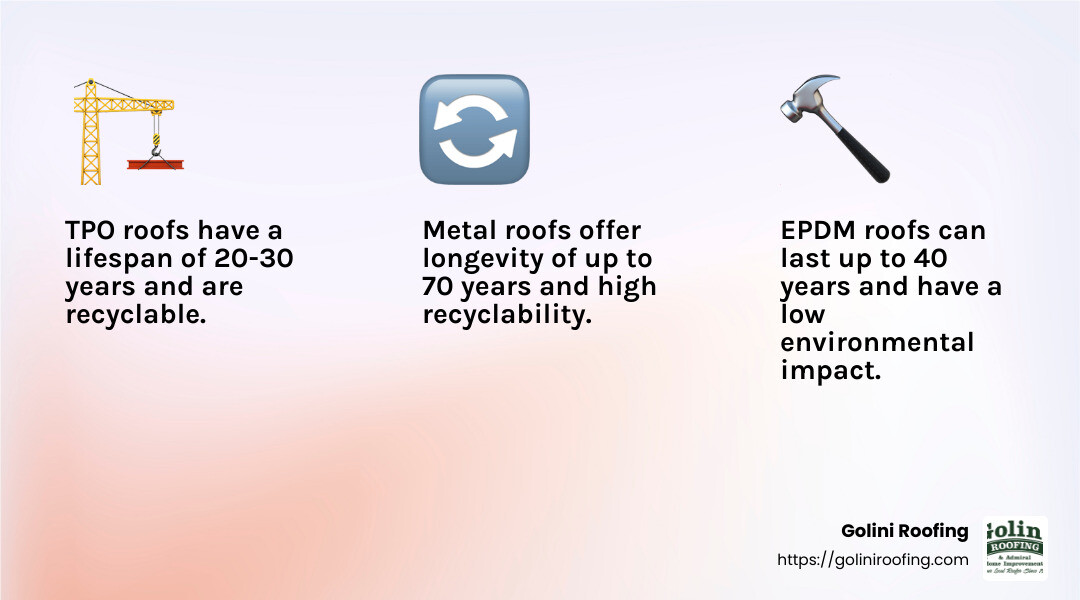
Longevity: TPO roofs can last between 20 to 30 years with proper maintenance.
Sustainability: TPO is considered environmentally friendly due to its recyclability and energy-saving properties.
EPDM: The Durable Classic
EPDM (Ethylene Propylene Diene Monomer) is another single-ply membrane that’s been around for decades. Known for its durability, EPDM is highly resistant to weathering, making it ideal for various climates.
Longevity: EPDM roofs can last up to 40 years, providing excellent value over time.
Sustainability: EPDM is made from synthetic rubber, which is recyclable and has a low environmental impact.
Metal Roofing: The Long-Lasting Defender
Metal roofing is a robust option that offers best durability and longevity. Made from materials like steel, aluminum, and zinc, metal roofs are highly resistant to fire, wind, and water.
Longevity: These roofs can last up to 70 years, making them a long-term investment.
Sustainability: Metal roofs are eco-friendly as they are often made from recycled materials and are fully recyclable at the end of their life.
Comparing the Options
| Material | Longevity | Energy Efficiency | Sustainability |
|---|---|---|---|
| TPO | 20-30 years | High | Recyclable |
| EPDM | Up to 40 years | Moderate | Low impact |
| Metal | Up to 70 years | High | Recyclable |
Choosing the right material depends on your specific needs, including climate, building design, and budget. Each option offers unique benefits that can improve the performance and sustainability of your industrial roofing system.
Understanding these materials will help you make informed decisions, ensuring your industrial facility is well-protected and energy-efficient. Next, we’ll explore the benefits of industrial roofing, focusing on energy efficiency, durability, and maintenance.
Benefits of Industrial Roofing
When it comes to industrial roofing, the benefits are numerous and impactful. Let’s break down some key advantages: energy efficiency, durability, maintenance, and safety.
Energy Efficiency
Industrial roofs, like TPO and metal, can significantly reduce energy costs. TPO roofing, with its bright white surface, reflects sunlight, keeping buildings cooler and reducing the need for air conditioning. This not only lowers energy bills but also lessens the environmental footprint of the building.
Durability
Industrial environments can be harsh, with exposure to chemicals, extreme weather, and heavy machinery. Materials like EPDM and metal roofing are built to withstand these conditions. They offer exceptional resistance to weathering, which means they can last for decades—sometimes up to 70 years for metal roofs. This longevity ensures a solid return on investment.
Maintenance
A well-chosen industrial roof requires minimal maintenance. For example, EPDM roofs are known for their low maintenance needs due to their robust nature. Regular inspections and minor repairs can keep these roofs in top condition, preventing major issues and costly repairs down the line.
Safety
Safety is paramount in industrial settings. Roofs must be able to support heavy equipment and withstand potential impacts. Metal roofing is fire-resistant and can handle high winds, making it an excellent choice for safety-conscious businesses. Additionally, proper installation and maintenance prevent leaks, protecting both the building’s interior and its occupants.
In summary, industrial roofing offers substantial benefits that contribute to the overall efficiency and safety of a facility. These advantages make it a wise choice for businesses looking to protect their assets and reduce long-term costs.
Next, we’ll dig into the challenges faced in industrial roofing, such as roof leaks, weather damage, and chemical exposure.
Challenges in Industrial Roofing
Industrial roofing comes with its own set of challenges that require careful consideration and proactive management. Let’s explore some of the key issues: roof leaks, weather damage, chemical exposure, and skylights.
Roof Leaks
Roof leaks are a major concern in industrial settings. Even a small leak can lead to significant damage, affecting sensitive equipment, inventory, and the safety of workers. Frequent inspections and maintenance are crucial to identify and repair leaks promptly. Employing professional roofers can help prevent leaks by ensuring proper installation and upkeep of the roofing system.
Weather Damage
Industrial roofs are often exposed to extreme weather conditions. Heavy rains, strong winds, and hail can all take a toll on roofing materials. Metal roofing is particularly durable and can withstand harsh weather. However, regular inspections are essential to detect any weather-induced damage early and address it before it escalates.
Chemical Exposure
In manufacturing environments, roofs are often exposed to chemicals and exhausts that can accelerate material degradation. This is particularly true for industries like food processing and semiconductor manufacturing, where chemicals and residues can break down roofing materials faster than usual. Selecting materials like EPDM, known for its chemical resistance, can mitigate these risks. Proper ventilation systems are also critical to minimize chemical exposure and protect the roof.
Skylights
Skylights are a common feature in industrial buildings, providing natural light and reducing the need for artificial lighting. However, they introduce additional vulnerabilities to the roofing system. Poorly installed or maintained skylights can lead to leaks and water damage. Ensuring that skylights are properly sealed and regularly inspected can prevent these issues. Using high-quality materials and professional installation services can significantly reduce the risk of skylight-related problems.
In summary, while industrial roofing offers many benefits, it also presents unique challenges that must be addressed to ensure the longevity and safety of the roof. Next, we’ll tackle some frequently asked questions about industrial roofing, including what makes an industrial roof and the best materials for these environments.
Frequently Asked Questions about Industrial Roofing
What is an industrial roof?
An industrial roof is specifically designed to meet the unique needs of manufacturing buildings and other industrial facilities. These roofs often have to withstand harsh conditions, like exposure to chemicals, heavy machinery, and extreme weather. Unlike typical commercial roofs, industrial roofs need to handle additional stressors such as chemical exposure and heavy foot traffic. This requires the use of more robust materials and specialized installation techniques.
What is the best industrial roof?
Choosing the best roof for an industrial facility often depends on the specific requirements of the building. However, TPO (Thermoplastic Polyolefin) is a popular choice due to its durability and environmentally friendly properties. TPO roofs are known for their resistance to UV rays and chemicals, which makes them a great fit for industrial settings that may involve chemical exposure. Additionally, TPO is energy efficient, reflecting sunlight to keep buildings cooler and reduce energy costs.
How long do industrial roofs last?
The lifespan of an industrial roof varies based on the material used and the maintenance it receives. TPO roofs, for example, typically last between 20 to 30 years with proper care. Regular maintenance and inspections can help extend the life of an industrial roof by catching small issues before they become major problems. It’s essential to choose materials that align with the environmental conditions and operational demands of the facility to maximize longevity.
Conclusion
At Golini Roofing, we take pride in our exceptional craftsmanship and commitment to customer satisfaction. With over 35 years of experience, our team ensures that every industrial roofing project is executed with the utmost precision and care. Our unique hand-nailing technique sets us apart, providing roofs that are not only durable but also carefully crafted to withstand the toughest conditions.
We understand the challenges that come with industrial roofing—be it chemical exposure, heavy machinery, or extreme weather conditions. That’s why we use only the highest-quality materials, like TPO, to ensure longevity and performance. Our expertise extends to a variety of industrial settings, from manufacturing plants to storage facilities, each requiring custom solutions.
Customer satisfaction is at the heart of what we do. We believe in building strong relationships with our clients, ensuring that every need is met and every concern is addressed. Our team is always ready to provide expert advice and support, whether it’s a routine maintenance check or an emergency repair.
Choosing Golini Roofing means choosing peace of mind. Our commitment to excellence and quality craftsmanship ensures that your industrial roofing needs are in the best hands.
Ready to experience the Golini Roofing difference? Contact us today and let our experts help you protect your investment with a roof that stands the test of time.
