

That Drip is a Ticking Clock
Leaking roof repair near me is one of the most urgent searches a homeowner can make. When water starts dripping from your ceiling, time is not on your side. Here’s what you need to know right now:
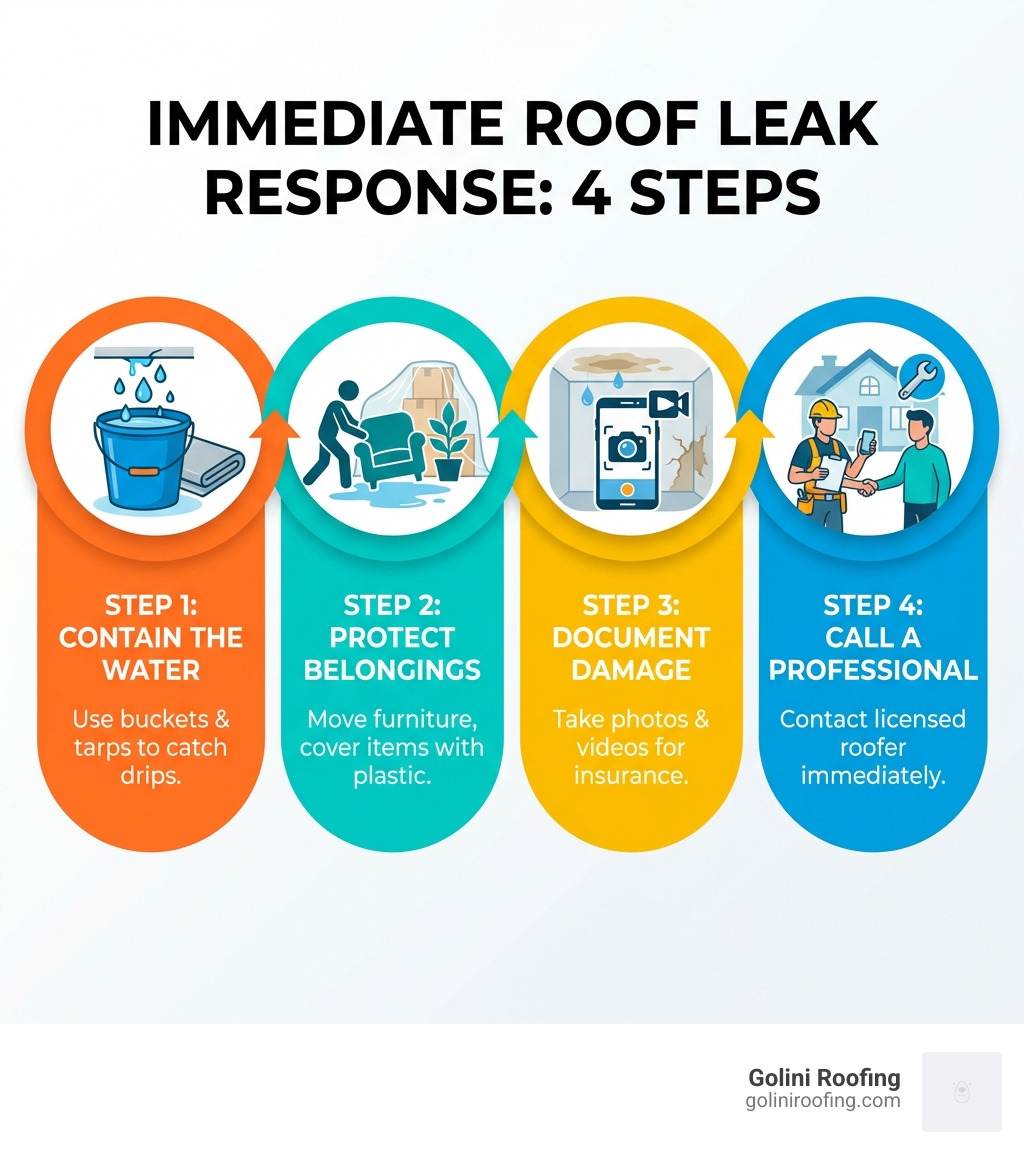
Immediate Action Steps:
- Contain the leak – Place buckets or containers under drips
- Protect your belongings – Move furniture, electronics, and valuables away from the affected area
- Document the damage – Take photos and videos for insurance claims
- Call a professional roofer immediately – Every hour of delay increases water damage and repair costs
A leaking roof is more than an annoyance—it’s a direct threat to your home’s structural integrity, your family’s health, and your property value. According to insurance data, water damage and ice account for nearly 20% of all homeowners insurance claims, with average payouts between $5,000 and $10,000. What starts as a few drops can quickly escalate into rotted framing, toxic mold growth, ruined insulation, and even electrical fires.
The good news? Acting fast and choosing the right roofing contractor can stop a small leak from becoming a catastrophe. This guide provides a comprehensive checklist for homeowners in the North Shore area, walking you through everything from spotting the first signs of a leak to finding and hiring the right professional for the job.
I’m Jack Golini, owner of Golini Roofing, and I’ve been helping Massachusetts homeowners solve their leaking roof repair near me emergencies since 1982. Over 35 years of experience has taught me that the difference between a minor repair and a major disaster often comes down to how quickly you act and who you trust with the work.
Must-know leaking roof repair near me terms:
First Signs of Trouble: Identifying a Roof Leak and Its Causes
A roof leak rarely announces itself with a brass band. More often, it’s a subtle hint, a faint discoloration, or a quiet drip. Being vigilant about these early warning signs can save you a world of trouble.
Signs of a Leak
The most common signs that your roof is trying to tell you something include:
- Water Stains: These are often the first visible indicators. Look for brown or yellow discoloration, dark circles, or faint shading on your ceilings or walls, especially after a heavy rain or snowmelt.
- Dripping Sounds: Hearing rhythmic “plink, plink, plink” during or after rainfall is a clear sign that water has breached your roof’s defenses.
- Musty Odors: A persistent musty smell, especially in your attic, indicates trapped moisture and potential mold growth, even if you can’t see the water itself.
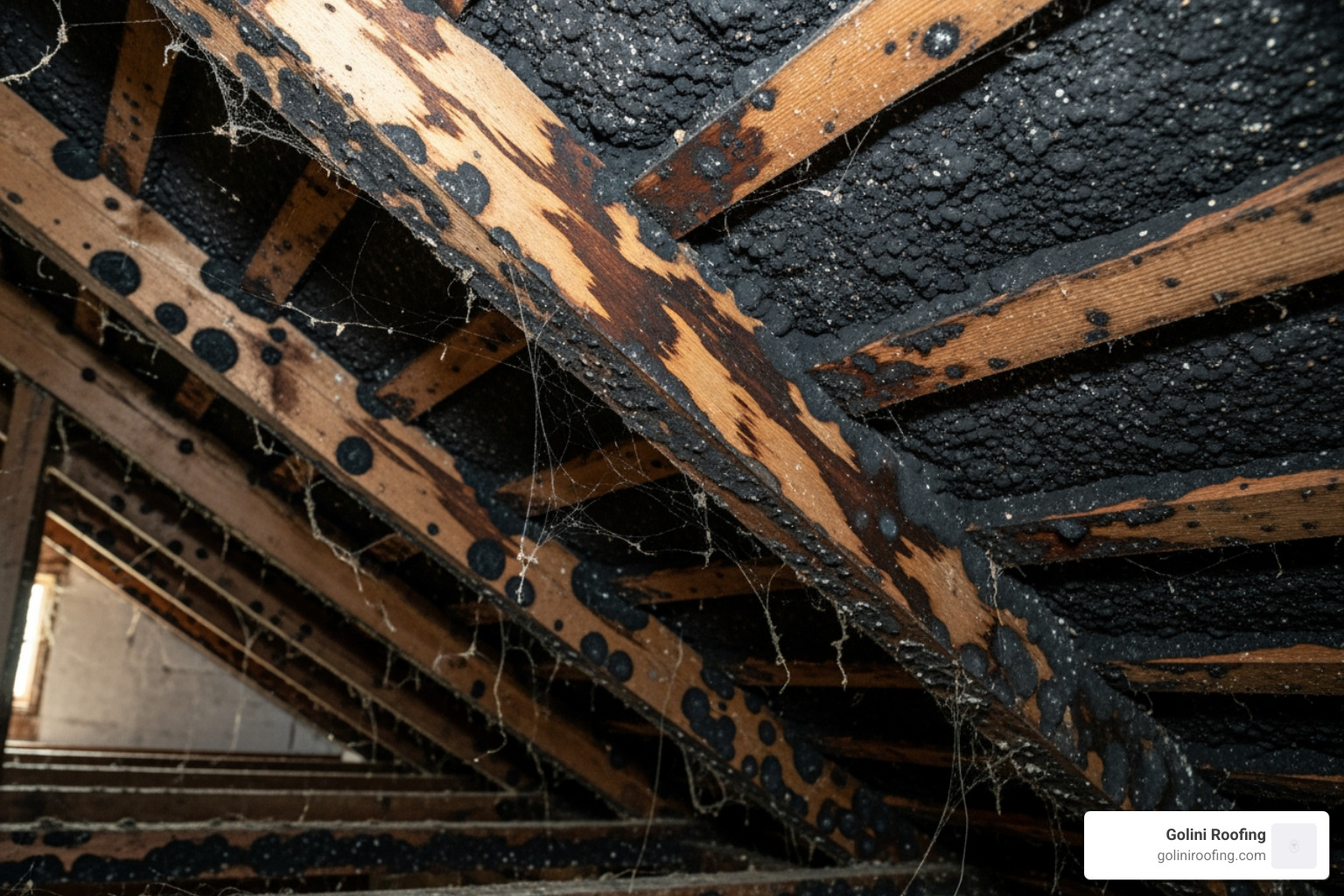
- Visible Mold or Mildew: Fuzzy, discolored patches on ceilings, walls, or attic rafters are undeniable proof of a moisture problem that can damage your home and cause health issues.
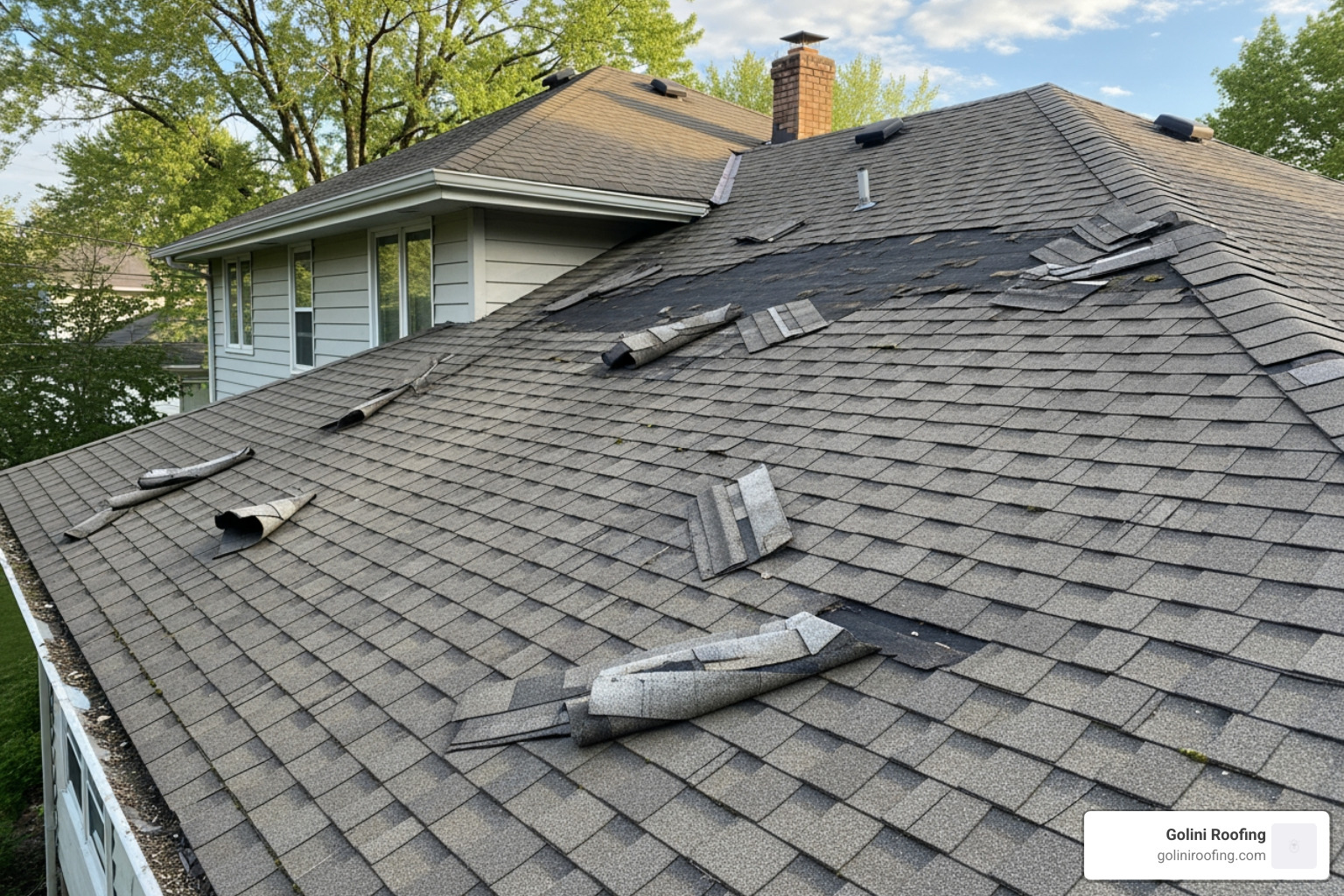
- Damaged Shingles: Step outside and look at your roof for missing, cracked, buckled, or curled shingles. These are vulnerable points where water can easily enter. Also look for loose shingle granules in your gutters, a sign your asphalt shingles are aging.
- Peeling Paint or Bubbling Wallpaper: If paint on your interior walls or ceiling is peeling or bubbling, it could be due to moisture seeping through from a roof leak.
- Daylight Visible Through the Roof: This one is a bit more dramatic, but if you can see shafts of sunlight filtering into your attic, it’s a direct pathway for water.
- Sagging Ceilings or Rooflines: A sagging ceiling indicates significant water accumulation, putting pressure on your home’s structure. A sagging roofline means serious structural damage to the roof itself.
Common Causes
Understanding why your roof might be leaking is the first step to a lasting repair. Here are the usual culprits we encounter in Massachusetts:
- Storm Damage: This is a leading cause of roof damage. Strong winds can lift and tear off shingles, while hail can crack or puncture them. Heavy rain and ice, particularly during our harsh New England winters, can overwhelm a compromised roof. A 2020 report from Bankrate revealed that 45.5% of homeowners insurance claims involved wind or hail damage, with an average payout of $13,804.
- Aging Materials: Nothing lasts forever, and your roof is no exception. Asphalt shingle roofs typically have a lifespan of 20-25 years. As they age, shingles become brittle, crack, lose their protective granules, and can no longer effectively repel water.
- Flashing Failures: Flashing – the thin metal strips installed around chimneys, vent pipes, and skylights – creates a watertight seal. Estimates indicate that flashing failures cause nearly 30% of roofing leaks. Over time, flashing can rust, crack, or become loose, allowing water to seep into your home.
- Ice Dams: A common winter woe in Massachusetts, ice dams form when heat from your home melts snow on the roof, which then refreezes at the colder eaves. This ice buildup prevents proper drainage, causing water to back up under shingles and into your attic and walls. Repairing water damage from ice dams can cost $2,000 to $5,000 or more. Proper insulation and ventilation can reduce the likelihood of ice dams by up to 90%.
- Clogged Gutters: When gutters are filled with leaves, twigs, and debris, they can’t effectively channel water away from your roof. This leads to water overflowing, pooling, and potentially backing up under the eaves and shingles, causing leaks. Regular gutter maintenance is crucial for preventing this. More info about gutter services
- Fallen Tree Branches: Strong winds or ice storms can send tree limbs crashing onto your roof, causing punctures or significant damage that requires immediate attention.
- Neglected Maintenance: Simply put, ignoring small issues can turn them into big ones. A minor crack or a single missing shingle, if left unaddressed, can lead to widespread water damage over time.
- Poor Installation: While rare with experienced contractors like us, improper installation can lead to leaks from day one. This could involve incorrectly laid shingles, inadequate flashing, or insufficient sealing.
The High Cost of Delay: Why You Must Act Fast
Ignoring a roof leak is like ignoring a crack in a dam—it only gets worse, and the consequences can be catastrophic. A seemingly minor drip can cause extensive damage to homes in Wakefield, Burlington, and surrounding communities.
Consequences of Ignoring Leaks
- Structural Damage: Water can saturate and rot wooden framing, including ceiling joists and rafters. This compromises your home’s structural integrity, leading to sagging ceilings, weakened walls, and even partial roof collapse. Rotted fascia boards can also occur, leading to further issues.
- Health Hazards: Persistent moisture creates a perfect breeding ground for mold and mildew. Mold spores can trigger allergies, respiratory problems, and other health issues. Toxic black mold, a particularly dangerous variety, can thrive in damp attic spaces and spread throughout your home.
- Ruined Insulation: When insulation gets wet, it clumps, loses its thermal properties, and becomes ineffective. Your home loses heat in winter and gains it in summer, forcing your HVAC system to work harder and leading to higher energy bills.
- Fire Hazard: This is a terrifying but real risk. Water seeping through your roof can come into contact with electrical wiring, potentially causing short circuits, electrical fires, or even electrocution.
- Increased Repair Costs: A small leak that might cost a few hundred dollars to fix can quickly escalate into thousands of dollars in repairs if left untreated. This includes not just the roof repair, but also interior damage to ceilings, walls, paint, flooring, and furniture.
- Damage to Interior: Beyond structural elements, water can ruin drywall, stain and warp hardwood floors, damage carpets, destroy electronics, and spoil cherished belongings stored in your attic.
Emergency Triage: What to Do Before the Professionals Arrive
Finding a leak can be alarming, but taking immediate, calm action can significantly minimize damage while you wait for our professional team to arrive.
Immediate Steps
- Contain the Water: Your first priority is to stop the water from spreading. Place buckets, large pots, or even trash cans directly under the drip. If the water is spreading across the ceiling, you might need multiple containers or plastic sheeting to cover a wider area.
- Move Valuables and Furniture: Quickly relocate any furniture, electronics, rugs, or other valuable belongings away from the leak area. If items cannot be moved, cover them with plastic tarps to protect them from drips and splashes.
- Protect Floors: Lay down old towels, blankets, or plastic sheeting on the floor beneath and around the leak to absorb water and protect your flooring.
- Document Damage with Photos: Before you touch anything, take clear photos and videos of the leak, the water stains, and any damaged belongings. This documentation will be invaluable when you file an insurance claim.
Safety Precautions
Your safety is paramount. When dealing with a roof leak:
- Avoid Walking on a Damaged Roof: Unless you are a trained professional with proper safety gear, never climb onto a damaged roof. The roof structure could be unstable, and you risk serious injury.
- Beware of Electrical Hazards: If the leak is near electrical outlets, light fixtures, or wiring, turn off the power to that area at your main breaker panel. Water and electricity are a dangerous combination.
- Do Not Go Into a Sagging Ceiling: If your ceiling is visibly sagging, it means it’s heavily waterlogged and could collapse. Stay clear of the area.
Temporary Mitigation
These aren’t permanent fixes, but they can buy you crucial time and prevent further damage until our team can perform a proper repair.
- Applying a Tarp: For larger leaks or significant roof damage, a sturdy tarp can be a lifesaver. Carefully (and safely, if you can access the roof without risk) spread a good-quality tarp over the damaged area, extending well beyond the leak. Secure it tightly with weights or ropes to prevent wind from dislodging it. This is a temporary solution, and proper installation can be tricky and dangerous.
- Using Roofing Tape or Sealant: For very small, identifiable cracks or holes, especially on a dry surface, specialized roofing tape or sealant can offer a temporary patch. Apply according to product instructions.
- Waterproof Caulk: If the leak is around a chimney, vent pipe, or skylight, applying waterproof caulk around the compromised flashing can provide a temporary seal.
Emphasize Temporary Nature: These DIY fixes are just temporary stop-gaps. They are not substitutes for professional, long-lasting repairs. They are designed to prevent further damage until a qualified roofing contractor can assess the situation and implement a permanent solution.
Finding Your Local Pro: The Ultimate Contractor Vetting Checklist
When your home is compromised by a leak, finding the right contractor for your leaking roof repair near me is critical. You want someone reliable, experienced, and trustworthy, especially in our Massachusetts communities of Wakefield, Reading, Lynnfield, and beyond.
How to Find a Reputable Contractor
- Local Search: Start by searching online for “leaking roof repair near me” or “roof repair [your town, e.g., Burlington, MA]”. This will help you find local companies familiar with our region’s specific weather challenges and building codes.
- Referrals from Neighbors: Word-of-mouth is powerful. Ask friends, family, and neighbors in Winchester, Woburn, or Stoneham who they’ve used and recommend for roof repairs.
- Check Online Reviews: Websites like the Better Business Bureau, along with Google reviews, offer valuable insights into a contractor’s reputation. Look for consistent positive feedback, especially regarding responsiveness, quality of work, and customer service.
- Verify Credentials:
- License and Insurance: Always ensure the contractor is fully licensed and insured. This protects you from liability if an accident occurs on your property and guarantees they meet state standards.
- Years in Business: Experience matters. A company with a long track record, like our 35+ years serving Massachusetts homeowners, indicates stability and expertise.
- Accreditation: Check if they are accredited by the Better Business Bureau (BBB). This shows a commitment to ethical business practices. You can find accredited roofers and check their ratings on the BBB website: Find accredited roofers on the Better Business Bureau
- View Past Projects: A reputable contractor should be proud to showcase their work. We encourage you to explore examples of our quality craftsmanship: View our past projects
Key Questions to Ask Before Hiring
Once you’ve narrowed down your choices, it’s time to ask some specific questions. Don’t be shy – a good contractor will appreciate your diligence.
- Do you have local references I can contact? Speaking to previous clients in North Reading, Wilmington, or other nearby towns can provide invaluable insights into their experience.
- What is your warranty on repairs? A strong warranty demonstrates confidence in their workmanship and materials.
- Do you use subcontractors? If so, what is their vetting process? Some companies use their own employees, while others rely on subcontractors. Understand who will actually be working on your roof.
- How do you protect my property during the repair? This includes protecting landscaping, driveways, and ensuring thorough cleanup after the work is done.
- Will you provide a detailed, written estimate? This estimate should clearly break down all costs, materials, and labor, leaving no room for surprises.
- What is your project timeline, and how will you communicate updates? Knowing what to expect and how you’ll be kept informed is crucial.
- Do you hand-nail shingles for better durability? This is a unique selling point for us at Golini Roofing. While many contractors use nail guns for speed, hand-nailing ensures each shingle is carefully secured, leading to a more durable and long-lasting roof, especially important for our Massachusetts weather.
- What safety measures do you take? Inquire about their safety protocols, such as using OSHA-approved safety gear, harnesses, and proper ladder usage to protect both their crew and your property.
- Will you handle required permits for the repair? Depending on the scope of the repair, permits may be necessary. A professional contractor should manage this process for you and ensure all work complies with local building codes.
The Repair Process Explained: From Inspection to Completion
Once you’ve chosen a trusted contractor for your leaking roof repair near me, understanding the process can ease your mind. It typically starts with a thorough assessment and moves through precise repair to a final review.
Repair or Replace? Making the Right Call
This is often the million-dollar question. While a repair might seem like the obvious, cheaper choice, sometimes a replacement is the more cost-effective long-term solution.
| Factor | Roof Repair | Roof Replacement |
|---|---|---|
| Roof Age | Younger roof, typically less than 15-20 years old | Nearing or beyond typical lifespan (20-25 years for asphalt) |
| Damage Extent | Localized, minor damage (e.g., a few missing shingles) | Widespread, extensive damage across multiple areas |
| Frequency of Repairs | Infrequent, isolated incidents | Frequent, recurring leaks or issues |
| Cost-Effectiveness | Lower initial cost, extends roof life if damage is minor | Higher initial cost, but better long-term value and peace of mind |
A professional inspection is crucial here. Our team can help you weigh these factors. If your roof is nearing its typical lifespan or repairs are becoming costly and frequent, a replacement might be the smarter investment. For more information on roof repairs, visit: More info about roof repairs
The Typical Roof Leak Repair Process
Here’s what you can expect when you entrust us with your leaking roof repair near me:
- Thorough Inspection and Damage Assessment: Our process begins with a comprehensive inspection. We don’t just look at the visible leak; we investigate the entire roof and attic space to pinpoint the exact source and extent of the damage. We may use visual assessment, check flashing around projections, and for hidden leaks, specialist tools like moisture meters or infrared cameras can be employed.
- Detailed Estimate: Based on our assessment, we’ll provide you with a transparent, written estimate outlining the necessary repairs, materials, labor costs, and project timeline.
- Project Scheduling: Once you approve the estimate, we’ll schedule the repair at your earliest convenience, prioritizing emergency situations.
- Property Protection: Before work begins, our crew will take steps to protect your property, covering landscaping, driveways, and any vulnerable areas around your home.
- Repair Execution: Our experienced technicians will carefully carry out the repairs. This includes specific repairs for damaged shingles or tiles, fixing or replacing compromised flashing around chimneys and vents, and applying waterproofing and sealing techniques to ensure a watertight seal. Our commitment to hand-nailing each shingle ensures a superior, durable repair.
- Site Cleanup: We believe in leaving your property cleaner than we found it. Our team conducts thorough daily cleanups and a final, comprehensive cleanup to remove all debris, nails, and materials.
- Final Walkthrough: We’ll conduct a final walkthrough with you to ensure your complete satisfaction with the repair work and address any questions you may have.
Understanding the Cost of leaking roof repair near me
The cost of leaking roof repair near me can vary widely, depending on several factors. Based on internet data, typical roofing repairs cost between $380 and $1,800 on average. However, most homeowners spend approximately $1,100 on a roofing repair project. The cost to replace your roof is often significantly more expensive, ranging from $5,890 to $12,800, and large, high-end replacements can exceed $46,000. Please remember these are average costs based on broad internet data and not actual costs for Golini Roofing. We provide customized, detailed estimates for each project.
Factors influencing the price include:
- Material Type: The type of roofing material (e.g., asphalt shingles, cedar shakes) affects the cost of replacement materials.
- Labor Costs: Roofing is a highly skilled and labor-intensive trade. Labor costs generally make up about 60% of the overall project cost.
- Damage Severity: A small, localized leak is less expensive to fix than extensive damage involving structural rot or widespread shingle replacement.
- Roof Accessibility: A steep pitch, multiple stories, or complex roof design can increase labor time and, therefore, cost.
- Time of Service: Emergency repairs, especially outside of normal business hours, may incur higher charges.
- External Factors: Product availability and supply chain issues can also impact material costs.
For more details on residential roofing solutions, visit: More info about residential roofing
Will Homeowners Insurance Cover the Repair?
This is a common question, and the answer is usually “it depends.”
- Coverage Circumstances: Homeowners insurance typically covers roof repair costs stemming from sudden and accidental damage, such as that caused by storms, wind, hail, or fallen trees. For instance, a 2020 report revealed that the average insurance claim payout for wind or hail damage to roofs was $13,804. If a tree falls on your roof during a storm in Lynnfield, or hail severely damages your shingles in Wilmington, your policy is likely to cover it.
- Exclusions: Insurance generally does not cover damage resulting from:
- Neglect or Lack of Maintenance: If the leak is due to you ignoring obvious signs of wear and tear or failing to perform basic maintenance, your claim might be denied.
- Old Age/Wear and Tear: Standard homeowners insurance policies don’t cover the cost of replacing a roof simply because it’s old and has reached the end of its lifespan.
- Faulty Installation: If the leak stems from shoddy workmanship, it might fall under a contractor’s warranty rather than your homeowner’s insurance.
- Filing a Claim:
- Document Everything: Take extensive photos and videos of the damage (as discussed in “Emergency Triage”).
- Contact Your Provider: Notify your insurance company as soon as possible.
- Contractor Presence: It can be beneficial to have your chosen roofing contractor present when the insurance adjuster inspects the damage. They can point out details the adjuster might miss and advocate on your behalf.
- Understand Your Policy: Review your policy for specific coverage details, deductibles, and limitations.
It’s always best to consult directly with your insurance provider or agent to understand your specific coverage and the claims process.
Proactive Protection: Preventing Future Roof Leaks
The best way to deal with a leak is to prevent it from happening in the first place! A little proactive care can go a long way in protecting your investment and preventing future leaking roof repair near me emergencies.
Preventative Maintenance
- Regular Roof Inspections: We recommend having your roof professionally inspected at least twice a year, ideally in the spring and fall. These inspections can catch minor issues like loose shingles, cracked flashing, or worn seals before they turn into major leaks. Always schedule an inspection after any severe storm, especially if your area in Stoneham or Woburn experienced high winds or hail.
- Gutter Cleaning and Maintenance: Regularly clean leaves, twigs, and other debris from your gutters and downspouts. Clogged gutters can cause water to back up, overflow, and seep into your roof and fascia. Ensure your downspouts are properly aligned to divert water away from your home’s foundation.
- Trimming Overhanging Tree Branches: Keep trees trimmed so that branches are at least 10 feet away from your roof. This reduces the risk of branches falling during storms and prevents leaves and debris from accumulating on your roof, which can trap moisture and degrade shingles.
- Addressing Minor Issues Promptly: Don’t procrastinate on small repairs. A single missing shingle or a tiny crack in your flashing can quickly become a major water entry point. Addressing these issues immediately is far less costly than dealing with a full-blown leak and interior water damage.
- Ensure Good Attic Ventilation: Proper attic ventilation prevents heat and moisture buildup, which can contribute to shingle deterioration and ice dam formation. Good ventilation helps your roof breathe, extending its lifespan and keeping your home more energy-efficient.
Stay informed with more tips and advice on roof maintenance by visiting our blog: Read our blog for more tips
Conclusion: Secure Your Home with a Trusted Partner
A leaking roof is a clear signal that your home needs attention, and fast. By understanding the signs, knowing what immediate steps to take, and thoroughly vetting your roofing contractor, you can steer this stressful situation with confidence. The difference between a quick fix and a lasting solution often comes down to the quality of workmanship and the experience of the team you hire.
For a job that demands precision and durability, particularly in the challenging weather conditions we face in Massachusetts, consider a contractor with proven experience and a commitment to excellence. Golini Roofing has served homeowners in Wakefield, Burlington, Lynnfield, North Reading, Reading, Stoneham, Wilmington, Winchester, and Woburn for over 35 years. We pride ourselves on the meticulous hand-nailing of each shingle, ensuring high-quality, durable roofs that stand the test of time and protect your biggest investment.
When you’re ready for a professional inspection and a repair you can trust, we’re here to help.