
Residential Metal Roofing Options: 2025 Best Guide
Why Metal Roofing Has Become a Top Choice for Massachusetts Homeowners
Residential metal roofing options have evolved from basic barn roofing into sophisticated systems that offer an impressive combination of durability, beauty, and long-term value. Modern metal roofs can last 40-70 years or more, far exceeding the lifespan of asphalt shingles while providing superior resistance to New England’s harsh weather.
Quick Overview of Residential Metal Roofing Options:
- Materials: Steel (most popular), aluminum, copper, zinc
- Styles: Standing seam, corrugated panels, metal shingles/tiles
- Cost Range: $6-30+ per square foot installed (based on internet averages)
- Lifespan: 40-70+ years vs. 15-25 years for asphalt
- Key Benefits: Weather resistance, energy efficiency, low maintenance
The move toward metal roofing is about more than just longevity. These systems provide exceptional wind resistance (up to 140 mph), superior fire protection, and can lower cooling costs by 10-25%. With steel roofs offering a great return on investment, it’s clear why more homeowners are choosing metal.
Three main categories define your residential metal roofing options:
- Materials: Steel, aluminum, copper, and zinc each have unique benefits.
- Profiles: Standing seam, corrugated, and metal shingles create distinct looks.
- Performance: Fasteners, coatings, and gauges all affect durability.
I’m Jack Golini, owner of Golini Roofing. Since 1982, I’ve helped Massachusetts homeowners steer their residential metal roofing options. With decades of experience in our challenging New England climate, I know how the right metal roof can protect a home for generations while adding significant curb appeal.

A Guide to Metal Roofing Materials
Choosing the right material is the foundation of your roof’s performance. When exploring residential metal roofing options, understanding each material’s characteristics helps you make the best decision for your home’s needs and budget. Your choice affects longevity and how the roof handles our unpredictable Massachusetts weather.
Steel Roofing: The Durable All-Rounder
Steel leads the residential market because it delivers exceptional performance at a reasonable cost. Most steel roofing features one of two protective coatings that are key to its longevity.
Galvanized steel is coated with zinc for solid corrosion resistance. A coating made from a mix of aluminum and zinc offers even better protection, especially for our coastal New England weather. For best results, I recommend steel with this type of coating and a high-quality PVDF paint system, which resists fading and chalking.
Steel’s strength and durability make it ideal for handling heavy snow and strong winds. It’s also relatively stable during temperature changes, which means fewer maintenance issues. The cost-effective nature of steel is clear when you consider its 50-70 year lifespan with minimal upkeep. Plus, it comes in a wide color selection, from classic barn red to modern charcoal gray.
The main drawback is steel’s heavy weight, which means your home’s structure must be able to support it. This is why professional installation is so critical. For more details, see our guide on Residential Roofing Options.
Aluminum Roofing: The Coastal Champion
For homes near the Massachusetts coast, aluminum is an excellent choice. It stands up to salt air and humidity that can damage other materials.
Aluminum’s lightweight nature puts less stress on your home’s structure, a benefit for older homes. Its best quality is its excellent corrosion resistance; aluminum doesn’t rust, making it perfect for coastal environments. Environmentally, aluminum is completely recyclable and naturally energy efficient, reflecting heat to help lower cooling costs in the summer.
The trade-offs? Aluminum is a softer metal and more prone to denting. It also costs more than steel, though less than copper, and may not hold its color as well as steel over many decades.
Copper & Zinc: The Premium Legacy Options
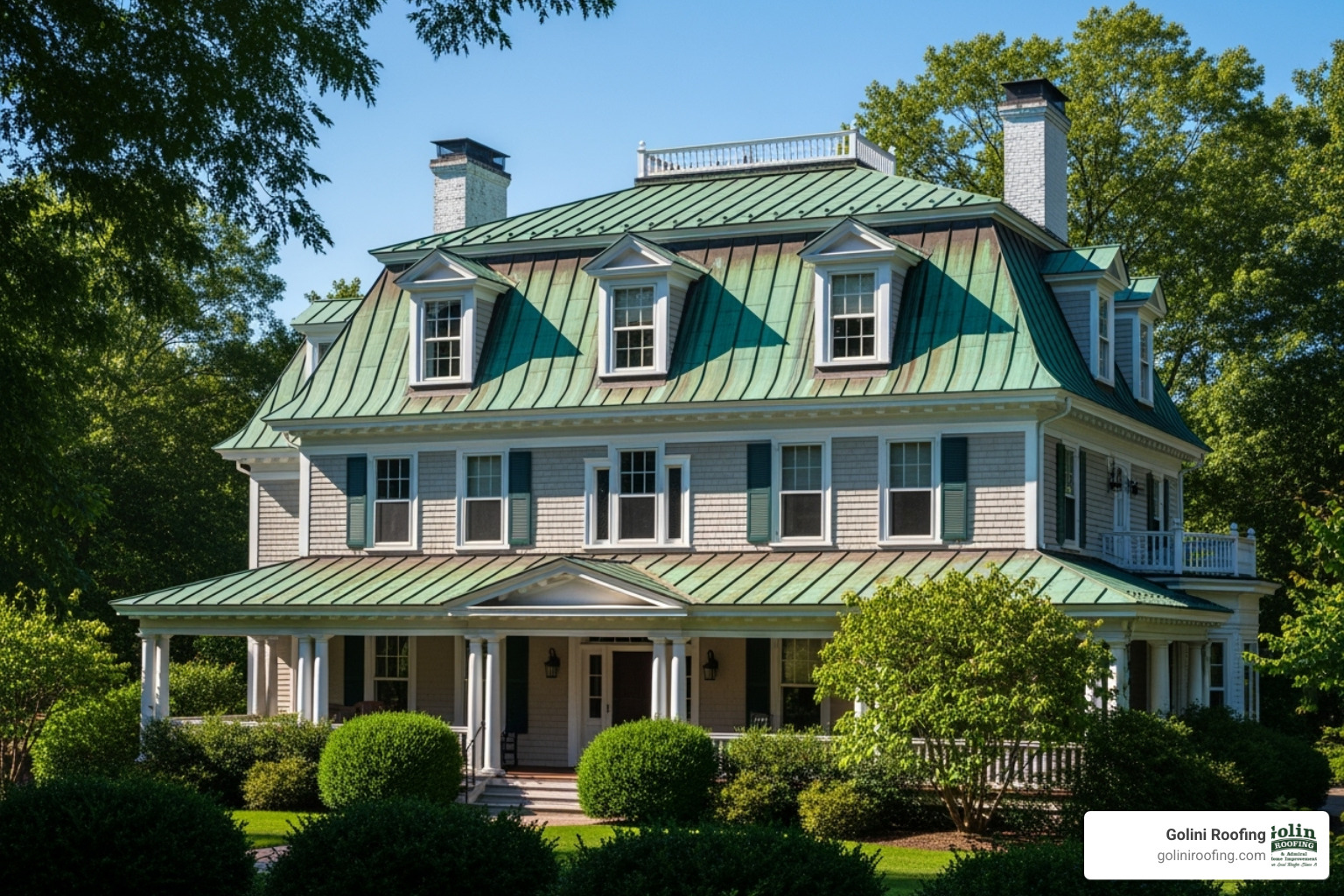
For a roof that gains beauty with age, copper and zinc are premium residential metal roofing options. These materials offer unparalleled longevity and develop stunning patinas.
Copper roofing delivers the best longevity, lasting for centuries. This lightweight metal develops its famous greenish-blue patina over time, creating a distinctive aesthetic seen on many historic Massachusetts homes that are still protected by their original copper roofs after 100+ years.
Zinc roofing offers similar longevity (80-100 years) and has self-healing properties, where minor scratches are filled in as its protective patina develops.
Both materials have the highest cost among metal options and require specialized installation to manage thermal movement. The patina runoff can also stain adjacent surfaces like siding or stonework, which is an important consideration. Our Roof Installation Services page details our approach to these specialized materials.
Exploring Metal Roofing Styles and Profiles
The profile you choose for your residential metal roofing options defines your home’s character. While the material is the foundation, the style creates the visual texture and architectural personality. Each style tells a different story, giving your home a unique look.
Standing Seam: Sleek, Modern, and Weathertight
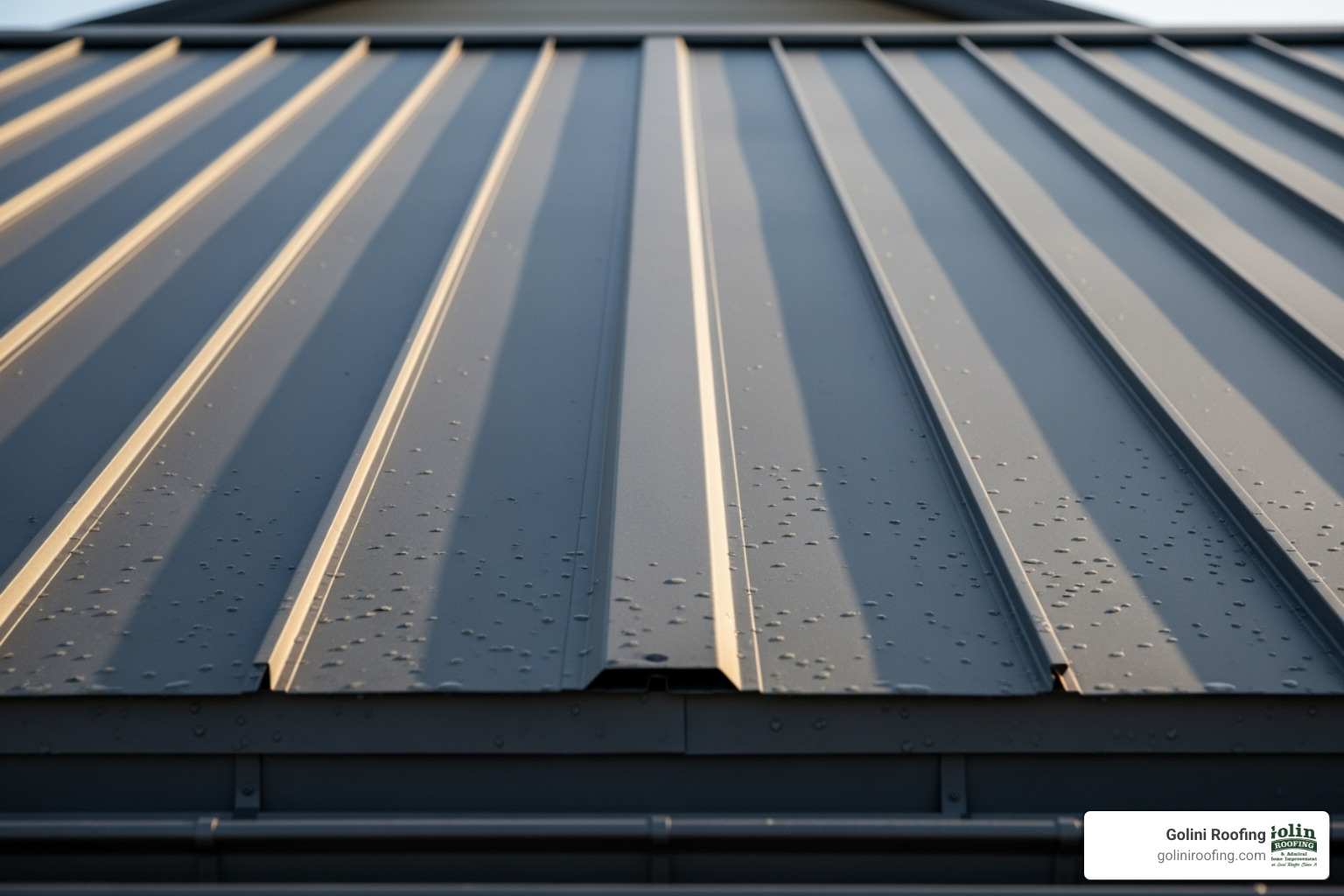
Standing seam is the gold standard for residential metal roofing options. Its panels feature raised, interlocking seams that run vertically, creating clean lines suitable for both modern and classic homes. The magic is in the hidden fasteners, which are protected from weather and allow the metal to expand and contract naturally. This prevents stress and potential failure points.
This style’s weather resistance is exceptional. The raised seams form a weathertight barrier that efficiently sheds rain, snow, and ice, making it ideal for Massachusetts winters. The contemporary look is sophisticated and timeless. However, this premium performance comes at a higher cost, typically $10-30+ per square foot installed (based on internet averages). A properly installed standing seam roof requires minimal maintenance and can protect your home for 30-50 years.
Corrugated Panels: Classic and Cost-Effective
Corrugated panels are a classic, practical choice. These panels feature the familiar wavy or ribbed pattern, as defined by the term corrugated, which creates interesting texture and shadow lines.
For budget-conscious homeowners, corrugated panels are an economical choice that doesn’t sacrifice toughness. Their large panel size allows for fast installation, which helps reduce labor costs. The industrial aesthetic works well on barn-style homes, modern farmhouses, and other contemporary designs.
The main trade-off is exposed fasteners. The gaskets on these screws can deteriorate over time from UV exposure and temperature changes, creating potential leak points. This means you’ll need to inspect and possibly replace fasteners every 5-10 years. Despite this, corrugated panels remain incredibly durable and offer excellent value.
Metal Shingles, Shakes, and Tiles: Traditional Looks, Modern Performance
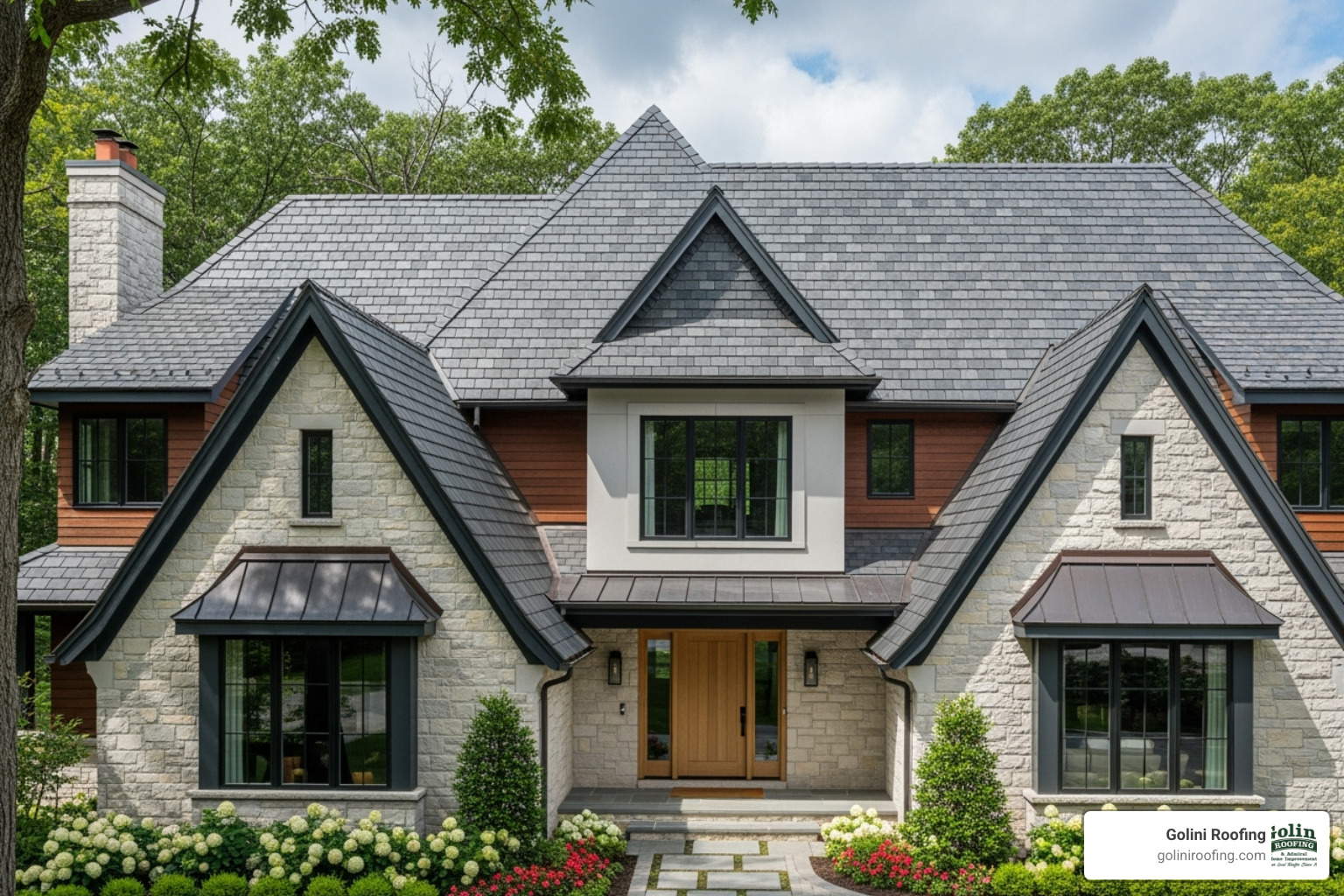
Stamped metal products cleverly mimic asphalt, slate, or wood shingles while providing all the performance benefits of metal. Stone-coating technology creates realistic textures by bonding tiny stone granules to the metal surface. These granules also absorb sound, improve energy efficiency, and add another layer of protection.
Each piece in the interlocking panels system fits together perfectly, creating a seamless appearance that looks like individual shingles but remains lightweight. This gives you traditional curb appeal without the weight, fragility, or maintenance of materials like real slate or clay.
Installation is complex and requires experienced professionals. Expect to invest around $6-18+ per square foot installed (based on internet averages), placing these products between corrugated and standing seam in cost. The result is a beautiful roof that combines traditional form with modern function.
Understanding Your Residential Metal Roofing Options for Performance
Beyond looks and materials, the functional performance of residential metal roofing options is crucial for Massachusetts weather. From winter blizzards to summer heat waves, your roof must perform year-round.
Key Fastener Systems to Consider
How your roof is attached is a make-or-break factor for long-term performance.
Exposed fastener systems use gasketed screws that go through the panel into the roof deck. Common on corrugated panels, they are economical and simpler to install, reducing upfront costs. However, these fasteners are a weak point. Gaskets can degrade from UV and temperature swings, and screws can loosen over time. This requires inspections and potential replacements every 5-10 years to prevent leaks.
Hidden fastener systems use clips and locks to attach panels, concealing all fasteners from the elements. This is the standard for standing seam profiles. The key benefit is that panels can accommodate expansion and contraction without stressing attachment points, offering superior long-term leak prevention and minimal maintenance. The trade-off is a higher upfront cost and the need for specialized installation. If you have concerns about your current fasteners, our Roof Repair Services can help.
Durability, Weather Resistance, and Energy Efficiency
Metal roofing excels when faced with harsh weather. For Massachusetts homes, this is a significant advantage.
- Wind Resistance: Wind uplift ratings often exceed 140 mph, easily handling Nor’easters. The interlocking panel system is far superior to individual shingles in high winds.
- Impact Resistance: While aluminum can dent, steel options often achieve the highest UL Class IV ratings for hail resistance. Stone-coated steel adds even more protection.
- Fire Safety: Metal roofing earns a Class A rating, the safest available, as it does not burn.
- Snow Shedding: The smooth surface of a metal roof allows snow to slide off, which helps prevent ice dams and reduces structural load. Snow guards should be installed over walkways for safety.
- Energy Efficiency: Cool roofing technology with high solar reflectance can reduce cooling costs by 10-25% by reflecting solar radiation.
- Environmental Benefits: Metal roofing contains recycled content (at least 25% for steel) and is 100% recyclable at the end of its life, unlike asphalt shingles that often end up in landfills.
The combination of these features makes metal roofing an excellent choice for Massachusetts homes.
The Financials: Metal Roofing Cost vs. Long-Term Value
When considering residential metal roofing options, cost is a major factor. While the upfront investment is higher, metal roofing often proves more economical over its lifespan. For decades, I’ve seen homeowners replace asphalt shingles multiple times, while a single metal roof installation can last for 40 years or more.
Upfront Investment vs. Lifetime Cost
Please note: The following prices are based on internet averages and are not quotes from Golini Roofing. Every project is unique.
Costs are influenced by material, style, and installation complexity. Material costs vary significantly: steel is the most affordable, followed by aluminum, with copper and zinc as premium, high-cost options. Style choice also matters. Corrugated panels are often the least expensive style, while standing seam commands the highest price. Metal shingles and tiles typically fall in between. Installation complexity, such as a steep pitch or multiple dormers, will also increase labor costs.
Overall, expect residential metal roofing options to range from approximately $6 to over $30 per square foot installed.
Here’s a comparison with asphalt shingles:
| Feature | Metal Roofing | Asphalt Shingles |
|---|---|---|
| Cost | Higher initial investment (avg. $6-30+/sq ft installed) | Lower initial investment (avg. $4-12+/sq ft installed) |
| Lifespan | 40-70+ years (steel/aluminum), 80-100+ years (copper/zinc). Often the last roof you’ll ever install. | 15-25 years. Typically needs replacement 2-3 times over the lifespan of a metal roof. |
| Maintenance | Virtually maintenance-free after installation, primarily visual inspections and debris clearing. | Requires more frequent inspections, potential for granule loss, cracking, curling, and blow-offs, leading to more frequent repairs and replacements. |
| ROI | High. According to the 2024 Cost vs. Value Report, metal roofs recoup significant value. Increases home value and curb appeal substantially. | Lower. Less significant impact on home value compared to metal. |
| Energy Efficiency | Reflective properties reduce heat absorption, leading to 10-25% lower cooling costs. | Absorb heat, contributing to higher cooling costs. |
| Durability | Exceptional resistance to wind (up to 200 mph), hail (Class IV), fire (Class A), and pests. Does not rot, crack, or warp. | Vulnerable to wind damage, prone to cracking in extreme temperatures, susceptible to algae growth, less fire-resistant. |
| Environmental | 100% recyclable, made with recycled content. | Significant contributor to landfill waste. |
The key difference is replacement cycles: a single metal roof can outlast two or three asphalt roofs. For more cost details, visit our Metal Roofing Costs page.
Return on Investment and Home Value
A metal roof is an asset. Its increased curb appeal is immediate, with standing seam systems offering clean, high-end lines. Home resale value also gets a boost. The 2024 Cost vs. Value Report shows that metal roofs deliver strong returns, as buyers are willing to pay for a roof they won’t have to replace.
Many insurance companies offer premium reductions for metal roofs due to their superior fire, hail, and wind resistance. The biggest financial win, however, is avoiding future replacements. A metal roof could be the last one you ever buy, saving you tens of thousands in future costs. When you add up all the benefits, a metal roof often pays for itself over time.
Frequently Asked Questions About Residential Metal Roofs
After helping Massachusetts homeowners with residential metal roofing options for over 35 years, I’ve heard nearly every question imaginable. Here are answers to the most common concerns.
How long does a metal roof really last?
This is one of the biggest reasons homeowners switch to metal. It’s no exaggeration to say your new metal roof could outlast you. Steel and aluminum roofs typically last 40-70 years with proper installation, which is two to three times longer than asphalt shingles (15-25 years). Copper and zinc roofs are in a league of their own, lasting 80-100 years or more.
Quality metal systems come with 30-50 year warranties, backing up these impressive lifespans and far exceeding the coverage on most asphalt shingles.
What kind of maintenance does a metal roof need?
The great news is that residential metal roofing options are remarkably low-maintenance. Standing seam systems are virtually maintenance-free after installation. However, a little attention goes a long way.
I recommend a simple annual visual inspection. The most important task is clearing debris like leaves and branches from valleys or around chimneys to prevent trapped moisture. For exposed fastener systems (like corrugated panels), you should check the screws every 5-10 years to ensure they haven’t loosened. Finally, check sealants around penetrations like vents and skylights for any signs of degradation.
If you prefer a professional eye, our Roof Inspection Services team can spot potential issues early.
Are metal roofs noisy in the rain?
This is the biggest myth about metal roofing. The idea of a noisy roof comes from old barns with metal installed over open rafters. Modern residential metal roofing options are completely different. Today’s installations include solid sheathing, proper insulation, and an attic space, all of which act as sound buffers.
The truth is, a properly installed metal roof is no louder than other roofing materials during a rainstorm. Many of our customers even find the gentle sound to be pleasant and soothing.
Making the Right Choice for Your Massachusetts Home
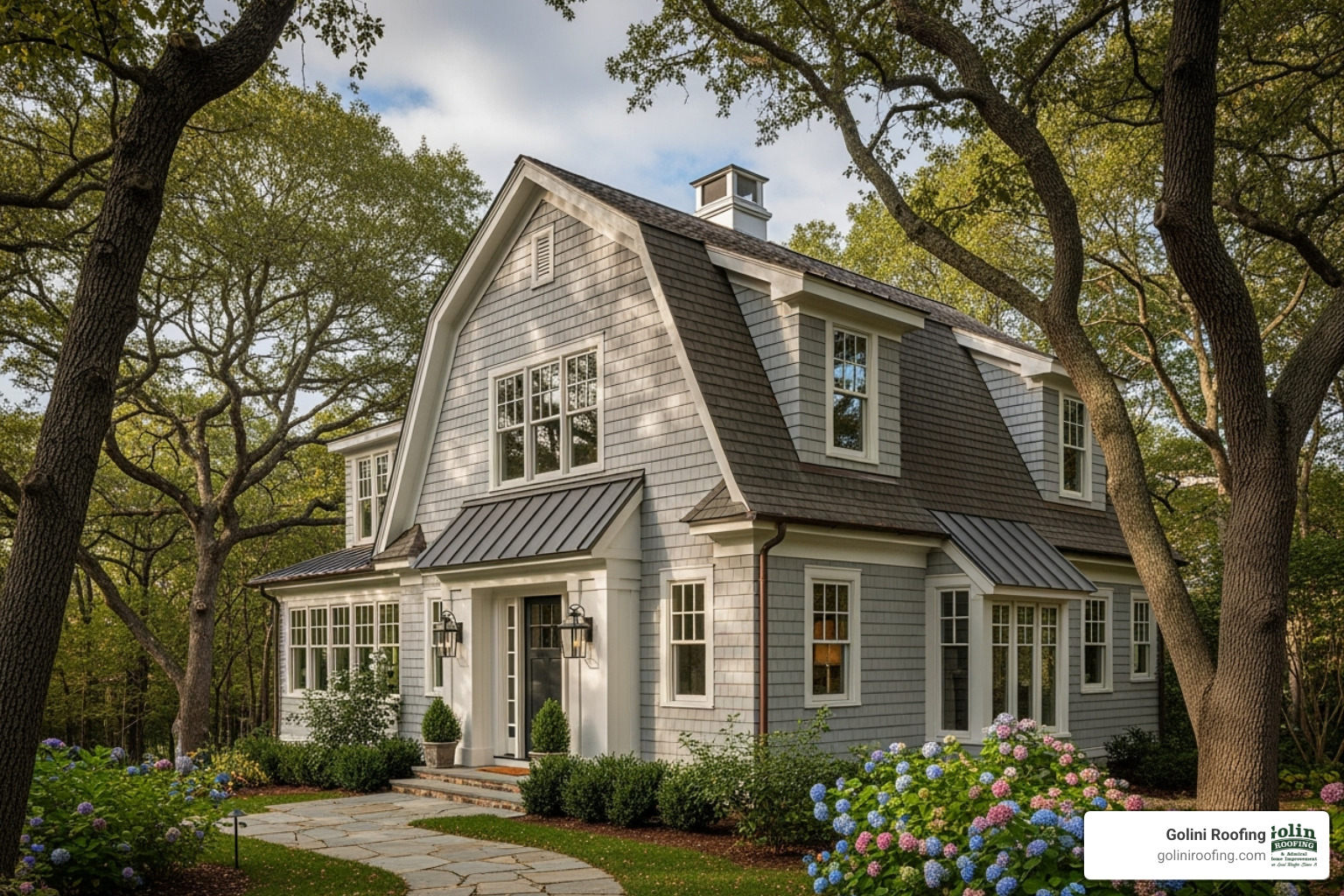
Choosing from the many residential metal roofing options can feel overwhelming. It’s a major decision, as your roof will protect your family and home for the next 40 to 70 years. The beauty of metal roofing is that there’s an option for every home, budget, and style.
Here are the key factors to consider:
- Your Budget: Corrugated steel is the most economical choice. Standing seam offers premium performance for a higher investment, while copper and zinc provide ultimate longevity at the highest cost.
- Architectural Style: A classic Colonial might look best with metal shingles that mimic slate, while a contemporary home can shine with clean standing seam lines. Modern metal roofing comes in enough colors and profiles to complement any style.
- Massachusetts Climate: Our harsh weather makes metal roofing a smart choice. It handles Nor’easters, heavy snow, and temperature swings with ease, shedding snow and resisting high winds.
- Long-Term Plans: If you plan to stay in your home for many years, the benefits of energy savings and no replacement costs really add up. If you might move, the increased curb appeal and home value still make it a wise investment.
Professional installation is absolutely crucial. Even the best materials will fail without skilled installation. The details of thermal movement, fasteners, and flashing require years of experience.
At Golini Roofing, we’ve helped Massachusetts homeowners with roofing decisions since 1982. We apply our renowned meticulousness to every metal roofing project. Serving areas like Beverly, Wakefield, and Winchester, we understand the challenges of New England weather.
We know choosing the right residential metal roofing options is about finding a partner you can trust. We take the time to understand your home, budget, and goals to help you make the best choice for your family’s future.
Get a Free Roof Quote for your project today, and let’s start the conversation about protecting your home with a roof that’s built to last.
