
Residential roofing types: 5 Best Options
Why Understanding Residential Roofing Types Is Essential for Your Home
Residential roofing types vary significantly in cost, durability, and performance, making it crucial to understand your options before making this major investment. Here are the most common types homeowners choose from:
Most Popular Residential Roofing Types:
- Asphalt Shingles – Most affordable option, lasting 15-30 years
- Slate Roofing – Premium choice lasting 100+ years
- Wood Shakes/Shingles – Natural rustic appeal, lasting 20-40 years
- Synthetic Composite – Modern materials mimicking natural looks
Your roof does far more than just cover your home – it’s your first line of defense against Massachusetts’ harsh winters, heavy snowfall, and unpredictable weather patterns. The right roofing material protects your family, prevents costly water damage, and significantly impacts your home’s curb appeal and resale value.
Average costs vary widely based on material choice, with basic asphalt shingles ranging from $150-$600 per square (100 square feet), while premium materials like slate can cost $1,500-$4,500 per square or more. These are average costs based on internet data and not actual costs for specific installations.
With over 35 years of experience installing residential roofing types throughout the North Shore area, I’m Jack Golini, owner of Golini Roofing, and I’ve helped countless homeowners steer these important decisions. This comprehensive guide will walk you through everything you need to know to choose the perfect roof for your home’s unique needs and budget.
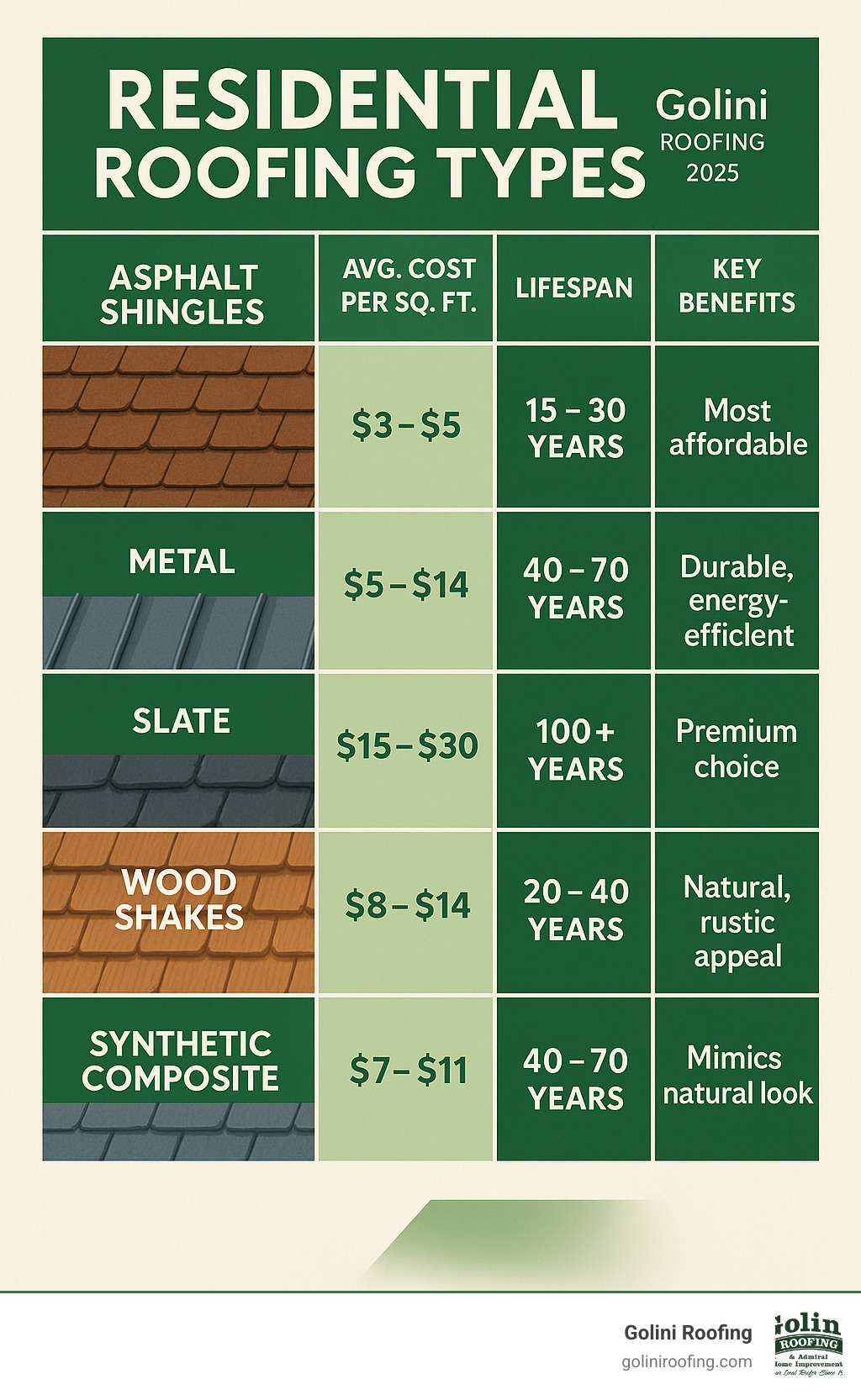
Glossary for residential roofing types:
An Overview of Popular Residential Roofing Types
Each of the residential roofing types has unique strengths and weaknesses. Understanding the most popular options will help you make the best choice for your home, your budget, and your peace of mind.
Let’s walk through the most common materials you’ll see on homes today.
Asphalt Shingles: The Versatile Standard
Practical, affordable, and effective, asphalt shingles are the most common roofing material in America for good reason. They have been a reliable choice for over a century.
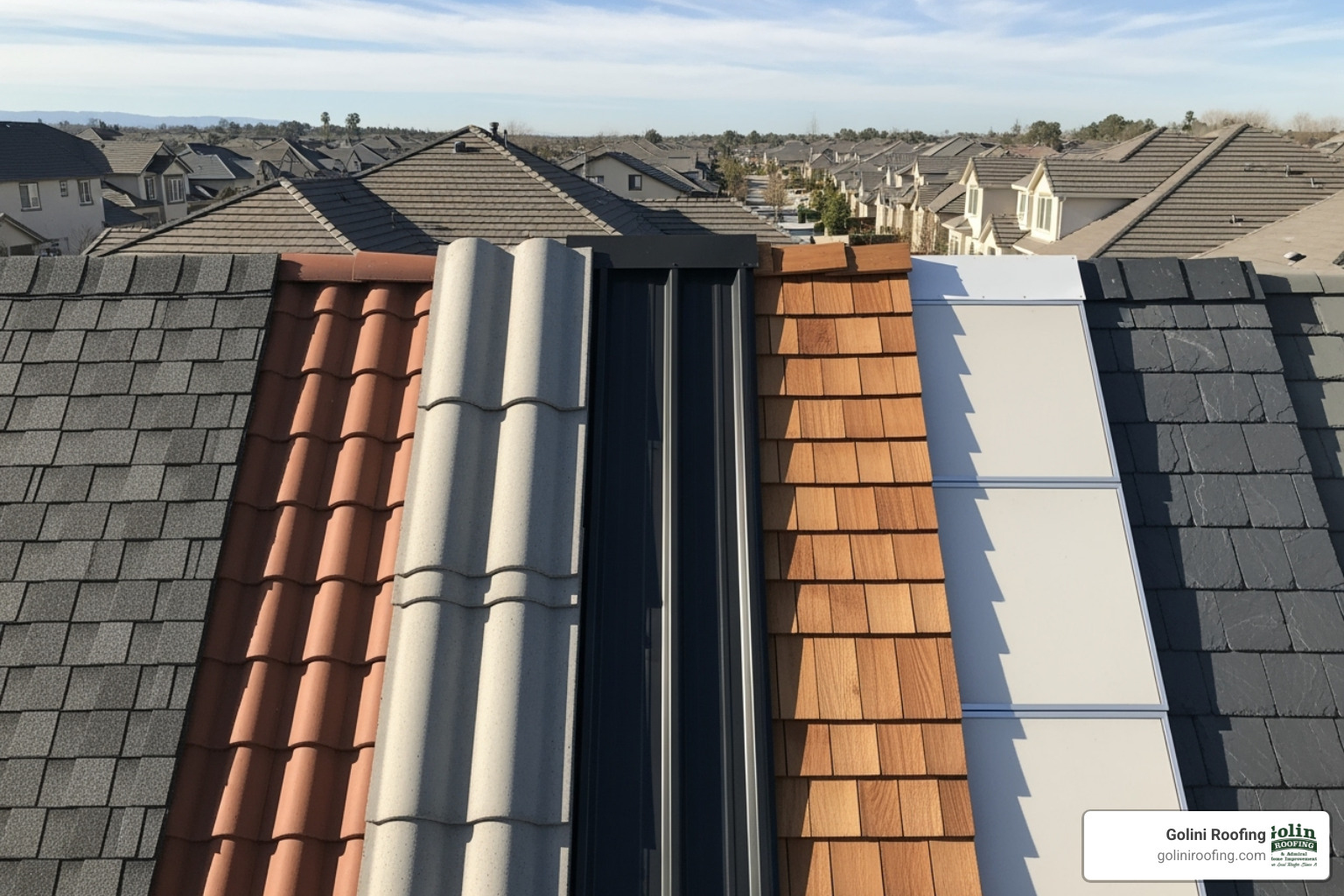
Asphalt shingles consist of a fiberglass base coated in waterproof asphalt and topped with ceramic-coated mineral granules. These granules provide protection from UV rays and come in a wide color variety.
There are two main types: 3-tab shingles are the basic, flat, and budget-friendly option, typically lasting 15-18 years. Architectural shingles (or dimensional shingles) are a popular upgrade; they are thicker, more textured, and designed to mimic slate or wood shakes while lasting 20-30 years.
Pros: The primary advantages are affordability and ease of installation, which help keep costs down. The vast selection of colors and styles makes it easy to match any home.
Cons: Their lifespan of 15-30 years is shorter than other materials. They can be susceptible to damage from high winds and hail, and the protective granules wear away over time, especially in harsh Massachusetts weather. They can also be prone to moss or algae growth in shady, damp areas.
More info about our roofing services.
Slate Roofing: The Premium, Long-Lasting Option
Slate is a natural stone material that offers best beauty and durability, often seen on historic New England homes that have stood for over a century.
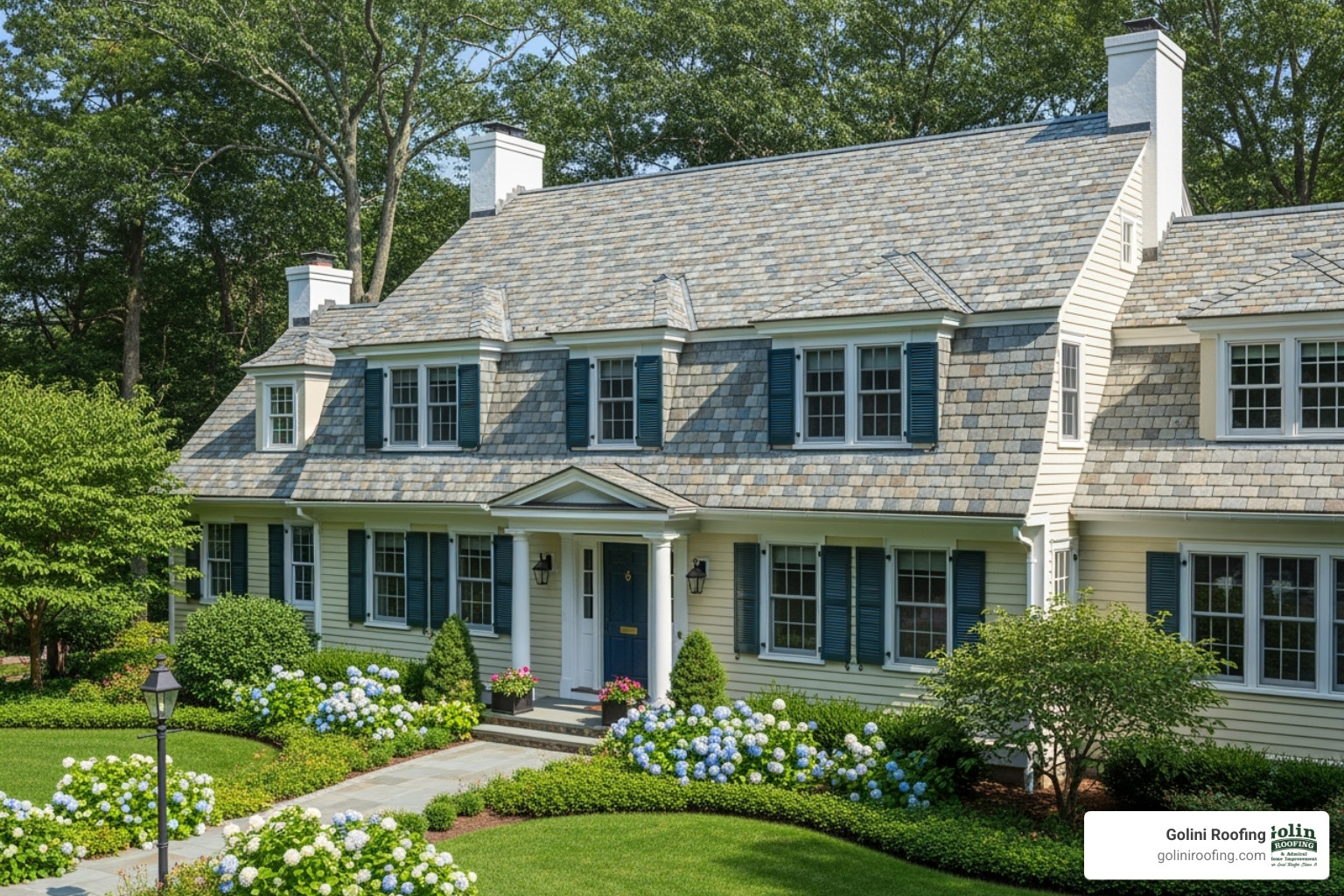
Pros: As a natural stone, each slate tile is unique. It offers the best durability available, with a lifespan of 100+ years. It is completely fireproof, requires very low maintenance, and is an environmentally friendly choice that will outlast many generations of other roofing materials.
Cons: The high cost is the most significant barrier, often $1,000-$4,000 per square or more. These are average costs based on internet data and not actual costs for specific installations. Its heavy weight may require structural reinforcement of the roof deck. The tiles are brittle and require specialized installation and repair by experienced craftspeople.
Wood Shakes and Shingles: Natural Rustic Charm
Wood roofing, typically made from cedar, offers a natural warmth and character that is perfect for traditional, cottage, and craftsman-style homes.
Wood shingles are sawn for a uniform look, while cedar shakes are split for a more rustic, textured appearance. Cedar is popular for its natural insulation and resistance to decay.
Pros: The main draw is its rustic aesthetic, which ages to a beautiful silver-gray patina. It also provides good natural insulation, which can help with energy efficiency.
Cons: Wood requires significant maintenance, including regular treatments to prevent rot and insect damage, especially in Massachusetts’ humid climate. It is combustible, posing a fire risk that may be restricted in some areas. The lifespan of 20-40 years is highly dependent on climate and consistent upkeep.
More info about our past projects.
Modern and Specialty Residential Roofing Types
The roofing industry continues to innovate, offering new materials that solve old problems. These modern residential roofing types are changing how homeowners think about roofing.
Synthetic composite shingles are made from recycled materials like plastic and rubber and are engineered to mimic the look of slate or wood shakes. They offer high-impact resistance, often achieving high-end Class 4 impact and Class A fire ratings. With a lifespan of 50+ years, they are lightweight, weather-resistant, and require minimal maintenance.
Solar tiles integrate seamlessly into your roof, providing energy generation without the bulky look of traditional solar panels. They can significantly reduce electricity bills and represent the cutting edge of roofing technology.
Green roofs are living roofs covered with vegetation that offer incredible environmental benefits, including stormwater management, natural insulation, and improved air quality.
These specialty materials have a higher initial cost. Synthetics can range from $900-$1,200 per square, while solar and green roofs are significantly more. These are average costs based on internet data and not actual costs for specific installations. However, they offer advanced performance, sustainability, and innovative solutions for the modern homeowner.
Key Factors for Choosing Your Ideal Roof
Selecting the right roofing material requires balancing budget, style, and long-term performance. The best of the residential roofing types is the one that best fits your home’s specific needs. The decision can feel overwhelming, which is why we walk our clients through these critical considerations to ensure they make a confident choice.
Comparing Cost, Lifespan, and Durability
When evaluating residential roofing types, the relationship between initial cost, lifespan, and durability reveals the true value. A cheaper upfront option can lead to expensive repairs and early replacement down the road. A quality roof is a long-term investment.
Here’s how the primary materials stack up against each other:
| Material Type | Initial Cost (per sq ft) | Average Lifespan (Years) | Maintenance Needs | Key Pros | Key Cons |
|---|---|---|---|---|---|
| Asphalt Shingles | $1.50 – $6.00 | 15-30 | Low to Moderate (cleaning, minor repairs) | Most affordable, wide variety of colors/styles, easy to install/repair. | Shorter lifespan, susceptible to wind/hail in extreme weather, can fade, petroleum-based. |
| Slate Roofing | $10.00 – $45.00 | 100+ | Very Low (periodic inspection, occasional repair) | Best longevity, stunning aesthetics, fireproof, environmentally friendly, extremely low maintenance. | Highest initial cost, very heavy (requires structural reinforcement), brittle (can break if walked on improperly), requires specialized installation/repair. |
| Wood Shakes/Shingles | $4.50 – $14.00 | 20-40 | High (cleaning, treatments for rot/insects/fire) | Natural, rustic beauty, good insulation properties, renewable resource. | Requires significant maintenance, vulnerable to moisture/insects/fire, variable lifespan based on climate/maintenance. |
| Synthetic Composite | $9.00 – $12.00 | 50+ | Very Low (periodic cleaning, inspection) | Mimics natural materials, lightweight, high durability (impact/fire ratings), resistant to rot/insects, long lifespan, often made from recycled materials. | Higher initial cost than asphalt, may not offer the exact aesthetic of natural materials for some. |
These are average costs based on internet data and not actual costs for specific installations.
Long-term value is crucial. Higher-end roofs can cost more upfront but may be cheaper per year over a 50+ year lifespan. Premium materials like slate can also increase your home’s resale value. Always review the warranty information, as a strong warranty reflects the manufacturer’s confidence in their product.
How Climate and Weather Impact Your Choice
Our Massachusetts climate—with heavy snow, ice dams, and nor’easters—demands a roof that can handle extreme weather. The performance of residential roofing types varies significantly under these conditions.
Steep-sloped, smooth-surface systems are excellent at shedding snow, which helps prevent ice dams that cause water damage. Regardless of the material, proper attic ventilation is absolutely critical to prevent ice buildup. Wind resistance is another major factor. Many architectural asphalt shingles meet high industry standards for wind resistance when properly installed. This is where our hand-nailing technique makes a difference, creating a stronger bond than pneumatic nail guns.
UV exposure from the summer sun degrades roofing materials over time. The ceramic granules on quality asphalt shingles are designed to block UV rays. Finally, materials must withstand extreme temperature fluctuations and freeze-thaw cycles without cracking. High-quality synthetic options perform particularly well in these conditions. Regardless of the material, proper ventilation is essential for regulating temperature and moisture, extending the life of any roof in our climate.
Aesthetics and Architectural Style
Your roof can account for up to 40% of your home’s visible exterior, so its appearance significantly impacts curb appeal. Matching your roof to your home’s architectural style is key to a cohesive look.
Colonial and Cape Cod homes look best with traditional materials like architectural asphalt shingles, wood shakes, or classic slate. Modern homes are often complemented by the sleek profiles of advanced composite systems or flat-profile architectural shingles. Rustic or craftsman-style homes are a natural fit for wood shakes or composites that mimic wood’s texture.
Today’s residential roofing types come in a vast range of color and texture options. You can choose from subtle earth tones that blend with the landscape or bold colors that make a statement. We work with clients to select materials that not only protect their homes but also improve their visual appeal.
The Roof Installation and Maintenance Process
Even the highest quality residential roofing types can fail if not installed and maintained correctly. The quality of the installation is just as important as the material itself.
Choosing a Qualified Roofing Contractor
Your most important decision is who installs your roof. Inexperienced work can lead to costly future repairs.
Experience matters. With over 35 years at Golini Roofing, we’ve seen what separates a durable roof from a failing one. Always verify licensing and insurance to protect yourself from liability. A contractor with a strong local reputation, backed by positive online reviews and references, is accountable to the community.
When reviewing estimates, get detailed written quotes and be wary of the cheapest bid, as it may involve cutting corners. We stand by our commitment to hand-nail every single shingle. While most contractors use faster nail guns, hand-nailing allows for precise fastener placement and depth, ensuring maximum durability and wind resistance for your roof.
More info about our service areas.
Understanding the Components of a Complete Roofing System
A complete roofing system consists of several layers working together to protect your home.
- The Roof Deck: The plywood or OSB foundation for the entire system.
- Underlayment: A water-resistant barrier over the deck that serves as a second line of defense.
- Leak Barriers: Self-adhering membranes installed in critical areas like valleys, eaves, and around chimneys to protect against ice dams and wind-driven rain.
- Starter Strip Shingles: Secure the first row of shingles and prevent wind uplift.
- Primary Roofing Material: The asphalt, metal, or other material that forms the main protective layer.
- Ridge Cap Shingles: Cover the peaks of the roof to prevent leaks at the joints.
- Proper Attic Ventilation: A system of vents that allows air to circulate, preventing heat and moisture buildup that can damage your roof and home.
- Flashing: Metal pieces that direct water away from vulnerable areas like chimneys and skylights.
Each component is vital for the system’s overall performance and longevity.
The Importance of Regular Roof Maintenance
Proper maintenance is the key to getting the most out of your investment and extending your roof’s life.
Regular care prevents small issues from becoming big, expensive problems. Gutter cleaning is one of the most critical tasks; clogged gutters cause water to back up under shingles, leading to rot and ice dams. Debris removal, especially from overhanging trees, prevents moisture from being trapped against the roof, which can cause mold and decay.
We recommend professional inspections annually and after severe storms. A trained eye can spot subtle signs of wear or damage that a homeowner might miss. Catching minor issues like a loose shingle early is far more affordable than dealing with the widespread water damage a leak can cause. A little preventive care goes a long way in protecting your home.
More info about gutter services.
Frequently Asked Questions about Residential Roofing
With over 35 years of experience, I’ve heard nearly every question about residential roofing types. Here are answers to some of the most common ones.
What is the most popular residential roofing material?
Asphalt shingles are the most popular choice, covering about 80% of homes in the U.S. Their popularity comes from a winning combination of affordability, a wide variety of styles and colors, and straightforward installation. This makes them an accessible and versatile option for most homeowners and architectural styles.
How long does a new roof last?
The lifespan of a roof depends heavily on the material, installation quality, and local climate. Here are the typical ranges:
- Asphalt shingles: 15-30 years
- Wood shakes/shingles: 20-40 years
- Synthetic composites: 50+ years
- Natural slate: 100+ years
Regular maintenance is crucial for helping any roofing material reach or exceed its expected lifespan.
Can I put a new roof over my old one?
While some building codes allow for one layer of new shingles to be installed over an existing layer (a “roof-over”), I almost always recommend a complete tear-off. Here’s why:
- Inspection: A tear-off allows us to inspect the underlying roof deck for rot or damage that would otherwise be hidden.
- Proper Installation: It ensures that modern components like ice and water leak barriers can be installed correctly on the deck for a fully sealed system.
- Weight: A second layer adds significant weight that your home’s structure may not be designed to support.
- Long-Term Value: A roof-over often has a shorter lifespan and can void manufacturer warranties. When it’s time for the next replacement, you’ll have to pay for the removal of two layers instead of one.
A complete tear-off is the best practice for ensuring a secure, long-lasting roof.
Protect Your Home with the Right Roofing Choice
Your roof is a critical investment in your home’s safety, value, and appearance. Understanding the differences between residential roofing types—from affordable asphalt to long-lasting slate—and considering factors like our challenging Massachusetts climate allows you to make a confident decision.
However, even the best material will fail without expert installation. With over 35 years of experience and our commitment to hand-nailing each shingle for superior durability, Golini Roofing ensures your investment is protected for decades. You deserve the peace of mind that comes from knowing the job was done right.
Contact us today for a free estimate and let us help you choose the perfect roofing solution for your home.
Like us on Facebook!
