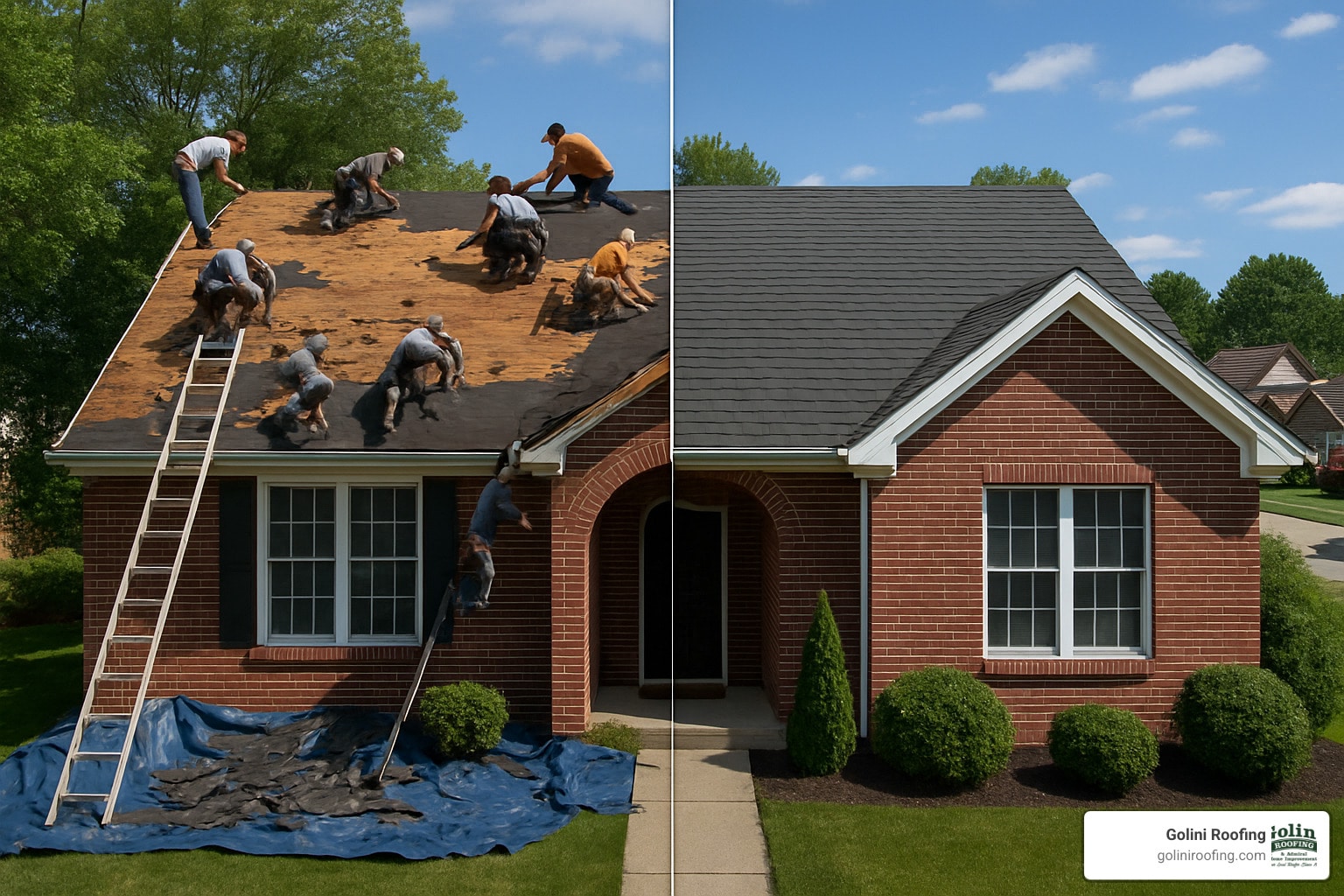
roof repair and replacement: 7 Powerful Tips for Smart Success 2025
Your Roof at the Crossroads: Repair or Replace?
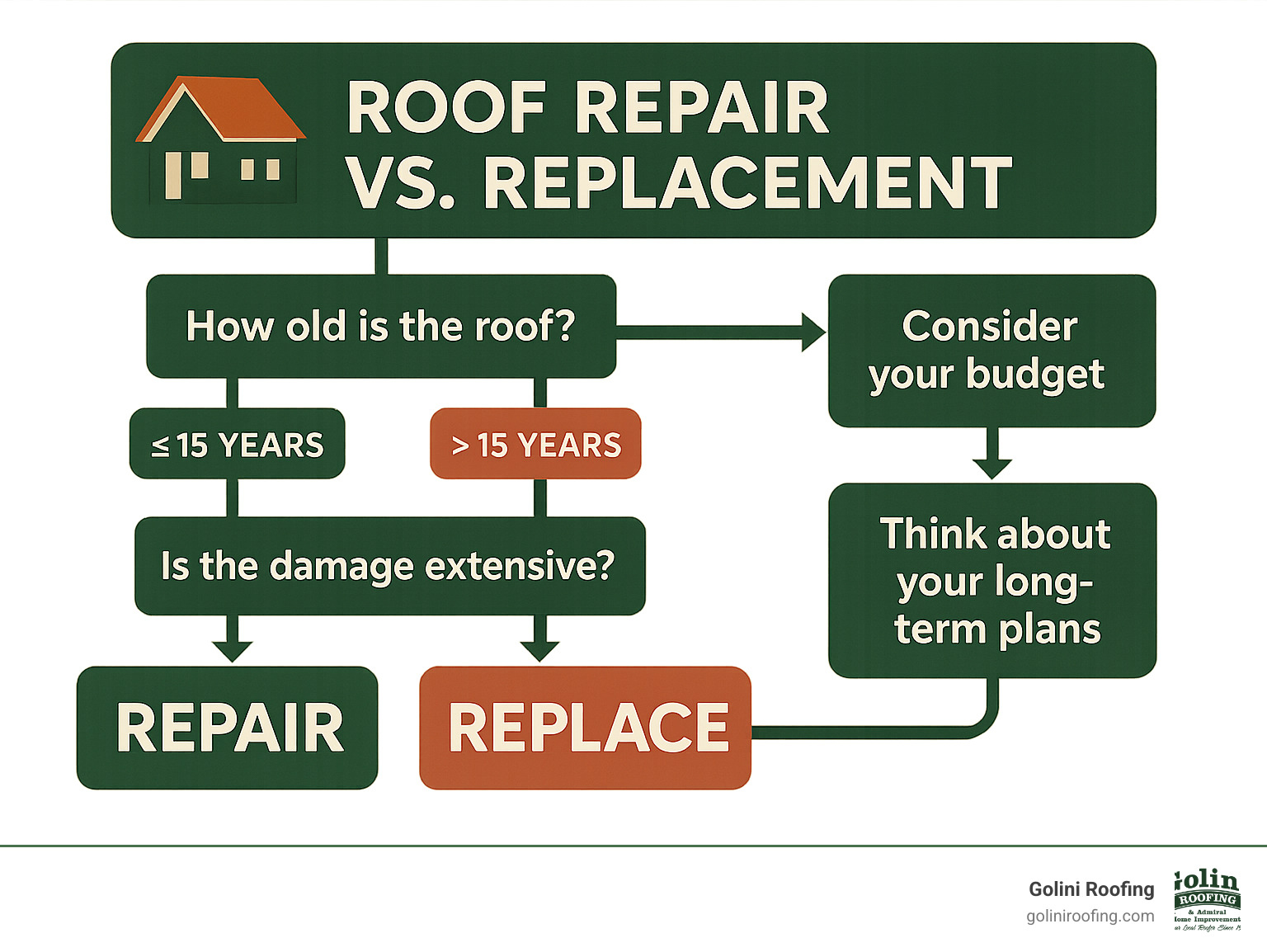
When facing roof repair and replacement decisions, homeowners need clear guidance to make the right choice. Here’s a quick guide to help you decide:
| Condition | Best Solution | Typical Cost Range |
|---|---|---|
| Repair when: | Replace when: | Cost Comparison |
| • Roof is under 15 years old | • Roof is over 20 years old | • Repairs: $300-$3,000 |
| • Damage is isolated | • Multiple leaks throughout | • Replacement: $5,000-$16,000 |
| • Less than 30% of roof affected | • Repair costs exceed 30% of replacement | • If repair exceeds 30% of replacement cost, replace |
| • No structural issues | • Sagging or deck damage visible | • Restoration: Middle-ground option with 15-year warranty |
A leaking or damaged roof creates immediate stress for homeowners. You’re suddenly faced with a crucial decision: patch the problem area or invest in a complete overhaul? This choice impacts not just your home’s protection but also your budget and property value.
Roof repair and replacement decisions don’t have to be overwhelming. With the right information, you can confidently choose the option that balances immediate needs with long-term value.
I’m Jack Golini, owner of Golini Roofing with over 40 years of experience in roof repair and replacement throughout Massachusetts’ North Shore communities, helping homeowners steer these exact decisions with honest assessments and quality craftsmanship.
Roof repair and replacement terms to remember:
– gutter installers near me
– commercial roofing services
– roof
Why This Guide Matters
“Compromise makes a good umbrella but a poor roof,” goes an old saying that perfectly captures why this decision is so critical. After a severe storm hits Wakefield or North Reading, homeowners often face urgent choices about their roof’s future. Understanding the key differences between repair, restoration, and replacement isn’t just about immediate fixes—it’s about protecting your largest investment.
Many homeowners operate under common roofing myths. Some believe a 25-year warranty means their roof will last exactly that long without issues. Others assume any leak automatically requires a complete replacement. By the end of this guide, you’ll have the clarity needed to make an informed decision that balances budget constraints with long-term protection.
Roof Repair and Replacement at a Glance
Understanding your options is the first step toward making the right roofing decision. Let’s break down what repair, restoration, and replacement actually mean for your home:
| Approach | Scope | Timeline | Average Cost | Best When |
|---|---|---|---|---|
| Repair | Targeted fixes to damaged areas | 1-2 days | $300-$3,000 | Roof is young, damage is isolated |
| Restoration | Comprehensive cleaning, sealing, and coating | 3-5 days | $2,000-$8,000 | Roof structure is sound but showing age |
| Replacement | Complete removal and new installation | 1-2 weeks | $5,000-$16,000+ | Extensive damage, end of lifespan |
Want to dive deeper into specific solutions? Learn more about our approaches to Roof Repair and Roof Replacement.
What Counts as a Roof Repair?
Think of roof repair as targeted medicine for your home’s protective shield. Rather than overhauling the entire system, we focus on specific trouble spots that need attention.
Just last month, a Stoneham family called us in a panic after finding a small water stain on their bedroom ceiling. After a careful inspection, we found the culprit – damaged flashing around their chimney that had loosened during recent high winds. A straightforward repair solved their problem without breaking the bank.
Common repair scenarios include patching isolated leaks around chimneys or vents, replacing damaged or missing shingles, fixing compromised flashing, and addressing minor structural issues before they become major headaches.
Most roof repairs can be completed for under a couple thousand dollars, making them the budget-friendly choice when damage hasn’t spread throughout your roofing system.
Where Does Roof Restoration Fit?
Restoration is the middle path – not quite a repair, not quite a replacement. It’s like giving your aging roof a comprehensive spa treatment that extends its life significantly.
The restoration process typically includes a thorough cleaning to remove debris and growth, replacement of damaged sections, and application of specialized protective coatings that seal and reinforce your existing roof.
“We were planning to sell our Reading home but worried about our 15-year-old roof,” shared one recent customer. “The restoration not only fixed several minor issues but transformed the curb appeal – all for about half what replacement would have cost.”
A quality restoration can provide a 15-year material warranty while costing 30-50% less than complete replacement. It’s particularly valuable when your roof is showing its age but hasn’t suffered structural compromise.
Full Replacement Explained
Sometimes, starting fresh is the smartest long-term investment. Roof replacement involves completely removing existing materials down to the decking, allowing us to inspect for hidden damage that might otherwise go undetected.
During replacement, we install new underlayment and water barriers, ensure proper ventilation and insulation, and bring everything up to current building codes. This comprehensive approach provides maximum protection and peace of mind.
Many homeowners are tempted to save money by adding a new layer of shingles over the existing roof. However, this adds significant weight – equivalent to parking two SUVs on your roof! At Golini Roofing, we always recommend complete removal to ensure the longest possible lifespan for your new roof.
The 30% rule offers helpful guidance: if repair costs would exceed 30% of replacement costs, investing in a new roof typically provides better long-term value. While the upfront cost is higher, you gain decades of protection rather than a temporary solution.
Listening to Your Roof: Inspection & Diagnosis
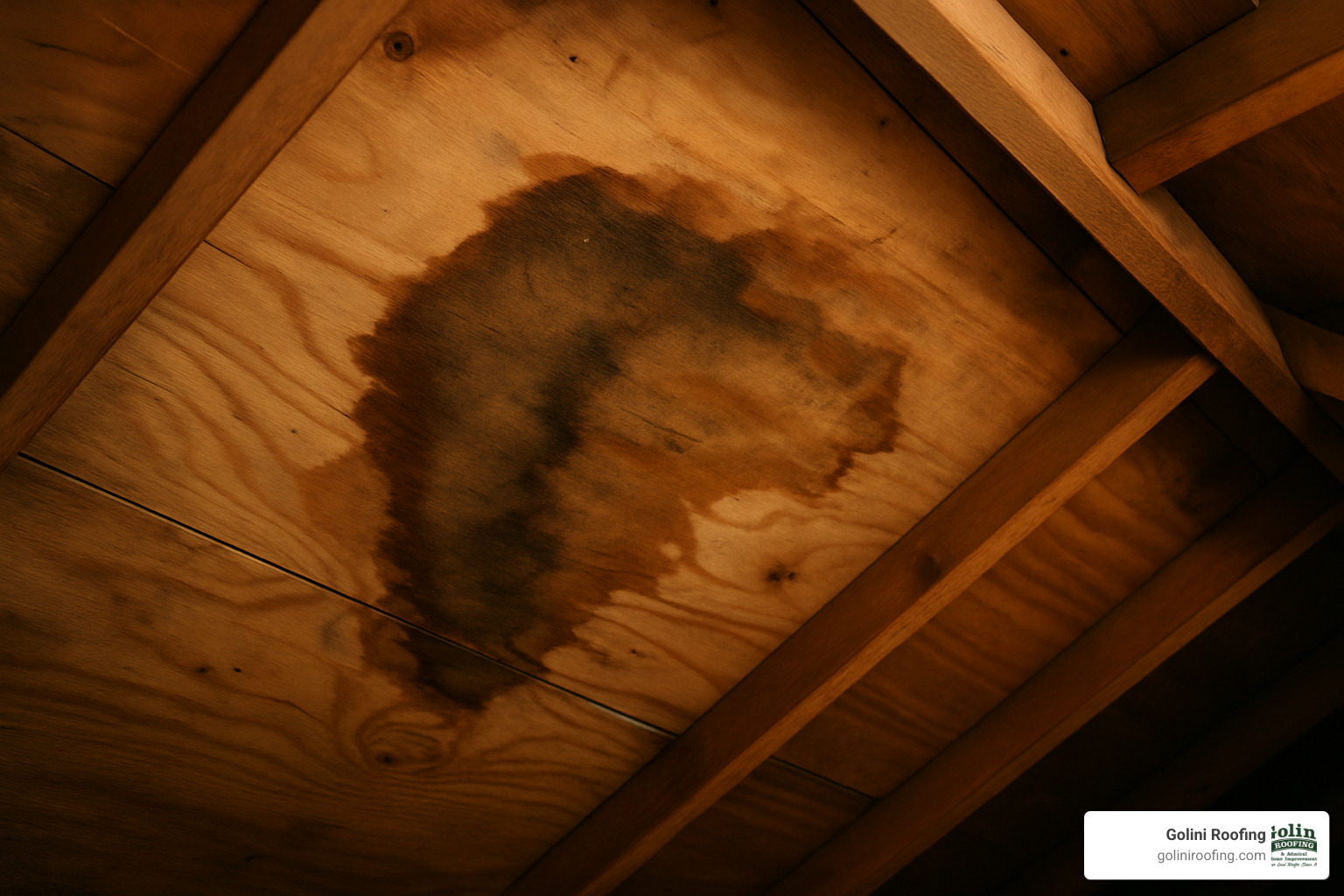
Your roof has a way of telling you what it needs—if you know how to listen. Think of those water stains or missing shingles as your home’s way of waving a red flag. Understanding these signals can save you thousands in the long run.
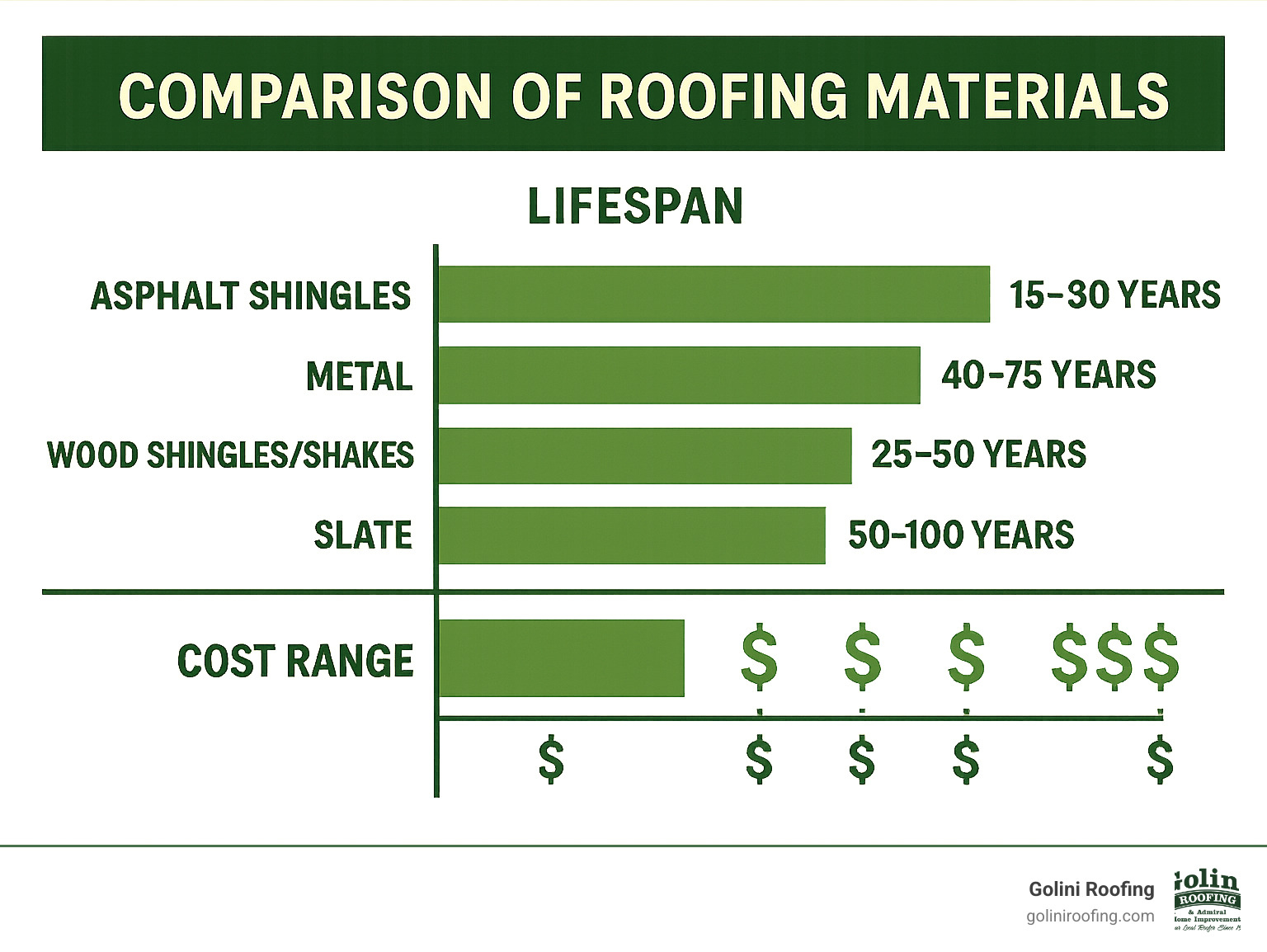
Most roofing materials have predictable lifespans. Asphalt shingles typically last 15-30 years depending on quality and installation. Metal roofing offers more durability at 30-50 years, while premium materials like slate or tile can protect your home for 50-100+ years when properly maintained.
But age isn’t everything. I’ve seen 15-year-old roofs that needed immediate replacement due to poor installation, while others have sailed past their 25-year warranty still performing beautifully. The key is knowing what to look for beyond just the birthday candles.
When I walk around a client’s home in Wakefield or Reading, I’m scanning for missing or curled shingles that expose your home to the elements. Granule loss is another telltale sign—those tiny particles that give shingles their color and protection often wash into gutters when the roof is deteriorating. Dark streaks might just be algae growth, but moss buildup can trap moisture and cause serious damage over time.
The most concerning signs are any sagging areas or visible dips in your roofline. These suggest structural problems that need immediate attention before a small repair becomes a major replacement.
DIY Spot-Check Checklist
While nothing replaces a professional eye, you can perform a preliminary assessment that might save you time and worry. On a clear day, grab a pair of binoculars for a ground-level inspection. This allows you to spot obvious issues without climbing ladders.
Next time you’re cleaning gutters (hopefully twice a year!), look for what resembles coarse black sand—this is granule accumulation and suggests your shingles are wearing thin.
The attic tells the most honest story about your roof’s health. On a sunny day, step into your attic and look for daylight peeking through roof boards—a clear sign of openings that need addressing. Check for water stains on rafters, damp insulation, or musty odors that suggest moisture has found its way in.
I remember a Winchester family who followed this checklist and noticed significant granule buildup in their gutters despite their roof looking fine from the ground. Their proactive call for inspection revealed widespread deterioration that would have caused serious leaks within months. That simple gutter check saved them thousands in potential interior damage.
Professional Roof Inspection Process
At Golini Roofing, we believe in thorough diagnostics before recommending any roof repair and replacement options. Our comprehensive inspection includes a detailed exterior assessment where we examine all roofing materials, flashing conditions, gutter systems, and ventilation components.
For larger homes or particularly steep roofs in places like Stoneham or North Reading, we sometimes employ drone analysis to safely capture detailed images of areas that would be dangerous to access directly. This technology allows us to see problems that might be missed in traditional inspections.
We don’t stop at the roof’s surface. Our interior evaluation checks your attic for signs of water intrusion, proper ventilation, and structural integrity. Using specialized moisture meters, we can identify hidden water damage that isn’t yet visible to the naked eye—catching problems before they become disasters.
After our inspection, you’ll receive a detailed report with photographs, clear recommendations, and straightforward explanations of any issues found. We believe in educating our customers, not just selling services.
Want to learn more about our inspection approach? Visit our Roof Repairs Near Me page for additional information about how we serve Massachusetts homeowners with honest assessments and quality craftsmanship.
Listening to your roof early saves both headaches and money later. A small investment in regular inspections can prevent the surprise of major replacement costs down the road.
Dollars and Sense: Cost Breakdown
When it comes to roof repair and replacement, understanding the financial landscape helps you make choices you won’t regret later. It’s like planning for a vacation – you need to know not just the flight cost, but all the expenses that create the full picture.
Your final roofing bill reflects several key ingredients. Labor costs vary based on how complicated your roof is, how steep it is (those cathedral pitches require extra safety measures), and even where you live in Massachusetts. A complex roof in Marblehead might cost differently than a similar one in Reading simply due to local market rates.
The materials you select play perhaps the biggest role in your bottom line. Think of it like choosing between a Honda and a Mercedes – both will get you there, but with different experiences and lifespans. Asphalt shingles offer affordability while premium materials like slate provide exceptional longevity at a higher price point.
Don’t forget the “extras” that can surprise homeowners: permit fees from your town, the cost of responsibly disposing of your old roof (which can be substantial), and any structural repairs that might only be finded once the old roof comes off. As one North Shore homeowner recently told me, “It’s the surprises under the shingles that got me!”
For the latest research on roofing costs and materials, check out Owens Corning’s newsroom for industry insights.
Average Cost of Roof Repair and Replacement
What should you expect to pay for roof repair and replacement? While every home is unique, here’s what typical Massachusetts homeowners invest:
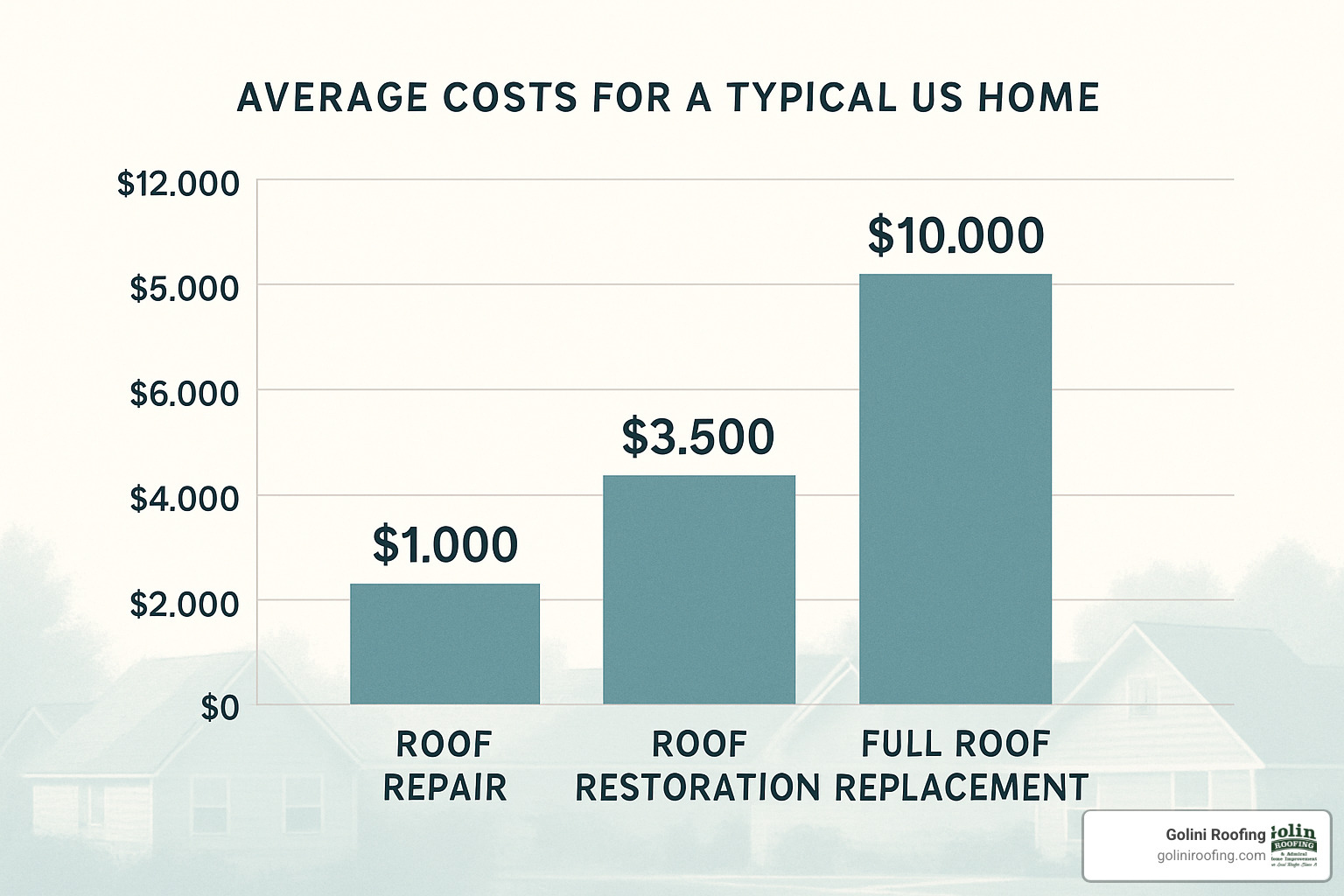
Minor repairs like fixing a few damaged shingles or a small leak might run $300-$1,000, while moderate repairs addressing several problem areas typically range from $1,000-$3,000. When facing major repairs that don’t quite justify a full replacement, be prepared for costs between $3,000-$7,000.
Restoration offers a middle path, with basic cleaning and coating services starting around $2,000 and comprehensive restoration projects reaching $5,000-$12,000.
Full replacement represents the biggest investment: expect to pay $5,000-$16,000 for quality asphalt shingles on an average home. Metal roofing, with its exceptional durability, typically runs $10,000-$30,000, while premium materials like slate or tile can range from $20,000-$60,000 or more.
Note: These figures represent average costs based on internet data and not actual costs for Golini Roofing. Your actual price will depend on your home’s specific needs, size, and features.
For a personalized estimate custom to your home’s unique requirements, visit our detailed guide on How Much Does Roof Replacement Cost?
Price Drivers You Can Control
You have more control over your roofing costs than you might think. Material selection offers the most obvious opportunity for customization. While architectural shingles cost more upfront than basic 3-tab varieties, they typically last longer and look more distinctive. Metal roofing represents a bigger initial investment but might be the last roof you ever buy.
Project timing can open up surprising savings. Many homeowners don’t realize that winter installations in Massachusetts often come with discounts of 5-15%. As one Wakefield customer finded, “I saved nearly $2,000 by scheduling my roof replacement in January instead of waiting until spring.”
The scope of work also offers opportunities for cost control. Removing just one layer of old roofing costs less than stripping multiple layers. Deciding whether to replace skylights or vents during your roofing project can also impact your bottom line.
Industry experts often cite the “30% rule” – if repair costs exceed 30% of replacement costs, replacing the entire roof typically makes more financial sense in the long run. I’ve found this rule remarkably reliable over my decades in the roofing business.
Insurance & Financing 101
Many homeowners are pleasantly surprised to learn their insurance may cover roof repair and replacement under certain circumstances. Storm damage from wind or hail, fallen trees, and other sudden, accidental events typically qualify for coverage. However, insurance rarely covers damage resulting from normal aging or lack of maintenance.
When dealing with insurance claims, documentation is your best friend. Take photos of damage before making temporary repairs, contact your insurance company promptly, and schedule inspections from both your insurance adjuster and a trusted roofing contractor. Be prepared to discuss your policy’s depreciation calculations and understand your deductible obligations.
For situations where insurance doesn’t apply or only partially covers costs, financing options can make your roofing project more manageable. Home equity loans often offer the lowest interest rates, while specialized roofing financing programs provide quick approval processes. Some homeowners leverage credit cards with introductory 0% APR offers for smaller projects, while others explore government-backed home improvement loans.
Decision Matrix: Fix, Restore, or Flip?
When you’re standing at the crossroads of roof repair and replacement, the decision can feel overwhelming. But it doesn’t have to be. Let’s break it down together, step by step, so you feel confident making the right call for your home and budget.
Choosing Between Roof Repair and Replacement
Start by looking at your roof’s age and history. If your roof is still “in its prime”—for asphalt shingles, that’s usually under 15 years old—and the damage is just in one small spot, repair often makes the most sense. Maybe you’ve got a few missing shingles after a windstorm, or a small leak after a branch fell during a nor’easter. As long as the rest of the roof is healthy, a targeted repair can add years to its life. Plus, it’s a budget-friendly way to buy yourself time, especially if you’re planning to move soon or just aren’t ready for a big investment.
Just last month, we helped a Wakefield family whose 10-year-old roof lost a few shingles in a storm. Since the rest of their roof was still in great shape, our team matched the new shingles to the old—fixing the problem and saving them the cost of a full replacement.
On the other hand, if your roof is getting up there in years—say, 20 years or more for asphalt—or if you’re finding leaks in several rooms, a patch just won’t cut it. The same goes if you’ve paid for repairs before but the problems keep coming back, or if more than 30% of the surface is damaged. In these cases, investing in a full replacement will protect your home, increase its value (especially important if you’re thinking about selling), and help you sleep better at night.
A real estate tip: Don’t assume a bad roof “isn’t your problem” when you’re selling. Home inspectors and buyers notice roof issues right away, and you could end up lowering your asking price by far more than the cost of a new roof.
If your roof sits somewhere in between—not brand-new, but not falling apart—you might want to consider restoration. Restoration is ideal for roofs that are structurally sound but showing their age. It can add 10-15 years of life, boost energy efficiency, and give your house a mini “facelift,” all without the cost or hassle of a full tear-off. It’s a smart move if you want better curb appeal or you’re not ready for the disruption (and expense) of a replacement.
How Material Type Influences the Call
Not all roofs are created equal, and different materials age in their own ways. Asphalt shingles are the most common and also the easiest to repair when they’re younger. If you spot a few bald patches or missing shingles early on, repairs can keep things watertight. But if you see widespread granule loss or most of the shingles are looking rough, it’s probably time for a new roof. Just keep in mind, new shingles may look a bit different next to older, weathered ones.
Metal roofing is tough and can go decades with just minor repairs—think tightening fasteners or swapping out a rusty panel. Full replacement is rare before the 30-year mark unless it wasn’t installed correctly in the first place.
Slate and tile roofs are built to last generations. If just a few tiles are cracked, a good roofer can swap them out and keep your roof in top shape. However, if the underlayment beneath those beautiful tiles starts to fail, replacement may be needed—even if the tiles themselves look fine.
Wood shakes and shingles need more regular care. Replacing a few split or cupped shakes here and there is routine maintenance. But once a third or more of the roof is showing its age, full replacement is your best bet for protecting your home.
And don’t forget about energy efficiency. Newer materials—whether shingles, metal, or tile—can reflect more sunlight and insulate better, helping lower your heating and cooling bills by up to 30% in some cases.
Extent & Location of Damage
It’s not just how much roof is damaged, but where the damage is that matters. Trouble spots like valleys (where water naturally flows), edges, and areas around chimneys or skylights are especially vulnerable. If these regions show recurring leaks or deterioration, it might mean bigger issues below the surface. For example, we once visited a home in Reading where the only visible leak was in a single area—but our inspection revealed most of the roof’s valleys had failing flashing. In that case, replacement wasn’t just the smarter choice, it was the only way to prevent future headaches.
Of course, if the damage is genuinely limited to a single, easy-to-access section—perhaps away from critical areas—repair is likely all you need.
When it comes to roof repair and replacement, remember: every roof and home is unique. The best decision comes from weighing your roof’s age, the type and location of damage, your plans for the home, and the pros and cons of each option. If you’re ever unsure, a trusted inspection from an experienced roofer (like Golini Roofing!) can help you see your options clearly and avoid costly surprises down the road.
Getting It Done Right: Estimates, Contracts & Contractors
Once you’ve decided between roof repair and replacement, finding the right professional to handle your project becomes your next crucial step. Let’s walk through what to expect during this process.
What to See in a Written Estimate
A proper roofing estimate isn’t just about the bottom-line price—it should tell the complete story of your project from start to finish.
Good estimates always include a detailed scope of work that clearly outlines which areas will be repaired or replaced, whether existing materials will be removed or roofed over, and any structural repairs or ventilation improvements that might be needed. Think of this as your project roadmap.
When reviewing materials specifications, look for brand names and product lines, not just generic terms like “30-year shingles.” A quality estimate will specify material weights or thicknesses, color and style selections, and details about underlayment and ice barriers. This transparency helps you understand exactly what you’re paying for.
The project logistics section should answer your “when and how” questions. When will work begin and end? What will the daily work hours be? How will your landscaping and property be protected? And importantly—who’s responsible for cleanup and waste removal?
Finally, examine the financial information carefully. Beyond the total price, the estimate should break down costs for materials and labor, include any permit fees, outline the payment schedule, and specify how long the quoted price remains valid.
“I recently had three contractors bid on my roof replacement,” shares a Lynnfield homeowner. “The difference was night and day. The detailed estimate from Golini Roofing included line items for everything from ice barrier installation to ridge vent replacement—giving me confidence they’d thought through the entire project.”
For a deeper understanding of what happens once you sign on the dotted line, check out our Roofing Process Step by Step guide.
Hiring a Trusted Roofer
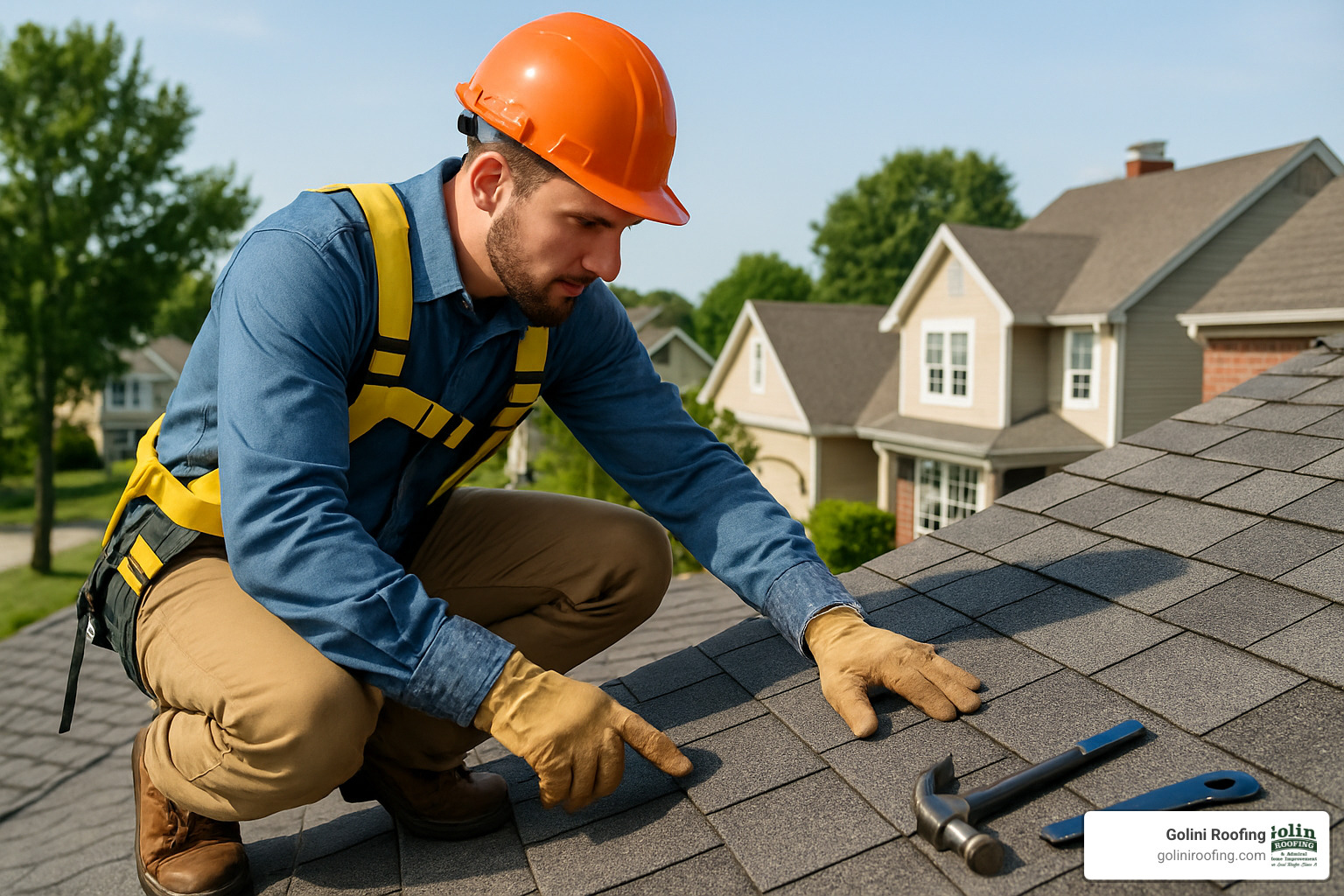
Finding a trustworthy contractor can feel overwhelming, especially after storm damage when so-called “storm chasers” might knock on your door offering quick fixes. The best defense is knowing what questions to ask.
Start with the basics: “Are you licensed and insured?” Don’t just take their word for it—request a certificate of insurance to verify coverage. Ask about their local experience and recent references. A reputable contractor will happily provide names of satisfied customers in your neighborhood.
Dig into the practical details too: Who will supervise the work daily? How will they protect your property? What kind of warranty covers both materials and workmanship? Understanding how they handle unexpected issues that arise during the project can reveal a lot about their professionalism.
Be alert for warning signs like door-to-door solicitation after storms, pressure tactics for immediate signing, unusually low bids, demands for full upfront payment, or the lack of a physical business address. These red flags often signal trouble ahead.
“The cheapest estimate can become the most expensive mistake,” cautions the Better Business Bureau in their tips for hiring roofing contractors. Their research shows that complaints about roofing contractors often stem from misunderstandings that could have been avoided with clearer contracts.
At Golini Roofing, we believe that quality workmanship starts with the smallest details—like our commitment to hand-nailing each shingle rather than using pneumatic nail guns. This old-school approach takes more time, but results in roofs that better withstand New England’s harsh weather cycles. It’s these kinds of craftsmanship details worth asking about when interviewing potential contractors.
The contractor you choose today will determine whether you’re smiling or sighing about your roof for years to come. Take your time, ask the right questions, and trust your instincts when making this important decision.
Maintenance & Efficiency: Extend Your Roof’s Life
Whether you’ve opted for roof repair and replacement or just a minor fix, proper maintenance is your roof’s best friend. With some regular attention, you can add years—sometimes even decades—to your roof’s life and protect your investment.
Routine Tasks That Pay Off
Your roof works hard every day to protect your home. Showing it some love twice a year can prevent small issues from becoming major headaches.
Spring and fall are perfect times for a quick roof check-up. After winter’s harsh weather, spring inspections help you spot any damage from ice or snow. Before winter arrives, fall maintenance ensures your roof is ready to handle whatever Mother Nature throws at it.
Keep those gutters flowing freely! Clogged gutters are like blocked arteries for your roof—they prevent proper drainage and can lead to water backing up under shingles. I’ve seen countless preventable leaks that started with nothing more than leaves and pine needles blocking a downspout.
Trim those overhanging branches that scrape against your roof during storms. Not only do they wear away granules from asphalt shingles, but they’re also highways for squirrels and other critters looking to make your attic their new condo.
Check your attic ventilation regularly. Poor airflow doesn’t just make your home less comfortable—it can literally cook your shingles from underneath and cut years off their lifespan. A well-ventilated attic keeps your roof cooler in summer and drier in winter.
A Burlington homeowner followed our maintenance advice after we completed a partial roof repair and replacement on their home. Their diligence with regular cleaning and prompt attention to minor issues has added more than five years to their remaining roof sections. That’s thousands of dollars saved simply by being proactive!
Energy & Sustainability Perks
Today’s roofing options do more than just keep the rain out—they can actually help lower your energy bills and reduce your environmental footprint.
Cool roof technology has come a long way. Modern shingles with reflective granules bounce back the sun’s heat instead of absorbing it. Even in our Massachusetts climate, homes with these materials can see summer cooling costs drop by 15-25%. That’s money in your pocket every month!
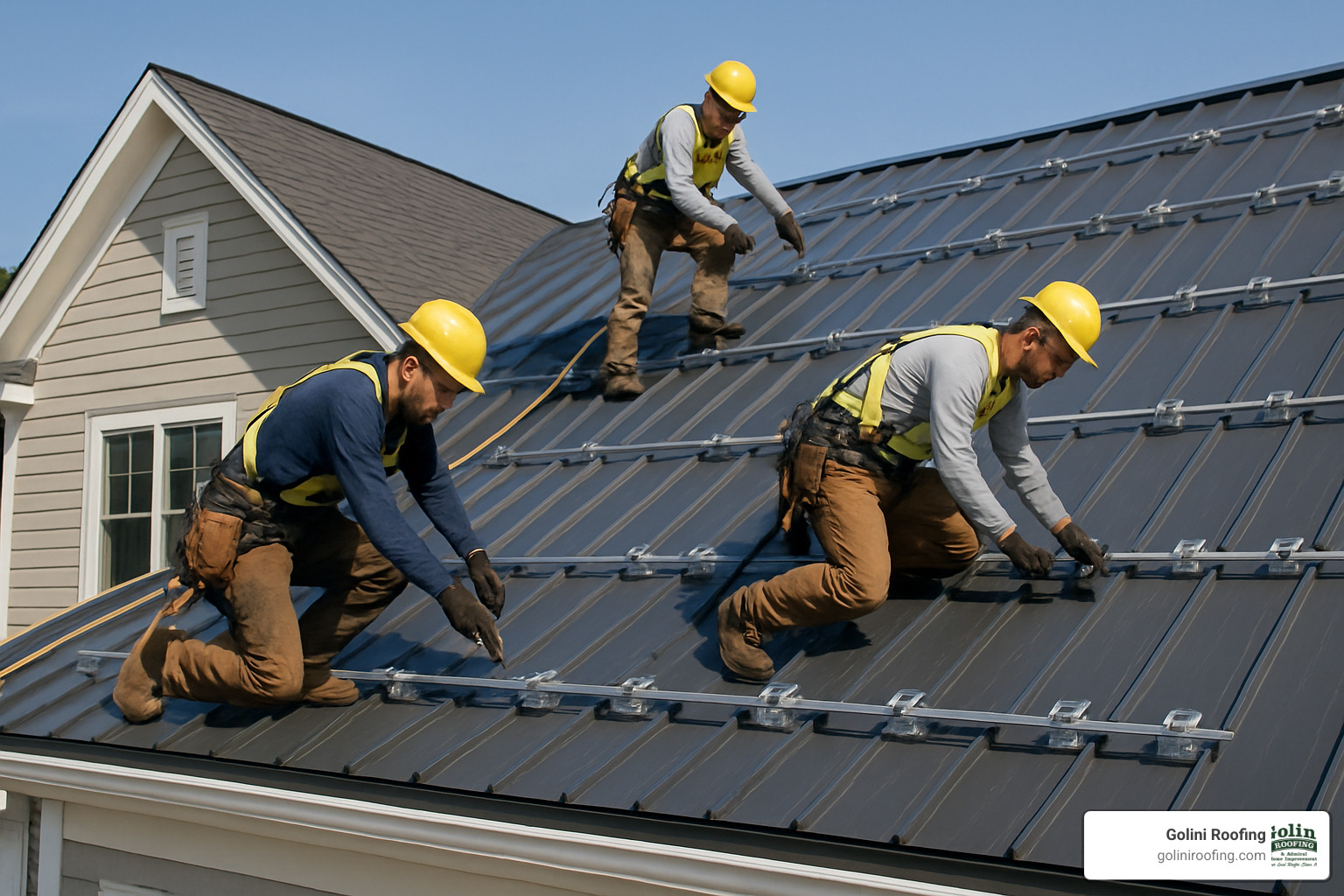
Metal roofing deserves special mention for its green credentials. Not only does it typically contain recycled content, but it’s also 100% recyclable at the end of its (very long) life. While the upfront cost is higher than asphalt, many homeowners find the energy savings and 50+ year lifespan well worth the investment.
Did you know that old asphalt shingles can have a second life? Instead of clogging landfills, they can be recycled and repurposed for road construction. When we remove old roofing materials, we make every effort to ensure they’re properly recycled whenever possible.
Solar-ready roofing systems are gaining popularity even in New England. If you’re considering solar panels in the future, mention this during your roof repair and replacement consultation. We can ensure your new roof is installed with future solar installation in mind, saving you considerable expense down the road.
The combination of proper maintenance and energy-efficient materials doesn’t just extend your roof’s life—it can actually pay you back through lower utility bills. Some energy-efficient roofing improvements may even qualify for utility rebates or tax incentives, making the decision to upgrade even easier on your wallet.
A well-maintained roof isn’t just about preventing leaks—it’s about creating a more comfortable, efficient home that costs less to heat and cool year-round. That’s protection that truly pays for itself.
Frequently Asked Questions about Roof Repair vs Replacement
How does roof age affect the decision?
Your roof’s age might be the single most telling factor when deciding between repair and replacement. Think of it like car maintenance – at different milestones, different approaches make sense.
For roofs under 10 years old, repairs typically make the most financial sense. These younger roofs usually have plenty of life left in them, and fixing isolated problems keeps your investment going strong. I recently worked with a North Reading family whose 8-year-old roof suffered wind damage during a nor’easter. Since their roof was otherwise healthy, a targeted repair restored protection without breaking the bank.
As your roof enters the 10-15 year range, repairs remain viable, but warrant a closer look at the bigger picture. This is when we recommend a thorough inspection to distinguish between isolated issues and early warning signs of systemic problems.
When your roof hits the 15-20 year mark, that’s when the famous “30% rule” becomes particularly relevant. If repair costs would exceed 30% of a full replacement, the scales often tip toward replacement being the wiser long-term investment. At this age, repaired sections may outlast the surrounding materials, creating an uneven aging pattern.
For roofs over 20 years old, even seemingly minor damage often signals it’s time for a complete update. As one roofing specialist puts it, “Budget for a replacement starting at year 22 of an asphalt shingle roof’s life.” This proactive planning prevents emergency replacements during the worst possible times – like in the middle of February when a major storm hits!
Can localized storm damage be repaired without full replacement?
Yes! Localized storm damage often can be addressed with targeted repairs rather than a complete overhaul, especially under certain conditions.
When your roof is relatively new and otherwise in good shape, spot repairs make perfect sense. The key factors that make repair viable include damage confined to a single area or slope, structurally sound decking underneath, and the availability of matching materials.
After a significant hailstorm swept through Wilmington last year, our team was able to perform successful repairs on several homes where damage was isolated to specific sections. We carefully matched existing materials for a seamless blend between old and new.
However, be aware that when storm damage extends across multiple roof planes or when finding matching materials becomes impossible (particularly with older or discontinued shingles), partial or complete replacement might become necessary.
Don’t forget that insurance typically covers storm damage! Before making any repair-versus-replace decisions, have a professional assessment completed. Document all damage with clear photos, and file your claim promptly – most policies have time limitations on storm damage reporting.
What should be included in a roofing contract?
A solid roofing contract protects both you and your contractor by clearly spelling out expectations. When reviewing your contract, ensure it contains these essential elements:
Complete contractor information should appear prominently, including full name, physical address, phone number, license numbers, and insurance details. This information confirms you’re working with a legitimate, properly insured business.
The scope of work section needs to spell out exactly what will be done. This includes specific areas to be repaired or replaced, materials being used (with brand names and specifications), underlayment and flashing details, and any ventilation improvements planned.
Look for clear project specifics covering start and completion dates, daily work hours, measures to protect your property during construction, and detailed clean-up procedures. A good contract specifies who’s responsible for waste removal – you don’t want to be stuck with a dumpster full of old shingles!
The financial terms should leave no room for confusion. Beyond the total price, your contract should outline the payment schedule and clearly explain how additional costs or change orders will be handled if unexpected issues arise.
Warranties and guarantees deserve careful attention. Your contract should detail both the manufacturer’s material warranty and the contractor’s workmanship warranty. If you’re planning to sell your home soon, check whether these warranties can transfer to new owners.
Finally, good contracts include contingency plans for weather delays and procedures for addressing unexpected problems finded during work. As the Better Business Bureau advises, all these elements should be included in both your initial estimate and your final contract to ensure a smooth project.
At Golini Roofing, we believe transparent contracts build trust and lead to better outcomes for everyone involved. A clear, detailed agreement is the foundation of every successful roof repair and replacement project.
Conclusion
When it comes to roof repair and replacement, there’s rarely a one-size-fits-all answer. Your home deserves thoughtful consideration that balances immediate protection with long-term value. Throughout this guide, we’ve walked through the factors that should inform your decision—from assessing damage extent to weighing costs against your timeline.
A well-maintained roof isn’t just about keeping water out—it’s about protecting your biggest investment, ensuring your family’s comfort, and maintaining your home’s value for years to come.
The most successful roofing decisions come down to these essential insights:
Start with a thorough assessment. Whether you climb into your attic with a flashlight or call in professionals with moisture meters, understanding your roof’s true condition is the foundation of smart decision-making. Don’t guess when it comes to your home’s first line of defense.
Consider the 30% threshold. This practical guideline has served homeowners well for decades—if repair costs exceed 30% of replacement, investing in a new roof typically offers better long-term value and peace of mind.
Factor in your roof’s age. Even if that leak seems minor, a 22-year-old asphalt roof is telling you something important about its overall condition. Sometimes what appears as a small problem is actually your roof’s way of signaling the end of its serviceable life.
Think about your timeline. Are you planning to sell in the next few years? Or setting up your forever home? Your plans should influence whether a quality repair or complete replacement makes more sense for your situation.
Never compromise on quality. Whether you’re patching a small section or installing an entirely new system, the materials and workmanship you choose today determine how well your roof performs for decades to come.
For over four decades, we at Golini Roofing have helped Massachusetts homeowners steer these exact decisions. Our commitment to craftsmanship—including our signature hand-nailing technique that’s increasingly rare in today’s rushed construction landscape—ensures that your roof receives the care and attention it deserves, whether we’re repairing a small section or replacing the entire system.
If you’re still weighing your options, we’re happy to provide a thorough assessment and honest recommendations custom to your specific situation. Connect with our roofing contractors to schedule a consultation that puts your home’s needs first.
Whatever you decide, your roof deserves attention from experienced professionals who understand New England’s unique weather challenges and who’ll stand behind their work for years to come.